Buffets and Servers: Complete 2026 Buying Guide


Holiday dinner has a way of exposing every weak spot in a dining room. The table feels crowded, the serving bowls end up in the kitchen, and there's nowhere graceful to set a platter, a stack of linens, or the good flatware you only bring out a few times a year. That's when buffets and servers stop being decorative extras and start looking like smart, long-term furniture.
A well-chosen piece adds storage, a serving surface, and visual order. In a home that entertains often, it also becomes part of the rhythm of the room, one of those heirloom pieces that earns its keep every week, not just on special occasions. For families in Ann Arbor and across Southeast Michigan, the right choice usually comes down to fit, craftsmanship, and how long the piece will stay useful.
Understanding Buffets and Servers for Your Dining Room
A dining room rarely fails because of the table alone. It fails because there is nowhere to set the serving pieces, nowhere to tuck the extra linens, and nowhere to keep the room organized once the meal starts. A buffet or server solves that problem with a piece of furniture that stores, serves, and finishes the room at the same time.
Function takes priority in this context. A server is usually the smaller, lighter-scaled choice, and it often sits on taller legs with a more formal profile, which helps it feel less heavy in a tight room. A buffet usually gives you more cabinet space and a stronger storage load, so it is the better fit when you need room for platters, linens, and extra tableware.
That difference matters over the long run. A well-made piece should do more than fill a wall. It should keep traffic out of the kitchen, shorten the path between dishes and guests, and give the dining room a finished, intentional look. Families planning a room from the ground up should start with layout, daily use, and proportion, which makes a good dining-room planning guide like Tyner Furniture's dining room design overview a sensible place to begin.
Practical rule: buy for the way the room works on a Tuesday night, not just for the way it looks on Thanksgiving.
That is the heirloom mindset. A good buffet or server is not disposable storage. It is a piece you choose carefully, customize when needed, and keep in the family because it still earns its place years later. When the proportions and build are right, the piece supports the room instead of fighting it.
Buffet vs Server vs Sideboard vs Credenza
These terms get mixed up constantly, and shoppers pay for the confusion with the wrong size or the wrong amount of storage. The cleanest distinction starts with scale, then moves to purpose. A server is generally smaller and more formal. A buffet usually combines sideboard-like cabinetry with taller server-style legs. A sideboard tends to offer the most storage and the longest footprint. A credenza is often lower and wider, which makes it feel more horizontal in the room.
| Furniture Type | Typical Size | Storage Capacity | Best Use Case |
|---|---|---|---|
| Server | Smaller, lighter scale, taller legs | Moderate | Tight dining rooms, serving pieces, formal settings |
| Buffet | Mid-to-larger footprint, mixed leg and cabinet profile | Moderate to high | Everyday storage plus serving surface |
| Sideboard | Longer footprint, substantial cabinetry | High | Large dining rooms, maximum storage |
| Credenza | Lower and wider profile | Varies, often generous | Broad wall runs, flexible display and storage |
A useful way to judge the fit is by use case, not style labels. If the room needs a graceful surface and only a little hidden storage, a server makes sense. If the household needs room for serving pieces, linens, and seasonal dishes, a buffet is the stronger choice.
The distinction matters because the wrong silhouette can make a dining room feel cramped or underused. A taller, narrower piece can open the floor visually. A deeper, wider cabinet can anchor a long wall and keep the room from feeling empty.
For homes that host often, the layout of the room usually decides the winner. The furniture name on the tag matters less than whether the piece gives the family the storage, serving access, and visual balance the space needs.
How to Measure and Choose the Right Size
Sizing is where most mistakes happen. A piece that looks perfect online can overwhelm the wall, block a walkway, or create a delivery headache at the front door. The fix is straightforward, measure the room as a working space, not just a square footage number.
Start with wall space, then check what has to stay clear. A comfortable dining room should allow minimum 36 inches for movement around traffic paths, which keeps the room usable when someone is carrying food or pulling out a chair. Then measure the distance from the dining table so the buffet or server doesn't crowd seated guests or pinch the walkway.
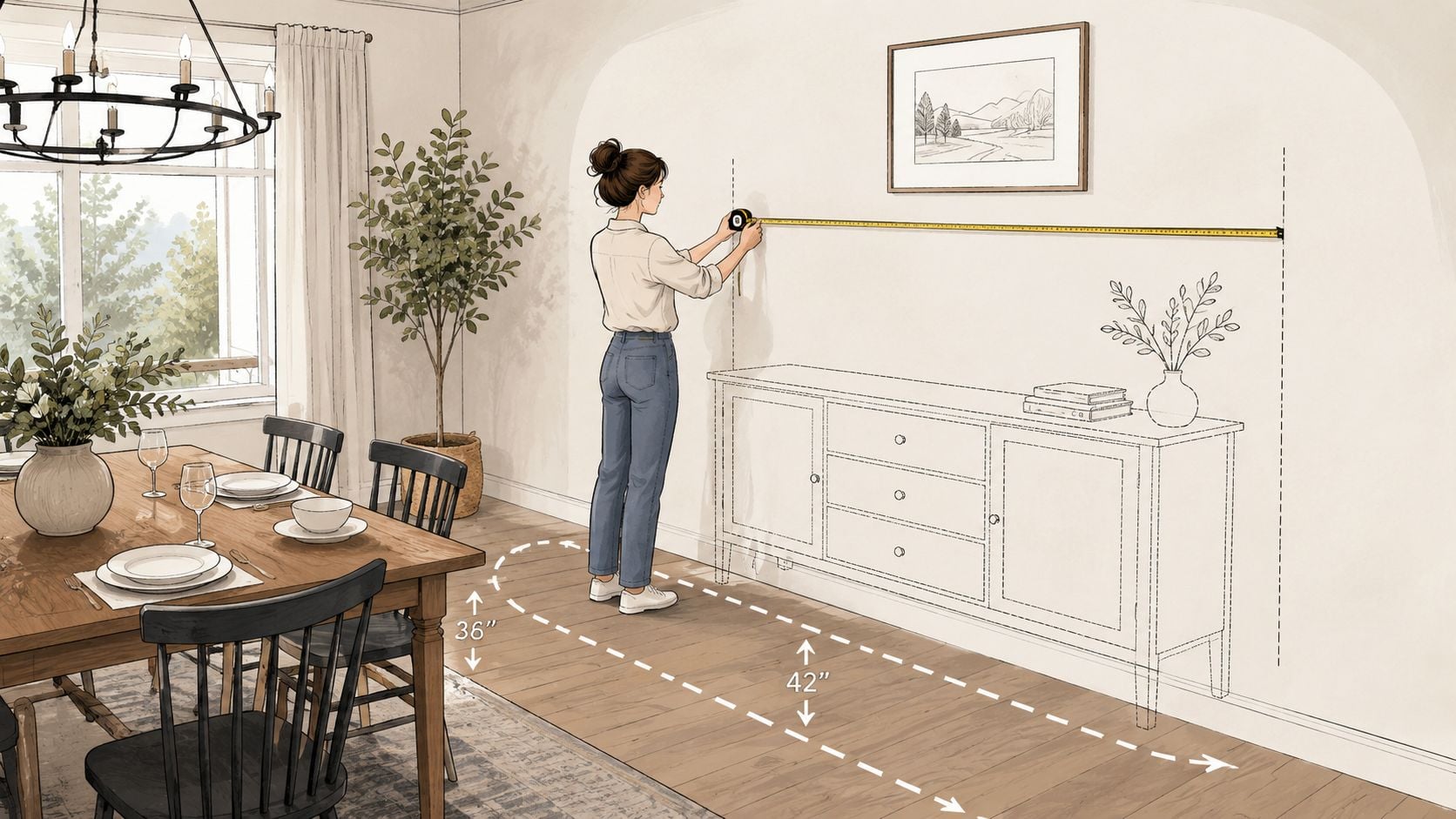
Measure the whole path, not just the wall
Doorways and hallways matter just as much as the dining room itself. If the piece cannot turn the corner, the purchase becomes a problem before it even reaches the house. Ceiling height matters too, especially if the room uses taller furniture, art, or decorative lighting that needs visual breathing room.
Buying note: compact servers work better when the room already feels full. Full-size buffets make more sense when the wall can carry the visual weight.
The cleanest way to shop is to think in three layers. First, confirm the usable wall length. Second, confirm delivery clearance. Third, choose the storage depth that matches the household's habits. A family that uses the piece for everyday dishes may want more enclosed storage. A room used mostly for entertaining may favor a lower, more elegant form.
For a more detailed measuring checklist, use Tyner Furniture's furniture measuring guide before going to the showroom. That step saves time and prevents guesswork.
The Case for Heirloom-Quality Solid Wood
A dining room piece gets used harder than many anticipate. It holds dishes, takes bumps from chairs, catches heat, and sits in the middle of family life for years. That's why the material choice matters more than surface fashion. Solid wood has weight, grain, and presence that thin panels and veneer-heavy alternatives just can't fake.
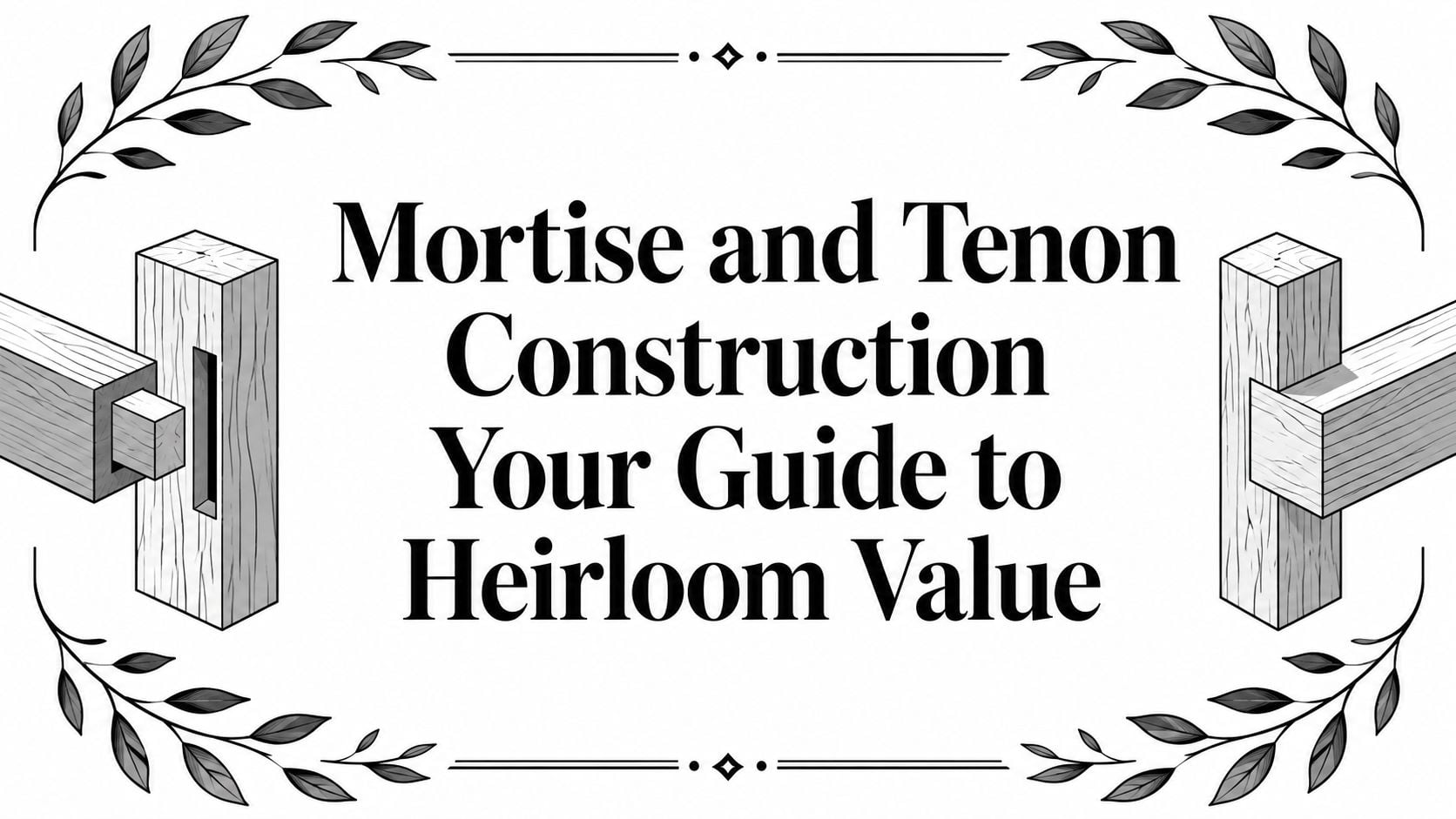
Tyner's Amish hand-crafted approach is built around that idea. The value is in the structure, not just the finish. Traditional joinery, including dovetailing and mortise-and-tenon construction, gives the furniture a level of integrity that mass-produced alternatives usually don't match. The result is a piece that feels grounded when the drawer opens and stable when the top carries real serving weight. For shoppers comparing the long-term value of hardwood furniture, Tyner Furniture's American-made solid wood collection shows how craftsmanship and material integrity work together.
Why solid wood changes the math
A buffet or server shouldn't be treated like a short-term purchase. Cost-per-year thinking makes more sense. A well-made piece can serve the same household through moves, remodels, and changing dining habits. The furniture becomes part of the home's history instead of something that gets replaced when the finish starts failing.
The sensory difference is real, too. There's a weight of solid cherry wood that feels reassuring when a drawer closes. Oak has a steadier, more traditional presence. Maple reads clean and bright. Those are not abstract design terms, they're the traits a family sees and feels every time the room gets used.
For broader material guidance, a useful reference on wood types and floor-compatible finishes is Savera Wood Floor Refinishing recommendations. It's a reminder that wood decisions should always be made with the whole room in mind, not just one furniture piece.
Solid wood furniture costs more up front, but the better question is how many years of daily use the piece can carry without apology.
That's the heirloom test.
Storage Configurations and Functionality Options
Storage should fit the way the household lives. Some families need a place for serving utensils and linens. Others want glass-front display for china that comes out on holidays. A well-made buffet or server gives the room the right mix of drawers, cabinets, and open or closed storage, so the piece works for daily use and not just for show.
What the inside should do
Drawers suit households that want order. Silverware dividers, napkin stacks, and smaller flat pieces stay organized without digging through a deep cabinet. Cabinet sections with adjustable shelves handle taller serving bowls, stackable dishes, and seasonal pieces that do not fit neatly into drawers.
Glass doors change the feel of the piece. They make sense when display matters and the household wants to show off china or decorative storage. Closed cabinets are the better choice when dust protection and a calmer visual look matter more.
Some households also want specialized features such as wine racks or stemware storage. Those details can be useful, but they should never crowd out the basics. If the piece does not hold the everyday items first, the extra features do not earn their keep.
Design rule: closed storage is easier to live with in busy homes, because it hides clutter and keeps the surface cleaner.
For families with children, durability and simple access usually matter most. For entertainers, the balance shifts toward display and quick serving access. Focus on essential features rather than chasing every option. Pick the storage that matches the actual pattern of use.
A helpful planning checklist is in this guide to selecting a dining storage piece, and it is especially useful for shoppers deciding between a cleaner cabinet look and a more display-friendly layout.
Styling and Placement in Your Dining Room
A buffet looks best when it feels anchored, not stranded. The simplest placement is against a wall where it can serve the table directly, especially if that wall sits opposite the kitchen or near the main serving route. In open-concept rooms, it can also act as a visual divider without closing the space in.
How to make it feel intentional
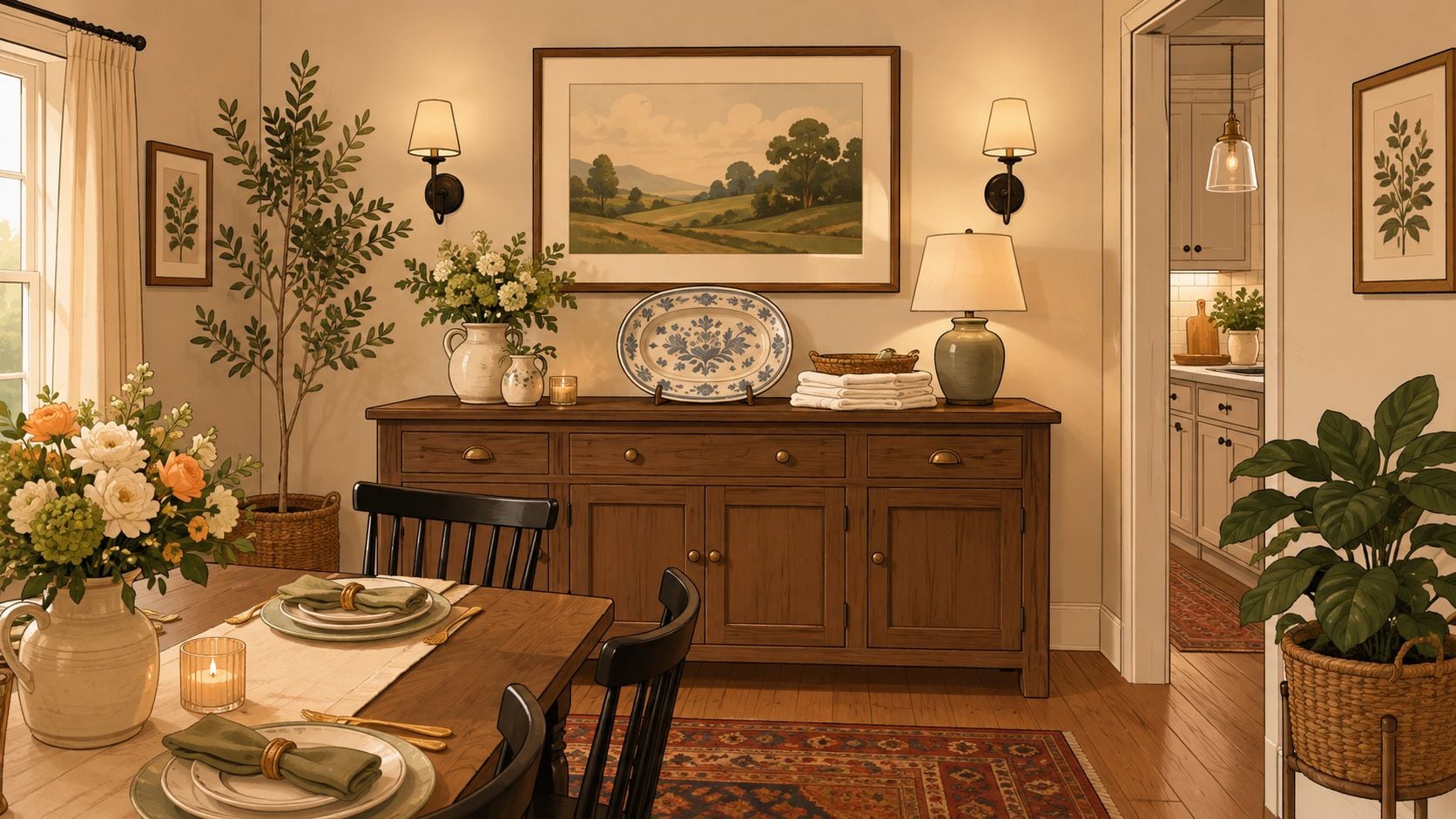
The surface should do more than hold mail and loose candles. A lamp, a framed artwork, a bowl, or a seasonal arrangement can turn the top into a design moment. The key is restraint. Too many small objects make the piece feel busy. A few substantial items give it presence.
Wood tone matters, but it doesn't have to match perfectly. Coordinated is better than identical. A warm buffet beside a dining table with a slightly different finish can look thoughtful if the tones share a similar depth. The room starts to feel collected over time, which is usually better than looking like it was bought all at once.
For buffet events and serving layouts, traffic flow guidance for buffet tables is a useful reminder that circulation shapes experience. The same idea applies in the dining room. Leave enough room for guests to move comfortably, and the piece feels integrated instead of obstructive.
Lighting helps more than one might realize. Buffet lamps or wall sconces create a warmer mood and make the wood grain visible at night. That matters in Southeast Michigan homes, where dining rooms often serve double duty for holidays, homework, and quiet evening meals.
Custom Order Options at Tyner Furniture
Off-the-floor is a starting point, not the finish line. For households that want a buffet or server to fit a specific wall, opening, or dining set, made-to-order is the smarter path. The point is to get the dimensions, finish, and details right so the piece looks like it belongs there from day one.
What can be tailored
Wood species matter first. Cherry, oak, maple, and quartersawn white oak each bring a different visual character and feel. After that comes the finish, where stain color and sheen level change how formal or relaxed the piece reads. Hardware style matters too, because pulls and knobs can make the same cabinet look rustic, crisp, or traditional.
The Canadel partnership gives shoppers a bespoke way to coordinate dining pieces, including buffets that visually match a custom table. That matters for rooms that need consistency without looking generic. The same approach applies to other personalized categories in the showroom, including Stressless seating, where sizing and configuration are part of the purchase instead of afterthoughts.
Tyner Furniture's Ann Arbor showroom also keeps a broad selection across Home Office and Outdoor Spaces, which helps families furnish more of the house with one design standard. Since 1957, that local legacy has been built around helping Southeast Michigan households choose pieces that last.
Custom ordering removes the settle-for mindset. It lets the room set the terms, then builds the furniture to match.
For shoppers comparing options, Tyner Furniture's custom order starting point is the cleanest way to begin. It keeps the process organized and makes the final piece feel intentional rather than improvised.
Care, Longevity, and Making Your Purchase
Solid wood doesn't ask for much, but it does ask for consistency. Dusting with a soft cloth, keeping hot dishes and drinks off the surface, and avoiding direct sunlight all help preserve the finish. In winter, a humidifier can help the room stay more stable, which matters for wood movement over the long run.
Small habits that protect a bigger investment
Minor care is easier when the piece is built well. Tight joints, quality hardware, and sound construction make everyday upkeep simpler. If the furniture ever needs attention, small repairs are much easier to justify on an heirloom piece than on something disposable.
Buffets and servers also make more sense when the purchase is supported the right way. Tyner Furniture's special financing options can help spread out the cost of a made-to-order piece, and the Low Price Promise keeps the value conversation grounded in competitive pricing rather than hype. White-glove delivery matters too, especially for heavy dining furniture that shouldn't be dragged across a floor or turned awkwardly in a hallway.
The bigger idea is simple. A dining room piece should be chosen for the next decade, not the next season. That's why families who care about craftsmanship, durability, and long-term value keep coming back to solid wood and careful customization.
For Southeast Michigan homeowners, the next step is straightforward. Visit the Ann Arbor showroom on South State St. for a sit test and a close look at the weight, grain, and finish in person, or browse the online Quick Specs for special orders when the goal is to compare dimensions before making a decision.
Tyner Furniture helps Southeast Michigan families choose dining pieces that feel built for the long haul, with custom buffets and servers, solid wood options, and made-to-order details that fit the room instead of forcing a compromise. Visit Tyner Furniture to explore the dining collection, compare Quick Specs for special orders, or stop by the Ann Arbor showroom for a hands-on sit test and a closer look at craftsmanship that lasts.