Shop Amish Solid Wood Furniture in Ann Arbor

You’re probably here because you’ve had the same experience many of our neighbors in Ann Arbor and Southeast Michigan describe the moment they start shopping seriously for furniture. A chair loosens. A drawer stops gliding well. A dining table that looked fine online doesn’t feel substantial once it’s part of daily life. After a few rounds of replacing pieces, the question changes from “What’s on sale?” to “What will still look and work well years from now?”
That’s where amish solid wood furniture enters the conversation differently.
It asks you to slow down and buy with intention. Not just for today’s room, but for the life that room will hold. Family dinners. Homework spread across the table. Holiday serving pieces tucked into a buffet. A dresser that still closes squarely after years of real use. If this is your first major solid wood purchase, it can feel like a lot. Wood species, finishes, joinery, customization, lead times, room measurements. It’s easy to feel unsure.
A trusted local store should make that process calmer, not more confusing. Since 1957, families in Southeast Michigan have turned to a showroom experience that helps them compare construction, understand long-term value, and choose pieces that fit both home and lifestyle. That’s the lens for this guide. Not pressure. Not hype. Just the practical knowledge that helps you buy once, and buy well.
Table of Contents
- Your Journey to Heirloom Quality Furniture
- The Hallmarks of True Amish Craftsmanship
- Why Invest in an Heirloom vs Mass-Produced Furniture
- Designing Your Bespoke Piece Wood Species and Finishes
- Expanding Your Custom Home with Tyner
- How to Measure Your Space for a Perfect Fit
- Begin Your Legacy at Our Ann Arbor Showroom
Your Journey to Heirloom Quality Furniture
Many consumers don’t begin this journey because they suddenly became furniture experts. They begin because they’re tired of replacing things.
A couple comes into a showroom on South State St. with photos of their dining room. Their current table worked for a while, but the top shows wear, the chairs wobble a bit, and they’ve realized they don’t want to repeat the same purchase cycle. What they want now is simpler. A table that feels grounded. Chairs that stay tight. Storage that looks better with age instead of worse.
That shift matters. It moves the conversation away from quick transactions and toward cost-per-year value. A well-made piece often asks more of you upfront, but it gives back in daily reliability, repairability, and lasting style. That’s a different kind of value than a low sticker price.
There’s also a bigger American craftsmanship story behind these pieces. The Amish furniture cluster in northeastern Ohio consumes an estimated 43,530,201 board feet of hardwood lumber annually, a scale that shows how significant this tradition is within the U.S. hardwood industry, according to this look at the Ohio Amish furniture market. For Southeast Michigan shoppers, that means access to a deep tradition of American-made woodworking rather than anonymous production.
A good first question: “Will I still be happy with this piece after years of ordinary use?”
That question usually leads people toward amish solid wood furniture because it’s built for a lived-in home, not just a nice product photo.
If you’re still sorting out whether custom furniture is the right path, this guide to getting started with a custom order is a helpful next step. It turns the process into manageable decisions instead of one big leap.
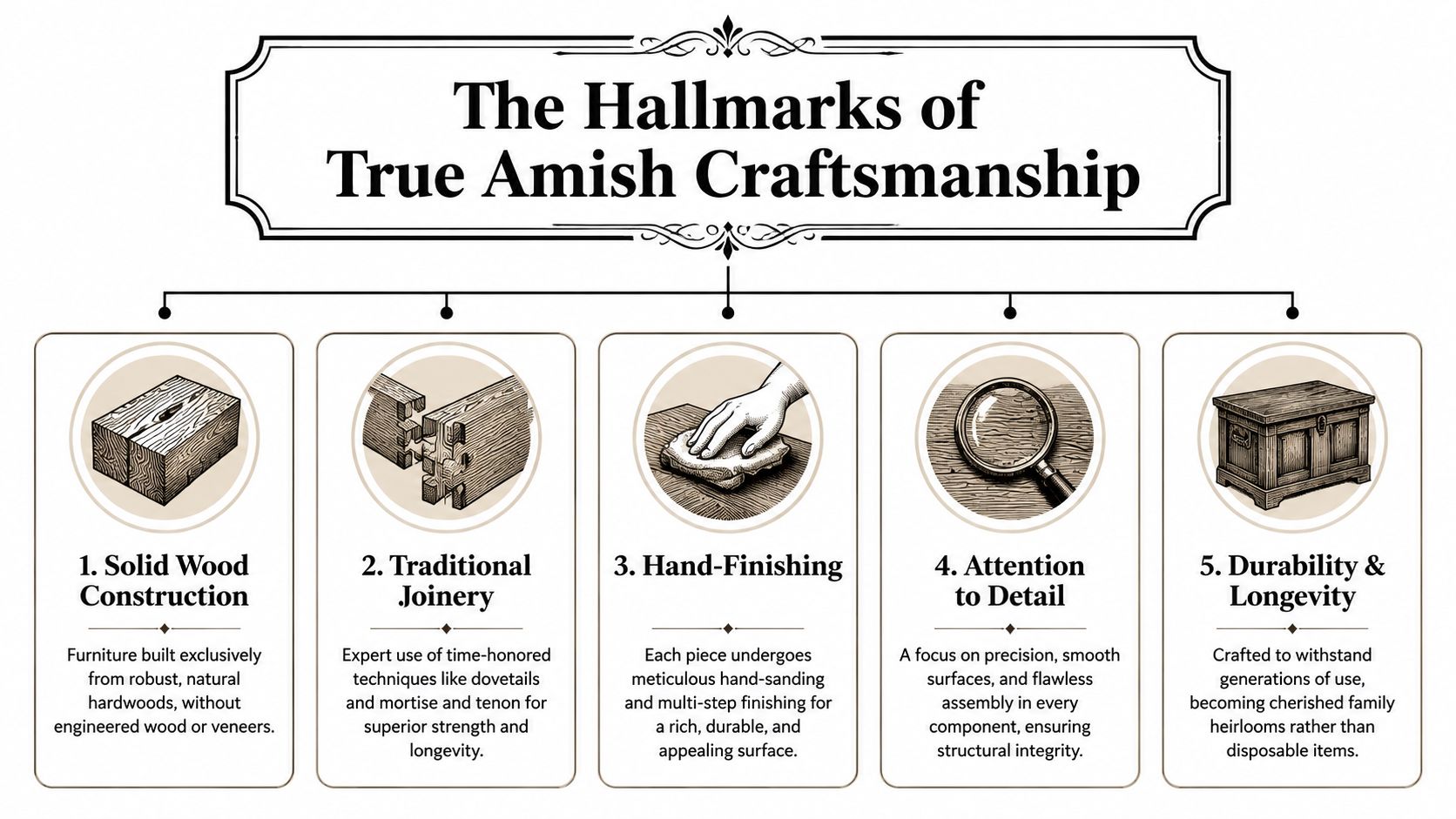
The Hallmarks of True Amish Craftsmanship
Some furniture looks solid until you open a drawer, lift a chair, or run your hand underneath the table edge. That’s when construction starts telling the truth.
Authentic amish solid wood furniture has a physical presence you can feel. The weight of solid cherry wood is different from a veneered panel. The grain continues naturally instead of stopping at a seam. Chair legs and arms feel carved from substance, not assembled from shortcuts. In a showroom, people often notice this before they have the vocabulary for it.
Why solid wood feels different right away
Solid wood construction begins with the material itself. These pieces are commonly made from North American hardwoods such as oak, cherry, maple, and walnut. The surface has depth. The grain pattern has variation. Edges feel crisp, not hollow. If you’ve ever touched a mass-market tabletop that sounded a bit thin when tapped, you’ll notice the contrast immediately.
That material integrity matters for more than appearance.
- Solid hardwood ages with character instead of peeling like a thin surface layer can.
- Refinishing stays possible because the wood itself is the finishable material.
- Repairs are more realistic when a piece is built from substantial parts rather than disposable panels.
- Customization looks intentional because stain and finish interact with real grain, not a printed imitation.
A careful buyer should also look past the visible top surface. Open the drawers. Check the back. Look under the table. Quality usually becomes more obvious underneath.
For a local overview of styles and options, this page on Amish furniture in Michigan gives a useful starting point.
The joints that tell the real story
Joinery is where many first-time buyers get confused, so let’s make it simple. Joinery is how the parts of a piece hold together. In quality furniture, that isn’t a minor detail. It’s the structure.
Two terms matter most in this category:
| Joint type | Where you often see it | Why it matters |
|---|---|---|
| Dovetail | Drawer boxes | Interlocking pins and tails help the drawer resist pulling apart |
| Mortise-and-tenon | Table bases, chairs, case pieces | One piece fits into another for a stronger structural connection |
Here’s why shoppers care. Amish furniture uses dovetail joinery with interlocking “pins” and “tails” that can resist pull-out forces exceeding 500 lbs, and mortise-and-tenon joints provide 40-60% higher tensile strength than screws, according to this Amish furniture buyer’s guide. Those aren’t abstract workshop details. They’re the reason a drawer still feels square and a chair still feels steady after repeated use.
When you inspect a drawer, look for joinery at the corners, not just a smooth front. Strength is often visible.
If you want one practical habit, make it this one: test the furniture the way you’ll live with it. Pull the drawer all the way out. Put a little pressure on the table edge. Sit down and shift your weight in the chair. Good craftsmanship doesn’t need a sales speech to hold up.
Why Invest in an Heirloom vs Mass-Produced Furniture
The hardest part of buying better furniture is often the sticker shock of comparison. One piece costs less today. The other is built to stay. If you only compare purchase price, you miss the part that matters most.
Heirloom furniture asks a different question. What will this cost you over the years you use it?
Cost per year changes the math
If a dining table serves your household through ordinary dinners, celebrations, moves, and redesigns, its value isn’t captured by day-one price alone. A stable table, durable finish, and repairable wood surface spread that investment across many years of use. That’s the thinking behind cost per year.
What usually drives replacement isn’t style fatigue alone. It’s structural frustration. Drawers loosen. Tops chip in ways you can’t fix cleanly. Chairs lose their rigidity. Once a piece starts feeling unreliable, it stops feeling like part of the home.
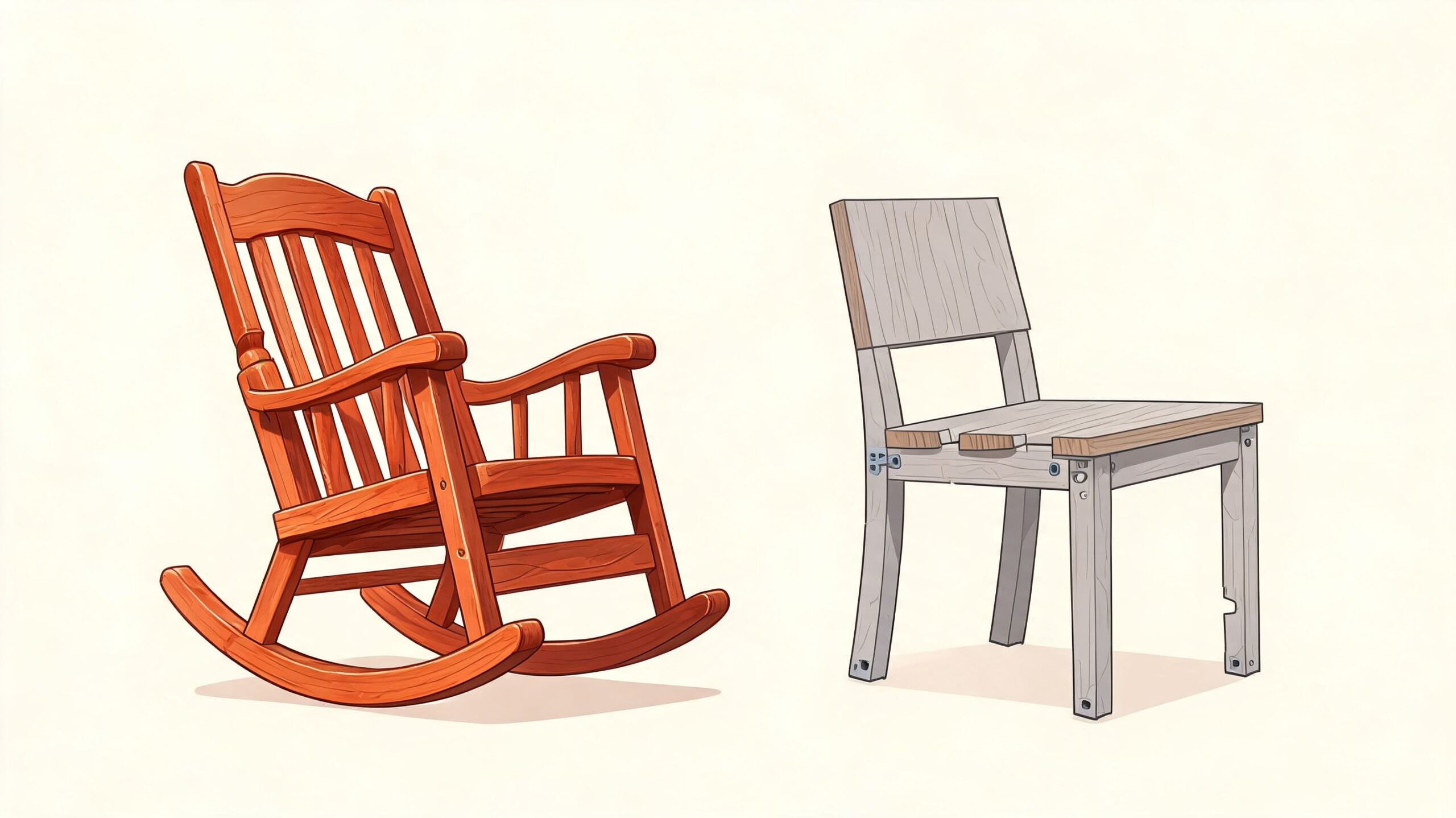
That’s why durability data matters here. Independent tests found that solid hardwood tables with traditional joinery withstand over 10,000 stress cycles before failure, while typical engineered wood products often fail before 5,000 cycles. The same research states that Amish-built tables can maintain structural integrity for a simulated 20+ years of household use, as described by Amish Furniture Factory’s durability comparison.
Where daily wear shows up first
Most families don’t destroy furniture in dramatic ways. They wear it down through repetition.
- Dining chairs handle shifting weight, scooting, and daily movement.
- Drawer boxes reveal weakness when they’re opened full and loaded often.
- Table bases absorb stress each time someone leans, drags, or bumps the piece.
- Bedroom storage gets tested by changing humidity, packed drawers, and repeated use.
A solid wood piece built with traditional joinery tends to absorb that routine better because the structure was designed for it. That doesn’t mean every heirloom piece is indestructible. It means the furniture is built to be lived with, maintained, and kept.
For shoppers comparing construction styles, this collection of American-made solid wood furniture helps frame the difference between furniture that’s built to serve and furniture that’s built mainly to ship efficiently.
Practical rule: If a piece needs to work hard in your home, judge it by how it’s built, not just how it looks under showroom lighting.
Designing Your Bespoke Piece Wood Species and Finishes
Once you’ve decided to buy solid wood, the fun begins. With this decision, a piece stops being generic and starts becoming yours.
Many first-time buyers think customization means choosing a stain and calling it done. In practice, the process is more personal than that. Wood species changes the visual texture of the piece. Finish changes the mood. Hardware, edge profile, and proportions shape how formal, relaxed, modern, or classic the final result feels in your room.

Choosing the wood for your lifestyle
Wood selection isn’t only about color. It’s about the kind of visual story you want the furniture to tell.
Oak usually appeals to buyers who want visible grain and a timeless, grounded look. It feels right in classic dining rooms, craftsman interiors, and homes that benefit from texture.
Cherry often draws people who want warmth and elegance. It has a smoother visual flow, and many shoppers love how it brings a room a richer, more settled feeling over time.
Maple tends to fit cleaner, quieter interiors. If you like a more understated grain and a versatile look that can lean contemporary or transitional, maple is often where the conversation lands.
Walnut gives a room immediate depth. It works well when you want a statement piece with natural richness and less need for heavy stain.
A useful way to narrow your choice is to bring in photos of your floors, cabinets, and nearby upholstery. Matching perfectly isn’t the goal. Coordinating undertones is.
Don’t choose wood in isolation. Choose it in relation to the room, the light, and the pieces already staying in the home.
If you’d like a deeper breakdown of species and style fit, this article on choosing the right hardwood for longevity and style is worth reviewing before you place an order.
Finishes that protect and personalize
Finish is where many custom orders either come alive or go slightly off course. A stain chip under bright showroom lighting won’t look exactly the same in a north-facing dining room or a sunlit breakfast area. That’s normal.
Use these checkpoints when reviewing finish options:
- Look at the sample in multiple lighting conditions so you can judge warmth, depth, and how much grain shows through.
- Think about the surrounding materials such as painted trim, stone countertops, leather seating, or area rugs.
- Ask how formal you want the piece to feel because darker, smoother finishes often read dressier, while lighter or more natural finishes can feel more relaxed.
- Realistically consider maintenance habits so the finish suits how your household lives.
Sustainability now plays a bigger role in that choice for many households. A recent industry report noted a 35% year-over-year increase in searches for “certified sustainable wood furniture,” reflecting stronger demand for transparent, eco-conscious buying, according to this discussion of green furniture claims. That makes American-sourced hardwood and clear sourcing conversations more relevant than ever for Ann Arbor buyers who care about both style and responsibility.
This is also where custom ordering shines. In-stock is only the beginning. A made-to-order approach lets you tune the piece to your home instead of forcing your home to adapt to whatever happened to be on a warehouse floor.
Expanding Your Custom Home with Tyner
Once people understand what custom solid wood can do in a dining room or bedroom, they usually start looking around the rest of the house differently. The same mindset applies elsewhere. Buy fewer pieces. Choose them more carefully. Make them fit the way you live.
That custom approach doesn’t stop with wood furniture. A home works better when the table, seating, storage, and comfort pieces all feel considered rather than pieced together in a rush.
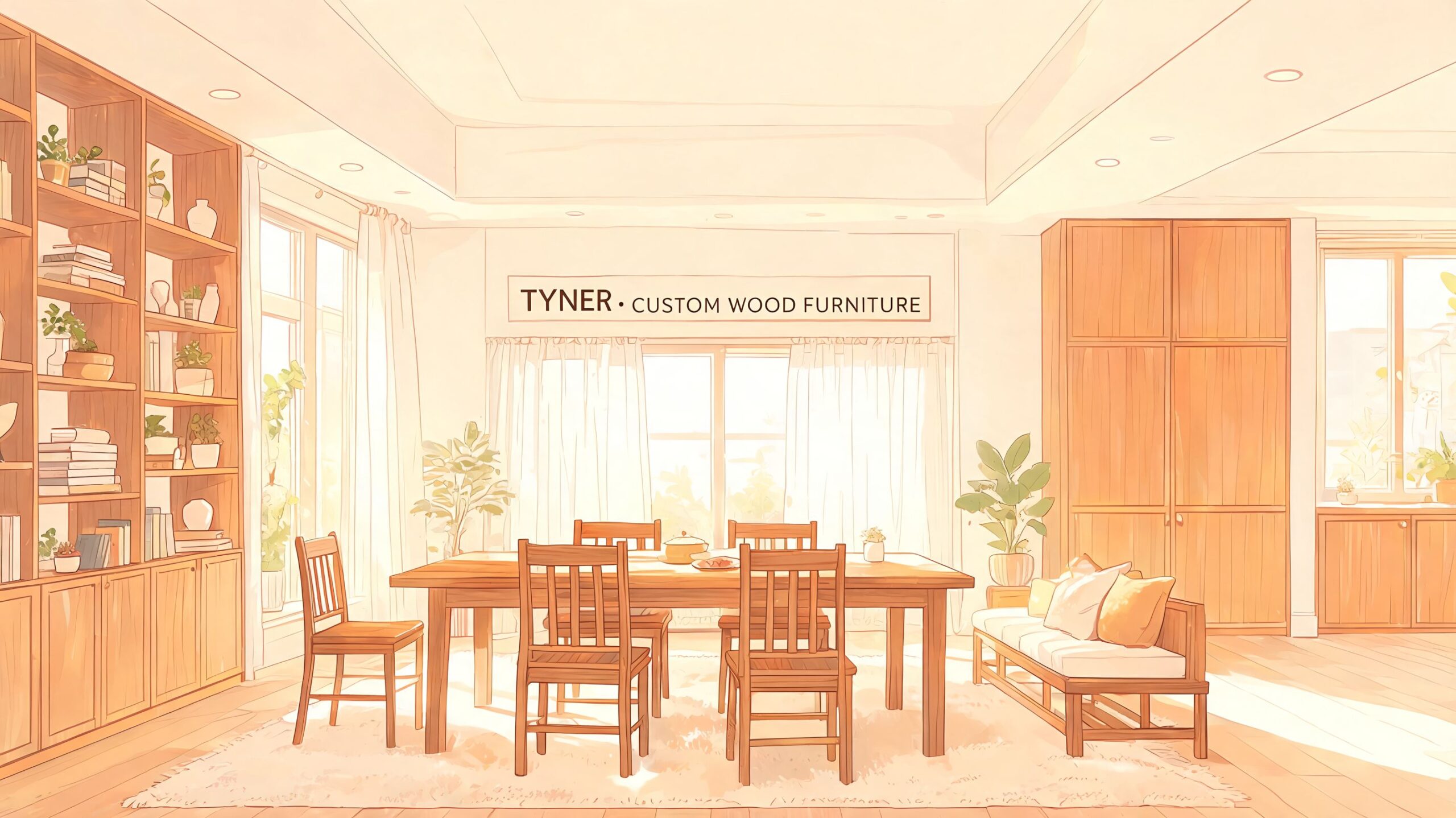
Custom thinking beyond the dining room
A shopper might begin with an Amish dining table and then realize the breakfast nook, home office, or media storage could benefit from the same made-to-order logic. Scale matters. Finish continuity matters. So does the feel of moving from room to room without visual disconnect.
That’s also where brand partnerships become useful in a very practical way.
- Canadel gives buyers a high degree of dining customization, including finish direction, table shape, and chair style combinations.
- Stressless focuses on ergonomic seating with size-specific comfort, which matters if you’ve ever sat in a recliner that felt good for five minutes and wrong after thirty.
- Case goods and accent pieces can carry wood tone and craftsmanship into bedrooms, home offices, and gathering spaces.
A whole home approach
A showroom is most helpful when it lets you compare categories with one set of eyes. You can feel the weight of a solid wood table, then walk over and compare the buttery feel of top-grain leather, the support of ergonomic seating, or the shape of a made-to-order dining chair back. One purchase often clarifies another.
Tyner Furniture is one local option for that kind of side-by-side comparison. The Ann Arbor showroom includes Amish hand-crafted solid wood pieces as well as custom programs from Canadel and Stressless, along with furnishings that reach beyond dining and bedroom into the home office and outdoor spaces.
That matters because real homes aren’t furnished one category at a time forever. They evolve. A dining upgrade can lead to a better office desk. A bedroom refresh can lead to a more supportive reading chair. The best custom decisions often come from seeing how those pieces relate in person.
A well-furnished home rarely comes from buying everything at once. It usually comes from choosing the right things in the right order.
How to Measure Your Space for a Perfect Fit
Even confident shoppers get nervous here. They’ve chosen the style, the wood, maybe even the finish, and then one practical thought pops up. Will it fit?
Good measuring removes a lot of stress. It also protects you from ordering a piece that works beautifully on paper but feels crowded once it arrives. Before you commit, compare room scale and delivery path with the same care you used to choose the furniture.
The three measurements people forget
Measuring wall length is a common step. However, the path the furniture must travel is often overlooked.
Use this short checklist:
Measure the room itself
Record wall length, window placement, vents, and anything that affects furniture position. In dining rooms, mark where chairs need room to move naturally.Map the walking space
Don’t only ask whether the table fits. Ask whether people can pass behind seated guests, open drawers, or move around corners comfortably.Check the delivery route
Measure doorways, stairwells, hallway turns, elevator depth if needed, and ceiling height in tight spots. A piece can fit the room and still fail the entry path.Note fixed obstacles
Radiators, railings, low light fixtures, and island overhangs often define the limits.Bring photos with your measurements
A quick phone snapshot of the room and access points helps a sales associate spot issues you may not notice.
For a more detailed walkthrough, this guide on how to measure furniture is a practical reference to keep open while you’re checking dimensions.
One more tip. If you’re buying a custom dining set, measure with the chairs occupied in mind, not pushed in perfectly. Homes are used by people, not staged by photographers.
Begin Your Legacy at Our Ann Arbor Showroom
A major furniture purchase should leave you feeling settled, not uncertain. That’s the genuine appeal of amish solid wood furniture. It offers material honesty, dependable construction, and the chance to create something that belongs to your home rather than borrowing a trend from somewhere else.
For many Southeast Michigan households, that kind of purchase becomes the anchor for a room. A dining table that hosts years of meals. A bedroom set that feels calm and substantial every morning. A desk that makes the home office feel finished. And because the order can be customized, you don’t have to settle for close enough regarding wood species, finish, or scale.
Local trust matters too. A store that has served this community since 1957 has seen style cycles come and go. What lasts is still the same. Strong construction. Clear guidance. Respect for your budget and your timeline. That’s also why practical tools such as Special Financing and a Low Price Promise can make sense. They lower the barrier to choosing long-term value without turning the experience into a pressure sale.
If you’re furnishing more than one room, it helps to think broadly. Dining, bedroom, living room, home office, and even outdoor spaces all benefit when the pieces feel cohesive in quality and intention. Sometimes the next right step is to sit down, open a drawer, feel a wood sample in your hand, and compare options with someone who can answer your questions plainly.
Visit Tyner Furniture in the Ann Arbor showroom on South State St. for a sit test, a closer look at hand-crafted wood construction, and help comparing custom options in person. If you’d rather begin from home, browse the online Quick Specs for special orders and start narrowing down the wood species, finishes, and configurations that fit your space.