Heirloom Custom Amish Furniture in Michigan

You walk into a room, set a coffee mug on the table, and the top flexes a little. A drawer sticks. A chair wobbles after one move across the floor. Most of us have lived with furniture like that longer than we wanted to, partly because replacing it feels like starting over from scratch.
That’s usually the moment custom Amish furniture starts making sense.
For many Ann Arbor and Southeast Michigan households, the central question isn’t “What’s the lowest price today?” It’s “What will still look right, feel solid, and function well years from now?” That shift matters. It turns furniture shopping from a string of replacements into a long-term decision about comfort, daily use, and the kind of home you want to build.
A trusted local business that’s been serving this community since 1957 tends to see the same pattern again and again. Shoppers come in tired of settling. They leave thinking more clearly about wood species, finish durability, sizing, ergonomics, and cost per year. If you’re exploring American-made solid wood furniture, you’re already asking the right questions.
Table of Contents
- Moving Beyond Fast Furniture to a Forever Home Investment
- What Defines True Amish Craftsmanship
- The Art of Bespoke Design Your Wood and Finish Options
- Your Customization Workflow From Seating to Dining
- How to Order Your Custom Piece Steps and Timelines
- Making Heirloom Quality Accessible with Smart Financing
- Caring For Your Solid Wood Furniture for Generations
Moving Beyond Fast Furniture to a Forever Home Investment
A family buys a dining set in a hurry because they need something before the holidays. It looks good on a screen, arrives in a box, and works well enough for a while. Then real life begins. A chair loosens after a year of daily meals, the tabletop shows wear where school projects and serving dishes land, and the size that seemed fine online starts to feel wrong in the room.
That experience changes how many people shop the second time.
Custom Amish furniture usually enters the conversation after disappointment. The goal is no longer to fill a room quickly. The goal is to choose a piece that fits the home, suits the family’s routines, and still makes sense years from now. That is a different kind of purchase. It asks better questions at the start, and it usually leads to fewer regrets later.
A well-made table works like a kitchen floor or a good roof. You notice the cost up front, but you live with the benefit every day.
The shift from buying furniture to choosing a legacy
Many shoppers start here because they are tired of replacing furniture that never quite matched their lives. Photos cannot tell you how a chair feels through a full dinner, whether the finish will age gracefully, or whether the size will still work after a remodel, a move, or a growing family. Custom work slows the process down enough to answer those questions before money changes hands.
That slower pace is a strength.
Instead of settling for a standard set, you can decide what the room needs. A busy breakfast area may call for rounded corners, easy-clean finishes, and chairs built for constant use. A formal dining room may need extension leaves, a more refined silhouette, or a wood species that develops richer character over time. The point is not decoration for its own sake. The point is fit.
For many Southeast Michigan shoppers, the local part matters just as much as the craftsmanship. Seeing samples in person, sitting in the chairs, comparing stain colors under real light, and talking through dimensions with someone who has helped families furnish homes since 1957 gives you a level of clarity online-only retailers cannot match. If you want to see what that quality looks like in practice, our collection of American made solid wood furniture is a useful place to start.
A custom piece also carries a longer story. It begins with how you live, continues through wood, finish, and sizing decisions, and ends when the furniture arrives and settles naturally into the room it was built for. That full journey matters. It is how a purchase turns into part of the home.
What Defines True Amish Craftsmanship
The phrase “Amish furniture” gets used loosely, which confuses shoppers. A piece isn’t special just because it looks rustic or uses a dark stain. What matters is the structure you can’t always see in the first photo.
Start with the material, then turn the piece over and look underneath.
Why solid wood feels different
Solid wood has a physical honesty to it. You feel it when you slide open a drawer built from hardwood. You notice it in the weight of solid maple, the depth of cherry grain, and the steadiness of a dining table that doesn’t shimmy when someone leans on one corner. Veneer and particleboard can mimic the look from a distance, but they don’t age, move, or repair the same way.
If you want a deeper primer on species and how they behave, this guide to choosing the right hardwood for longevity and style is a useful next step.
Here’s a simple side-by-side view.
| Feature | Amish Solid Wood | Mass-Produced Furniture |
|---|---|---|
| Core material | Solid North American hardwood | Often veneer, engineered board, or particleboard |
| Weight and feel | Substantial, grounded, dense | Often lighter, hollow-feeling |
| Aging | Develops character over time | More likely to chip, peel, or show edge failure |
| Repair potential | Often refinishable and serviceable | Limited repair options |
| Construction focus | Built for long use | Often optimized for lower upfront cost |
How joinery changes longevity
The next thing to inspect is joinery. That’s where real craftsmanship stops being a slogan and becomes engineering.
Amish custom furniture uses joinery such as mortise-and-tenon and dovetail joints, creating interlocking connections that distribute stress evenly and resist shear forces up to 2,000 to 3,000 psi in hardwoods. That structure helps pieces withstand 50 to 100+ years of use, according to this explanation of how Amish furniture is made.
A customer usually understands this fastest when shown the underside of a table or the corner of a drawer box.
- Mortise-and-tenon joints lock one piece of wood into another. They’re common in chair frames, table bases, and doors.
- Dovetail joints interlock at the corners of drawers. They resist pulling apart during years of opening and closing.
- Solid wood movement is anticipated in quality construction, so the piece can respond to seasonal changes without falling out of square.
Turn the drawer around and look at the corner. If the construction tells a clear story, the furniture usually does too.
This is also why “solid wood” alone isn’t enough. Good hardwood with weak assembly still disappoints. The lasting value comes from material and joinery working together.
The Art of Bespoke Design Your Wood and Finish Options
Once the construction is right, the design choices become exciting instead of stressful. Here, custom Amish furniture starts to feel personal. You’re not picking a piece off a stack. You’re selecting the wood, the color tone, and the finish behavior that fit your home and your routines.
Choosing wood for daily life
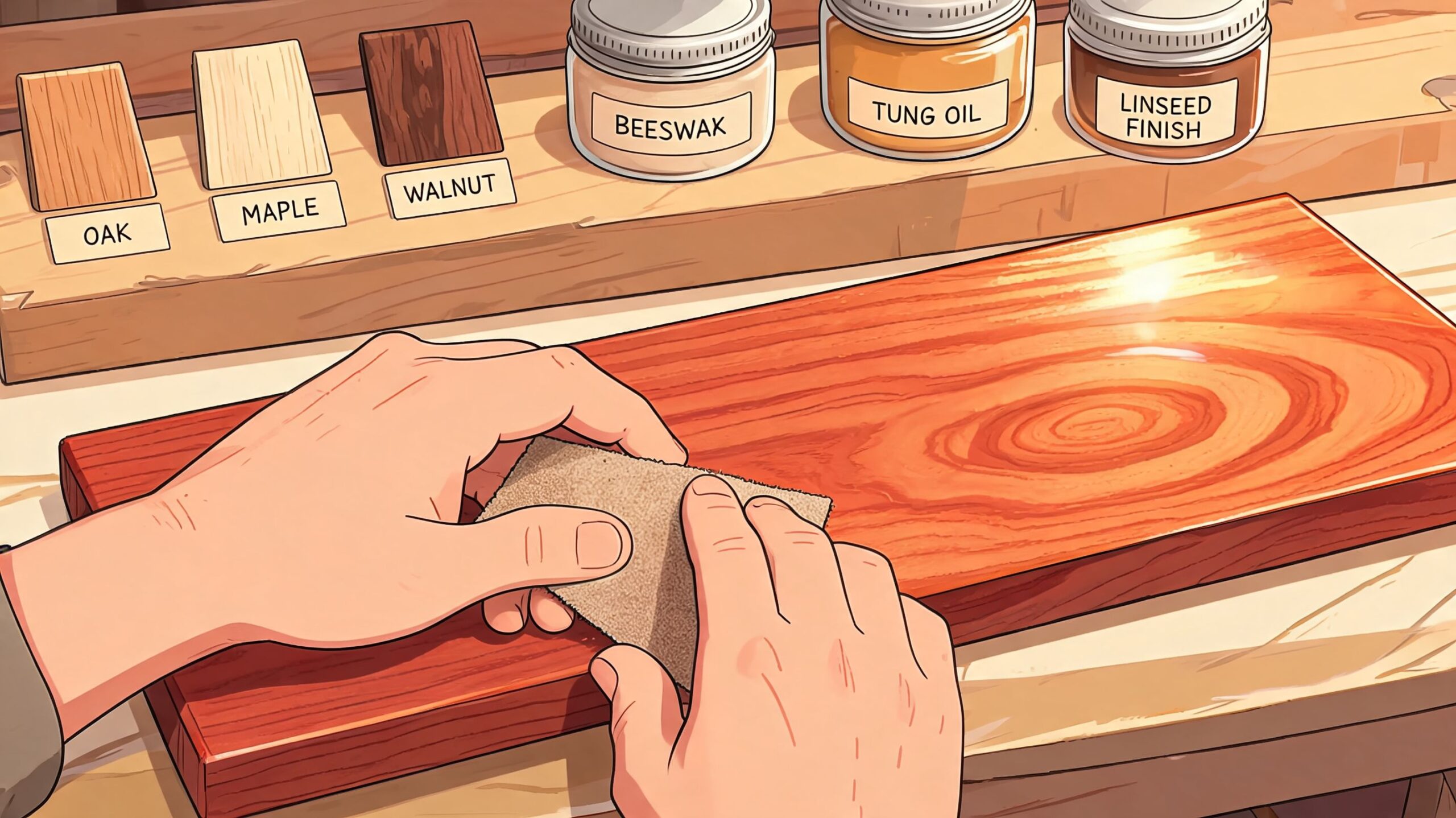
Wood choice isn’t only about color. It affects mood, grain pattern, how the piece reflects light, and how it blends with nearby flooring or cabinetry.
A few common directions shoppers lean toward:
- Oak brings visible grain and a traditional sense of structure. It works well in dining rooms and homes that want warmth and texture.
- Maple reads cleaner and quieter. Many people like it when they want a more transitional or contemporary look.
- Cherry starts rich and grows deeper with age. It’s a favorite for people who want a softer, more refined patina over time.
- Walnut gives a deeper tone and a more dramatic presence, especially in offices and statement dining pieces.
If you’re ordering online and trying to avoid disappointment, this guide on how to avoid color mismatch when ordering online helps you compare stain expectations more realistically.
Why finish matters as much as wood
Finish is where many buyers get tripped up. They focus on species and stain, but the protective top layer often determines how calm or stressful ownership feels.
Custom Amish furniture often uses a conversion varnish finish, which is significantly more durable than lacquer. It forms a hard, cross-linked polymer that resists water, household chemicals, and scratches, and it can extend finish life 2 to 3 times, according to this overview of Amish wood furniture finishes.
That matters most on surfaces people live on.
- Dining tables: Better resistance to spills, wipe-downs, and repeated contact.
- Bedroom casegoods: A stronger finish helps around lotions, water glasses, and routine cleaning.
- Home office desks: A durable top coat is useful when laptops, notebooks, and accessories stay in one place for long stretches.
A beautiful stain gets the attention. A durable finish earns its keep quietly every day.
If you’re coordinating furniture with a broader remodel or room refresh, it helps to understand the design process from the other side too. This article on successful interior designer collaboration gives a practical look at how homeowners and designers make finish, proportion, and material choices together.
Your Customization Workflow From Seating to Dining
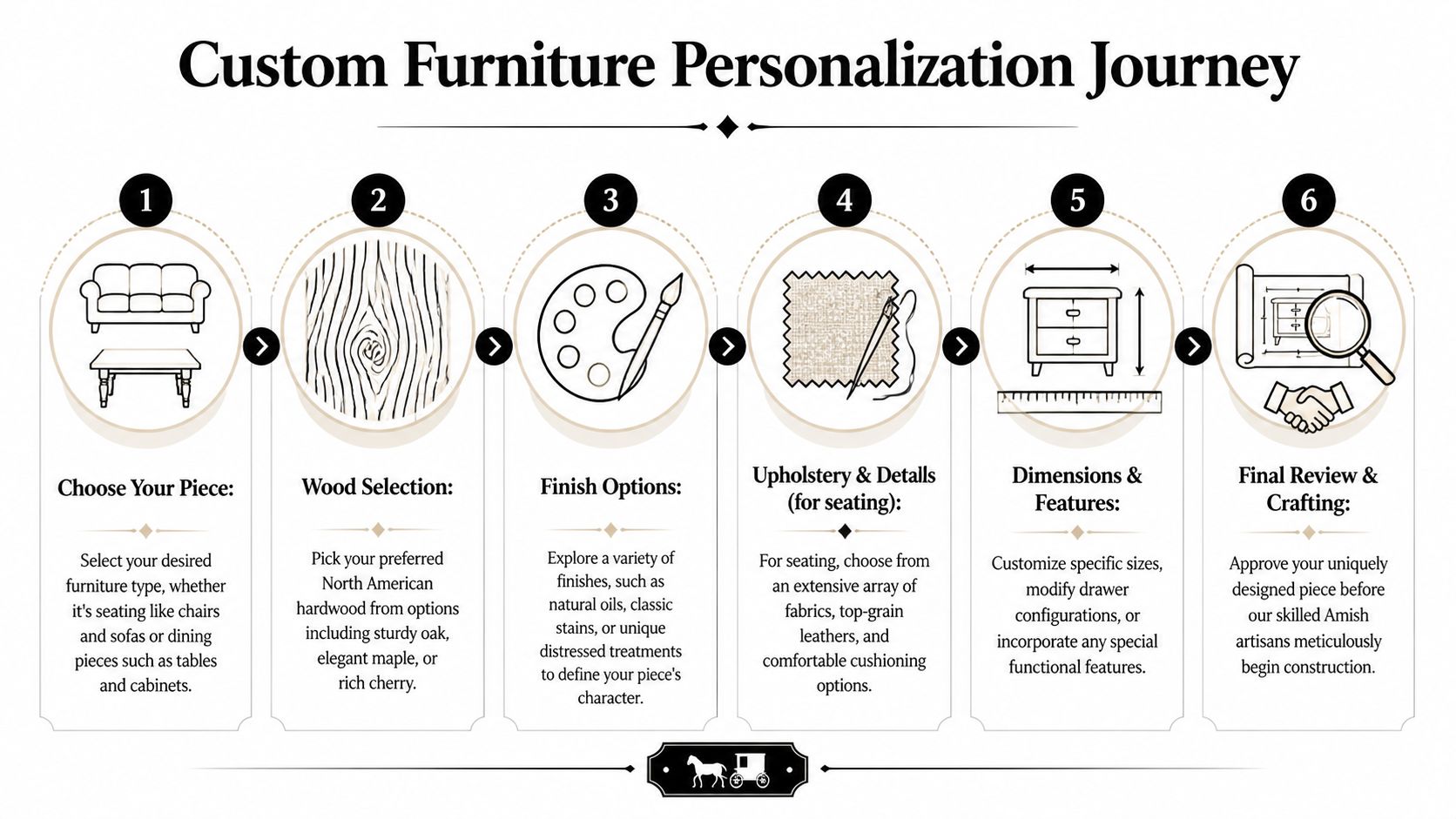
“Custom” doesn’t mean the same thing in every room. A dining set asks for one kind of decision-making. A recliner asks for another. The easiest way to think about it is by function first, then by material and appearance.
For a clear overview of the process from start to approval, this guide on getting started with a custom order helps organize the first conversation.
Dining pieces with design control
Dining is where many households first try bespoke furniture because the options are easy to see and easy to compare. With Canadel, shoppers can work through combinations of table shape, leg style, edge detail, finish tone, and chair pairing. That’s helpful when your room needs a specific visual weight or when your dining area has to balance everyday use with hosting.
Common decision points include:
Table size and shape
Round softens a square room. Rectangular often suits longer spaces and larger gatherings.Base style
A trestle can feel grounded and architectural. Four legs may give a lighter, more familiar outline.Chair mix
Matching every chair isn’t required. Many homes look better with host chairs at the ends and a simpler side chair profile elsewhere.
Comfort choices for living spaces and home office
Seating is more personal because your body becomes part of the specification, making upholstery and ergonomic design matter as much as the silhouette.
Tyner Furniture offers made-to-order options across upholstery, dining, bedroom, home office, entertainment, and outdoor spaces, including custom programs with Canadel and Stressless. In practical terms, that means shoppers can choose from hundreds of fabrics and top-grain leathers for sofas and sectionals, then shift to ergonomic sizing in recliners where Small, Medium, and Large options help match the chair to the person using it.
That’s a very different custom conversation than selecting wood and stain for a server or bookcase.
- For sofas and sectionals: Focus on seat depth, arm style, cushion feel, and fabric or leather behavior.
- For recliners: Fit matters. An ergonomic chair that’s too large or too small won’t support you the way it should.
- For home office seating: Look for posture support, movement, and materials that feel good over long work sessions.
A room feels more intentional when these choices connect. Solid wood in the dining room, custom-fit upholstery in the living room, and ergonomic seating in the office can share a visual language even when the materials differ.
How to Order Your Custom Piece Steps and Timelines
The ordering process feels much less intimidating when you know what happens in sequence. Most hesitation comes from uncertainty, not from the furniture itself. People want to know how firm the decisions need to be, when changes are possible, and how long they’ll wait.
What happens first
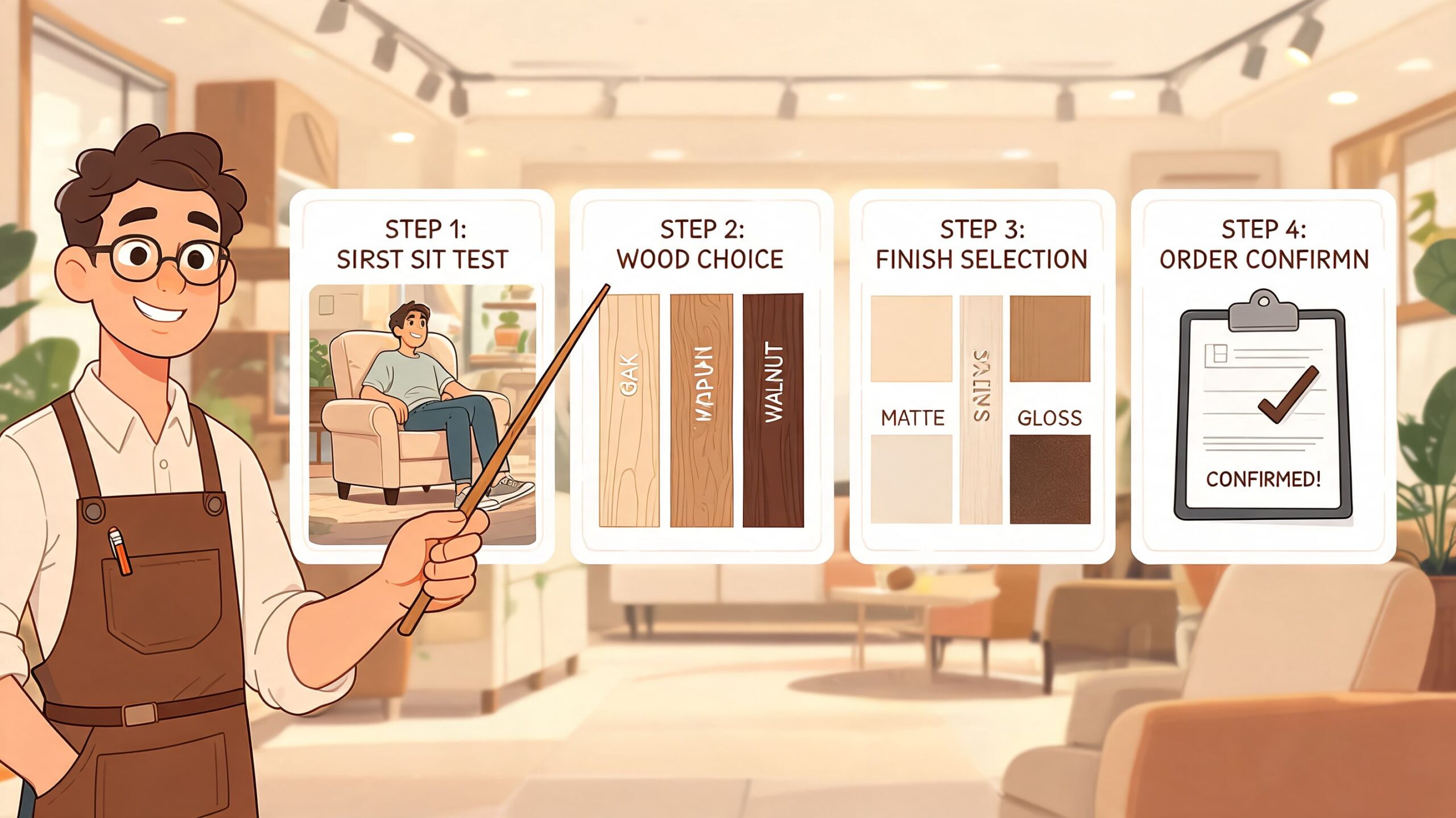
If you’re shopping in Ann Arbor, start with the physical experience. Sit in the chair. Open the drawers. Run your hand across the finish. Compare woods in person if you can. A screen can suggest color, but it can’t tell you how a seat fits or how substantial a table edge feels.
A typical order path looks like this:
Initial selection
You choose the category first: dining, bedroom, living room, home office, or another space.Specification stage
Dimensions, wood species, finish, upholstery, hardware, and special details are finalized in this stage.Order review
A careful review matters because made-to-order furniture isn’t something you want to rush through with assumptions.Delivery planning
Access, room placement, and timing all become easier when addressed before the piece arrives.
What the waiting period really means
Lead time is the part shoppers usually ask about first. For custom Amish furniture, the lead time is typically 8 to 16 weeks due to the handmade process. Some modern scheduling systems are reducing that by about 15%, but the craftsmanship and shipping from Ohio and Indiana hubs to Southeast Michigan still require patience, as described by this overview of custom wood furniture lead times.
That wait can feel long if you’re used to online checkout and warehouse shipping. But it’s also part of what you’re paying for. The piece is being built after your decisions are made, not pulled from a stack of near-matches.
Waiting is easier when you know the order is moving toward your exact dimensions, wood, and finish instead of somebody else’s compromise.
If you’re furnishing on a deadline, be honest about that early. There may be ways to prioritize certain rooms first, use in-stock pieces where it makes sense, and reserve custom ordering for the pieces that will anchor the home for the long run.
Making Heirloom Quality Accessible with Smart Financing
A common scene in the showroom goes like this. A family has found the right table, sofa table, or bedroom set. They can see it in their home. Then the practical question arrives. Can we do this now without putting pressure on the rest of the budget?
That is the core financing conversation.
Custom Amish furniture asks you to think past the checkout moment and toward the years of daily use ahead. A solid wood piece that serves your family well for decades belongs in a different category than furniture bought to get through the next few years. The price is higher at the start, but the value is spread across a much longer life.
Think in cost per year, not sticker shock
A dining table is a good example. If it becomes the place for weeknight meals, holiday gatherings, homework, and coffee with friends, you are not only buying wood and finish. You are buying years of use from a piece built to be repaired, refinished, and kept in service.
That broader view matters because this is not a fringe corner of the furniture market. As noted earlier, Amish furniture remains a well-established part of American hardwood manufacturing because buyers continue to choose durability, repairability, and made-to-order design over disposable construction.
If you are weighing whether the investment makes sense, a few questions usually bring clarity:
- Will this style still feel right in my home years from now?
- Can this piece adapt if I move or update the room around it?
- Would I rather pay for quality once than replace a weaker version later?
Those questions shift the decision from short-term price to long-term fit.
Use financing with clear eyes
Financing can make a meaningful purchase easier to manage, especially during a move, renovation, or whole-room update. It also gives you more flexibility to choose the wood, size, and construction you want instead of settling for what fits one month’s cash flow.
But financing only helps when the terms are clear.
Promotional offers can be useful, especially when paired with a local store that can walk you through your options face to face. Before signing, read the details on payoff timing, minimum payments, and deferred interest. This guide on how deferred interest affects credit explains one of the most misunderstood parts of store financing.
A good financing plan should reduce stress, not postpone it.
That is one advantage local buyers often overlook. An online listing can show a price. It cannot sit down with you, compare options room by room, help you decide which pieces to buy first, and point you toward care habits that protect the investment after delivery. For example, our guide to protecting wood furniture from scratches and stains helps you preserve the value of the piece long after the purchase is complete.
The goal is simple. Bring home furniture worth keeping, in a way that still lets your budget breathe.
Caring For Your Solid Wood Furniture for Generations
Owning solid wood furniture doesn’t have to feel delicate or high-maintenance. In fact, one of the pleasures of custom Amish furniture is that it’s meant to be used. The goal is steady care, not constant worry.
Most good habits are simple. Keep them consistent and the piece rewards you.
Simple habits that protect the piece
Daily care is usually less about special products and more about restraint.
- Use a soft damp cloth for routine cleaning, especially on durable finishes designed for everyday use.
- Dry spills promptly so moisture doesn’t sit longer than it needs to.
- Avoid harsh household chemicals unless the manufacturer specifically recommends them.
- Watch direct sunlight because long exposure can change how wood and stain read over time.
- Manage room conditions as best you can, especially if heating or cooling makes the space feel very dry or very damp.
For a deeper maintenance checklist, this guide to protecting wood furniture from scratches and stains is a practical resource to keep handy.
Wood is a natural material. It responds best to steady conditions and calm maintenance, not aggressive cleaning.
Minor marks don’t always mean damage. Some surface issues are part of life with a real material, and many are easier to address than people expect. That’s another advantage of buying furniture built to last. It invites stewardship instead of disposal.
Stewardship matters too
There’s also an environmental side to proper care. A key but often overlooked aspect of Amish furniture is its sustainability. Sourcing from responsibly managed local forests helps minimize carbon footprints, and the furniture’s 50+ year lifespan results in a lower total emission per year of use compared with mass-produced alternatives that contribute to landfill waste, as explained in this overview of green furniture practices.
That changes the meaning of maintenance a bit. Caring for the piece isn’t only about preserving appearance. It’s also about honoring the material, the labor, and the fact that well-made furniture doesn’t need to become waste just because life leaves a few marks on it.
If you’re furnishing a whole home, that long view matters across more than dining and bedroom furniture. The same mindset carries into the home office, living room, and even outdoor spaces. Choose well, care for it well, and the room settles in around it.
If you’re ready to compare wood tones in person, test comfort the right way, or sort through custom options without guesswork, visit Tyner Furniture in Ann Arbor for a sit test on South State St., or browse the online Quick Specs for special orders and start shaping a piece that fits your home for the long haul.