Craft Your Dream Custom Upholstered Bed

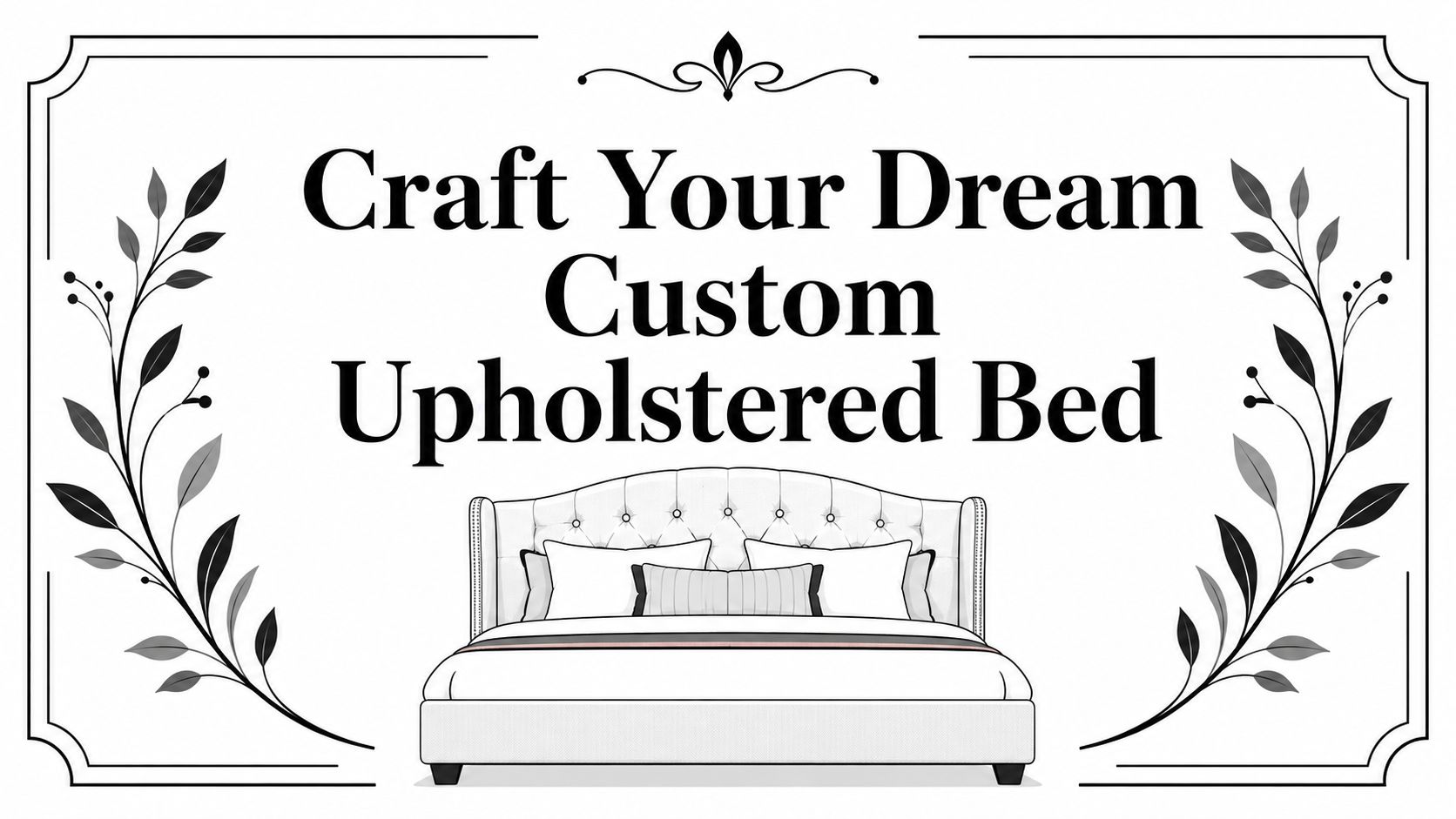
A lot of bed shopping in Ann Arbor starts the same way. A homeowner finds a shape they like, then wishes the headboard were taller, the fabric were softer, the frame were sturdier, or the proportions worked better with the room. Another shopper finds a bed that fits the space, then realizes the upholstery color fights the wall paint or the side rails sit awkwardly with the mattress height. Most retail browsing ends in “almost.”
That's why a custom upholstered bed matters. It gives the buyer a way to stop compromising and start making intentional choices about comfort, scale, structure, and style. Done well, it isn't just a bedroom purchase. It's a made-to-order piece that can suit the room now and still feel right years from now.
For households across Southeast Michigan, that kind of decision can feel heavy. A bed is large, visible, and used every day. Since 1957, local shoppers have turned to established furniture guidance because they don't just want something attractive on a showroom floor. They want to understand what's inside it, what affects longevity, and what makes one upholstered bed feel substantial while another feels short-lived.
This guide takes the educational route. It walks through how custom upholstered beds are designed, how hand-crafted construction affects value, how to measure correctly, and why the investment mindset often leads to better decisions than chasing surface-level style alone.
Table of Contents
- Your Search for the Perfect Bed Ends Here
- What Truly Makes an Upholstered Bed Custom
- The Anatomy of an Heirloom Bed Construction and Materials
- Designing Your Dream Bed Headboard and Frame Styles
- The Perfect Fit Measuring Your Room and Mattress
- From Concept to Delivery The Customization Journey
- Protecting Your Investment Care and Long-Term Value
Your Search for the Perfect Bed Ends Here
A common local scenario goes like this. A couple spends weeks scrolling through bedroom sets, visits a few stores around Southeast Michigan, and narrows the search to two beds. One has a headboard they like but feels too bulky. The other fits the room but comes in a fabric that doesn't work with the rest of the home. Both are close. Neither is right.
That's where many shoppers assume they have only two choices. Settle, or keep looking.
A custom upholstered bed offers a third option. It lets the buyer adjust the details that usually force compromise, such as scale, upholstery, trim, silhouette, and support style. Instead of trying to squeeze a standard product into a very specific room, the room and the homeowner's habits start guiding the design.
Why “almost right” usually feels wrong later
Beds aren't like accent pieces that can fade into the background. They anchor the bedroom visually and physically. If the headboard is too short, the wall can feel unfinished. If the rails are awkwardly high, the mattress can look crowded. If the fabric is delicate for a busy household, the bed may start looking tired faster than expected.
A bed can look fine on day one and still be the wrong purchase if it doesn't fit the room, the mattress, or the way the household lives.
That's why education matters more than impulse when shopping for a made-to-order piece.
A local legacy changes the conversation
Since 1957, established furniture guidance in Ann Arbor has centered on helping people buy for the long run. That mindset matters because the bedroom isn't just one category among many. It connects to how the home feels as daily life concludes.
It also helps to work with a store that understands the whole house. Many shoppers start with a bed and later coordinate across the dining room, home office, or even outdoor spaces. That broader design perspective tends to produce better results than treating each room as a disconnected project.
For the buyer who's tired of compromises, the custom route doesn't mean making things complicated. It means making the important decisions on purpose.
What Truly Makes an Upholstered Bed Custom
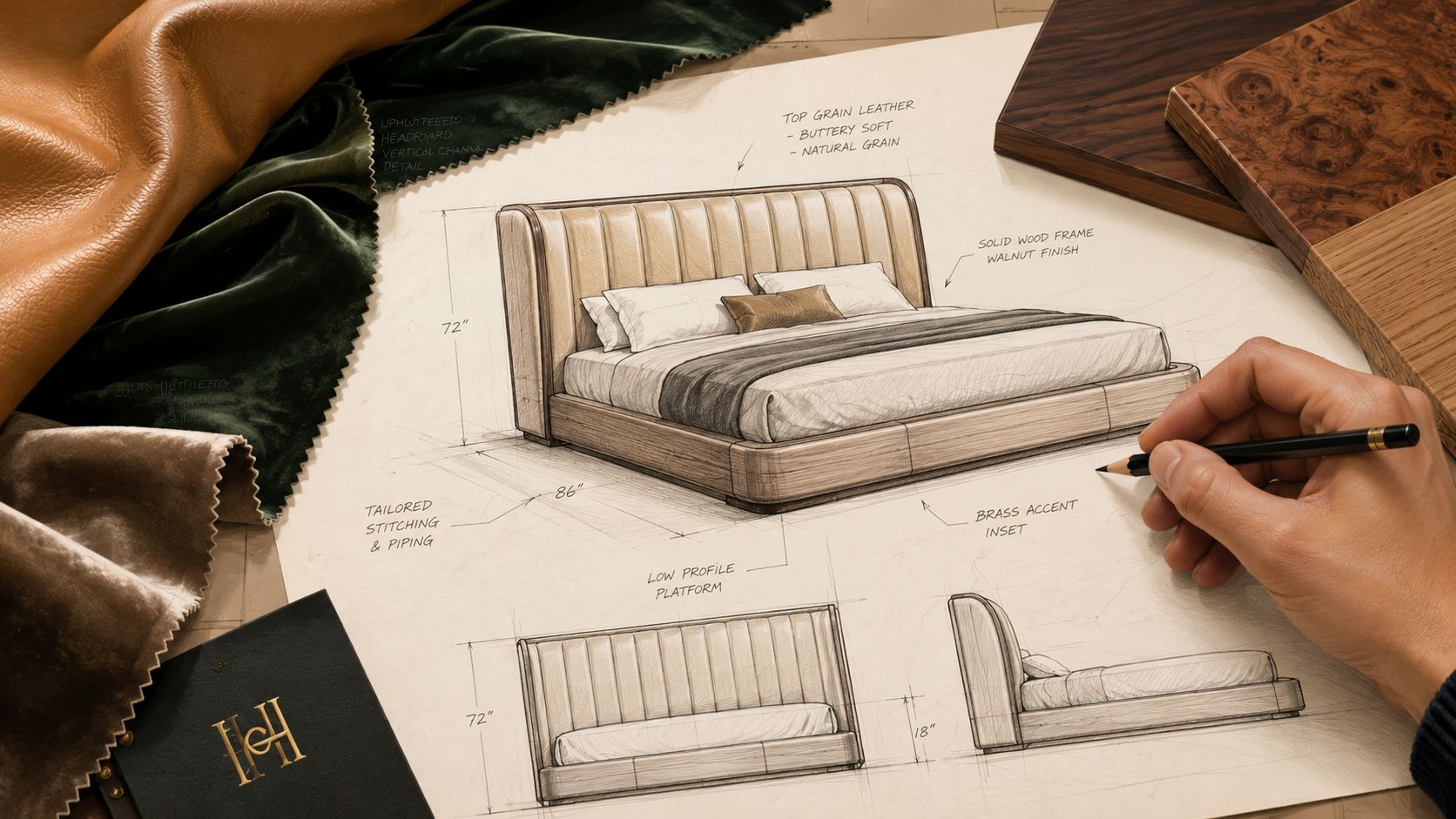
Many shoppers hear “custom” and assume it means choosing one of a few fabrics on an existing frame. That's part of it, but it's only the surface layer. A real custom upholstered bed is closer to a commissioned furniture piece than a menu option.
Custom means more than a fabric swap
In one custom bed program, buyers could combine more than 1,150 customizable looks by choosing bed size, type, style, and upholstery treatment. That same program also offered more than 800 fabrics, 150 leathers, and a dozen nailhead trim options, which shows how deep the category can go when it's built around made-to-order flexibility rather than fixed inventory (industry coverage of the custom bed program).
Those choices matter because they shape different parts of the bed:
- Scale: headboard height, bed size, and overall visual weight
- Texture: smooth woven fabric, nubby weave, velvet-like softness, or leather
- Detailing: clean edges, tufting, welt, or decorative trim
- Mood: refined, formal, relaxed, modern, or traditional
A configurable bed asks, “Which option is closest?” A custom bed asks, “What belongs in this room?”
For shoppers exploring materials before they visit a showroom, upholstery options and customization details can help clarify how broad the category really is.
The visible choices and the hidden ones
The visible features usually get the most attention, but hidden decisions often matter just as much.
A buyer may choose a tall headboard for a room with high ceilings. Another may prefer a lower, cleaner line for a more modern interior design direction. A family with pets may lean toward easier-care performance fabric. Someone furnishing a primary suite may want the quiet elegance of leather, especially if they like the buttery feel and soft sheen that develop character over time.
A useful way to think about customization is to break it into layers:
| Layer | What the buyer notices |
|---|---|
| Shape | Headboard outline, wings, height, rail profile |
| Surface | Fabric or leather, color, texture, pattern |
| Detail | Tufting, nailheads, seams, edge treatment |
| Function | Platform or foundation style, clearance, storage needs |
Practical rule: If a bed only offers surface changes, it's personalized. If it allows meaningful changes to shape, support, and finish details, it's custom.
That same mindset shows up in other categories too. Canadel dining programs, for example, are known for broad made-to-order flexibility, and Stressless focuses on ergonomic sizing and fit. The common thread is that in-stock is only the beginning. The stronger value often comes from selecting the version that matches the home and the person using it.
The Anatomy of an Heirloom Bed Construction and Materials
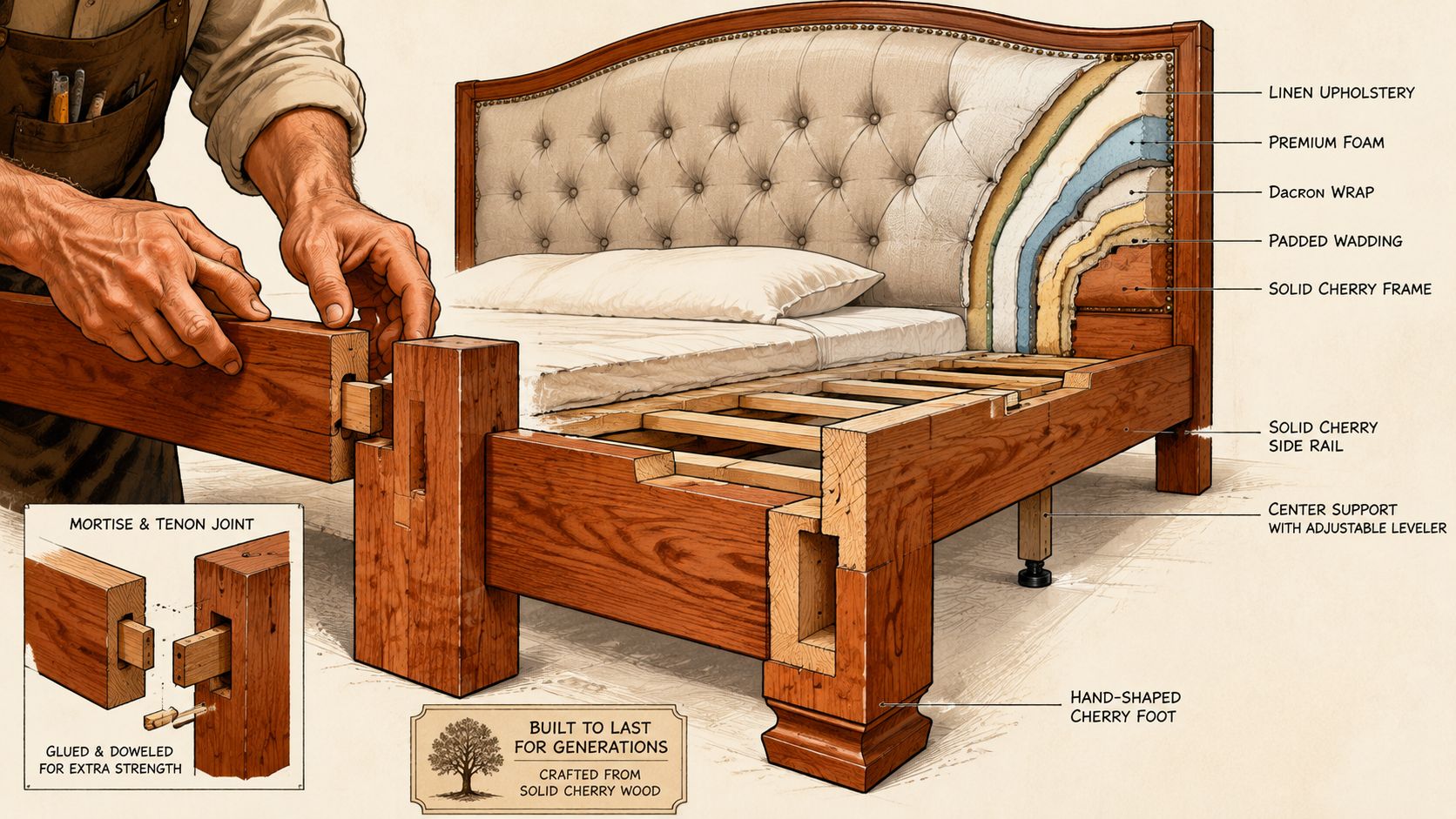
A custom upholstered bed can look impressive from across the room and still be poorly built. The upholstery hides the frame, so construction quality often gets missed until the bed starts creaking, loosening, or wearing unevenly.
What sits under the upholstery matters most
The frame is the bed's skeleton. If it's solid and well joined, the upholstery has a stable base. If it's weak, even beautiful fabric won't save it.
That's why serious bedroom furniture buyers often focus on solid wood integrity first. Amish hand-crafted beds made from solid North American hardwoods such as cherry, oak, or maple tend to feel different immediately. They carry more physical weight, hold hardware more confidently, and respond better to time-tested joinery such as mortise-and-tenon or dovetail construction.
A simple analogy helps. Veneer over a lighter core can look polished the way a printed photo frame looks polished. Solid wood feels more like a real cabinet door. There's depth to it. There's substance when a hand presses against the rail or footboard.
Shoppers who want to understand the upholstery side of that equation in more detail can review upholstery materials and how they behave over time.
Why rail support and fit affect long-term wear
One of the least glamorous parts of bed construction is also one of the most important. The internal support system has to hold the sleep set correctly, or strain shifts to the wrong places.
According to industry technical guidance on upholstered bed construction, the vertical distance from the top of the side rail to the attachment point of the internal support frame must be calculated precisely so the box spring rests securely. When that relationship is wrong, weight distribution can become uneven and upholstery can wear prematurely.
That may sound technical, but the practical effect is simple:
- Proper support helps the mattress sit correctly
- Correct rail placement reduces stress at the edges
- Stable load distribution protects both the frame and the upholstery covering
A bed doesn't fail only when it breaks. It can fail slowly through rubbing, sagging, loosening, and edge wear caused by poor internal setup.
That's one reason an heirloom mindset pays off. The visible fabric may attract the buyer first, but the unseen engineering determines whether the piece ages gracefully.
Fabric feel, leather character, and daily living
Material choice is where comfort, maintenance, and sensory experience come together.
Some households want the crisp texture of a woven upholstery fabric that adds warmth without feeling heavy. Others prefer the smoother hand of top-grain leather, especially in a bedroom with layered neutrals and rich wood tones. The right fabric grade depends less on trends and more on the room's use, the household's habits, and tolerance for upkeep.
For readers who enjoy understanding fabric hand and surface feel in plain terms, this quilter's guide to minky and Cuddle gives a helpful example of how texture changes the tactile experience of a textile. Bed upholstery uses different materials, but the comparison is useful because it trains the eye and hand to notice what “soft,” “plush,” and “smooth” mean.
A buyer weighing fabric options should consider:
- Touch: Does the surface feel cool, brushed, textured, or sleek?
- Maintenance: Will lint, pet hair, or fingerprints show easily?
- Shape retention: Does the upholstery style rely on a fabric that holds clean lines well?
- Lifestyle fit: Does the household want a formal look or a forgiving one?
Deep tufting can look handsome, but some shoppers prefer flatter surfaces because they're simpler to wipe and less fussy over time. Clean-lined upholstery often makes long-term care easier, especially in homes where comfort and practicality matter as much as style.
Designing Your Dream Bed Headboard and Frame Styles
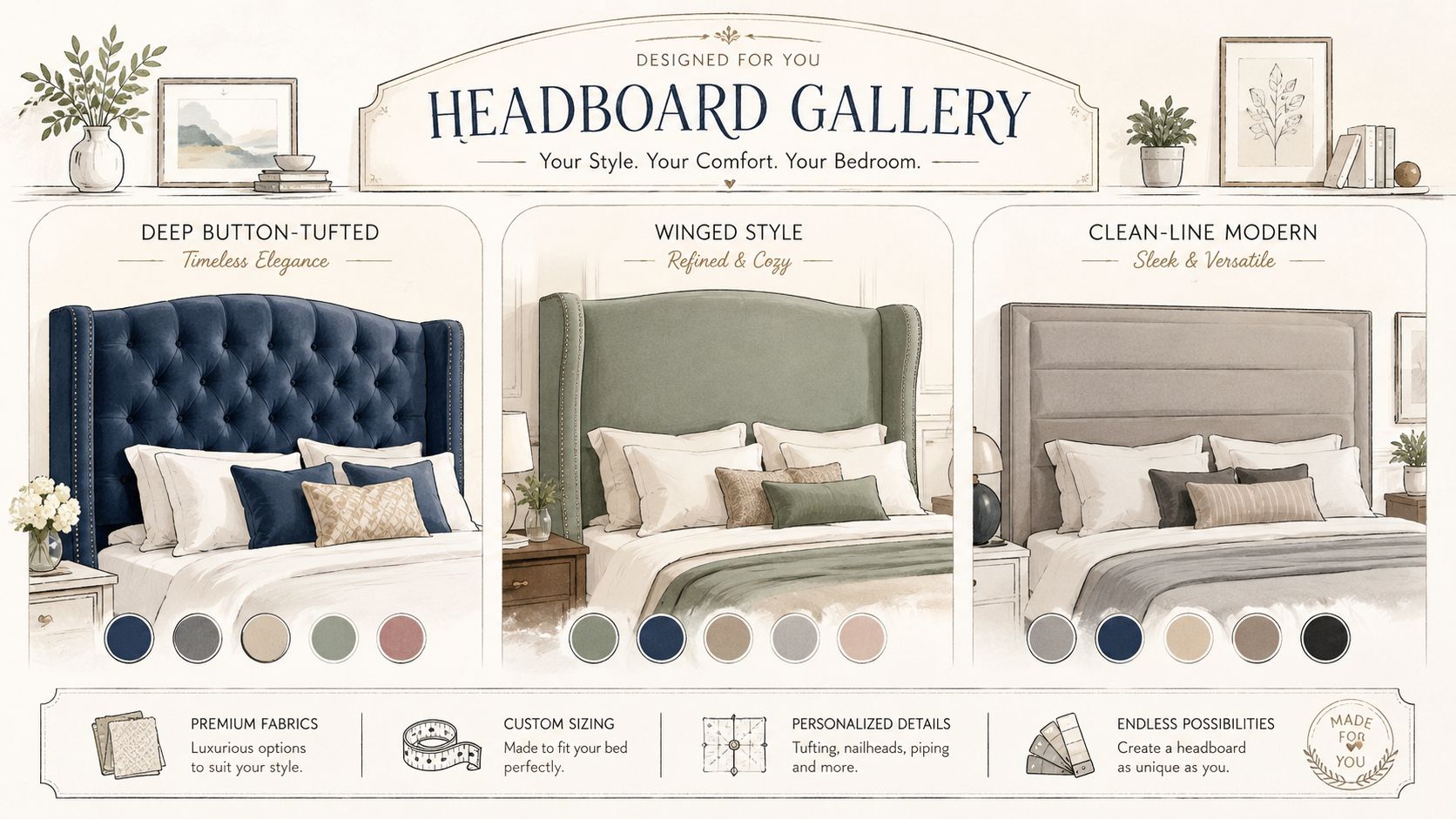
Style is where many shoppers start, and that makes sense. The headboard is usually the first thing seen when entering the bedroom. It sets the tone before anyone notices the nightstands, lamps, or bedding.
How headboard shape changes the room
A tufted headboard creates softness and formality. It catches light differently across the surface, which gives the room depth. In a traditional or layered bedroom, tufting can make the bed feel grounded and dressy.
A channel headboard looks tidier and more architectural. Vertical channels draw the eye upward. Horizontal channels feel lower and calmer. Either one works well in modern interiors where the goal is structure without fuss.
A wingback headboard adds presence. The sides frame the bed and make the sleeping area feel sheltered. In a larger primary suite, that outline can help the bed hold its own against tall windows or a broad wall.
A clean panel headboard often suits the broadest range of homes. It doesn't demand attention, but it can still feel bespoke through proportion, fabric, and edge detail.
The safest style choice isn't always the simplest one. It's the one whose scale, shape, and texture match the architecture of the room.
Frame profiles and how they live day to day
The frame style changes both appearance and use.
Some homeowners want a platform look with a lower profile and a clean silhouette. That style often feels especially good in contemporary spaces or smaller rooms where visual lightness matters. Others prefer a more traditional frame presence, where the bed has a fuller rail and a more established furniture look.
A few practical distinctions help:
- Low-profile frames tend to read modern and open
- Taller rails can feel more substantial and formal
- Storage-integrated beds support function, especially in tighter rooms
- Exposed legs create more visible floor area and a lighter visual footprint
In Ann Arbor homes with older architecture, softer upholstered shapes can balance harder trim details or historic woodwork. In newer builds, a custom headboard can keep a bedroom from feeling too flat or generic.
A shopper choosing between styles can ask three simple questions:
- What does the room need more of? Softness, height, structure, or calm.
- What will sit around the bed? Nightstands, windows, art, and lamps all change what works.
- How formal should the room feel? Relaxed bedrooms usually benefit from fewer ornate details.
That's where the showroom experience helps. Looking at a bed online gives shape and color. Seeing one in person reveals the depth of the upholstery, the way the seams are finished, and whether the headboard feels inviting when someone leans against it for evening reading.
The Perfect Fit Measuring Your Room and Mattress
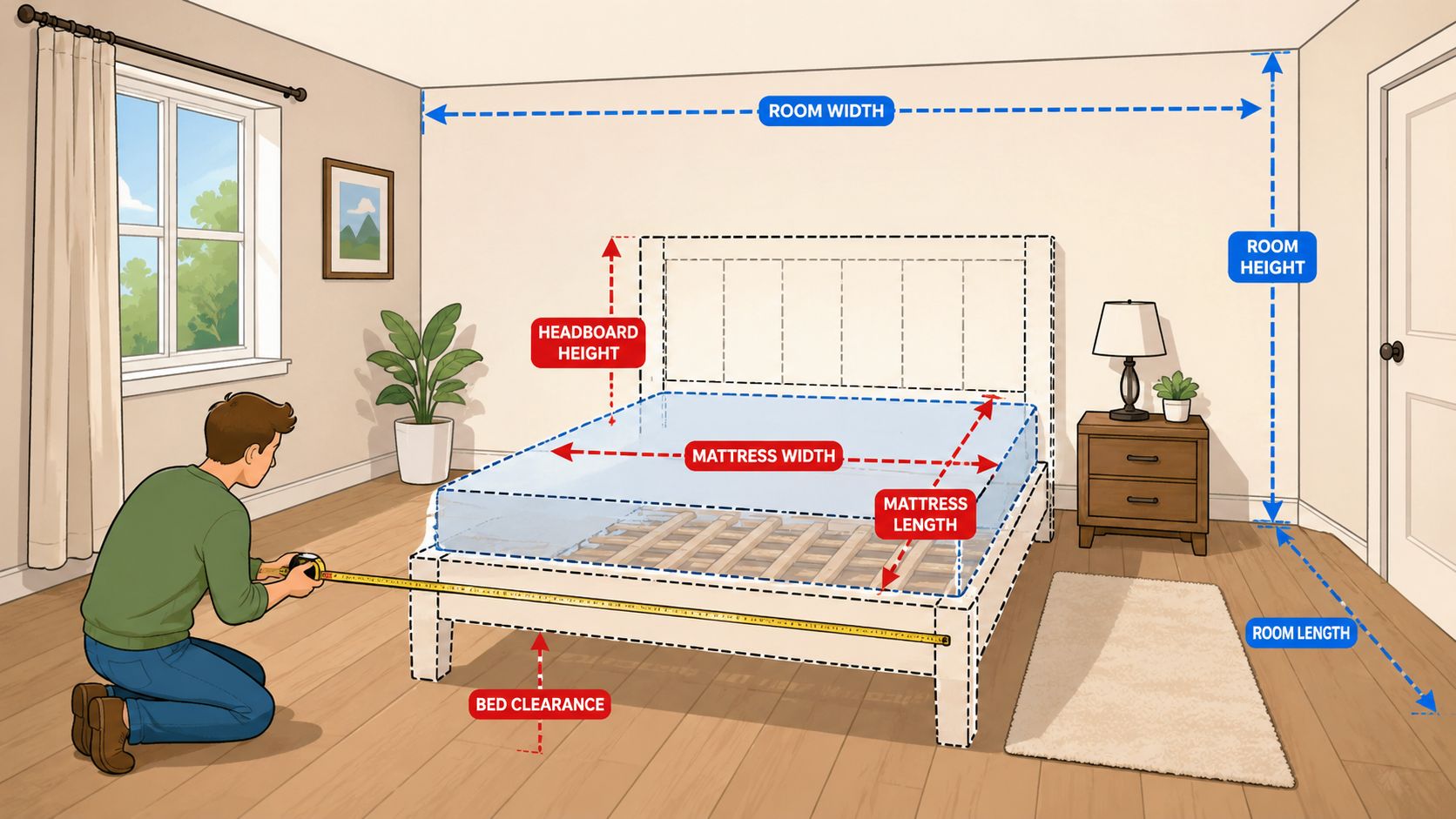
A beautiful bed that doesn't fit the room well can make even a large bedroom feel awkward. Most sizing mistakes happen because shoppers measure only where the mattress will sit and forget everything around it.
A simple room-measuring checklist
A calm measuring routine prevents a lot of delivery-day stress.
- Measure wall-to-wall space: Record the width and depth of the room where the bed will go.
- Check the approach path: Note hallways, stair turns, entry doors, and bedroom doors.
- Account for door swing: A bed can fit the room and still block a closet or entry door.
- Notice window and sill height: Tall headboards may interfere visually or physically.
- Protect walkway comfort: Leave enough room to move naturally on both sides and at the foot.
For shoppers who want a more detailed planning process, this furniture measuring guide is a practical next step.
Some households also discover that their mattress size isn't as straightforward as expected. Split configurations, oversized formats, and specialty dimensions can change bed planning. For that reason, this overview of understanding large mattress sizes can be a useful companion before finalizing a frame.
Matching the frame to the mattress setup
Not every custom upholstered bed works the same way with every sleep system. Some need a foundation. Some are built for a platform setup. Some are designed so the mattress sits deeper within the rail line, while others create a lighter, more floating look.
A few questions help clear up confusion:
| Question | Why it matters |
|---|---|
| Is a box spring or foundation required? | It affects overall bed height and support setup |
| How high does the mattress sit? | It changes ease of entry and the bed's visual balance |
| Does the bedding cover the rails correctly? | It affects whether the finished bed looks tailored or crowded |
Pro tip: Measure the full sleep stack, not just the mattress. Mattress height, foundation height, and rail design all work together.
That point is especially important in bedrooms where scale is tight. A bed that sits too high can dominate a room. One that sits too low may look underdressed against a taller headboard.
The simplest approach is to treat the bed as a full composition rather than a single object. Headboard height, rail depth, mattress thickness, and room size should all support each other.
From Concept to Delivery The Customization Journey
A custom bed order feels easier once the process is visible. Most buyers aren't worried about choosing a fabric swatch. They're worried about making a costly mistake. A good process reduces that anxiety by turning the decision into a sequence of manageable steps.
How a custom order usually unfolds
The journey often begins with a room, not a product. The shopper brings in measurements, photos, finish samples, or even just a clear sense that the current bedroom doesn't feel complete. From there, the key decisions usually fall into an understandable order:
- Start with size and silhouette. The room often decides whether the bed should feel airy, structured, dramatic, or understated.
- Choose the upholstery material. Fabric and leather change both mood and maintenance.
- Refine the details. Headboard height, seam treatment, trim, and leg style shape the final personality.
- Confirm the support setup. Mattress compatibility matters as much as appearance.
- Place the made-to-order request. Hand-crafted furniture takes time because it isn't pulled from a warehouse shelf.
For shoppers who want to see how custom ordering is typically organized, this guide to getting started with custom order furniture offers a helpful overview.
One local option for that process is Tyner Furniture, where shoppers can review custom-order upholstery and broader whole-home selections in the Ann Arbor showroom. That matters for households coordinating more than one room, since the same visit may include bedroom planning, dining customization through Canadel, or ergonomic seating through Stressless.
Why the price range varies
Price becomes less mysterious when the buyer understands what changes it.
According to this upholstered versus wood bed pricing guide, budget upholstered bed frames run about $500 to $700, while luxury and custom upholstered beds typically fall around $1,500 to $2,000+. The same guide places budget wood bed frames at about $450 to $550 and luxury wood beds at about $800 to $1,000, which helps show that upholstery usually carries an added comfort-and-style premium.
That premium generally reflects choices such as:
- Material upgrades: more refined fabrics, leathers, cushioning, or trim
- Construction quality: stronger internal framing and better support design
- Customization depth: more options usually mean more custom-made production
- Scale and complexity: larger sizes and more intricate silhouettes require more labor
That doesn't mean every shopper must jump to the highest tier. It means the bed should be evaluated as an investment, not just a line-item expense. Financing can also help spread the cost of a made-to-order purchase into manageable payments, which is why many households use special financing when they're furnishing a primary bedroom with a long time horizon in mind.
A white-glove delivery experience matters too. A large upholstered bed isn't just dropped at the curb. The final impression depends on careful placement, assembly, and fit within the room.
Protecting Your Investment Care and Long-Term Value
A custom upholstered bed should look better settled into a home than it did on delivery day. That usually happens when the materials suit the household and the owner follows a few steady care habits.
Care habits that protect appearance
Most upholstery maintenance is simple, but consistency matters.
- Vacuum gently: Use a soft brush attachment to remove dust from seams and folds.
- Rotate attention areas: Check the headboard and rails where hands, hair products, and bedding rub most often.
- Respond to spills quickly: Blot rather than scrub, especially on textured fabrics.
- Keep hardware monitored: If anything loosens, tighten it before movement creates wear.
- Shield from harsh sun when possible: Light can change how some fabrics and finishes age.
For seasonal reminders and general upkeep habits, this furniture maintenance checklist is a useful reference.
A hand-crafted bed doesn't need fussy treatment. It needs steady, sensible care and a structure worth maintaining.
Why long-term value changes the buying decision
The strongest argument for a custom upholstered bed often appears years after purchase.
For households planning a long-term home, true cost of ownership matters. One verified industry point is especially telling: mass-produced veneer frames often need replacement within 5 to 7 years, while Amish-crafted solid wood beds are associated with generational longevity ([National Association of Home Builders, 2025, as provided in the verified brief]). That gap changes the conversation from “What does it cost today?” to “What will this decision feel like over time?”
That's the investment mindset in plain language:
- A lower upfront price can still produce a poor value if replacement comes early.
- A stronger frame supports better daily use and often preserves the upholstery longer.
- A made-to-order bed can suit a forever home more naturally than a one-size-fits-most option.
The same philosophy applies across the home, whether someone is choosing bedroom furniture, a dining set, a home office desk, or pieces for outdoor spaces. Buyers who prioritize craftsmanship, durable materials, and thoughtful design often end up with rooms that feel calmer and more coherent because they weren't assembled around short-term compromises.
For anyone in Ann Arbor or across Southeast Michigan weighing a custom upholstered bed, the next useful step is simple: visit Tyner Furniture for a sit test, touch the fabrics and leathers in person, and compare made-to-order options with the room in mind. Shoppers who prefer to begin from home can also browse online Quick Specs for special orders, then bring measurements and ideas into the South State St. showroom. Special Financing and the Low Price Promise can also make a long-term furniture investment easier to plan.