Tyner: Mission Style Furniture Near Me in Ann Arbor

The search usually starts the same way. A homeowner in Ann Arbor opens a dozen tabs for Mission style furniture near me, clicks through a mix of marketplace listings, broad furniture directories, and polished product photos, then realizes none of them answer the core question. Is this piece genuinely well made, or does it only look the part on a screen?
That uncertainty matters more with Mission furniture than with many other styles. These pieces are supposed to feel grounded, substantial, and permanent. The wrong version looks flat, thin, and generic. The right version brings the quiet confidence of solid wood, clean joinery, and proportions that still feel right years later.
For shoppers in Southeast Michigan, the challenge isn't just finding a Mission silhouette. It's finding a piece with honest construction, a finish that will age gracefully, and a store environment where someone can compare options side by side without guesswork. That's where local knowledge helps.
Ann Arbor families have been furnishing homes through changing trends for generations, and a business that has served the community since 1957 tends to see the same pattern repeat. People often regret buying what looked convenient. They rarely regret buying something built to stay.
Table of Contents
- Your Search for Timeless Furniture Ends Here
- What Defines Authentic Mission Style Furniture
- How to Identify Heirloom Quality Craftsmanship
- Pro Tips for Shopping in Person
- Finding Authentic Mission Pieces Near Ann Arbor
- Making Your Perfect Piece a Reality
- Your Ann Arbor Mission Furniture Shopping Checklist
Your Search for Timeless Furniture Ends Here
A lot of shoppers aren't looking for “more furniture.” They're looking for the piece that ends the cycle of replacing furniture.
That usually happens after living with something that looked acceptable online but felt disappointing in person. The table wobbled. The chair was lighter than expected. The finish looked dark in a product photo, then revealed a flat, lifeless surface under real light. Mission style furniture near me becomes the next search because the style promises the opposite of all that. It suggests order, utility, and permanence.
Mission furniture works for buyers who want a room to feel settled. In a dining room, that means a table with visual weight and clean edges. In a bedroom, it means a bed that feels architectural instead of decorative. In a living room, it often means wood-framed seating, case pieces, and lamps or upholstery that let the grain and structure do the talking.
The appeal isn't flash. It's trust. A Mission piece should look like it was built on purpose.
That's one reason the style continues to resonate in Southeast Michigan homes, from older Craftsman interiors to newer houses that need warmth and definition. It doesn't fight the room. It anchors it.
A store with a local legacy can make that search less overwhelming. Shoppers don't just need inventory. They need guidance on what holds up, what to inspect, and where customization is worth the wait. That kind of practical help matters whether someone is furnishing a dining room, bedroom, home office, or even coordinating surrounding spaces so the whole home feels coherent.
What Defines Authentic Mission Style Furniture
Mission furniture has a distinct presence. Even across a room, it tends to read as calm, balanced, and honest.
Its roots go back to the late nineteenth century. A chair made by A.J. Forbes around 1894 for San Francisco's Swedenborgian Church is often cited as a key starting point, and by 1898 New York retailers were already selling full lines, showing how quickly the style moved from one influential piece into a lasting American furniture category, as outlined in this history of Mission style furniture.
The visual language of Mission design
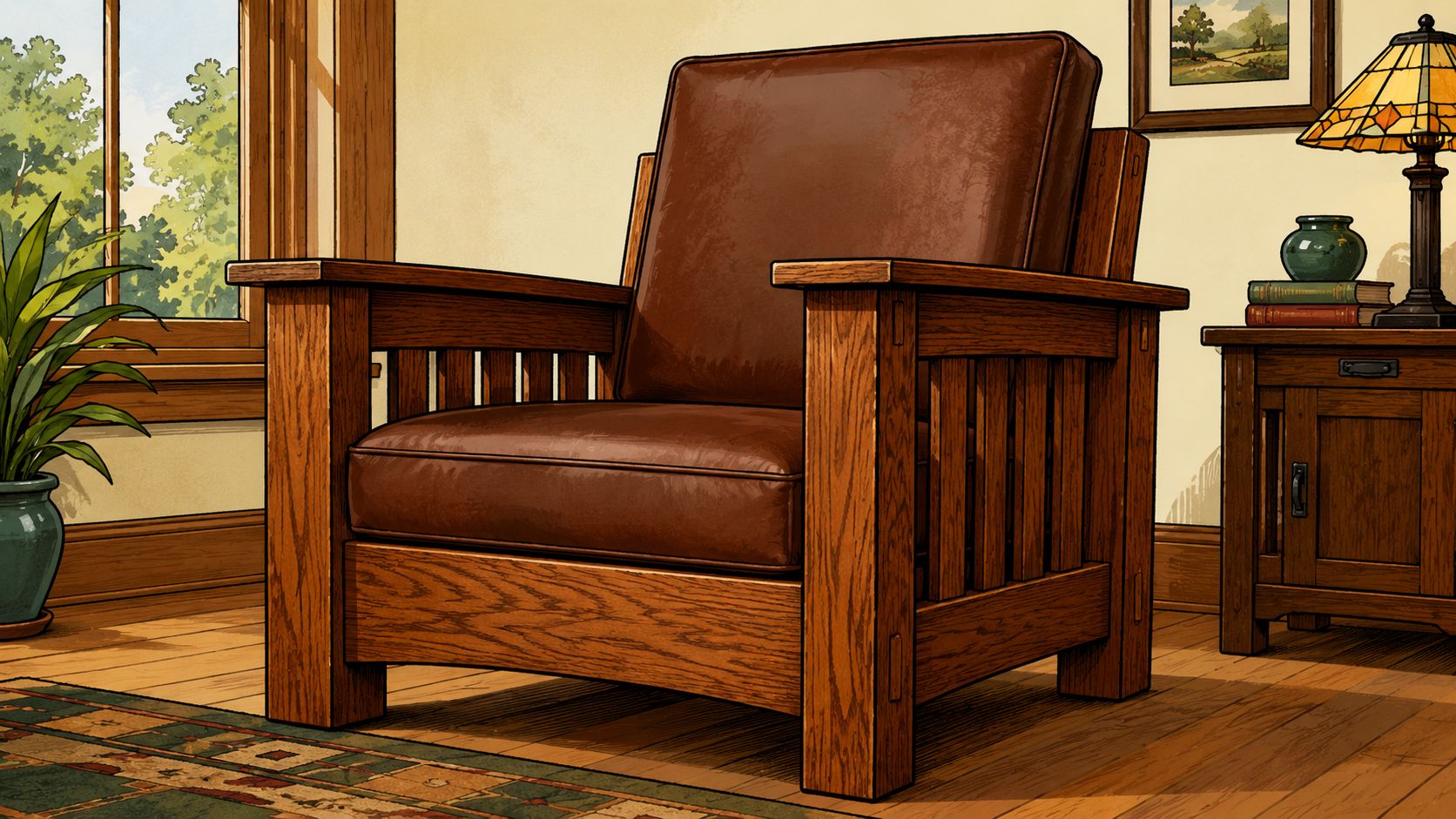
The core features are easy to recognize once a shopper knows what to watch for:
- Straight lines that create a sense of order
- Flat panels that let the wood grain stay visible
- Vertical slats that add rhythm without clutter
- Minimal ornamentation so form and material take center stage
The style doesn't rely on carving or fussiness. It relies on proportion. A well-made Mission chair looks sturdy before anyone touches it. A sideboard should feel composed, not busy. That restraint is a big part of why the style still works in both traditional and more pared-back interiors.
For buyers comparing wood furniture across rooms, it also helps to understand how species change the look. This guide to different cabinet wood options gives useful context on how grain, tone, and hardness influence the final appearance.
Why the wood matters so much
Mission design depends on wood doing visible work. Grain isn't hidden. It's featured. That's why the wood choice changes the entire impression of the piece.
Traditionally, oak carries the look many people expect. The surface should feel substantial, and the finish usually lands in a medium-to-dark range that adds depth rather than shine. When the material is right, light catches the grain instead of bouncing off a plastic-looking topcoat.
Buyers who want to see how this style translates into American-made case goods, dining, and bedroom furniture can browse examples of solid wood furniture made in America. It helps to compare profiles, panel layouts, and wood character before walking a showroom.
A genuine Mission piece doesn't ask the finish to do all the work. The wood itself should carry the design.
How to Identify Heirloom Quality Craftsmanship
Plenty of furniture borrows Mission styling. Far fewer pieces deliver Mission construction.
That difference matters because this is a style people often buy for dining rooms, bedrooms, and living spaces where the furniture gets daily use. A chair that only looks good from the front won't age well. A table with weak joinery won't become an heirloom because the profile looks traditional.
Start with the structure
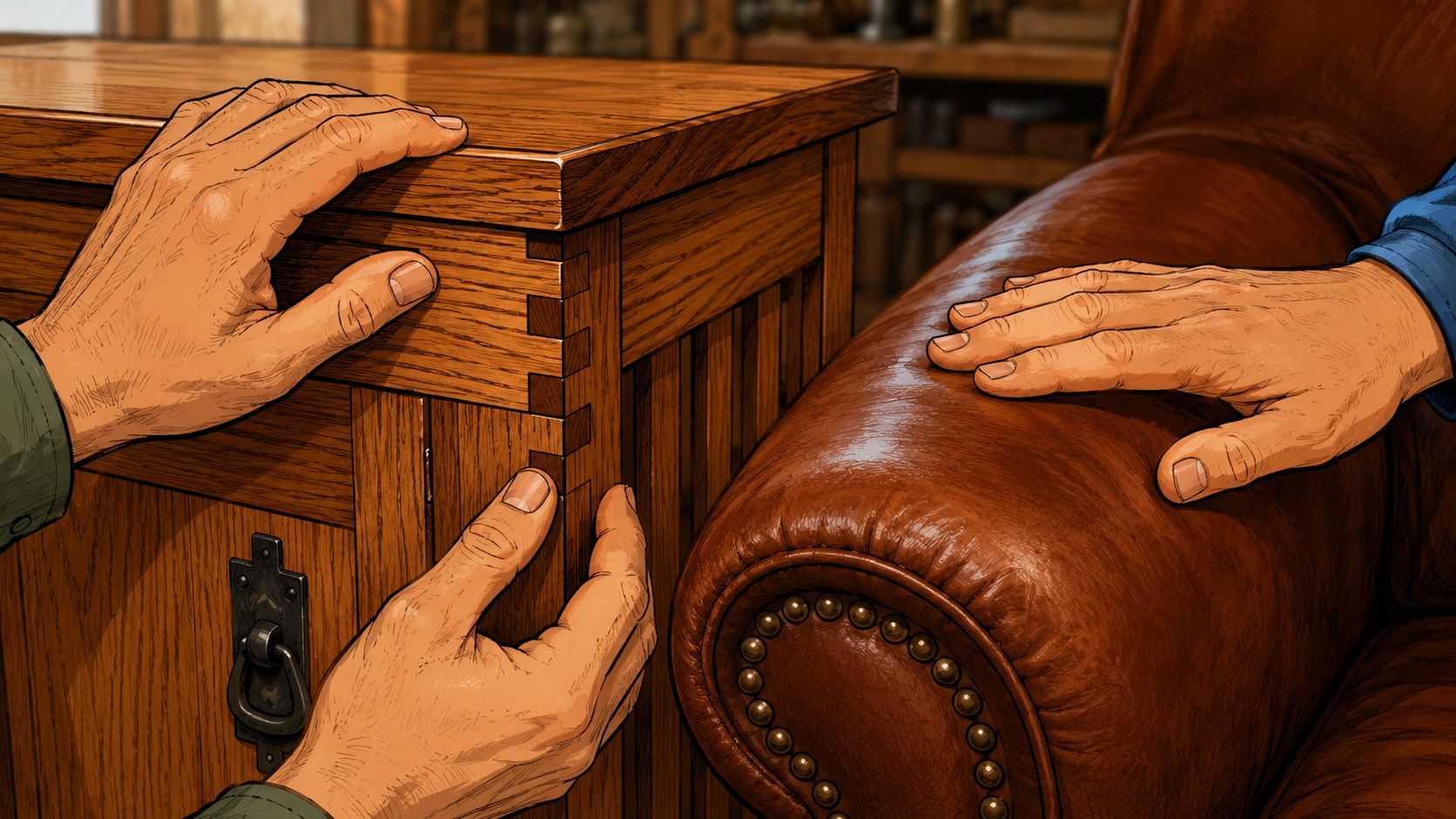
The strongest structural cue is joinery. Mission furniture is defined by straight lines, flat panels, and exposed mortise-and-tenon joinery, with quarter-sawn white oak as the traditional benchmark because its figure and stability support both durability and visual character, as described in this overview of Mission construction details.
A shopper inspecting a piece in person should focus on these areas first:
- Leg-to-apron connections: These should feel integrated and deliberate, not loosely attached.
- Chair arms and back slats: They should feel rigid under pressure, without flexing or twisting.
- Drawer and door alignment: Gaps should look consistent, and movement should feel controlled.
- Weight and balance: Solid wood furniture usually has a reassuring heft. It shouldn't feel hollow.
For large pieces, moving and placing them safely matters too. Buyers planning delivery room by room may find this practical guide on professional advice on moving heavy furniture useful before a new dining cabinet, desk, or bed arrives.
Look past the surface
Finish can hide shortcuts. That's why inspection should go beyond color.
A buyer's hand can tell a lot. Run fingers along the edge of a table. Open a drawer. Look under the top. If the underside is rough, the back panel feels flimsy, or the wood pattern repeats in a suspiciously uniform way, the piece may be relying on appearance more than integrity.
Practical rule: If a piece is marketed as heirloom quality, it should still look well made in the places most people never photograph.
That's where hand-crafted Amish furniture tends to separate itself from mass-produced alternatives. Solid North American hardwood, time-honored joinery, and clean internal construction are easier to trust over the long term than pieces assembled around thin panels and cosmetic surfaces. For shoppers evaluating upholstered seating alongside wood case goods, collections such as Hickory Craft furniture are also useful for comparing how premium materials and build quality show up in the details.
Cost per year changes the conversation
Price matters, but so does lifespan.
A lower upfront cost can look attractive until the piece loosens, scratches easily, or stops fitting the room because it never felt substantial to begin with. Heirloom-grade furniture asks for more thought at the start, but it often gives back through durability, refinishability, and the ability to move from one home to the next without feeling disposable.
That's the practical definition of value. Not just what a piece costs today, but how well it serves the room for years.
Pro Tips for Shopping in Person
The showroom visit is where Mission style becomes real. Photos can suggest proportion. They can't tell a shopper how a chair sits, how a finish catches afternoon light, or whether a drawer feels solid in the hand.
Authoritative style guidance also points buyers toward the same practical cues: authentic Mission pieces are usually solid hardwood, often oak, with a medium-to-dark finish, minimal ornamentation, and visible craftsmanship details rather than veneer-driven shortcuts, as noted in this overview of timeless Mission furniture style.
Before leaving home
A few minutes of preparation saves a lot of frustration later.
- Measure the room first: Note width, depth, and any tight pathways.
- Photograph the space: Include floors, wall color, windows, and nearby wood tones.
- List the must-haves: Storage, seating comfort, extension leaves, desk function, or bedside scale.
- Know the surrounding rooms: Mission furniture often works best when the home has some visual continuity.
Shoppers who want a broader framework before visiting a store can review these furniture shopping dos and don'ts.
What to do on the showroom floor
Once inside, slow down. Mission furniture rewards close inspection.
- Do the sit test: Wood-framed chairs and leather seating should support the body naturally, not push it into a rigid posture.
- Touch the finish: It should feel smooth and intentional, with depth that lets the grain remain visible.
- Open everything: Drawers, doors, extension mechanisms, and cabinet lids should operate cleanly.
- Check from the side and back: A strong piece usually looks resolved from every angle, not just the front.
Bring room photos and compare them against the wood tones in person. Mission furniture can read warmer, deeper, or heavier depending on natural light at home.
This is also the stage to ask direct questions. Is the piece solid wood throughout? Which wood species is used? Is the item in stock, or built to order? Can the finish be changed? A good salesperson won't treat those questions like obstacles. They should treat them like signs of a careful buyer.
Finding Authentic Mission Pieces Near Ann Arbor
“Near me” sounds simple, but for furniture it usually means more than distance. It means the ability to verify quality in person, compare construction, and work with people who can explain what's in front of the customer without turning the process into a guessing game.
That local piece matters because Mission furniture availability tends to follow retail networks focused on solid-wood and Amish-made goods. One California directory alone lists 20 Amish furniture stores, including several retailers promoting Mission-style products across major regions, which illustrates how durable demand supports a real showroom network rather than a narrow antique niche, according to this listing of Amish furniture stores in California.
What a good local showroom should offer
For Ann Arbor and Southeast Michigan shoppers, that points toward a dedicated showroom rather than anonymous listings. The right showroom gives people a chance to compare oak tones, examine joinery, and test scale across multiple categories.
A worthwhile visit should offer:
- Room-to-room selection: Dining, bedroom, living room, home office, and even outdoor spaces should feel like part of a broader design conversation.
- Knowledgeable guidance: Staff should be able to discuss wood species, finish differences, and practical care.
- A no-pressure pace: Mission furniture is rarely an impulse purchase. Buyers need time to look, sit, open, compare, and think.
A local resource for buyers interested in this category is Amish furniture in Ann Arbor, where solid-wood construction and hand-crafted design are central to the conversation.
Why local beats anonymous listings
A broad online search often mixes new, used, custom, and marketplace inventory into one stream. That makes it hard to evaluate provenance, consistency, and long-term value.
A dedicated local showroom solves that in a practical way. It gives shoppers the chance to see whether the stain feels rich or muddy, whether the slats are well spaced, whether the proportions suit a bungalow, a newer build, or a downtown condo. It also creates room for smarter questions about delivery, lead time, and how one Mission piece will relate to the rest of the home.
That's where a long local legacy matters. A business that has served Ann Arbor since 1957 has likely helped families furnish first homes, forever homes, guest rooms, studies, and patios through decades of changing taste. That kind of continuity doesn't replace inspection. It makes inspection easier.
Making Your Perfect Piece a Reality
A common sticking point appears after a shopper finds the right style. The floor model is close, but not exact. The wood tone is slightly off. The dimensions are almost right. The chair is comfortable, but the upholstery doesn't fit the room.
That's where the decision begins. Existing local search results often leave buyers without a clear framework for balancing availability, lead time, and customization, even though those tradeoffs shape whether the purchase feels merely acceptable or truly right over the long term, as discussed in this look at the gap in local furniture search guidance.
In stock versus made to order
In-stock furniture has one obvious advantage. It shortens the wait. For some rooms, that's the right answer.
Made-to-order furniture offers a different kind of value. It lets buyers adjust the piece to the home rather than adjusting the home to the piece. With Mission-adjacent solid wood furniture, that often means choosing species, stain, scale, or storage details that make the room feel settled instead of improvised.
A practical way to compare the two paths:
| Purchase path | What works well | What to watch |
|---|---|---|
| In-stock | Faster placement, easier immediate decision-making, useful for urgent room needs | Limited finish or size flexibility |
| Made-to-order | Better fit for long-term homes, more control over wood and finish, stronger design cohesion | Requires patience and clearer planning |
Customization, comfort, and budget planning
One local option can be helpful to understand. Tyner Furniture offers custom order programs that go beyond the showroom floor, including hand-crafted Amish solid wood furniture, bespoke dining options through Canadel, and ergonomic seating through Stressless with size-based fitting. That matters because “in stock” doesn't have to be the end of the conversation.
The smartest furniture purchase is often the one that solves the room once, not the one that fills it fastest.
Customization isn't only about wood furniture, either. A Mission dining room might pair with a made-to-order table finish, while the surrounding seating, accent pieces, or recliner are chosen for comfort and proportion. For homeowners working through color planning, this guide to designing brown and blue interiors is a useful reference when balancing wood tones with upholstery, drapery, and wall color.
Budget planning belongs in the same conversation. Special financing can make a higher-quality choice more manageable month to month, and a Low Price Promise can reduce the fear that better craftsmanship automatically means poor value. Buyers exploring custom paths can start with these custom order planning details, then decide whether the room calls for quick placement or a more personalized result.
Your Ann Arbor Mission Furniture Shopping Checklist
Mission style furniture near me becomes a much easier search once the shopper knows what to verify in person. The checklist below keeps the visit focused and practical.
- Measure the room: Bring dimensions for the furniture wall, traffic paths, and nearby openings.
- Bring real photos: Include flooring, trim, existing wood pieces, and the light the room gets during the day.
- Inspect the joinery: Check leg connections, slats, drawer fit, and the underside of tables.
- Feel the finish: It should reveal wood grain, not bury it under a heavy-looking surface.
- Check the material: Ask whether the piece is solid hardwood and where veneer may or may not be used.
- Do a sit test: Dining chairs, office chairs, and leather seating should feel supportive, not stiff for the sake of style.
- Ask about customization: Confirm whether wood species, finish, size, fabrics, or configurations can be changed.
- Discuss timing clearly: Find out whether the piece is available now or made to order.
- Think in cost per year: A better-built piece often earns its keep over a much longer life.
- Look beyond one room: Mission furniture often works best when dining, bedroom, home office, and living spaces feel connected.
A careful checklist helps shoppers avoid common mistakes. It also makes the showroom visit calmer, because the decision stops being about vague impressions and starts being about visible proof.
For shoppers ready to move from searching to verifying, Tyner Furniture offers a practical next step. Visit the Ann Arbor showroom on South State St. for a sit test, compare solid wood construction in person, and review options for dining rooms, bedrooms, home offices, and outdoor spaces. For special orders, browse the online Quick Specs and use them to narrow down wood, finish, and configuration choices before the visit.