Your Panel Bed King Buyer’s Guide

A lot of shoppers reach the same point before buying a new bed. The old frame squeaks, the room feels unfinished, and the mattress deserves something better than a temporary base that never looked quite right. A king bed often enters the conversation because comfort matters, but the frame style is what determines whether the room feels grounded or crowded, refined or forgettable.
That's where a panel bed king earns its reputation. It has the familiar structure many people grew up with, yet it can still look refined, architectural, and current. For homeowners and renters around Ann Arbor and Southeast Michigan, the main challenge usually isn't finding a king bed. It's finding one with the right footprint, the right material integrity, and the right long-term value.
Since 1957, local furniture guidance has mattered because furniture isn't just décor. It's daily use, nightly rest, and a purchase that should still make sense years from now. For anyone sorting through styles, materials, and room measurements, a helpful place to start is this guide on how to select the perfect bedroom furniture.
Table of Contents
- Starting Your Search for the Perfect Bed
- What Defines a King Panel Bed
- The Solid Wood Difference Heirloom Quality vs Fast Furniture
- Measuring Your Space for a King Panel Bed
- Exploring Styles and Bespoke Customization
- Panel Beds Versus Platform and Sleigh Beds
- Making Your Investment and Bringing It Home
Starting Your Search for the Perfect Bed
A bed is the visual anchor of the bedroom, and in a primary suite it usually becomes the piece everything else answers to. Nightstands, rugs, lighting, wall art, and even traffic flow all work around it. That's why a panel bed king appeals to so many shoppers. It feels complete.
The style also carries a sense of permanence. A panel bed has shape, edges, and presence. It doesn't disappear into the room. For many households, that's exactly the point. They want a bed that looks substantial, supports a full mattress set properly, and still feels appropriate years from now when paint colors and bedding change.
What often gets overlooked at the start is the difference between buying a look and buying a structure. A good-looking photo can hide weak materials, light hardware, and shortcuts in construction. A well-made bed earns its value later, when it stays tight, stable, and visually relevant instead of loosening up after repeated moves or seasonal changes in the home.
The first decisions that actually matter
Before comparing finishes, it helps to narrow the purchase around three realities:
- Room size: A king bed can feel luxurious or overwhelming depending on circulation around it.
- Support style: A panel bed is usually built for a mattress and box spring, so the full sleep setup matters.
- Material quality: The difference between solid wood and lower-grade sheet goods often determines whether the bed ages gracefully.
Practical rule: Buy the bed frame for the next chapter of the home, not just the next delivery day.
That's especially true in Southeast Michigan homes, where bedroom sizes can vary widely from newer builds to older Ann Arbor properties with tighter layouts and narrower stair access.
What Defines a King Panel Bed
A king panel bed is defined by its framed construction. It has a headboard, side rails, and a footboard or low-profile end panel that creates a clear perimeter around the mattress setup. In most cases, it is built to pair with a box spring or foundation, which gives the bed its familiar height and traditional stance. For a general overview of that construction, this what a panel bed is reference gives the basic category definition.
What matters in the showroom, though, is not just the outline. A king panel bed can look similar across price points and still be built in very different ways. I have seen two beds with nearly the same profile sit side by side, while one uses thin rails, light hardware, and printed surfaces, and the other uses thicker lumber, tighter joinery, and finish work that still looks right years later.
That difference is where value starts.
The structure behind the style
A panel bed gives the room a stronger architectural presence than many low-profile designs. The headboard sets the visual anchor. The side rails define the mattress area. The footboard finishes the frame and gives the bed a complete, furniture-grade look instead of a floating sleep setup.
On a king size, those parts have to do real work. Wider beds put more strain on rail connections, center support, and the way the headboard is fastened. If those points are weak, the bed may still photograph well and disappoint in daily use.
Shoppers looking at American-made solid wood furniture often notice this right away. Better materials usually come with better joinery, more stable rail systems, and a frame that stays square instead of working loose after a move or a few years of regular use.
Why one king panel bed costs more than another
The category covers everything from fast furniture to pieces meant to stay in the home for decades. The silhouette alone does not tell the story. Construction does.
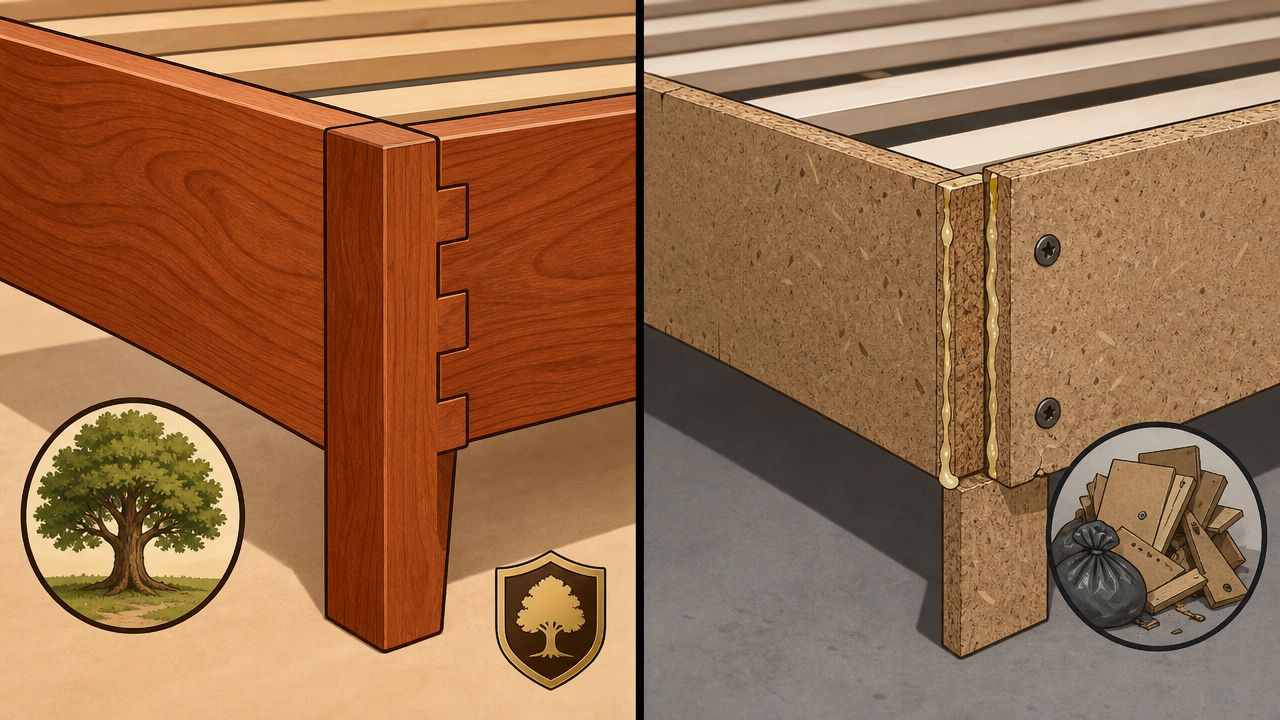
A lower-cost bed may use manufactured panels, thin veneers, staple-heavy assembly, or hardware that carries too much of the structural load. A better-made bed usually shows its quality in heavier side rails, cleaner panel fit, more secure bed bolts or hook systems, and wood that has real depth under the finish. That is the difference between buying a bed for the next few years and buying one that spreads its cost across a much longer life.
The same principle shows up in other wood products throughout the home. This solid hardwood flooring guide is useful because it explains why genuine wood character, grain variation, and material integrity hold value over time.
What to inspect before you buy
- Rail joinery: A king bed needs strong connections at the rails and corners because that is where movement shows up first.
- Center support: Extra width requires dependable support under the middle of the sleep set, not an afterthought leg or flimsy beam.
- Headboard stability: Press on it. Sit against it. A well-built headboard should feel planted.
- Material honesty: Real wood grain, solid edges, and finish depth usually reveal more than a product label does.
- Foundation fit: Panel beds are often designed around a box spring or foundation, so final mattress height should be checked before delivery.
A king panel bed is defined by more than panels. In a well-made piece, the materials, joinery, and support system all work together so the bed keeps its shape, stays quiet, and earns a lower cost per year over a much longer span.
The Solid Wood Difference Heirloom Quality vs Fast Furniture
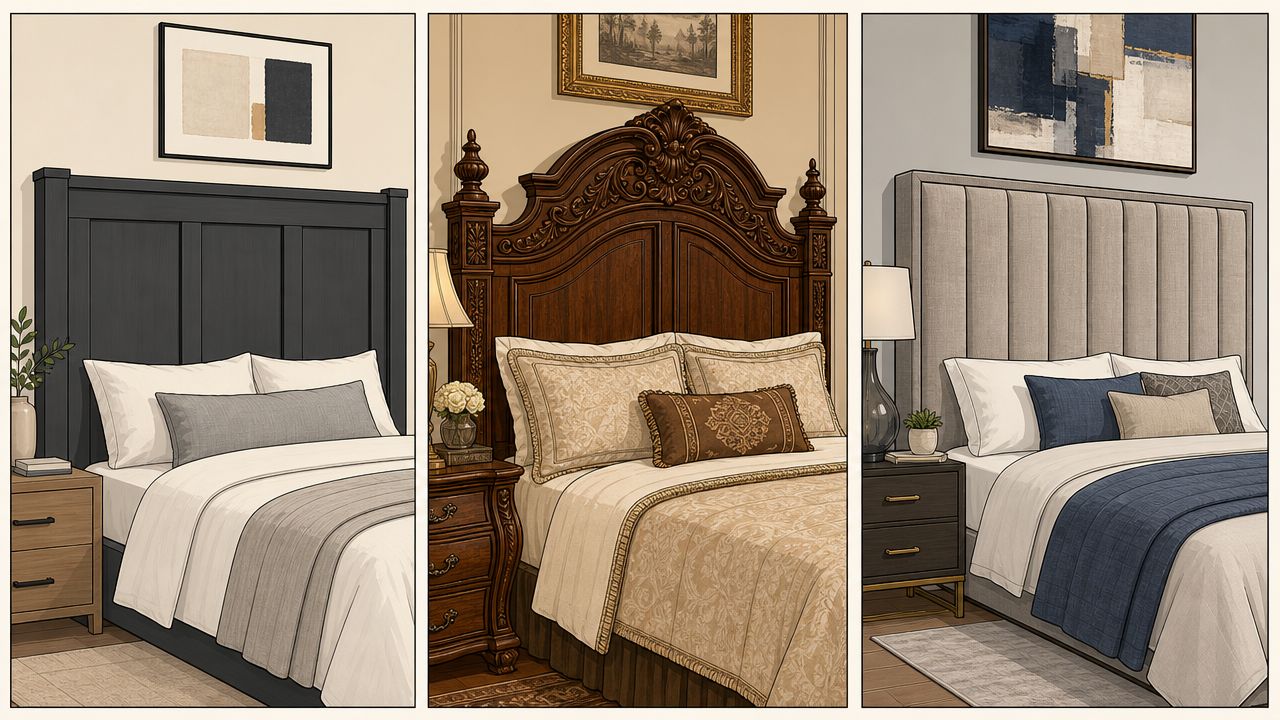
The biggest difference between one panel bed king and another usually isn't the panel shape. It's the material story underneath the finish. That's where shoppers either buy lasting value or buy another replacement cycle.
What mass-produced beds often miss
A mass-produced bed can look polished online and still disappoint in person. The warning signs are familiar. Hollow sound when the rail is tapped. A printed grain pattern that lacks depth. Hardware that does the work that proper joinery should be doing. Thin veneers can look acceptable at delivery and less convincing after years of use, cleaning, friction, and relocation.
The problem isn't just cosmetic. It's structural confidence. A bed should feel composed when someone sits on the edge, shifts weight, or leans back against the headboard with a book.
Shoppers comparing wood options often find it useful to study how real hardwood behaves in other parts of the home. This solid hardwood flooring guide is a helpful outside reference because it explains why genuine wood character, grain variation, and material integrity matter over time.
A bed frame shouldn't feel like packaging around a mattress. It should feel like furniture.
Why hand-crafted solid wood changes the value equation
Solid wood brings weight, stability, and repairability. It also brings visual depth that imitation materials rarely match. Cherry has a warm, refined glow. Oak shows more grain character. Maple tends to read cleaner and more structured. In a bedroom, those differences aren't abstract. They affect how the bed reflects light, how it coordinates with flooring, and whether it feels like a long-term fit.
Hand-crafted Amish pieces stand apart because the build methods usually reflect furniture traditions rather than shipping efficiencies. Mortise-and-tenon joinery and dovetailed construction aren't decorative talking points. They're signs that the piece was built to stay square and stay useful.
For shoppers exploring that category, this page on American-made solid wood furniture gives a clear look at the type of hand-crafted construction available.
A solid-wood bed often costs more upfront, but the better question is cost per year. If the frame remains sturdy, attractive, and worth keeping through mattress changes and bedroom updates, the purchase usually looks smarter with time. That's the investment mindset many experienced furniture buyers settle into.
Why solid wood often earns the higher ticket
- Material integrity: Real hardwood has substance, grain depth, and better long-term credibility.
- Joinery quality: Traditional connections generally hold up better than purely hardware-driven assembly.
- Refinishing potential: A quality wood surface can age with dignity and, in some cases, be renewed.
- Heirloom character: Better craftsmanship gives the piece a chance to stay in the family instead of heading out with the next style shift.
That's one reason long-standing local stores still give this category serious floor space. In a home full of replaceable things, a bed can still be bought as an heirloom.
Measuring Your Space for a King Panel Bed
A customer walks into the showroom convinced a king panel bed will fit because the mattress size looks workable on paper. Then we review the room dimensions, the nightstands, the door swing, and the hallway turn upstairs. That is usually the moment the actual planning starts.
A king mattress gives you generous sleeping width, but a king panel bed takes up more room than the mattress alone. Headboards, side rails, footboards, and post thickness all affect the final footprint. With hand-crafted solid-wood beds, those parts often have more substance than lower-cost import frames, which is good for long-term stability but important to account for before you order.
Measure the room as a functioning space, not as an empty box.
Start with the wall where the bed will sit. Then measure the full room width and length, note window placement, register locations, and door swings, and leave enough space for nightstands and comfortable walking clearance. A bed can fit technically and still make the room feel crowded every day.
I also tell shoppers to ask for the full outside dimensions of the bed, not just the mattress size it holds. That matters with panel beds because a solid wood frame with thicker rails and properly built panels can run larger than a mass-produced frame built to save material. The better-built piece often gives you more years of service, but only if it fits the room and the delivery path cleanly.
A simple process helps prevent expensive mistakes:
- Measure wall to wall in the bedroom.
- Mark windows, vents, and door clearance.
- Add the width of both nightstands.
- Confirm the bed's full exterior dimensions.
- Measure the path into the home, including stairs, landings, and bedroom doors.
For a clear step-by-step reference, use this guide on how to measure furniture before delivery.
Painter's tape helps more than any app. Tape the bed footprint onto the floor, then walk the room as you use it. Open the closet door. Stand where you would pull out dresser drawers. Make the turn you will take when changing sheets. Those small movements tell you more than a spec sheet ever will.
This is also where material quality affects the decision in a practical way. A substantial solid-wood panel bed usually has the weight, joinery, and presence to stay in service for many years, which improves its cost per year. But that same substance can make a small bedroom feel tighter if the proportions are wrong. Good measuring protects the investment before the bed ever reaches the house.
Older homes around Ann Arbor prove that point all the time. Bedrooms may have narrower staircases, shorter wall runs, or radiators in awkward spots. A good fit means the bed looks settled, the room still breathes, and the piece has a fair chance to become one you keep for a very long time.
Exploring Styles and Bespoke Customization

A panel bed king can lean classic, rustic, transitional, or modern without losing its essential structure. That versatility is one reason the form has stayed relevant. The same basic outline can shift dramatically depending on wood species, panel depth, edge profile, finish tone, and whether the headboard feels refined or more architectural.
One frame style, many personalities
A shaker-inspired panel bed has a calm, disciplined look. It works well in homes that favor clean lines and light visual clutter. A more traditional version might use thicker posts, richer stain, and framed panel detailing that gives the room a formal center. Some designs soften the look with upholstered inserts, while others let solid wood and grain character carry the entire design.
Buyers often realize that “in stock” is only the beginning. The right silhouette may be on the floor, but the right finish for the room might be different. The grain that complements walnut nightstands may not be the same one that works with painted trim, warm flooring, or antique case pieces.
Where customization makes the difference
Made-to-order furniture changes the conversation from “What's available today?” to “What fits the home best?” A shopper might prefer maple for a cleaner, more even appearance, or cherry for a richer, warmer presence. Another may want quarter-sawn oak because the grain itself becomes the design feature.
Customization is one of the strongest reasons people still shop local showrooms in Southeast Michigan. It gives them the chance to coordinate the bed with existing furniture rather than replace everything at once. This is also where partnerships such as Canadel for dining and Stressless for ergonomic seating reflect a broader philosophy. The floor sample is a starting point, not the final answer.
For anyone considering that route, this overview of custom furniture made simple shows how bespoke choices in finish, scale, and construction can be approached without making the process feel complicated.
Customization choices that have lasting impact
- Wood species: This changes grain pattern, tone, and overall personality.
- Finish depth: A stain can make the same bed feel airy, formal, or grounded.
- Headboard expression: Flat panels read quieter. Framed details read more traditional.
- Room coordination: The bed should connect with flooring, textiles, and nearby case goods.
A panel bed king looks its best when it feels selected for the room, not dropped into it.
Panel Beds Versus Platform and Sleigh Beds
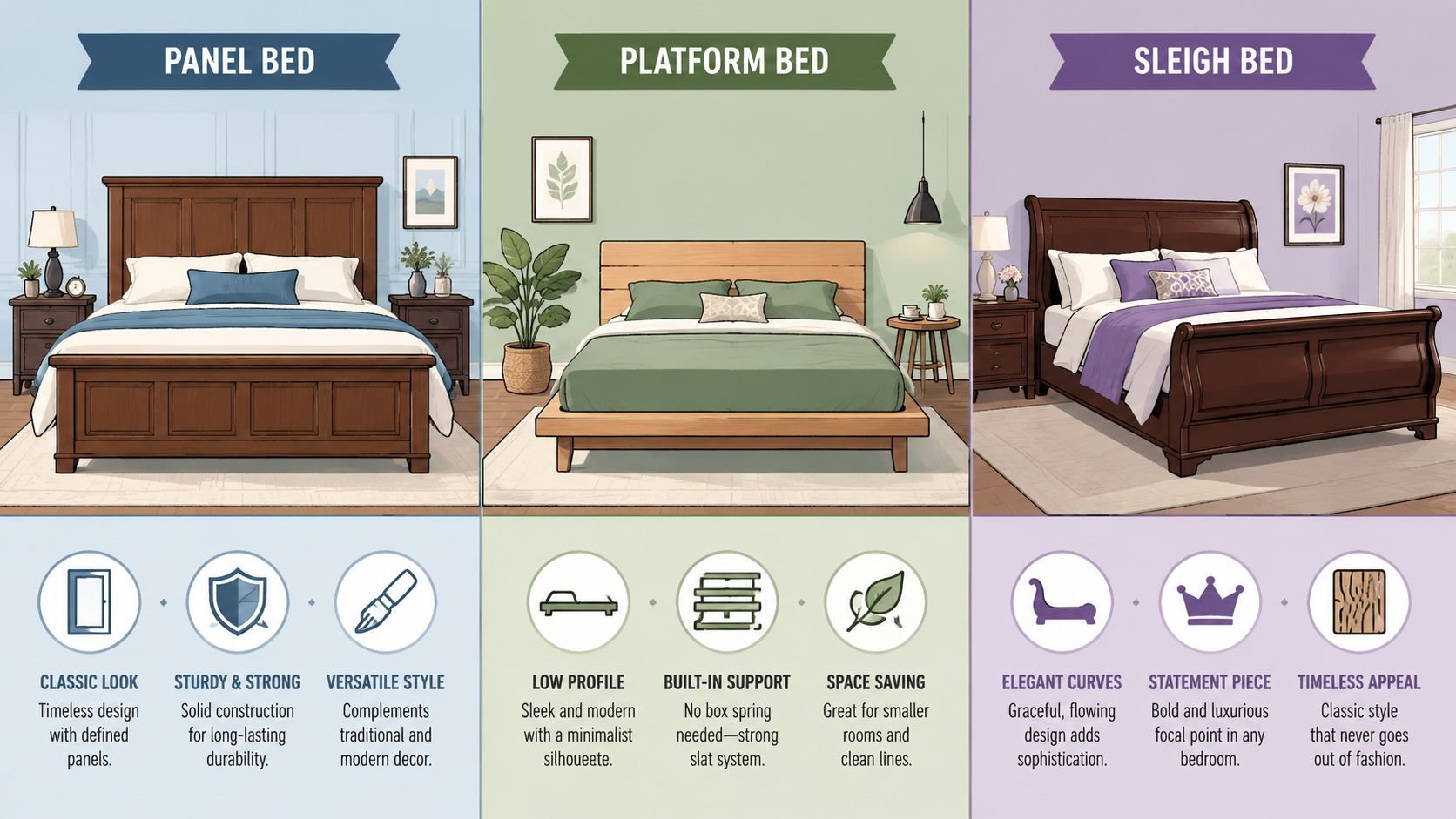
A couple walks into the showroom convinced they want a sleigh bed because it looks impressive online. Then they stand beside a king in person, picture two nightstands, a bench, and the path to the closet, and the decision changes quickly. Bed style has to work in daily use, not just in a product photo.
How each style lives in a room
A panel bed usually sits in the practical middle. It gives the room a clear headboard and footboard, enough presence to feel finished, and a shape that works in traditional, transitional, and many updated classic spaces. In a well-built wood version, that structure also tends to age better than lighter, mass-produced designs because the rails, panel frames, and joinery carry the load with more confidence over time.
Platform beds solve a different problem. They keep the profile lower, often skip the box spring, and can make a bedroom feel more open. The trade-off is that some platform designs, especially imported fast-furniture versions, rely on thinner materials and simpler support systems. They can look clean on day one but develop flex, noise, or sagging sooner under the weight of a king mattress set.
Sleigh beds bring the most drama. The rolled headboard and footboard create a strong silhouette, but they also ask more from the room. In tighter bedrooms, that curved bulk can crowd walkways and make the space feel shorter.
A practical comparison
| Bed type | Best fit | Main strength | Main trade-off |
|---|---|---|---|
| Panel bed | Traditional, transitional, and tailored rooms | Balanced presence, strong structure, and wide style range | Needs enough wall space and benefits from careful mattress support |
| Platform bed | Modern or minimal interiors | Lower profile and simpler setup | Some models feel lighter and wear faster, especially in lower-grade construction |
| Sleigh bed | Larger rooms with formal character | Distinctive shape and strong visual impact | Uses more visual space and can limit movement around the bed |
Material quality changes this comparison more than many shoppers expect.
A solid-wood panel bed with fitted rails, substantial slats, and well-cut joinery often gives the best cost-per-year value of the three. It may cost more upfront than a mass-produced platform or sleigh bed made with veneers over engineered components, but the frame usually stays quieter, tighter, and more stable through years of use. That matters in a king size, where extra width puts more strain on every connection point.
The right choice comes down to what the room and household need. Choose a platform bed if low height and visual simplicity matter most. Choose a sleigh bed if the room is generous and the bed is meant to be the focal point. Choose a panel bed if you want a design with staying power, better odds of long-term structural integrity, and flexibility with a range of bedroom styles.
Good delivery planning matters too, especially with king beds that include larger headboards and side rails. Reviewing bedroom furniture delivery and setup details before you buy can prevent problems with stair turns, narrow halls, and second-floor access. If artwork will hang above the bed, this guide to sizing and placement for bedroom art can help the wall feel finished once the bed is in place.
At our South State St. showroom, that is often the point where preferences become clearer. Once shoppers compare scale, construction, and how each bed will wear over ten or fifteen years, the right style usually stands out.
Making Your Investment and Bringing It Home
Buying a bed frame at this level isn't a quick-decision purchase. It's a home decision. The best choices usually come from balancing craftsmanship, room fit, support needs, and the kind of ownership experience that feels manageable from purchase through delivery.
Think in cost per year, not just purchase day
A well-made panel bed king often makes the most sense when viewed over time. If the wood stays attractive, the joinery stays tight, and the design still feels grounded after redecorating, the purchase keeps paying back in use and satisfaction. That's why value-minded shoppers often move away from the lowest initial price and toward the strongest overall lifespan.
This is also where access matters. Special financing can make a higher-quality purchase more realistic, and a Low Price Promise can reduce the anxiety that often comes with stepping up in category. Those tools don't change the need for good judgment, but they can make a durable choice easier to act on.
Wall styling deserves thought too, especially once the bed is in place. Anyone planning artwork above the headboard may find this guide on sizing and placement for bedroom art useful for getting the proportions right.
What a smoother purchase looks like
Delivery is part of the value equation. A bed with a substantial headboard, footboard, side rails, and a box-spring setup benefits from careful handling and clear communication before install day. In the Ann Arbor area, buyers should confirm access points, stair conditions, and room readiness well before the truck arrives.
One available option for delivery planning is Tyner Furniture delivery information, which outlines the process for bringing larger furniture pieces into the home.
A store with roots going back to 1957 usually understands that a bed purchase rarely exists in isolation. The same household may also be coordinating a mattress, nightstands, a dresser, a home office refresh, or even outdoor spaces later in the season. Good guidance keeps those decisions connected.
The final test is simple. Does the bed feel like a short-term answer, or does it feel like part of the home's long-term interior design story? The right panel bed king should satisfy both the eye and the hand. It should look settled, feel sturdy, and reward ownership over time.
For shoppers ready to compare finishes, feel the weight of solid wood, and see how a panel bed king reads in person, Tyner Furniture offers a practical next step. Visit the Ann Arbor showroom on South State St. for a closer look at bedroom craftsmanship, or browse the online Quick Specs if a special order, custom finish, or made-to-order piece is part of the plan.