Amish Oak and Cherry Hickory Furniture: A Buyer’s Guide


A couple stands in an Ann Arbor showroom with three wood samples balanced in their hands, surprised by the weight of each one. Hickory catches attention first, with its sharp contrast and restless grain, but the excitement fades when they picture that bold surface in a smaller dining room. Oak looks dependable. Cherry feels refined. Meanwhile, the dog is waiting in the car, and two children are already treating the kitchen table like a baseball field.
That's the Amish oak and cherry hickory decision. The best species isn't the one that photographs most beautifully. It's the one that fits the household's habits, cleaning routines, room size, lighting, and tolerance for visible wear. Solid wood is an investment, so the choice should be based on daily life before style.
Walking Into the Showroom With Three Wood Samples
The couple's conversation changes as soon as the practical details enter the room. A dining table for a quiet formal space can be judged mainly by color and silhouette. A table used for homework, craft projects, family meals, and hurried breakfasts needs a surface that handles activity without making every small mark feel like a crisis.
The hickory sample has the strongest personality. Its pale sapwood, darker heartwood, knots, and mineral streaks create movement that can anchor a plain room. In a compact dining area, though, that same movement may compete with patterned rugs, painted cabinetry, or a busy view through the windows. Oak offers a steadier visual rhythm, while cherry brings a smoother, quieter presence.
Practical rule: A family should choose the wood that supports the room's real work, not the wood that wins the first glance.
The dog matters. So do the children. Pet claws, dropped cookware, chair legs dragged across the floor, and the occasional wet glass all change the recommendation. A homeowner who entertains often may value hickory's rugged character. Another household may prefer oak because its open grain makes small scuffs less conspicuous. A couple furnishing a study or primary bedroom may decide that cherry's aging patina matters more than maximum impact resistance.
The production behind the look
This isn't a narrow craft category. A U.S. Forest Service study estimated that the Ohio Amish furniture cluster used 44 million board feet of wood annually, equal to about 11% of Ohio's hardwood lumber production and 19% of hardwood lumber used in appearance-based applications. The same study estimated employment of roughly 2,991 people in that cluster, while another analysis placed Amish furniture manufacturing at about 1.3% of national hardwood lumber production. These figures are summarized in market research on the global wood furniture industry.
That scale helps explain why oak, cherry, and hickory remain practical furniture choices rather than passing style preferences. The species are tied to established hardwood supply chains, solid-wood construction, and made-to-order craftsmanship.
At the South State St showroom, the useful question is simple: what will this piece experience every day? The answer leads to the species. Custom finishes and careful joinery then determine whether the final furniture feels formal, farmhouse, modern-traditional, or comfortably somewhere in between.
What Makes Amish Furniture Different From the Big Box
“Solid wood” should describe the structure, not merely the visible surface. Amish hand-crafted furniture is generally built from solid hardwood components rather than particleboard, MDF, or a thin veneer placed over a manufactured core. That distinction affects how a drawer moves, how a table carries weight, and whether a worn surface can be repaired instead of discarded.
A solid hardwood dining top still moves naturally with changes in indoor conditions. A skilled builder accounts for that movement through construction details rather than pretending wood behaves like plastic. The result is a piece that feels substantial in the hand, from the edge of a drawer to the weight of a solid cherry tabletop.
Joinery that earns its place
Traditional joints do more than create an appealing workshop detail. Dovetails physically interlock drawer parts, while mortise-and-tenon construction connects table bases and frames with wood fitted into wood. Tongue-and-groove construction can help case backs sit securely and remain aligned.
Mass-produced alternatives may rely heavily on staples, screws, glue, thin panels, or printed grain patterns. Those methods can produce a functional piece, but they don't offer the same material integrity or refinishing potential as a well-built hardwood frame. A drawer that stays square after years of use, a table leg that resists wobble, and a top that can be renewed all contribute to cost-per-year value.
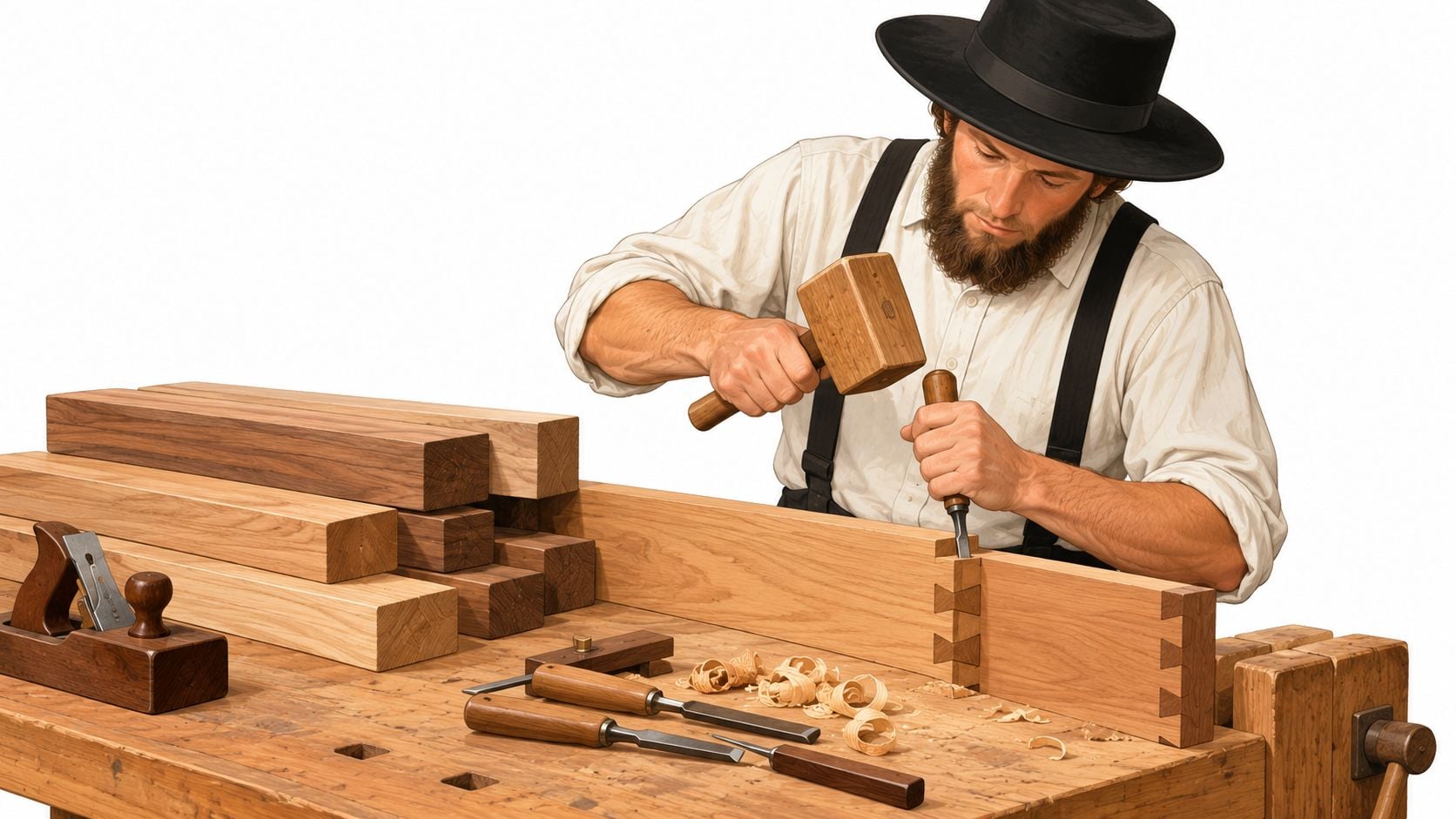
Visitors can inspect those details on floor samples at the South State St showroom. A hand on an exposed dovetail often communicates more than a product description. The weight of the piece, the smoothness of the drawer travel, and the way the frame meets at a corner reveal whether the furniture was designed for lasting use.
For shoppers coordinating cabinetry, flooring, or painted walls, the SouthRay Kitchen & Bath oak palette guide offers useful color context before a finish is selected. Furniture should complement the room's undertones rather than force every other material into a new palette.
A broader look at Amish furniture in Michigan can also help local shoppers understand the difference between a stocked display and a special-order hardwood piece. In-stock is just the beginning. Finish, dimensions, hardware, and configuration can change the character of the final furniture.
Oak Strength, Grain, and Honest Tradeoffs
Oak is the workhorse of the three species. Red oak measures around 1,290 lbf on the Janka hardness scale, while white oak measures around 1,360 lbf, according to this oak and cherry wood comparison. Those ratings translate into useful resistance for dining chairs, tables, storage pieces, and family-room furniture that absorb regular contact.
A child pushing back from a chair, a laptop sliding across a coffee table, or a moving crew shifting a case piece can all test a surface. Oak won't make furniture indestructible, but its hardness gives busy households a sensible margin. Its open grain also adds visual texture, which can help small scuffs blend into the surface rather than appearing as isolated marks.
What the grain gives and takes
Oak accepts stain readily, but it won't disappear beneath it. The grain remains pronounced under clear, lightly pigmented, and darker finishes. That's an advantage for shoppers who want visible craftsmanship and a classic American hardwood appearance. It's less suitable for anyone seeking a perfectly quiet, almost uniform surface.
White oak generally offers a tighter pore structure and better moisture resistance than red oak, making it a strong choice for frequently cleaned surfaces and rooms with more variable moisture. Open-grained wood still responds to indoor conditions, so construction and care remain important.
Oak verdict: Oak is the safest recommendation for a busy dining room, active family room, or household that wants durability without hickory's visual intensity.
Oak at a Glance
| Property | Detail |
|---|---|
| Best role | High-use dining, family-room, and storage furniture |
| Surface character | Open, visible grain with strong stain response |
| Red oak hardness | Around 1,290 lbf on the Janka scale, as documented in the wood comparison |
| White oak hardness | Around 1,360 lbf on the Janka scale, as documented in the same comparison |
| Main tradeoff | More texture and grain visibility than cherry |
For a deeper look at how oak's grain behaves in built environments, Buff & Coat Hardwood Floor Refinishing's oak flooring insights provide helpful visual context. The same principles apply to furniture: oak reads true, takes color well, and rewards a finish that works with its grain instead of trying to conceal it.
Shoppers comparing table proportions and family use can review the oak wood dining table selection before visiting. The right oak table should feel durable, but it should also leave enough visual breathing room for the rest of the interior design.
Cherry Smoothness, Aging, and Quiet Elegance
Cherry appeals to households that want furniture to become more beautiful with time. Its grain is generally fine and mostly straight, and its closed-pore feel gives a tabletop a smoother touch than open-grained oak. Under the hand, cherry feels polished and calm. The wood has presence without demanding attention.
Its color is part of the appeal. Cherry commonly begins with a lighter pinkish-brown tone and develops a deeper, warmer reddish patina as it ages, especially when exposed to sunlight. That shift isn't a defect to be corrected. It's one of the reasons a cherry dining set, bedroom collection, or writing desk can feel more personal after years in the home.
A refined surface with a clear limit
Cherry is moderately hard, so it handles normal dining use well. It isn't the first recommendation for a household that expects heavy pet claws, dropped cast iron, or constant rough handling. Those marks can become part of the piece's history, but buyers who want maximum impact resistance should look toward oak or hickory.
The tradeoff is worthwhile in rooms where visual restraint matters. Cherry suits a formal dining room with upholstered seating, a primary bedroom with warm textiles, or a quiet study where the grain can sit behind the books, lighting, and artwork. A hand-rubbed finish can bring out its warmth without turning the piece into a glossy display.
Cherry also works well when the goal is continuity. A made-to-order piece can be finished to coordinate with existing woodwork, but the sample should be viewed in the actual room's daylight. Cherry's developing color means the final appearance will evolve, particularly near bright windows.
The right buyer for cherry
Cherry is a strong recommendation for couples furnishing a room with moderate daily traffic and a preference for understated elegance. It's also a good fit for buyers who see furniture as a long-term companion rather than a static purchase.
The cherry dining room set collection gives shoppers a useful starting point for comparing silhouettes, chair arrangements, and finish directions. The important decision isn't whether cherry looks refined. It does. The question is whether the household will appreciate its developing patina more than it will resent the occasional visible mark.
Hickory Toughness, Bold Character, and Loud Grain
Hickory is the outspoken choice. Its grain can move from creamy white sapwood to reddish-brown heartwood, with knots, mineral streaks, and sharp contrast that make each board visually distinct. The effect can feel rustic, lodge-inspired, farmhouse-ready, or wonderfully rugged.
That personality works best when the room has enough scale to support it. A large dining table can let hickory's grain become the anchor. A simple kitchen with restrained cabinetry can make the wood feel intentional. In a smaller room filled with patterned upholstery and strong artwork, hickory may compete for attention.
Toughness with a visual price
Hickory is one of the hardest domestic furniture woods and is known for resisting impact and wear. That makes it a sensible choice for large dining tables, children's rooms, active households, and statement pieces expected to handle demanding use. Its character can also disguise some surface wear because the grain already contains variation.
The same variation makes hickory difficult to calm. Light stains, glazes, and painted treatments may emphasize the difference between boards rather than create a uniform field. Construction also demands capable tools and experienced craftsmanship because the wood's hardness makes it less forgiving during shaping and fitting.
Hickory verdict: Choose hickory when the grain is supposed to be part of the room's architecture. Don't choose it hoping a light finish will make it behave like cherry.
Where hickory earns its keep
A farmhouse dining room, lodge-style family room, rustic home office, or children's bedroom can benefit from hickory's directness. It pairs naturally with wool, leather, iron, woven textures, and simpler painted surfaces. The wood looks strongest when surrounding materials give it room to speak.
The hickory craft furniture collection helps shoppers explore that character across tables, storage, and accent pieces. A hickory table doesn't need elaborate ornament. Its board pattern supplies the visual interest, while a restrained edge profile and durable topcoat keep the design grounded.
For a household with a large dog and children who use the dining table hard, hickory deserves serious consideration. For a compact, quiet dining room with pale walls and delicate upholstery, oak will usually be easier to live with visually.
Matching the Right Wood to Your Real Life
The clearest choice comes from matching the species to the household before matching it to a paint color. Oak offers a balanced combination of hardness, visible grain, and finish flexibility. Cherry offers a smoother surface and a warmer aging story. Hickory offers the strongest visual contrast and the most forceful resistance to impact.
Oak vs Cherry vs Hickory at a Glance
| Attribute | Oak | Cherry | Hickory |
|---|---|---|---|
| Durability direction | Strong choice for regular family use | Handles normal use but shows harder impacts more clearly | Strongest choice for impact-heavy use |
| Scratch visibility | Open grain can soften the appearance of minor marks | Smooth grain can make marks easier to notice | Bold grain can disguise some wear |
| Grain intensity | Clearly visible and structured | Fine, restrained, and refined | Dramatic, varied, and dominant |
| Color aging | Warm tan-to-honey character with modest change | Deepens toward a warm reddish patina | Contrast remains a major part of the look |
| Best room fit | Busy dining rooms and family rooms | Formal dining, bedrooms, and studies | Large dining rooms, farmhouses, lodges, and children's spaces |
| Finish direction | Takes stain readily while retaining texture | Rewards transparent and warm finishes | Benefits from finishes that control, rather than erase, contrast |
Ann Arbor and Southeast Michigan homes also experience seasonal changes in indoor conditions. Solid wood expands and contracts as humidity changes, and properly designed joinery gives the material room to move. Independent solid-wood care guidance recommends indoor humidity around 35% to 45% to help minimize movement, with the range explained in this hardwood furniture care guidance.
Veneered alternatives can also move, cup, or crack when moisture and construction quality work against them. The answer isn't to fear solid wood. The answer is to maintain a reasonable indoor environment, keep furniture away from direct heat, and choose a builder who understands how hardwood behaves.
A practical household rule
- Young children and large dogs: Start with oak. Choose hickory when bold grain fits the room and impact resistance takes priority.
- Formal dining and quieter rooms: Choose cherry for its smooth feel, controlled grain, and developing patina.
- Frequent entertaining: Choose oak for visual balance, or hickory for a statement table in a room with restrained surrounding materials.
- Modern interiors: Use oak with a calmer finish, or cherry with clean lines. Hickory requires more discipline in the rest of the room.
A flooring comparison from Flacks Flooring on hickory versus oak offers useful perspective on the broader durability and appearance tradeoffs between those two species. Furniture decisions still depend on touch, scale, and joinery, not hardness alone.
Custom Finishes and Joinery Choices That Shape the Final Piece
Species is the foundation, not the finished decision. The same oak can look golden, smoked, warm brown, or nearly ebony depending on the stain and topcoat. Cherry can be directed toward a soft traditional tone or a richer formal appearance. Hickory can show every contrast in the board or use a finish that visually settles the differences.
Made-to-order furniture gives the shopper control over those choices. A finish should be judged against flooring, wall color, cabinet undertones, rugs, and daylight. A small sample under showroom lighting can look different beside a north-facing window or warm evening lamps.
Finish choices have practical consequences
Hand-waxed surfaces offer a tactile, low-sheen character and can be refreshed, but they demand attentive care. Oil finishes bring out depth and feel natural under the hand, while repairs can often be localized more easily than with a hard film finish. Conversion varnish and polyurethane create more protective surfaces with different sheen options, but repairs may require more careful blending.
The right choice depends on the furniture's work. A dining table used several times a day needs a finish appropriate for spills, wiping, and contact. A bedroom chest may prioritize touch and visual warmth. A desk may need a surface that tolerates writing, devices, and repeated arm contact.
The custom wood finishes program gives shoppers a way to evaluate those decisions as one package rather than selecting a species in isolation.
Joinery determines the lasting feel
Dovetailed drawers with full-extension soft-close slides create a different daily experience from a drawer held together with basic fasteners. Mortise-and-tenon table bases provide a strong structural foundation, while through-tenon aprons can add both strength and visible craft detail.
Edge profiles, inlays, and controlled distressing also change the result. A square edge and restrained stain can move oak toward modern-traditional. A eased edge and visible knots can push hickory toward farmhouse. Cherry with a smooth edge and warm hand-rubbed finish belongs comfortably in a formal interior.
Customization extends beyond Amish hardwood pieces. Canadel allows shoppers to configure dining furniture around finishes, fabrics, table details, and room requirements. Stressless recliners also come in Small, Medium, and Large sizes, and some models offer neckrest adjustment of up to 4 inches, as shown in the manufacturer's recliner specifications. In-stock is just the beginning when configuration, ergonomic fit, and finish all affect the final choice.
From Comparison to Heirloom Your Next Step
The comparison should narrow the field, not replace the sit test. A homeowner can decide that oak is the practical front-runner, cherry is the emotional favorite, or hickory is the right statement. The final answer still depends on how the grain looks at furniture scale, how the finish feels under the hand, and whether the chair supports the body properly.
A visit to the South State St showroom in Ann Arbor should include more than a quick walk past display pieces. Shoppers should bring room dimensions, flooring or paint swatches, and a short description of household use. A sample viewed beside a rug can reveal undertones that disappear in a catalog photograph. A drawer opened repeatedly can reveal whether the construction feels precise. A chair should receive a genuine sit test, especially when comfort and ergonomic support matter.
Bring the right questions
- For dining furniture: How often will the table be used, and will children, pets, homework, or entertaining shape its finish requirements?
- For bedrooms: Should the room feel quiet and refined, or should the wood provide stronger visual character?
- For living rooms: Will the piece sit near a heat source, direct sunlight, or an entry path where contact is frequent?
- For special orders: Can the dimensions, wood pairing, edge profile, hardware, and finish be adjusted?
Quick Specs can help shoppers review common configurations and pricing while standing in the showroom or browsing online. Non-standard sizes and wood pairings belong in the custom-order conversation, where the room's measurements and intended use guide the specifications.
Financing can also make an heirloom purchase easier to plan. Promotional financing commonly involves credit approval and installment terms, and some offers include deferred or no-interest periods, as described in the available furniture financing information. A Low Price Promise adds a value check for shoppers comparing comparable pieces, while special financing can help spread a major purchase into manageable monthly payments.
The local legacy behind the showroom matters as well. Since 1957, the business has served Southeast Michigan, giving Ann Arbor households a place to discuss furniture as part of a home rather than as a disposable accessory. The selection reaches from the Home Office to Outdoor Spaces, with dining, bedroom, living, comfort seating, and interior design guidance in between.
Cost-per-year is the right lens for this purchase. A properly built solid-wood table can move between homes, receive a new finish when its appearance needs refreshing, and remain useful after a trend has passed. That is the difference between buying a surface for a room and buying an heirloom for a household.
Thirty minutes handling oak, cherry, and hickory will reveal more than another hour of scrolling. The family with the dog and the baseball-field kitchen table may leave with oak. The couple furnishing a formal dining room may choose cherry. The household seeking a rugged focal point may settle on hickory. Each can be the right answer when the species, finish, dimensions, and joinery match real life.
Tyner Furniture offers made-to-order Amish solid wood furniture in oak, cherry, and hickory, along with Canadel dining customization and ergonomic Stressless seating. Ann Arbor and Southeast Michigan shoppers can visit Tyner Furniture for a showroom sit test, Quick Specs, special-order guidance, Special Financing, and a Low Price Promise.