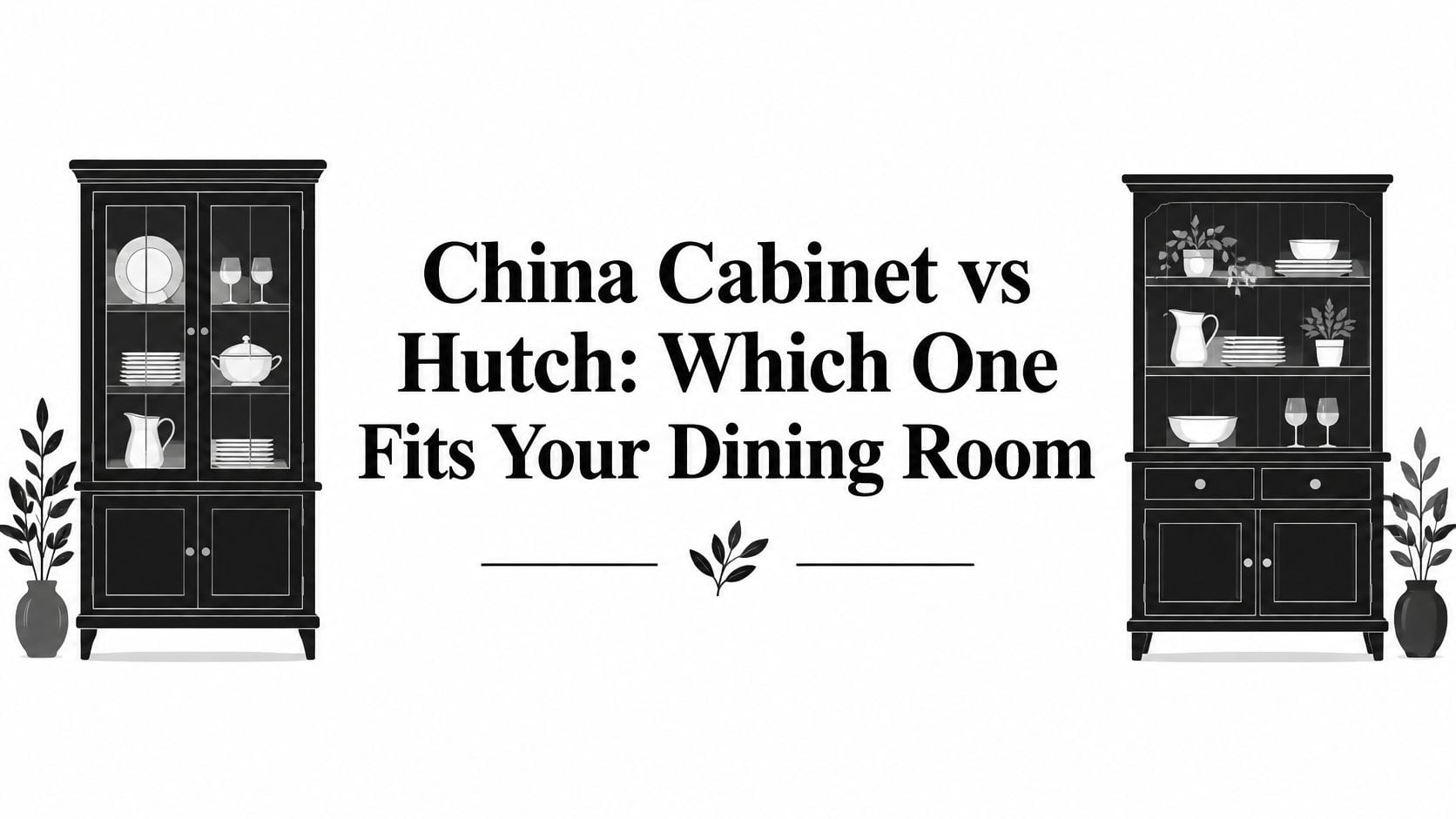
China Cabinet vs Hutch: Which One Fits Your Dining Room

An Ann Arbor homeowner stands beside the dining table with a stack of inherited plates, wondering whether they belong behind glass or within easy reach of dinner. The room needs storage, but the wrong piece could crowd the chairs, hide a beautiful collection, or leave the largest platter without a home. Furniture shopping can feel overwhelming until the decision becomes concrete: fit the room, inspect the build, and judge the investment by years of useful service.
China Cabinet vs Hutch at a Glance
A china cabinet usually keeps a collection inside one enclosed case. A hutch pairs a lower storage base with an upper section, so the same piece can display dishes, hide everyday items, and give you a surface for serving.
China cabinet and hutch compared at a glance
| Feature | China Cabinet | Hutch |
|---|---|---|
| Structure | One integrated display case | Two parts: a lower base and an upper section, sometimes separate |
| Primary purpose | Showcasing china, stemware and heirlooms | Display plus everyday storage and serving |
| Display | Glass-front doors and several display shelves | Open or glass-fronted upper shelves, sometimes solid doors |
| Concealed storage | Limited, mostly behind the display | Drawers and cupboards in the base |
| Serving surface | Rarely included | Usable counter on the base |
| Best-fit household | A household prioritizing a protected collection | A household needing everyday access and mixed storage |
Use these distinctions as a starting point and confirm construction on the specific piece. The Hunker furniture comparison distinguishes enclosed display cases from base-and-upper arrangements and emphasizes their different practical uses.
Start With the Job, Not the Style
Delicate stemware wants a protected shelf. Folded napkins, everyday bowls, and serving utensils want drawers and a cupboard you can reach during dinner. A glass cabinet that looks right in a photo still fails the fit test when the household mainly needs to hide clutter. A wide hutch fails the same test when the room is built around a collection and has no use for a serving counter.
I would run three checks before the style choice sticks: whether the footprint and any counter leave a clear path around the table, whether the doors, drawers, and shelf joints match the job, and whether weekly use or occasional display justifies the price across the years you expect to keep it.
Tyner Furniture's Ann Arbor showroom lets shoppers compare both styles side by side before deciding. The counter opening, drawer arrangement, and glass frontage show the trade-off more clearly than a product photograph.
The deciding question: Does this room mainly need to show dishes, or to store and serve them every day?
That question ties the look of the piece to the objects already in the house. The stronger choice still has a practical home for those objects after the first week of use.
Where the Names Came From and Why They Overlap
The distinction began with different furniture traditions. In seventeenth-century Europe, porcelain and decorative objects became symbols of wealth and refinement, encouraging purpose-built display furniture; the furniture history summarized in the hutch reference) also explains the base-and-upper arrangement and the traditional Welsh dresser's overlapping identity as a china hutch.
A display case gave prized objects a deliberate setting. Glass made the contents visible, while the cabinet itself became part of the room's formal presentation. That display-first purpose still explains why many china cabinets have a continuous vertical silhouette.
The hutch followed a more work-oriented arrangement. A lower cabinet supported an upper section, allowing a household to combine useful storage with visible dishes. The Welsh dresser makes the overlap understandable: a piece can hold everyday crockery, display treasured plates, and still be described using more than one familiar name.
Read the Construction, Not Just the Tag
Modern naming doesn't always preserve those distinctions. A two-part piece may appear under china cabinets, while a glass-front case may be marketed as a hutch. Product photography can make the confusion worse when the joint between the upper section and base disappears into the finish.
The useful questions are physical:
- Section connection: Is the top structurally separate from the base, or is the cabinet one continuous case?
- Shelf adjustment: Can shelf positions change to suit tall glasses or upright plates?
- Door construction: Are the glass doors framed, or does broad glazing provide a less interrupted view?
- Included components: Does the listed purchase include the base and top, or only one component?
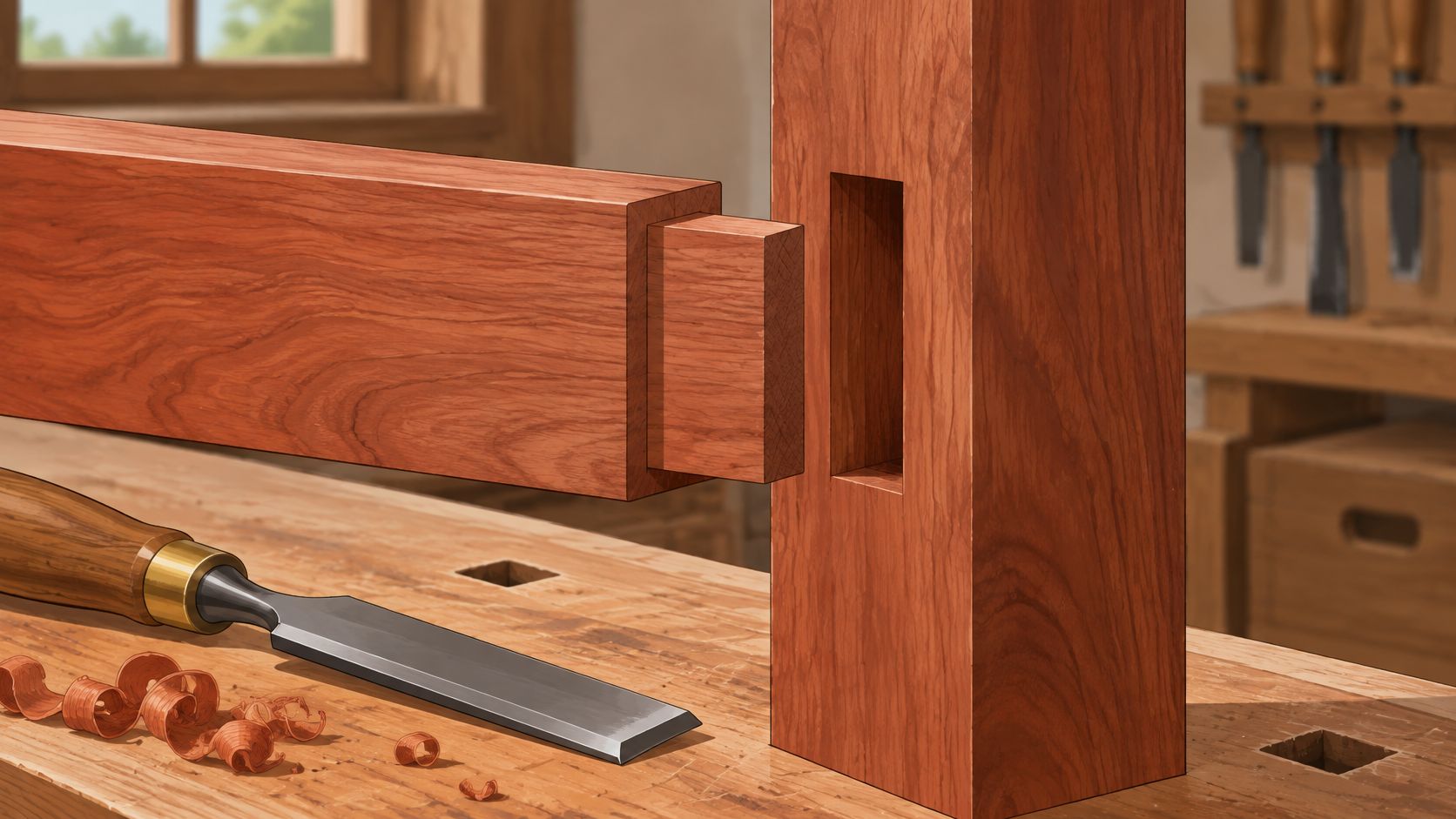
Traditional wood connections also deserve a closer look once the basic format is clear.
A familiar name isn't a construction specification. The reliable approach is to read the tag, examine the actual case, and have the connection details confirmed before choosing. That prevents an attractive label from standing in for a useful understanding of the furniture.
Size, Depth and Clearance Before You Buy
A cabinet can fit the wall and still block a chair, crowd a passage, or fail to hold the platter you want to store. Check the room, route, and usable shelf space before settling on a style.
As a general planning range, a hutch may stand 70 to 90 inches high and measure 30 to 72 inches wide. Its base is often 14 to 20 inches deep, with an upper section around 10 to 14 inches deep. These figures help narrow options; use the selected piece's specifications before ordering. A furniture-planning reference puts china cabinet depth at roughly 14 to 18 inches and suggests allowing 44 to 48 inches between a dining table edge and the cabinet front where people pass behind seated diners.
Typical dimensions by piece type
| Piece | Height | Width | Base Depth | Upper Depth |
|---|---|---|---|---|
| Hutch | 70–90 inches | 30–72 inches | 14–20 inches | 10–14 inches |
| China cabinet | Confirm selected model | Confirm selected model | 14–18 inches | Confirm interior shelf depth |
A shallow upper case keeps the piece from projecting as far into the room, while the deeper base sets the floor-level clearance. Check the interior opening as well as the outside depth: a large serving piece may not fit through the door or sit flat on the shelf.
Measure the Furniture in Use
Mark the cabinet footprint on the floor with painter's tape. Pull out a dining chair, then check whether someone can pass behind it. Account for nearby door swings and the space needed to open drawers.
Measure the contents, too. A platter might fit diagonally through a cabinet door but still be too wide to rest flat on a shelf. A tiered server may need extra shelf depth and vertical space.
Plan the delivery route separately from the room layout. Measure the narrowest doorway, hallway, stair turn, and landing. The same turning-space principles used for pivoting a couch around tight corners apply, but a rigid cabinet must be assessed for its own dimensions and shape.
Bring a measurement sheet to the showroom:
- Room envelope: Available wall width, ceiling height, baseboards, and nearby trim.
- Working clearance: Space between table and cabinet, door swings, and drawer extension.
- Contents: Largest platter diameter and depth, tallest serving piece, and intended shelf loads.
- Delivery route: Widest doorway, narrowest clear opening, stair turns, landings, and entrance approach.
- Exact specifications: Maximum cabinet depth, usable shelf dimensions, and removable components.
Use this guide to measuring furniture before a purchase to organize the dimensions. Record the tightest point on the delivery route; a wide entrance will not help if the hallway or stair turn is narrower.
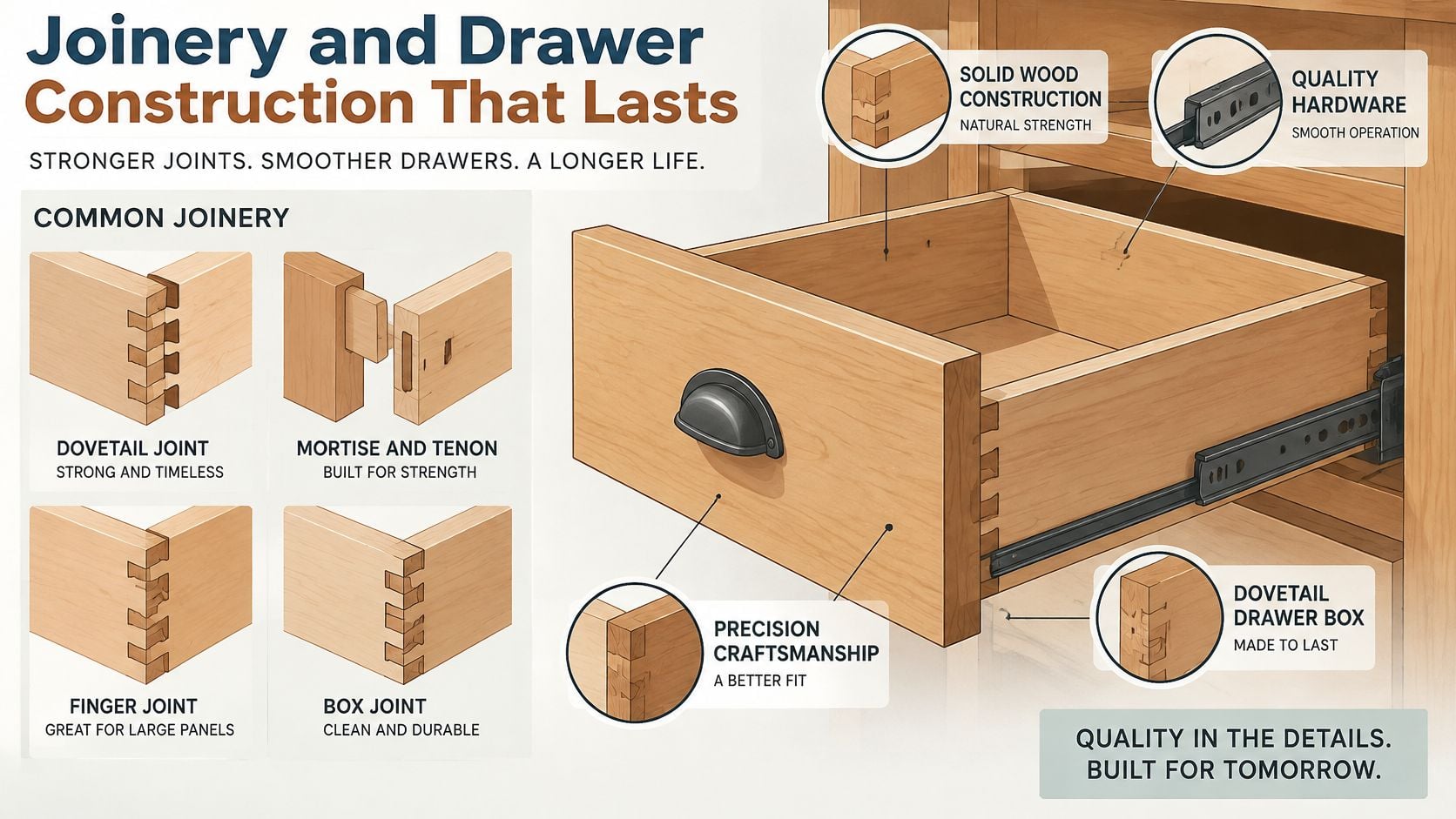
Joinery and Drawer Construction That Lasts
Construction matters more than the category name. A mortise-and-tenon joint connects a projecting piece of wood, the tenon, to a fitted socket, the mortise. The quality depends on accurate fitting, suitable material, adhesive, and the way the joint carries load.
In testing of beech-wood furniture frames, mortise-and-tenon joints reached an average moment capacity of 204 Nm, compared with 154 Nm for dowel joints, with 99.99% calculated reliability under the tested conditions, according to the BioResources furniture-frame study. Those results aren't a lifetime rating for every cabinet: species, dimensions, adhesives, loading direction, and workmanship affect performance.
Inspect the Parts That Work
Drawers deserve particular attention because pulling them repeatedly loads their corner connections. The University of Minnesota furniture guide identifies well-matched, properly glued dovetailing at all four drawer corners as a mark of high quality.
A practical inspection follows this sequence:
- Remove a drawer if permitted. Examine the box behind the decorative front and check how the bottom is supported.
- Inspect the interlocking corners. Dovetails should fit cleanly, without open gaps or poorly matched cuts.
- Check the surrounding structure. Door frames and case connections should feel tight, without visible excess glue.
The Utah State University furniture-selection guide likewise emphasizes joining method and structural sturdiness. A glossy finish can't compensate for a loose frame or a drawer that racks sideways.
Judge Material Integrity and Finish Together
Tyner Furniture's Amish hand-crafted selection uses solid North American cherry, oak, and maple with traditional joinery. The weight of solid cherry wood, the texture of oak's grain, and a cleanly fitted corner give shoppers tangible details to compare against mass-produced alternatives.
Veneer alone isn't proof of poor quality. The more useful questions concern the substrate, edge construction, fastening method, and repair options. Stain controls color, while the protective topcoat affects how the serving surface handles daily wear; hot dishes still need protective trivets.
The furniture and joinery guide supports that inspection, while Lewis and Sheron Textiles' heirloom-quality furniture durability guide offers another lens for evaluating longevity across a furnished room.
The broader brand selection includes Berlin Gardens, Mavin, BDI, Millersburg Amish, Palliser, Riverside Furniture, Smith Brothers of Berne, Vaughan Bassett, and Yutzy Woodworking. Brand breadth provides options, but the selected piece should still earn its place through visible craftsmanship.
Safety, Anchoring and Stability at Home
A separate hutch top introduces a connection that deserves explicit attention. The upper section must be secured as specified, and the complete piece needs an appropriate wall-anchoring method. A one-piece china cabinet also requires a stability assessment; an integrated case isn't automatically tip-proof.
The U.S. Consumer Product Safety Commission tip-over report records 217 reports of furniture, television, or appliance tip-over-related fatalities from January 2013 through July 31, 2023, and its storage-furniture examples include hutches. That is a reason to inspect installation provisions, not a verdict against either furniture style.
Secure the Piece Before Loading
Installation should follow the manufacturer's instructions and use hardware suitable for the wall construction. An anchor attached only to an unsuitable surface can create confidence without dependable restraint.
- Connect the sections: Confirm the required fasteners between the upper unit and base.
- Anchor the complete piece: Use the specified restraint system and appropriate wall attachment.
- Level the cabinet: Correct rocking with the approved leveling method before operating doors.
- Load deliberately: Place heavier dinnerware low and keep weight within each shelf's stated limit.
- Check glass shelves: Verify support placement, shelf condition, and load guidance before stacking dishes.
Door operation provides another useful check. A door that swings on its own, rubs its frame, or changes alignment after loading may indicate that the cabinet needs leveling or adjustment. It shouldn't be forced shut.
Households with young children, climbing pets, seismic exposure, or frequent furniture rearrangement need particular care. Moving a piece can disturb its level, loosen connections, or leave the anchor disconnected.
Installation rule: Fasten the piece before the first load of dishes goes in.
Before delivery, shoppers should obtain the anchoring method, shelf-load guidance, and instructions for securing separate sections. If the wall construction or installation method is uncertain, a qualified installer should resolve it rather than improvising with miscellaneous screws.
What a Piece Really Costs Per Year
A solid-wood piece bought for $3,000 and kept in service for 25 years comes to $120 a year before any service work. Use this as a planning figure. Divide the purchase price by the years you expect the cabinet to stay useful, then add maintenance you can already see coming.
A lower-priced piece replaced after 8 years has to be scored on that shorter life. The smaller first payment can still cost more per year once the replacement is included.
Include Repairability in the Calculation
Replaceable hinges, serviceable drawer hardware, and a finish that can be refreshed change the yearly number. A separate top that can be reused after a move only counts if that model is built to come apart and be used that way. Confirm it on the piece in front of you.
The comparison of solid wood furniture and particle board shows why the core material belongs in the math. Swollen particle board at a joint usually means replacing the panel. Solid wood with mechanical fasteners can take new hardware and stay in the room.
For finish work, Painters North Shore's explanation of kitchen cabinet refinishing costs NZ walks through a refinishing sequence and how that labor is priced. It covers a kitchen-cabinet process in New Zealand. It does not quote Michigan dining-piece restoration, glass-door work, or an in-home furniture service call.
After one year, an in-home service call carries a minimum charge of $69.00. Put that minimum in the budget if doors, slides, or leveling need a technician instead of a simple adjustment at home. Before you buy, confirm that hinges, pulls, and drawer components can be replaced. Protect serving surfaces from heat, moisture, and abrasive objects so the finish is not what ends the useful life. Proportions and colors that still work if the room changes later keep you from buying a second cabinet just to match a new floor.
Customize What Actually Improves Use
Made-to-order Amish pieces offer wood-species and stain choices so the new storage piece can match the table you already own. Bespoke Canadel dining configurations add leg style, table edge, finish, and distress level when the cabinet has to sit with a made-to-order table rather than a stock set.
The shop's color filter includes Black, Blue, Brown, Cream, Gray, Green, and White. Use those filters to narrow the visual direction before a visit. Finish samples still need to sit beside the actual flooring and the wood already in the room. A stain that looks neutral on a screen can read warm or cool next to oak.
I would pay for hardware I can replace and a finish I can maintain before I take a lower sticker price that forces a full replacement inside a decade. Cost per year is the purchase, plus that $69.00 service minimum when a call is required, spread across the years the construction can stay in use.
Which Piece Fits Your Household
Sunday dinner settles the choice faster than a furniture label. The turkey platter has to clear the chairs and still land where the host can reach it, and the piece that works is the one that leaves that path open.
Household layouts and the better choice
| Household Situation | Better Choice | Why It Fits |
|---|---|---|
| Formal china and crystal kept on display | China cabinet | Closed glass protects rarely handled pieces; check shelf depth against the deepest platter before the doors go on |
| Daily serving with a counter near the table | Hutch | The base holds the platter during plating, and a nearby drawer keeps utensils within reach of the table |
| Narrow room or tight passage | China cabinet, when it is the shallower piece | A slimmer case leaves a walking path between the chairs and the wall |
| Mixed everyday storage and display | Hutch | Daily dishes stay in the lower cupboards; upper shelves hold only what should stay visible |
| Frequent moves or tight stairs | Hutch with a separate top, when the route allows | The upper case can travel alone if its width and weight clear the stairs and turns |
Check depth and the delivery route on the actual pieces. A china cabinet belongs in the narrow-room row only when it is shallower than the hutch you are comparing. A separate top helps a move only when each section fits the stair width and can be carried.
Lay out the meal, then the case
For a formal collection, sit where guests sit and look through the doors. Broad glass keeps a set readable as one group. Heavier wood frames break that view into smaller panels, which suits a traditional room and can also hide a shelf that is a little short for the largest charger. Finish, wall color, and interior light change how full that glass looks once the shelves are loaded.
An active family table needs a different map. Napkins and serving spoons belong in a drawer someone can open without asking a guest to stand. Use the counter for the hot platter while plates go out, then clear it. The dining-room storage guide shows configurations built around that kind of reach.
Run three checks on the row you circled. Fit: walking space beside the chairs, plus shelf depth versus your deepest platter. Build: drawer joints, and how a separate top fastens to the base. Cost per year: a case you can repair and keep beats one that only looks right on delivery day.
If display and daily storage matter equally, I would choose the hutch, keep everyday pieces in the base, and limit the glass shelves to what you want seen at dinner.
Match the finish to the room you already have
The new case does not have to copy every wood tone already in the dining room. A clear contrast holds when that color or material shows up again in the chairs, the floor, or a rug. Two finishes that are almost the same should be compared side by side. A near miss reads as a mistake once both pieces share the same light.
Different forms can share one room. The arrangement should follow how people walk, serve, and put things away.
Choose the Right Piece with a Showroom Visit
Two pieces can share a name and still fail in your dining room. Stand in front of the cabinet, open a drawer, and set a plate you use on the shelf. That single pass covers the fit test and the build inspection: platter depth, door swing, and whether the joint flexes when you pull.
Ask before you handle anything fragile. With permission, a dinner plate or serving platter shows whether the shelf is deep enough and whether the glass door still latches. Look at the drawer box. Dovetails or a mortise-and-tenon corner hold up better than a stapled joint you can twist with two fingers. On a two-piece hutch, find the fasteners between base and top, and look for a spot to anchor the piece to the wall. Those details decide stability after delivery.
Pack three things, not a new measuring project:
- Photos of the table, walls, flooring, and nearby furniture.
- One line separating storage you use at every meal from pieces you only want on display.
- The platter or plate, if the floor staff says it is fine to bring.
Passage width, ceiling height, and the delivery path already belong on the sheet from Size, Depth and Clearance Before You Buy. Bring that sheet. Do not rebuild it in the aisle.
Tyner Furniture's Power product features page lists 187 products, so a floor sample is a starting point, not the whole range. Made-to-order Canadel dining and Stressless seating add leg styles, finishes, and chair sizes (Small, Medium, Large) that change how the rest of the room sits. The furniture buying journey guide maps the path from that comparison to the order, including financing on a floor model or a custom build.
I would not order until the platter fits, the joinery does not flex, and the anchor point is obvious. Spread across the years you plan to keep it, a piece that clears those checks costs less per year than a cheaper cabinet you replace after the first move.
Tyner Furniture offers hand-crafted solid-wood options, customizable dining furniture, and practical guidance for choosing between a china cabinet and a hutch. Visit Tyner Furniture at the Ann Arbor showroom, with room photos and the clearance sheet, so the team can match a long-term piece to the room.