Leather Upholstery for Sofa: Types, Care, and Value

A sofa often starts with a deceptively simple decision. A household compares a soft fabric swatch with a leather hide, considers pets, children, sunlight, and everyday comfort, then tries to imagine how each option will look after years of use. The right answer depends less on fashion than on material quality, household conditions, and the care routine the owner can realistically maintain.
Leather upholstery for sofa can be a long-term investment rather than a short-lived finish. The buttery feel of top-grain leather, the visual depth of a natural hide, and the structural integrity of a well-built frame can turn a living-room centerpiece into an heirloom. But leather isn't automatically durable just because it looks substantial. Its grain, finish, tanning quality, placement, and maintenance all shape the ownership experience.
Why Leather Upholstery for Sofa Matters
A couple furnishing a living room in Ann Arbor may stand between two swatches after a small spill has already tested the old sofa. One person wants leather's polished appearance and quick wipe-down. The other prefers fabric's cooler feel, broader color range, and softer visual texture. Both are reasonable priorities. The right choice depends on the room, the household, and the care routine each material can handle over time.
Leather has served as furniture upholstery for centuries. Early seating used animal skins over rigid frames, and historical references on leather furniture describe its continued place in European furniture traditions, including formal interiors and the Chesterfield style that emerged in Britain in the late 1700s. Its staying power comes from more than appearance. Properly selected and constructed, leather can provide comfort, visual authority, and resilience through years of daily use.
Modern tanning methods made upholstery leather softer, more colorful, and suitable for wider production. Chrome tanning became common for upholstery leather by the early 20th century, helping leather sofas reach homes beyond elite interiors. Market reporting places the global leather furniture market at USD 11.45 billion in 2024, with a projection of USD 16.16 billion by 2032 and a 4.40% CAGR. Sofas represented 38.2% of product-type share in 2025, according to this history and market overview of leather furniture upholstery. Those figures show continuing demand, but they do not tell a buyer whether a particular sofa will suit the household.
Practical rule: Judge a sofa by its expected service life and cost-per-year, not only by its initial ticket.
Fabric may suit a room that needs a bold pattern, a cooler seating surface, or a softer visual texture. Leather may suit a busy household that wants crumbs less likely to settle into the surface and minor spills easier to address. Climate matters too. Dry heat can pull moisture from a hide, while humidity, direct sunlight, and inconsistent cleaning can affect its feel and finish. Leather is a material, not merely a decorative finish, so its origin, surface treatment, and care requirements deserve attention before purchase.
The word “leather” covers materials with different grain structures, finishes, and aging behavior. A natural outer surface and a heavily corrected or bonded surface can feel and wear very differently. Buyers in Southeast Michigan can make a more confident decision by exploring American-made leather sofas at Tyner and asking which part of the hide is used, how much it has been corrected, and which care routine fits the home.
Understanding Leather Grades and Types
A sofa can feel excellent in a showroom and age poorly at home if the label hides how the hide was prepared. The grain shows how much of the original outer surface remains. That detail affects texture, breathability, natural variation, and the way the upholstery responds to years of sitting. A less-treated hide may show small marks and changes in color, while a processed surface usually provides a more consistent appearance.
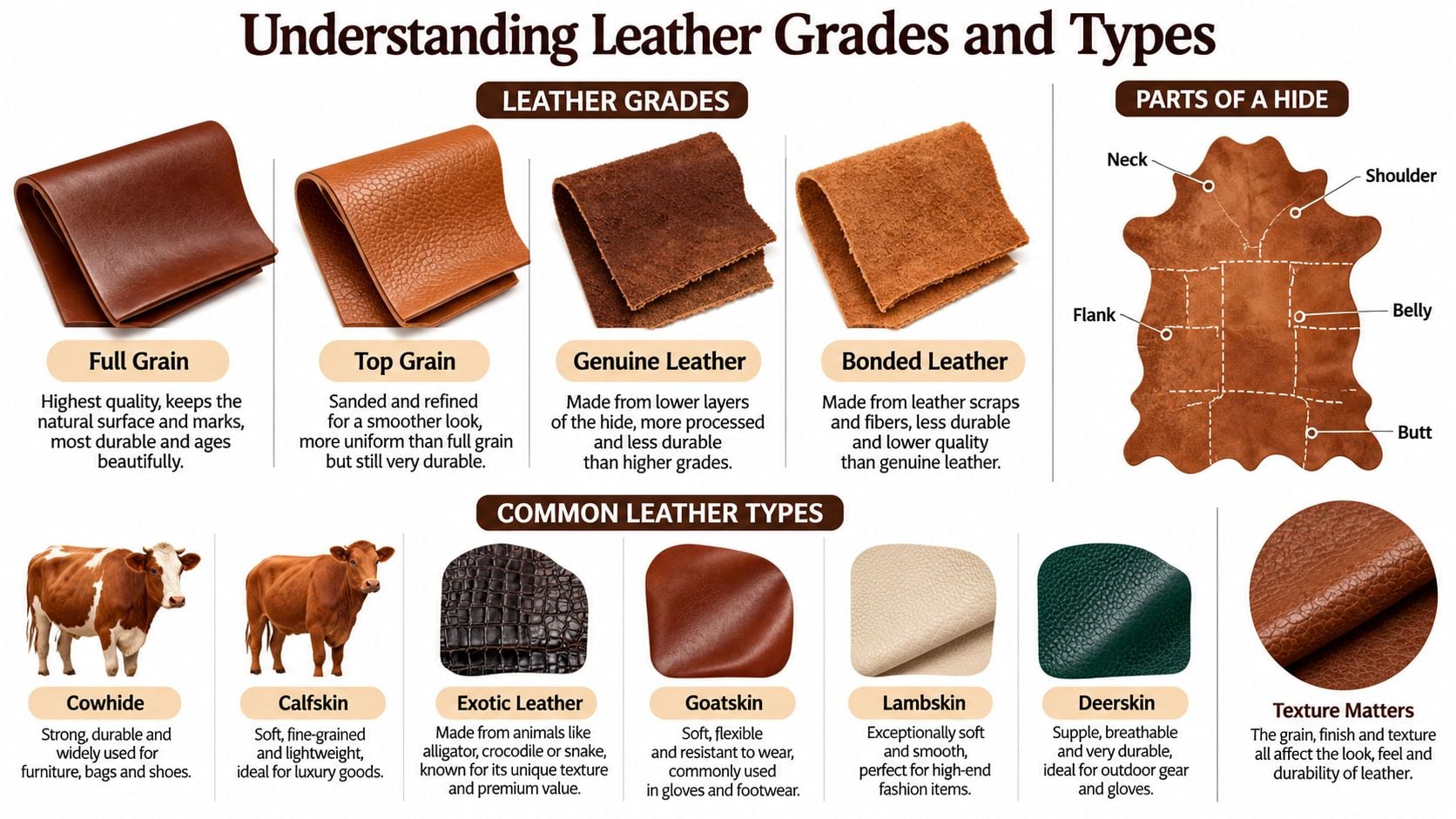
The main grain categories
Full-grain leather comes from the outermost, unsanded layer of the hide. It retains the natural grain, so small scars, markings, and variations remain visible. Full-grain leather is widely described as highly durable and capable of developing a patina over time. On a sofa, that can produce a surface that becomes more individual with use instead of appearing merely worn. This guide to full-grain leather for furniture explains why its unsanded structure is associated with long-lasting upholstery.
Top-grain leather also uses the hide's strong outer layer, but the surface is lightly sanded or buffed to reduce visible imperfections. That treatment creates a more even appearance while retaining much of the grain structure. Top-grain leather guidance describes it as a durable option for heavily used furniture such as sofas. Its hand is often smooth and substantial, with a finish that may look more uniform than full grain.
Corrected-grain leather receives more surface treatment to produce consistent color and texture. That process can suit a room where a controlled appearance matters, although it reduces some of the hide's natural character. The practical question is whether the finish suits the household's priorities for feel, visual variation, and aging. A uniform surface may be easier to match across pieces, while a more natural surface shows more of the material's origin.
Where lower-cost constructions fit
Split leather comes from a lower layer of the hide after the strongest outer section has been separated. Bonded leather uses leather fibers or scraps combined with a surface coating. These constructions can meet a particular budget or design requirement, but they should not be treated as equivalent to full-grain or top-grain upholstery. Read this comparison of top-grain leather and bonded leather before choosing between them.
The phrase “genuine leather” needs careful interpretation. It can indicate real leather, but it does not identify which part of the hide was used, how thick the surface is, or whether the material is bonded. Ask for the upholstery construction in writing. A clear specification is more useful than a broad label.
A useful showroom test: Run a hand across the surface, then ask whether the sample shows natural grain, a corrected finish, or a bonded construction. Texture cannot answer every question, but the specification should.
For a family sofa used every day, full-grain or top-grain leather generally offers the strongest material case. A lower-grade surface may suit occasional seating, provided its expected wear and care requirements are understood. Choose the construction for the room's use, not just for the sample color that looks best under showroom lighting.
Leather Versus Fabric Upholstery
Leather and fabric solve different furnishing problems. Leather offers a smooth, structured appearance and a surface that can be gently wiped after many everyday spills. Fabric offers a broad design vocabulary, from quiet solids to tactile weaves and expressive patterns, with a hand that often feels cooler when someone first sits down.
Temperature is one of the most noticeable differences. Leather can feel cool when first touched and warmer as the body transfers heat to the surface. Fabric usually feels less temperature-reactive at the moment of contact, which some households prefer in summer. Room temperature, window exposure, and the sofa's cushion construction also influence comfort, so a short sit test matters more than a general rule.
Hair and crumbs behave differently on the two materials. Pet hair may slide across a smooth leather surface and remain visible for easy removal, while fabric can hold hair and fine debris within its weave. Leather isn't immune to pet damage. Claws can scratch or puncture the finish, and repeated rubbing in one place can change its appearance. A tightly woven fabric may better suit a household that expects frequent claw contact, while leather may better suit one that values quick surface cleanup.
A practical comparison
| Consideration | Leather | Fabric |
|---|---|---|
| Surface response | Smooth and structured, with visible grain or finish variation | Soft, woven, or textured, with broad pattern options |
| Temperature | Can warm with body contact and room conditions | Often feels cooler at first contact |
| Pet hair | Hair can remain on the surface for easier removal | Hair may collect within the weave |
| Claws | Scratches can be visible, especially on delicate finishes | Tight weaves may tolerate some contact, but can snag |
| Design range | Timeless color and material depth | Extensive patterns, colors, and tactile textures |
| Care | Needs leather-specific cleaning and conditioning | Needs care suited to the fabric fiber and finish |
Fabric shouldn't be dismissed just because leather has a reputation for durability. A patterned textile may integrate more naturally with an eclectic interior design scheme, while leather can anchor a room with a quieter, more architectural presence. Households comparing textile options can also browse Seoul Bag fabrics for a sense of how different fabric textures and colors can change a piece's character.
For buyers deciding between materials, the guide to the best fabric for sofa upholstery can help clarify the textile side of the decision. The strongest choice accounts for the people using the sofa, the room's light, the desired tactile experience, and the owner's willingness to follow the correct care routine.
Essential Care and Maintenance Routines
A leather sofa beside a sunny window, a radiator, or a busy family seating area will need a different routine from one in a shaded, lightly used room. Leather is a semi-porous natural material, not a wipe-anything surface. Body oils, dust, and grit can wear the finish over time, while heat and sunlight draw moisture from the hide. Consistent care protects the grain and helps the upholstery age as intended.

A simple routine for everyday use
Dust weekly. Wipe accessible surfaces with a soft, dry cloth or microfiber cloth. A vacuum fitted with a soft brush attachment can lift grit from seams and crevices without the abrasion of a stiff brush. Follow leather upholstery cleaning guidance by avoiding aggressive tools and unsuitable household chemicals.
Blot spills immediately. Lay a clean, dry cloth over a liquid and lift the moisture without rubbing. Rubbing spreads the spill and pushes it deeper into the surface. Lift solid debris carefully instead of pressing it into the leather.
Avoid harsh chemistry. Bleach, ammonia, acetone, window cleaners, alcohol-based products, and general household detergents can damage a leather finish. Choose a cleaner made for furniture leather, then test it in an inconspicuous area before treating the visible upholstery.
Condition with restraint. Conditioning is commonly appropriate every 6 to 12 months, depending on climate, use, and leather type. Apply a suitable conditioner sparingly to help maintain suppleness and reduce the drying effects of heat and sunlight. The leather-care recommendations for conditioning support this approach. Too much product can leave residue, so the surface's feel is a better guide than an automatic schedule.
Climate changes the maintenance question
Dry winter air, strong afternoon sun, pets, children, and frequent use all increase the demand on a leather sofa. Some rooms may suit conditioning every 3 to 6 months, while others may need it only every 6 to 12 months. Protect upholstery from direct sunlight and heat, and use the climate and leather upholstery care discussion to understand how room conditions affect the hide.
Keep the sofa at least 30 cm from radiators or similar heat sources. Rotate cushions where the design allows, smooth comfort wrinkles gently, and watch for leather that feels dry or stiff. For heavily used furniture or larger commercial spaces, arrange a professional deep clean for facility upholstery rather than attempting aggressive treatment at home.
Care principle: Clean according to the leather's specification, condition according to its surface cues, and protect the sofa from the room's strongest heat and light.
Use this guide to protecting leather furniture when reviewing placement and daily habits. These steps keep care practical while preventing avoidable damage that no leather grade can fully overcome.
Aesthetic Appeal and Long-Term Value
A leather sofa often shows its real character after the showroom finish feels familiar. A well-selected hide can develop patina, a gradual change in color and surface character that records use while still looking cared for. Full-grain leather is especially known for this change because its natural surface remains visible rather than being heavily altered.
That aging gives leather a lasting role in interior design. A deep brown sofa can settle into a traditional room with the visual weight of an established piece. A pale or richly colored hide can bring warmth to a modern room without introducing a busy pattern. Top-grain leather adds a different appeal through its soft, buttery hand. The material is seen across the room and felt every time someone sits down.
Cost-per-year is the useful comparison
A sofa's value rests on more than its purchase price. With sound construction and appropriate care, a well-made genuine leather sofa is commonly expected to serve for 15 to 25 years or more, as described in guidance on leather grade, durability, and care. That service life depends on the frame, upholstery work, hide quality, finish, room placement, and the owner's maintenance habits. It is a reasonable expectation for a properly made sofa, not a guarantee for every leather piece.
A lower-priced sofa that cracks or peels early may cost more per year than a better-built sofa kept in good condition. The opposite can happen too. An expensive natural hide exposed to strong sunlight or treated with unsuitable chemicals may lose its appearance sooner than expected. Leather works as a long-term investment when its qualities match the household's use and the room's conditions.
Sustainability calls for a measured view. Keeping a sofa in service for many years can reduce frequent furniture replacement, while leather production still involves tanning methods, chemical use, and supply-chain decisions that deserve attention. Current upholstery trend coverage on material quality and tanning reflects growing interest in lower-chemical and more efficient tanning approaches. Durability helps, but it does not settle every environmental question.
An heirloom sofa remains useful, repairable, and welcome in the home over time. Material integrity matters, as do the frame beneath the upholstery, the maker's craftsmanship, and the owner's willingness to care for the hide. That combination turns leather from a showroom finish into a material with a service life.
Customizing Your Leather Sofa at Tyner
The right leather sofa may not be the one sitting on the showroom floor in the exact configuration a household needs. In-stock is just the beginning. A made-to-order program can allow a shopper to select a finish, fabric or leather, seating configuration, and comfort profile that suit the room rather than forcing the room to accommodate a fixed piece.
At the South State St. showroom in Ann Arbor, a sit test can reveal details that photographs can't communicate. The difference between full-grain and top-grain leather is easier to understand through the hand, while cushion firmness, seat depth, reclining movement, and arm height become practical rather than abstract questions.
Custom decisions worth making in person
- Leather grade: Compare the natural variation and developing character of full grain with the more consistent finish of top grain.
- Color and finish: Place samples near the room's flooring, trim, and natural light before selecting a final hide.
- Configuration: Consider a sofa, sectional, reclining sofa, or coordinated seating arrangement based on traffic flow.
- Comfort profile: Ergonomic support matters as much as appearance, particularly for households that use the sofa for extended periods.
- Future care: Ask which cleaner and conditioner suit the selected leather rather than assuming one product works for every finish.
The Made-to-Order offering includes hundreds of premium fabrics and top-grain leathers. Customization also extends beyond living rooms. Canadel provides made-to-order dining choices that include finishes and configurations, while Stressless offers ergonomic seating with Small, Medium, and Large sizing. Those options make it possible to coordinate an interior design plan across living, dining, and comfort-focused spaces.
The local legacy dates to 1957, when the business began serving the Southeast Michigan community. Today, the selection reaches from the Home Office to Outdoor Spaces, so a leather sofa can be considered as part of a broader home rather than as an isolated purchase. For bedroom and dining furniture, Amish hand-crafted solid wood pieces provide a different standard from mass-produced alternatives, with material integrity, careful joinery, and the weight of solid cherry, oak, or maple under the hand.
Special Financing, subject to approval, can help households plan for a substantial furnishing purchase, and the Low Price Promise supports competitive value. The relevant starting point for leather buyers remains the custom upholstery sofa program, where the hide, configuration, and comfort decisions can be evaluated together.
Tyner Furniture offers leather sofas, made-to-order upholstery, ergonomic seating, and home furnishings across living, dining, bedroom, office, and outdoor spaces. Visit Tyner Furniture in the Ann Arbor showroom for a hands-on sit test, or browse the online Quick Specs before arranging a special order.