White Glove Delivery Tip: Your Essential Guide for 2026


A white glove delivery tip is typically optional but widely appreciated. A standard tip is $10 to $20 per person for routine deliveries, and $20 to $50 per person for complex jobs involving stairs, tight access, heavy pieces, or assembly.
A new sofa, dining table, recliner, or mattress can feel like a major arrival in the home. The crew has to move through hallways, protect walls and flooring, place the furniture correctly, and often leave the room ready to use. For high-end, made-to-order furniture, that care matters even more because craftsmanship, finish, and material integrity are part of the investment.
Furniture shoppers in Ann Arbor and across Southeast Michigan can make delivery day smoother with a little preparation. The right white glove delivery tip should reflect the crew's effort, not the furniture's purchase price. It should also come after the work is finished, the packaging is gone, and the customer has had a chance to inspect the piece.
What Sets White Glove Service Apart
Standard delivery usually ends at the curb, driveway, or threshold. White glove service continues inside the home, with a trained crew handling placement, unpacking, assembly when included, and removal of packaging materials. White glove furniture delivery is therefore a labor service, not just a transportation appointment.
That distinction explains the tipping difference. A crew may carry a large sectional through a narrow entry, angle a solid cherry cabinet around a stairwell, or position a heavy dining table without marking the floor. The work calls for strength, planning, patience, and respect for the home.
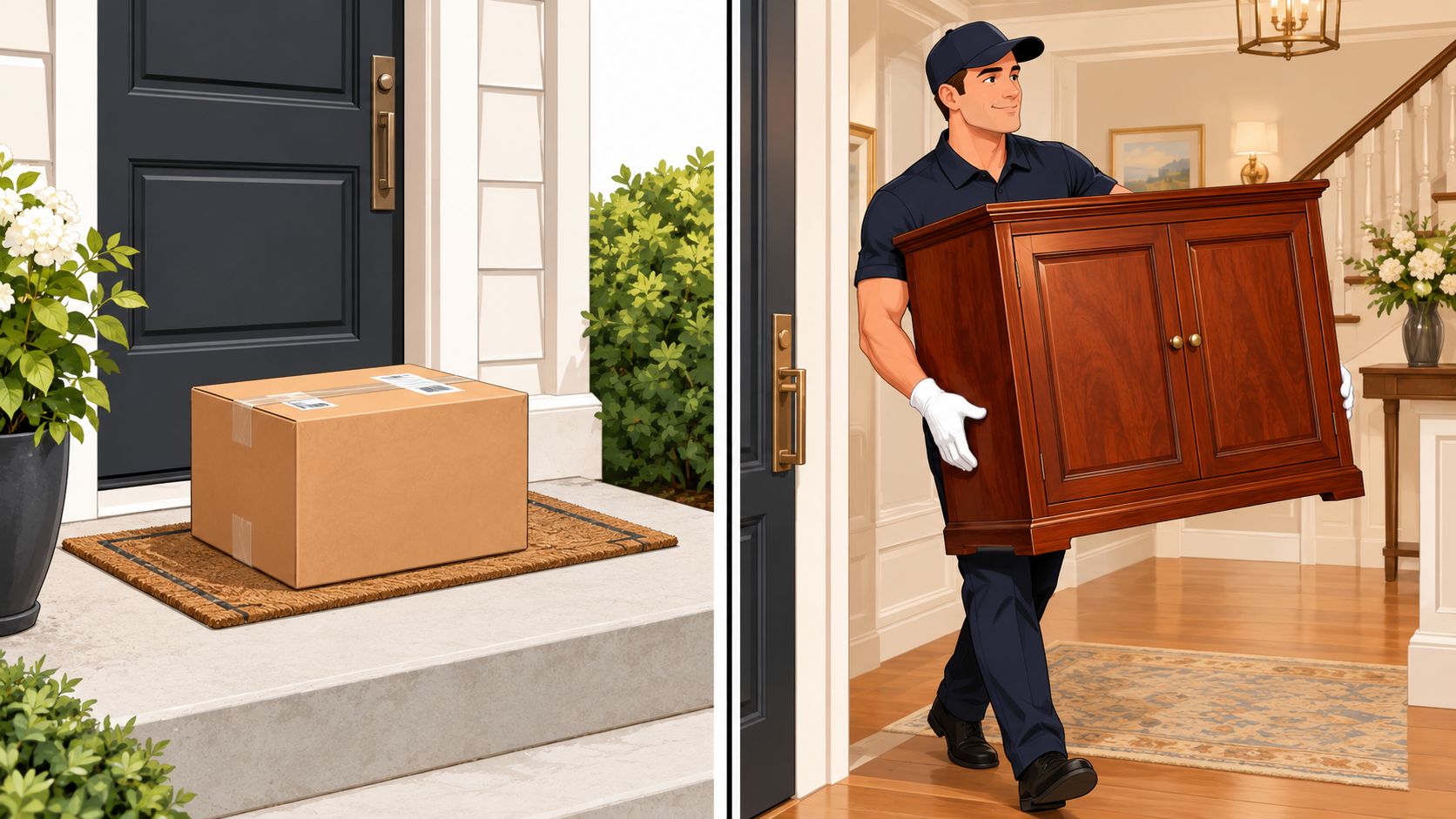
More than a box at the door
The phrase white glove delivery describes a service model that goes beyond curbside drop-off. It can include:
- In-home placement: The crew brings the furniture to the room selected by the customer.
- Unpacking: Protective wrap, cartons, and other shipping materials are removed.
- Assembly: Components are put together when the service includes setup.
- Packaging removal: The room is left without the delivery debris that a standard shipment may leave behind.
The name also captures an expectation of careful handling. The buttery feel of top-grain leather, the weight of solid cherry wood, and the clean movement of an ergonomic recliner all deserve attention from the truck to the final room.
Customers interested in the broader meaning of careful in-home handling can also read what white glove rug care means, especially when a delivery involves rugs, flooring, or other delicate surfaces.
Why the premium changes the etiquette
Contemporary industry guidance places white glove service at about 5% to 20% more than standard curbside delivery, because the added cost reflects labor and service scope rather than distance alone. Industry guidance on white glove service describes the distinction between basic transport and the added work of in-home handling.
That same principle should guide the gratuity. A simple ground-floor placement requires less effort than a multi-room setup involving stairs, tight turns, or assembly. The quality of the furniture doesn't create an obligation to tip, but careful handling of an heirloom piece is a sensible reason to show appreciation when the work is excellent.
Preparing Your Space for Arrival
A smooth delivery begins before the truck reaches the driveway. The customer should treat the route from the entrance to the final room as part of the furniture plan, especially for a large sofa, dining table, bedroom case piece, or solid wood cabinet.
The first task is to measure more than the destination. Doorways, hallways, stairwells, sharp corners, elevator openings, and the space around the final placement all matter. A product may fit comfortably in a room yet fail at a narrow turn on the way there. The furniture measuring guide helps customers evaluate the complete path rather than relying on room dimensions alone.
A practical arrival checklist
- Clear the route: Move lamps, plants, small tables, artwork, toys, and other breakables away from the entry and hallway.
- Protect the floor: Use approved runners, cardboard, or drop cloths where appropriate, particularly around hardwood, light carpet, or freshly finished flooring.
- Reserve assembly space: Leave enough room for the crew to turn, unpack, and assemble the furniture without working around existing pieces.
- Secure pets: Keep dogs and cats in a separate room so the crew can work safely and keep doors from being left open.
- Confirm building access: Renters should check loading rules, elevator reservations, service entrances, and delivery hours before the appointment.
- Choose the final position: Clear the exact area where the piece will sit, including enough space for doors, recliners, drawers, or table leaves to operate.
Practical rule: A clear path protects both the home and the furniture. It also gives the crew room to make careful decisions instead of rushing around obstacles.
Preparation protects the investment
Preparation has special value when the furniture is hand-crafted or made-to-order. Amish solid wood pieces rely on material integrity, precise joinery, and carefully selected North American hardwoods. Their weight and structure differ from mass-produced alternatives, so the route should account for more than the boxed dimensions.
The same applies to bespoke upholstery. A custom fabric, top-grain leather, or carefully selected finish represents a long-term interior design decision. Customers who clear the room, protect the floor, and communicate placement preferences make it easier for the crew to preserve the piece and complete the setup properly.
Understanding Fair Tipping Guidelines
The white glove delivery tip should be based on effort, complexity, and service quality. Furniture price is the wrong anchor. A modestly priced item that must pass through a tight stairwell can require more work than a premium piece placed directly inside a wide first-floor entrance.
For routine in-home furniture or mattress delivery, etiquette guidance commonly places the amount at $10 to $20 per person. For heavier or more complicated work, the practical range rises to $20 to $50 per person, particularly when the crew handles stairs, tight turns, difficult access, unpacking, or assembly. White glove delivery tipping guidance supports this distinction between routine service and more demanding work.
Match the amount to the job
A straightforward delivery may sit near the lower range when the crew has an easy route, minimal setup, and no unusual handling. A higher amount makes sense when the team has to maneuver a large piece through narrow spaces, assemble several components, or take extra care with a delicate finish.
The following factors deserve attention:
- Access difficulty: Stairs, tight turns, long carries, and restricted entrances increase physical effort and risk.
- Furniture weight: Solid wood tables, cabinets, bedroom furniture, and oversized seating require controlled handling.
- Assembly demands: More involved setup deserves more recognition than simple placement.
- Room protection: Crews that protect floors, walls, and door frames demonstrate valuable care.
- Professional conduct: Clear communication, respectful behavior, careful positioning, and complete cleanup all matter.
A recent delivery etiquette benchmark places many white glove jobs in the $20 to $50 per person range, with $50 or more per person potentially appropriate for especially demanding deliveries. Additional guidance on white glove delivery tips emphasizes that the amount should follow the work rather than the receipt total.
Check the invoice before setting aside cash
Tipping remains discretionary. The customer shouldn't feel pressured to provide a gratuity when a service fee or stated gratuity already appears on the invoice. Some delivery arrangements include a gratuity component, while others charge only for logistics and labor.
The best process is simple:
- Review the paperwork: Look for wording such as service fee, gratuity included, or delivery charge.
- Ask for clarification: If the invoice isn't clear, the customer can ask the retailer whether gratuity is included.
- Judge the completed service: The final amount should reflect what the crew handled.
- Prepare individual cash tips: Cash makes it easy to recognize each crew member directly.
A 2025 Bankrate survey found that only 15% of consumers always tip furniture or appliance delivery workers, which confirms that tipping isn't universally expected. Bankrate's survey on tipping behavior also reinforces the practical distinction between a discretionary reward and a mandatory charge.
Timing and Handing Over the Tip
The best time to offer a white glove delivery tip is after the entire job is complete. The furniture should be in its final position, assembly should be finished, the mechanisms should have been checked, and all packaging should be removed before the customer decides what the service deserves.
Tipping too early creates an awkward incentive and leaves important work unfinished. A crew should be judged on the complete handoff, not on the first impression made when the item enters the home.

A respectful handoff
Cash handed directly to each crew member is the clearest approach. It avoids uncertainty about whether the amount will be divided and gives every person a personal acknowledgment for the work performed.
A short thank-you is enough. Customers can mention the specific care that stood out, such as protecting the flooring, handling a tight turn, assembling a recliner correctly, or placing a dining table precisely where requested.
The tip belongs at the end, after the room is ready and the customer is satisfied with the result.
Keep the final minutes organized
Before opening a wallet or envelope, the customer should complete a brief walkthrough. If a piece needs a small adjustment, the delivery team should hear about it while the crew is still present. That isn't a confrontation. It is the normal final step in a professional installation.
The delivery service information can help customers understand what in-home handling and setup may involve before the appointment. Advance clarity keeps the delivery day focused on placement and care rather than last-minute confusion about what the crew was expected to do.
A customer without cash can still recognize excellent service through a sincere compliment to the delivery manager or a detailed review that names the specific care provided. Appreciation should be clear, but nobody should feel obligated to tip when the service was incomplete or the invoice already includes gratuity.
Final Inspection and Checkout
The final inspection protects the furniture and gives the customer a fair opportunity to raise concerns. It should happen before the delivery team leaves, while the item remains in position and any setup questions can be answered immediately.
For a solid wood piece, the inspection should focus on both appearance and function. The customer should look at visible surfaces under normal room light, check edges and corners, and confirm that the finish appears consistent with the selected sample or order.
The inspection checklist
- Secure the structure: Check that legs, handles, shelves, and visible hardware are firmly installed.
- Examine the finish: Look for scratches, dents, rub marks, or other signs of handling on wood surfaces.
- Test moving parts: Open drawers, extend table leaves, operate recliners, and check doors for smooth movement.
- Confirm placement: Make sure the piece sits level and leaves the clearance needed for doors, walking paths, and nearby furnishings.
- Review the room: Confirm that packaging, wrap, and other delivery materials have been removed.
Mass-produced furniture can hide construction shortcuts behind a finished surface. Hand-crafted Amish furniture deserves a more thoughtful review because joinery, solid wood selection, and finish quality are central to its value. A customer should document and report any concern rather than trying to repair it independently.
Resolve concerns before checkout
If a scratch, dent, loose component, or mechanical problem appears, the customer should point it out immediately and record the issue through the retailer's stated process. The furniture warranty information can provide additional guidance on coverage and next steps.
A clean inspection also clarifies the gratuity decision. If the crew handled the piece carefully, completed the setup, removed the packaging, and responded professionally to final requests, the customer can offer the planned tip with confidence. If the work remains incomplete, the retailer should be contacted before a gratuity is considered.
Tyner Furniture's local legacy began in 1957, and that history supports a straightforward standard of hospitality. Furniture delivery isn't finished when the truck arrives. It is finished when the customer can use the piece safely and the room is left in proper order.
Embracing the Tyner Experience
The delivery conversation reflects a larger furniture decision. A high-quality piece should earn its place in the home through durability, comfort, craftsmanship, and long-term usefulness. Cost-per-year matters more than the first impression of the purchase price when a table, recliner, bedroom set, or sofa is expected to serve for years.
The Ann Arbor showroom on South State St. gives Southeast Michigan shoppers a place to experience those differences in person. Customers can feel the buttery surface of top-grain leather, test the ergonomic support of Stressless seating, and examine the weight and grain of solid cherry, oak, or maple furniture before ordering.
Customization starts beyond in-stock furniture
In-stock is just the beginning. Made-to-order programs allow customers to select finishes, fabrics, sizes, and configurations that suit the home. Canadel dining furniture supports bespoke choices across table details, finishes, and seating arrangements, while Stressless offers ergonomic seating designed around different body sizes and comfort preferences.
The same showroom supports decisions across the home, from the Home Office to Outdoor Spaces. Customers can coordinate living rooms, bedrooms, dining areas, entertainment spaces, patios, and sleep systems instead of treating each purchase as an isolated choice.
Special Financing can lower the immediate barrier to an heirloom-quality purchase, subject to approval, while the Low Price Promise supports competitive value. The Tyner Furniture advantage also includes design guidance for shoppers comparing materials, configurations, and long-term fit.
A well-prepared customer respects the delivery crew's labor. A careful crew respects the customer's home and investment. That partnership is what turns a custom order into a finished living space.
Tyner Furniture offers made-to-order furniture, hand-crafted solid wood pieces, ergonomic seating, and coordinated options for every room, supported by Special Financing and a Low Price Promise. Customers can visit Tyner Furniture in Ann Arbor for a personal sit test and practical design guidance before arranging white glove delivery.