Shop Amish Furniture Ann Arbor: Heirloom Quality 2026

You’re probably here because a piece of furniture has started to bother you.
Maybe it’s the dining chair that rocks a little more each month. Maybe it’s the dresser drawer that only closes if you lift it just right. Or maybe you’ve reached that point many Ann Arbor homeowners hit, where replacing furniture every few years stops feeling practical and starts feeling wasteful.
That’s usually when amish furniture ann arbor becomes more than a search term. It becomes a different way to buy. Instead of asking what looks good for now, you start asking what will still feel solid, useful, and beautiful years from today. That’s a better question, especially if you’re furnishing a forever home, upgrading a home office, or trying to make one strong purchase instead of several weak ones.
Table of Contents
- Your Journey to Heirloom Furniture Starts in Ann Arbor
- What Makes Amish Furniture a Lifelong Investment
- Understanding Solid Wood Species and Joinery
- Designing Your Bespoke Piece from the Ground Up
- Navigating the Showroom and Ordering Process
- Making Heirloom Quality Accessible and Affordable
- Care, Delivery, and Frequently Asked Questions
Your Journey to Heirloom Furniture Starts in Ann Arbor
You order a bedroom set online because the photos look polished and the price feels reasonable. Two Michigan winters later, the finish looks worn, a drawer starts to rack, and the piece that once felt like a smart buy now feels temporary.
That moment is often what sends Ann Arbor shoppers into a showroom looking for something different. They are not just shopping for a style. They are trying to stop repeating the replace-and-regret cycle.
In Michigan, that search is easier than many people expect. Michigan has a large Amish community and a well-established network of Amish furniture makers and retailers, which has made hand-crafted solid wood furniture more available to shoppers in places like Ann Arbor, according to Amish America’s overview of Amish furniture in Michigan.
That local access changes the experience in practical ways. You can sit in the chair before ordering it. You can compare stain colors under real lighting. You can ask what will change if you add two leaves to a table or request a narrower dresser for a smaller wall.
A different kind of furniture decision
Heirloom furniture usually begins with a household problem, not a decorating trend. A dining table needs to handle weeknight meals, homework, and holiday gatherings. A desk needs enough depth for real work. A bedroom set needs to feel settled in the room instead of oversized or flimsy.
Custom Amish furniture works much like having a coat custom-made instead of buying one off the rack. The basic purpose stays the same, but the fit changes everything. Size, wood choice, finish, storage details, and chair comfort can all be adjusted so the piece suits your home and your routine.
A local showroom helps make those decisions clearer. Amish furniture in Michigan buying guidance lets shoppers compare construction methods, finishes, and customization paths in person instead of trying to judge quality from a screen.
Practical rule: Buy the piece you will still be glad to own after the room changes around it.
Why Ann Arbor buyers approach this category with care
Ann Arbor homes ask a lot from furniture. A historic home may need a table that feels appropriate with original woodwork. A newer open-concept house may need a larger piece with clean lines and strong proportions. A condo may need storage that uses every inch wisely.
That is why many local buyers treat this as a full process, not a quick transaction. They want to understand what can be customized, how ordering works, what delivery looks like, and whether financing can make a better piece realistic now instead of someday. Tyner Furniture, a local store serving the area since 1957, has been part of that conversation for decades. The question has stayed consistent even as styles change. How do you buy furniture that feels right today and still earns its place years from now?
Amish furniture appeals to Ann Arbor shoppers because it offers a practical answer. You get solid wood construction, a wide range of design options, and a buying process that can include showroom guidance, made-to-order details, and white-glove delivery. That combination is what turns a furniture purchase into a long-term home decision.
What Makes Amish Furniture a Lifelong Investment
People often use the word “quality” loosely. In furniture, it has to mean something concrete. It has to show up in the materials, the finish, the way a drawer glides, and the way a chair feels after years of ordinary use.
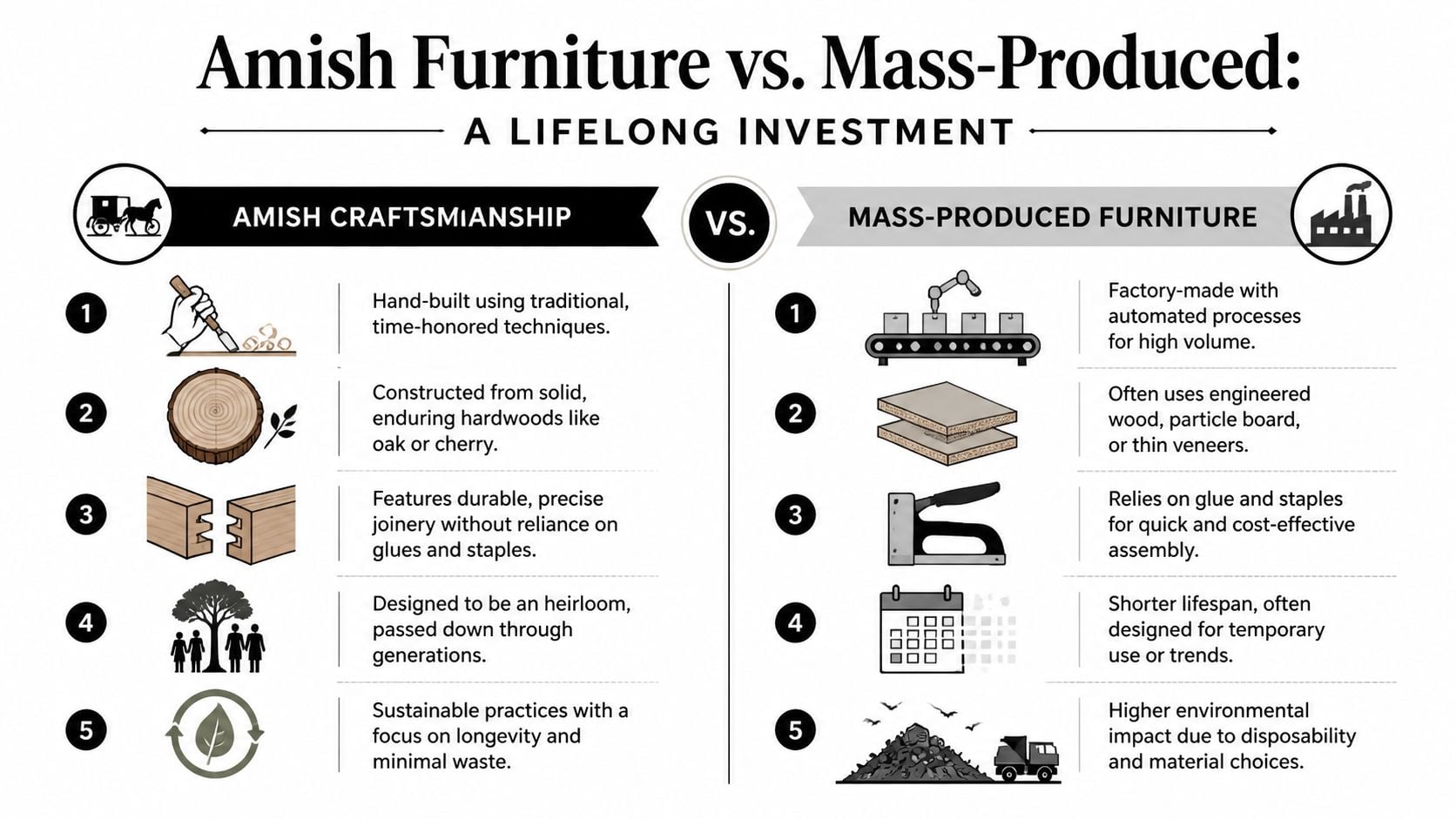
Amish furniture stands apart because the build standard starts higher. It’s not just that it looks traditional or solid. It’s that the craft process places long service life ahead of speed.
Why shoppers notice the difference right away
The first thing many people notice is the surface. A well-finished solid wood piece has a smoothness that feels calm in the hand. Corners feel considered. Drawer interiors don’t feel neglected. Edges don’t feel sharp or hurried.
That isn’t accidental. Amish businesses have a 95% five-year success rate, and furniture from this tradition is known for full sanding, buttery soft finishes, post-catalyzed varnish for durability, and sealed edge grains to help prevent warping, as described by Amish business background and furniture construction details.
That last point matters more than shoppers expect. A finish isn’t just color. It’s protection. When craftsmen sand thoroughly and seal carefully, the piece feels better on day one and holds up better over time.
What lasting value looks like in daily use
A lifelong investment doesn’t have to mean formal furniture. It can be a Shaker dining set that sees breakfast every day. It can be a Mission-style bookcase in a family room. It can be a home office desk that takes the weight of monitors, paperwork, and years of repeated drawer use.
Here’s where mass production usually cuts corners:
- Material shortcuts mean surfaces can look fine at first but age poorly.
- Assembly shortcuts often rely on fast methods that don’t hold up to repeated movement.
- Trend-driven styling can make a piece feel dated before it’s even worn out.
By contrast, solid wood furniture built with care earns value slowly. The grain becomes more familiar. The finish develops character. The piece starts to feel like it belongs in the room rather than matching it.
Furniture becomes affordable in a different way when you stop measuring only the purchase and start measuring the years of confident use.
For buyers who want to compare that build standard more closely, American-made solid wood furniture is a useful reference point, especially when you’re weighing heirloom construction against veneer-based alternatives.
Another benefit is flexibility. A hand-crafted dining table doesn’t lock you into one aesthetic forever. Change the rug, repaint the walls, swap the lighting, and a solid cherry or oak table can still hold the room together. That kind of staying power is hard to fake, and it’s one reason so many shoppers eventually stop asking for the lowest upfront number and start asking for the strongest long-term value.
Understanding Solid Wood Species and Joinery
Once you decide you want real wood furniture, the next question usually sounds simple. Which wood should I choose?
It’s a fair question, but there isn’t one universal answer. The right species depends on how you live, how much texture you like in the grain, and what role the piece plays in the room. A dining table works differently than a dresser. A home office desk takes different wear than a bedside chest.
How wood choice changes the experience
Wood affects more than color. It changes weight, visual character, and how the furniture will age in your home.
Red oak and maple are especially strong examples. Solid hardwoods like red oak with a Janka hardness of 1290 lbf and maple at 1450 lbf outperform softwoods by 2-3x in impact resistance, and they’re kiln-dried to a controlled moisture content to help prevent cracks and warping during Ann Arbor’s humidity swings, according to Michigan solid wood furniture guidance from Millwest.
That’s why a solid wood piece feels different year after year. Proper drying helps the wood stay stable. Good hardwood selection helps the surface resist the dents and wear that show up quickly on weaker materials.
Solid Hardwood Comparison
| Wood Species | Hardness (Janka Scale) | Grain & Appearance | Best For | Aging Character |
|---|---|---|---|---|
| Cherry | 950 lbf | Smooth, refined grain with a warm look | Bedrooms, home offices, formal or transitional dining | Develops a richer patina over time |
| Red Oak | 1290 lbf | Open, visible grain with classic texture | Dining tables, chairs, storage pieces | Keeps a familiar, time-tested character |
| Maple | 1450 lbf | Smoother, quieter grain | Contemporary spaces, desks, dressers | Holds a clean look as styles change |
| Walnut | 1010 lbf | Deep tone with elegant figure | Statement pieces, offices, accent furniture | Ages with depth and distinction |
A few practical examples help:
- Choose cherry if you want warmth without heavy grain.
- Choose red oak if you want visible texture and classic furniture character.
- Choose maple if you prefer a cleaner, more refined surface.
- Choose walnut when the piece needs a little drama and visual richness.
For a deeper look at how species affect longevity and style, choosing the right hardwood for longevity and style is worth reviewing before you settle on a finish.
Why joinery matters more than most shoppers expect
Shoppers often focus on the top surface because that’s what they see first. The hidden story is in the joints.
Mortise-and-tenon joinery locks one part of the frame into another in a way that spreads stress through the wood. Dovetailed drawers interlock at the corners instead of relying on simple glue-only assembly. Those are old methods, but they’re still around because they work.
The practical result shows up in everyday life:
- Dining chairs stay tighter through repeated use.
- Desk drawers feel more stable when loaded with files or electronics.
- Cabinet frames resist loosening when moved or used heavily.
- Tables feel planted instead of developing sway over time.
If you want to know how a piece will age, open the drawers, check the joints, and look underneath. The construction tells the truth faster than the stain does.
At this stage, many Ann Arbor buyers start to feel more confident. Once you’ve handled solid hardwood and learned what dovetail and mortise-and-tenon joinery look like, furniture shopping gets much less confusing. You stop comparing only style and start comparing structure.
Designing Your Bespoke Piece from the Ground Up
You walk into the showroom knowing you need a dining table, then the specific questions start. How many people need to fit on a normal Tuesday. What happens at Thanksgiving. Will the stain fight with your floors. Do you need storage that hides clutter or storage you can reach quickly every day.
That is how custom furniture usually begins. With real life.
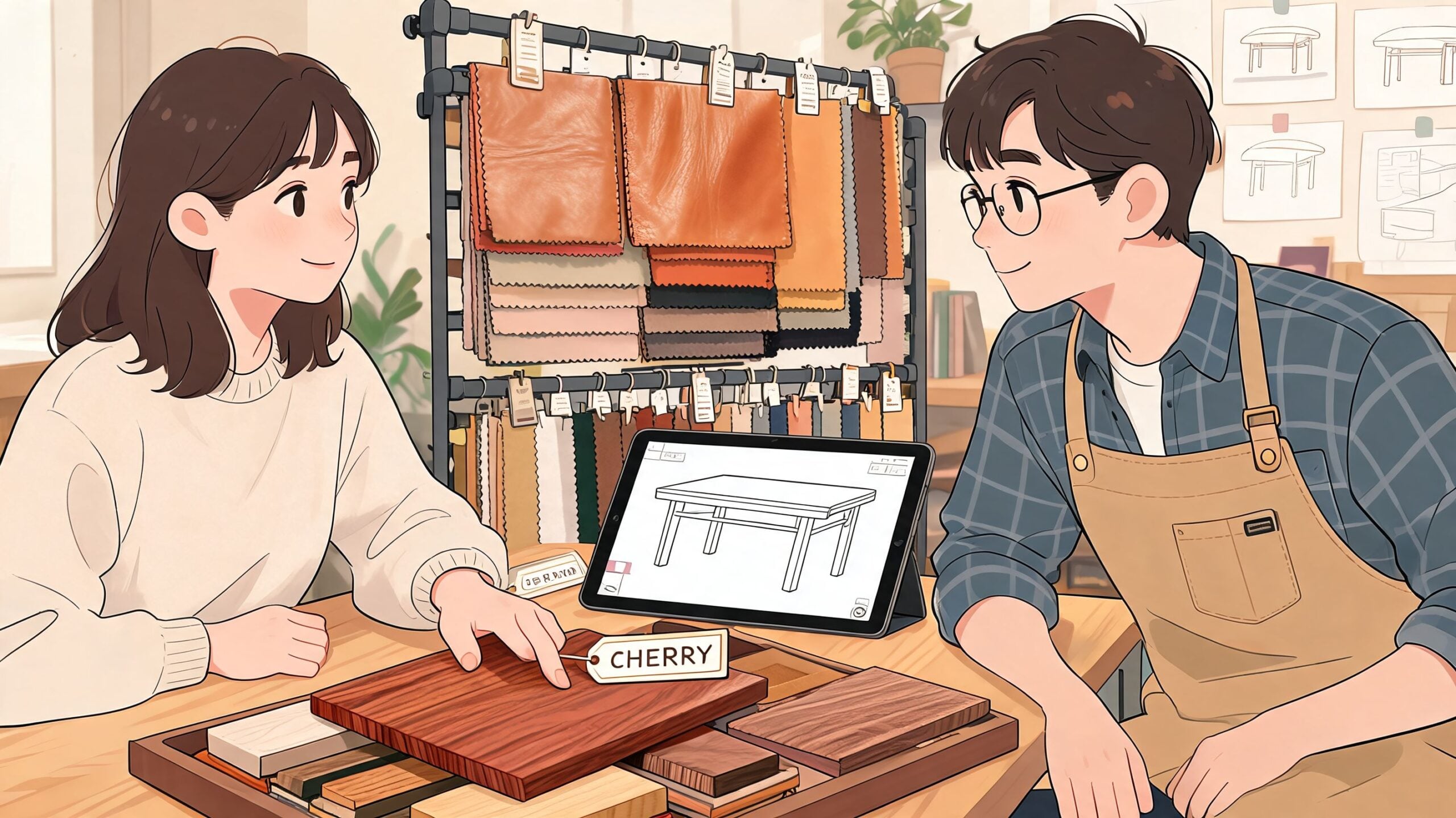
A bespoke piece rarely starts as a blank page. It usually starts with a proven design and a series of smart adjustments. That makes the process much less intimidating for Ann Arbor shoppers who want something personal but also want the comfort of seeing examples, touching finishes, and sitting in the furniture before they place an order.
Start with function, not just style
The strongest custom orders begin with use patterns.
For a dining table, start with the number of people who sit there most often. Then account for guests, walk-around space, and whether you want leaves. For a desk, consider where your monitor sits, how much writing space you need, and whether drawers should be shallow for small supplies or deep enough for files. For a bedroom set, it helps to look at your habits. Folded clothes, hanging clothes, jewelry, extra bedding, and everyday drop zones all point to different storage choices.
A good custom order solves these practical problems first. Style comes next, and that order matters. It works like building a house. You choose the floor plan before you pick the paint.
Customization also goes beyond surface details. You are not merely changing color or hardware. You are choosing proportions, storage layout, edge profile, seating comfort, and the way a piece will function in one specific room for many years.
The choices that shape the final piece
Once the function is clear, the design process becomes much more enjoyable because each choice has a purpose.
Many Ann Arbor shoppers begin with a floor sample. That approach helps because scale is hard to judge from a catalog alone. A chair that looks graceful in a photo may sit too upright for long dinners. A table that seems generous online may feel oversized once you factor in traffic paths, rugs, and nearby case pieces.
A made-to-order piece may include:
- Wood selection to set the overall character and grain pattern
- Stain choice to coordinate with flooring, trim, cabinets, or existing furniture
- Edge and base details that shift a table from formal to casual
- Hardware options that change how a dresser or desk feels in the hand
- Dimensions and configuration for rooms with tight clearances or unusual layouts
This is also the point where shoppers often realize custom work can be more practical than shopping off the floor. A breakfast nook may need a narrower table. A condo office may need a desk that fits one exact wall. A primary bedroom may call for taller chests instead of wider dressers because floor space is limited.
Brands can solve different parts of that puzzle. Canadel gives buyers a lot of control over dining dimensions, shapes, bases, finishes, and seating combinations. Stressless addresses a different need. It offers sizing and upholstery choices that matter when comfort and body fit are the top priority.
If you want a clearer picture of how selections, approvals, and build timing fit together, custom furniture made simple explains the process in plain language.
A custom order works best when the room guides the decisions.
That mindset is especially helpful if you are furnishing more than one area at a time. One household might order an Amish dining set, add a recliner sized for daily use, choose a bedroom storage piece with specific drawer needs, and arrange delivery so everything arrives in the right sequence. That full journey, from design choices to financing and white-glove delivery, is often easier than shoppers expect once each decision is tied to how the home functions.
Navigating the Showroom and Ordering Process
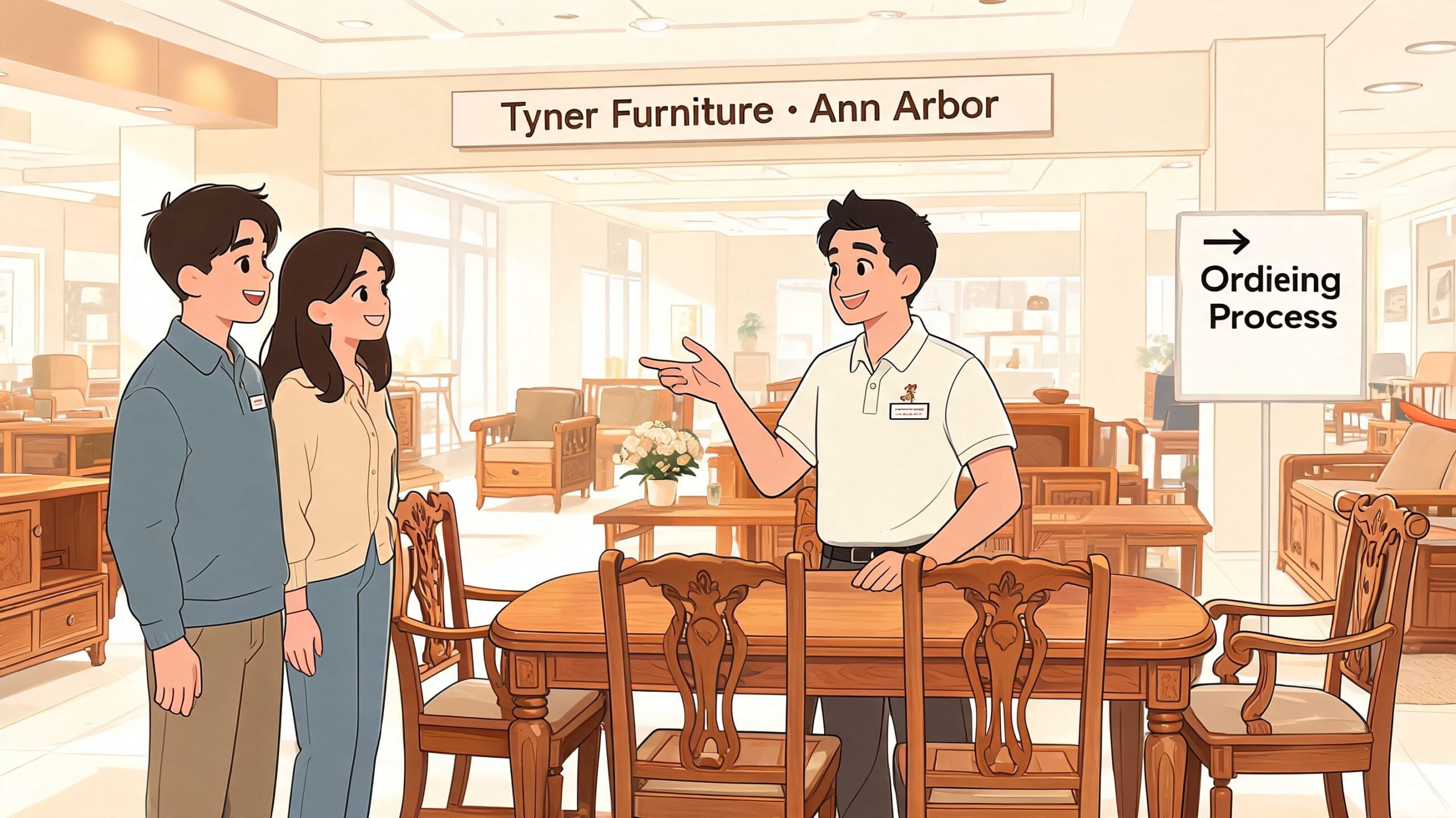
The showroom experience feels easier when you know what to do once you walk in. Most shoppers don’t need a script. They just need a clear sense of what’s worth touching, testing, and asking.
A productive visit is usually slower than people expect. That’s a good thing. Furniture that’s meant to stay in your home deserves a little time.
What a productive visit looks like
Start with the pieces you’ll use most. Sit in the dining chair. Pull the drawer all the way out. Put your hand on the table edge. If you’re shopping for seating, do the sit test more than once. Your first impression may be about softness. Your second is usually about support.
The South State Street showroom helps with that because you can compare categories in one trip. A shopper may come in for a dining table and end up realizing they also need a better home office solution, a more ergonomic recliner, or a bedroom storage piece with stronger drawer construction.
A few things to bring with you:
- Room measurements so scale decisions are based on reality
- Photos of the space from more than one angle
- Finish references like flooring or cabinet photos
- A short priority list so you know what matters most if you have trade-offs
From showroom sample to finished order
In-stock furniture is helpful because it gives you something real to judge. You can test comfort, inspect grain, and see how a style reads in person. But for many buyers, it’s only the starting point.
A store associate may help you narrow the options by asking practical questions. Do you need extension leaves? Do you prefer a quieter grain pattern? Will the piece sit in direct sun? Do you need a reclining chair sized to your body rather than just chosen by appearance?
One local option in this process is Tyner Furniture, located on South State Street in Ann Arbor. Since 1957, it has offered shoppers a place to compare solid wood furniture, upholstery, home office pieces, mattresses, entertainment furniture, and outdoor selections in person.
Bring your measurements before you bring your opinions. The room usually settles the hardest questions.
Custom orders also feel less intimidating when communication is clear. Most buyers want to know what they chose, how it will look, and what happens next. Good ordering support means reviewing wood species, finish samples, dimensions, and any special details carefully before the order is placed. That kind of review reduces surprises and gives you more confidence while you wait for a made-to-order piece to arrive.
Making Heirloom Quality Accessible and Affordable
The most useful way to think about premium furniture isn’t “Is this inexpensive?” It’s “Will this still serve me well long enough to justify the investment?”
That’s where cost per year becomes a better lens than sticker shock. A piece that stays sturdy, attractive, and useful over a long stretch often delivers more value than a cheaper substitute that needs to be replaced after ordinary wear.
Think in cost per year
Solid wood furniture asks for more upfront, but it often asks for less regret later.
A dining table, dresser, or desk that remains structurally sound through moves, seasons, and routine use gives you something mass-produced furniture rarely does. Stability. You stop budgeting mentally for the next replacement. You stop living with the wobble because “it’s good enough for now.” You buy once with greater confidence.
This is especially true in Ann Arbor homes where furniture needs to adapt over time. A guest room becomes a nursery, then a study. A condo owner moves into a larger house. A family upgrades one room at a time instead of refurnishing all at once. Heirloom pieces keep working through those changes.
Ways buyers make the investment manageable
Even when the value is clear, cash flow still matters. That’s why shoppers often ask about payment flexibility early in the process, especially for larger projects involving dining, bedroom, or whole-room updates.
Practical options may include:
- Special financing, subject to credit approval, for spreading the purchase over time
- Low Price Promise policies that help buyers feel confident about competitive value
- Mixing in-stock and custom pieces to balance timing and budget
- Prioritizing anchor items first, such as the table, bed, or recliner used most often
For buyers comparing payment options, furniture financing information can help clarify how special financing fits into a larger home plan.
A thoughtful purchase doesn’t have to be rushed, and it doesn’t have to be overwhelming. Many households make the process easier by starting with the piece that solves the biggest daily frustration, then building around it over time.
Care, Delivery, and Frequently Asked Questions
Once your furniture arrives, the good news is that solid wood care is usually simple. Most problems come from neglect or overcorrection. Too much moisture, harsh products, or direct heat are more likely to create trouble than ordinary daily use.
The goal is steady care, not fussy care.

Simple care habits that protect solid wood
A few habits go a long way in Michigan homes, where seasonal dryness and humidity can affect any natural material.
- Dust gently with a soft cloth instead of anything abrasive.
- Wipe spills promptly so moisture doesn’t sit on the finish.
- Use pads and felt protectors under lamps, décor, and accessories.
- Avoid prolonged direct sun when possible, especially on richly stained pieces.
- Keep furniture away from harsh heat sources so the wood and finish stay more stable.
If you ever feel tempted to use a strong household cleaner, don’t start there. Test care products carefully and follow the guidance that came with the piece. Most of the time, less is more.
Frequently asked questions
What is white-glove delivery like for Ann Arbor-area buyers?
White-glove delivery usually means the team brings the furniture into the home, places it in the room, and handles setup steps appropriate to the piece. Delivery details can vary by item and location, so it’s smart to ask what’s included before the order is finalized.
How long does a typical custom Amish order take?
Lead times vary by maker, finish, and level of customization. Because retailer websites often don’t publish consistent timelines, the best approach is to ask for the current estimate when you order and to check whether your piece is in stock or made to order.
Can I match a stain to my existing woodwork?
In many cases, you can get close by comparing wood species and stain samples side by side. Exact matches can be tricky because lighting, age, and wood type all affect the final look. Bring cabinet photos, flooring samples, or nearby finish references to the showroom.
Is Amish furniture only for traditional homes?
No. Amish craftsmanship appears in Mission, Shaker, Craftsman, and cleaner transitional looks. The construction method is traditional. The visual style can be much more flexible than people expect.
What should I inspect before I place the order?
Focus on the wood species, stain sample, dimensions, storage details, and any comfort questions if the purchase includes seating. For desks, dressers, and buffets, open and close the drawers yourself if you can.
Good furniture care starts before delivery day. Clear the pathway, decide on placement, and know where the piece will live before it comes through the door.
If you’re narrowing down amish furniture ann arbor options, the most helpful next step is still the simplest one. See the wood in person. Feel the finish. Test the chair. Open the drawer. That kind of hands-on comparison makes the buying process far less intimidating and much more satisfying.
If you’d like a closer look, visit Tyner Furniture in Ann Arbor for a sit test, finish review, and in-person look at solid wood construction, or browse the online Quick Specs if you’re starting to plan a special order from home.