Elevate Your Space with Wooden Chairs Living Room


A lot of living rooms feel almost finished. The sofa works. The rug is close. The lighting is good enough. But one corner still feels blank, or one side of the room lacks warmth, balance, or a place where someone wants to sit.
That’s usually where a well-chosen wooden chair changes everything. It can soften an empty corner, give a guest a natural place to land, and add the kind of texture that makes a room feel lived in rather than staged. In homes across Ann Arbor and Southeast Michigan, I’ve seen this happen again and again. One chair, chosen well, often does more for a room than another decorative accessory ever could.
The reason goes deeper than style. Wooden chairs carry history, craftsmanship, and a sense of permanence. The Chiavari chair’s 1807 design legacy helped move wooden chairs from elite symbols into everyday standards of comfort and elegance, and that same idea still matters today. A good chair shouldn’t just fill space. It should earn its place in the room for years.
Table of Contents
- From Empty Corner to Cherished Seat
- Why Solid Wood Is a Lifetime Investment
- Matching Chair Styles to Your Living Room
- Choosing Your Hardwood Finish and Materials
- The Science of a Perfectly Comfortable Chair
- Planning Your Layout for Flow and Function
- Your Path to the Perfect Chair Begins in Ann Arbor
From Empty Corner to Cherished Seat
A living room corner often starts the conversation. You notice a spot by the window that never gets used, or a gap near the sofa where guests end up standing, or a reading lamp with no seat beneath it. That is usually when the search begins for a wooden chair that belongs in the room and earns its place over time.
A well-chosen chair does more than finish the floor plan. It shapes how the room is used day after day. One seat can become the place for morning coffee, story time with a child, or the chair a parent prefers because it is easier on the back than the sofa. In that sense, a chair works like a small piece of architecture. It supports the body, sets the tone of a corner, and changes how people move through the room.
That long view matters.
A young family may need a sturdy seat that can handle daily use without feeling clunky. A downsizing couple may want one handsome chair that brings warmth without adding visual weight. A remote worker may need a chair that looks at home in the living room and still feels supportive after an hour with a laptop. Different households ask different questions, but the best answer is often the same. Choose a chair that serves your body, your home, and your budget over many years.
A good wooden chair does not just decorate a room. It becomes part of the way you live in it.
That is why the smartest purchase is rarely the cheapest one on the sales floor. A chair that stays comfortable, wears in gracefully, and avoids the landfill after a few seasons often costs less per year and less per sit than one you replace again and again. Good wood furniture also brings a steadier, more natural material into the home, which many homeowners value as they try to buy fewer, better things.
If you are still sorting out whether your room needs a single reading chair, a conversational pair, or a stronger focal point, these five practical ways to use an accent chair in your living room can help you decide before you shop.
What makes a chair feel meaningful
Some chairs occupy square footage. Others become the seat everyone reaches for.
Look for signs that a chair has the potential to become a lasting part of the room:
- Clear purpose: It solves a real need, such as reading, conversation, easier sitting and standing, or flexible extra seating.
- Physical comfort: It supports the body in a way people notice after ten minutes, not just in the first glance.
- Visual steadiness: It balances the room from several angles and makes the corner feel settled.
- Material character: The wood grain, shape, and finish gain charm with use instead of looking tired after one season.
- Long-term value: It feels like something you maintain and keep, not something you plan to replace.
That is the shift from empty corner to cherished seat.
Why Solid Wood Is a Lifetime Investment
If you want a chair that still feels steady years from now, start with how it’s built. Style matters, but construction matters first.
The biggest divide in the market isn’t traditional versus modern. It’s solid wood craftsmanship versus shortcut construction. Many chairs look similar online. In person, the difference shows up in the weight, the stability, the way the frame responds when you sit down, and how the joints hold after daily use.
What’s happening inside the frame
A solid wood chair built with traditional joinery behaves differently from one assembled with basic screws and lighter materials. The frame feels quieter. It doesn’t shift under you as much. It’s less likely to develop that familiar wobble people start excusing as “normal.”
According to this chair construction guide on mortise-and-tenon joinery, pre-assembled solid wood chairs using traditional mortise-and-tenon joinery are rated to last 3 to 4 times longer than Ready-to-Assemble counterparts, with solid wood frames achieving 12 to 15+ year lifespans compared to 3 to 5 years for typical screw-based assemblies.
That changes the buying decision. You’re not comparing chair to chair anymore. You’re comparing cost per year of use.
| Construction type | Typical lifespan |
|---|---|
| Pre-assembled solid wood with mortise-and-tenon | 12 to 15+ years |
| Typical screw-based Ready-to-Assemble | 3 to 5 years |
A lower upfront price can look attractive until the chair loosens, creaks, or stops feeling trustworthy. Then you’re shopping again.
Why this matters in a living room
Living room chairs don’t just sit there looking nice. People lean into them, rise from them, shift sideways to talk, drop into them after a long day, and move them around during gatherings. That repeated use exposes weak joinery quickly.
Amish hand-crafted solid wood furniture has earned its reputation because it starts with integrity. Better wood. Better joinery. Better odds that the chair becomes part of the home rather than part of the next replacement cycle.
If you want to see how craftsmanship carries across categories, Hickory Craft furniture is a useful example of how construction and comfort work together in long-term pieces.
Practical rule: If a chair feels light in the wrong way, shifts at the joints, or sounds busy when you sit down, keep looking.
A smarter definition of value
Value isn’t only the price on the tag. Value is how long the chair stays attractive, supportive, and structurally sound.
That’s why many experienced shoppers eventually stop asking, “What’s the least expensive option?” and start asking better questions:
- What wood is this made from
- How are the joints constructed
- Will this still feel solid after years of daily use
- Does this piece look better with age
That’s the mindset that leads to heirloom furniture. Not formal. Not fussy. Just well made enough to keep.
Matching Chair Styles to Your Living Room
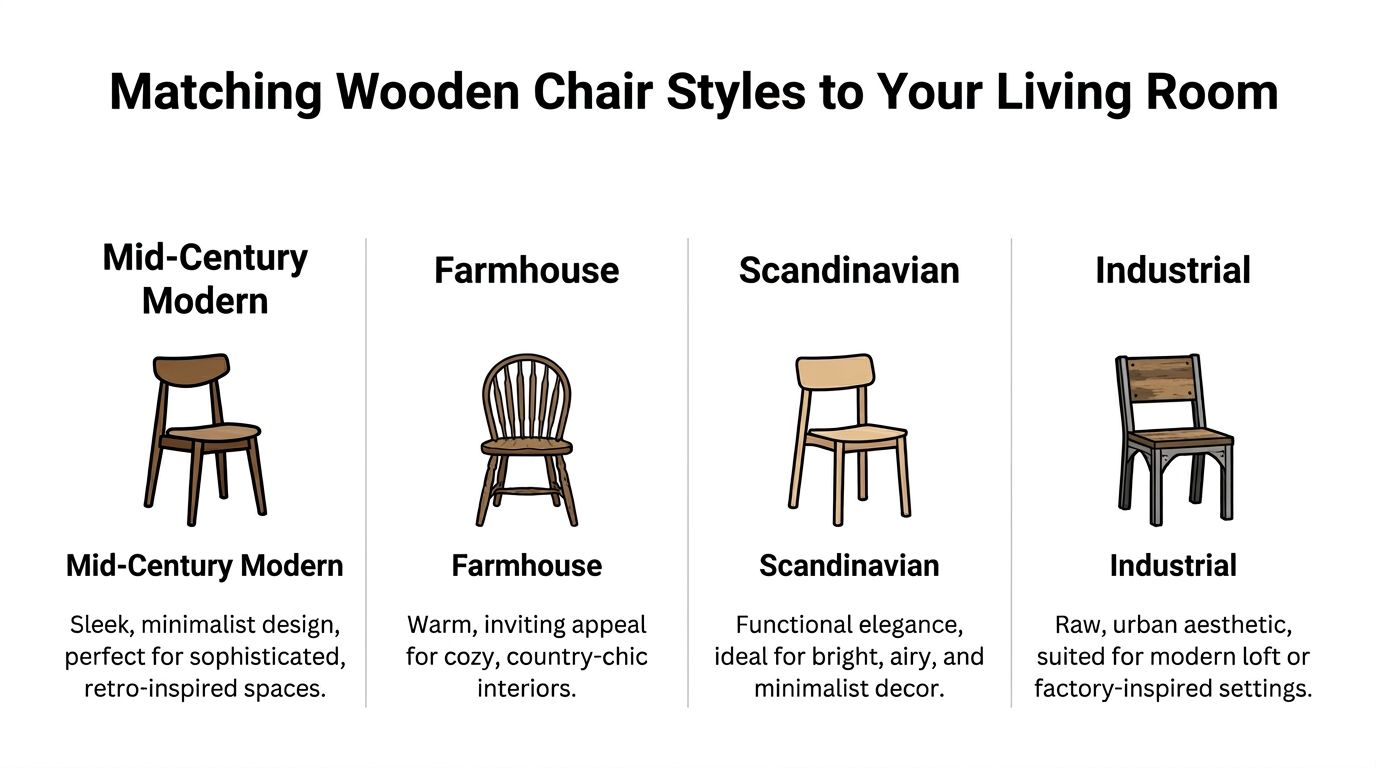
Style gets easier once you stop trying to memorize labels and start reading the room in front of you. Wooden chairs living room choices usually become clearer when you notice three things: the lines of your existing furniture, the warmth or coolness of the finishes, and how formal or relaxed the room feels.
If you’ve ever struggled to name your style, this comparison of contemporary vs traditional design styles can sharpen your eye before you choose a chair.
Start with the room you already have
A chair doesn’t need to match every piece. It needs to belong.
Ask yourself:
- Are your lines clean or detailed: A low-profile sofa with simple arms usually pairs well with quieter chair shapes.
- Does the room feel formal or casual: Some wooden chairs look crisp and architectural. Others feel relaxed and familiar.
- What wood tones already exist: Floors, tables, frames, and shelving all influence what will look intentional.
A room with sleek lighting, thinner silhouettes, and edited décor often welcomes a chair with a simpler profile. A room with turned legs, layered textiles, and softer shapes can carry more detail without looking crowded.
Four familiar style directions
Mission chairs feel grounded. You’ll notice straight lines, visible structure, and a calm, architectural presence. In a living room, they pair well with arts-and-crafts homes, transitional spaces, and interiors that need visual weight.
Windsor chairs bring a lighter, more relaxed energy. Their spindle backs and recognizable shape work beautifully in farmhouse, cottage, and collected interiors. They also help a room feel inviting rather than overly polished.
Shaker style is restrained in the best way. It values proportion, honest materials, and clean function. If your room feels quiet, uncluttered, and intentional, a Shaker-inspired wooden chair often fits naturally.
Mid-century modern chairs tend to introduce taper, openness, and a sculptural profile. They’re useful when a room needs warmth without visual heaviness.
Sometimes the right chair is the one that adds contrast. A crisp wooden frame can wake up an upholstered room.
Consider this quick guide:
| Style | Best fit for rooms that feel | What it adds |
|---|---|---|
| Mission | grounded, precise, architectural | structure and substance |
| Windsor | welcoming, rustic, easygoing | charm and familiarity |
| Shaker | quiet, minimal, timeless | simplicity and discipline |
| Mid-century modern | refined, open, design-forward | lightness and shape |
The sensory side matters too. The weight of solid cherry wood feels different from a breezier light-oak frame. A smooth, hand-sanded finish on maple reflects light differently than a grain-forward oak chair. Those details are subtle online. In person, they often decide the room.
Choosing Your Hardwood Finish and Materials
Wood choice does more than set the color of a chair. It shapes how the piece ages, how it wears under daily use, and how satisfied you are ten years from now.
That is why this decision deserves a careful look. A living room chair is something you sit in hundreds, sometimes thousands, of times each year. The right material can lower ownership costs over time because it stays attractive, stays sturdy, and keeps doing its job without asking for replacement.
For a closer look at species, durability, and appearance, this guide to choosing the right hardwood for longevity and style is a useful reference.
How oak cherry and maple feel in a room
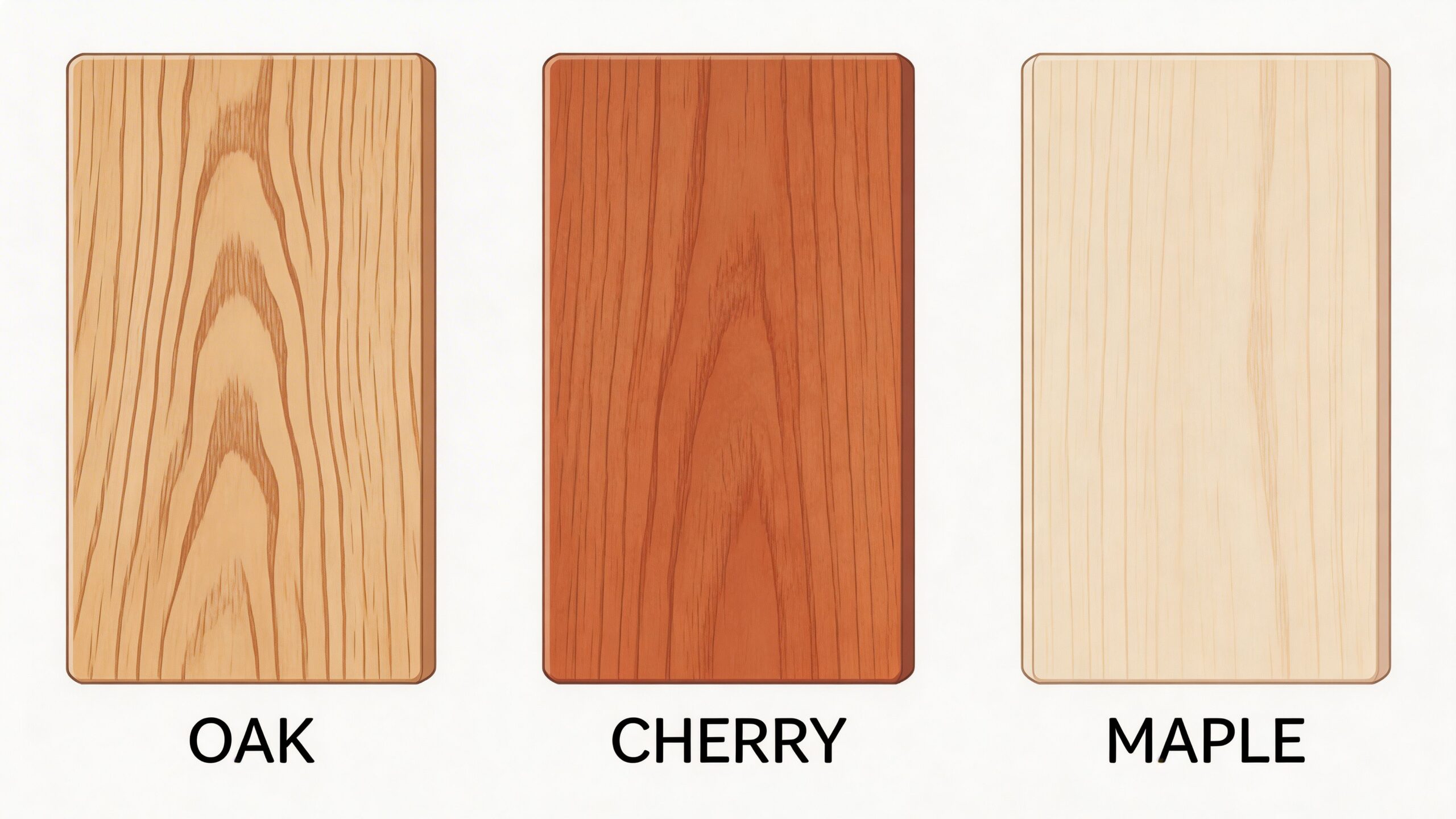
Three hardwoods show up again and again in well-made living room chairs because each brings a different kind of strength and visual character.
Oak has a more visible grain and a grounded presence. It tends to hide everyday wear well, which makes it practical for homes where chairs get real use instead of occasional admiration. If you want a chair that feels honest, durable, and settled into the room, oak often answers that need.
Cherry is warmer and more refined. Over time, it develops a richer patina, much like a leather bag that looks better after years of use. Homeowners who want a chair with heirloom potential often gravitate toward cherry because the aging process is part of the beauty.
Maple is smoother and quieter in grain. It gives you a cleaner surface and often reads brighter, which helps if your living room already has plenty of texture and you want the chair form, not the grain, to carry the visual interest.
A simple way to sort them:
- Choose oak for character, grain, and everyday resilience.
- Choose cherry for warmth, depth, and long-term richness.
- Choose maple for a crisp, clean look with subtle grain.
Why the finish matters as much as the wood
Finish is the part your hand meets and your home lives with. It affects sheen, touch, maintenance, and indoor air quality.
Shoppers who care about wellness are asking better questions about finishes, especially in rooms where the family spends long stretches reading, visiting, or recovering from a long workday. A recent survey summary noted that a large majority of buyers prefer furniture with certifications tied to low-VOC finishes. The point is simple. People want a chair that looks good and supports a healthier indoor environment.
That concern makes sense. The chair sits close to you, close to children, close to pets, and close to the air you breathe every day.
Material note: A well-made wooden chair supports the room in two ways. It gives visual warmth, and it contributes to a healthier, longer-lasting home.
If sustainability and long-term value matter to you, pay attention to these details:
- Low-VOC finishes: A smart choice for buyers who want to reduce unnecessary chemical exposure indoors.
- Solid wood construction: Solid hardwood can often be repaired, refinished, and kept in service far longer than many mass-market alternatives.
- Made-to-order options: Custom ordering helps you match stain, sheen, and tone more precisely to the room you already have.
Custom ordering also helps with the economics of a good chair. A piece that fits your space, your lighting, and your daily habits is less likely to be replaced after a short trial period. That is where cost-per-year and even cost-per-sit become useful ways to judge value. A chair that serves your body well, holds up structurally, and avoids quick trend fatigue often costs less over its lifetime than a cheaper chair replaced every few years.
The Science of a Perfectly Comfortable Chair
Many people know comfort when they feel it, but they don’t always know why one chair feels supportive and another feels tiring after half an hour. The answer usually comes down to geometry.
A chair can look beautiful and still ask too much of your body. Seat height, seat depth, and overall posture support matter more than most shoppers realize.
What your body notices right away
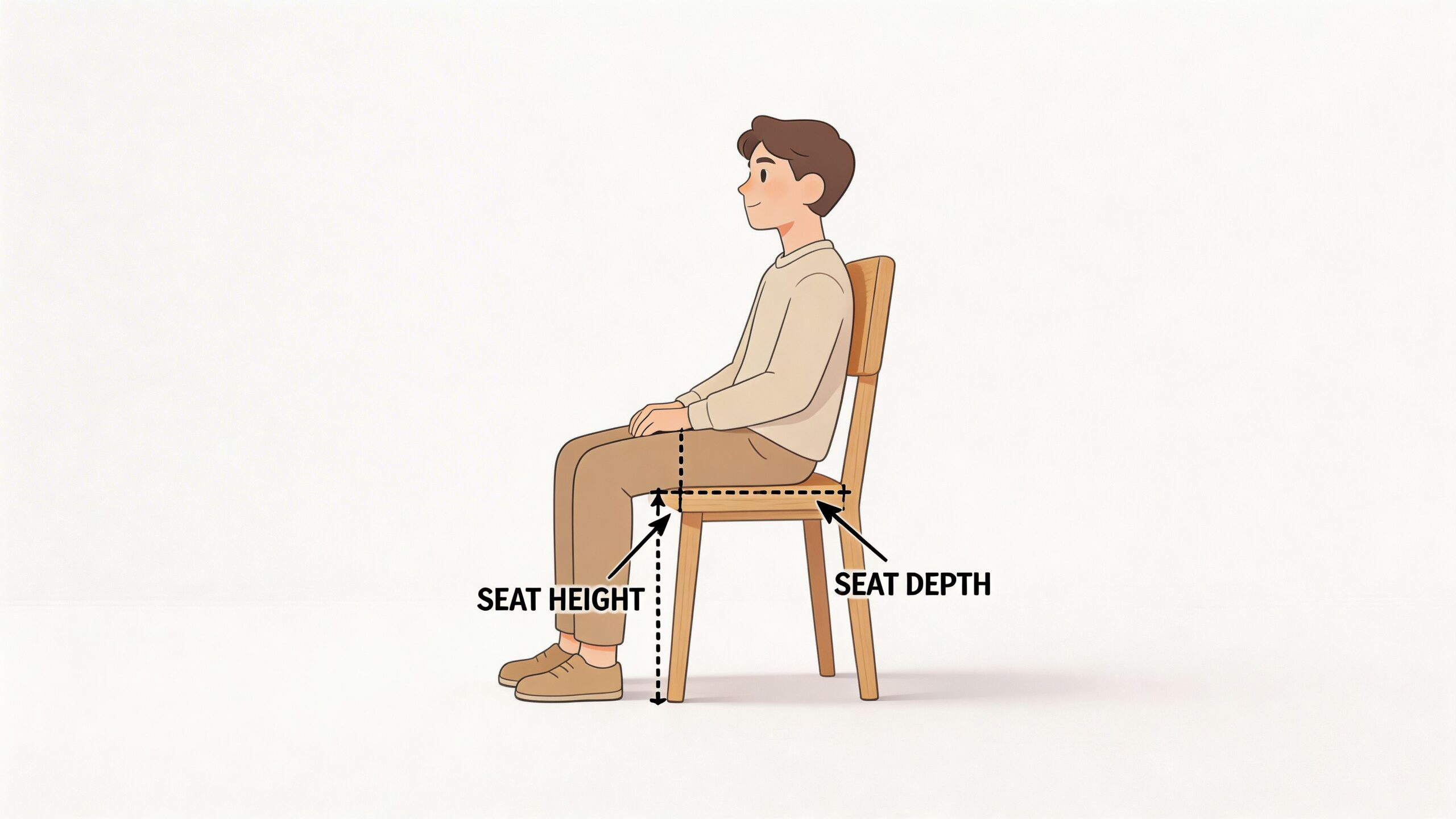
According to this chair ergonomics reference on seat dimensions, optimal seat height is 16 to 18 inches and optimal seat depth is 15 to 18 inches. A deviation of just 2 inches can increase musculoskeletal strain markers by 25 to 40% because the wrong dimensions can restrict blood flow and misalign the spine.
That’s why two chairs that appear similar can feel completely different after a real sit.
If the seat is too high, your feet may not rest naturally. If it’s too deep, the seat edge can pressure the back of your legs while your lower back loses support. If it’s too shallow, you may feel perched rather than settled.
A simple comfort check helps:
- Feet flat: Your feet should rest comfortably on the floor.
- Back supported: You shouldn’t have to scoot or brace yourself to feel upright.
- Seat edge clearance: The front edge shouldn’t press hard behind the knees.
- Easy rise: Standing up should feel smooth, not awkward.
Why a sit test matters
Comfort isn’t a visual category. It’s physical. That matters even more in living rooms, where chairs often serve multiple jobs. Reading seat. conversation seat. evening unwinding seat. guest seat.
That’s also why ergonomic collections such as Stressless have earned loyal followings. Personalized sizing and thoughtful support details answer a problem many shoppers feel but can’t easily describe. The difference often shows up in the shoulders, lower back, and how relaxed you feel after sitting a while.
If you’re shopping for a daily-use chair, don’t judge it in the first thirty seconds. Sit long enough to notice what your shoulders and lower back do.
For a wooden chair with an upholstered seat or an ergonomic lounge companion in the same room, comfort should be tested, not assumed. The best chair is the one that supports your posture without making you work for it.
Planning Your Layout for Flow and Function
A strong chair in the wrong spot won’t help the room. Placement decides whether the chair feels welcoming or in the way.
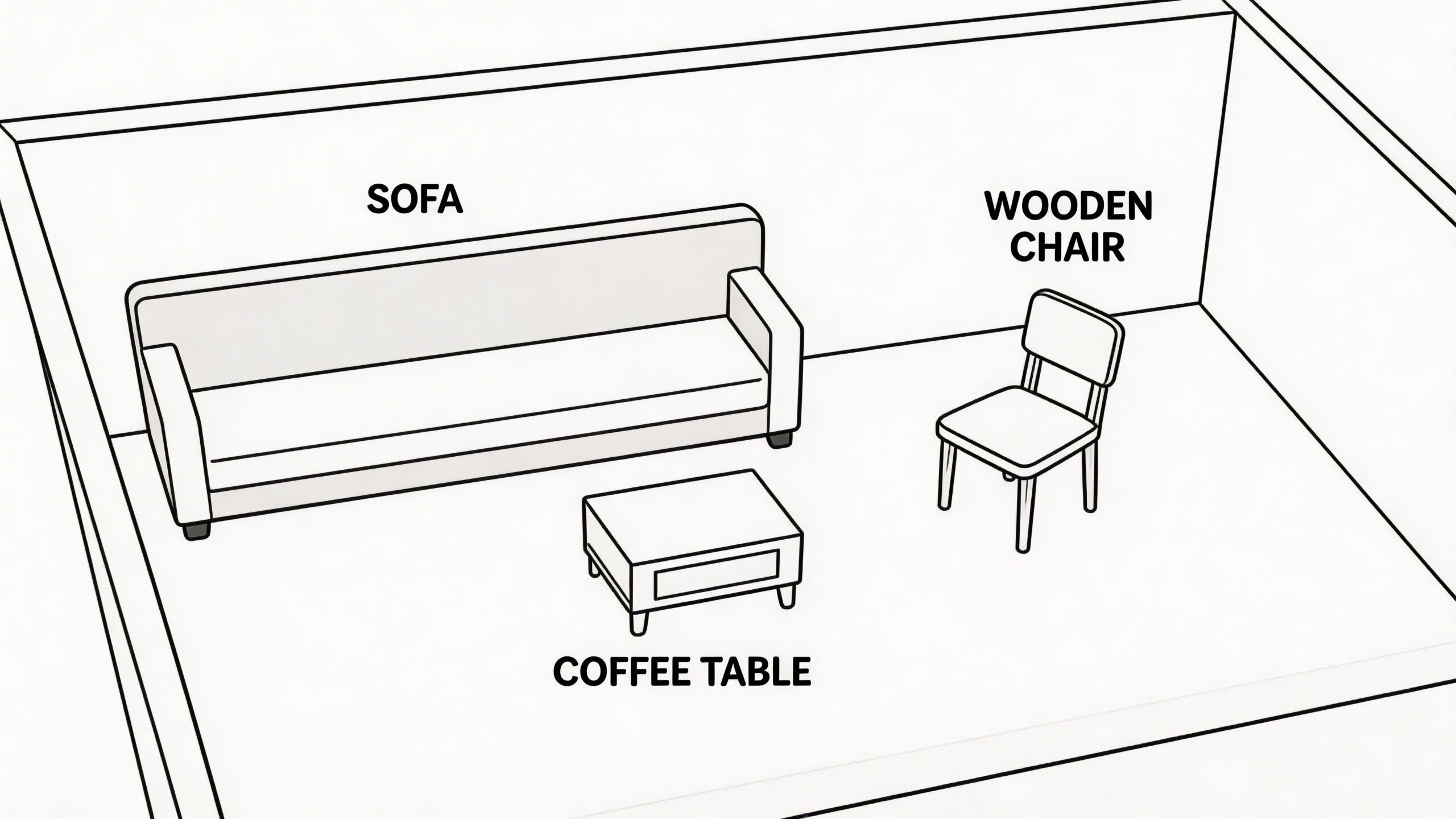
That’s good news, because layout problems are usually fixable with a tape measure, a little honesty, and a clear sense of how the room is used. If you need extra inspiration, these living room arrangement ideas can help you visualize a few directions.
A simple placement checklist
Start with use, not symmetry. Ask what the chair is supposed to do.
If it’s for conversation, it should feel connected to the sofa and coffee table zone. If it’s for reading, it may belong closer to a lamp, window, or bookshelf. If it’s there to soften an empty corner, angle matters as much as distance.
Here’s the checklist I use most often:
- Check traffic flow: You should be able to walk through the room without weaving around the chair.
- Watch the scale: A heavy wood frame can overpower a small apartment living room, while a slight chair may disappear beside a substantial sofa.
- Respect sightlines: The chair shouldn’t block a focal point such as a fireplace, window, or media wall unless that tradeoff is worth it.
- Give it a partner: A chair often feels more intentional with a small table, lamp, or textile nearby.
- Test the angle: Even a slight turn can make the chair feel more conversational and less rigid.
Some of the best wooden chairs living room layouts use the chair as a bridge between zones. It can connect the sofa area to a reading corner, or soften the edge of an open-plan room without needing a large footprint.
A chair should help the room move. It shouldn’t stop it.
Your Path to the Perfect Chair Begins in Ann Arbor
A lot of Ann Arbor shoppers walk in expecting to pick a chair in ten minutes. Then they sit in three that look nearly identical and realize one supports the lower back, one pushes the shoulders forward, and one feels right. That moment is useful. It reminds you that a living room chair is part furniture, part daily tool.
A well-made wooden chair shapes more than the look of a room. It affects how long you can read comfortably, how your posture feels after an evening with guests, and how often you replace what you bought. That is where long-term value becomes clear. A cheaper chair may cost less at checkout, but an heirloom-quality chair often costs less per year, and even less per sit, when it serves you well for decades.
The clearest way to choose is to weigh four factors together:
- Craftsmanship: Solid wood, stable joinery, and careful construction hold up to daily use.
- Fit for your room: The chair should support the way the space is used and feel at home with the rest of the furnishings.
- Ergonomic comfort: Seat height, depth, back angle, and arm placement all influence how your body feels after twenty minutes or two hours.
- Material choices: Wood species and finishes affect appearance, maintenance, indoor air quality, and the chair’s environmental footprint.
Testing in person matters, especially for a chair you expect to use every day. Two chairs can share the same silhouette and still sit very differently. One may let your feet rest flat and your spine settle naturally. Another may look handsome on the floor and feel tiring by the end of the evening. Wood furniture is similar to good shoes in that way. The details you feel are often the details that determine whether you still enjoy the purchase years later.
Shopping also gets easier when you can compare options side by side. You might begin with in-stock pieces to learn what proportions suit your body and room, then explore made-to-order choices through Canadel if you want a specific finish or configuration. If comfort is the top priority, trying ergonomic seating from Stressless alongside solid wood designs can clarify what kind of support your living room really needs.
If you are furnishing several rooms, broad guidance helps. A store that understands living room seating, dining furniture, bedroom pieces, home office function, and outdoor use can help you choose a chair that fits the whole house, not just one corner.
If you’re ready to move from browsing to confidence, visit Tyner Furniture on South State St. in Ann Arbor for a real sit test and side-by-side look at heirloom-quality options. Since 1957, Tyner has helped Southeast Michigan shoppers compare solid wood craftsmanship, explore bespoke Canadel and Stressless customization, and make long-term choices with support like Special Financing and a Low Price Promise. If you’d rather begin from home, browse the online Quick Specs for special orders, then stop in when you’re ready to feel the wood, test the comfort, and choose a chair that fits your life.