The Perfect Dining Side Chair: A Buyer’s Guide


You’re probably not shopping for a dining side chair because chairs are exciting on their own. You’re shopping because something isn’t working.
Maybe the seats at your table look fine in photos, but halfway through dinner everyone starts shifting around. One chair wobbles. Another sits too low. A third has a back that looks elegant until someone has to stay in it through dessert, coffee, and a long conversation. That’s usually the moment people realize a dining chair isn’t just decor. It’s part of how a room feels to live in.
A good dining side chair supports ordinary life. Weeknight meals. Homework at the table. Holiday gatherings that run longer than expected. It also has to hold up, year after year, without loosening, creaking, or looking tired before the rest of the room does.
At a long-standing local business, that’s how we’ve always approached dining furniture. Since 1957, families in Ann Arbor and across Southeast Michigan have come in feeling overwhelmed by options and left with a clearer sense of what matters: fit, material integrity, and the kind of craftsmanship that still makes sense decades from now. The same thinking applies across the home, from the Home Office to Outdoor Spaces, but the dining room is where comfort and durability get tested in the most public way.
Table of Contents
- More Than Just a Seat at the Table
- Finding Your Perfect Fit The Art of Ergonomics
- Built to Last Materials and Craftsmanship
- Creating a Cohesive Look Matching Styles with Confidence
- The Bespoke Advantage Customization for Your Life
- Protecting and Acquiring Your Investment
- Your Table Is Waiting
More Than Just a Seat at the Table
The chair that causes trouble is rarely the one people notice first.
It’s usually attractive enough. The finish works with the table. The profile looks current. But once real use begins, the flaws show up fast. A loose joint makes the chair feel uncertain. A hard seat cuts a meal short. A back that doesn’t support you turns a gathering into a countdown to standing up.
That’s why a dining side chair deserves more thought than most shoppers expect.
The category itself has deep roots. The dining side chair emerged as a distinct furniture form during the 12th to 15th centuries, evolving from simple stools, and by the 18th century craftsmanship advances such as refined joinery and Rococo detailing helped define the comfort and decorative quality still associated with heirloom furniture today (history of chairs through the centuries).
That history still shows up in the decisions that matter now. Not in ornament alone, but in proportion, stability, and the sense that a chair was built by someone who understood daily use.
A dining chair earns its keep one long meal at a time.
In practice, the best purchases tend to come from a slower mindset. Instead of asking, “Will this work for now?” ask, “Will this still feel right after years of use?” That’s the heart of cost per year. A chair that stays sturdy, comfortable, and visually settled in your home usually costs less in frustration, replacement, and repair than a chair that only wins on first impression.
For many households around Ann Arbor, the dining room also does double duty. It’s a project table, a laptop station, a place where kids linger, and where guests gather. That puts real pressure on a chair. If you want heirloom value, start by treating the dining side chair as a daily tool with a design role, not just a matching accessory.
Finding Your Perfect Fit The Art of Ergonomics
Comfort isn’t mysterious. You can feel it within a minute if you know what to check.
A well-shaped dining side chair supports you unobtrusively. You don’t slide forward. Your legs don’t feel pinched. Your back doesn’t ask for help from your core after a few minutes. Good ergonomics feel almost uneventful, and that’s exactly what you want.
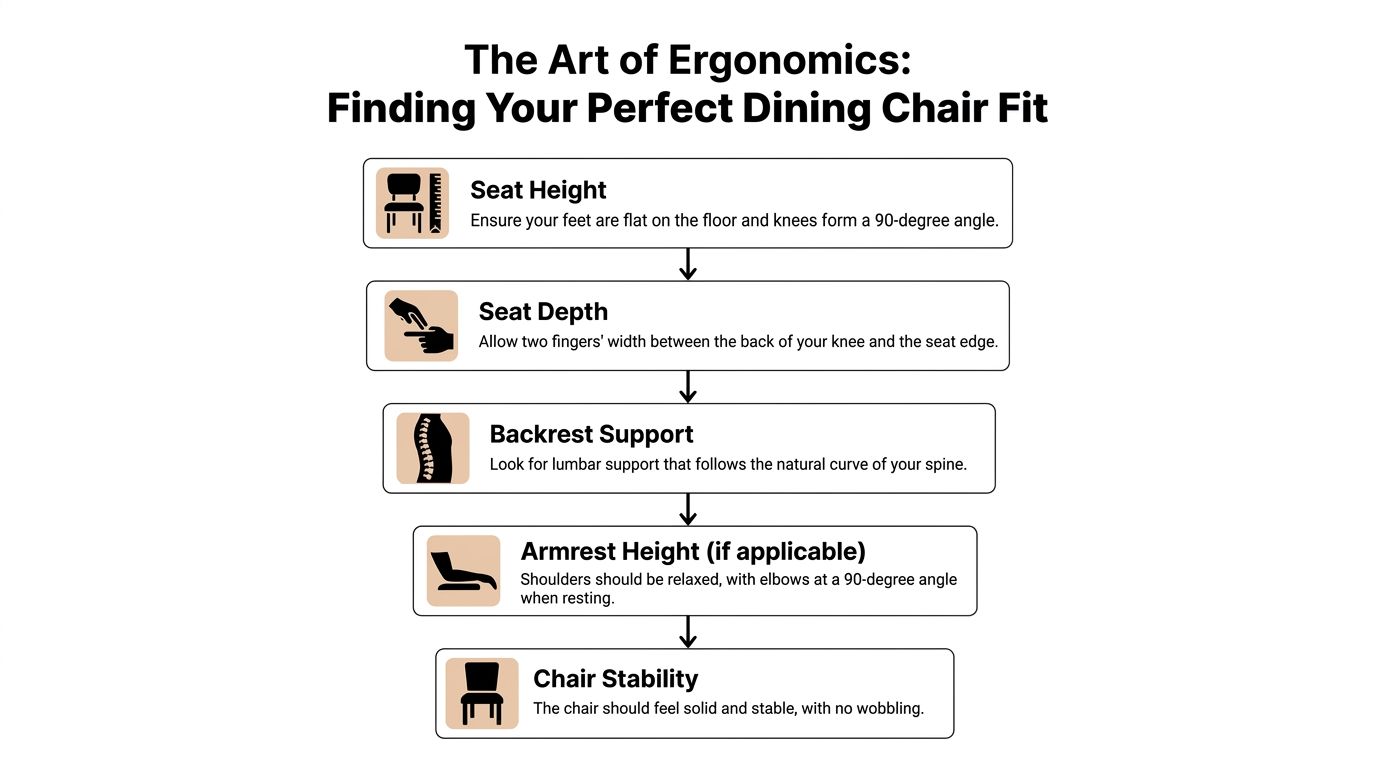
What to check in the sit test
Start with the basics. The most reliable showroom test is still your own body.
According to this chair design reference on dining chair ergonomics, the optimal back support angle is about 20 degrees relative to the seat surface, and standard dining side chairs typically have seat heights of 17 to 20 inches and seat depths of 16 to 18 inches. Those numbers matter because they translate directly into how a chair feels after more than a quick sit.
Use these checks:
- Feet position: Your feet should rest flat on the floor. If they dangle or you feel pressure under the thighs, the seat height isn’t working for you.
- Seat depth check: Sit all the way back. You should have about two fingers of space between the back of your knee and the front edge of the seat.
- Back contact: The backrest should meet you naturally. You shouldn’t have to perch forward to stay comfortable.
- Shoulder tension: If the chair has arms, your shoulders should stay relaxed when your elbows rest.
- Stability: Shift your weight slightly. A quality chair should stay planted and quiet.
Practical rule: Don’t judge a chair in ten seconds. Sit long enough to notice whether your body starts making adjustments.
That matters even more now because many people use the dining table for more than meals. A chair that’s fine for twenty minutes may become tiring during a long conversation, remote work session, or a family game night.
The table matters too
A good chair can still feel wrong under the wrong table.
For dining comfort, the clearance between the chair seat and tabletop should be about 25 to 30 cm (10 to 12 inches), and planning should allow at least 60 cm per diner, with 76 cm per seat being the more comfortable target for movement and elbow room (dining chair buyer’s guide with clearance measurements). If a table has a thick apron or bulky base, that changes how usable the chair feels.
If you’re checking a full dining setup, compare the chair with the table instead of judging each piece in isolation. This is also where a sizing guide like this overview of dining table heights can help you avoid a mismatch before you order.
A dining side chair should disappear into the experience of the room. If you keep noticing your knees, your lower back, or the edge of the seat, something is off.
Built to Last Materials and Craftsmanship
You can usually tell within a few seconds whether a chair was built to last or built to sell quickly.
Lift it. Move it. Run your hand along the frame. Sit down and shift your weight. Good construction has a certain calm to it. There’s weight where there should be weight. There’s no chatter in the joints. The wood feels substantial instead of hollow.
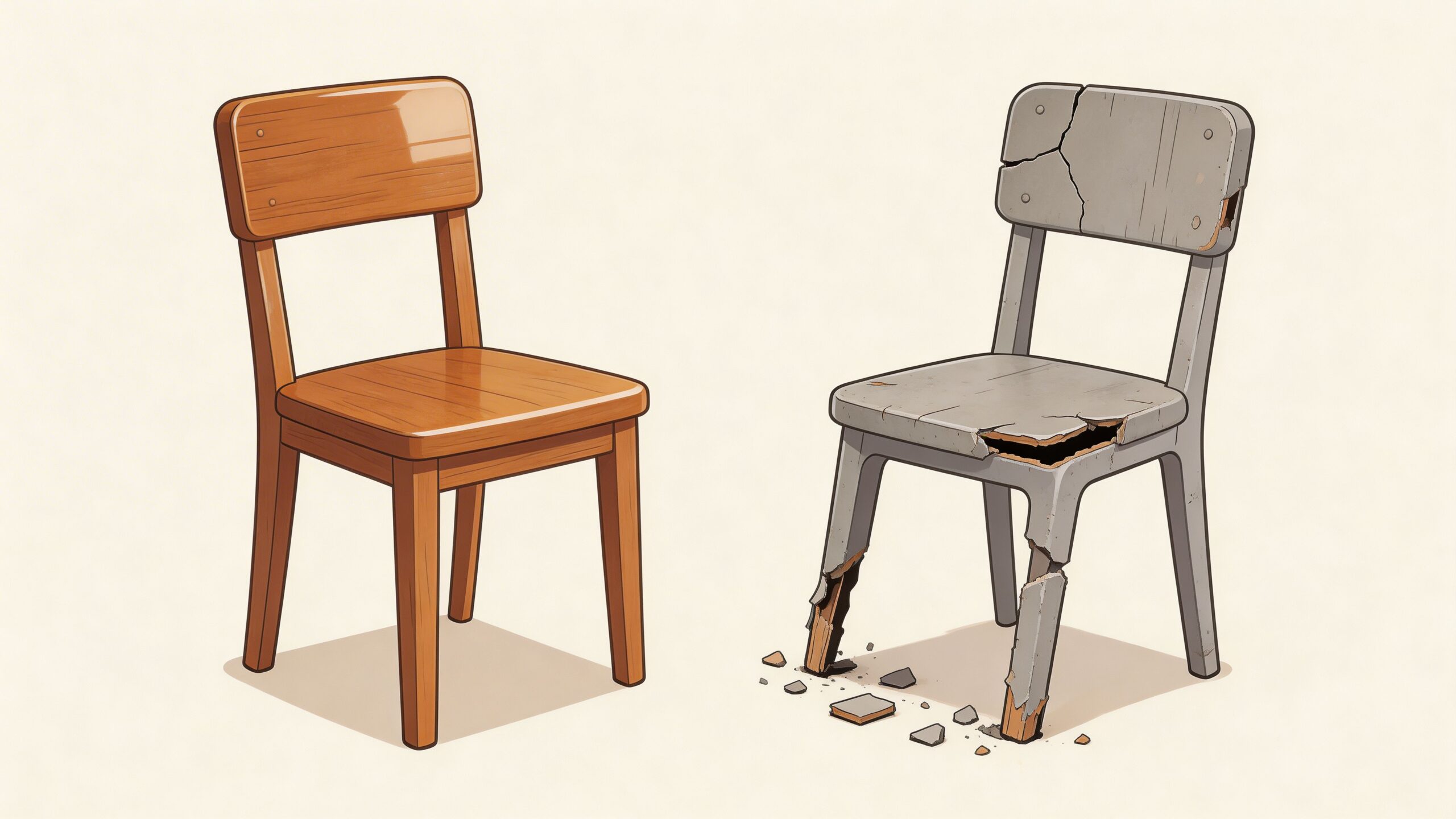
Why old chairmaking lessons still matter
The principles that shaped heirloom seating centuries ago still make sense in a modern home. Comfort, refined proportions, and careful joinery aren’t antique ideas. They’re practical ones.
With solid wood, the species matters, but so does the build. Cherry has warmth and depth. Oak brings visible character and strength. Maple offers a cleaner, tighter grain. In a showroom, you can feel the difference in the weight of solid cherry wood or the steadiness of a well-built oak frame right away.
What holds that frame together matters as much as the wood itself. Mortise-and-tenon joinery remains one of the clearest signs that a chair was designed for long service, not short-term convenience. When people talk about an Amish hand-crafted chair lasting for generations, they’re usually talking about that combination of solid hardwood and joinery that resists loosening under repeated use.
For upholstered models, material choice changes both feel and upkeep. Leather has that supple, buttery hand many shoppers want for a more refined dining room. Performance fabrics make sense when family life is active and spills are part of the routine. If you’re sorting through those options, this guide to upholstery materials is a useful starting point.
Where cost per year shows up
A dining side chair isn’t a smart investment because it’s expensive. It’s a smart investment when its useful life stays long and its maintenance stays reasonable.
Here’s where cost per year becomes real:
| Choice | What happens over time |
|---|---|
| Solid wood frame | Better odds of long-term structural stability and refinishing potential |
| Weak joinery | More likely to wobble, creak, or fail under daily use |
| Durable upholstery | Keeps the chair in service without constant worry |
| Thin or fragile surfaces | Shows wear faster and often ages unevenly |
The cheapest feeling chair often becomes the most expensive one once replacement enters the picture.
That’s why many experienced shoppers stop asking only about style and start asking what the chair will look and feel like years from now. The answer usually lives in the materials you can touch and the craftsmanship you can test.
Creating a Cohesive Look Matching Styles with Confidence
Matching chairs to a table doesn’t require a design degree. It requires a few steady rules and the confidence to ignore some of the noise.
Most dining rooms look best when the chairs relate to the table rather than copy it exactly. The relationship might come through wood tone, shape, visual weight, upholstery, or a repeated line. When that relationship is missing, the room can feel accidental.
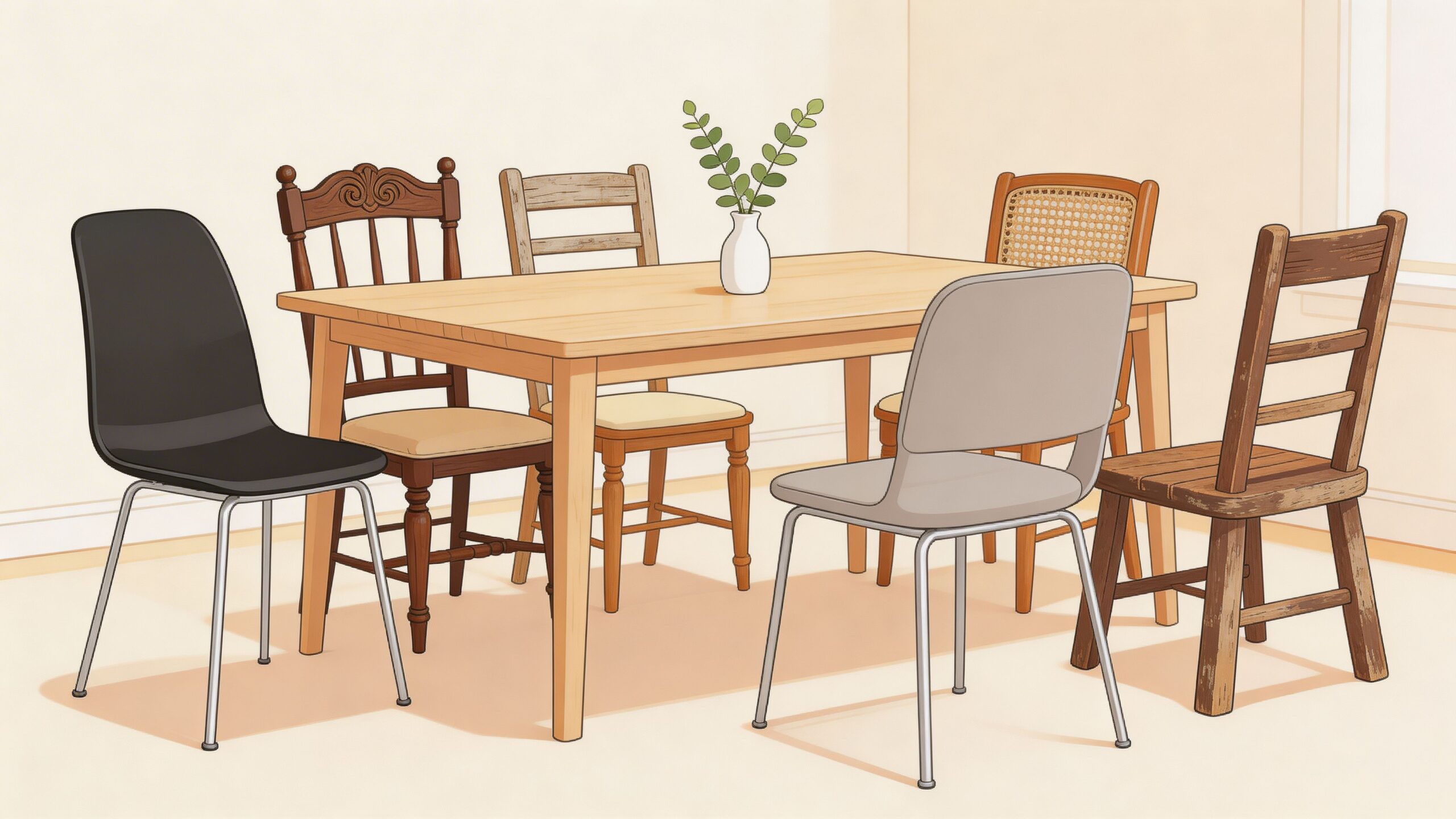
What makes chairs look related
A cohesive room doesn’t mean every chair has to match perfectly.
These pairings usually work well:
- Shared wood story: If the table has strong grain or a deep stain, chairs can echo that tone without being identical.
- Repeated shape language: A table with soft curves often pairs better with chairs that have some roundness in the back or leg profile.
- Balanced visual weight: A heavy pedestal table can overpower very delicate chairs. A slim table can look awkward with oversized seating.
- One contrast at a time: If the chairs differ in silhouette, keep the material palette tighter. If materials vary, simplify the chair shapes.
For homeowners trying to define the room’s direction first, these dining room style ideas can help narrow the choices before you focus on individual chair details.
The hidden maintenance trade-off
Mismatched dining chairs can look collected, relaxed, and full of personality. They can also create maintenance headaches when the pieces come from different makers, different eras, and different material standards.
That’s the part many design conversations skip. A linen-upholstered vintage chair won’t live the same life as a wipeable modern seat. Different finishes react differently to cleaners, sunlight, and daily abrasion. Different construction methods age at different speeds.
The practical issue is well put in this discussion of the mismatched chair trend, which notes that homeowners often overlook the care and durability complications of mixed sets. A curated program such as Canadel can create visual variety while keeping joinery standards, finish durability, and fabric care more consistent across the set.
That’s one of the few places where mentioning a specific solution is useful. Tyner Furniture offers Canadel made-to-order dining options that let shoppers mix finishes, forms, and details while keeping the underlying construction and care requirements aligned.
A collected look works best when the chairs share invisible discipline, not just visible charm.
If you love variety, don’t give it up. Just build it on a foundation that won’t become a patchwork of conflicting care routines.
The Bespoke Advantage Customization for Your Life
In-stock chairs solve one problem. They’re available now.
Custom chairs solve a different problem. They fit the way you live.
That distinction matters more than people expect, especially in Southeast Michigan homes where dining rooms often carry more than one job. A table may host dinner at night, schoolwork in the afternoon, and remote work in the morning. A standard chair can be acceptable in each use. A bespoke chair can be right for all of them.

Small room problems need specific answers
A lot of small-space advice stops at “buy narrower chairs.” That’s incomplete.
As noted in this small apartment dining chair guide, many sources suggest narrow side chairs in the 45 to 55 cm range, but often overlook ergonomic performance. A made-to-order approach can address that by allowing adjustments to seat height, arm height, and back support so compact furniture doesn’t become uncomfortable furniture.
That’s especially important when a household includes:
- An older family member who needs a seat height that makes standing easier
- A child or teen who uses the dining table for long stretches of study time
- A frequent host who wants side chairs that stay comfortable through extended meals
- A small-space homeowner who can’t afford to waste inches on the wrong proportions
One-size-fits-all works best for warehouses, not homes.
Customization is practical, not precious
The best custom programs don’t turn shopping into homework. They narrow decisions around the issues that matter.
A good made-to-order dining process usually helps you choose among things like:
- Wood species and finish: To match an existing floor, table, or cabinet tone
- Seat style: Wood seat, upholstered seat, or fully upholstered feel
- Back shape: More upright and structured, or more shaped and supportive
- Arms or no arms: Depending on room width, mobility needs, and table fit
In a well-run program like Canadel, shoppers can work through many combinations without losing sight of function. If you want a clearer picture of how that process works before visiting a showroom, this overview of custom furniture ordering presents it clearly.
A bespoke dining side chair isn’t about making the room fussier. It’s about removing compromises that standard inventory asks you to accept. In a smaller Ann Arbor home, or in a house where several generations share the table, that can make the difference between furniture that merely fits the room and furniture that fits the people.
Protecting and Acquiring Your Investment
A well-made chair doesn’t stay beautiful by accident. It stays beautiful because someone uses it thoughtfully and cares for it with some consistency.
The good news is that maintenance usually isn’t complicated. It’s mostly a matter of protecting surfaces before damage becomes part of the finish.
Simple care that preserves value
For solid wood dining chairs, daily care should stay gentle.
A few habits go a long way:
- Dust with a soft cloth: Fine dust can dull the finish over time if it’s left to grind into the surface.
- Wipe spills promptly: Moisture is rarely a problem when handled quickly. It becomes a problem when it sits.
- Lift, don’t drag: Dragging stresses joints and scuffs legs.
- Keep cleaning products simple: Harsh chemicals can do more harm than ordinary daily use.
If you want a fuller wood-care routine, this guide to protecting wood furniture from scratches and stains covers the basics in a practical way.
For upholstered seats, the key is matching your maintenance habits to the material. Leather wants different treatment than woven fabric. Performance textiles are forgiving, but they still benefit from regular attention. Consistency beats heroics.
Buy the chair you’re willing to care for properly. That’s often the smartest form of value.
Making a long-term purchase manageable
People sometimes assume heirloom quality and accessibility can’t exist together. Furniture history says otherwise.
The history of the Windsor chair and industrial-era affordability offers a useful reminder. The Windsor chair, introduced more broadly in the 19th century, helped democratize furniture ownership through relatively affordable production, building on a shift accelerated by the Industrial Revolution from 1760 to 1840. The larger lesson still holds. Quality and affordability don’t have to be enemies.
Today, the practical version of that idea is planning. A household can choose better materials, stronger construction, and made-to-order fit without taking on the full weight of a purchase all at once. That’s where special financing can be helpful. It gives families a way to buy for the long term instead of settling for a short-term answer. A Low Price Promise matters too, because value only means something if it’s competitive and transparent.
For many shoppers in Ann Arbor and across Southeast Michigan, that combination changes the decision. The question stops being “Can we justify better chairs?” and becomes “Can we justify replacing lesser ones again?”
Your Table Is Waiting
A dining side chair does more work than it gets credit for. It supports posture, sets the tone of the room, and absorbs years of family life. When the fit is right and the build is honest, people stop thinking about the chair and just enjoy being at the table.
That’s the standard worth shopping for. Not whatever is easiest to click on. Not whatever photographs well for a season. A chair with ergonomic sense, durable materials, and sound joinery carries its value differently. You feel it when you sit down, and you notice it years later when the room still functions the way you hoped it would.
Since 1957, families in Ann Arbor have leaned on local guidance for exactly that reason. Whether you’re furnishing a dining room, a Home Office, a bedroom, or Outdoor Spaces, the goal is the same: buy once with more care, and live with the piece longer and better.
If you’re still narrowing options, trust your hands and your posture as much as your eyes. Sit in the chair. Push it back from the table. Notice the back angle. Notice the weight. Notice whether it feels calm and settled or merely new.
Visit Tyner Furniture on South State Street in Ann Arbor for a proper sit test, compare solid wood dining side chair options in person, and explore bespoke choices through Canadel and ergonomic seating insights from Stressless. If you’d rather start from home, browse the online Quick Specs for special orders, then come in with a clearer sense of what fits your table, your space, and your cost-per-year goals.