Top Grain Leather Ottoman: A Smart Buyer’s Guide


A homeowner stands in a showroom, one hand resting on a fabric ottoman and the other on leather. The fabric feels familiar, but the leather has a buttery surface and a visual weight that could anchor the living room. The question isn't which piece looks better today. It's which one will still feel like good value after years of movie nights, visiting children, muddy shoes, and everyday use.
A top grain leather ottoman deserves consideration because it balances refined appearance, practical maintenance, and meaningful durability. The right choice still depends on the frame, support core, stitching, dimensions, and care routine. A beautiful hide can't compensate for weak construction, just as a sturdy frame can't make an unsuitable size work in a crowded room.
What a Top Grain Leather Ottoman Really Is
The material in plain language
A shopper comparing ottomans may notice that top-grain leather looks smoother and more consistent than a hide with prominent natural markings. Top-grain leather comes from the outer layer of the hide. Manufacturers sand or buff that surface to reduce visible blemishes, then commonly add color and a protective finish. The result is a genuine leather surface with a more even appearance and some added resistance to stains and wear.
That refinement removes some of the densest surface fibers, so top grain generally falls short of full grain in durability. Carl Friedrik's guide to top-grain leather describes it as the second-highest common leather grade and notes that practical consumer guidance often places its properly cared-for life around 5 to 10 years, while full-grain comparisons may place full-grain pieces at 20 to 30 or more years.
For many households, that makes top grain a practical middle ground. It keeps genuine leather's tactile warmth and visual depth while offering a more predictable finish than an untreated hide. The surface can suit ordinary contact from feet, bags, and occasional spills without requiring constant caution.
Why the ottoman format matters
An ottoman concentrates daily use in a small area. Feet rest on the top, guests may sit on an edge, and children may use it as an impromptu perch. Top-grain upholstery is often specified around 0.9 to 1.4 millimeters thick, with a buffed outer surface and a finish intended to improve resistance to stains and wear. Decor-Rest's leather furniture guide explains why this construction is commonly considered for heavy-traffic seating, while noting that protective coatings can slightly reduce breathability compared with unfinished leather.
The material choice also affects lifecycle value. A lower sticker price may look attractive, but the better comparison is how the ottoman performs each year, how much care it needs, and whether its finish remains suitable as the household changes. A guide to upholstery materials can help shoppers compare those trade-offs before visiting a showroom.
In Ann Arbor and across Southeast Michigan, an in-person visit reveals details a photograph cannot. You can feel the leather, test the firmness beneath it, and assess how the ottoman's scale works with your room. Since 1957, Tyner Furniture has served local households by helping shoppers consider the complete piece, including available made-to-order customization, rather than judging the upholstery label alone.
Understanding the Leather Grade Hierarchy
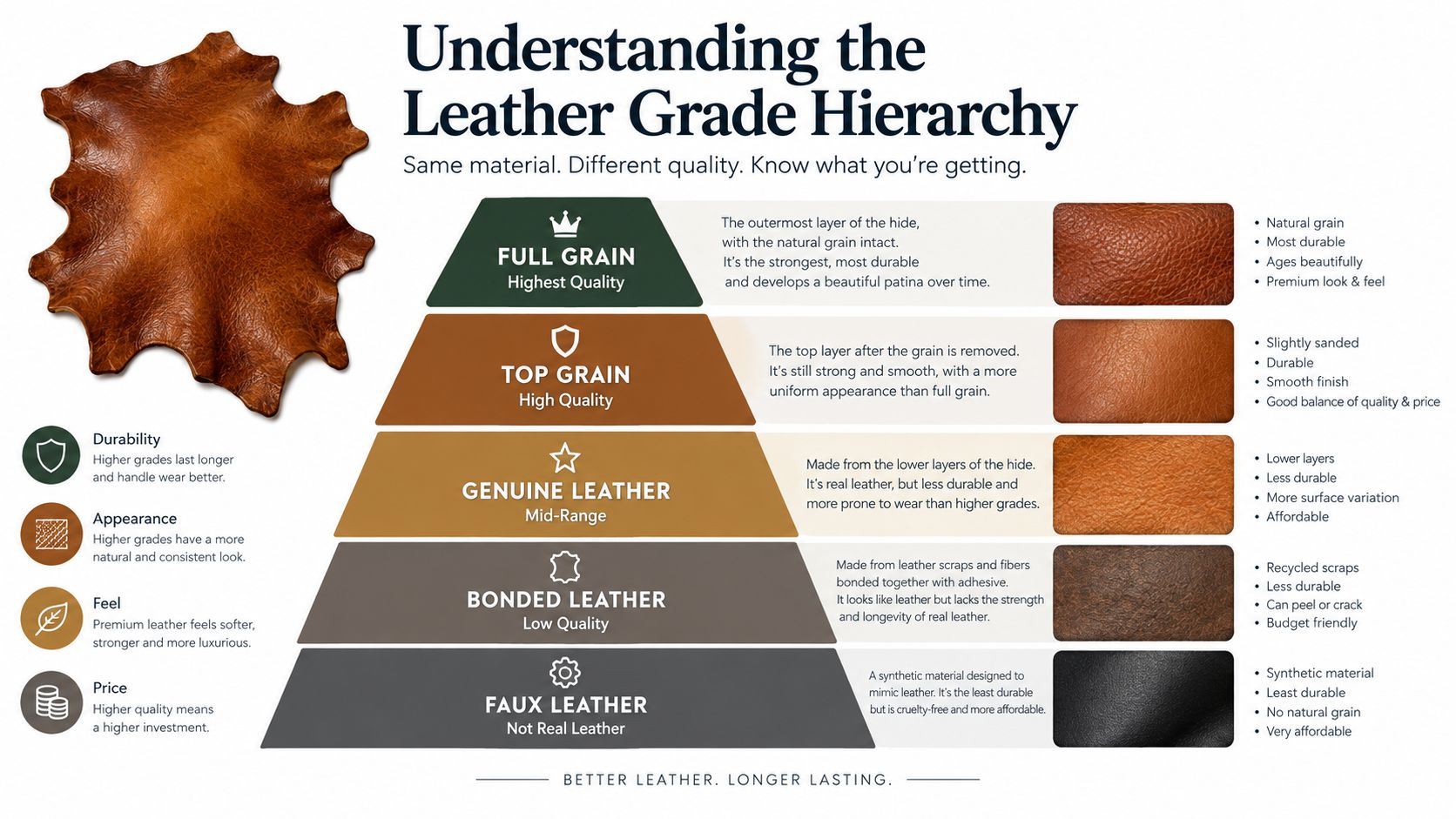
A simple layered comparison helps clarify leather grades. Think of a hide as a book with a strong outer cover and softer inner pages. The closer the material stays to the original outer surface, the more natural strength and character it generally retains. The more the manufacturer alters or reconstructs it, the more uniform the appearance may become, but the material's original structure becomes less intact.
Four grades a shopper should recognize
- Full-grain leather keeps the hide's natural outer surface, including markings and variations. Those details give each piece character and allow a patina to develop, but they also make color and texture less uniform.
- Top-grain leather begins with that outer layer, then receives sanding or buffing to reduce blemishes. It offers genuine leather with a cleaner, more predictable look.
- Split-grain leather comes from the lower portion of the hide after the top layer has been separated. Its fibers have a different structure and generally provide less strength and durability.
- Bonded leather is a reconstructed material made by combining leather fibers with polyurethane or similar backing materials. It can resemble leather at first, but it isn't a continuous hide.
The hierarchy isn't a ranking of good and bad. Each grade answers a different need. Full-grain appeals to buyers who want maximum natural character and long aging potential. Top grain suits shoppers who want a polished surface and manageable care. Split and bonded materials can meet furnishing needs where the budget or intended use makes a lower-cost construction appropriate.
Showroom question: Ask whether every upholstered surface uses the same leather. Some pieces use genuine leather on contact areas and a matched alternative elsewhere, so the specification deserves a close look.
A practical resource such as Quote My Wall expert tips can also help shoppers think about how surface materials interact with a room's broader finish palette. For upholstery-specific guidance, Tyner's leather furniture selection provides another starting point before a local consultation.
Top grain remains popular for ottomans because it balances authenticity with consistency. Its protective finish can reduce anxiety around everyday marks, while its real leather surface still contributes the soft, substantial feel that makes an ottoman look more finished than a purely synthetic substitute.
Inside a Well-Built Ottoman
During a showroom visit, an ottoman can look impressive from across the room while hiding weaknesses underneath. The leather is only the visible layer. A well-built piece works as a system, and its frame, support core, cushion, and upholstery determine how it feels, ages, and handles repeated pressure. Judging those parts together gives a clearer view of total cost per year than focusing on the sticker price alone.
Start with the frame
A kiln-dried hardwood frame can provide a strong foundation because controlled moisture helps reduce later movement. Engineered wood can also perform well when properly specified. Particleboard and lightly built framing deserve closer inspection if the ottoman will serve as frequent seating rather than occasional foot support.
Joint design matters as much as the frame material. Corner blocks, dowels, screws, and fitted structural connections distribute force more effectively than staples and glue alone. Dovetail joints resist pull-apart force in boxes and drawers. Mortise-and-tenon construction joins a projecting tenon to a matching recess, creating a sturdy connection. Tyner's mortise-and-tenon guide explains why this type of joinery matters.
Examine the support core
Under the cushion, you may find high-density foam, wrapped foam over springs, or a serpentine spring system. Foam provides a controlled, stable feel. Springs can add resilience, especially when the ottoman also serves as seating. The appropriate choice depends on whether the piece is mainly a footrest, cocktail surface, extra seat, or combination of uses.
The cushion wrap changes the first impression. A Dacron topper tends to create a cleaner, more structured surface. A down-feather blend feels softer and more relaxed, but it may need regular reshaping. Sit on the ottoman in the showroom and check whether the cushion returns smoothly or remains compressed and uneven.
Inspect the upholstery details
Top-grain furniture upholstery is commonly specified around 0.9 to 1.4 millimeters. A pigmented finish may improve resistance to scuffing and stains, as noted earlier. Check whether seams avoid areas that receive unnecessary strain. Double-needle stitching, reinforced corners, and neatly finished thread reveal more about construction than a broad label such as “premium.”
For heavy use, upholstery testing may include 25,000 to 40,000 Martindale cycles for residential-to-contract applications. Heavier-duty protected leathers may target 50,000 or more cycles. Testing can examine tear strength, flex resistance, cracking, and colorfastness, but those results do not replace inspecting the support core and stitching. Concentrated heel pressure can stress the build before the leather visibly wears through.
A made-to-order showroom option can also change the calculation. Choosing the frame, cushion feel, leather finish, and intended use together may cost more initially, yet a better-matched ottoman can remain useful longer, lowering its cost per year.
Top Grain vs Full Grain vs Bonded Leather
A showroom comparison becomes clearer when the three materials are judged against the way the ottoman will be used. A family room needs a different balance than a formal sitting area, and a transitional rental doesn't carry the same long-term expectations as a forever home.
| Attribute | Top Grain | Full Grain | Bonded |
|---|---|---|---|
| Surface | Sanded or buffed, often finished | Natural outer surface | Reconstructed leather fibers with manufactured backing |
| Appearance | Consistent and polished | Natural markings and variation | Uniform leather-like appearance |
| Feel | Soft, refined, and practical | More natural and increasingly characterful | Can imitate leather's touch at first |
| Maintenance | Protective finish can simplify everyday care | More responsive to environment and handling | Surface condition requires careful scrutiny |
| Aging | May develop some character, with less natural patina | Develops a richer patina over time | May lose its surface integrity sooner |
| Best fit | Busy living rooms and everyday upholstery | Buyers seeking natural character and long aging | Situations where initial purchase value dominates |
Matching the material to the room
Top grain is often the pragmatic selection for a central living-room ottoman. The sanded surface sacrifices some natural grain character, but it brings visual consistency and stain resistance. Full grain is more compelling when the buyer wants the hide itself to become part of the home's story, with marks and patina accepted as signs of use.
Bonded leather can create an attractive first impression, but it isn't the same as a continuous hide. The material may offer a leather scent and familiar visual effect, while the reconstructed surface can become a concern as the piece experiences regular use. Tyner's comparison of top-grain and bonded leather can help clarify the construction difference before a purchase.
Value test: A lower initial price only matters if the piece serves the room for an appropriate length of time. The useful comparison is purchase cost, care, expected service life, and replacement risk together.
For a formal cocktail ottoman, full grain may provide the desired presence. For family movie nights, top grain may better balance resilience and ease. For a temporary furnishing need, a lower-grade option may seem reasonable, but the cost-per-year calculation should still include the possibility of earlier replacement. A good advisor will ask about use before recommending a grade.
Caring for Top Grain Leather the Right Way
A top-grain leather ottoman earns its value through years of ordinary use, not showroom perfection. Care is a small routine that protects comfort, appearance, and the cost-per-year of the piece. A protective finish can make top grain forgiving, but dust, heat, sunlight, and ignored spills still wear on the surface.
Build simple habits
Start with weekly dusting. A dry microfiber cloth removes grit before it settles into seams and textured areas. If a spill occurs, use a clean white cloth to blot it. Rubbing spreads moisture, pushes it farther into the hide, and may disturb the finish.
Apply a pH-balanced leather conditioner in a thin coat about every six months, following the product directions and testing first in an inconspicuous area. Proper care can support a 5 to 10 year practical consumer service range for top grain, though maintenance cannot compensate for weak construction or unsuitable placement. That distinction matters when a showroom advisor helps you compare sticker price with expected years of use.
Control the environment
Place the ottoman away from direct afternoon sunlight, which can fade or dry the finish. Heating vents also deserve attention because concentrated warm, dry air can affect leather unevenly. If the design allows it, rotate or flip loose cushions so one sitting position does not carry every load.
A scratch calls for restraint. Aggressive household products may spread discoloration or damage the finish. Review the Evo Dyne Products scratch repair guide for general repair considerations, then contact a leather professional if the mark is deep, discolored, or close to a seam.
Care rule: Blot first, condition lightly, and test every cleaner in a hidden area before treating the visible surface.
For furniture-specific prevention, consult Tyner's leather protection guide. The aim is not to freeze leather in showroom condition. It is to prevent avoidable drying, staining, and uneven wear, keeping the ottoman comfortable and presentable through normal household life. Over time, that modest routine can matter more than a small difference in the original price.
Sizing and Styling for Your Living Space
An ottoman can make a seating arrangement feel generous, or it can turn the room into an obstacle course. Proportion comes before color. The room's walking paths, sofa relationship, and intended use should guide the shape.
Measure the room first
A rectangular ottoman often looks balanced at roughly two-thirds the length of the accompanying sofa, while a square design can suit a compact conversation area where it doubles as extra seating. The exact result depends on the sofa's depth, the coffee-table relationship, and the clearance needed for people to move through the room.
Height affects comfort as much as footprint. An ottoman top within two inches of the seat cushion height usually allows the legs to rest naturally rather than angling upward. A low profile can look elegant, but a dramatic height difference may make the piece less comfortable as a footrest.
A simple measurement list prevents showroom guesswork:
- Sofa length: Record the usable seating span, not just the outside arms.
- Traffic lanes: Mark the routes between the entry, seating, and nearby rooms.
- Open door paths: Check drawers, cabinets, and doors that may swing toward the ottoman.
- Seat height: Measure the cushion rather than relying on the frame.
- Dual use: Decide whether people will sit, rest feet, serve drinks, or store blankets.
Style the leather as an anchor
The buttery feel of top-grain leather gives an ottoman a tactile center. A warm cognac tone can complement textured rugs and natural wood, while a darker finish can bring structure to patterned drapery or lighter upholstery. The surrounding accents don't need to match exactly. They need to support the ottoman's visual weight.
For walls above a sofa or along a nearby conversation area, a guide to the best wall art for living rooms can help coordinate scale and color without making the room feel over-designed. In the South State St. showroom, shoppers can compare leather tones beside rugs, chairs, and tables, which is far more reliable than judging a color from a small screen.
Why Custom Upholstery Changes the Equation
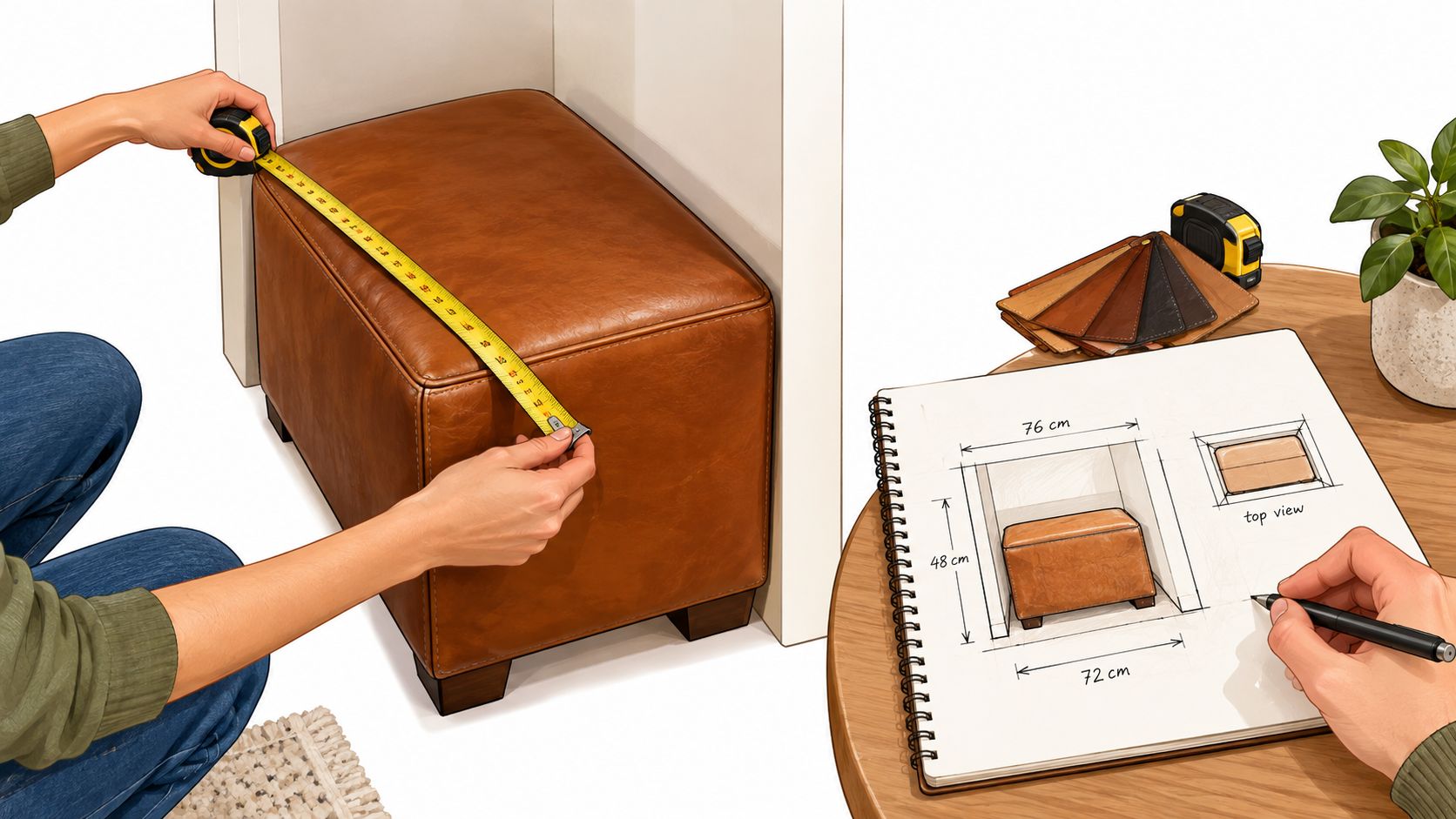
Stock dimensions assume an average room. Real homes rarely behave like averages. A narrow passage, an unusual alcove, a deep sectional, or a room with several doorways can make a standard ottoman feel slightly wrong every day.
Precision replaces compromise
A made-to-order ottoman can be sized around the actual sofa and traffic pattern. A rectangular piece may be shortened to preserve a walkway, or a storage design may be adjusted to fit beneath a window. The point isn't indulgence. It's precision that prevents a household from accepting an awkward footprint just because it was available in stock.
Leather selection also benefits from physical swatches. A shopper can compare color, grain, sheen, and hand-feel against existing seating rather than relying on an approximate online match. Protected top grain may suit a household that prioritizes stain resistance, while a more natural finish may appeal to someone who wants visible character and evolving patina.
Select the details that affect use
Leg style, leg height, and finish should relate to the sofa, chair, and nearby case goods. A clean-lined frame may call for tapered legs, while a traditional room may benefit from turned feet or a skirted base. Cushion firmness determines whether the ottoman feels like a supportive footrest or a relaxed extra seat.
Other specifications can include:
- Tufting: Adds texture and a formal, refined effect, though it changes how the surface feels under the feet.
- Nailhead trim: Defines the perimeter and can reinforce a traditional design language.
- Stitching: Matching thread keeps the surface quiet, while contrast thread emphasizes construction lines.
- Storage: Adds function when blankets, games, or reading materials need a designated place.
- Configuration: A paired ottoman arrangement can serve separate chairs more comfortably than one oversized piece.
Tyner's made-to-order programs allow shoppers to move beyond the in-stock starting point and explore finishes, fabrics, configurations, and leather upholstery. The same customization mindset extends to Canadel dining furniture, where wood finishes and configurations can be selected, and to Stressless seating, where ergonomic sizing helps align comfort with the user's body. In-stock is just the beginning, especially when the ottoman must coordinate with a carefully developed interior design.
Making a Lasting Investment in Your Home
A shopper comparing two ottomans in a showroom may notice the price first. A better comparison asks how long each piece is likely to serve the room, how well it handles daily use, and whether its design can remain useful after the room changes. Cost-per-year puts those questions together. A carefully built top-grain leather ottoman may cost more initially, yet provide stronger lifecycle value when its materials, proportions, and care needs suit the household.
Look for lifespan signals
Inspect the parts that carry long-term value:
- Frame integrity: Kiln-dried hardwood or another appropriately engineered structure should feel solid, without twisting or creaking under normal pressure.
- Joint strength: Corner blocks, dowels, screws, or traditional joinery suggest more deliberate structural work than staples alone.
- Support quality: High-density foam, properly supported springs, and a resilient cushion wrap affect comfort after repeated use.
- Leather specification: Top grain can receive a protective finish, but thickness and finish should be considered together rather than treated as the only quality measure.
- Seam execution: Even spacing, reinforced corners, and clean transitions show that the maker has planned for stress.
Commercial upholstery guidance commonly benchmarks residential-to-contract leathers around 25,000 to 40,000 Martindale cycles, while heavier-duty protected leathers sometimes target 50,000 or more. Furniture Discover's upholstery testing discussion explains that abrasion is only one consideration, alongside tear strength, flex resistance, cracking, and colorfastness. These checks matter because concentrated pressure can challenge stitching and support materials as much as the hide.
Consider the local relationship
A physical showroom lets you judge details that photographs cannot. Run a hand across the leather, test the firmness of the core, inspect seam alignment, and notice whether the frame feels substantial. Ask about cleaning, warranty coverage, future repair, and reupholstery before treating the purchase as a one-time transaction.
Tyner Furniture has served Southeast Michigan since 1957, with an Ann Arbor showroom covering needs from the Home Office to Outdoor Spaces. Its selection includes upholstery, made-to-order options, solid wood furniture, and comfort-focused seating. Special Financing programs are subject to credit approval. Promotional no-interest offers generally require minimum payments and payoff within the promotional period, as described in consumer financing guidance for furniture purchases. A Low Price Promise gives shoppers another point of comparison while they assess construction and expected service life.
The goal is a useful part of the home's daily rhythm, not a short-lived accent. A top grain leather ottoman will not automatically become an heirloom. Appropriate care, sound construction, and a configuration that fits the household can make it a comfortable investment whose annual cost becomes easier to justify over time.
Visit Tyner Furniture in the Ann Arbor showroom on South State Street for a hands-on sit test, compare leather swatches and construction details, and discuss made-to-order sizing, finishes, and configurations. Shoppers can also browse online Quick Specs for special-order options before planning a visit.