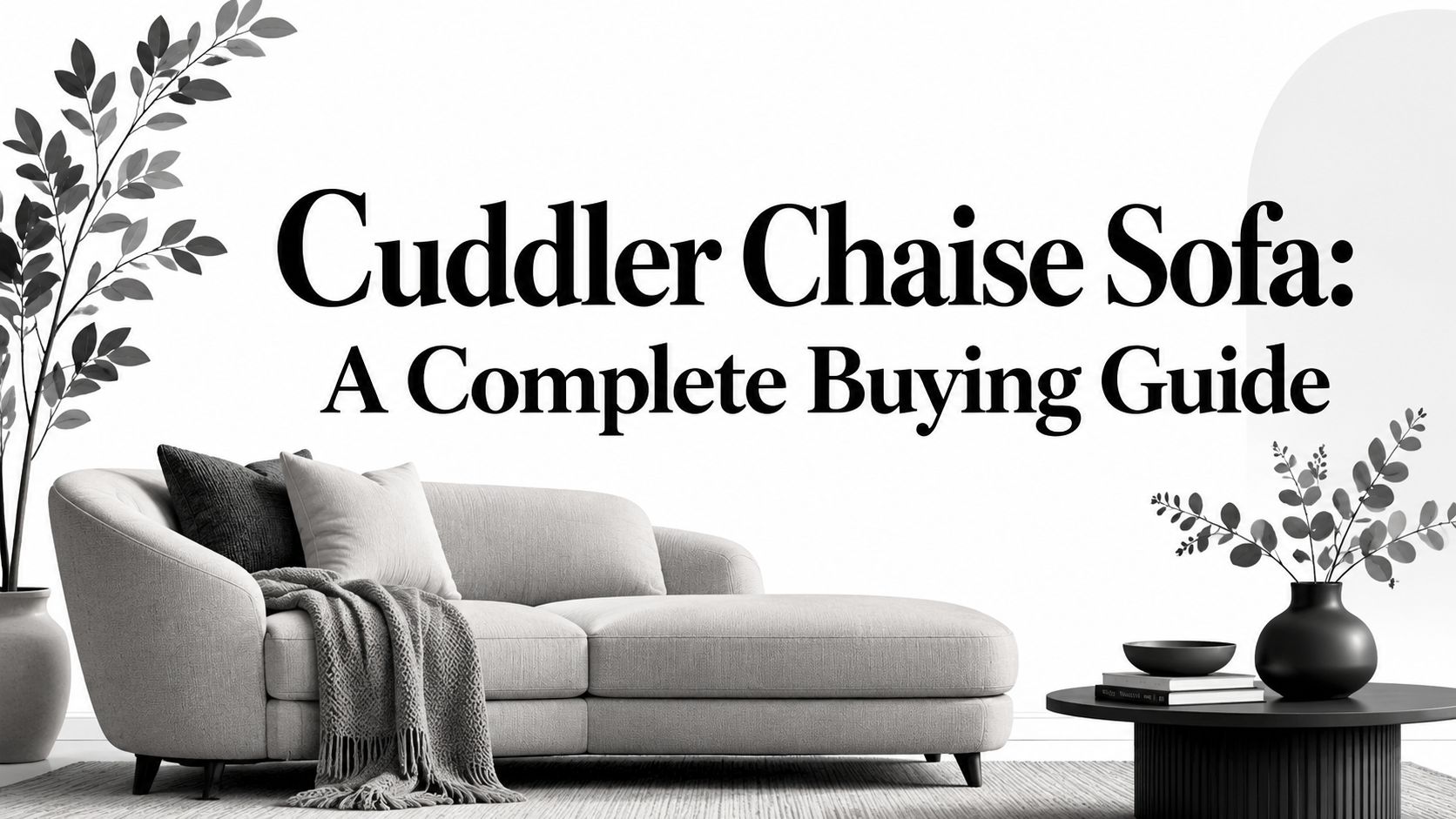
Cuddler Chaise Sofa: A Complete Buying Guide

A lot of households arrive at the same point. The old sofa still looks acceptable, but every movie night turns into a quiet negotiation. One person stretches out, another perches on the arm, the dog claims the softest corner, and the room's supposed “main seat” suddenly feels too small for the way the home is used.
That's when the term Cuddler Chaise Sofa starts showing up in searches. It sounds cozy, a little luxurious, and slightly confusing. For many homeowners and renters around Ann Arbor and Southeast Michigan, the appeal is immediate. It promises the lounge feel of a sectional without settling for a standard sofa that only works well for one sitting posture.
Furniture shopping can feel crowded with vague labels and oversized promises. A piece this substantial deserves a slower, more practical look. The right cuddler chaise can become the comfort hub of a room. The wrong one can eat up circulation space, dominate the floor plan, and become an expensive regret.
Table of Contents
- The Search for the Perfect Family Sofa
- What Exactly Is a Cuddler Chaise Sofa
- Will a Cuddler Chaise Sofa Fit Your Room
- Craftsmanship and Customization Your Heirloom Investment
- Styling Your Cuddler Chaise Sofa
- The Tyner Furniture Purchase Experience
- Frequently Asked Questions
The Search for the Perfect Family Sofa
A family room usually tells the truth faster than a showroom tag does. The sofa may technically seat several people, yet the household keeps drifting toward one corner, one cushion, one “good spot.” That pattern says more than any product label. It says the room needs better shared comfort, not just more upholstery.
That's where a cuddler chaise sofa starts to make sense. Not as a trend piece, but as a response to the way real households gather. One person wants to tuck in with a book. Another wants legs up. A child wants room to sprawl sideways. A pet wants to be close to everyone without ending up on the floor.
For homes with dogs, sleeping habits matter too. A helpful side read is Nandog Pet Gear's dog bed guide, especially for households trying to decide whether the pet should share the sofa zone or have a dedicated comfort spot nearby. That small decision can shape the size and layout of the seating plan more than people expect.
A family sofa works best when it supports the habits that already exist in the room, instead of asking everyone to sit more formally than they actually do.
Since 1957, local furniture guidance in Southeast Michigan has often meant helping people slow down enough to buy once and buy well. A larger sectional piece can absolutely create that welcoming center a household wants, but only when comfort, scale, and long-term durability are considered together.
A useful starting point is to think beyond color and arm style. The better question is how the sofa will serve the room for years. Will it host conversation, reading, weekend naps, visiting relatives, and ordinary evenings that turn into late-night lounging? That's the kind of value that lowers cost-per-year over time.
For shoppers sorting through comfort, support, and layout questions, five things to look for in a new sofa or chair is a practical next step. It helps narrow down what matters before anyone gets dazzled by size alone.
What Exactly Is a Cuddler Chaise Sofa
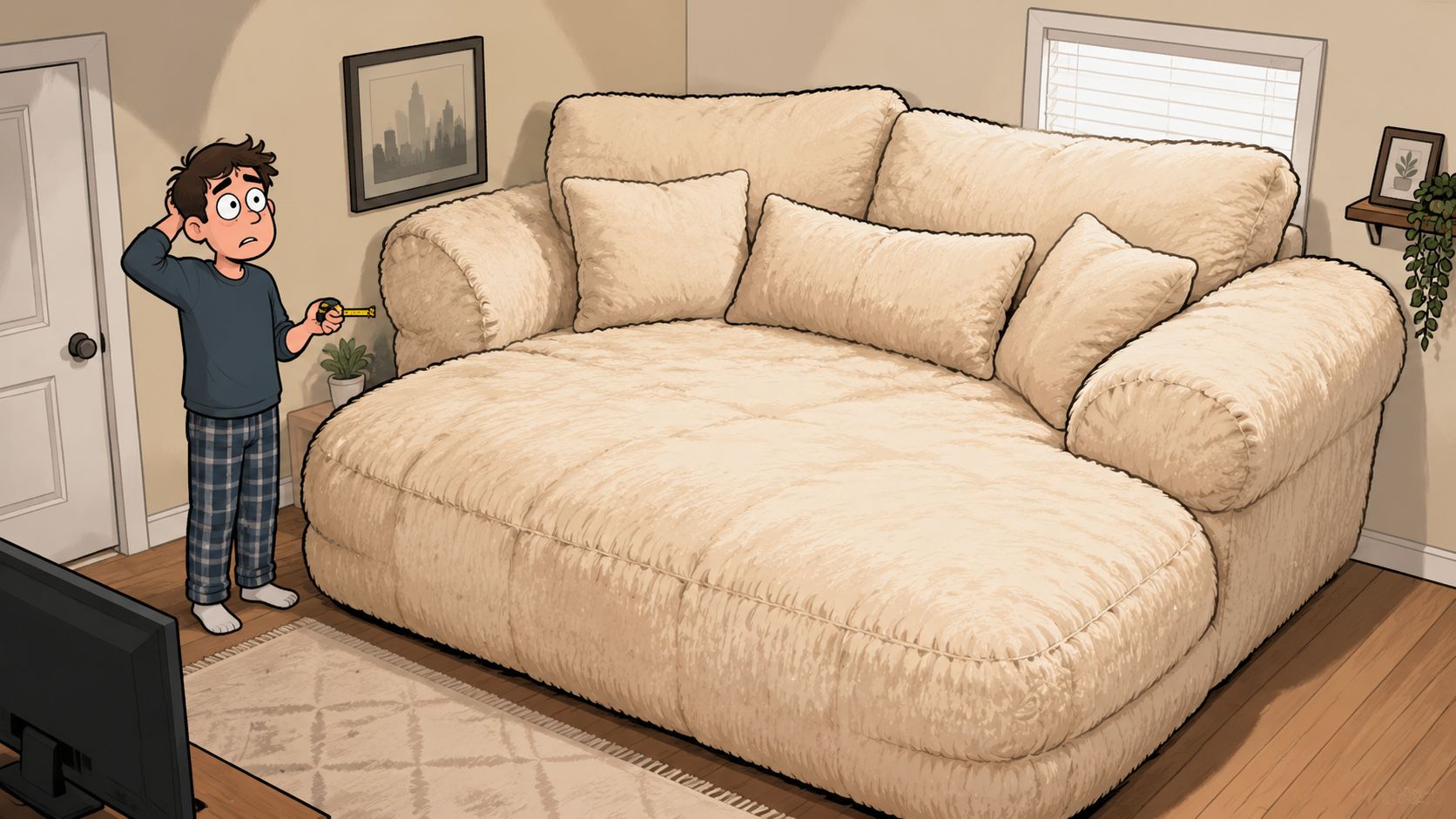
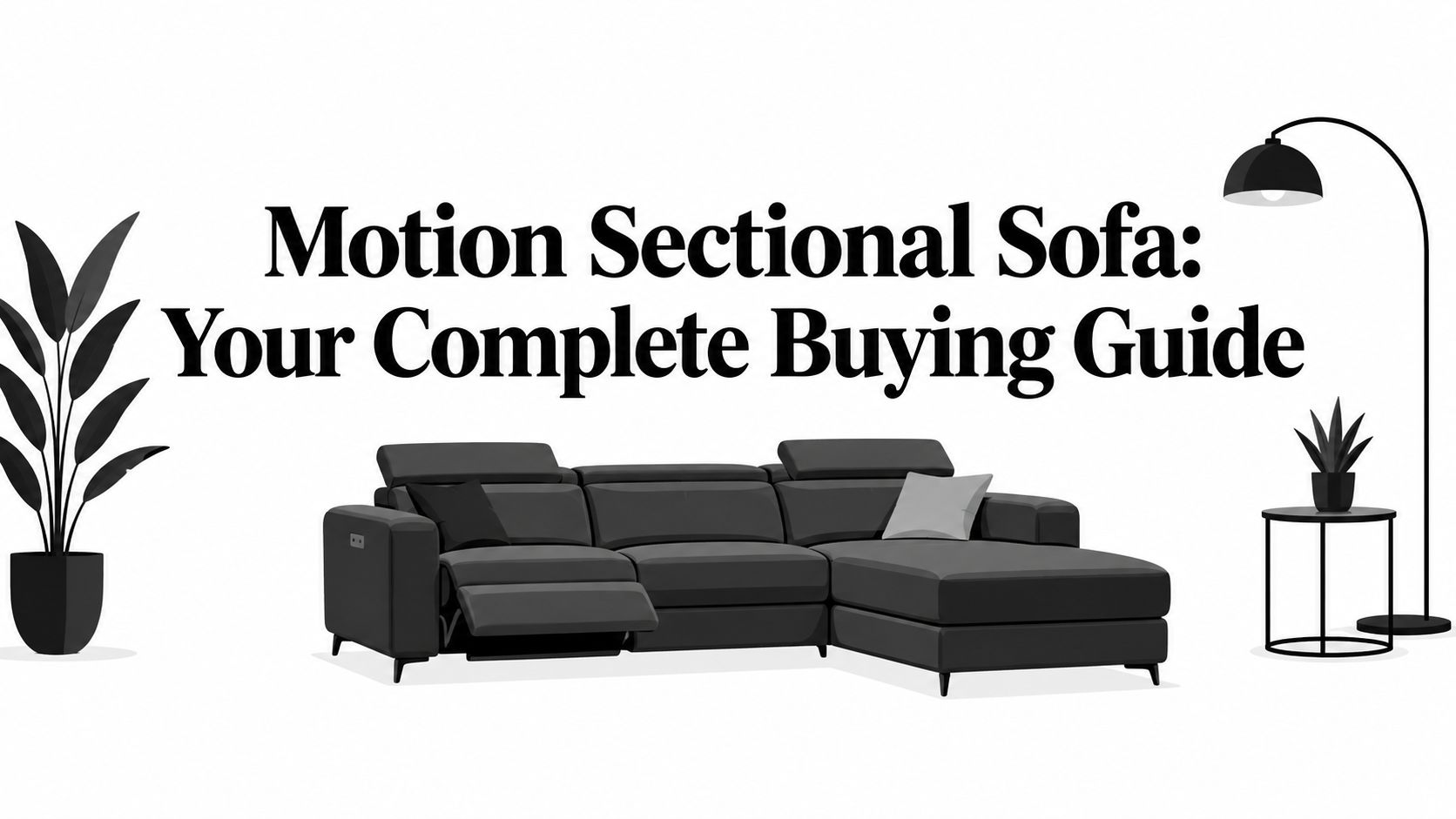
The term sounds like one piece, but it helps to break it apart. A cuddler chaise sofa isn't a single standardized furniture type. It combines two sectional ideas that shoppers often hear about separately.
Breaking the term into two parts
A cuddler is best understood as an oversized end seat. It's similar to a chair-and-a-half built into a sectional. Industry guidance notes that it usually has one arm, can sit on either side of the sectional, and often measures about 55 to 60 inches wide and 42 to 45 inches deep according to this furniture explainer on cuddler and chaise seating.
That depth is the whole point. It invites more than one posture. Someone can sit upright with a pillow behind the back, curl sideways, or share the space. The same explainer notes that a cuddler can accommodate two adults in a pinch and may also fit two small children.
A chaise, by contrast, is an end piece with an elongated seat designed for leg support. It's more of a classic one-person lounge seat. The shape is usually cleaner and more directional. One person claims it, stretches out, and that spot tends to stay theirs for the evening.
Why shoppers mix up cuddler and chaise
The confusion happens because both pieces signal relaxation. Both are usually attached to a sectional end. Both look more lounge-oriented than a standard sofa cushion. But they serve comfort differently.
A chaise says, “stretch out.”
A cuddler says, “settle in.”
That distinction matters when a shopper wants the room to support multiple people without moving up to an oversized full sectional that overpowers everything else. The phrase Cuddler Chaise Sofa usually signals a configuration chosen for flexible lounging in one footprint, rather than a standard three-seat sofa with one obvious lounging end.
A good way to picture it is this:
- Cuddler side: broad, deep, social, and forgiving
- Chaise side: extended, directional, and leg-forward
- Combined effect: a sectional that feels more generous than its seat count might suggest
For anyone sorting through sectional terminology before shopping, this sectional buying guide can help clarify common configuration language without turning the process into guesswork.
Will a Cuddler Chaise Sofa Fit Your Room
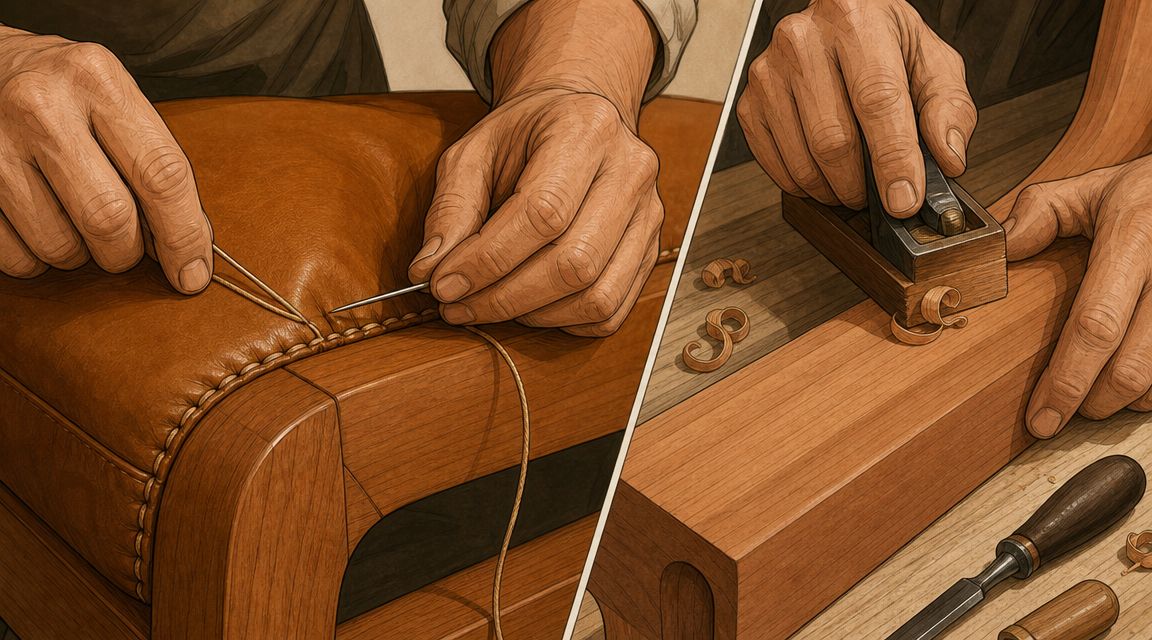
A cuddler chaise often wins people over in the showroom for a simple reason. It feels generous. Then it gets home and asks more from the room than expected.
That is the costly mistake this piece can create, especially in Southeast Michigan homes where family rooms often share space with dining areas, breakfast nooks, or a main traffic path to the kitchen. A cuddler chaise may look cozy in a photo, but in real life it behaves like a luxury-sized seating piece. The question is not only, “Will it fit on this wall?” The better question is, “Will the room still work once it is in place?”
Why scale matters more than shoppers expect
A standard sofa usually asks for a clear wall and a little breathing room. A cuddler chaise asks for a zone.
The extra depth changes how the whole room functions. Coffee tables need more clearance. Walkways can narrow quickly. Accent chairs may end up too far away to feel connected. In open layouts, the piece can also interrupt sightlines, which makes the room feel heavier even if every measurement technically works.
That is why experienced furniture shoppers measure for movement, not just furniture.
A practical room check before you buy
Start with the room the way your family uses it on a normal Tuesday night. Where do people walk? Where does someone set down a drink? Which path gets used when kids head to the kitchen or someone crosses the room during a movie?
Then check these five points:
Measure the full living zone
Wall width is only part of the story. Include the space needed for a coffee table, side tables, lamps, and everyday walking paths.Tape the footprint on the floor
Painter's tape gives a much more honest answer than guessing from a product photo. Mark both the width and the deepest point, then walk around it several times.Test real traffic flow
Leave enough room for people to pass without turning sideways or bumping the front corner. This matters most in rooms that connect to another busy area of the house.Check delivery access
Measure doorways, stair turns, hallways, and any tight corners before purchase. Large sectionals often arrive in pieces, but that does not remove the need to confirm the path inside.Study the room from across the space
A deep, broad sofa can feel settled in one room and visually heavy in another. Look at it from the entry, the kitchen, and the main seating angle.
If you want a good step-by-step process, this furniture measuring guide for room size, doorways, and delivery access is worth using before you order.
A simple way to judge fit
Here is the easiest test I give shoppers in the store. If the sofa takes the room from “comfortable gathering space” to “careful obstacle course,” it is too large, even if the tape measure says yes.
A cuddler chaise should make the room feel more livable, not more crowded.
At a glance comparison
| Feature | Cuddler Chaise Sofa | Standard Chaise Sectional |
|---|---|---|
| End-seat feel | Oversized, deep, built for multiple sitting postures | More defined lounging position |
| How it gets used | Shared seating, curling up, conversation, family lounging | One-person stretch-out spot |
| Room impact | Heavier visual presence, stronger room anchor | Usually easier to place |
| Traffic-flow risk | Higher if the footprint is not mapped carefully | Lower in many layouts |
| Best fit | Larger family rooms, media rooms, open-plan spaces | Households that want a chaise without the extra bulk |
Craftsmanship and Customization Your Heirloom Investment
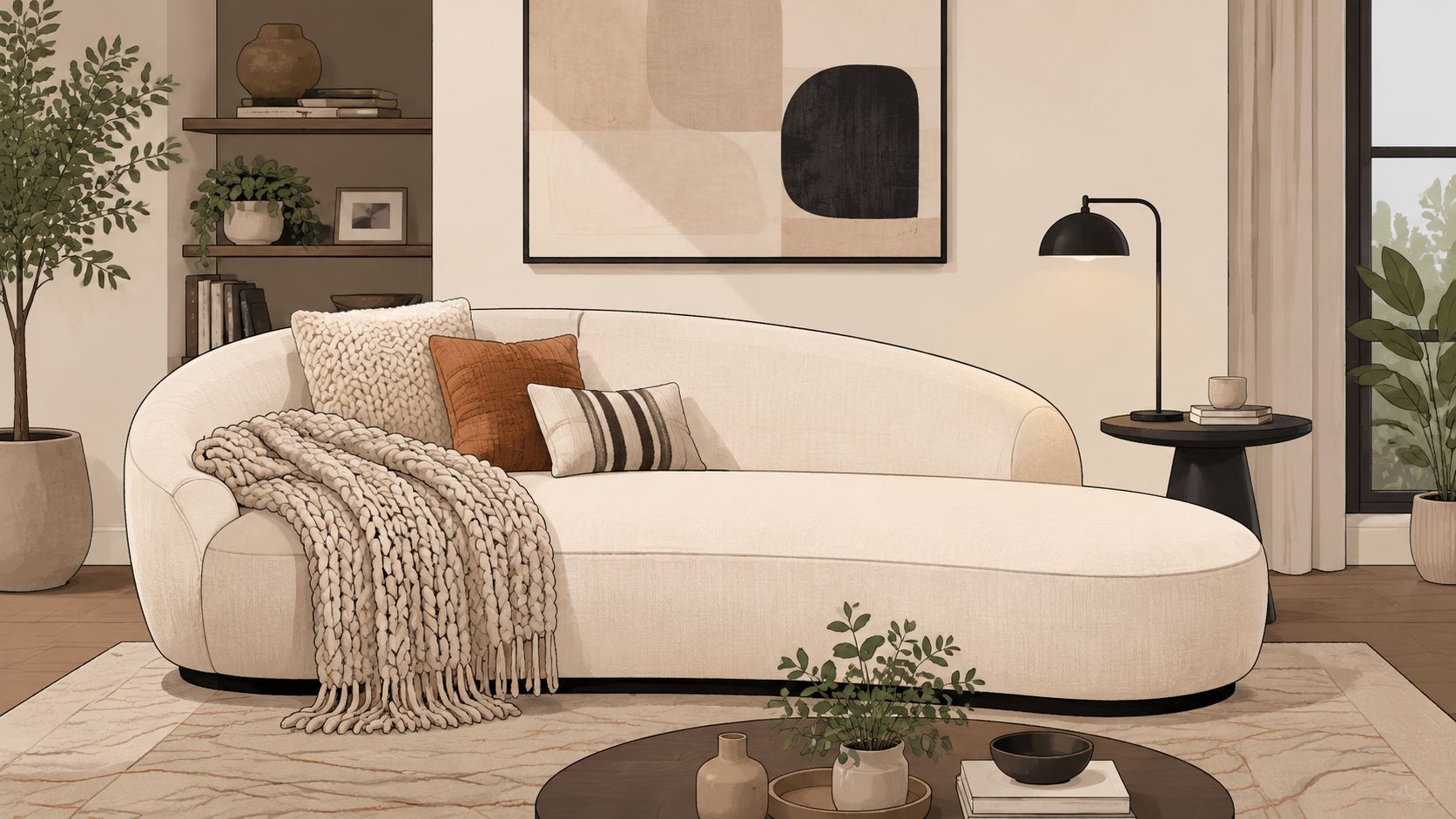
A cuddler chaise usually earns its keep in one of two ways. It becomes the seat everyone drifts toward, or it becomes the expensive piece that looked great on the floor and wears unevenly at home.
That difference often comes down to construction.
Because this style invites people to sit sideways, tuck their legs up, nap across the corner, or pile in together, it gets used more like a small upholstered room than a standard sofa seat. The frame absorbs weight from more angles. The cushions compress in more places. The fabric gets touched, rubbed, and stretched across a wider lounging zone.
A well-made cuddler chaise should feel steady under all of that use. If the seat support is weak, you will notice it quickly. The lounge corner starts to feel tired first, much like a mattress that develops a dip where one person always sleeps.
Here is what I tell shoppers to test before they focus on color or price:
- Seat support: Sit upright, then turn sideways, then tuck your feet up. The cushion should stay supportive in each position.
- Back comfort: The back should work for conversation and for lounging, without needing a stack of extra pillows just to feel right.
- Cushion recovery: Stand up and look back. Good cushions regain their shape reasonably well instead of staying compressed.
- Fabric durability: The surface should feel pleasant for daily contact and suitable for your household, whether that means performance upholstery, a textured weave, or leather.
- Arm and corner firmness: Press where people lean most. Those spots often reveal build quality faster than the center seat does.
Large lounge pieces reward better materials. They also punish shortcuts.
That is why customization matters so much here. On a smaller sofa, a near match in fabric or firmness may be acceptable. On a cuddler chaise, “close enough” can turn into a room-dominating mistake because the piece is so visible and so heavily used.
At Tyner Furniture, custom furniture options made simple let shoppers adjust upholstery, configuration, and comfort details so the sofa suits both the room and the household using it. That is especially helpful for Southeast Michigan homeowners who want the scale of a cuddler chaise without ending up with a piece that feels too bulky, too soft, or too formal once it is in place.
Customization also affects how long the sofa feels right in your home. A family with young kids may want a forgiving fabric with easier maintenance. A couple furnishing a quieter sitting room may care more about the hand of the textile and the shape of the arm. If you like layered rooms with tactile materials nearby, an easy sheepskin rug care guide can be useful for keeping those softer accents looking fresh around a heavily used seating area.
The goal extends beyond buying a big, comfortable sofa. It is to choose a version of this luxury-sized piece that still makes sense five or ten years from now, after movie nights, naps, guests, and everyday family use have tested it. That is what gives a cuddler chaise real heirloom potential.
Styling Your Cuddler Chaise Sofa
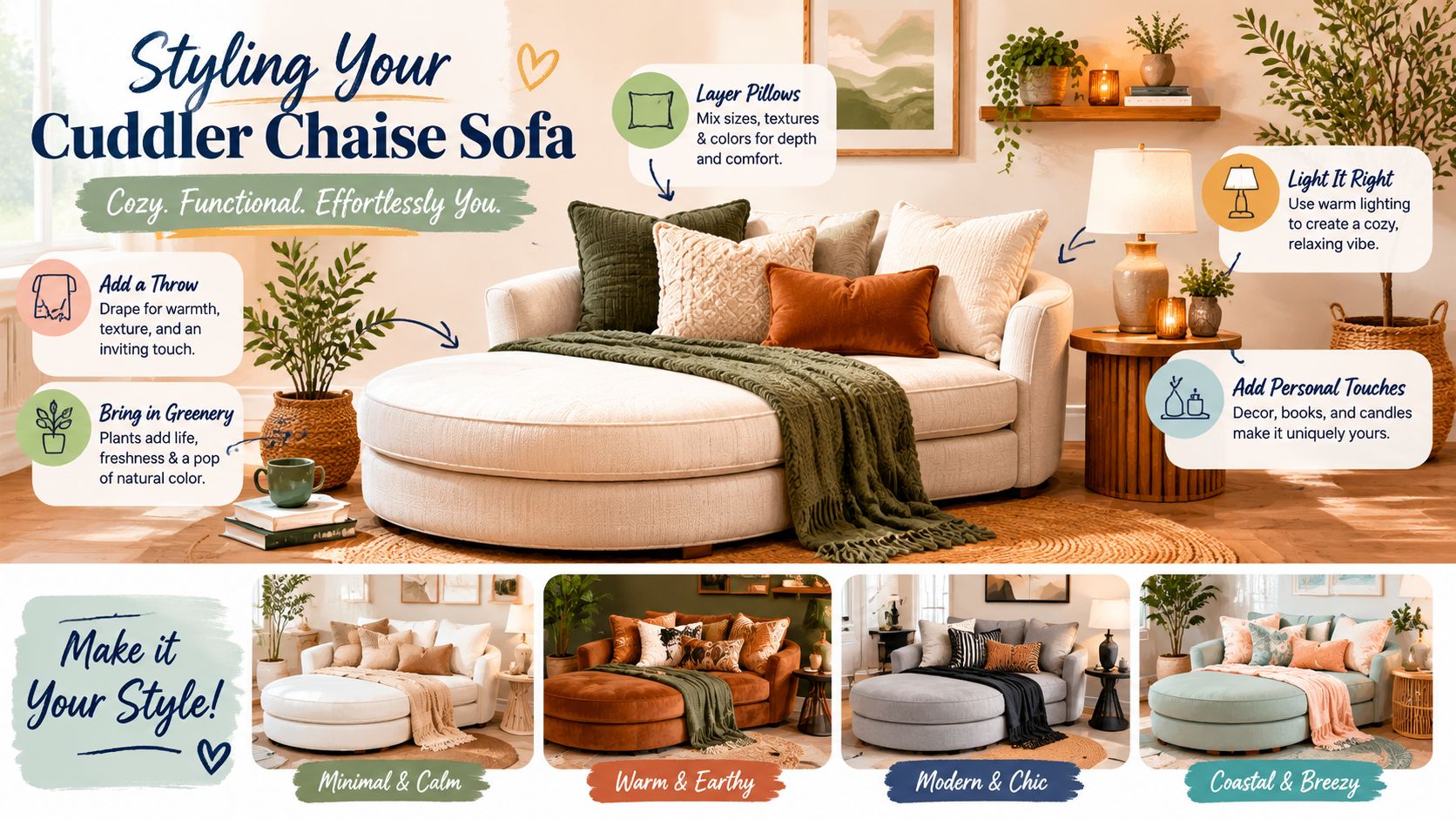
A cuddler chaise sofa doesn't disappear into a room. It sets the tone. Because it carries so much visual weight, styling should support that generosity rather than fight it.
Ann Arbor modern
This look suits clean-lined homes, renovated bungalows, and newer spaces that want warmth without clutter.
- Pillows: Use a restrained mix. A couple in a woven neutral, one with subtle pattern, and one softer accent pillow is often enough.
- Throw: Drape a single textured blanket over the cuddler corner, not the chaise end. That keeps the lounge side feeling inviting without making the whole piece look overfilled.
- Rug: Choose a rug with quiet pattern or tonal texture so the sofa remains the anchor.
- Tables: Round coffee tables or softly shaped nesting tables help offset the sofa's mass.
For shoppers building the rest of the room around the seating area, living room essentials can help narrow down supporting pieces.
Lakeside casual
This approach works well for family rooms that need softness, ease, and a little relaxed texture.
A washable-looking throw, a few mixed fabrics, and a rug with visible texture usually land the look well. The goal isn't a staged room. It's a room that still looks composed when people use it. A woven basket for blankets nearby keeps the chaise from becoming blanket storage by default.
Households considering natural accents often ask about sheepskin. For care advice before adding one to a lounge area, this easy sheepskin rug care guide is a useful reference.
Historic home elegance
Older Southeast Michigan homes often have beautiful trim, deeper color stories, and a little more formality in the architecture. A cuddler chaise can still work there, but styling should be edited.
A substantial sofa looks most graceful in a traditional room when the accessories are fewer and better chosen.
Try velvet-look or nubby pillows in richer tones, a neatly folded throw instead of a casual drape, and wood tables with visual substance. If the room has classic millwork or fireplaces, let those architectural details breathe. The sofa should feel grounded, not piled high with accessories.
The Tyner Furniture Purchase Experience
Buying a large upholstered piece should feel calmer than anticipated. The best process starts with a sit test, because comfort that looks right online can still feel off in person. Seat depth, back angle, cushion response, and arm height all become obvious within a few minutes of actual use.
Why the sit test matters
The South State St. showroom in Ann Arbor gives shoppers a way to slow down and compare real comfort, real scale, and real upholstery feel before committing. That matters for a cuddler chaise sofa because this category is often chosen for shared use. One person's dream lounge seat can be another person's too-deep perch.
A showroom visit also helps with material decisions. The weight of a fabric, the hand of leather, and the way a cushion recovers after use are hard to judge from a screen. For households furnishing beyond the living room, that same visit often becomes productive across categories, from home office and bedroom to dining and even outdoor spaces.
Making the investment manageable
Since 1957, the local legacy has been built on guidance rather than pressure. That shows up in the purchase process. Staff can help sort through configuration questions, discuss made-to-order options, and help shoppers decide whether a larger sectional is right for the room.
The financial side matters too. High-quality furniture is an investment, and many households prefer to spread that cost out. Special Financing can make a custom or higher-grade upholstered piece more manageable, and a Low Price Promise helps keep value part of the conversation without reducing everything to the opening ticket.
A good furniture purchase should support the home for years, not just solve the next weekend. That's especially true with a room anchor like this. The ideal outcome isn't just “it fit.” It's that the room feels more usable, more comfortable, and more settled after the piece arrives.
Frequently Asked Questions
Even after the measurements are done and the style direction feels clear, a few practical questions usually remain. These are the kinds of details shoppers often want settled before placing an order.
| Question | Answer |
|---|---|
| Is a cuddler chaise sofa better for families than a standard sofa? | It can be, especially when the household uses the living room for shared lounging instead of upright, formal seating. The deeper end seat usually supports more than one posture, which can make the room feel more accommodating. |
| Can a cuddler chaise work in a smaller home or apartment? | Sometimes, but only if the footprint and traffic paths are mapped carefully first. In tighter layouts, the extra depth can make the room feel crowded faster than expected. |
| Should shoppers choose in-stock or made-to-order? | That depends on the room and the household's priorities. In-stock can shorten the timeline, while made-to-order often gives better control over fabric, feel, and configuration. A large sofa usually benefits from more precise choices because it has such a strong effect on the room. |
Another common question is whether a cuddler chaise sofa is “too much” for everyday use. Usually, the answer comes down to habits. If the home regularly hosts reading, napping, family movies, casual conversation, and pets climbing up beside people, the generous scale can make daily life feel easier. If the room mainly serves as a formal sitting area, a trimmer silhouette may suit it better.
The final detail is patience. A piece that serves as an heirloom investment deserves a little measuring, testing, and material comparison before the order is placed.
For anyone ready to narrow down options, Tyner Furniture is worth visiting for a proper sit test at the Ann Arbor showroom on South State St., or for browsing online Quick Specs when comparing special-order possibilities. A cuddler chaise sofa is a major piece, and a confident choice usually comes from seeing the scale in person, feeling the upholstery, and matching the configuration to the room instead of forcing the room to adapt later.