Coffee Table Round Wood: Your Ann Arbor Buyer’s Guide

You know the feeling. The sofa is in place, the rug is down, the lamps are working, and the room still feels unfinished. There’s nowhere natural to set a mug, no easy place for a book or remote, and the seating area doesn’t quite hold together. In most homes, that missing piece is the coffee table.
A coffee table round wood design does more than fill empty floor space. It softens a room, gives conversation a center, and becomes the surface that supports daily life. It’s where kids spread out a puzzle, where guests set down glasses, where Saturday morning coffee lands before anything else starts. In a well-lived home, it becomes part of the family rhythm.
That matters here in Southeast Michigan, where homes often mix old bones with updated layouts. Some living rooms need a visual anchor. Others need better movement between the sofa, TV, and adjoining kitchen. A round wood table often solves both problems while adding a sense of warmth that metal-and-glass pieces rarely match.
Table of Contents
- The Round Coffee Table The Centerpiece of Your Home
- Planning the Heart of Your Living Room
- Choosing Your Solid Wood and Finish
- The Craftsmanship That Creates an Heirloom
- Matching Style and Customizing Your Table
- Understanding the Lifetime Value of Your Investment
- Find Your Forever Table at Tyner Furniture
The Round Coffee Table The Centerpiece of Your Home
There’s a reason a good coffee table changes the whole room. A living space without one can feel scattered. Add the right round wood table, and suddenly the seating feels connected. The room starts working the way people live in it.

In homes around Ann Arbor, I see this often. A family has chosen a comfortable sofa and maybe even a beautiful accent chair, but the center of the room is still unresolved. Once a round wood table goes in, the space feels calmer. It becomes the landing place for everyday objects and the quiet signal that this room is meant to be used, not just looked at.
A Michigan story worth knowing
Michigan has deep roots in this category. According to coffee table design history from Sentient Furniture, Michigan played a significant role in early 20th-century furniture manufacturing, and the first modern coffee table was reportedly invented around 1900 by F. Stuart Foote of the Imperial Furniture Company in Grand Rapids when he cut down the legs of a dining table for his wife's party.
That bit of history matters because it connects this simple piece to a real local legacy of practical design. The coffee table wasn’t invented as decoration alone. It came from people needing a lower, more useful surface for the way they gathered at home.
A table earns its place when people use it without thinking about it.
Why round wood still works
Round wood tables continue to feel right because they balance function and comfort.
- They invite gathering because nobody gets the “far corner” seat.
- They soften a room filled with straight sofa arms, media cabinets, and wall lines.
- They age with character when they’re made from real wood instead of a printed surface.
- They support decorating without demanding it, whether you prefer a tray and books or a simpler look.
If you enjoy styling the center of your room after the practical decisions are made, these coffee table decorating ideas can help you finish the look without cluttering the surface.
For a store that’s served Southeast Michigan since 1957, this is still the most important distinction. A coffee table isn’t just an accessory. It’s a functional legacy piece. Done well, it supports the room today and still feels right years from now.
Planning the Heart of Your Living Room
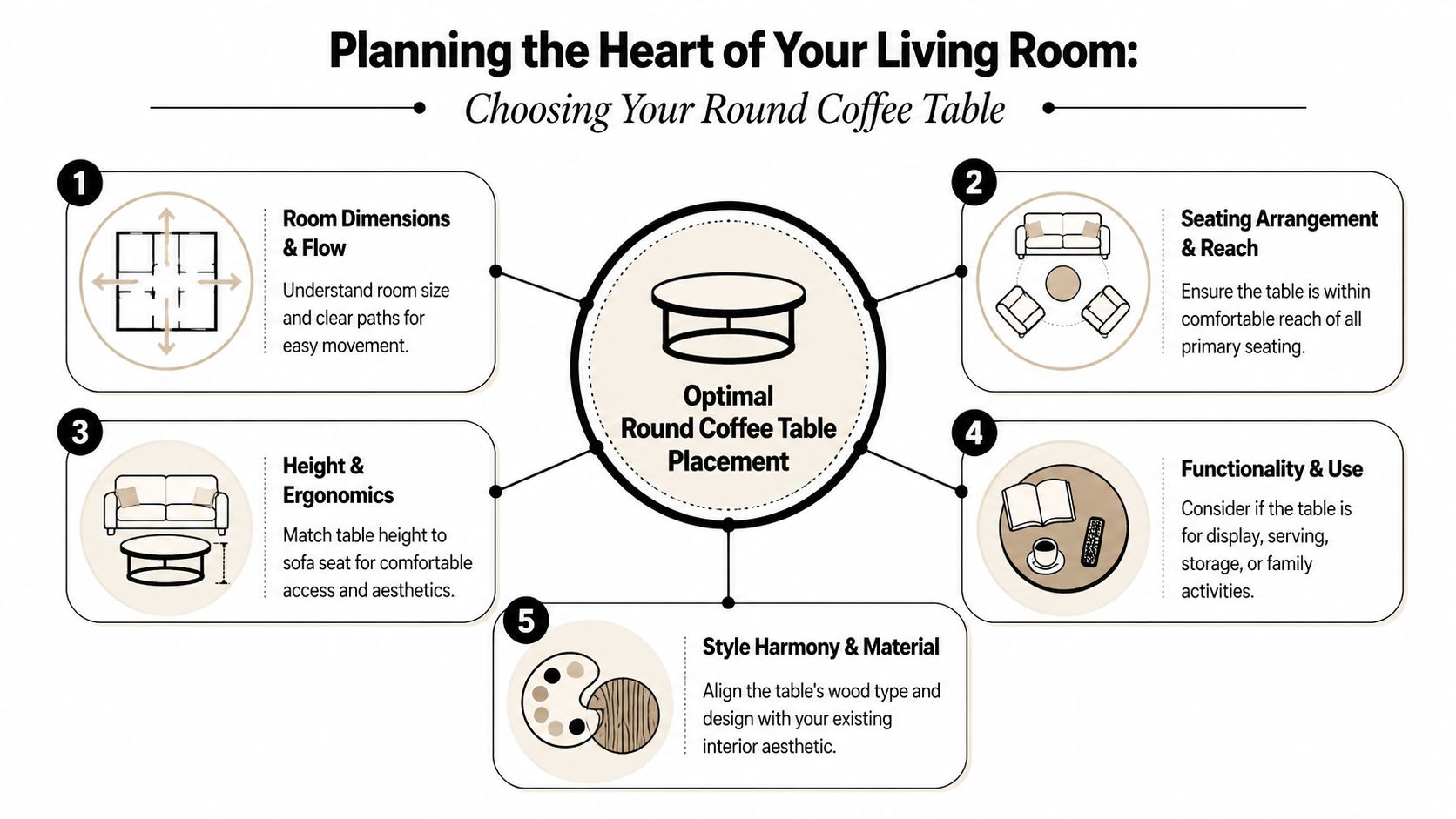
Most coffee table mistakes happen before anyone talks about style. People buy by eye, then discover the room feels tight, the walkway pinches, or the table sits too far away to be useful. Good planning fixes that.
Start with movement, not the table
In Southeast Michigan, floor plans vary a lot. You may have a traditional room in an older neighborhood, a wide-open great room in newer construction, or a multi-use space where the living area flows into the kitchen. In those layouts, shape matters.
As noted by Tribesigns on round coffee table layouts, for open-concept homes common in Southeast Michigan, a round coffee table can significantly improve traffic flow compared to rectangular tables, which often create bottlenecks. The circular shape provides better clearance and solves layout problems in multi-functional spaces, a key reason for their popularity.
That’s one reason a coffee table round wood style often works so well in family rooms with sectionals. The absence of corners makes the room easier to move through, especially when people are crossing the space to the kitchen, a hallway, or a patio door.
A simple planning sequence
Use this order before you fall for a finish or base design.
Mark the conversation zone
Stand in the room and identify where people naturally sit, talk, and reach. The table should serve that zone first, not the empty square in the middle of the room.Test the walking paths
If your living room is a pass-through space, trace the route people use. If a rectangular table cuts into that route, a round one often feels more natural.Check reach from every primary seat
If someone has to lean too far to set down a mug, the table is undersized, poorly placed, or the wrong shape.Look at sightlines
In many Ann Arbor homes, the living room centers on both conversation and TV viewing. A bulky table can interrupt that balance.
Practical rule: The best coffee table placement supports both movement and use. If people have to sidestep it constantly, the room is working around the table instead of with it.
Think like a designer, not just a shopper
In design, a little planning goes a long way. Designers often study how a room carries the eye and the body at the same time. If you enjoy that side of home planning, Colorado Art Services' design insights offer a thoughtful look at how visual composition and lived function work together in a space.
A few practical checks help:
| What to evaluate | What works | What usually doesn’t |
|---|---|---|
| Traffic flow | Curved edges that let people move around naturally | Sharp corners in tight or shared pathways |
| Seat access | A table easy to reach from sofa and chairs | A large centerpiece that looks good but feels distant |
| Visual weight | A base and top proportion that fit the room | A heavy top in a compact seating area |
| Daily use | Enough open surface for mugs, books, and remotes | Styling the whole top so there’s nowhere to use it |
For more room-planning ideas beyond the coffee table itself, living room essentials for a balanced setup can help you think through the whole seating arrangement.
Choosing Your Solid Wood and Finish
Material is where a table either gains character or starts its slow decline. At a glance, many wood-look tables appear similar online. In person, the difference is obvious. You can feel it in the surface, see it in the grain, and notice it years later when one piece develops patina and another starts peeling at the edges.
What solid wood gives you
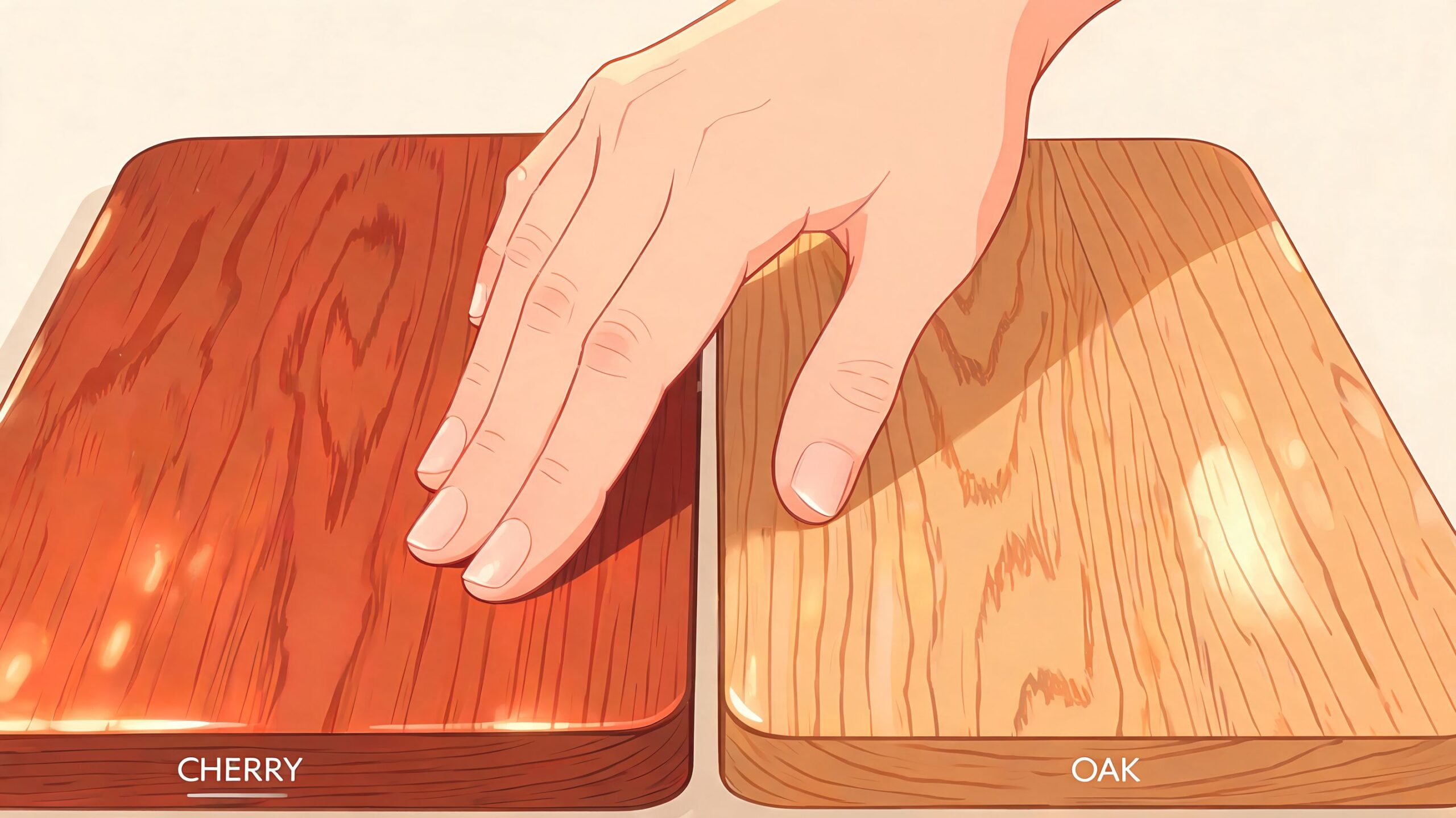
A solid wood coffee table round wood piece carries a kind of visual honesty. Oak shows bold grain and a grounded, traditional presence. Cherry brings a richer, warmer tone that many homeowners love in transitional interiors. Maple reads cleaner and more restrained, which suits lighter contemporary rooms.
These woods also give you something veneer and printed surfaces usually don’t. They can be refreshed. Small wear marks become part of the story or can be corrected. A solid top has depth, not just color.
Why moisture matters in Michigan
Wood moves. That isn’t a flaw. It’s the nature of the material. What matters is how the wood was prepared before the table was built.
According to Plank+Beam’s round coffee table specifications, solid wood's dimensional stability is critical. Woods like pine must be kiln-dried to a 6-8% moisture content to match indoor humidity levels of 30-50% in the Midwest, preventing the expansion and contraction that causes warping and cracking in lower-quality pieces.
That’s a practical issue for Southeast Michigan homes. Winter heat dries interiors out. Summer humidity comes back. If the wood wasn’t properly dried and built with movement in mind, a round top can cup, crack, or shift in ways that shorten the life of the piece.
The table that looks fine on delivery day isn’t always the table that still looks fine after a few Michigan seasons.
Finish choice changes the whole personality
Finish is where a table starts to belong to your home instead of a catalog page. A deep brown stain can tie into existing trim or hardwood floors. A lighter natural finish can open up a room and let the grain do more of the work. Matte finishes feel quieter and more architectural. Higher-sheen finishes reflect more light and can read more formal.
If you’re trying to coordinate furniture wood tones with flooring, it helps to understand how sheen and stain depth affect the eye. A good reference is this guide to hardwood floor finish types, especially if you’re thinking through how your table should sit alongside existing floors.
A few practical trade-offs matter here:
- Lighter finishes show less dust but can reveal dents more clearly on softer species.
- Darker stains feel dramatic and established, though they may show surface scratches sooner.
- Open-grain woods such as oak bring texture and movement.
- Smoother-grain woods such as maple create a cleaner, more refined look.
For a deeper look at species, grain, and long-term wear, this hardwood furniture guide is a helpful next step.
The right finish doesn’t chase a trend. It supports your room, your light, and the way you want the home to feel when you walk into it.
The Craftsmanship That Creates an Heirloom
Quality is often hidden. A coffee table can have a handsome top and still fail where it matters most. Wobble usually starts in the base. Separation starts in weak joinery. The difference between a table that lasts and one that loosens up in a few years usually comes down to construction details most shoppers were never taught to inspect.
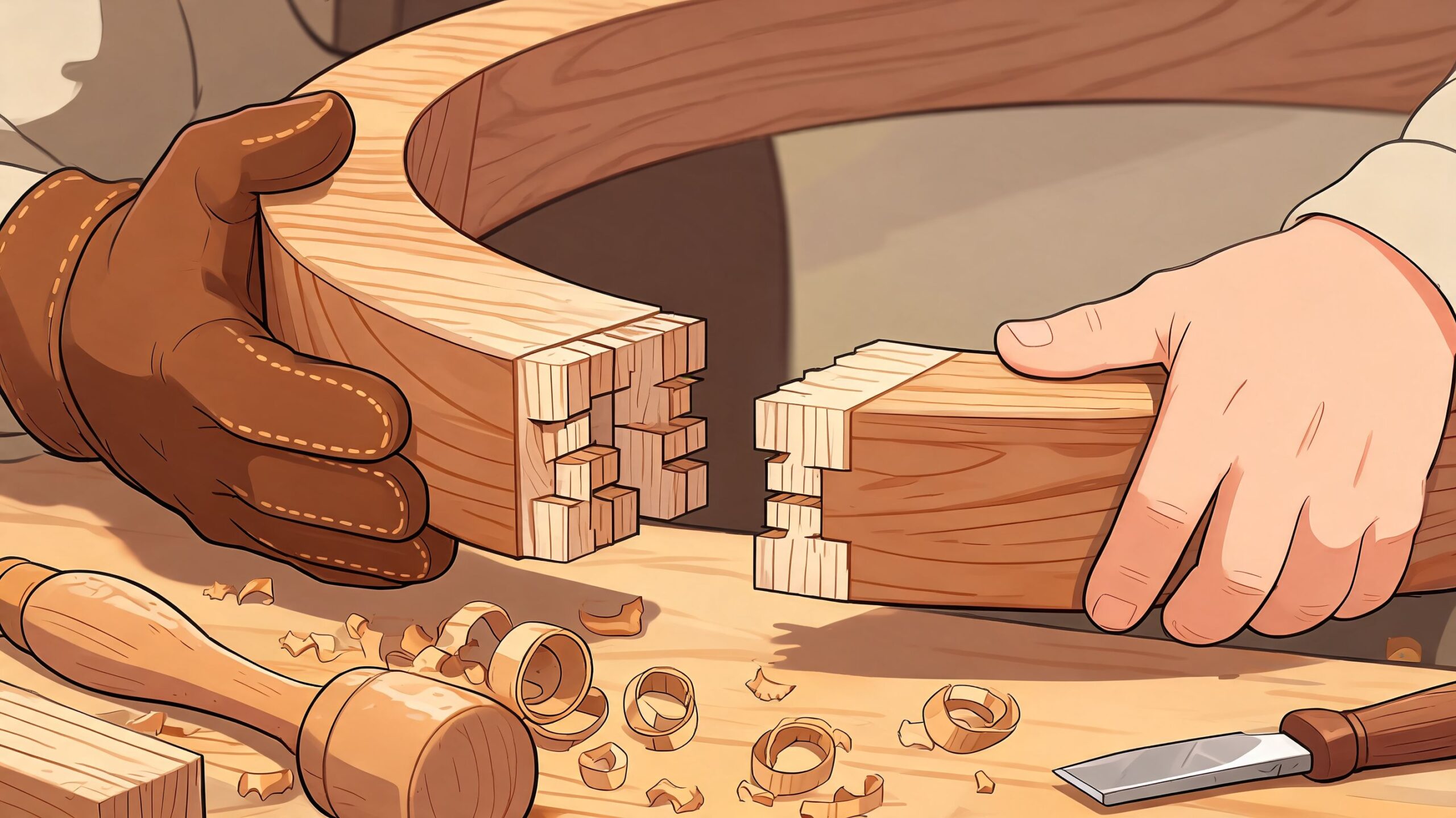
Joinery tells the truth
When people ask what separates hand-crafted solid wood furniture from mass-market pieces, I start with the joints. Screws can hold for a while. Stapled construction can look acceptable at first. But repeated use exposes shortcuts.
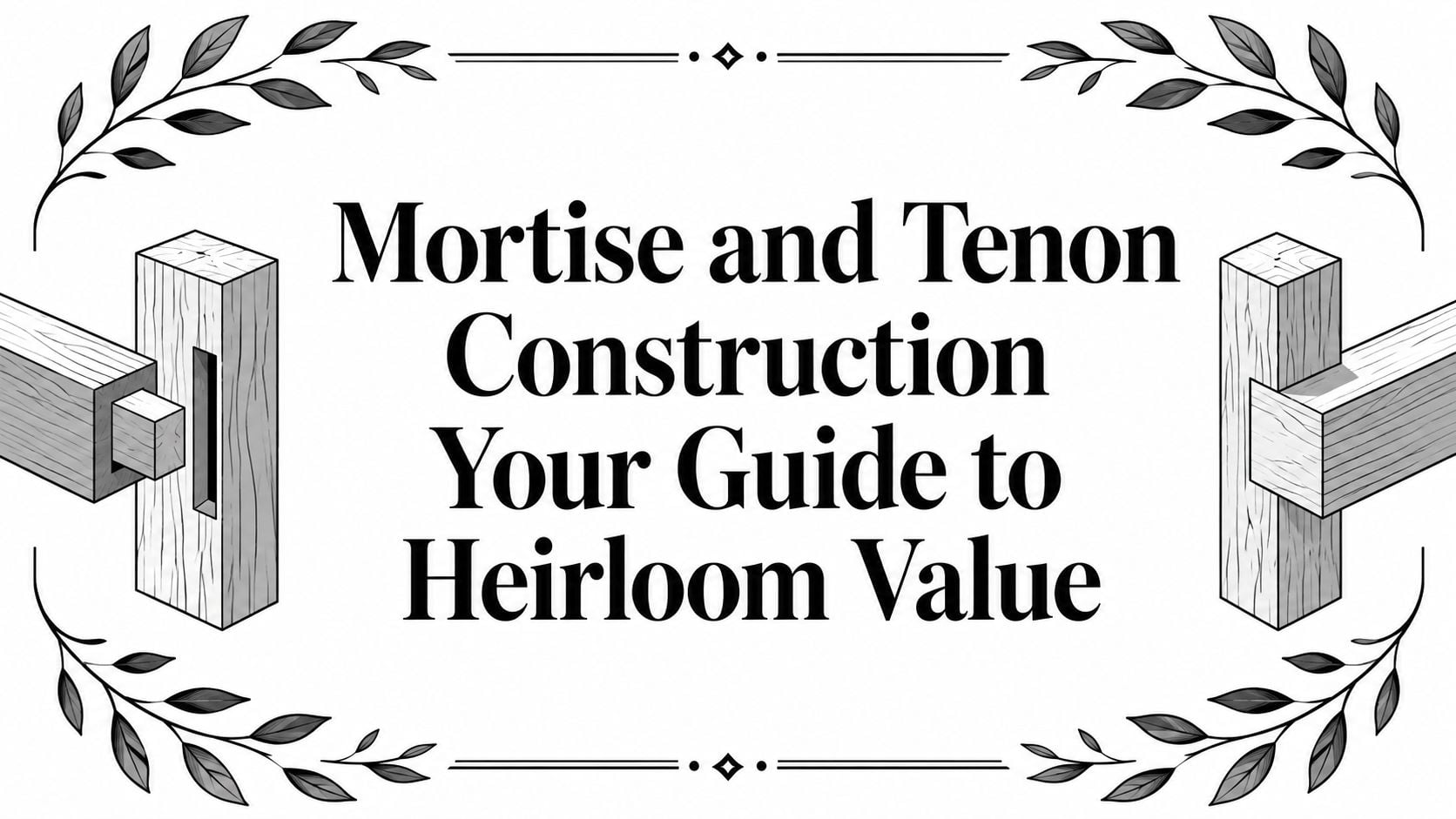
The verified construction data matters here. As detailed in the Sorenna round table construction reference, structural integrity depends on joinery and base design. A pedestal base on a round table distributes forces radially to minimize tipping, while joinery like mortise-and-tenon can outperform screws by 40% in shear strength, ensuring stability that lasts for generations.
That’s not marketing language. It’s why some tables stay quiet and solid, while others develop a little sway every time they’re nudged across a rug.
Base design matters more than most people think
Round tops create a specific engineering challenge. The support underneath has to distribute weight evenly. A poorly designed leg system can feel fine when untouched, then wobble once a child leans on the edge or someone shifts a stack of books across the top.
Here’s what to look for:
- Pedestal bases work well when they have enough footprint to resist tipping and enough mass to support the top.
- Four-leg designs can be excellent, but only if the joinery is strong and the stance is stable.
- Lightweight center columns often look elegant online and disappoint in everyday use.
- Mixed-material bases need extra scrutiny if they combine solid wood visuals with lower-integrity core materials.
Don’t judge a round coffee table by the top alone. Turn your attention underneath. That’s where durability lives.
Hand-crafted construction pays off in daily life
Amish craftsmanship stands apart. Time-honored methods like mortise-and-tenon and dovetailing aren’t there for nostalgia. They’re there because they work. They create a table that feels settled, weighty, and confident in the room.
For homeowners comparing options, these are the questions worth asking in a showroom:
| Question | Good answer |
|---|---|
| How is the base attached? | With robust joinery or well-engineered hardware, not just light screws into weak material |
| What is the top made from? | Solid wood, not a thin decorative layer over a disposable core |
| Can the finish be maintained or refreshed? | Yes, especially on solid wood |
| Will the table stay stable on real flooring and rugs? | It should feel planted, not delicate |
If you want to study construction quality in other categories too, Hickory Craft furniture details are useful for seeing how build quality shows up across better-made home furnishings.
An heirloom table isn’t defined by ornate design. It’s defined by the fact that it keeps doing its job beautifully long after the newness wears off.
Matching Style and Customizing Your Table
Once the structure is right, style gets easier. A round wood table is unusually flexible because it can lean modern, rustic, classic, or transitional depending on the base, edge profile, stain, and surrounding upholstery.
Read the room before you choose the table
If your room has clean-lined seating, metal lighting, and a quieter palette, a simple round top with a restrained base usually fits best. If your home has richer wood tones, layered textiles, and more traditional architecture, a thicker top or more substantial base can feel appropriate.
A quick style check helps:
- Modern rooms usually respond well to cleaner silhouettes and lighter visual weight.
- Rustic or farmhouse spaces can handle more texture, visible grain, and a sturdier feel.
- Transitional interiors often do best with balanced shapes and mid-tone stains that don’t overpower the seating.
- Small apartments or furnished rentals benefit from designs that feel open rather than bulky.
Customization solves real problems
Many shoppers often settle too soon. They find a table that’s close enough in size, close enough in color, and close enough in shape. Then they live with the compromises.
Made-to-order furniture changes that conversation. Instead of asking, “What can I make work?” you start asking, “What does this room need?” A custom round table can be customized for your layout, your wood preference, and the finish that works with the rest of the home.
That same mindset shows up across other categories too. Canadel gives shoppers a broad made-to-order path for dining, with choices in finish, edge detail, and style direction. Stressless approaches personalization through ergonomic sizing and comfort fit in seating. The point is the same in each case. In-stock is only the beginning.
A well-chosen custom piece doesn’t feel customized for the sake of being different. It feels resolved.
One practical example is this Capri round coffee table option, which shows how a round format can serve as a starting point while you compare scale, visual weight, and how a design would sit with your existing upholstery.
Details that change the look
Small decisions make a visible difference:
- A softly eased edge feels relaxed and family-friendly.
- A crisper profile reads more architectural.
- Visible grain movement adds warmth in neutral rooms.
- A darker stain can anchor pale upholstery.
- A natural finish can keep a compact room from feeling heavy.
That’s especially useful in Ann Arbor homes where one room often has to do several jobs well. A bespoke table can support the room’s style, but it can, even more, support the way the room is used.
Understanding the Lifetime Value of Your Investment
Price matters. It should. Furniture is a significant purchase, especially when you’re trying to furnish thoughtfully instead of all at once. But the better question isn’t only “What does it cost today?” It’s “What will this cost me over the years I live with it?”
Cost per year is the better lens
That’s where solid wood separates itself from disposable construction. The sticker price is higher at the start, but replacement cycles change the math.
According to Plank+Beam’s round coffee table collection analysis, while initial cost is higher, the cost-per-year of a solid wood table can be 60-70% lower than veneer alternatives when amortized over a 30-year lifespan, because it avoids the 5-7 year replacement cycle common with mass-produced furniture.
For a homeowner building a forever space, that’s the right frame. You’re not only buying the object. You’re buying fewer replacements, better repairability, and a piece that can continue to belong as the home evolves.
What holds value over time
Solid wood earns its keep in a few practical ways.
- It can be maintained instead of discarded when life leaves marks.
- It tends to age more gracefully because wear often reads as character rather than failure.
- It supports long-term decorating changes since wood adapts well as rugs, upholstery, and wall color shift.
- It avoids the churn of short replacement cycles, which many homeowners find frustrating as much as expensive.
A veneer table can look appealing in a product photo. Once the edge chips or the top starts separating, your options narrow fast.
Make the investment easier to live with
A quality purchase still needs to fit real budgets. Special Financing can help spread the cost into manageable payments, subject to credit approval, and a Low Price Promise helps remove some of the anxiety that often comes with choosing better furniture over lower-grade alternatives.
That matters whether you’re furnishing a primary living room, a home office sitting area, or coordinating pieces across the house. Since 1957, the value conversation has never been only about a sale price. It’s about what you get to keep.
Here are a few care habits that protect that investment:
Use coasters consistently
Wood is resilient, but repeated moisture exposure is still avoidable wear.Lift instead of drag
A strong table can still be stressed unnecessarily if it’s shoved across flooring.Dust with a soft cloth
Grit on the surface can act like fine abrasives over time.Keep placement stable
Don’t park a solid wood table right against heating vents or in harsh direct sun if you can avoid it.
The best furniture value usually looks boring on day one. Years later, it proves to have been the wise decision.
Find Your Forever Table at Tyner Furniture
The right round wood coffee table does several jobs at once. It anchors the room, improves how people move through it, and adds the kind of material depth that makes a living room feel finished. When it’s built well, it also carries a longer story. Not just of design, but of use.
That’s why this purchase is worth slowing down for. Shape matters. Wood species matters. Joinery matters. Finish matters. In Southeast Michigan, climate and layout matter too. A table that looks good for a season isn’t hard to find. A table that still feels right after years of family life is a different standard.
Since 1957, Tyner has served Ann Arbor and the broader Southeast Michigan community with that longer view in mind. The showroom on South State St. gives shoppers a chance to feel the weight of solid cherry wood, compare the character of oak and maple, and see how scale and finish change a piece in person. That same guidance extends beyond the living room, with furnishings for the dining room, bedroom, home office, and even outdoor spaces.
If you’re narrowing options, pay attention to what your hands and eyes tell you. Does the table feel grounded? Does the grain have depth? Does the finish suit your home’s light? Does the scale support the way the room works?
Those are the questions that lead to a forever piece instead of another replacement.
Visit Tyner Furniture to browse online Quick Specs, compare made-to-order options, or stop by the Ann Arbor showroom for a sit test and an in-person look at the craftsmanship, finishes, and functional details that make a round wood coffee table worth bringing home.