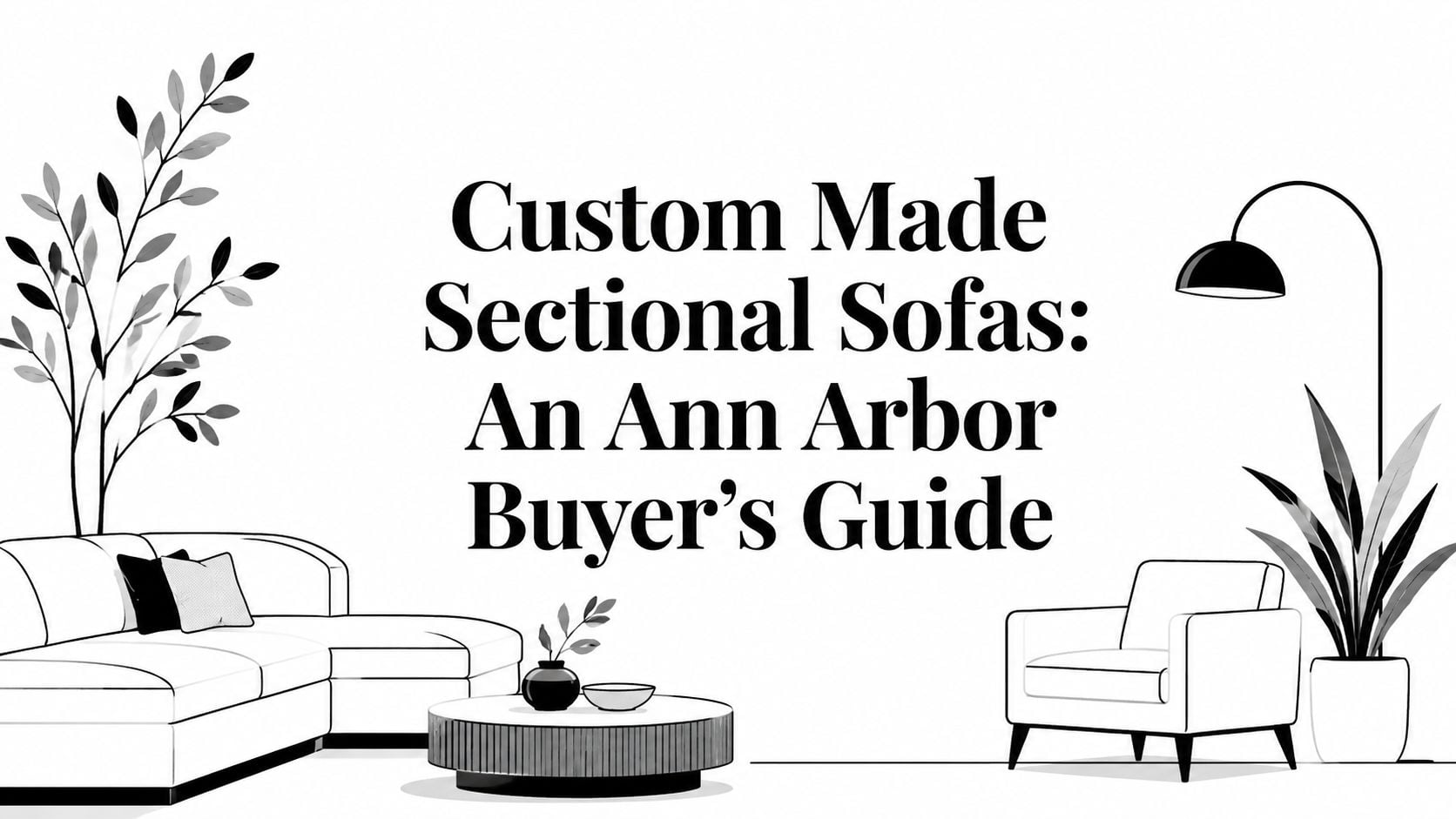
Custom Made Sectional Sofas: An Ann Arbor Buyer’s Guide

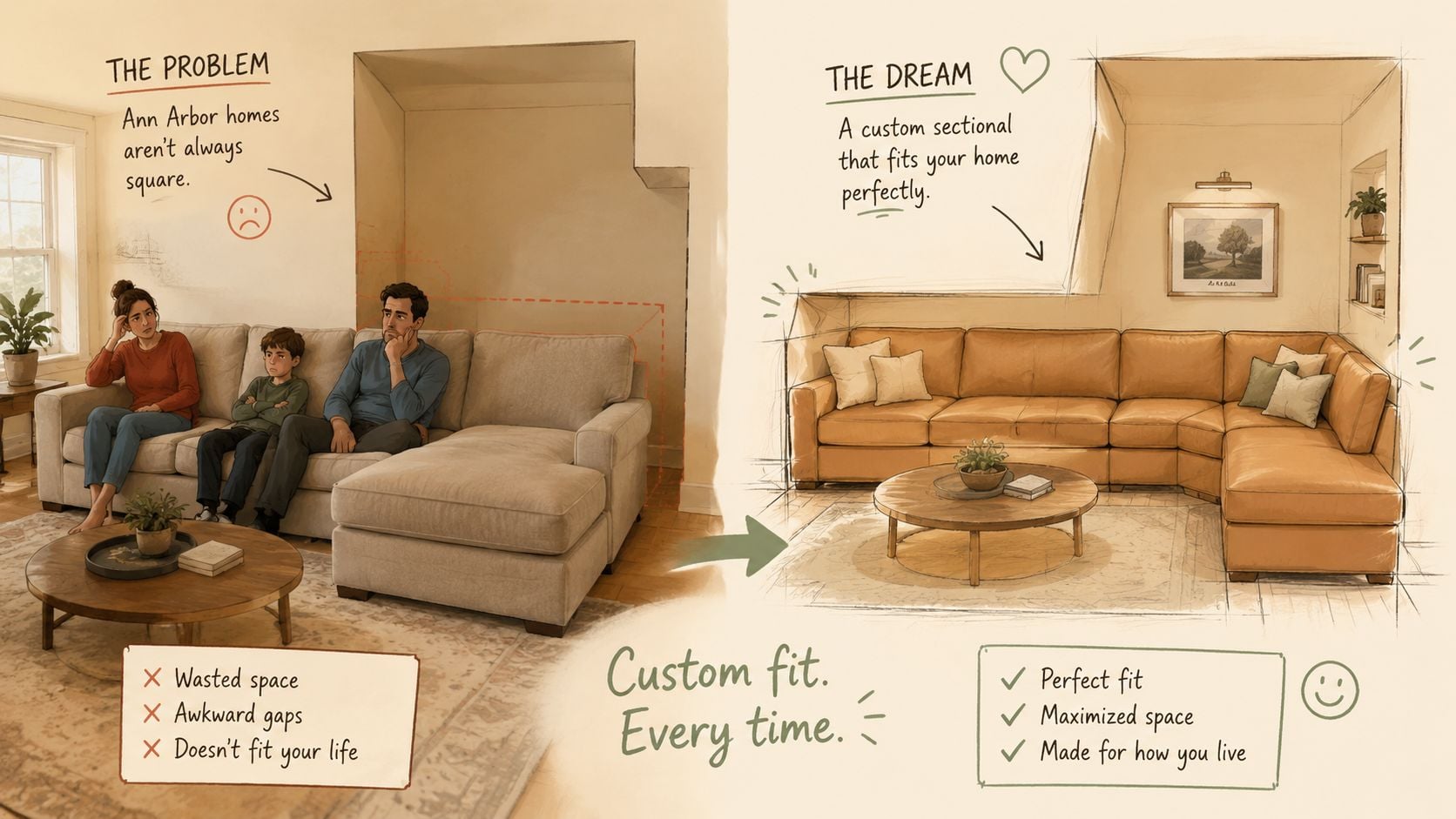
You've found the right color, the right general shape, and perhaps even the right price. Yet the sectional still blocks the doorway, leaves an awkward gap near the window, or feels wonderful for lounging but uncomfortable when someone needs to sit upright. That “almost right” experience is common, especially in Ann Arbor homes, Southeast Michigan open-concept rooms, and apartments where every inch has a job.
Custom made sectional sofas replace that compromise with deliberate choices about size, configuration, depth, upholstery, and comfort. The process doesn't need to feel mysterious. With careful measurement, honest lifestyle planning, and an in-person sit test, a made-to-order sectional can become an heirloom centerpiece rather than another temporary purchase.
Why Your Forever Sofa Is a Custom Made Sectional
A standard sectional can look right in a showroom yet feel wrong at home. It may sit too deep for upright reading, end short of the wall, or place a chaise across the only comfortable walkway. An custom made sectional sofa begins with the room and the people using it, so the investment serves actual habits instead of a fixed showroom footprint.
That distinction matters because a sectional often becomes the household's busiest seat. It may host movie nights, weekday reading, remote work, visiting relatives, and an afternoon nap. A compact L-shape can suit a downtown apartment, while a larger family room may need a U-shaped arrangement to keep conversation comfortable. The right configuration supports those routines without forcing the room to work around the furniture.
Custom means intentional, not complicated
Customization can cover the configuration, upholstery, seat depth, cushion feel, arm profile, leg style, and exposed wood finish. You do not need to invent every detail from scratch. A furniture consultant can narrow the choices by asking who uses the room, how they sit, what must remain accessible, and how much maintenance the household will accept.
The benefit is practical control. A deeper seat may suit relaxed lounging but frustrate someone who reads upright. A firmer cushion can make standing easier and hold its shape, while a softer feel may better support long movie nights. Fabric, leather, arm width, and exposed wood also affect cleaning, visual scale, and how the piece ages. Each choice should earn its place through daily use.
Practical rule: Let daily habits determine the sectional first. Style becomes more satisfying after the scale, comfort, and access points work.
Value is measured over ownership
A custom order requires more planning than an in-stock purchase. That extra attention can pay off when the sectional is expected to serve for years, because fit, comfort, upholstery, and care requirements are addressed before production begins. The useful question is not only what the piece costs today. Ask how many years of comfortable, appropriate use it should provide.
That is the cost-per-year perspective. Durable construction, serviceable components, timeless proportions, and upholstery suited to the household can reduce the likelihood of replacing furniture that never quite worked. Custom does not automatically mean better. Thoughtful construction and well-matched choices make the investment more sensible.
Since 1957, Tyner Furniture has served the Southeast Michigan community with attention to longevity and craftsmanship. In-stock furniture is only the beginning. Made-to-order options extend across finishes, fabrics, and configurations, including choices associated with Canadel dining furniture and Stressless ergonomic seating. The broader selection reaches from the Home Office to Outdoor Spaces, allowing a sectional consultation to support a larger interior plan.
For a closer look at construction and quality considerations, review Tyner's guide to high-end sectional sofas.
Mapping Your Space for Comfort and Flow
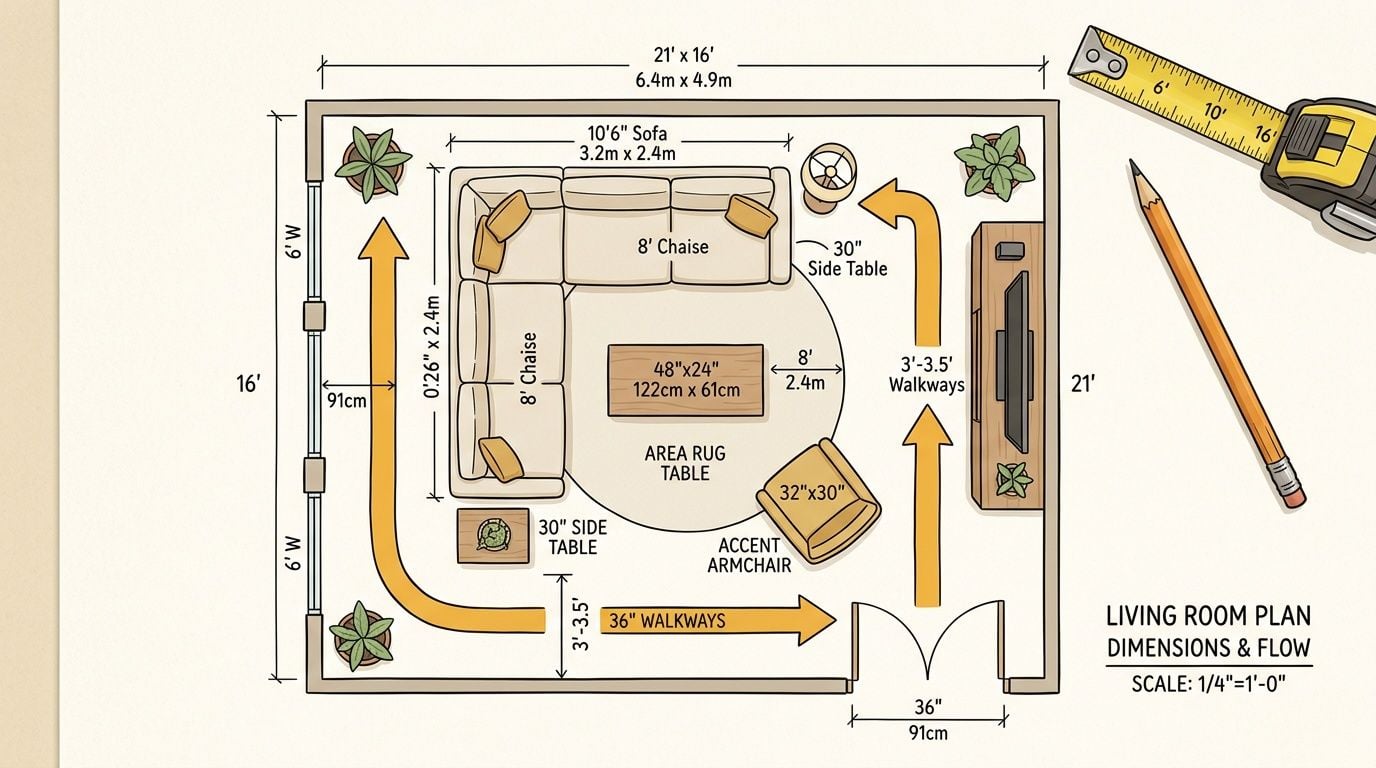
A successful sectional plan begins with movement. Measuring a wall is necessary, but it doesn't reveal whether someone can carry laundry through the room, open a nearby door, reach a window, or move from the entry to the kitchen without squeezing past a chaise.
Start by sketching the room, then mark doors, windows, radiators, vents, outlets, built-ins, and the television or fireplace. Measure the usable wall lengths rather than relying on the room's total dimensions. Doorway turns matter just as much as the destination wall, because a sectional that fits the living room may not make the turn from the hallway.
Build the circulation envelope
Use painter's tape on the floor to outline the proposed sectional, including the chaise or bumper end. Add the coffee table and any major accent chairs so the taped footprint represents the room as a whole. Walk through the space at different times of day, carrying a basket or standing where a host would greet guests.
A practical workflow includes:
- Record usable walls. Note where furniture can sit without covering heat sources, windows, or access points.
- Mark traffic paths. Identify the route between entrances, adjacent rooms, seating, and storage.
- Test the footprint. Tape the outside dimensions, including arms and corner pieces, not only the cushions.
- Check delivery turns. Photograph or measure the entry, stairway, elevator, and tightest corner.
- Plan focal points. Decide whether the sectional faces a fireplace, television, view, or conversation center.
For more detail on documenting a room before furniture arrives, Tyner's furniture measurement guide can complement a separate flooring measurement guide, especially when an open room has multiple flooring zones or irregular boundaries.
Select depth according to posture
Depth changes the way a sectional supports the body. Guidance summarized in this sectional sizing resource places typical seat depth at 20 to 22 inches for upright sitting and 23 to 26 inches or more for lounging.
That distinction is important in a multi-use room. A deep seat can feel generous during a weekend film, but shorter occupants may need a cushion behind the lower back to sit comfortably for conversation or work. A more moderate depth can support upright posture while still allowing relaxed seating, especially when the chaise provides a dedicated lounging position.
Comfort check: Don't judge depth by appearance. Sit with both feet supported, lean back naturally, and notice whether the lower back remains supported without forcing the knees forward.
Custom sizing should also account for the people who use the room most often. A household that alternates between work, guests, and relaxation may need a balanced seat depth rather than the deepest available option. The best footprint leaves room for movement while making the sofa feel generous where it counts.
Decoding Sectional Shapes and Components
A sectional works as a system of connected pieces. Each component affects seating capacity, circulation, posture, and the room's usefulness over time. Understanding those trade-offs makes the custom configuration conversation more practical and helps connect the initial investment to years of daily use.
A chaise extends the seat for leg support and creates a dedicated lounging position. It suits a household where someone regularly stretches out, though its fixed direction can limit future rearrangement. A reversible chaise offers more flexibility if the room may change, provided the design supports switching sides.
An armless chair adds seating without another wide arm. It can lengthen a run efficiently and keep the sectional's profile visually lighter. A corner wedge turns the arrangement and uses the corner for conversation, although its angled seat may feel less supportive to someone who prefers a straight, fully supported position.
A bumper end creates a compact endpoint with a raised arm or back-like edge. It can give the sectional a finished stopping point without the length of a chaise. These distinctions matter more than the labels suggest. Two sectionals with similar outside dimensions may offer very different amounts of comfortable, usable seating.
Match the shape to household rhythms
A large Southeast Michigan family room may benefit from a U-shaped arrangement when several people need to sit together during gatherings. The shape supports conversation from multiple directions and frames a central table, but it needs a larger circulation envelope. Doorways, walkways, and nearby furniture must remain clear.
A couple in a downtown Ann Arbor apartment may prefer an L-shape with a reversible chaise. That configuration preserves an open path and provides a flexible lounging end without filling every wall. Smaller rooms may also benefit from armless components, narrower arms, or a clean back that looks finished when the sectional floats away from the wall.
Choose the components by answering practical questions first:
- Who needs a dedicated lounge position? A chaise or bumper end may serve that person better than adding length everywhere.
- Does the room host groups? More linear seating or a U-shape may work better than one oversized chaise.
- Will the sofa move later? Modular pieces and reversible elements can preserve flexibility as the room or household changes.
- Does the sectional float? Finished outside backs and carefully placed arms become visible parts of the design.
- Is work done from the sofa? Moderate depth and supportive back cushions may matter more than maximum sprawl.
Design insight: A component earns its place when it solves a daily need. Extra length alone does not create better seating.
Customization also affects cost-per-year value. A chaise that goes unused, an awkward corner, or a depth that makes conversation uncomfortable can turn a costly sofa into a daily compromise. The right configuration directs money toward the positions and support the household will actually use.
Buyers can review terminology and configuration considerations in Tyner's sectionals buying guide, then test the preferred arrangement in person. Sit in each intended position, check how people enter and leave the room, and confirm that the chosen pieces support the household's real routines rather than only the showroom layout.
Choosing Heirloom Fabrics and Leathers
The upholstery determines how a sectional feels every day and how much care it demands. A fabric can look perfect under showroom lighting yet become frustrating if it resists cleaning, shows every mark, or feels too warm for the room. Material selection should begin with the household's care reality, then move toward color and texture.
Top-grain leather offers a distinctive tactile experience, with a buttery feel that becomes part of the room's sensory character. It can suit a busy living area when the household appreciates natural variation and straightforward maintenance, but leather still needs appropriate care and may show scratches or changes in finish. Fabric can offer more visual softness and a broader range of patterns, weaves, and textures.
Let maintenance lead the style decision
Recent design coverage points toward comfort-first sectionals with deeper seats and textured materials such as bouclé and corduroy, while also recognizing that these surfaces can be harder to maintain in homes with children, pets, or heavy daily use, as discussed in this upholstery and sectional trend guide. That isn't a reason to reject texture. It's a reason to place it where the household can live comfortably with the care requirements.
Performance weaves, linens, velvets, bouclés, and full-grain hides can all serve different purposes. A tightly woven performance textile may make sense on the primary seating surfaces, while a more delicate texture could work in a lower-use room. Removable covers can simplify some maintenance routines, but they don't eliminate the need to follow the manufacturer's cleaning guidance.
A useful fabric review asks:
- What touches the sofa every day? Consider pets, children, meals, work materials, and outdoor clothing.
- How will spills be handled? Choose a material and cleaning method the household can manage promptly.
- What does the room's light do? Evaluate samples near windows and under evening lighting.
- Will the texture still feel good later? Run a hand across the swatch and consider whether the tactile appeal supports daily use.
- Does the pattern need matching? Multiple modules increase the importance of grain direction and seam placement.
Look beyond the outer surface
Upholstery quality also involves how the fabric is cut, matched, and fitted across the sectional. A yardage guide indicates that a small sectional center section can require about 8 to 10 yards, while a large center section may require 12 to 14 yards, with separate measurements for inside and outside arms, back panels, seat decks, and cushion boxing, as detailed in this sectional yardage guide. Those requirements explain why accurate specifications matter before an order is placed.
Each added chaise, corner, or armless section creates another opportunity for variation in grain, seam placement, and cushion depth. The order should capture the outside-arm-to-outside-arm width, maximum cushion width, and contour length. A standard upholstery chart may cap cushion depth near 28 inches, so unusually deep designs deserve careful review rather than casual approval.
Tyner's upholstery materials guide can help shoppers organize those questions before handling samples at the South State St. showroom. The goal is a sectional that looks beautiful on delivery and remains practical through ordinary life.
Bringing Your Vision to Life The Tyner Way
The final design stage should feel like editing, not guesswork. Once the room footprint and sectional shape are clear, the buyer can make a sequence of smaller decisions that give the piece its character without losing sight of comfort or care.
Custom upholstery programs commonly follow a straightforward path. Shoppers select a configuration, choose from material categories such as performance weaves, linens, velvets, bouclés, and full-grain hides, review the resulting order, and finalize the made-to-order piece, as illustrated by this custom upholstery program. A local consultation adds a valuable physical layer because samples, seat support, and scale are easier to judge in person.
Fine-tune the parts that affect daily use
Cushion firmness deserves direct attention. Softer cushions can feel inviting at first contact, while firmer support may suit upright sitting, frequent guests, or people who work from the sofa. Back cushion construction, seat height, arm width, and chaise length also influence posture and usable space.
Legs and exposed wood introduce a visual decision. A low profile can create a grounded, lounge-oriented look. Taller legs may show more floor and make cleaning easier. If a sectional includes visible wood, the finish should relate to nearby tables, floors, or built-ins without demanding an exact match.
The in-stock option is just the beginning. Made-to-order programs can extend across fabric, leather, finish, and configuration choices. The same broader custom-order philosophy appears in Canadel dining pieces, where leg styles, table edges, finishes, and distress levels can be selected, and in Stressless seating, where Small, Medium, and Large sizing supports a more ergonomic fit.
Tyner Furniture can discuss these sectional choices alongside the rest of a home furnishing plan. That's useful for households coordinating a living room with a dining area, bedroom, Home Office, entertainment space, or Outdoor Spaces.
Treat the order as a shared specification
Before approval, the buyer should have a written record of the decisions that affect fit and ownership:
- Configuration: Confirm the direction of the chaise, corner, bumper, and arms.
- Dimensions: Review overall width, depth, height, and any unusual contours.
- Comfort: Record cushion firmness, seat depth, and back support preferences.
- Upholstery: Keep the selected fabric or leather reference with the order.
- Delivery: Verify the entry route, room placement, and removal of packaging.
- Care: Ask which cleaning methods and products are appropriate for the chosen material.
The custom order starting guide can help organize the conversation. A special order takes patience because production begins around the selected specifications. The exact schedule depends on the maker, materials, and order details, so a responsible consultation should clarify the expected window rather than promise an unverified date.
Evaluate the investment with clear terms
A well-made sectional should be considered through cost-per-year value, not only the initial price. The buyer is paying for the fit, materials, labor, guidance, and the possibility of keeping the piece useful as the household changes. That calculation becomes more favorable when the sofa avoids an awkward layout, supports comfortable posture, and uses upholstery suited to actual wear.
The same principle is especially visible in Tyner's Amish hand-crafted solid wood furniture for dining and bedroom spaces. Solid wood can be sanded, refinished, and repaired more than once, according to this guide to Amish furniture quality. That source says properly maintained solid wood furniture typically lasts 20 to 50 or more years, and in some cases over 100 years, while engineered wood products typically last 5 to 25 years. Joinery such as dovetailing and mortise-and-tenon construction, along with the weight and grain of solid cherry, oak, or maple, gives those pieces a different ownership story from mass-produced alternatives.
For the sectional itself, Tyner's Special Financing and Low Price Promise can reduce the barrier to a higher-quality purchase without turning the conversation into a price-only decision. Financing terms still need careful review. The Federal Trade Commission explains that credit and retail installment offers should disclose the annual percentage rate, finance charge, amount financed, total of payments, and payment schedule, while promotional no-interest periods can become costly if the balance isn't paid under the stated rules, as explained in this financing disclosure guide.
Your Next Step Toward Lasting Comfort
A custom made sectional earns its place by solving several problems at once. It can fit the room's circulation pattern, support the way people sit, provide a useful balance between lounging and posture, and carry upholstery selected for the household's care routine.
The process is more manageable when decisions happen in the right order:
- Measure the room and delivery route.
- Map traffic and focal points.
- Choose the sectional shape and components.
- Test seat depth and cushion feel.
- Evaluate fabric or leather against daily use.
- Review the complete specification before ordering.
That order keeps attractive details from overpowering practical needs. A fashionable texture may be appealing, but a durable performance weave can deliver more satisfaction when pets, children, meals, or frequent guests are part of the household. A deep chaise may look generous, but an ergonomic seat depth can matter more when the sectional doubles as a work or conversation seat.
The broader furniture decision deserves the same care. Tyner's local legacy reaches back to 1957, with a focus on hand-crafted quality, solid materials, and guidance for Southeast Michigan households. The Ann Arbor showroom on South State St. gives shoppers a place to feel upholstery, compare cushion support, inspect wood finishes, and decide whether a configuration works beyond a screen.
A sectional can also become part of a coordinated home rather than an isolated purchase. The same store covers furnishings from the Home Office to Outdoor Spaces, with options for dining, bedroom, ergonomic seating, entertainment areas, and patios. That breadth makes it easier to think about scale, finish, and comfort across the home.
Promotional financing can be helpful, but transparency remains essential. As noted in the financing guidance above, buyers should review the APR and payment schedule before accepting an offer. Clear terms protect the investment and help the household choose a payment plan that fits without losing sight of long-term value.
Visit the Ann Arbor showroom for a sit test, bring room measurements and doorway photographs, and handle fabric samples in person. Shoppers who prefer to begin online can browse Quick Specs for special orders, then bring the remaining questions to a local design consultant.
Tyner Furniture offers made-to-order sectional guidance, upholstery choices, ergonomic seating, and heirloom-quality furnishings for homes across Ann Arbor and Southeast Michigan. Visit Tyner Furniture to plan a showroom sit test on South State St. or browse the online Quick Specs before starting a special order.