Best Table Top Finishes for Heirloom-Quality Furniture

A new dining table often arrives with a deceptably simple question: should the surface feel silky and natural, or should it stand up to spilled juice, hot serving dishes, homework, and years of family dinners? In Ann Arbor and across Southeast Michigan, that choice matters even more as homes move through humid summers, dry heated winters, and changing household routines.
The most suitable table top finish isn't automatically the hardest one. It should match the wood species, the table's daily workload, the household's tolerance for maintenance, and the kind of aging the owner wants to see. A resilient film can protect a busy dining table for a long time, while a penetrating oil may offer a warmer touch and simpler local renewal. The right decision is a lifecycle decision, not merely a showroom color choice.
Understanding the Role of Table Top Finishes
After a family dinner, a cold glass leaves a ring, crumbs collect beneath a centerpiece, and a child begins homework at the same table. A table top finish stands between those ordinary moments and the wood itself. It brings out grain, color, and depth while helping limit stains, moisture, food oils, abrasion, and pressure from dishes or chair backs.
A finish is therefore part of the table's service plan, not just its appearance. Protective layers help resist soiling and moisture, while the finish's sheen and feel influence whether owners are willing to clean, refresh, or repair the surface over time. The conservation guidance on furniture finishes also places these coatings in a long history of furniture care, including natural resin finishes used in ancient Egypt and China.
Protection begins with moisture control
Wood keeps responding to its surroundings after leaving the workshop. A suitable finish slows liquid water at the surface, reducing opportunities for swelling, watermarking, and damage to the wood beneath. The USDA Forest Service guidance on wood finishing explains that finishes can extend service life by limiting liquid-water entry while still allowing trapped moisture to evaporate.
That matters in Michigan homes, where humid summers and heated winters place different demands on furniture. A finished solid cherry tabletop can still move naturally, but a protective coating gives a spill more time to be wiped away. It does not stop wood from changing. It reduces how punishing everyday exposure becomes.
Practical rule: Choose a finish for the table's hardest ordinary day, not its quietest afternoon.
The finish affects perceived value
A satin surface can make oak feel calm and contemporary. A richer oil can give walnut a warmer, hand-rubbed character. A clear film can preserve pale maple while making routine cleanup easier. These choices affect lifecycle cost because a finish determines how soon marks appear, how much maintenance owners accept, and whether a damaged area can be renewed locally or requires broader refinishing.
For shoppers comparing solid wood furniture, this guide to choosing hardwood for longevity and style provides context about the material beneath the coating. The soundest purchase pairs appropriate wood, careful construction, and a finish suited to the household's habits. A finish that is slightly easier to repair may serve a busy family better over decades than one chosen solely for maximum initial hardness.
The Evolution of Wood Finish Chemistry
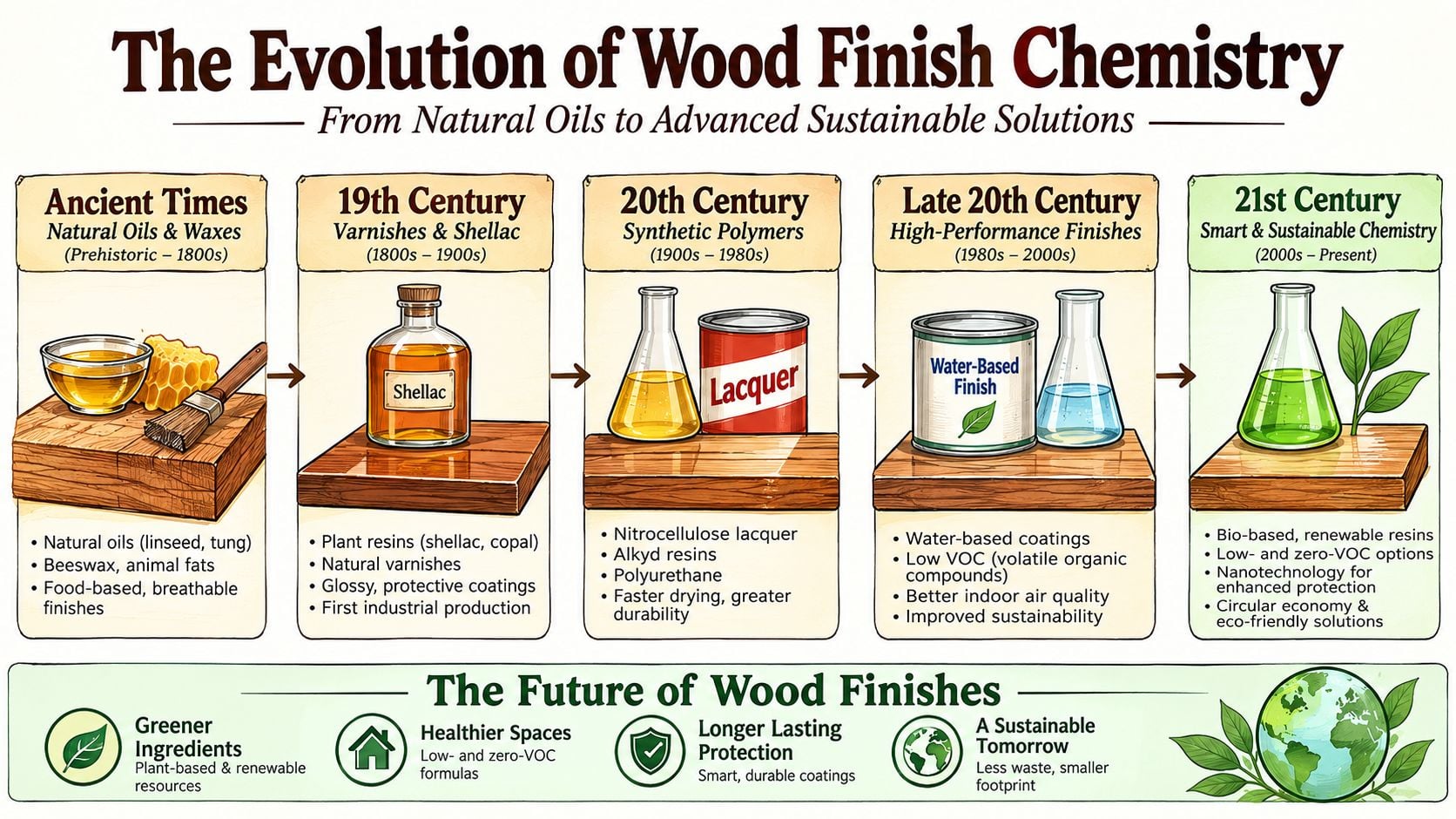
A tabletop may look simple in a showroom, yet its finish reflects centuries of changing chemistry. Furniture makers moved from natural materials toward engineered coatings as households and workshops sought faster drying, stronger abrasion resistance, and more consistent results. Shellac remained a dominant protective finish in Western furniture history until the 1920s and 1930s, when nitrocellulose lacquer gained ground with industrial production. Its historical overview of furniture finishes places modern choices within that longer progression.
Two categories make the chemistry easier to follow. Evaporative finishes, including shellac, harden as their solvents leave the coating. Reactive finishes, including oil varnishes and polyurethane, cure through chemical changes that create a more resistant film. One behaves more like a surface that can sometimes be softened and blended again. The other becomes a cured layer that usually requires abrasion before new material will bond.
Why chemistry changes repair work
An evaporative coating may accept a compatible solvent that partially reopens the existing finish. That can make a small blended repair more practical, although the result still depends on the damage, color, and skill of the craftsperson. A cured reactive film responds differently. If a scratch cuts through a polyurethane surface, an invisible repair often requires leveling, sanding, and refinishing a wider area so its sheen and thickness match.
This difference changes lifecycle cost. A harder finish may reduce routine attention for years, while a serious failure can require more labor and a larger refinishing area. A finish that shows wear sooner may still cost less to maintain if a craftsperson can renew only the affected section rather than strip the entire top.
Asking better questions about a custom piece
Finish selection belongs in the furniture conversation before production begins. For made-to-order furniture, ask whether the coating is evaporative or reactive, how it handles heat and moisture, whether future coats are compatible, and how the shop approaches a deep scratch.
Tyner's custom wood finishes information helps frame that discussion around color, sheen, and the wood's character. Exterior projects follow different rules. Sun, rain, and repeated exposure call for an outdoor system, so guidance on staining your outdoor deck can help separate deck maintenance from indoor tabletop decisions.
Comparing Durability and Repairability Trade-offs
A family dining table may face spilled drinks, craft projects, hot dishes, and repeated wiping. A writing desk may see far less abuse. The right finish therefore depends on whether the household values a protective barrier, easy local renewal, or a practical balance between both.
Polyurethane usually offers stronger protection for busy tabletops because it forms a continuous film over the wood. That film slows liquid-water penetration and generally resists abrasion, scratches, and stains better than penetrating oil or wax systems. Its strength is similar to a raincoat: it keeps everyday moisture and wear from reaching the wood as easily.
Hard-wax oil follows a different approach. It penetrates the surface and leaves a more tactile feel, so the timber remains more noticeable under the hand. Reported pendulum values place hardwax oil around 55 to 100 seconds, compared with approximately 120 to 220 seconds for polyurethane, according to this comparison of walnut furniture finishes. Those figures help explain the trade-off, but they do not decide which finish suits every home.
Finish Performance Matrix
| Finish Type | Durability | Repairability | Best Use Case |
|---|---|---|---|
| Polyurethane | High protection against spills, abrasion, scratches, and stains | Damage usually calls for sanding and refinishing, especially when sheen must match | Busy dining tables, family kitchens, and heavily used desks |
| Hard-wax oil | Moderate protection with a softer surface feel | Local renewal is generally easier | Owners who value tactile wood feel and practical touch-ups |
| Shellac | Protective evaporative coating with historically important repair characteristics | Can sometimes be reworked with compatible methods | Traditional furniture and pieces where period character matters |
| Wax | Limited moisture and wear protection | Simple to renew, but frequent attention is needed | Decorative or lightly used surfaces rather than demanding tabletops |
The repair bill belongs in the decision
A polyurethane tabletop may cost less to live with during years of ordinary spills because it reduces routine maintenance. Serious damage changes the calculation. A deep scratch, chipped edge, or worn traffic path often requires sanding back and refinishing a broader area so the new surface matches the original sheen and thickness. Professional labor may be needed to blend color depth and the transition between repaired and untouched sections.
Hard-wax oil reverses that pattern. It may need more frequent renewal in a busy household, yet a small worn patch can often be addressed with less disruption. On a home office desk used mainly for writing and reading, that repairability may matter more than maximum resistance. A dining table used by children, pets, and frequent guests may justify the harder barrier because preventing damage is easier than repeatedly touching up the surface.
Lifecycle question: Would the household rather maintain the surface more often, or accept a more involved refinish when serious damage eventually occurs?
Water-based and oil-based polyurethane also serve different priorities. Water-based products generally dry faster, produce lower VOCs, and preserve a clearer color. Oil-based products tend to cure more slowly and add a warmer amber tone. Both create hard films, so substantial damage commonly requires sanding and refinishing rather than a simple spot coat.
The best choice is not a universal durability ranking. Consider the cost of care over the table's working life, the family's routines, and the likelihood that future spot repairs will be useful. Before approving a custom finish, ask for written care instructions and a repair recommendation. That small conversation can prevent an inexpensive touch-up from becoming a large refinishing project.
Matching Finishes to Wood Species and Lifestyles
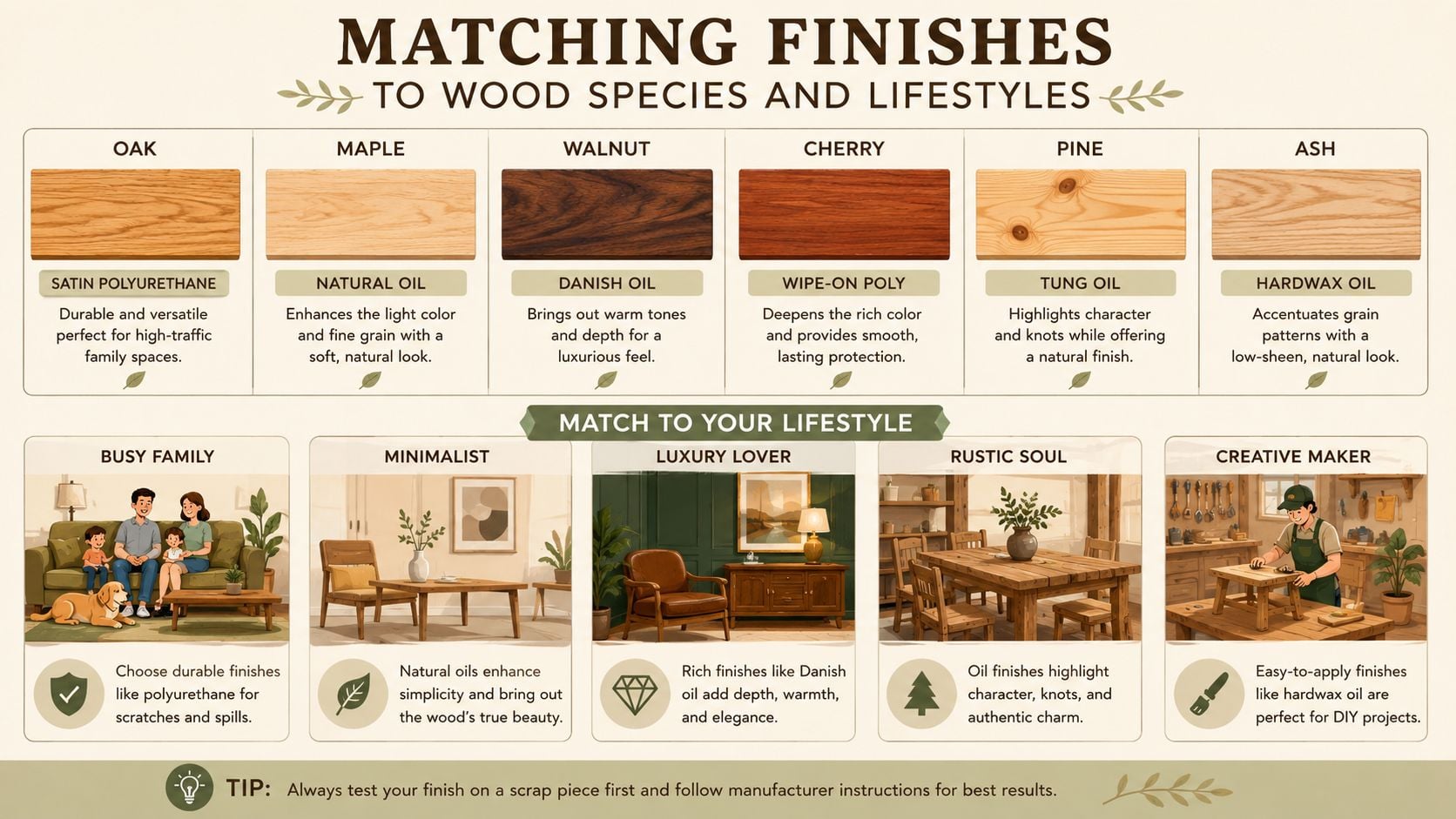
Wood species sets the visual starting point, but lifestyle determines how much protection the surface needs. A quiet writing desk and a large dining table may use the same timber yet deserve different finish strategies. The finish should support the wood's natural color instead of masking it, while also handling the table's most common sources of wear.
Start with the wood's visual direction
Cherry develops a warmer, richer appearance with time. An oil-based finish can reinforce amber tones, making it suitable for shoppers who want a traditional, evolving heirloom character rather than a permanently pale surface.
Maple often appeals to households seeking a bright, clean appearance. A clear water-based polyurethane can help maintain that lighter look while giving a dining or work surface a harder protective film.
Oak shows pronounced grain and works across traditional, transitional, and modern interiors. A matte or satin coating can preserve its texture without making the surface look overly glossy.
Quarter-sawn white oak brings distinctive grain patterns and a strong architectural presence. The finish should be tested on a sample because sheen and color can change how dramatically the rays and flecks appear.
Tyner's guide on matching wood stains to an interior can help shoppers compare undertones before choosing a finish for a made-to-order piece. A sample board remains valuable because online images can't reproduce the weight of solid cherry, the grain movement of oak, or the buttery visual depth of a carefully finished surface.
Then measure the household's routine
A practical matching process looks like this:
- List the hardest use. Frequent meals, children doing crafts, pets climbing onto benches, and daily laptop work all increase surface demands.
- Decide how repairs should happen. Owners comfortable with local renewal may prefer hard-wax oil, while households seeking longer intervals between maintenance may favor a film finish.
- Select the desired color direction. Oil-based chemistry can warm cherry, while water-based polyurethane can keep maple visually bright.
- Choose the sheen last. Matte hides some visual glare and supports a natural look, while satin offers a balanced appearance for everyday furniture.
For high-traffic dining, a durable film system is generally the sensible benchmark. For an occasional table or lightly used home office, a natural oil may better express the wood's tactile warmth. The right decision respects both the room's design and the family's actual habits.
Health and Aesthetic Trends in Modern Finishes
Many homeowners now evaluate a finish through more than durability. They also consider odor during installation, indoor air quality, the appearance of bare wood, and the environmental profile of the materials used. Families with children, pets, or shared dining spaces often want a surface that feels natural without giving up reasonable protection.
Water-based polyurethane is commonly selected for its lower VOC profile, quicker drying behavior, and clearer appearance compared with oil-based polyurethane. Hard-wax-oil finishes appeal to shoppers who want a low-sheen surface and visible grain contact. These choices still require careful product-specific guidance, ventilation, and adherence to the manufacturer's curing instructions.
The raw-wood look requires protection
A raw-wood appearance doesn't mean leaving the tabletop unprotected. Light-pigmented oils and matte topcoats can preserve a pale, understated look while adding a barrier against ordinary use. On oak, that approach can keep the grain soft and contemporary. On maple, a clear water-based coating may maintain brightness without adding much amber color.
The visual target should be tested under the home's actual lighting. A finish that looks neutral beneath showroom lights may appear warmer beside a window or cooler beneath kitchen fixtures. That test matters for an interior design plan involving flooring, cabinetry, upholstery, and wall color.
Lower emissions are part of value
Low-VOC and no-added-solvent options are becoming more important in furniture decisions, although “natural” doesn't automatically mean maintenance-free or universally safer. Product labels, ventilation requirements, curing guidance, and the intended room all deserve attention. Homeowners seeking broader information about airborne compounds can consult this Covenant Aire Solutions VOC guide as part of their indoor-air-quality research.
A sustainable choice also considers lifespan. Replacing a table because its surface fails early can undermine the value of a lower-emission finish. Tyner's information on sustainable wood furniture provides a useful starting point for connecting responsible materials, durable construction, and long-term ownership.
The Tyner Standard for Heirloom Quality
A beautiful finish can't rescue weak construction. The table's joinery, wood integrity, and ability to tolerate movement provide the foundation for every coating applied above it. That distinction separates an heirloom piece from furniture that looks convincing at delivery but fails at its joints before the surface reaches the end of its useful life.
Tyner's Amish hand-crafted solid wood furniture uses structural joinery such as mortise-and-tenon. In this joint, a projecting tenon fits into a matching mortise, creating a large long-grain glue surface and mechanical resistance to racking and twisting under load. Woodworking joinery guidance explains why that configuration suits structural frame members, while dovetails are better suited to drawer sides and box corners because their wedge shape resists pull-apart forces. Additional joinery guidance distinguishes those use cases clearly.
Solid wood changes the ownership equation
Solid North American hardwoods such as cherry, oak, and maple offer material integrity that differs from mass-produced veneered alternatives. Veneer has legitimate uses, but buyers seeking a table intended for generations should ask how the top, rails, legs, and joints are built, not only how the stain looks.
A made-to-order piece also lets the finish serve the room. The shopper can coordinate species, stain, sheen, edge profile, and configuration instead of accepting an in-stock compromise. In-stock is just the beginning. Custom finishes, fabrics, and configurations are available across the broader home, including Canadel dining options and Stressless ergonomic seating.
Tyner Furniture has served Southeast Michigan since 1957, giving local shoppers a long-standing place to discuss craftsmanship, finish selection, and cost-per-year value. Its range extends from the Home Office to Outdoor Spaces, so a coordinated interior design plan can address more than one room without sacrificing the bespoke character of a central dining table.
Special Financing, subject to approval, can help households plan for a made-to-order investment, and the Low Price Promise supports competitive value. Deferred-interest financing advertised as “0% if paid in full in X months” postpones interest rather than eliminating it, so buyers should understand the terms and pay the balance before the promotional period ends.
Long-Term Care and Maintenance Routines
Good care starts with restraint. Use a soft, slightly damp cloth for ordinary cleaning, wipe spills promptly, and avoid abrasive powders, rough scrubbers, and unapproved household chemicals. Standing water, hot cookware without protection, and gritty objects beneath decorative pieces can challenge even durable table top finishes.
A simple care rhythm
- Daily cleaning: Remove crumbs and moisture with a clean soft cloth rather than scrubbing.
- Heat protection: Use trivets or pads beneath hot dishes and serving pieces.
- Surface protection: Lift ceramics, lamps, and centerpieces instead of dragging them across the finish.
- Repair decisions: Treat a small worn area according to the finish system, and ask a professional before applying an incompatible product.
- Environmental balance: Keep the home's humidity reasonably consistent so solid wood has fewer abrupt moisture changes to manage.
Hard-wax oil owners should expect periodic renewal, especially where hands, chairs, and dishes repeatedly contact the surface. Polyurethane owners can usually postpone routine recoating longer, but a deep scratch or worn-through area may require sanding and refinishing rather than a quick dab of product. The guide to protecting wood furniture from scratches and stains offers additional care ideas for preserving the finish and the furniture beneath it.
A professional assessment makes sense when the surface has widespread dulling, exposed bare wood, chipped film, persistent water marks, or a sheen mismatch from earlier repairs. The goal isn't to keep a table looking untouched. It's to keep the heirloom useful, structurally sound, and visually connected to the life happening around it.
Tyner Furniture helps Ann Arbor and Southeast Michigan shoppers compare table top finishes, solid wood construction, and made-to-order options across the home, including Canadel dining and Stressless ergonomic seating. Visit Tyner Furniture for a sit test and a hands-on look at finish samples, or browse the online Quick Specs when planning a special order.