Scalloped Edge Dining Table: A Complete Buying and Styling

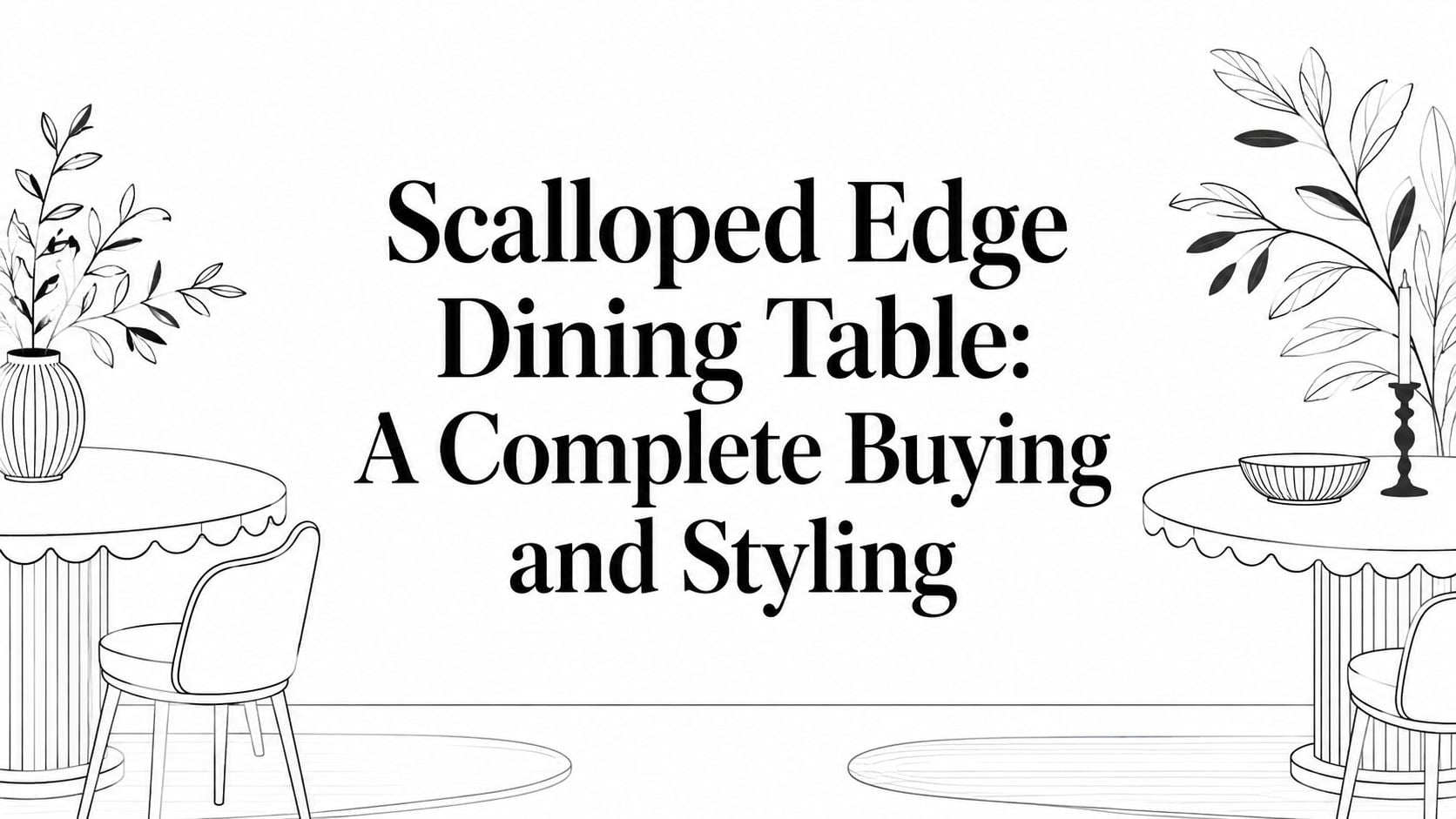
A shopper in Ann Arbor can spend an afternoon comparing dining tables and still feel stuck. One table looks practical, another feels too plain, and then a scalloped edge dining table catches the eye. Its repeated curves soften the room, add a handcrafted character, and make an everyday meal feel more considered. The harder question comes afterward: will that beautiful edge hold up to family traffic, and will the style still feel right years from now?
The answer depends less on the scallop than on the table's wood, joinery, finish, proportions, and repairability. A well-built solid hardwood table can become an heirloom, while a visually similar veneered piece may show wear at its exposed contours and offer fewer repair options. For Southeast Michigan households furnishing a forever home, the right purchase is an investment in craftsmanship and cost-per-year value, not merely a reaction to a design trend.
What Makes a Scalloped Edge Dining Table Special
A dining room with straight-edged furniture can feel severe, especially in homes with open layouts. A scalloped edge dining table changes that balance through a repeated curve around the tabletop. The result feels softer and more crafted, even when the legs, finish, and surrounding chairs remain simple.
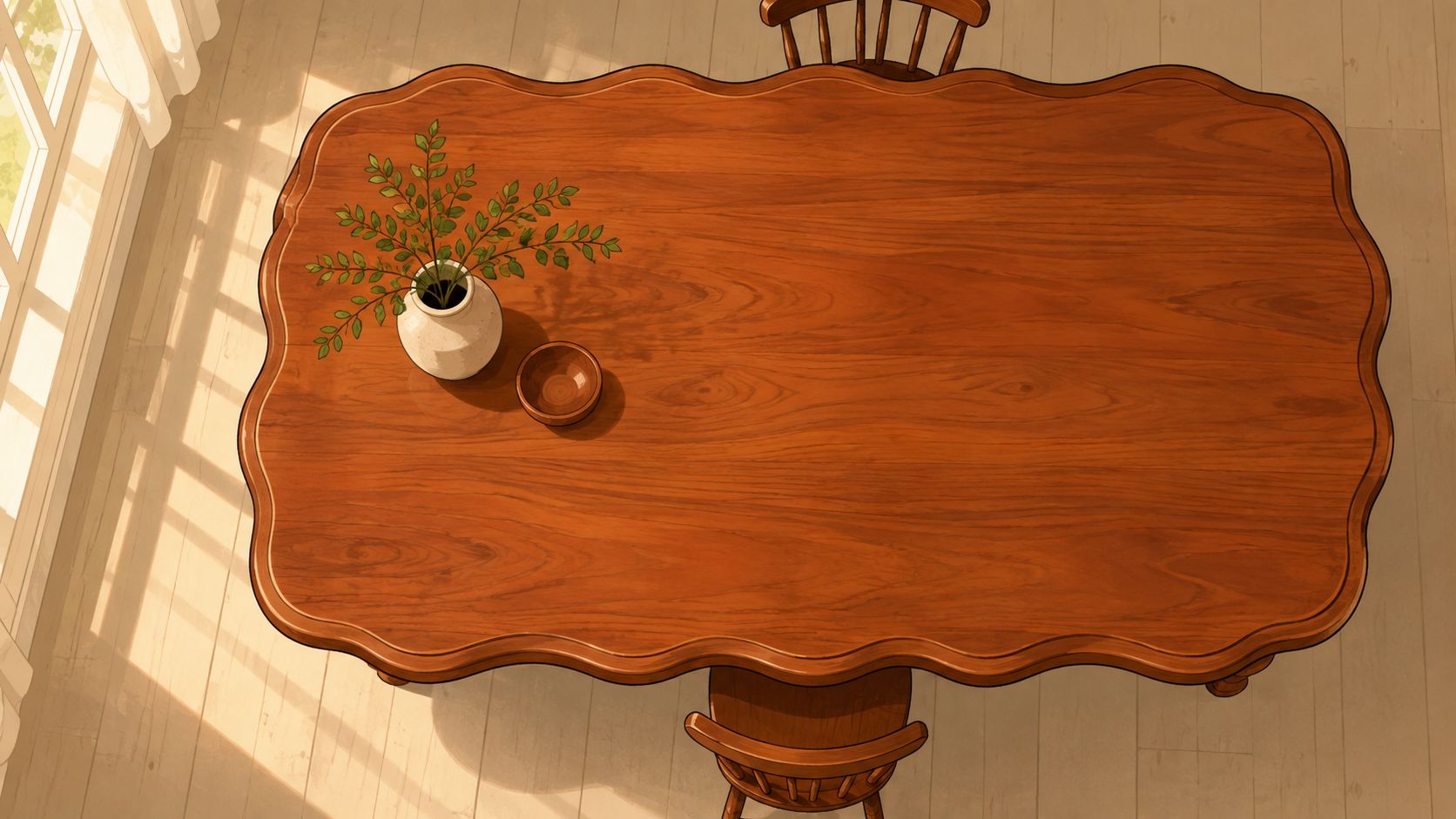
A scalloped edge consists of repeated semicircular or intersecting-arc cuts along the perimeter. A maker may shape the pattern with a jigsaw, scroll saw, or CNC profile pass. In CAD/CAM work, a ball-nose end mill can produce consistent curves. Its bit radius affects scallop depth, so tool diameter influences both uniformity and the smoothness of the finished surface. Makers note that bit radius directly influences scallop depth and surface quality.
Why the profile reads differently
A rounded edge softens a corner and feels comfortable at the seat. A bevel removes material at an angle, leaving a sharper, more contemporary line. A scalloped edge establishes a repeating motif, giving the tabletop character without relying on ornate legs, heavy carving, or decoration elsewhere in the room.
Proportion determines whether the design looks refined or fussy. Shallow scallops suit restrained, architectural interiors. Deeper curves create a more decorative effect and demand closer attention to spacing, transitions, and edge durability. Uneven scallops, rough sanding, or visible machining marks indicate rushed production.
Practical rule: The scallop should look intentional from across the room and feel smooth under a hand at the nearest seat.
The edge profile also changes daily care. Solid wood can usually be sanded and refinished when the exposed curves accumulate scratches. Veneer requires more careful cleaning because aggressive sanding can remove its thin surface layer. The finish affects that service life, so review Tyner's guide to tabletop finishes before choosing sheen, color, and wood character. Warm cherry reads traditional, natural oak feels relaxed, and a painted finish gives the same profile a more custom appearance.
In 2026, the scallop is a strong design choice, not an automatic heirloom. Buy one with clean curves, a durable finish, and a construction method that allows future repair. That combination gives the trend staying power in an everyday dining room.
The 500-Year History Behind Scalloped Edges
A scalloped edge dining table can look current in a Southeast Michigan dining room, yet the profile has roots reaching back roughly 500 years. Furniture makers returned to scalloped forms during the late Renaissance, Rococo, Victorian and Edwardian periods, Art Deco, and mid-century design. The style gained particular attention again in the 1950s, proving that the curve can adapt to changing materials, proportions, and interiors. Apartment Therapy's history of the scallop edge traces that recurring appeal.
From tea trays to tea tables
The strongest connection to dining furniture comes from eighteenth-century tea tables. European joiners began mounting tea trays on frames during the 1680s, helping create early tea tables and related occasional furniture. Circular tops with carved edges appeared in consumer descriptions as “scallop'd,” and the same form was also called “piecrust.” Both names refer to the repeated pastry-like curves around the perimeter.
The Victoria and Albert Museum documents scalloped-edge tea tables in use from the mid-1720s to about 1770. More elaborate examples were associated with London maker Frederick Hintz in the 1730s. The documented history of scalloped edges places the detail within established European and colonial furniture traditions, rather than treating it as a recent social-media invention.
A recurring mark of refinement
Scalloping appeared on aprons, the knees of cabriole legs, and table edges during the late Renaissance, Louis XIV, Louis XV, Queen Anne, and Georgian periods. Makers placed it where skilled shaping would remain visible. On well-made furniture, the repeating curves signaled careful workmanship and a deliberate level of refinement.
Later interiors changed the treatment. Victorian and Edwardian rooms favored more decorative versions. Art Deco introduced stronger geometry, while mid-century designers simplified the profile. That history gives buyers a practical distinction: scalloping is a durable design idea, but a heavily themed table can still date quickly.
For a 2026 purchase, choose restrained curves, balanced spacing, and a finish suited to daily use. Those decisions matter more than reproducing every historical feature. A table with disciplined proportions can remain relevant through several decorating changes, while an overloaded design may feel tied to one revival.
Tyner's guide to barley twist tables offers a useful parallel for shoppers who appreciate historic silhouettes. Decorative details last longer when the underlying proportions and construction are sound.
Solid Wood Craftsmanship Versus Mass-Produced Alternatives
After years of meals, homework, celebrations, and moving chairs, the edge profile shows whether a table was built for use or appearance alone. Solid hardwood provides substantial material that can often be sanded and refinished as ordinary wear accumulates. Veneer and engineered wood may look convincing at purchase, but a scalloped, exposed perimeter leaves less room for repair when the surface chips, lifts, or reveals its core.
Where construction makes the difference
Amish hand-crafted furniture earns its value through material integrity and joinery, not decoration alone. Solid North American hardwoods such as cherry, oak, and maple run through the tabletop and scalloped edge. When a maker cuts the curves into solid stock, the profile remains part of the same durable structure rather than a thin decorative layer over another material.
A mortise-and-tenon joint fits a projecting tenon into a matching mortise, creating a strong connection between components. Dovetail joints use interlocking geometry in drawers and boxes to resist separation under stress. These traditional methods remain relevant for households seeking furniture that serves as a functional legacy. Ask how the apron, legs, and top are connected, rather than judging construction from the finish alone.
| Construction choice | Ownership implication |
|---|---|
| Solid hardwood | Can generally be sanded and refinished as the surface ages |
| Veneer | Offers a wood appearance but has limited repairability if the surface is damaged |
| Engineered wood | Can provide stable construction, though exposed edges may be harder to restore |
| Hand-crafted joinery | Supports long-term structural integrity when properly executed |
| Mass-produced assembly | Requires closer inspection of connections, edge transitions, and material thickness |
Inspect the underside, apron attachment, leg connections, and every point where a scallop meets a straight run. Those transitions receive regular contact from chairs, hands, and cleaning cloths. A beautiful top cannot compensate for weak support or poorly finished edges.
Cost-per-year thinking
The lowest purchase price does not always provide the strongest value. A solid hardwood table with a durable finish may cost more initially, yet refinishing can extend its useful life when scuffs appear along the curves. A veneered table that looks nearly identical may become difficult to repair after a curved corner chips, lifts, or exposes its substrate.
Tyner's explanation of solid wood versus engineered wood gives shoppers a practical framework for weighing material integrity. For a 2026 purchase, choose solid construction when you expect the table to handle daily family life and remain in service through changing interiors. Choose appearance-led construction only after confirming how the scalloped edge can be repaired. The right question is whether the table can stay attractive, structurally sound, and serviceable for the years your household expects to own it.
Sizing and Scale for Your Dining Space
A scalloped edge dining table needs more planning than a quick visual measurement. The curves create personality, but they can also reduce the amount of fully continuous perimeter available for chairs, place settings, and attachment hardware. The table should fit the room first, then express the design detail.
Measure the room before choosing the shape
Start by measuring the open dining area, not just the wall length. Mark the table footprint with painter's tape or temporary furniture, then account for chair movement and the main walking route. A table that technically fits can still feel cramped if diners must turn sideways to reach a seat or if a doorway opens directly into the chair zone.
Use this sequence:
- Measure the usable floor area. Exclude built-ins, radiators, door swings, and permanent circulation paths.
- Mark the tabletop footprint. Include the full outer scalloped profile, not an imaginary smaller rectangle.
- Place chair footprints around it. Test both pushed-in and occupied positions.
- Check traffic flow. Walk between the table, walls, cabinets, and nearby furniture.
- Test an extension plan. If leaves are part of the order, mark the expanded length before committing.
Capacity depends on the table's shape, leg placement, apron design, and chair width. A round or oval scalloped table can encourage conversation and eliminate a hard corner, while a rectangular version may serve a longer room more efficiently. The edge pattern also affects usable seating. A deep scallop can make a seat feel awkward if a chair lands directly beneath a curve rather than a stable, comfortable section of the perimeter.
Choose proportions, not just capacity
Height should feel natural with the intended chairs. Armchairs need more clearance than armless chairs, and an apron can restrict legroom even when the tabletop dimensions appear generous. Bring chair measurements to the ordering conversation, including seat height, arm height, width, and how far the arms extend beneath the top.
An extension leaf can make a made-to-order table more adaptable, but the expanded version must still preserve a balanced silhouette. Shoppers should ask whether the scalloped detail continues across the leaf or remains concentrated on the fixed perimeter. Tyner's dining-space guide provides additional planning guidance for matching table shapes with seating arrangements.
A table is correctly sized when diners can sit comfortably, chairs can move freely, and the room still has an obvious path through it.
Styling Your Scalloped Edge Table
A scalloped edge already supplies visual movement, so the surrounding pieces should create harmony rather than competition. The most successful rooms repeat the table's softness in one or two places, then add contrast through texture, proportion, or material.
Build the chair relationship first
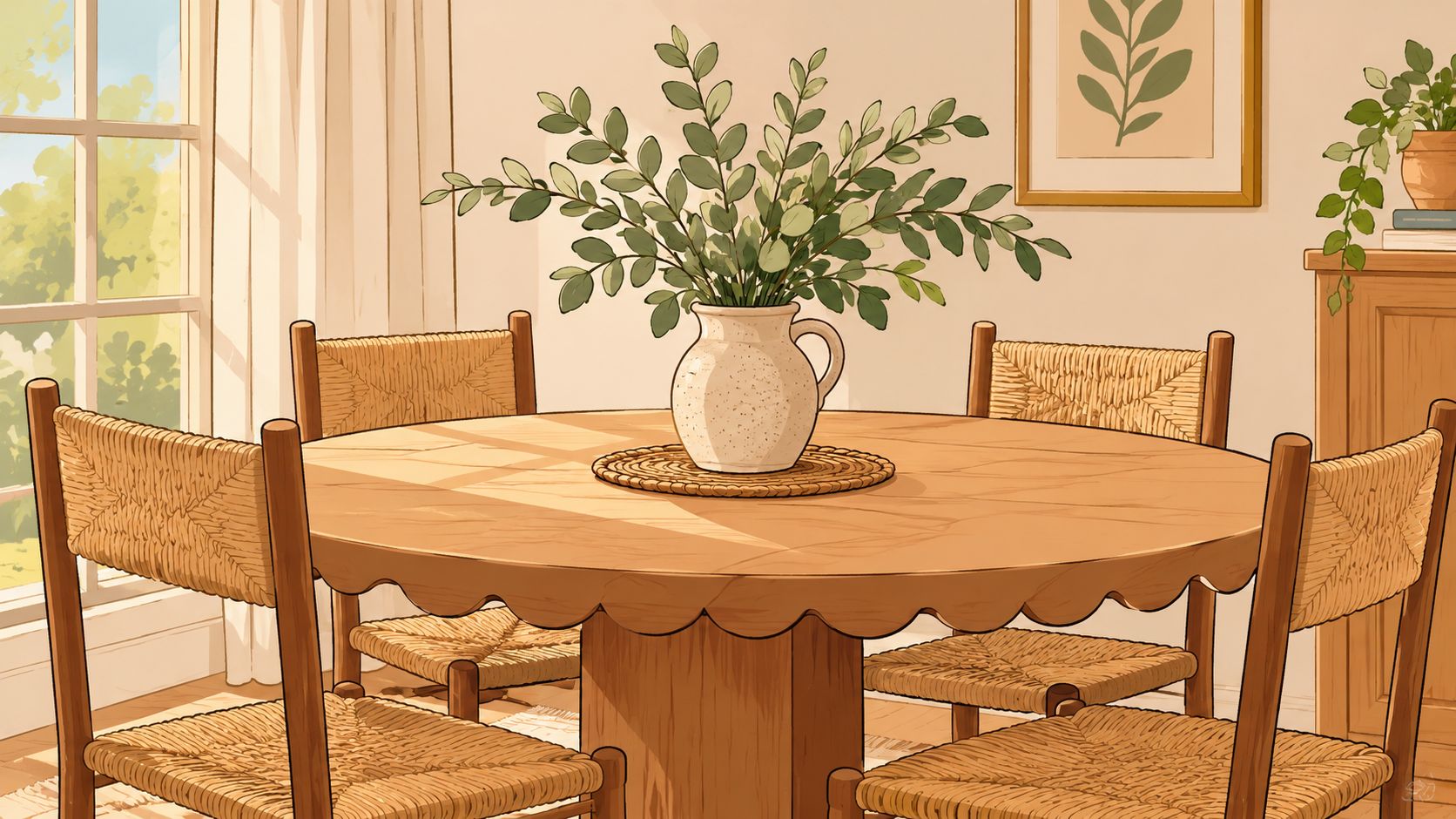
Upholstered Parsons chairs echo the table's generous curves and add comfort for long dinners. Woven or cane-back chairs create a lighter contrast, especially around a substantial wood top. Ladder-back chairs introduce vertical lines that keep the scallop from making the room feel overly soft.
Chair finish should relate to the table without matching every detail. A natural oak table can support painted seating, textured upholstery, or darker wood accents. A rich cherry finish benefits from fabrics that let the wood remain the focal point rather than competing with it.
Tyner's customization approach matters here because in-stock is just the beginning. Made-to-order options can coordinate finishes, fabrics, and configurations, while Canadel supports bespoke dining choices such as leg styles, table edges, finishes, and distress levels. The same principle applies elsewhere in the home. Stressless offers ergonomic seating in custom sizing, so a dining room and adjacent living space can be planned around comfort as well as appearance.
Let lighting reveal the edge
A chandelier or pendant should illuminate the tabletop without visually crowding it. A fixture with a rounded silhouette can reinforce the curved profile, while a restrained linear fixture creates a useful counterpoint over a long rectangular table. The finish should connect to existing hardware, wall lighting, or nearby case goods.
Table settings should stay proportionate. Everyday styling may need only a low centerpiece, simple ceramics, and clear sightlines across the table. For special occasions, layered linens, candles, and greenery can create richness, but the arrangement should leave enough of the scalloped perimeter visible to appreciate the workmanship.
For napkins, serving pieces, and other finishing touches, dining room accessory guidance can help keep the room cohesive. The goal is an inviting setting where the table feels used, not protected like a museum object.
Durability and Maintenance Realities
A busy Southeast Michigan household will test the edge first. Chairs bump it, serving dishes slide across it, and spills settle in the curves. The substrate and finish matter more than the scallop itself, but the profile still requires careful construction and sensible upkeep.
Solid wood is the stronger long-term choice for an edge that may see years of use. Scratches, dull spots, and minor wear can usually be sanded and refinished. Veneer and engineered wood offer less repair room, especially along a curved edge where aggressive sanding can expose the underlying material. Choose the surface based on how you use the table, not only on how the finish looks in the showroom. A practical furniture-material guide also helps clarify which materials handle scratches, stains, chips, and repairs more effectively.
Protect the exposed profile
Inspect the transition between each scallop and the straight sections. A careful maker sands the cut edge, then refines it with a router profile or bevel. This sequence removes machining marks and supports a cleaner, more durable curve, as shown in scalloped end-table construction guidance.
Use this routine:
- Use coasters and placemats: Reduce moisture rings, heat marks, and abrasion from rough objects.
- Clean promptly: Wipe spills with a soft, slightly damp cloth before liquid settles inside the curves.
- Avoid harsh scrubbing: Abrasive pads can dull the finish and make one section look different from the next.
- Inspect transitions: Run a hand along the edge occasionally. Raised grain or a small finish failure is easier to address early.
- Follow the maker's finish instructions: Oils, varnishes, and protective coatings require different cleaning methods.
Families with children or frequent gatherings do not need to avoid this style. A well-built solid hardwood table can handle regular use and later refinishing. The concern is a thin, poorly supported, difficult-to-repair table that copies the silhouette without matching its construction.
A scalloped edge is a lasting investment when its proportions are restrained, its joinery is sound, and its material suits the household. In 2026, the look remains distinctive, but craftsmanship determines whether it ages well or feels tied to a passing trend.
For a move, wrap the edge carefully and keep straps away from the cutouts and corners. Review insuring your heirlooms for a move before transporting a valuable table.
Making Your Scalloped Edge Table Investment Accessible
A scalloped edge dining table becomes a sensible investment when you set the budget around the household, not around a showroom display. Start with room dimensions, seating needs, construction quality, and the edge profile's practical demands. Then customize the table so it fits the space instead of forcing the room to accommodate a standard model.
Custom order creates better value
A made-to-order dining program lets shoppers choose leg styles, edge profiles, finishes, and distress levels. Those decisions prevent costly compromises, including a table that crowds the room, conflicts with the flooring, or leaves too little space for the desired seating arrangement.
Customization also helps the scalloped profile remain attractive over time. Choose a restrained edge, a wood tone that works with the room, and a finish suited to regular dining use. Request finish samples, compare them with flooring and cabinetry, and confirm that the edge detail continues across extension leaves. That last detail matters. A mismatched leaf can make an otherwise carefully crafted table look pieced together.
Tyner Furniture has served Southeast Michigan since 1957, with an Ann Arbor showroom on South State St. where shoppers can judge dining proportions and inspect finish samples in person. Its selection extends beyond dining to the Home Office and Outdoor Spaces, which supports a coordinated interior plan without treating the table as an isolated purchase.
Financing still requires discipline
Special financing can spread out the cost of a custom table, but promotional wording deserves careful review. Offers advertised as “0% interest if paid in full within X months” typically defer interest rather than eliminate it. With deferred-interest offers, paying the full balance before the promotional period ends is typically required to avoid retroactive interest charges. Check the payoff deadline, minimum payments, eligibility rules, and consequences of missing a payment before signing.
Financing terms differ by offer. Review the complete agreement rather than relying on the headline rate, especially when a purchase includes custom work, delivery, or coordinated seating. The payment schedule should fit the household budget without depending on a last-minute payoff.
Tyner Furniture offers Special Financing subject to approval and a Low Price Promise. Shoppers can consider custom dining, upholstery, ergonomic Stressless seating, and other coordinated pieces within a deliberate household budget. Judge the purchase by cost per year, material quality, joinery, repairability, and whether the family will still appreciate the design after current trends change.
A scalloped edge is worth financing only when the underlying table deserves to last. Choose solid construction, sensible proportions, and an edge profile that supports daily use. That approach makes the style a durable choice in 2026 rather than an expensive trend piece.
Tyner Furniture offers customizable dining tables, including made-to-order finishes and edge details, alongside hand-crafted solid wood furniture and coordinated pieces for every room. Visit Tyner Furniture at the Ann Arbor South State St. showroom for a proper sit test and finish consultation, or browse the online Quick Specs before arranging a special order.