Large Oval Dining Table Your Complete Buyer’s Guide

A lot of households reach the same point at once. The dining area needs to do more than hold weeknight plates. It needs to handle birthdays, card games, holiday meals, homework, and the kind of lingering conversation that turns a table into part of family history.
That's usually when the shape question starts. A rectangle can feel a little rigid in a room that already has hard lines. A round table can feel warm, but it may not give enough length for larger gatherings. A large oval dining table often lands right in the middle, with a softer profile and a more gracious sense of movement.
For Southeast Michigan homes, especially the mix of classic colonials, bungalows, and open-plan spaces around Ann Arbor, that balance matters. This isn't a small purchase, and it shouldn't feel rushed. Since 1957, Tyner Furniture has served families across the region with the kind of steady guidance that makes a significant furniture decision feel clear instead of stressful. For readers still narrowing down the overall look of their space, this overview of dining room styles for different homes can help frame the style direction before the measuring begins.
Table of Contents
- Your Guide to the Perfect Gathering Place
- Finding the Perfect Fit for Your Room
- How Many People Can an Oval Table Seat
- The Enduring Beauty of Solid Wood Craftsmanship
- Bespoke Design Your Table Your Way
- Making Your Dream Dining Room a Reality
- Begin Your Family's Next Chapter with Tyner Furniture
Your Guide to the Perfect Gathering Place
On a winter evening in Michigan, the dining table often becomes more than a place to eat. It holds a weeknight pasta dinner, a science project, a stack of mail, and then, by Sunday, a full family gathering. A large oval dining table suits that kind of life because it offers generous surface area without the hard, stop-you-short feeling of sharp corners.
The shape has a different presence in a room. An oval softens the visual weight of a large table, much like a curved walkway feels easier to follow than a rigid path with abrupt turns. You still get the length needed for hosting, serving dishes, and spreading out, but the room usually feels calmer and easier to move through.
Why oval feels different in a real home
In daily use, comfort is not only about inches on a measuring tape. It is also about how a room behaves. An oval table often makes traffic flow feel smoother between the kitchen, dining area, and nearby hallways. In homes with children, frequent guests, or open-concept layouts, that gentler movement can matter just as much as seating capacity.
It also changes the mood of the room. Rectangular tables can feel formal and directional, with clear ends and sides. An oval encourages a more connected feeling. Conversation travels differently when no one is sitting at a hard corner, and the table can feel more welcoming on ordinary evenings, not just on holidays.
For homeowners still shaping the character of the room, it helps to explore how different looks work with this softer silhouette. Our guide to dining room styles for different kinds of homes can help you see how an oval table fits everything from traditional spaces to lighter, more relaxed interiors.
A large table should solve more than one problem
A piece this substantial should earn its footprint. In many Southeast Michigan homes, the dining room is not a museum space used a few times a year. It is part workshop, part gathering place, part quiet landing spot daily. A large oval table handles that mix well because it offers scale without feeling severe.
That practical side extends to the finishing details too. Families who host often, use seasonal linens, or want a more polished look during celebrations may want help with choosing the perfect oval tablecloth, especially since oval sizing can confuse even careful shoppers.
Why a slower decision usually leads to a better one
A dining table of this size becomes part of the rhythm of the house. People rest their hands on it every day. Children grow up around it. Holiday photos happen there. Over time, the right table starts to feel less like furniture and more like part of the family setting.
That is why this choice deserves patience. The measurements matter, of course, but so do the quieter questions. Does the table invite people to linger? Will the materials age gracefully? Does it reflect the kind of home you are building for the next twenty years, not only the look you like this season?
For shoppers in Ann Arbor and across Southeast Michigan, that mindset usually leads to a better investment. The best large oval dining table is not just the one that fits the room. It is the one that supports your everyday routines, feels right in your home, and is made well enough to be handed down.
Finding the Perfect Fit for Your Room
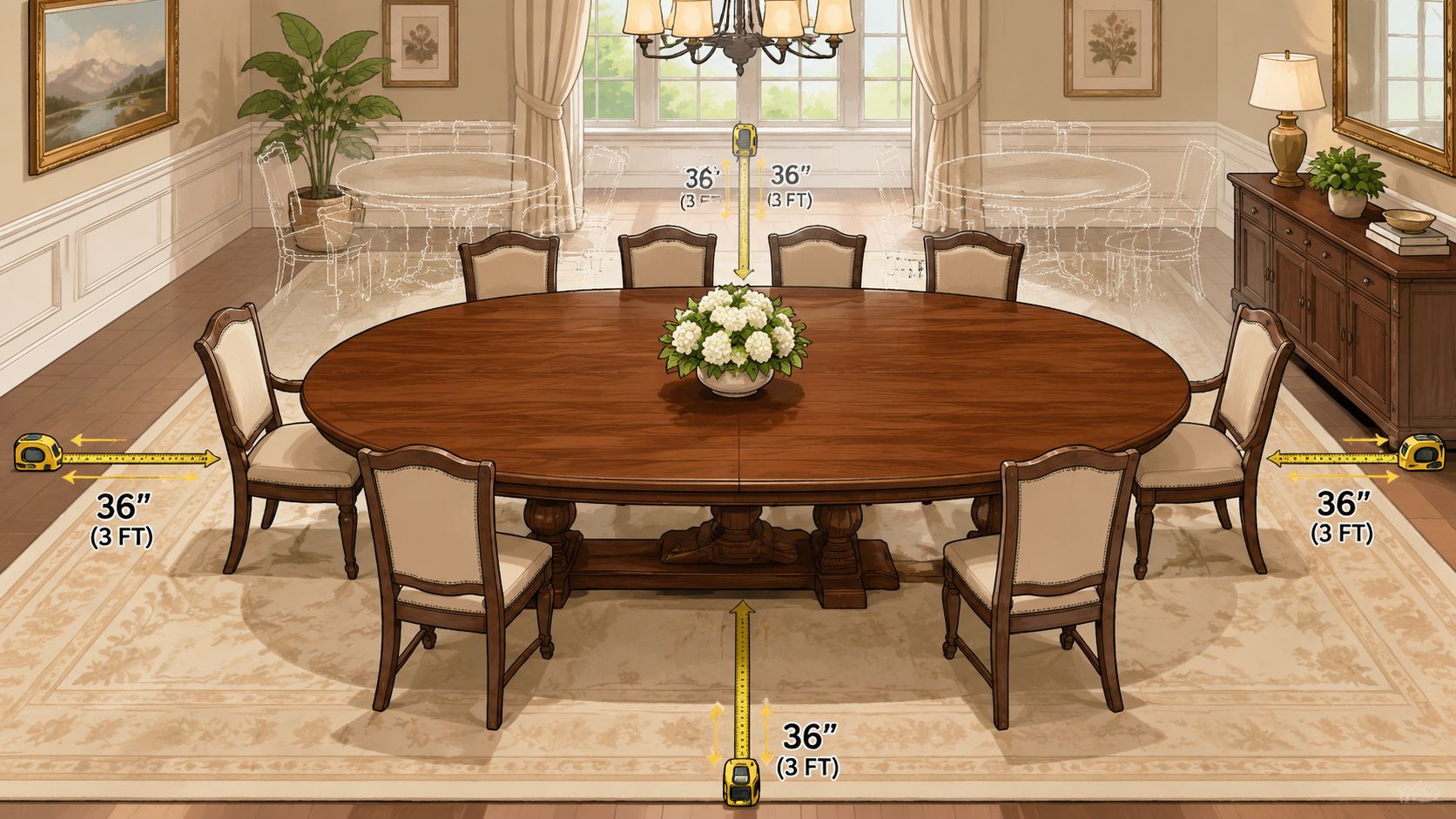
The most common mistake isn't picking the wrong style. It's falling in love with the tabletop and forgetting the space around it. A large oval dining table only feels elegant when people can sit down, slide their chairs back, and still move through the room without that constant side-step around furniture.
Start with the room, not the table
A helpful benchmark is to leave at least 70 cm (about 28 inches) between the table edge and surrounding walls so chairs can be pulled out and people can circulate comfortably, according to this oval table sizing guide for 8 people. Some general furniture guidance goes further and suggests that more breathing room often feels better in active family spaces. The point isn't to chase a perfect formula. The point is to make the room function on an ordinary Tuesday, not just on Thanksgiving.
For many homes in Ann Arbor, that means measuring more than the dining room itself. It may also mean checking the path from the island to the pantry, the clearance near a hutch, or the route to a patio door.
Readers trying to think ahead to linens and entertaining details may also find this guide to choosing the perfect oval tablecloth useful once the table size starts to come into focus.
Use a simple floor test before ordering
Before anyone commits to a large table, a low-tech test works wonders. Painter's tape on the floor can show the full footprint in a way online browsing never can.
Try this process:
- Measure the room first. Note the walls, nearby furniture, and all walkways people use.
- Tape the oval footprint. Mark the approximate tabletop size on the floor.
- Add chair space around it. Don't stop at the table edge. Include the area needed when chairs are pulled out.
- Walk the room normally. Carry a laundry basket through. Open the nearby cabinet. Pretend someone is already seated.
- Check the rug relationship. The table should feel centered and settled, not like it's floating off the edge of the room.
A taped outline often answers the question faster than another hour of scrolling product photos.
This is also where shape comparison becomes clearer. A rectangular table can technically fit a room and still make it feel narrower than it is. Oval shapes often soften that effect because the ends don't interrupt movement the same way. This companion guide on maximizing dining space with table shapes and seating arrangements is useful for households still comparing forms.
A quick room-planning checklist
| Checkpoint | What to look for |
|---|---|
| Wall clearance | Enough room for chair pull-out and comfortable circulation |
| Traffic path | A clear route between dining, kitchen, and nearby doors |
| Visual scale | A table that feels substantial, not overpowering |
| Daily use | Space for regular meals, not just occasional entertaining |
A room can be technically large enough and still not feel good. That difference matters.
How Many People Can an Oval Table Seat
A family of six can sit at the same table in two very different ways. In one room, dinner feels relaxed, with enough elbow room for passing mashed potatoes and settling in after the meal. In another, the same headcount feels tight because the chairs crowd the base, the serving bowls take over the center, and the people at the ends feel a little stranded.
That is why seating capacity is only partly about numbers. A large oval dining table succeeds when it supports the way your household gathers, whether that means quick school-night dinners, holiday meals with extra leaves in place, or long Sunday afternoons with coffee cups lingering on the top.
A practical way to judge seating
For everyday use, many households find that a 72-inch oval table suits about six adults comfortably. Once you move into the 84- to 96-inch range, an oval table usually has room for larger gatherings, often around eight to ten, depending on chair width and the style of base. In generous dining rooms, very long oval tables can seat even more, especially for holidays and special occasions, as shown in these formal oval dining room dimensions.
Round tables are often part of the same conversation. If you are comparing how conversation and place settings feel at a similar scale, this reference on 72-inch diameter round table info is a useful point of comparison.
Those ranges are starting points, not promises. Chair size changes the count. So does the pedestal or leg placement. A slim dining chair with open sides gives you more flexibility than a broad upholstered host chair.
Why oval seating often feels better than the chart suggests
An oval table works a bit like a well-shaped porch. It invites people in without giving every inch the same job. The long sides carry the daily seating, while the curved ends soften the edges of the group. That shape helps conversation travel more naturally than it often does on a long rectangle, especially in Michigan homes where dining rooms need to feel welcoming in every season, from busy December gatherings to bright summer brunches.
The curve also changes how the room feels once people are seated. End guests do not feel pushed out to a hard corner. Passing dishes is easier. Walking around the table feels smoother too, which matters in real homes where children, grandparents, and serving platters all need space at the same time.
What to test before you decide
A seating chart cannot tell you whether the table feels good to live with. You have to check the human details.
- Knee room: Sit at the side and at the end. Make sure the base does not claim the best seats for itself.
- Place setting space: Each person should have room for a dinner plate, glass, and a little breathing room.
- Chair width: Measure the actual chairs you plan to use, not a generic estimate.
- Serving space: A table that seats ten for a holiday should still leave room for serving bowls, candles, or a centerpiece.
- Ease of entry: Guests should be able to slide in and out without bumping the base or jostling the person beside them.
This is the point where measuring meets feeling. A table can be large enough and still feel fussy. A well-proportioned oval in solid wood often does the opposite. It feels settled, generous, and ready to serve the family that owns it for years, not just for one season of entertaining.
For families shopping on South State St. in Ann Arbor, these are the questions worth asking in person. How does the edge feel under your forearm during a long meal? Does the end seat feel like a real place to sit, or an afterthought? Can the table handle both Tuesday dinner and Thanksgiving without losing its sense of ease?
If you want a broader framework before you visit, this guide to picking the perfect dining table helps connect seating, shape, and everyday use in a practical way.
The Enduring Beauty of Solid Wood Craftsmanship
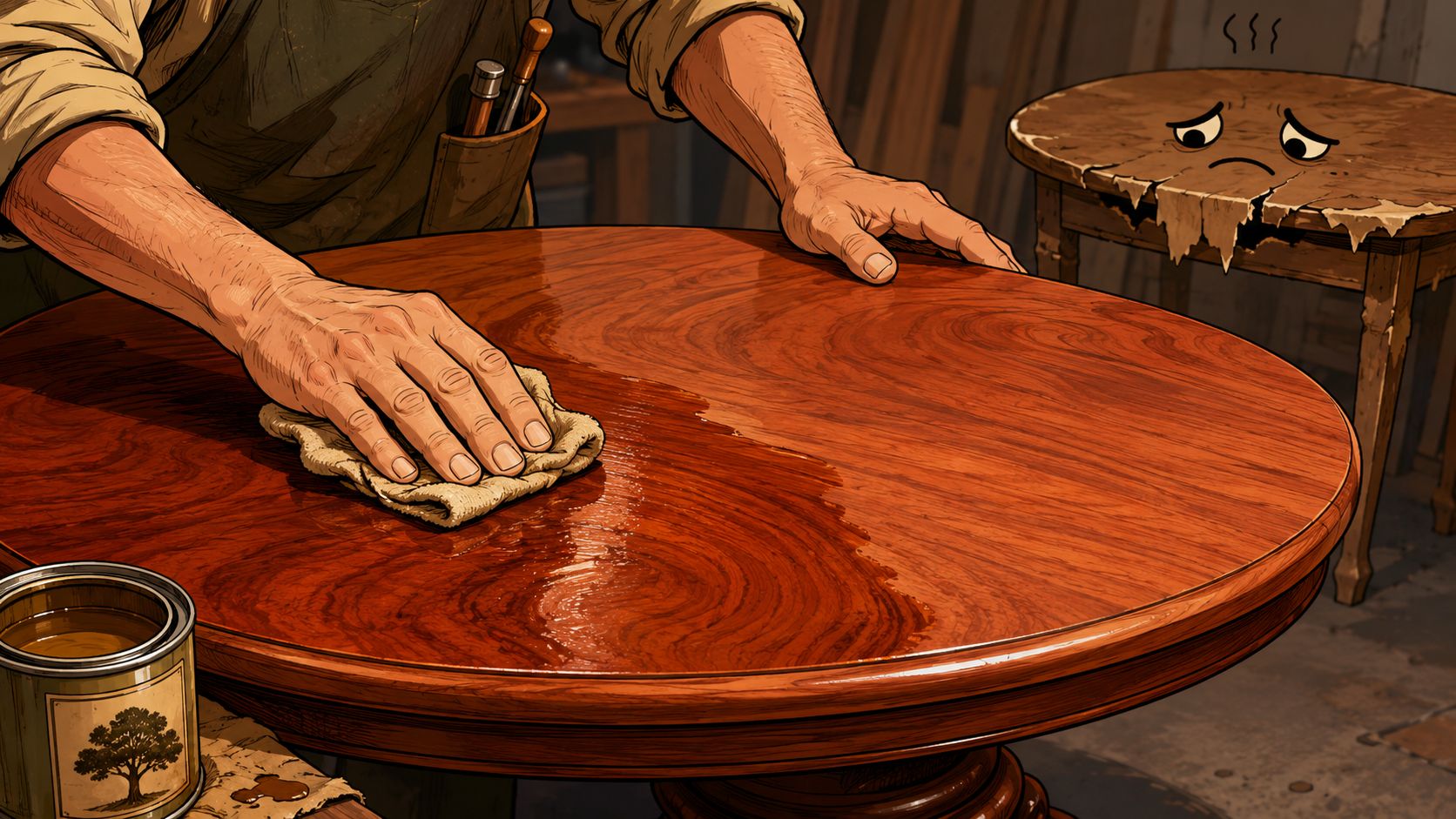
Material changes the entire character of a dining room. A large oval dining table in solid wood has a presence that lighter, mass-produced pieces do not replicate. The difference isn't just visual. It's tactile. It's the weight of the top, the depth of the grain, the way light settles into real cherry, maple, or oak instead of bouncing off a printed surface.
Why material integrity matters
An heirloom table earns its place year after year. That kind of value comes from construction choices most shoppers never see at first glance. Strong joinery, honest wood movement, and a finish that can age with grace matter far more than a quick showroom impression.
Amish hand-crafted pieces stand out here because the build quality is the point. Mortise-and-tenon joinery and other time-honored methods support long-term durability in a way that feels steady and substantial. A solid wood table can gather character over time rather than deteriorating. That is where cost-per-year becomes a more useful lens than the initial receipt.
What shoppers often notice in solid wood pieces:
- Weight and stability: The table feels planted and dependable.
- Natural variation: Grain pattern gives the surface depth and individuality.
- Repair potential: A quality wood surface can often be refreshed rather than replaced.
- Long-term relevance: Good proportions and real materials don't go out of style quickly.
The visual payoff is just as important. Quarter-sawn oak can bring quiet pattern and structure to a room. Cherry can warm up cooler interiors. Maple can look clean and refined without feeling cold. In a Michigan home with changing seasonal light, those details show up every day.
For readers exploring handcrafted options in more depth, this collection of custom solid wood dining tables shows how material and craftsmanship shape the final piece.
The comfort standard has deep roots
Furniture history also explains why a well-made dining table feels so comfortable when its proportions are right. Historical measurements show that table heights moved closer to the modern standard over time, with dining table height settling around 30 inches (76 cm) during the Stuart period (1603 to 1714), according to this oak furniture history study on table height and width.
That detail matters because ergonomics isn't a trend. It's a standard refined across centuries. A good dining table should feel natural at mealtime, whether the setting is formal or casual.
A table can be dramatic and still be comfortable. The best heirloom pieces never ask a room to choose between beauty and use.
This is one reason buyers often regret choosing surface appearance over construction quality. The daily experience exposes every shortcut. A dining table isn't just viewed. It's lived with.
Bespoke Design Your Table Your Way
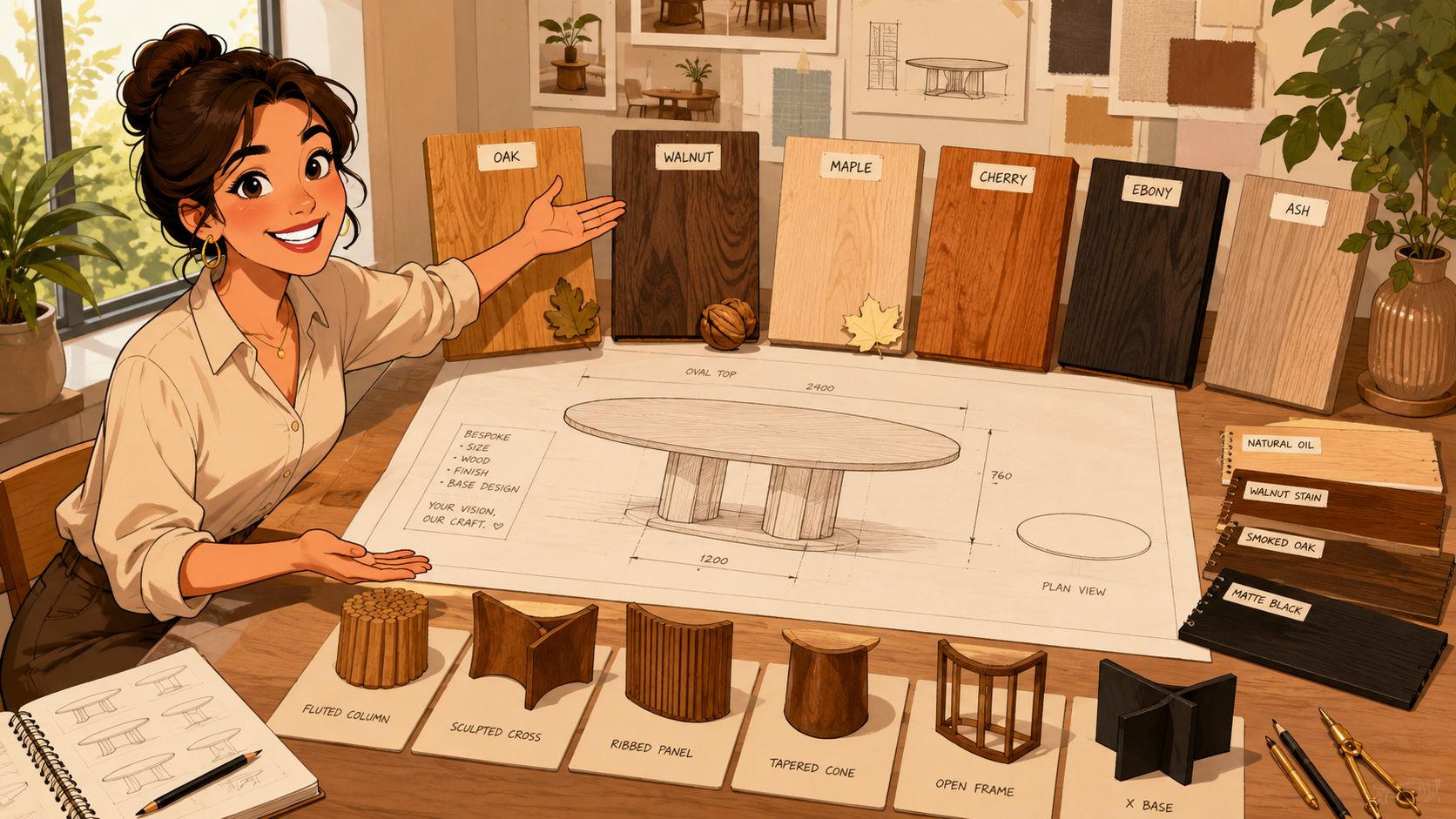
Many shoppers assume the process starts and ends with what's on the floor. That's rarely the most satisfying path for a major dining purchase. The better approach is often to treat the showroom as the starting point, then shape the final piece around the home it will live in.
Customization changes the whole decision
A bespoke dining table lets the household solve several problems at once. The finish can work with existing floors. The wood species can shift the tone from rustic to refined. The edge profile can soften a formal room or sharpen a contemporary one. The base can improve legroom or strengthen the visual weight of the table.
Made-to-order programs are particularly useful, especially for homes that already have a clear interior design direction. Canadel gives shoppers a way to personalize a dining set through choices in finishes, edge details, and configurations, while Stressless is better known in other parts of the home for ergonomic sizing and comfort-focused customization. Together, those examples show that “in stock” doesn't have to be the end of the conversation.
A local design team can help narrow those choices so they don't feel endless. For shoppers who want a practical starting point, this guide to custom furniture made simple helps explain how a made-to-order process comes together.
Chairs should finish the story
The table may anchor the room, but the chairs determine how the space feels in use. A large oval dining table with slim wood chairs reads very differently from the same table paired with upholstered seating. Neither is automatically right. It depends on the room, the household, and how often long meals happen there.
A few smart pairings to consider:
- All-wood chairs: These keep the look lighter and often feel timeless beside solid wood tables.
- Upholstered side chairs: These soften the room and can make longer dinners more comfortable.
- Mixed seating: End chairs with more presence can frame the oval beautifully while simpler side chairs keep the room from feeling too formal.
- Bench alternatives in casual spaces: Some households prefer flexibility on one side, though a full chair plan often suits a formal oval better.
One factual option in this category is Tyner Furniture, which offers made-to-order dining through brands such as Canadel and also carries Amish hand-crafted solid wood pieces. For many Southeast Michigan shoppers, that means the finish, wood species, and seating combination can be matched more closely to the room instead of chosen as a fixed set.
The result should feel cohesive, ergonomic, and personal. A dining room works best when nothing looks accidental.
Making Your Dream Dining Room a Reality

A Michigan dining room often has to do more than look good in a photo. It hosts weeknight dinners in January, birthday cakes in March, holiday meals when boots pile up by the door, and quiet coffee on bright summer mornings. A large oval dining table earns its place by serving all of those moments with comfort, steadiness, and enough grace to still feel right years from now.
That is why the final decision should feel grounded, not rushed.
Buy for the life you plan to live in the room
A large solid wood table is rarely a short-term purchase. It is closer to choosing the front porch for a house than choosing a lamp. You live with it daily, and the right one becomes part of family memory. For many households, that makes a cost-per-year view more useful than focusing only on the receipt from one afternoon.
Practical buying options can help families reach a better level of quality without settling for something temporary. Special Financing can spread out the investment. A Low Price Promise can add peace of mind that value still matters. That combination often makes it easier to choose the table you want to keep, rather than the table you expect to replace.
The room around the table matters too. Floor color, plank character, and sheen all influence how a wood top reads once it is in place. Homeowners comparing warm oak against cooler stains may find this collection of Savera expert flooring advice useful while refining the overall palette.
Plan the path into the room as carefully as the table itself
By this stage, you likely already know the table size that suits your room, as noted earlier. Now the question changes. Can the piece get into the house cleanly, turn where it needs to turn, and settle into the room without surprises?
That sounds simple until delivery day.
A large oval table has presence. The top may be long, the base may be substantial, and the route from truck to dining room may include narrow entries, stair landings, or a sharp hallway corner. Measuring only the dining area is a common mistake. The access path matters just as much.
A good final checklist usually includes:
- Placement confirmation: Rechecking the exact spot in the room before delivery
- Entry measurements: Looking at doorways, hall widths, and corners in advance
- Setup planning: Knowing whether the table arrives in pieces and how it will be assembled
- Floor protection: Preparing rugs, pads, or clear pathways so the room stays protected during placement
A well-planned delivery feels easy because the hard thinking happened ahead of time.
That same mindset helps with the room as a whole. Many families want the dining space to relate naturally to nearby spaces such as the home office, living room, or even an outdoor entertaining area. A store like Tyner Furniture, which serves the whole home, can help you choose a table that feels connected to the house instead of isolated as a single purchase.
Begin Your Family's Next Chapter with Tyner Furniture
A large oval dining table often becomes the quiet center of family life. One week it holds Tuesday homework, takeout containers, and a half-finished puzzle. The next, it hosts birthday candles, holiday platters, and relatives who stay longer than planned because the room feels good to be in.
That lasting role is what makes the choice feel bigger than a measurement exercise. Size matters, of course, but so do the parts you notice with your hands and your habits. The curve of the top changes how people move around it. The weight of solid wood changes how the table ages. The right finish changes whether daily use feels stressful or natural.
In many Michigan homes, that balance matters more than trend. Families want a piece that suits everyday life in January boots-and-salt season just as well as it suits a long Thanksgiving meal. They want a table that feels settled in the house, not borrowed from a passing style.
Since 1957, Tyner Furniture has helped families in Ann Arbor and across Southeast Michigan make those decisions with care. The South State St. showroom gives shoppers a chance to compare finishes in person, study solid wood construction up close, and do the one test a screen cannot offer. Sit down, pull in the chair, and feel whether the table invites people to stay.
That kind of visit answers practical questions, but it also answers emotional ones. Does the wood have character you will still appreciate in ten or twenty years? Does the scale feel calm in the room? Does the table look like it belongs with the rest of your home and the way your family lives?
A visit to Tyner Furniture gives shoppers in Ann Arbor a chance to feel the weight of solid wood, see the depth of a hand-finished surface, and explore special-order options before making a decision. For anyone still narrowing the options from home, the online Quick Specs offer a useful starting point for custom possibilities and heirloom-minded pieces built to serve a family for years, not just for a season.