Discover American Made Dining Tables in SE Michigan


You're probably starting where most dining table shoppers do. You want something that looks right in the room, fits the people you live with, and doesn't leave you wondering in three years why the top is chipping, the legs are wobbling, or the finish already looks tired.
In Ann Arbor and across Southeast Michigan, the dining table has become more than a place for dinner. It's where laptops land in the morning, where kids spread out homework after school, and where friends stay longer than planned after dessert. That shift isn't just anecdotal. The U.S. dining table market is projected to reach USD 2.34 billion by 2032, driven in part by multifunctional dining spaces that support hybrid living and work, according to Fortune Business Insights on dining table market growth.
That creates a real challenge for shoppers. The market is full of pieces that photograph well and disappoint in person. If you're trying to sort through american made dining tables, it helps to know what's worth paying for, what's mostly marketing, and how to spot heirloom quality before you bring anything home.
Table of Contents
- Finding the Heart of Your Home The Dining Table
- The Heirloom Difference Why Choose American Solid Wood
- How to Judge Quality Like an Expert
- Bespoke by Design Customization Options
- Understanding Value Pricing and Financing Your Investment
- Bringing Your Table Home Delivery and Long-Term Care
- Your Local Partner in Ann Arbor
Finding the Heart of Your Home The Dining Table
A dining table rarely stays in one lane. It holds a weeknight carryout dinner, birthday candles, unopened mail, science projects, and the quiet cup of coffee before the house wakes up. The best ones earn their place slowly, then become part of the family rhythm so completely that it's hard to imagine the room without them.

In our area, that matters because homes do a lot of work. A dining room in Southeast Michigan might need to feel polished for holidays, durable enough for daily use, and flexible enough for remote work on Tuesday afternoon. If you're still sorting out proportion, flow, or how a table should sit in the room, this guide to designing a dining room where to start is a helpful first stop.
Why this purchase feels bigger than furniture
People often come in thinking they're shopping for a tabletop and four legs. They're not. They're trying to solve a long list of practical questions at once.
- Room fit: Will the table leave enough space to pull chairs out comfortably?
- Daily wear: Can the surface handle dishes, cleaning, and constant use?
- Style pressure: Will it still feel right if the rest of the room evolves?
- Longevity: Is this a piece you'll still respect ten or twenty years from now?
That's why price alone rarely settles the issue. A low sticker can feel good for a weekend and disappointing for years.
A dining table should age with the household, not fight it.
Since 1957, families in Ann Arbor have walked into our South State St. showroom asking versions of the same question. How do I buy something once and buy it well? The answer usually starts with learning the difference between furniture built to get through a sale and furniture built to get through life.
The Heirloom Difference Why Choose American Solid Wood
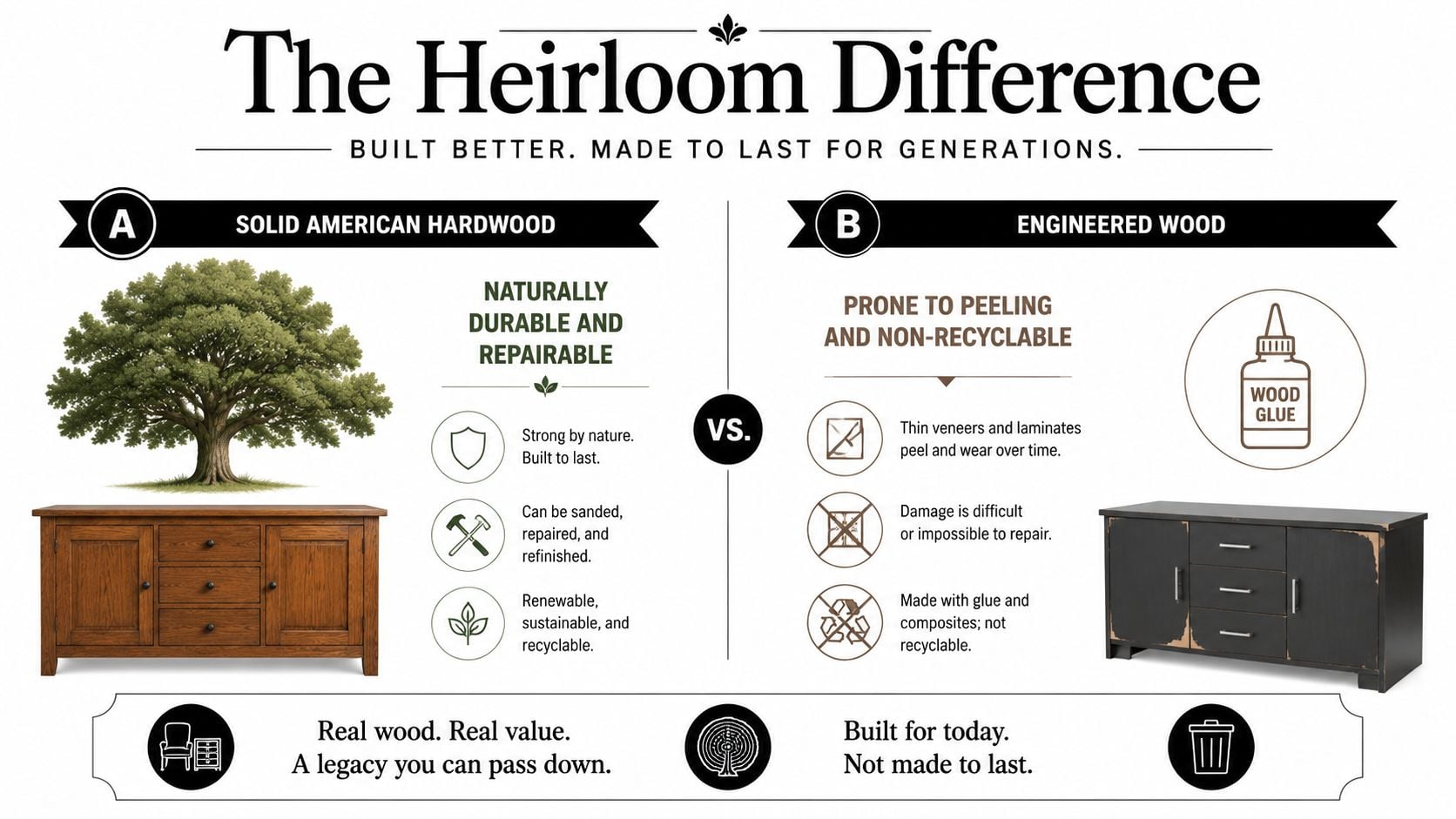
The biggest divide in dining furniture isn't modern versus traditional. It's solid wood versus furniture made to imitate it.
If you've ever placed your hand on a solid oak or cherry table, you know the difference immediately. There's weight in the base, depth in the grain, and a certain visual calm that comes from real material instead of a printed surface. Hand-crafted American hardwood furniture, including Amish-built pieces, tends to feel grounded in a room because it is grounded in how it's made.
What american made should actually mean
A lot of shoppers assume “made in USA” is a loose phrase. It isn't. The FTC standard is stricter than many people realize. Unqualified claims should be supported by a product being “all or virtually all” made in the U.S., as explained in this overview of what the FTC Made in USA standard means for furniture buyers.
That matters because “American made” can be used casually in the marketplace. A careful shopper should ask what's domestic and what isn't:
| Question to ask | Why it matters |
|---|---|
| Is the wood domestically sourced? | Material origin affects transparency and buyer confidence. |
| Where are the table base and top built? | Assembly location alone doesn't tell the whole story. |
| Are the hardware and finish systems domestic? | Small components can reveal how complete the claim really is. |
| Is the piece built to order or pulled from a mixed-origin inventory? | Made-to-order often gives you clearer product-level detail. |
Why solid wood wins over time
A veneer or engineered-wood table can look tidy on a screen. In daily use, the trade-offs show up faster. Edges are harder to repair cleanly. Surface damage tends to look more obvious. Once corners swell, peel, or chip, there often isn't much a craftsperson can do to restore the piece gracefully.
Solid wood is different. It can develop character without looking spent. It can often be refinished. It responds to care. That's where the cost-per-year idea becomes useful. If a table lasts long enough to move from starter home to forever home, the higher initial investment often looks far more reasonable.
Practical rule: If a table can't be repaired, refreshed, or refinished with dignity, it's harder to call it an heirloom.
For shoppers comparing options locally, american made solid wood furniture gives a better benchmark than broad patriotic branding. You're not just buying a look. You're choosing a category of construction, a level of repairability, and a piece with the potential to become part of a family's local legacy.
How to Judge Quality Like an Expert
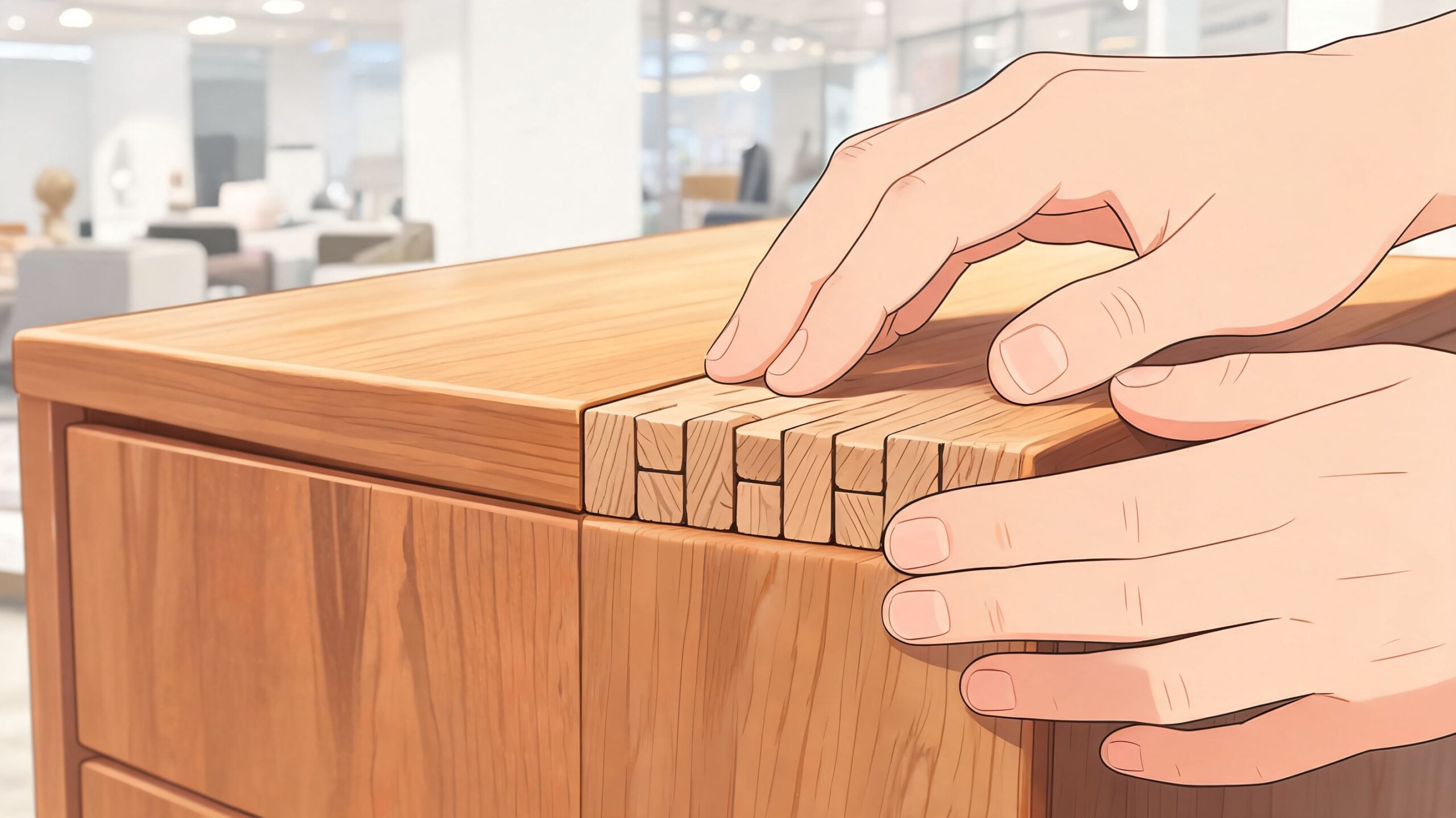
Inspect a dining table from standing height to see what showrooms want to highlight. A smarter approach involves looking beneath the surface to find where shortcuts often hide.
Start underneath, not on top
The underside tells you more than the finish sheen ever will. Kneel down and look at how the legs meet the aprons and frame. High-quality tables commonly use mortise-and-tenon joinery, an interlocking joint that creates a mechanically strong bond and resists racking and twisting over decades of use, as described in this guide to what makes solid wood dining tables durable.
That matters in ordinary life. People lean on table edges. Chairs bump the base. Floors aren't perfectly level. A table that relies mainly on screws can feel acceptable at first and grow loose over time.
Signs worth looking for
- Joinery you can trust: Mortise-and-tenon construction is a strong sign that the maker planned for long-term stress.
- Corner reinforcement: Corner blocks add stability where movement tends to concentrate.
- A stable base: Push gently from the side. A good table shouldn't shimmy under light lateral pressure.
Wood choice matters, but construction matters more
Shoppers often focus on species first. That's understandable. Oak, cherry, maple, and walnut all bring a different personality to the room. Oak tends to feel grounded and forgiving. Cherry often reads warmer and more refined. Maple gives a cleaner, tighter look.
But a beautiful species can't rescue poor build quality. Think of wood selection as the face of the table and joinery as the skeleton. If the skeleton is weak, the piece won't age well no matter how attractive the grain looks in the showroom.
A useful primer on choosing the right hardwood for longevity and style can help narrow the field if you're comparing species side by side.
Read the finish with your hands
Run your fingertips along the edge and underside. Good finishing feels even, not gummy, sharp, or rushed. Look across the surface from an angle. You want consistency, not blotchy patches or corners that seem to have absorbed stain differently from the rest of the top.
If the builder paid attention where your guests won't look, there's a good chance they paid attention everywhere else too.
Ask one more question while you're there. If the table takes a hit years from now, can it be touched up, repaired, or refinished? A confident answer often tells you you're dealing with furniture built for real homes, not just for initial delivery day.
Bespoke by Design Customization Options
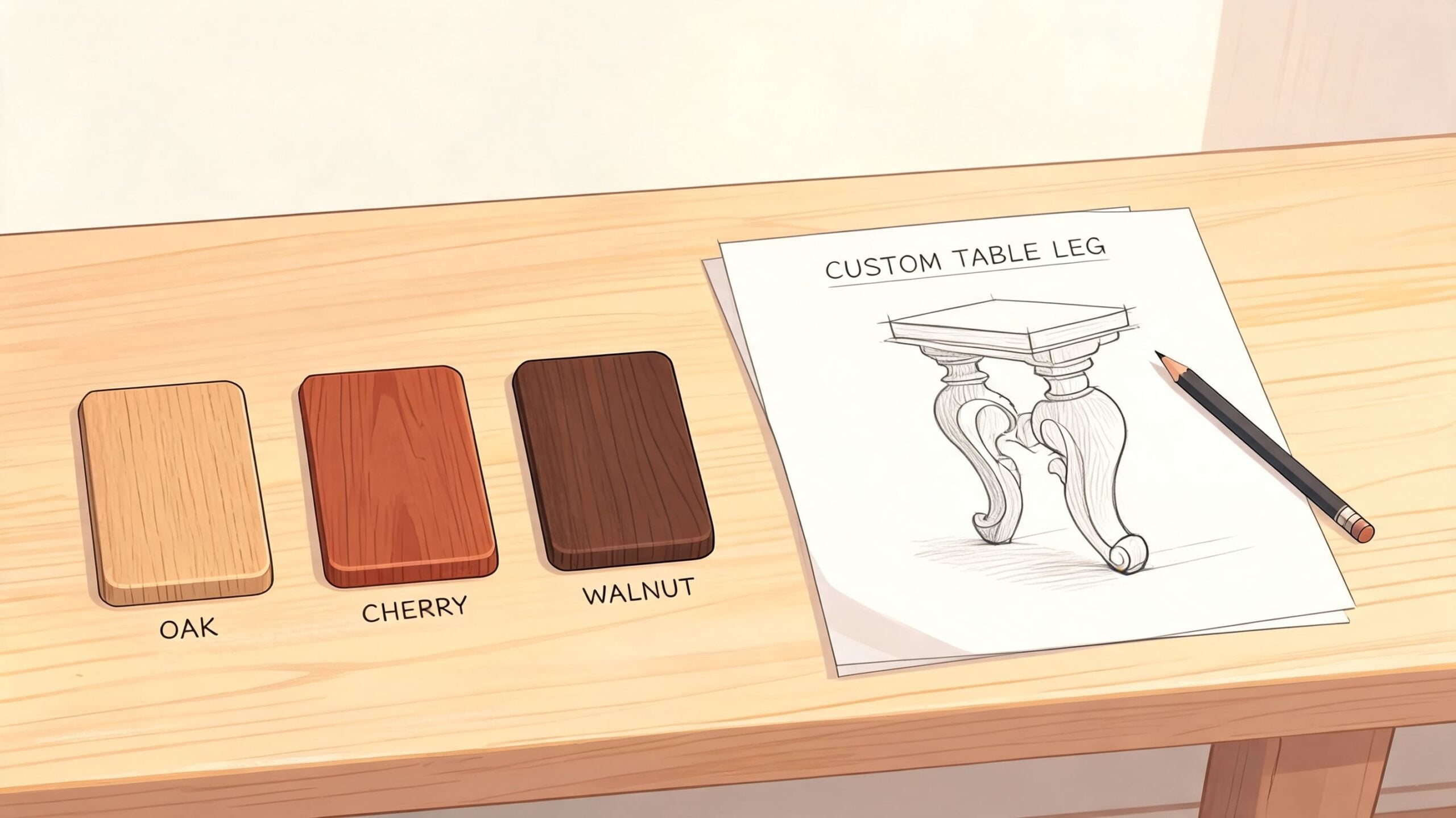
The most frustrating table search usually ends with “almost.” Almost the right width. Almost the right stain. Almost the right leg shape. Almost enough seating. That's where custom work stops being a luxury word and starts being the practical answer.
When standard sizes don't work
Many Southeast Michigan homes don't fit catalog assumptions. Breakfast nooks can be tight. Older homes can have charming but awkward proportions. Open-concept spaces often need a table that visually connects to nearby cabinetry, flooring, or a living area without feeling oversized.
That's why “in stock” should be the beginning, not the limit. A made-to-order table lets you solve the details that matter in day-to-day living:
- Length and width: Enough seating without crowding circulation.
- Wood species: Oak for a more durable, grain-forward look, cherry for warmth, walnut for depth.
- Edge profile: Clean and precise or softer and more traditional.
- Finish tone: Matched to the room instead of merely tolerated.
Two useful customization paths
One path is the hand-crafted route. Amish-built dining tables are often chosen by shoppers who want material integrity first. They care about the weight of solid hardwood, the feel of a hand-finished top, and the ability to select species and stain with precision. This is often the right route when the piece needs to feel architectural and lasting.
The other path is more system-driven. Canadel's UDesign approach is useful for households that want to compare combinations efficiently. You can work through table shapes, base styles, chair pairings, finishes, and design details without guessing how separate pieces will relate once they're in the same room.
For shoppers who want to explore that category in more detail, custom solid wood dining tables show how made-to-order options can address room size, seating needs, and finish preferences.
The right custom table doesn't feel custom because it's flashy. It feels custom because nothing about it feels compromised.
This same made-to-order mindset shows up elsewhere in the home too. Canadel is useful in dining. Stressless does something similar in ergonomic seating through size and comfort customization. It's the same principle. The piece fits the person and the room, instead of asking the room to adapt to the piece.
Understanding Value Pricing and Financing Your Investment
A good dining table isn't inexpensive. That's usually obvious. What's less obvious is how expensive the wrong table becomes once replacement, disappointment, and lost years of use enter the picture.
Cost per year changes the conversation
The cleanest way to think about value is cost per year, not just purchase price. A table that holds up through moves, children, holidays, and routine wear often costs less emotionally and financially than a cheaper one you stop liking because it's already breaking down.
Here's the trade-off in plain language:
- Lower upfront price: Easier to buy today, but often harder to live with over time.
- Higher material and construction quality: More money at the start, but usually more satisfaction across the years.
- Repairability: A table that can be refreshed extends its useful life and protects your investment.
That's why heirloom furniture tends to make sense for forever-home shoppers, growing families, and anyone furnishing with a long view.
A practical bridge for better furniture
Budget still matters. It should. Quality doesn't become wise just because it's expensive. The goal is to buy at a level your household can support comfortably, then stretch toward durability rather than settling for repeated replacement.
One option some local shoppers use is special financing for furniture purchases, which can make a made-to-order dining table more manageable without forcing a compromise on construction. The same practical thinking applies to a Low Price Promise. It's not about chasing the lowest number on paper. It's about reducing friction when you've identified the right long-term piece.
A veteran showroom lesson is simple. Regret usually comes from buying below the way you live.
Bringing Your Table Home Delivery and Long-Term Care
A well-built table still needs a good start in the home. Delivery isn't a minor detail. Heavy solid wood deserves careful handling, thoughtful placement, and proper setup so the table begins its life level, stable, and protected.
What good delivery should include
White-glove delivery matters most with larger dining pieces because doorways, stairs, flooring, and final room placement all create opportunities for preventable damage. A proper setup should feel calm and methodical, not rushed.
Look for a process that covers these basics:
- Room placement: The table is positioned where it will live, not dropped near the front door.
- Assembly and leveling: Bases, leaves, and top alignment are checked before the crew leaves.
- Surface respect: Floors, corners, and the furniture itself are protected during the move-in.
Simple care that protects solid wood
Day-to-day care is usually easier than people fear. The finish does a tremendous amount of the work. According to guidance on finish systems for solid wood dining tables, the performance of a solid wood table is largely determined by its finish. Catalyzed lacquer or conversion varnish offers strong resistance to heat, moisture, and daily wear, and oak is noted there at about 1,290 on the Janka hardness scale.
That combination helps explain why some tables remain handsome under real use while others quickly show rings, clouding, or surface fatigue.
A few habits make a difference:
- Wipe gently and consistently: Use a soft cloth rather than abrasive cleaners.
- Respect standing moisture: Condensation from glasses and wet items should be cleared promptly.
- Avoid dramatic humidity swings: Wood moves naturally. Stable indoor conditions help it do so gracefully.
- Use simple protection when needed: Pads, trivets, and placemats are sensible tools, not signs that the table is fragile.
A durable finish doesn't excuse neglect. It gives daily life a wider margin for error.
The goal isn't to treat the table like a museum object. It's to let it serve the household while preserving the surface and structure that made it worth bringing home in the first place.
Your Local Partner in Ann Arbor
Buying american made dining tables online can narrow your options. It can't replace touch, scale, or honest comparison. You can't feel the weight of solid cherry through a screen. You can't see how a finish changes when natural light crosses the grain. You can't judge chair comfort, table height, or edge profile from a product tile.
That's where a local showroom still matters. Since 1957, Tyner Furniture has served Ann Arbor and Southeast Michigan with a broader view of the home, from the dining room and home office to bedroom furniture, ergonomic seating, and outdoor spaces. That matters because dining decisions rarely happen in isolation. The table has to live with your flooring, your traffic patterns, your lighting, and the rest of your interior design.
What you can only judge in person
At the South State St. showroom, the in-person experience answers questions that online browsing can't settle.
- Material feel: Solid wood has a different temperature, weight, and tactile presence than engineered substitutes.
- Finish depth: A hand-crafted surface shows nuance when you move around it.
- Seating comfort: Chair pitch, seat firmness, and table clearance all become obvious once you sit down.
- Proportion: A table that seems ideal online may read too bulky or too slight in person.
A broader home perspective
Furniture shopping can get overwhelming because one decision often creates another. A new dining table leads to questions about lighting, storage, rugs, host seating, and even nearby home office pieces if the room multitasks during the week. Looking at the whole home helps prevent expensive mismatches.
That's also why shoppers who come in for dining often end up considering custom upholstery, Stressless ergonomic seating, or coordinated pieces in other rooms. The value isn't just in a single product. It's in seeing how craftsmanship, comfort, and made-to-order options can work together across the house.
If you're close to Ann Arbor, come test the details that matter. Sit in the chair. Run your hand across the top. Look underneath. Ask where the wood came from, how the joinery is built, and what can be customized. Those are the questions that separate a table you'll tolerate from one you'll keep.
Visit Tyner Furniture in Ann Arbor for a no-pressure showroom visit and a real sit test, or browse the online Quick Specs if you're comparing special-order options from home.