Natural Wood Coffee Table Buying Guide for Lasting Style


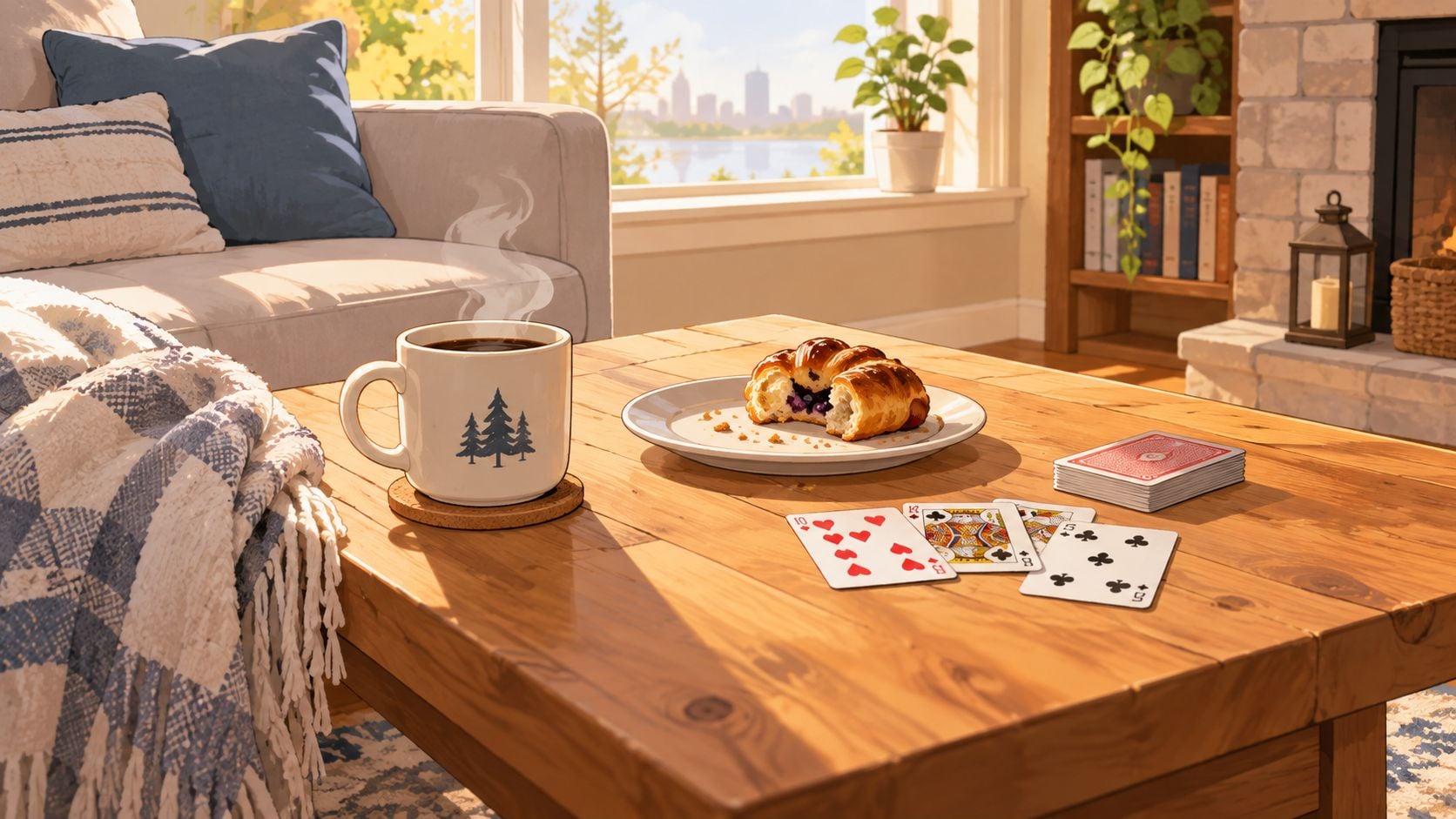
A Southeast Michigan living room asks a lot of its coffee table. Morning coffee and a croissant may share the surface with playing cards, remote controls, homework, or a family dinner plate by evening. In that setting, a natural wood coffee table isn't just a decorative accent. It becomes one of the home's most used pieces, and its material, joinery, finish, and proportions determine whether it remains useful for years or becomes something to replace.
Tyner Furniture has served Ann Arbor and the surrounding community since 1957, with a local legacy built around craftsmanship and practical guidance. That perspective treats a coffee table as an heirloom investment, not just a purchase to judge by its sticker price. Solid hardwood furniture can last 20–50+ years with basic care, and many high-quality pieces last over 100 years, making cost-per-year a more useful value measure than the initial price alone. Learn more about the longevity of solid wood furniture.
The right table should feel comfortable in daily life, look better as the room matures, and remain repairable when a mark eventually appears. The following guide covers wood species, solid construction, heirloom joinery, room proportions, styling, care, and made-to-order options. Readers who want a deeper look at species selection can also explore choosing the right hardwood for longevity and style.
Introduction to the Natural Wood Coffee Table
Why the table earns heirloom status
A sofa may define the room, but the coffee table handles the daily work. It receives a warm mug, a stack of books, a child's craft project, and the occasional hurried placement of keys. Over time, those ordinary moments give the piece meaning. A well-made table develops a surface that reflects the household without losing its usefulness.
Natural wood stands apart because it brings visible grain, tonal variation, and a sense of weight that manufactured surfaces often struggle to reproduce. The buttery feel of a carefully finished tabletop invites a hand to rest there. The weight of solid cherry or walnut gives the room a grounded quality, while small changes in grain make each table distinct.
Value measured over ownership
Price matters, but it doesn't tell the whole story. A table that can be sanded, refinished, repaired, or renewed may provide stronger long-term value than one that must be discarded after surface damage. That's the difference between judging furniture by the transaction and judging it by its useful life.
A natural wood coffee table also adapts as a household changes. A young family may value rounded edges and easy cleaning, while an established home may prioritize a refined finish, storage, or a particular wood tone. Solid construction can support those changing needs because the material remains serviceable rather than becoming visually obsolete after a single decorating cycle.
Practical rule: The best coffee table is the one that fits the household's routines as comfortably as it fits the room.
Tyner's perspective comes from serving Southeast Michigan homes since 1957. The same showroom that helps households choose living-room furniture also supports coordinated decisions across the Home Office, bedroom, dining room, entertainment areas, and Outdoor Spaces. That breadth matters because a coffee table rarely exists alone. Its wood tone and craftsmanship should relate naturally to the rest of the home.
What the guide helps clarify
Shoppers often feel overwhelmed by species names, finish choices, dimensions, and construction terms. The useful questions are straightforward:
- What is the material? Solid hardwood, veneer, or a wood-based panel?
- How is it built? Look for stable joinery and room for seasonal movement.
- How will it live? Consider drinks, sunlight, children, pets, and traffic.
- Can it be renewed? A repairable surface supports sustainable ownership.
- Will it fit? Proportion matters as much as beauty.
The goal isn't to chase a trend. It's to choose a piece with heirloom potential, sensible maintenance, and a design that still feels right after the room evolves.
What Makes a Coffee Table Natural Wood
Natural wood begins with the species, but species alone doesn't determine quality. Grain direction, board selection, construction, and finish all affect the way a table looks and performs.
Start with species and character
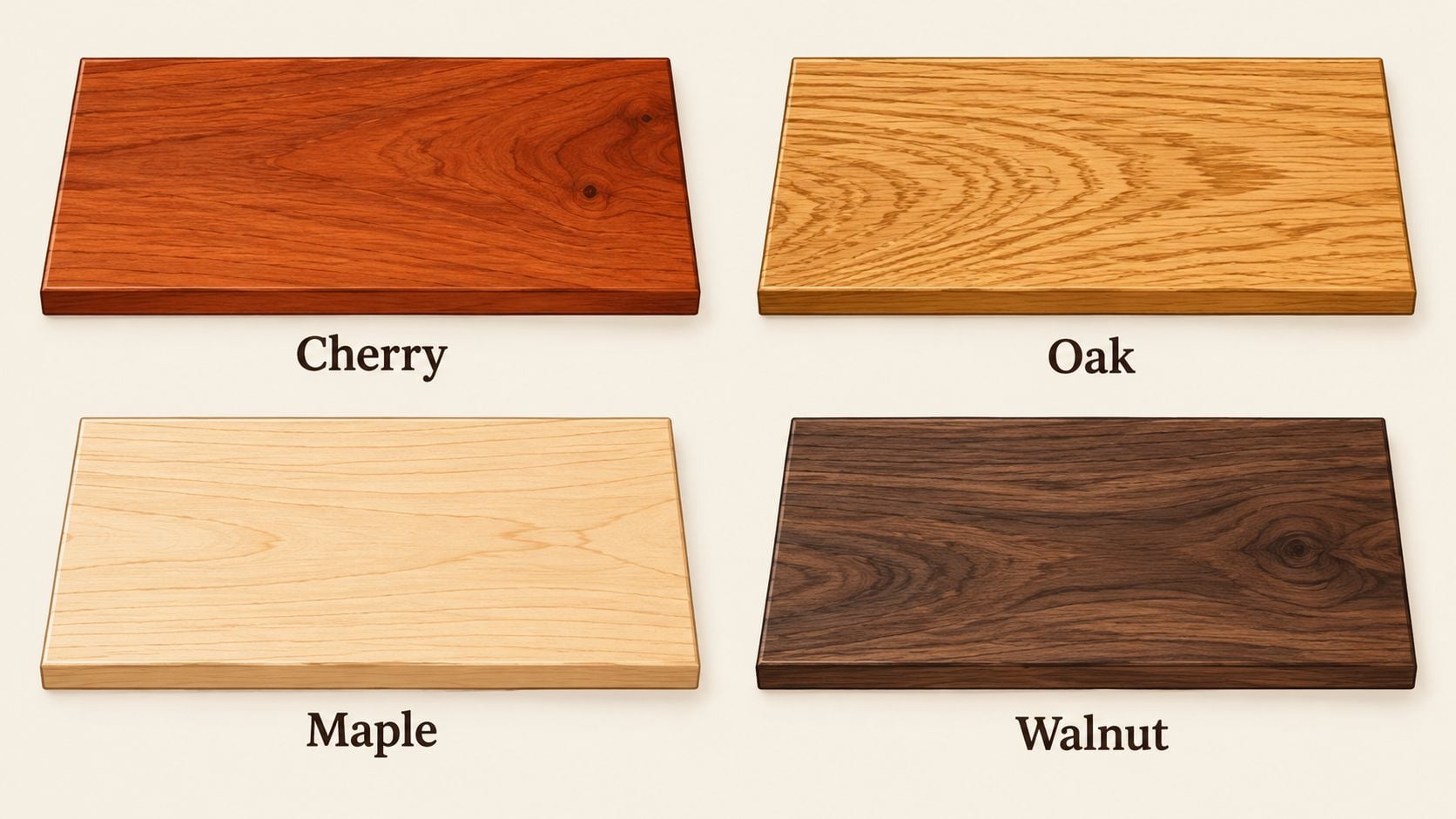
Common hardwood choices each bring a different visual and tactile personality:
- Cherry offers a warm, refined appearance that can deepen with age and light.
- Oak shows pronounced grain and brings a more textural, architectural look.
- Maple tends toward a clean, quieter grain with a lighter visual presence.
- Walnut is valued for rich darker tones and expressive natural variation.
- Teak is known for durability and a naturally distinctive appearance.
These descriptions are starting points, not rigid rules. A stain can shift the apparent color, while board selection changes how dramatic or restrained the grain feels. A showroom sample helps because photographs can't fully convey the difference between a satiny surface and a heavily glossy one.
Solid wood, veneer, and panels
Solid wood means the primary wooden components are made from natural lumber rather than a thin decorative layer applied over another core. Solid construction gives a piece greater renewal potential because damaged surfaces may often be repaired or refinished, depending on the depth and finish.
Veneer uses a real wood surface over a different substrate. It can be carefully made and visually appealing, but shoppers should understand what they're buying instead of assuming every wood appearance indicates solid lumber. Wood-based panels can also have practical uses, yet they don't offer the same material integrity or repair pathway as a substantial solid hardwood top.
Within the broader wood-furniture supply chain, solid wood accounts for 52% of total wood-furniture production, compared with 38% for wood-based panels and 10% for miscellaneous furniture, while global wood-furniture production exceeded 3.2 billion units in 2024. Review the wood-furniture market data. Those figures place solid wood in the dominant construction category, not at the fringe of furniture making.
For a closer explanation of the differences, see solid wood versus engineered wood.
Finish changes the experience
A penetrating oil tends to preserve a tactile, close-to-the-wood feel and may require periodic maintenance. A harder film finish creates a more protective surface against everyday moisture and abrasion, often with a different sheen and feel under the hand. Neither approach makes wood completely immune to marks, but each supports a different ownership routine.
A hand-crafted table should also show consistency in the way its parts meet. Clean transitions, thoughtful grain placement, and a finish that supports rather than hides the material are signs of considered work. Sustainability starts with responsible sourcing, but it also includes longevity, repairability, and choosing a piece that remains useful for a long time.
How to Judge Quality and Craftsmanship
The wood species may catch the eye, but construction determines how the table handles years of use. A shopper can learn a great deal by looking underneath the top, examining the leg connections, and asking how the tabletop attaches to its base.
Joinery reveals the builder's priorities
Traditional mortise-and-tenon and dovetail joints interlock rather than relying only on staples or surface glue. That connection style helps joints hold tight under daily use and resist loosening over time. See how mortise-and-tenon construction supports durability.
Amish hand-crafted furniture often emphasizes this kind of time-tested construction, along with solid North American hardwoods such as cherry, oak, and maple. Mass-produced alternatives may prioritize speed and uniformity, which can leave fewer options for repair or refinishing. The difference isn't always visible from across the room, so a careful inspection matters.
Allowance for natural movement
Solid wood changes as indoor humidity changes. A responsible builder doesn't try to prevent that movement completely. Instead, the design allows the tabletop to expand and contract without splitting joints or forcing the top out of alignment.
Look for floating attachments, slotted fasteners, or another method that lets the top move across the grain. Rigid perimeter glue joints can create stress because the wood needs room to respond to its environment.
Quality markers at a glance
| Feature | Heirloom Solid Wood | Mass-Produced Alternative |
|---|---|---|
| Primary material | Substantial hardwood selected for integrity and repairability | Veneer, wood-based panels, or mixed construction may be used |
| Joinery | Interlocking mortise-and-tenon or dovetail connections | Staples, screws, or surface glue may carry more of the load |
| Tabletop attachment | Allows cross-grain movement | May restrict movement with rigid attachment |
| Finish | Selected for tactile character and practical protection | Often standardized for efficient production |
| Renewal potential | Can often be repaired, sanded, or refinished | Surface damage may be harder to correct |
| Customization | Made-to-order species, stain, edge, or configuration options | Limited to available configurations |
A simple showroom inspection
A quality check doesn't require specialized equipment. Run a hand along the edge and underside, look for clean transitions, check whether the table feels stable, and ask what happens if the surface receives a dent. Online, review the Quick Specs for materials, dimensions, finish information, and configuration details before ordering.
The strongest table isn't necessarily the heaviest or most ornate. It's the one whose material, joinery, movement allowance, and finish work together as a coherent system.
Sizing and Layout for Your Living Room
A beautiful natural wood coffee table can still feel wrong if its proportions fight the sofa or block the room's circulation. Measuring first gives the table a job description before a shopper begins comparing shapes and finishes.
Begin with the sofa
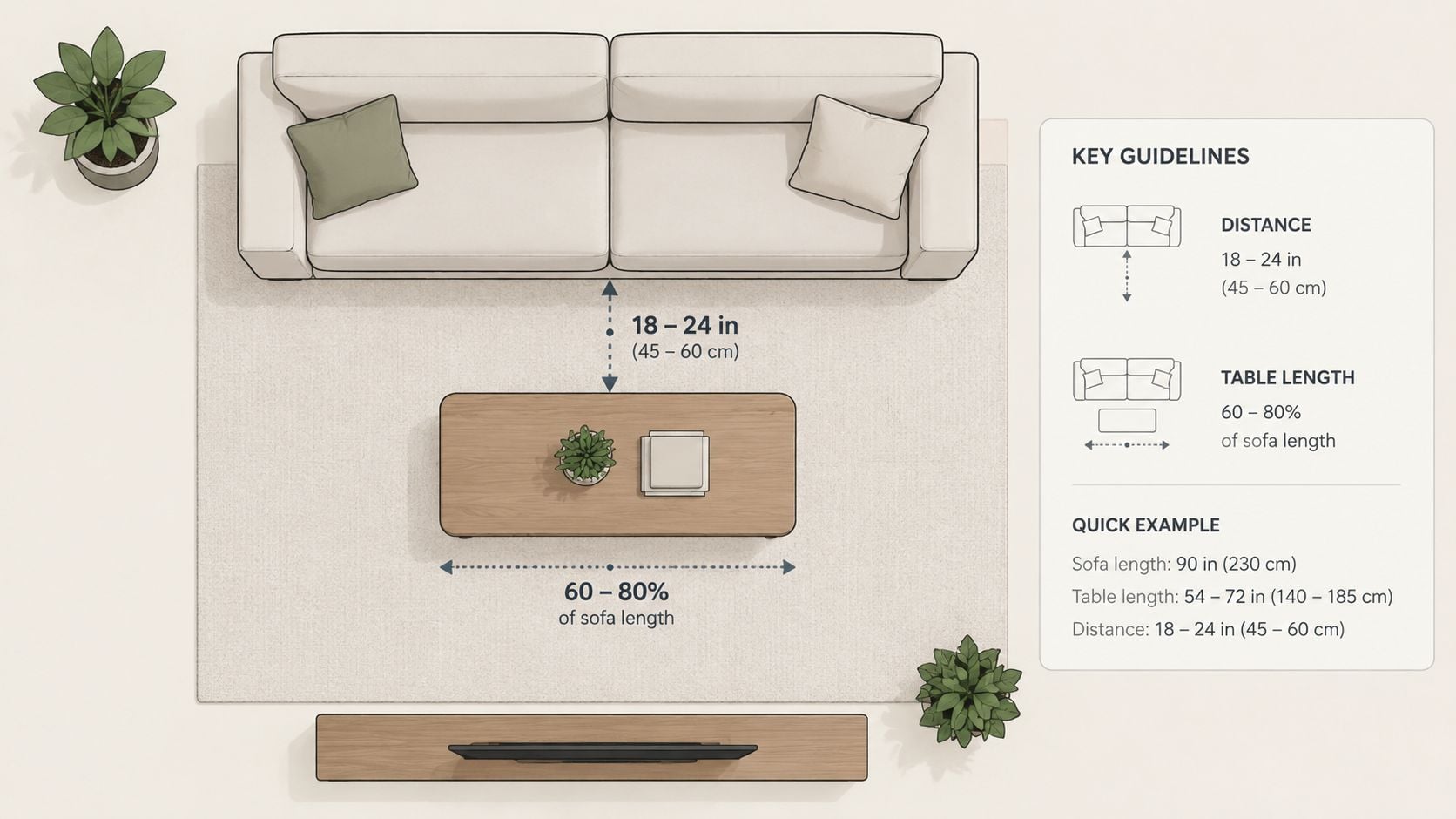
A practical proportion is for the table to measure at least half the sofa's length and no more than roughly two-thirds of it. The table usually feels most comfortable when its height is close to the sofa seat, with a modest difference in either direction rather than a dramatic rise or drop.
Sectionals require a slightly different reading. If the table sits inside the open area created by a chaise, compare its length with the main horizontal seating run rather than the entire L-shaped footprint.
Measure the walking paths
Use painter's tape or folded paper to mark the intended footprint on the floor. This creates a quick visual test for traffic flow, rug placement, and the space needed to reach the sofa.
- Check the sofa relationship: The table should serve the main seats without stretching beyond them awkwardly.
- Protect circulation: Walk from the sofa to nearby doors, stairs, dining areas, or the kitchen and note where the route feels pinched.
- Test the rug: A table should help anchor the seating group, not sit so far outside it that the room loses cohesion.
- Account for drawers and lift mechanisms: Storage features need room to open without colliding with knees or nearby furniture.
- Mark the corners: Tape makes sharp corners and overlarge footprints obvious before delivery.
Proportional check: A table that looks modest in a large showroom may feel visually heavy in a compact Ann Arbor apartment. A smaller room often benefits from a round or oval profile that keeps the walking path visually open.
Match shape to the room
Rectangular tables work naturally with standard sofas and narrow layouts. Square tables suit a spacious sectional or a conversation grouping with chairs on multiple sides. Round tables can soften a room full of straight lines, while oval and organic shapes offer a smoother path through high-traffic areas.
Open-concept Southeast Michigan homes may need a piece with enough visual weight to define the living area without creating a barrier. Compact rooms often need the opposite, a lighter base, a smaller footprint, or softened edges. The right choice should feel intentional from both the sofa and the entry path.
A visit to the South State St. showroom gives shoppers the chance to test the proportions beside real seating. A sit test can reveal whether the table is easy to reach, too tall for a relaxed posture, or positioned too close to the knees.
Styling Your Natural Wood Coffee Table With Any Decor
Styling works best when the tabletop remains visible. The wood should contribute color, texture, and warmth rather than disappear beneath a crowded arrangement.
Build contrast without conflict
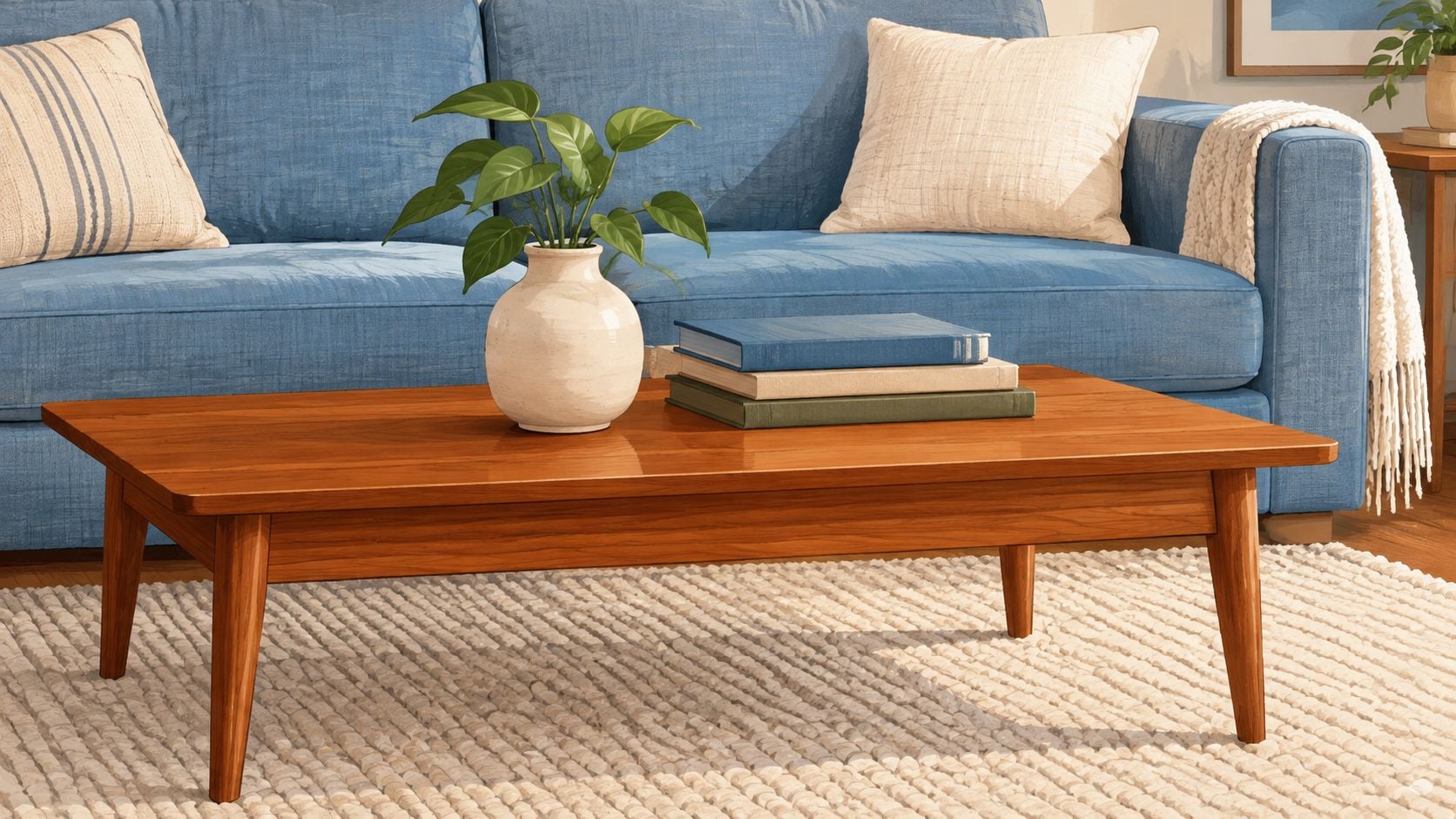
A warm cherry or walnut table pairs well with cool linens, pale ceramics, or textured stone because contrast lets both materials stand out. Oak can support woven textiles and relaxed interiors, while maple can bring brightness to a room with darker upholstery. The goal isn't to match every wood surface exactly. It's to repeat a related undertone or balance the existing palette.
A living room with top-grain leather nearby benefits from tactile contrast. The buttery feel of top-grain leather beside the grain of a solid wood surface creates a richer sensory composition than a room filled with one repeated texture. Likewise, the weight of solid cherry under a ceramic vase gives small decorative pieces a visual anchor.
Use a simple arrangement
A coffee table usually needs a combination of height, texture, and negative space. A low stack of books can establish a base, a modest vase or plant adds height, and a tray gathers smaller objects without covering the whole surface.
- Begin with one anchor: Choose a tray, bowl, or sculptural object that relates to the table's shape.
- Add varied height: Pair a low object with a taller but visually light element.
- Keep working space open: Leave room for drinks, books, and hands.
- Repeat one room detail: Echo a fabric color, metal tone, or wood undertone from nearby furniture.
- Respect the grain: Avoid placing so many objects that the tabletop's character disappears.
Readers exploring broader eco conscious furniture choices may find it useful to evaluate sourcing, repairability, and longevity alongside appearance. A natural label alone doesn't prove that a table supports sustainable ownership. A piece designed to remain useful and repairable has a stronger lifecycle story.
For a more detailed approach to arranging objects, decorate a coffee table like a pro offers additional design direction.
Coordinate beyond the living room
A thoughtfully chosen wood tone can connect the living room to a dining area, home office, or entry. Tyner Furniture's selection extends from the Home Office to Outdoor Spaces, making it easier to consider the whole interior design rather than one isolated purchase.
The customization edge matters here. In-stock is just the beginning. Made-to-order options can support coordinated finishes, fabrics, and configurations, including Canadel dining selections and Stressless seating for an ergonomic living arrangement. A bespoke room doesn't require every piece to look identical. It requires the materials to feel deliberately related.
Everyday Care and Long Term Protection
Natural wood is more forgiving than many households expect, but it still responds to its surroundings. Care protects the finish, while good construction gives the table room to respond naturally.
Understand cross-grain movement
Wood absorbs moisture from humid air and releases it in dry air. The resulting seasonal swelling and shrinking happens mainly across the grain, not along it. A 42-inch-wide solid wood tabletop can change by about 3/8 inch over a year as indoor relative humidity shifts, which is why a properly built table uses floating attachments, slotted fasteners, or another movement allowance instead of rigid perimeter glue joints. Review guidance on wood movement and furniture construction.
Indoor humidity matters especially during Southeast Michigan heating and cooling cycles. A practical target is roughly 35%–55% relative humidity, a range associated with reducing stress such as cupping, checking, drawer binding, and joint strain.
Care principle: The finish protects the surface, but the construction protects the structure.
Match maintenance to the finish
Penetrating oils and waxes can offer a warm, tactile surface, but they generally call for periodic maintenance. Harder film finishes provide stronger resistance to spills and abrasion, making them useful for households where mugs, toys, and frequent wiping are part of daily life. Owners should follow the maker's finish-specific care instructions rather than applying a generic product.
A simple routine helps:
- Remove dust gently: Use a soft, clean cloth rather than an abrasive pad.
- Wipe spills promptly: Moisture left on the surface has more opportunity to affect the finish.
- Use coasters and trivets: Heat and wet rings are easier to prevent than repair.
- Avoid harsh cleaners: Unknown chemicals can dull or soften a finish.
- Renew as directed: Re-oil or wax only when the finish calls for it.
- Protect from localized drying: Keep the table away from radiators, HVAC vents, and strong direct sunlight.
The guide to protecting wood furniture from scratches and stains can help households build a more specific routine.
Repairability supports sustainable value
Small dents and scratches don't automatically end a table's useful life. Depending on the damage and finish, a surface may be sanded, filled, or refinished by a qualified professional. That repair pathway is a practical reason to view solid wood as a sustainable, heirloom material. The table can gain history without becoming unusable.
Owners should still address serious cracks, loose joints, or structural movement early. A local furniture professional can determine whether the issue involves the finish, humidity, fasteners, or joinery. Timely attention protects both the table and the cost-per-year value that made it worth choosing.
Ordering Your Custom Piece Through Tyner Furniture
The final decision becomes easier when the shopper separates what must be right from what can remain flexible. Size, height, and traffic flow are essential. Wood species, stain, edge profile, leg style, and storage can then shape the table's personality.
In-stock is only the beginning
An in-stock table provides an immediate way to assess scale and comfort, but made-to-order furniture opens more precise options. A shopper may need a particular finish to relate to existing flooring, a specific configuration for a sectional, or an edge detail that softens the room.
Tyner Furniture offers customization across finishes, fabrics, and configurations. Canadel supports bespoke dining selections, while Stressless provides ergonomic seating options with personalized sizing. Those choices can help a coffee table sit naturally within a larger living space rather than forcing the room to adapt to a fixed package.
The same principle applies to Amish hand-crafted solid wood furniture. Material integrity, mortise-and-tenon or dovetail joinery, and a selected finish can create a functional heirloom that serves more than one decorating phase.
Plan the purchase responsibly
Special Financing may help qualified shoppers manage a substantial furniture investment, including certain custom orders. Promotional furniture financing commonly uses fixed no-interest windows such as 6, 12, 18, or 24 months, but true 0% interest generally requires paying the balance before the promotional period ends. Deferred interest may apply afterward, so shoppers should review the full terms carefully. Read consumer guidance on promotional furniture financing.
Tyner also provides a Low Price Promise, giving local shoppers another way to evaluate competitive value alongside craftsmanship. Financing and pricing should support a careful decision, not encourage a household to choose a table that doesn't fit its room or routines.
Choose the next practical step
A showroom visit lets shoppers compare wood tones under real lighting, feel the finish, inspect construction, and complete a sit test with nearby seating. Online browsing can be useful for reviewing Quick Specs and considering special-order possibilities before visiting South State St.
Tyner Furniture's local legacy since 1957 includes guidance across living, dining, bedroom, home office, and outdoor furnishings. For a natural wood coffee table, that support helps connect a single piece to the long-term comfort, durability, and interior design of the entire home.
Tyner Furniture offers natural wood coffee table options, made-to-order finishes, and broader living-room guidance for households throughout Ann Arbor and Southeast Michigan. Visit Tyner Furniture at the South State St. showroom for a sit test and hands-on look at solid wood craftsmanship, or browse the online Quick Specs before arranging a special order.