Leather Recliner Wall Hugger Options for Small Rooms


A comfortable recliner sits neatly against the wall in the showroom. At home, the same chair opens, the footrest rises, and the path to the kitchen disappears. That moment explains why a leather recliner wall hugger deserves more scrutiny than a single clearance number. Rear space matters, but forward projection, seat fit, leather construction, and everyday care determine whether the chair works for years. For households in Ann Arbor and Southeast Michigan, a careful footprint check turns a hopeful purchase into a confident, long term seating investment.
When a Wall Hugger Recliner Fits Your Room
Many Ann Arbor living rooms have one sensible wall for seating, a nearby walkway, and little spare depth. A chair can look perfectly placed while upright, then block passage once the footrest extends and the seat glides forward. The household hasn't chosen badly. It has measured only the closed position.
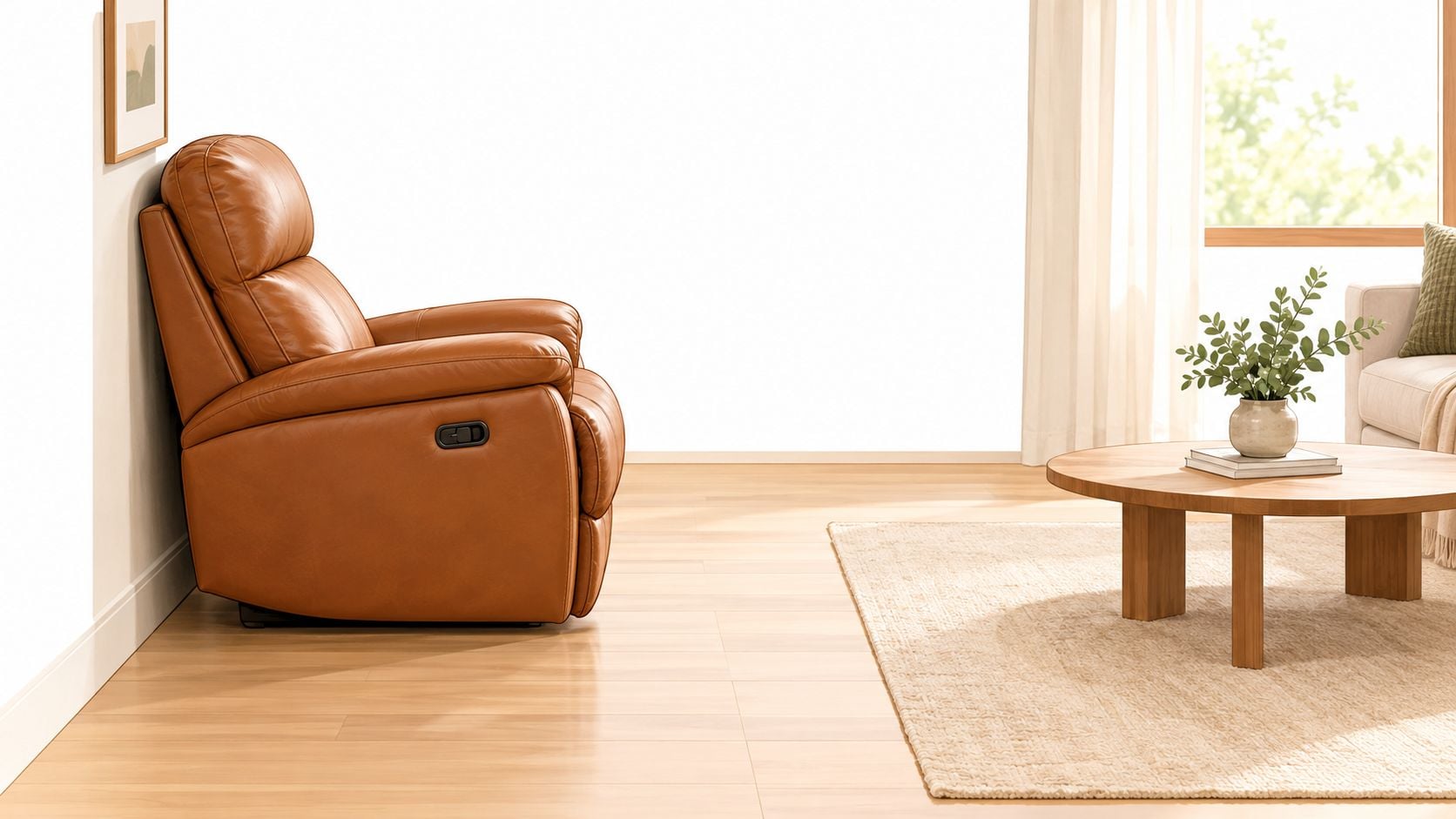
That's the central distinction behind a leather recliner wall hugger. The design reduces space behind the chair, yet it doesn't erase the space needed in front or at the sides. Guidance on making a small room feel larger through placement and scale helps frame the broader layout, but the recliner still needs a model specific test.
A Local, Long Term View
Tyner Furniture has served Southeast Michigan since 1957, and its South State St. showroom in Ann Arbor reflects that local legacy through patient, fit first guidance rather than pressure. Furniture shopping can feel overwhelming when dimensions, mechanisms, and leather names pile up. A calmer sequence helps. First, confirm the complete footprint. Next, test body fit and support. Then choose upholstery and custom details.
Renters face the same logic as homeowners, with added concern for doorways, wall paint, and future moves. Owners furnishing a forever home may weigh craftsmanship and cost per year more heavily. Both groups benefit from treating wall clearance as the opening question, not the final answer. A chair that preserves a walkway, supports a long evening of reading, and ages gracefully is the true space saver.
How the Wall Hugger Mechanism Saves Space
A conventional recliner gets its recline by sending the backrest toward the wall, so empty floor has to sit behind the frame before anyone sits down. A wall hugger changes the path of travel. As the back opens, a linked track slides the seat forward into the room and the footrest unfolds from below, a motion closer to a drawer gliding out than a chair tipping away.
The feel matters in a tight room. You sit down, pull the handle or press the button, and the chair grows toward the coffee table while the rear stays near the baseboard. The backrest still reclines, but its pivot is coordinated with seat travel, so the rear edge does not sweep a wide arc. A U.S. patent application published in 2008 describes the arrangement as allowing placement "very close" to the wall while the seat and back advance; the same record lists U.S. application 12/101,448, later patent US7722114B2, and an April 11, 2008 priority date in the published patent application record.
Wall hugger means reduced rear clearance. The chair still needs room ahead for the footrest, legs, and safe entry and exit.
Why Leather Isn't the Mechanism
Leather is the visible upholstery choice. The space saving hardware sits underneath, in the linkage, track geometry, and coordinated motion of seat, back, and leg rest. Two chairs in identical leather can behave differently against the same wall, which is why a footprint check starts with clearance and ends with the fully open shape, walk paths, and doorway approach. That difference shows up when a side table, radiator, or main walkway shares the same few feet.
The category also reflects a longer evolution toward integrated comfort. Early recliner development moved from a reclining wooden porch chair in 1928 toward upholstered indoor models, and later designs added a built in adjustable footrest to remove the need for a separate ottoman, as traced in the Henry Ford museum's recliner innovation timeline.
For a compact Southeast Michigan room, treat the mechanism as one part of a long term seat. Ask how the chair moves under real body weight, whether manual or power travel changes the open depth, how wide the seat is for the person using it, and whether a Stressless size or base option gives better support without crowding the room. A smooth linkage that keeps working year after year protects both floor space and cost per year.
Wall Hugger Versus Conventional Clearance
Manufacturer specifications commonly place wall hugger clearance at a small fraction of the rear space a conventional reclining chair requires. That difference explains the appeal for apartments, condos, bedrooms, and the narrower living rooms common in compact Southeast Michigan homes. Rear clearance is the first measurement in a complete footprint check, though, not the last.
Manual and power mechanisms can travel differently. Back thickness, padding beyond the frame, track geometry, and footrest travel all change the required gap. A category label, by itself, is not a measurement. Shoppers comparing different types of recliner mechanisms and motions should ask for the manufacturer's figures for the exact chair under consideration.
Wall Hugger and Conventional Recliner Clearance
| Consideration | Wall Hugger Recliner | Conventional Recliner |
|---|---|---|
| Rear clearance | Commonly about 3 to 6 inches | Commonly about 12 to 18 inches |
| Open footprint | Seat and footrest project forward as the back reclines | Back travels rearward while the footrest projects forward |
| Entry and exit | Needs side space and a clear approach in front | Needs the same approach space, plus more depth behind |
| Best fit rooms | Seating that must stay near a wall in a compact room | Rooms with generous depth behind the chair |
The forward dimension deserves equal weight: a chair placed close to the wall can still crowd a coffee table or close a walking lane once opened. The seat works like a drawer on a track, gliding into the room as the back reclines, which trades depth behind the chair for depth in front of it.
The smallest rear gap doesn't always create the smallest usable footprint in the room.
That trade off is useful information. Households with limited rear depth but adequate open floor ahead often gain the most. Households with a tight path in front may need a smaller scale chair, a different wall, or a revised furniture arrangement, regardless of the clearance claim. A chair that still fits the room, and the person sitting in it, years from now is what turns a small footprint into a sound long term seat.
Measure the Complete Recliner Footprint
Accurate measuring starts with three model specific dimensions: closed width and depth, fully reclined depth, and manufacturer specified rear clearance. Published guidance recommends adding tolerance for baseboards, carpet compression, and a padded back that may extend beyond the structural frame, a point covered in guidance on measuring wall hugger installation dimensions. Side clearance matters too, because arms, controls, and the natural motion of standing up all need room.
Painter's tape turns abstract numbers into a visible floor plan. Mark the rear position of the closed chair, the side boundaries, and the front edge at full recline. Then walk the route a household routinely uses, carrying a laundry basket or a mug, and notice whether the tape outline pinches the path.
A Printable Style Checklist in Plain Steps
- Closed footprint: Record width and depth, including the widest part of the arms.
- Rear gap: Add baseboard depth and cushion overhang to the stated clearance.
- Open depth: Mark the footrest position and leave space for feet to settle.
- Side approach: Check access to controls and room to stand without twisting.
- Nearby furniture: Confirm tables, lamps, and neighboring seats remain usable.
Careful measuring habits transfer across rooms. The same discipline used to measure kitchen cabinets correctly applies here: measure the actual fixed features, write figures down, and verify twice before ordering. Reference material on recliner dimensions and spatial planning gives shoppers a starting framework before a showroom visit.
Rugs deserve a separate check. A thick rug edge under the front of the base can tilt the chair, alter track balance, or catch during movement. Carpet compression can also reduce the apparent gap at the wall. The chair should sit level, with the linkage clear of cords, toys, and stored items.
In compact Southeast Michigan rooms, the decisive test is simple. Tape the outline, recline the dimensions on paper, and live with the outline for an evening. If the walkway fails on the floor plan, it won't improve after delivery.
Choosing Leather for Everyday Comfort
A leather sample in the hand tells you how a chair feels on day one. It tells you almost nothing about year five. The word leather covers several constructions with different wear patterns, and the differences surface slowly: top grain leather is commonly estimated at 10 to 15 plus years, while lower cost bonded or faux leather may crack, peel, or delaminate within roughly 3 to 6 years under daily use, according to a comparison of leather and alternative furniture materials. Spread across a decade of evenings, the construction beneath the surface matters more than any first impression of softness.
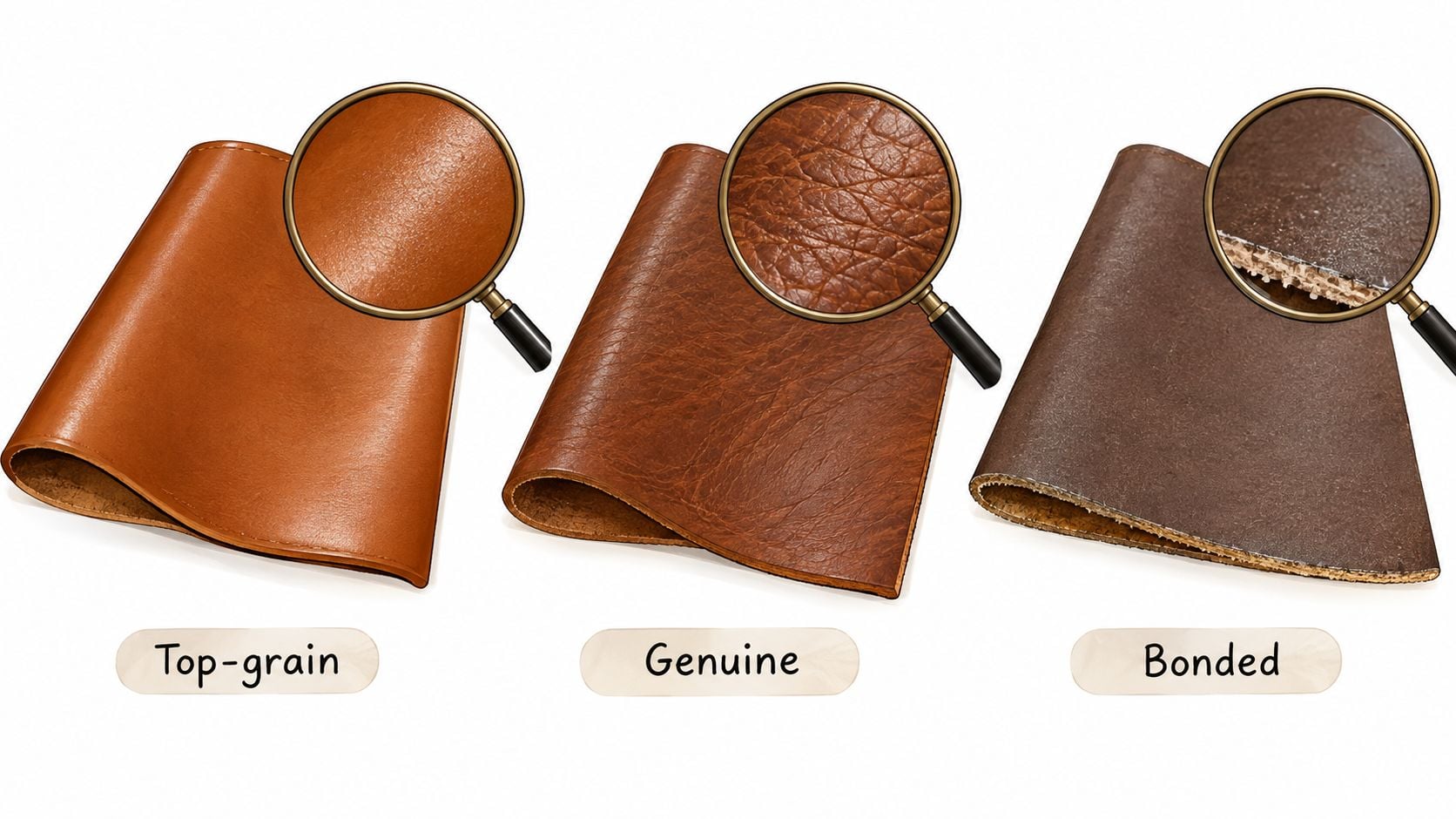
Finish shapes daily life just as much. Aniline and more natural finishes show variation and develop patina, which some households prize as the chair ages alongside them. Protected or corrected finishes present a more uniform color and usually suit easier day to day maintenance. The most expensive option isn't automatically the best family choice: a household that wants the buttery feel of top grain leather and welcomes character may accept more care, while a household with children and pets may prefer finish consistency and simpler cleaning.
Questions to Ask Before Ordering
- Exact specification: Request the leather type, finish, and where each material appears on the chair.
- Abrasion testing: Ask for the result and method, since Martindale cycles under ISO 12947-2 and Wyzenbeek double rubs under ASTM D4157 aren't directly convertible, as explained in upholstery abrasion testing guidance.
- Use range: That same published guidance places approximately 15,000 to 25,000 Martindale cycles in the general domestic range and about 25,000 to 30,000 cycles in the heavy domestic range for recliners and motion furniture.
- Care limits: Confirm approved cleaners, conditioning expectations, and warranty exclusions in writing.
Detailed background on top grain leather compared with bonded leather helps separate surface feel from long term construction. Practical routines for those who care for your leather sofa reinforce a basic rule for recliners: remove spills promptly and use only manufacturer approved products.
Placement affects aging. Direct sunlight, heating vents, body oils, denim transfer, pet claws, and repeated flexing at the seat edge can wear the finish even when the mechanism remains sound. That risk sharpens in a compact Southeast Michigan room, where a wall hugger often ends up near a window or vent precisely because open wall space is scarce, so the inches you saved in floor area can cost the hide in sun exposure. Softness alone shouldn't settle the purchase, since long term comfort comes from seat geometry and back contour rather than upholstery plushness. Cost per year, comfort per evening, and care per week all belong in the same calculation.
Match Size and Support to Stressless Options
A compact footprint doesn't guarantee a comfortable seat. A chair can fit the wall and still miss the body, with a seat that's too deep, arms that crowd the shoulders, or a back that pushes the head forward. Fit should be checked through seat width, seat height, seat depth, back height, arm position, and the ease of approaching and leaving the chair.
Ergonomic guidance identifies a supported recline angle of roughly 110 to 130 degrees as the range associated with lower lumbar disc pressure and back muscle activity, with a contoured back preserving lumbar lordosis, a point noted in the upholstery and ergonomic guidance cited earlier. That range is a reference point, not a prescription. Bodies differ, and a brief showroom pose can't reveal pressure points that emerge during a film or a long chapter of reading.
Why Custom Sizing Deserves a Sit Test
Tyner's Stressless offering includes custom sizing in Small, Medium, and Large, intended to provide a personalized active release for the spine. Size names alone don't settle the choice. Shoppers reviewing Stressless recliner dimensions and sizing considerations should still sit in more than one size, feet supported, and move slowly from upright conversation posture into a rested recline.
- Seat depth: The back should meet the lumbar curve without pressure behind the knees.
- Foot support: Legs should rest without dangling or forced knee bend.
- Arm height: Shoulders should stay relaxed rather than lifted or pulled inward.
- Motion control: Manual effort or power controls should feel manageable at every stage.
- Return to upright: Standing up should feel stable, without pulling on the arms.
Power operation can offer fine positioning, while manual motion can feel direct and simple. Neither is automatically more ergonomic. The better choice is the one that holds the body comfortably over time, operates without strain, and fits the room's approach path. Warranty details, upholstery durability, and mechanism serviceability belong in the same conversation, because support that fades early isn't a sound investment.
Customize the Chair for Your Home
In stock is just the beginning at Tyner. Made to order programs allow households to select finishes, fabrics, top grain leathers, and configurations that suit a specific room rather than forcing the room to accept a single showroom sample. That customization edge includes bespoke dining through Canadel and ergonomic seating through Stressless, alongside recliners, sofas, and sectionals in coordinated upholstery.
A leather recliner wall hugger shouldn't be chosen as an isolated object. Its color and sheen sit next to wood tones, wall paint, rug texture, window light, and neighboring furniture. A deep leather can ground pale walls, while a lighter tone can keep a small room visually open. Texture matters too. Smooth leather beside a woven rug and matte wood creates contrast without adding visual clutter.
Craftsmanship Across the Room
Tyner's broader selection covers living rooms, bedrooms, dining spaces, the Home Office, and Outdoor Spaces. Its Amish hand crafted solid wood furniture illustrates the same longevity standard in another material, with solid cherry, oak, and maple, time honored joinery, and custom finishes. The weight of solid cherry wood in a side table or dining piece communicates material integrity in a way a photograph can't.
That comparison is relevant because a recliner often anchors a room filled with other long lived pieces. Coordinating a chair with repairable, solidly built furniture supports a coherent interior design plan and a more sustainable approach to replacement. Households don't need matching sets. They need compatible scale, honest materials, and finishes that can live together as the room evolves.
Custom ordering also creates time to recheck the essentials before production. Leather selection, size, mechanism, and footprint should be confirmed together, since changing one can affect the others. A slightly different model or size may preserve the walkway and improve support at the same time. That is the practical value of personalization, measured in daily use rather than novelty.
Plan Financing Delivery and Final Selection
A well chosen recliner is an heirloom minded purchase for many households, even when the style is contemporary. Value should be judged over service life rather than ticket price alone. Research on cascading use of wood furniture notes that modularity can compromise strength and contribute to a shorter lifespan, while durable wood products have been known to exceed the modeled timeframe, a finding discussed in research on furniture lifespan and cascading wood use. The principle transfers to seating. Frame integrity, hardware, upholstery construction, and repairability shape cost per year.
Tyner's Special Financing, subject to credit approval, and its Low Price Promise can make a higher quality recliner more manageable without turning the decision into a monthly payment contest. Terms still require close reading. The Consumer Financial Protection Bureau distinguishes true zero interest from deferred interest, where interest accrues from the purchase date and can be added retroactively if the promotional balance isn't paid by the deadline, as explained in CFPB guidance on special promotional financing. A related CFPB document reports that the non promotional rate on these offers is generally around 25%.
Deferred interest works like a clock running in the background. Pay the balance before the deadline and the accrued interest disappears. Miss it by a day, and the full amount posts to the account.
Final Details Before the Order Is Placed
- Payoff schedule: Confirm the promotional type, deadline, and amount required each month to finish on time.
- Delivery scope: Ask about white glove timing, room of choice placement, assembly, and packaging removal.
- Access route: Measure doorways, halls, and turns before the delivery date.
- Service path: Clarify damage reporting, mechanism service, and warranty contacts.
- Final sit test: Recheck size, recline travel, and leather feel in person where possible.
Delivery planning protects the earlier measurement work. A chair that fits the wall but can't turn through a hallway creates a preventable problem, which is why the access route belongs in the footprint check alongside wall clearance. Households should also keep objects away from the linkage, avoid sitting on a raised footrest, and confirm the chair sits level after placement so track forces stay balanced.
The strongest final selection rests on complete room fit, tested support, transparent financing, and construction that justifies years of use. With a legacy dating to 1957, Tyner invites Southeast Michigan shoppers to visit the Ann Arbor showroom on South State St. for a sit test, or to browse online Quick Specs when preparing a special order from home.
Visit Tyner Furniture to explore leather wall recliners, Stressless custom sizing, and made to order upholstery with guidance grounded in fit and longevity. Bring room measurements to the Ann Arbor South State St. showroom for a sit test, or review Quick Specs online before placing a special order.