Best Wood Stain Colors for Furniture in 2026


Standing in a showroom with a few stain swatches in hand can feel deceptively simple. One sample looks warm and familiar, another looks deep and dramatic, and a third seems to change color every time the light shifts across it. That confusion is normal, because the best wood stain colors are never chosen from a chart alone, they're chosen for the wood species, the room, and the finish process that will carry the color home.
In Ann Arbor and across Southeast Michigan, homeowners often come in wanting one answer and leave with a better question, namely, what will this stain look like on their wood under their lighting? That's the actual finish problem, and it's why wood selection, stain choice, and topcoat behavior should be treated as one system. Even a beautiful stain can disappoint if the wood absorbs it unevenly or the room light changes the appearance too much.
The best approach is practical, not trendy. The right finish is the one that looks intentional on the actual piece, holds up over time, and supports the kind of craftsmanship that belongs in an heirloom home. For readers comparing dining tables, bedroom case pieces, or custom built-ins, the conversation needs to move from “Which color is best?” to “Which finish will age well, feel right in the space, and protect the investment?”
Why the Best Wood Stain Color Depends on Your Wood
A homeowner can hold the same stain swatch against two different boards and get two very different answers. That's because stain absorption varies by species, and the final look depends on how the wood fibers take in the finish, how the surface was sanded, and how the room light falls across the piece. Sherwin-Williams notes that pre-stain conditioner is especially useful on softwoods such as pine because it helps even out penetration and reduce blotching, which is a good reminder that the wood itself is part of the color decision, not just the can of stain. Sherwin-Williams wood species guidance
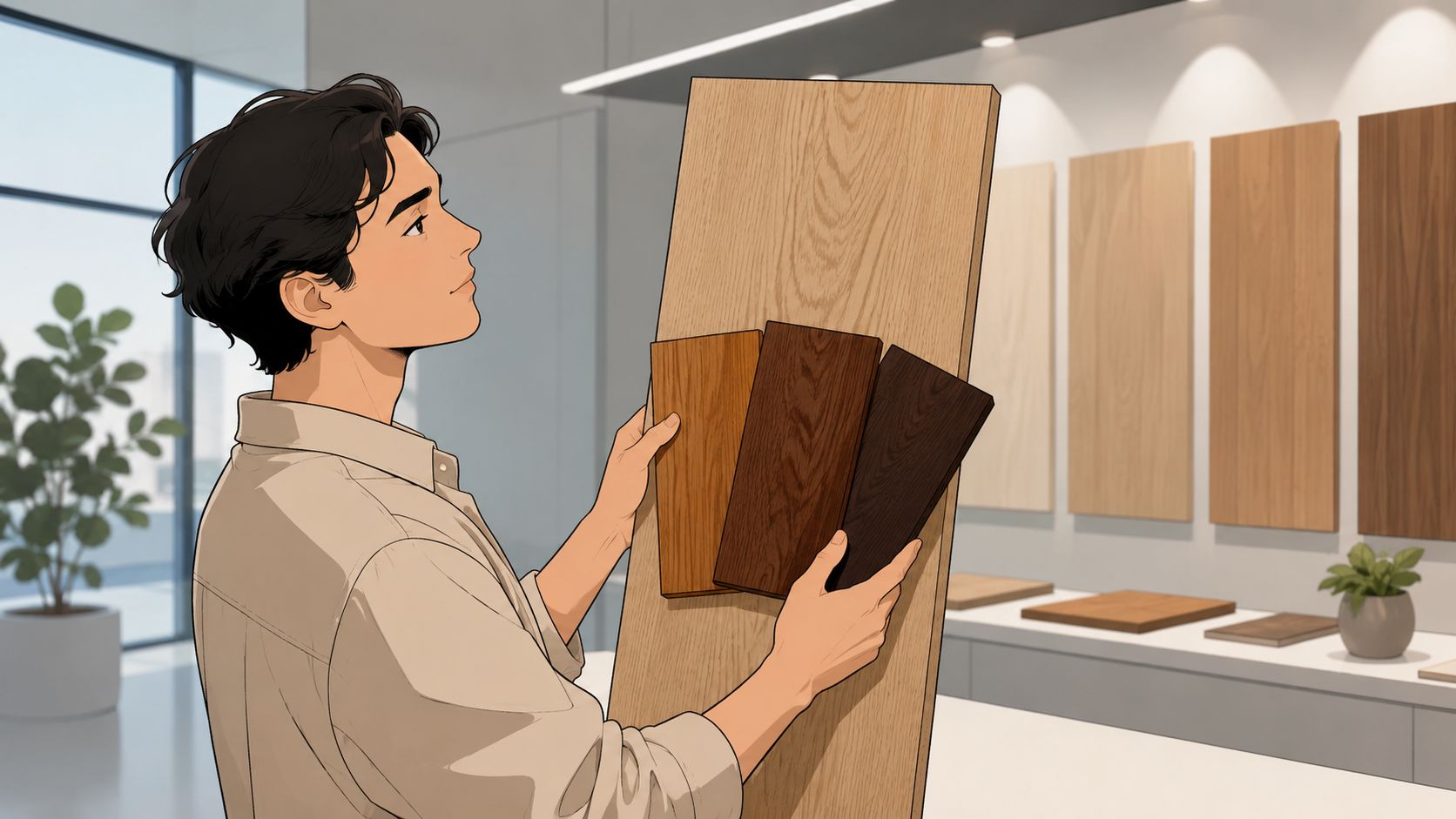
The swatch problem in plain terms
A stain name doesn't describe a universal outcome. The same finish can read one way on pine, another on oak, and something cleaner or lighter on maple, because each species absorbs color differently and has its own natural undertone. That's why a stain that looks perfect on a display sample can look too heavy, too red, or too washed out once it meets the actual furniture piece.
Practical rule: test on the exact wood, not a substitute board. That's the only reliable way to judge the final color before the piece is fully finished.
For readers sorting through a cabinet decision, a useful companion is the stain cabinets decision guide, because it reinforces the same idea, the finish choice has to work with the wood, not just against it. The same logic applies whether the project is a dining table, a dresser, or a built-in bookcase.
Why color becomes a process
The final result is often built in layers, not picked in one step. The DIY Playbook's finish guidance reflects that reality by recommending an overnight dry period, followed by a light sanding with 220-grit paper before a second coat, which shows how much the appearance can change as the finish develops. That's why the most useful mindset is not swatch collecting, it's finish planning.
For readers comparing wood types before choosing a finish, the guide to choosing the right hardwood for longevity and style helps frame the decision around durability, tone, and long-term use. A beautiful finish starts with knowing what the wood will do before the stain ever touches it.
How Wood Species Shape Stain Color and Character
For solid hardwood furniture, the label on the stain matters less than the wood's pore structure, figure, and undertone, because stain penetrates into the fibers instead of sitting on top like an opaque film. National Hardwood explains that on the same stain, oak's open grain typically reads darker and more textured, while maple's dense, closed grain often looks lighter and more uniform. That difference is why the same stain can feel bold on one piece and restrained on another. National Hardwood stain guide
Reading the wood before reading the color
Oak usually gives the finish more visual depth because the grain opens up and accepts more tone. Maple tends to keep the surface cleaner and more even, which can be excellent when the goal is a smooth, contemporary look. Cherry sits in a different lane, with a natural warmth that makes the wood feel rich even before stain is added, and that warmth tends to reward finishes that support rather than fight it.
Cherry also has a physical presence that homeowners notice immediately in person. The weight of solid cherry wood and the soft, hand-finished feel of a well-rubbed surface tell a different story from a thin veneer panel or a mass-produced board. That is one reason handcrafted furniture often feels calmer and more resolved in a room.
What that means for real rooms
A deep stain on open-grain oak can look grounded and architectural. The same shade on maple may appear more subtle, which can be a strength when the room already has a lot of visual activity. Cherry can pull a finish toward warmth, while a darker walnut-toned piece can hold its own in a dining room or study without feeling heavy.
Design insight: species first, stain second. That order prevents a lot of disappointment, especially when a buyer wants a finish that feels tailored instead of generic.
For visual inspiration that treats wood as part of the design language, the article on natural wood frames at Printano shows how grain and tone can shape the final look as much as color itself. A similar principle applies to furniture. The wood is doing part of the styling work before the stain is even chosen.
For readers exploring species that pair well with custom finish work, the North American hardwoods overview is a useful reference point. It helps frame why one finish can feel formal on one species and relaxed on another.
Trending and Timeless Wood Stain Palettes for 2026
The current market conversation is split between richer dark tones and modern softened neutrals. One 2025 trend report on wood stain interest found dark wood stain peaking at a normalized score of 85 in August 2025, while light wood stain was lower at 37 to 47, which points to much stronger interest in deeper finishes such as espresso, ebony, and other dark browns. A 2026 deck stain guide also named warm cedar, golden honey, rich redwood, driftwood gray, and chocolate brown among the most popular shades, with cedar and warm wood tones described as best-sellers and driftwood gray identified as the fastest-growing modern choice. 2025 wood stain trend report
That split matters for furniture buyers. The strongest palette isn't just one dramatic look, it's a mix of warm browns that still feel classic and gray-brown neutrals that fit more contemporary interiors. For dining sets, bedroom pieces, and home office furniture, that means there's room to choose a finish that feels current without locking the room into a short-lived style.
Trending vs Timeless Wood Stain Colors
| Palette Type | Popular Shades | Best For | Longevity |
|---|---|---|---|
| Trending | Espresso, ebony, dark brown, driftwood gray | Modern dining rooms, clean-lined bedrooms, contemporary offices | Strong now, especially when the room already has contrast |
| Timeless | Warm cedar, golden honey, rich redwood, chocolate brown | Traditional homes, heirloom tables, relaxed family spaces | Steady appeal because the tones stay close to natural wood character |
| Transitional | Medium walnut, weathered brown, gray-brown neutrals | Open-plan homes, mixed finishes, flexible interiors | Good balance when the furniture needs to work across changing decor |
Warm cedar and golden honey keep a room approachable. Chocolate brown gives furniture more visual weight, which can be useful when the piece needs to anchor the space. Driftwood gray reads more contemporary, but it still works best when the wood grain remains visible, so the furniture keeps its natural character.
For readers who want a broader style lens, the home style trends guide helps connect finish color to room direction without making the choice feel trendy for trend's sake. The strongest long-term pieces usually blend a steady wood tone with a finish that still feels personal.
Lighting, Undertones, and the Room Test
Sherwin-Williams says stain colors should be matched to the lighting in the home, because lighting changes how the color appears, and older wood darkens over time, so the same stain can look different on younger and older pieces of the same species. That's a simple reason the “best” color always depends on context. Sherwin-Williams stain color guidance
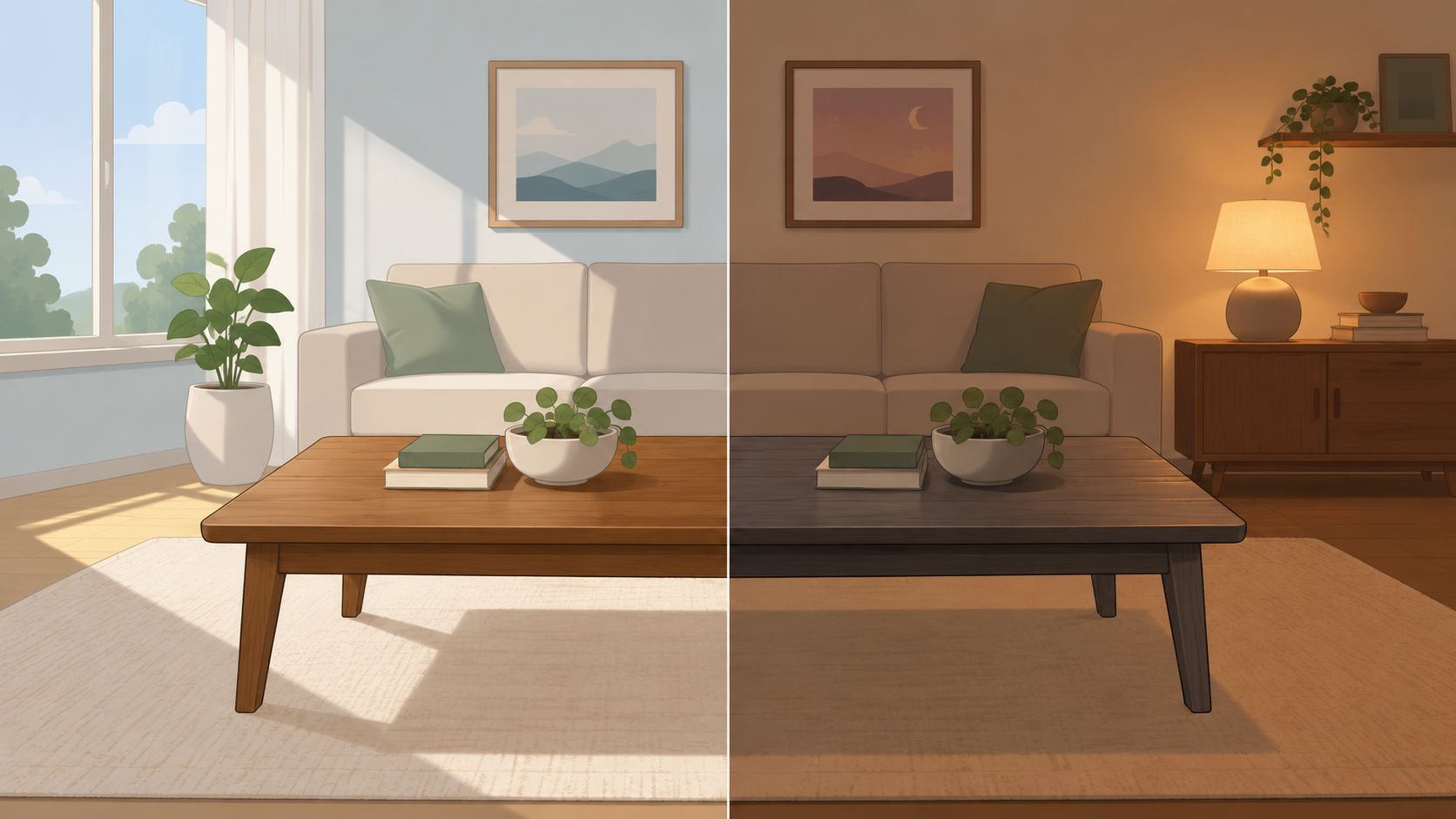
Why the room changes the stain
Natural daylight, especially in a bright dining room or south-facing living room, can make warm stains feel lighter and cooler stains feel clearer. Evening light often does the opposite, softening the finish and giving the wood a richer, deeper presence. The same table can look calm in daylight and more formal after sunset.
That shift matters in everyday spaces. A bedroom with warm ambient bulbs may make a brown stain feel cozier, while a home office with cooler light can make the same finish feel more structured. Even the age of the wood matters, because older wood naturally darkens, which can make a stain appear heavier than it did on a newer sample board.
A simple way to judge the color
For local shoppers in Ann Arbor, the safest method is to view samples where the furniture will live, not just under showroom lighting. A dining set can look ideal in the store and still feel too red, too gray, or too dark once it lands beside the wall color, rug, and windows at home.
Room-test rule: check the sample morning, afternoon, and evening. If the finish still feels balanced at all three times, it's usually a strong candidate.
For readers thinking about a living room update, the best light for your living room guide pairs naturally with stain selection, because lighting and finish should be chosen together. A good stain doesn't just look nice in one moment, it stays comfortable as the light changes.
Testing and Sampling Your Stain Like a Pro
The most reliable finish work starts with preparation. Sherwin-Williams explains that pre-stain conditioner is especially helpful on softwoods such as pine because it evens out penetration and helps reduce blotching, which is exactly why a quick wipe-on test rarely tells the whole story. A clean sample board, properly sanded and conditioned, gives a far better preview than a bare scrap thrown together at the last minute. Sherwin-Williams wood species guidance
A practical test sequence
- Sand consistently. Use the same sanding routine on the sample that the final piece will receive, because surface prep changes how the stain reads.
- Condition softwoods. Pine especially benefits from pre-stain conditioner, since it helps the stain absorb more evenly.
- Apply the stain in the same way. Wipe, brush, or pad application can all shift the result, so the sample should match the planned process.
- Let it dry fully. Color often looks different after the stain dries than it does when it's first applied.
- Add the topcoat before deciding. The final color only really shows itself after finish application.
The DIY Playbook's finish guidance also recommends letting stain dry overnight, then lightly sanding with 220-grit before a second coat, which reinforces the idea that the last color is often built in stages. That layering can deepen a finish, smooth the surface, and change the final feel of the piece.
How to make the test board useful
A sample board should be made from the same species and, when possible, from a piece with similar grain and cut. A flat, smooth board tells part of the story, but the exact furniture part, such as a table leaf, a drawer front, or a leg, may respond differently. That is why a serious test should mimic the object as closely as possible.
Pro-Tips
- Match the sanding grit: finish on the sample the same way the furniture will be finished.
- Keep notes on drying time: a stain can look warmer or cooler after it fully dries.
- View the sample near the final room: a board on a workbench is not the same as a board beside a window.
- Save the winning sample: the color reference becomes useful if more pieces are ordered later.
For anyone comparing stain coordination on custom pieces, how to match wood stains is a practical companion. It helps narrow the field before a full piece is committed, which saves a lot of second-guessing later.
The Value of Custom Finishes on Heirloom Furniture
Custom finish work changes the furniture conversation from “What's available?” to “What belongs in this home for the long run?” That matters because solid wood furniture with thoughtful joinery and a well-chosen finish tends to hold its place in a room much longer than veneer pieces built for short replacement cycles. For homeowners who think in terms of cost-per-year, the stronger investment is usually the piece that can be lived with, repaired, and enjoyed over time.
Tyner Furniture's in-stock selection is only the starting point. The advantage comes from made-to-order programs that let buyers choose wood species, stain color, and configuration details for dining rooms, bedrooms, and home offices. Canadel's custom dining program also supports a wide range of finish and style combinations, which is useful when a room needs a precise match instead of a near miss. Stressless seating adds another layer of customization through sizing and comfort choices, which shows how finish selection fits into a broader design plan. Tyner Furniture itself offers custom wood finish guidance for special orders.
Why craftsmanship changes the finish decision
Amish hand-crafted pieces built with dovetailing and mortise-and-tenon joinery give the finish a better foundation than mass-produced alternatives. When the material integrity is solid, the stain can do its job without compensating for weak construction or thin veneers. That matters in dining furniture and bedroom case goods, where the piece is expected to hold up through years of use, moving, and cleaning.
For readers who want a practical exterior-to-interior finish perspective, the wood staining service overview is a helpful reminder that good staining is always about surface preparation, even application, and the right finish system. The same logic carries over to furniture, only the stakes are more personal because the piece lives in the heart of the home.
What customization really buys
Custom stain work lets the homeowner coordinate the finish with flooring, wall color, existing cabinets, and lighting. It also helps solve the common problem of loving a style but needing it in a slightly different tone, sheen, or level of distressing. That flexibility is where bespoke furniture earns its keep, especially for families furnishing a forever home in Southeast Michigan.
Customization wins when the room needs one of these outcomes:
- Exact tone matching, when a table or dresser needs to sit comfortably beside other wood pieces.
- Controlled contrast, when the furniture should stand out without feeling disconnected.
- Long-term usability, when the buyer wants one piece to outlast multiple decor changes.
Your Next Steps to the Perfect Wood Finish
The right finish choice comes from four decisions, not one. First, identify the wood species, because open grain, closed grain, figure, and undertone all shape the result. Second, consider the room light, since daylight and evening light can make the same stain look very different. Third, test samples after full drying and topcoat application. Fourth, decide whether a custom finish will give the piece the longevity and fit that a one-size option can't provide.
For shoppers in Ann Arbor and Southeast Michigan, that process becomes easier when the furniture can be seen, touched, and compared in person. The South State St. showroom gives local buyers a place to judge the color in real light, feel the weight of solid cherry wood, and compare handcrafted construction with mass-produced alternatives. Tyner's 1957 founding also matters here, because long service usually means the team has seen enough homes, wood types, and lighting conditions to give grounded advice.
A simple checklist helps:
- Choose the wood first, then narrow stain families.
- Look at the room light, not just a swatch.
- Test before committing, especially on solid wood.
- Ask about custom finishes, because in-stock is just the beginning.
- Think long term, not just about the first impression.
Visit the Ann Arbor showroom for a sit test and hands-on guidance, or browse the online Quick Specs for special orders if the next step needs to happen from home.
A CTA for Tyner Furniture. Visit the Ann Arbor showroom on South State St. for a sit test, or browse the online Quick Specs for special orders, special financing options, and the Low Price Promise that helps make heirloom-quality furniture feel accessible.