Faux Fur Pillow Guide: Choosing, Styling, and Caring

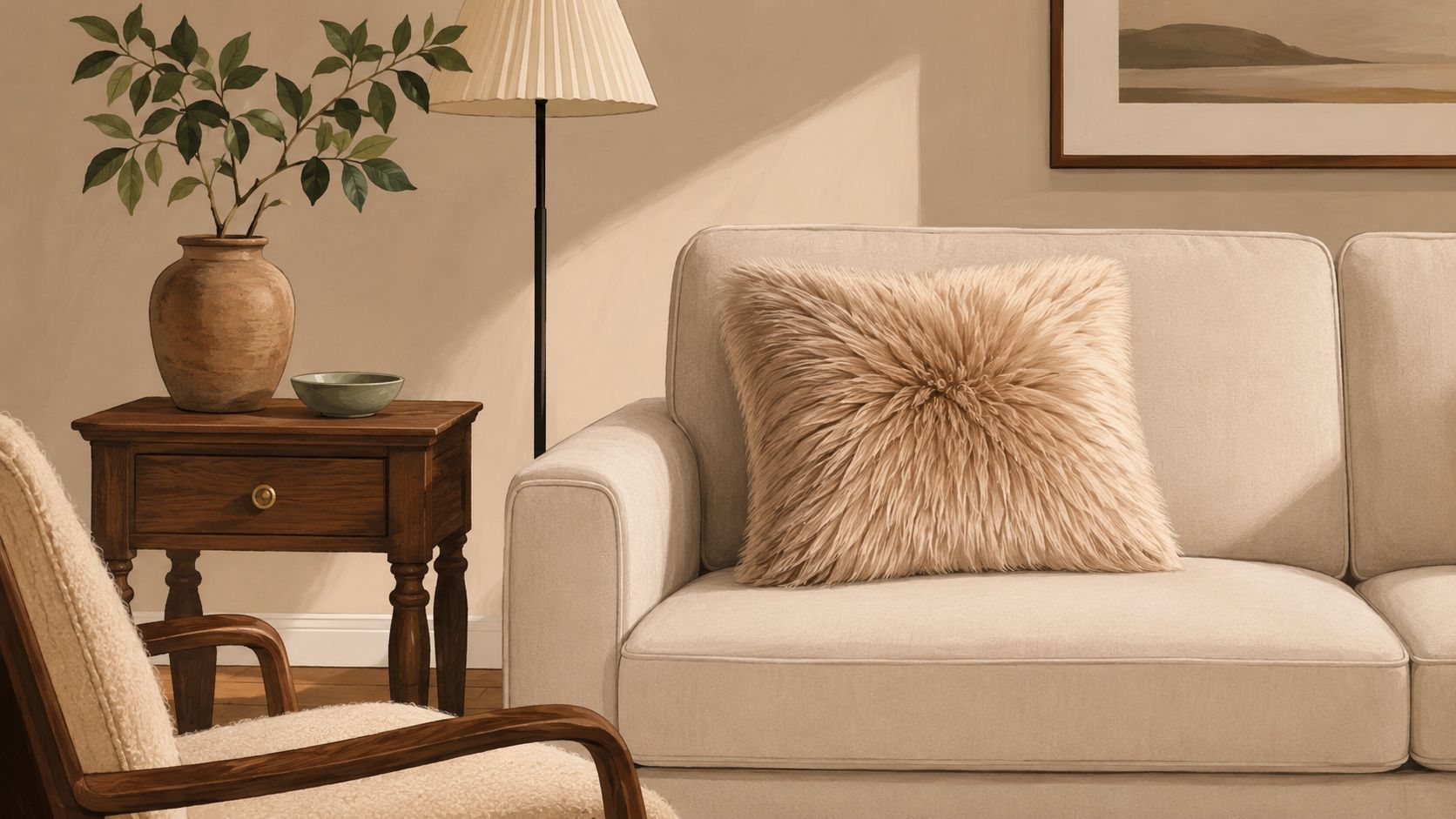
The right faux fur pillow solves a real room problem. A sofa can look complete and still feel unfinished, especially when the wood table is handsome, the lamp gives off a warm pool of light, and the seating needs one soft layer to pull everything together. In a room like that, one well-chosen pillow does more than decorate. It adds weight, texture, and a sense that the space was finished with intention.
That is why this category deserves a longer look than most shoppers give it. The best version is not a novelty accent that disappears after one season. It is a long-term textile choice that should hold its shape, feel good to the touch, and work with the rest of the room instead of fighting it. For shoppers in Ann Arbor and across Southeast Michigan, that means thinking about fiber, fill, size, and care before thinking about color alone.
For a good visual example of how a plush accent changes a seating group, the room styling at find luxury home staging advice is a useful reference point. It shows the same principle that drives strong interiors everywhere, a single soft layer can make solid furniture feel more welcoming without looking fussy. Tyner's own home decor tips sit in that same practical lane, where the goal is to make a room feel finished and livable, not staged for one afternoon.
Why a Faux Fur Pillow Earns Its Place in the Room
A good living room usually has at least one thing that grounds it. In many homes, that anchor is a wood table, a leather chair, or a sofa with enough visual heft to hold the space together. A faux fur pillow earns its place because it softens that structure without making the room look slippery or overdecorated.
A family room in a house near Ann Arbor often has mixed materials already, a wood coffee table, upholstered seating, a reading lamp, maybe a wool throw folded nearby. A faux fur pillow bridges those pieces. It catches light differently than a flat weave, and that slight movement matters because it gives the eye a rest point. The result feels deliberate, not accidental.
Practical rule: one great pillow should make the room look more finished, not more crowded.
That mindset is the right way to shop this category. A pillow like this should be judged on texture, loft, durability, and how it ages with daily use, not just on whether it looks soft in a product photo. That is the same long-view approach homeowners use when choosing upholstered seating or solid wood furniture. The pillow should support the room the way a well-made side chair supports a dining set, reliably.
For shoppers who like a deeper design framework, Tyner's guide to the perfect color palette is worth a look because the pillow's job is tied to the rest of the palette, not separate from it. A pale cream pillow against dark wood reads one way, while the same pillow beside a warm neutral sectional reads another. That's the difference between a good accent and a throwaway purchase.
The larger point is simple. A faux fur pillow belongs in the room when it improves the whole composition, not just the sofa. That is how an accent becomes part of the furniture plan instead of a seasonal add-on.
What a Faux Fur Pillow Is Actually Made Of
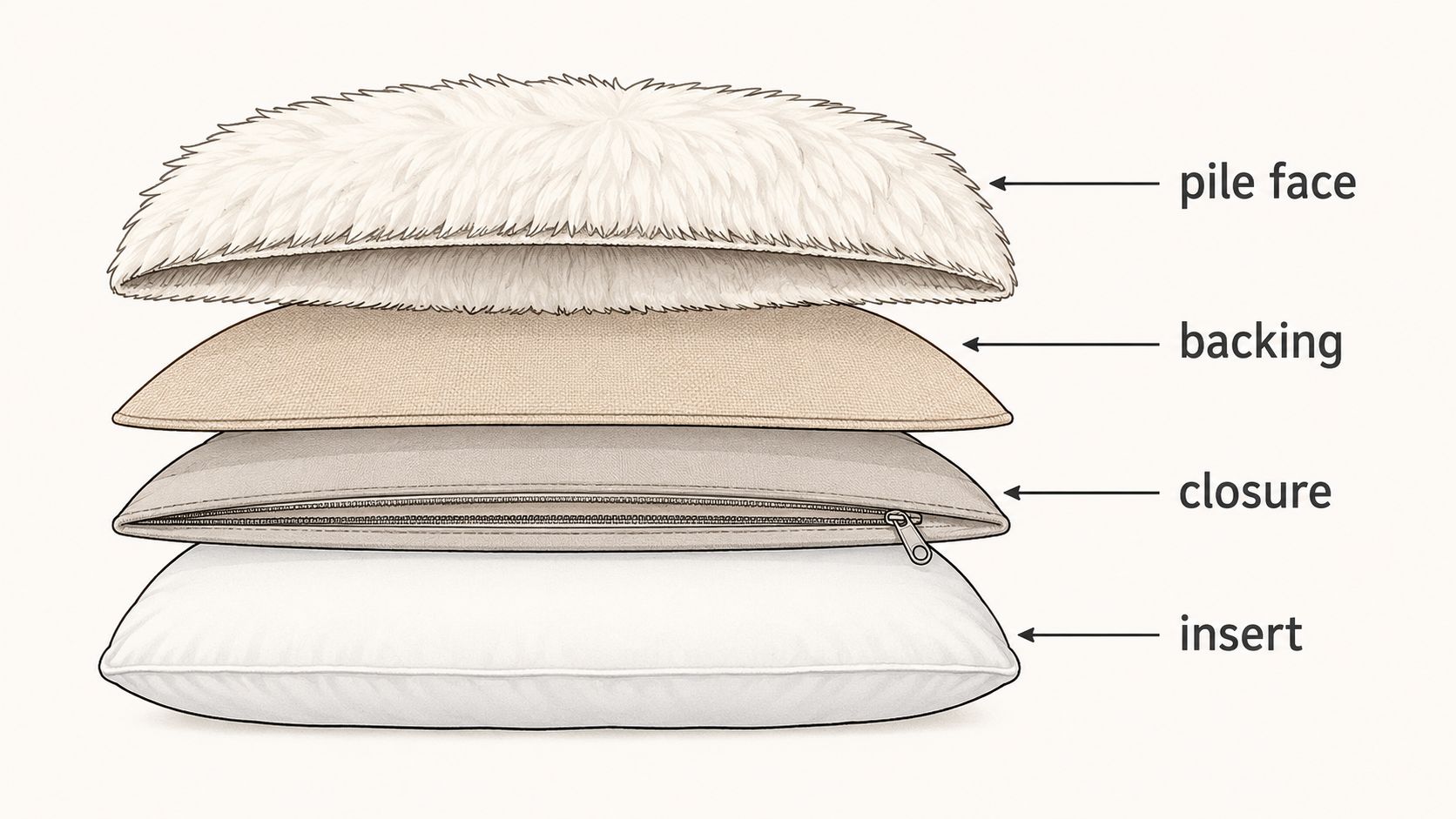
A faux fur pillow is a layered textile product, not a single fabric. The part people see and touch is the pile face, but the backing, closure, and insert all affect how the pillow feels and how long it lasts. If those layers are weak, the pillow will flatten, shed, or look tired far sooner than it should.
Start with the face fabric
Most quality versions use a 100% polyester faux-fur shell, and that choice makes sense. Polyester is abrasion-resistant, quick-drying, and less likely to behave badly after spot cleaning than many natural-pile fabrics. It also gives the pillow that plush, fur-like surface without the ethical and maintenance issues of real fur.
Then check the insert
The insert matters just as much as the shell. A polyester down-alternative or polyester fiberfill insert gives loft without feather quills, which is a better fit for many households. In product listings, that difference is not a small detail. It tells the buyer whether the pillow will stay springy or collapse into a flat square after a few weeks on the sofa. Products can also be certified to OEKO-TEX STANDARD 100, which signals the finished textile has been tested for a defined set of harmful substances (Luxome faux fur pillow details).
Read the details like an upholstery shopper
A pillow listing should be read the same way a serious shopper reads upholstery specs. One useful internal reference is Tyner's upholstery materials guide, because the same habit applies here, look at face fiber, backing integrity, fill, and cleaning language. If a listing is vague about those layers, the shopper is buying appearance, not construction.
The best pillow listings are specific about the shell, the insert, and the care routine. Vague product copy usually means the buyer is left guessing later.
That is the distinction. A faux fur pillow is not just about touch. It is about how the layers work together to create comfort that lasts.
Faux Fur Compared With Real Fur and Other Pillow Textiles
A faux fur pillow earns its place because it gives a room softness with fewer complications than real fur. It keeps the lush look people want, while avoiding the upkeep, sourcing concerns, and sensitivity issues that come with a natural-hide textile. For a house that needs to feel lived-in, not precious, faux fur is the cleaner choice.
Compared with real fur, faux fur is simpler to clean and far easier to defend on ethical grounds. It also behaves better in everyday family rooms because the material is clear from the start, and there is no guessing about the outer surface. Real fur can still make sense in a very specific decorative setting, but most living rooms need textiles that can take regular use without turning into a maintenance project. Faux fur does that job with less stress and fewer second thoughts.
Against velvet, faux fur brings more surface movement and a softer tactile read. Velvet can look polished, especially in more formal rooms, but it tends to feel flatter and more controlled. Faux fur works better when the room needs warmth, texture, and a relaxed layered feel. Against linen, the difference is even sharper. Linen is crisp and breathable, but it does not offer the same plush presence. Faux fur is the better call when softness matters more than restraint.
Where faux fur loses ground
Faux fur is not the right answer for every room. A down-and-feather pillow keeps a more traditional loft over time, and plenty of buyers still prefer that sink-in comfort. Faux fur also asks for more care than a tightly woven cotton or linen cover. That is the trade-off. The material looks richer, but it needs more attention if you want it to keep that look.
For buyers comparing outer textiles for a sofa or chair, Tyner's sofa upholstery fabric guide is a useful reminder that the surrounding furniture matters just as much as the pillow. A tactile pillow looks strongest when the main seating surface can support it. A nubby chair fabric, a leather sofa, or a wood-framed recliner all change how faux fur reads in the room.
The right companion material makes the pillow look intentional. The wrong one makes it feel pasted on.
Rule of thumb: choose faux fur when the room needs softness, visual warmth, and a clear accent. Choose a flatter weave when durability is the only goal.
That is the honest way to judge it. Faux fur is not universally better, and it does not need to be. It is the better choice when the room benefits from texture, comfort, and a little visual depth. If you are trying to sort through insert options and want a ready-made route, find minky pillow kits for a plush build that fits the same comfort-first goal.
Choosing the Right Size, Shape, and Color
A faux fur pillow only earns its keep when the scale fits the room. Too small, and it disappears into the upholstery. Too large, and it swallows the seat. On a standard sofa, an 18-inch square usually gives enough presence without taking over. On a bed, 22- to 24-inch squares carry more visual weight and look deliberate in a layered setup. Oversized lumbar shapes and floor cushions belong where people lounge, because support matters more there than perfect symmetry.
Match the shape to the job
A square pillow looks orderly on a sofa or bed. A round pillow softens a reading chair and breaks up hard angles. A thicker, larger format belongs on the floor or in a corner meant for stretching out. Market examples range from compact 18" x 18 decorative pillows to larger 24" x 24", 25" round x 3" thick, and oversized 30" x 48" pieces, with weights that can run from about 2.2 lb for a 25-inch floor pillow to 6.2 lb for an extra-large model (Target faux fur floor pillow details). Those dimensions affect more than appearance. They change how the pillow holds its shape and how much visual volume it adds to the room.
If you want a ready-made insert or kit for a softer build, find minky pillow kits and treat the fill as part of the design, not an afterthought.
Let color do layered work
Color shifts in faux fur because the pile catches light. A cream pillow looks brighter beside a window and warmer in lower light. That is why one room should not be built around a single soft tone. Use one grounding neutral, one mid-tone, and one stronger accent or texture. That mix usually looks more finished than a room crowded with matching soft surfaces.
For a clear way to balance those tones, Tyner's palette guide makes the right point. The pillow should support the room's main colors rather than compete with them. A walnut chair, a light sofa, and a pale rug will each make the same pillow read differently, so judge the color in the room it will live in.
Don't ignore closure and fill weight
Hidden zippers and removable inserts are worth insisting on because they make restuffing and long-term care easier. Fill weight matters just as much. A heavier insert helps the pillow keep its edges and resist flattening, especially on a sofa that gets daily use. That is what keeps a decorative piece looking composed long after the first flush of newness fades.
Styling Faux Fur Pillows With Heirloom Wood and Upholstery
A faux fur pillow looks its best when it plays against something solid. That is why it pairs so well with hand-crafted wood furniture, leather upholstery, and the kind of seating that has real presence in a room. The softness of the pile makes the grain of cherry, oak, or maple feel even more grounded, and the contrast feels especially good in a Midwest home where a room needs warmth as much as polish.
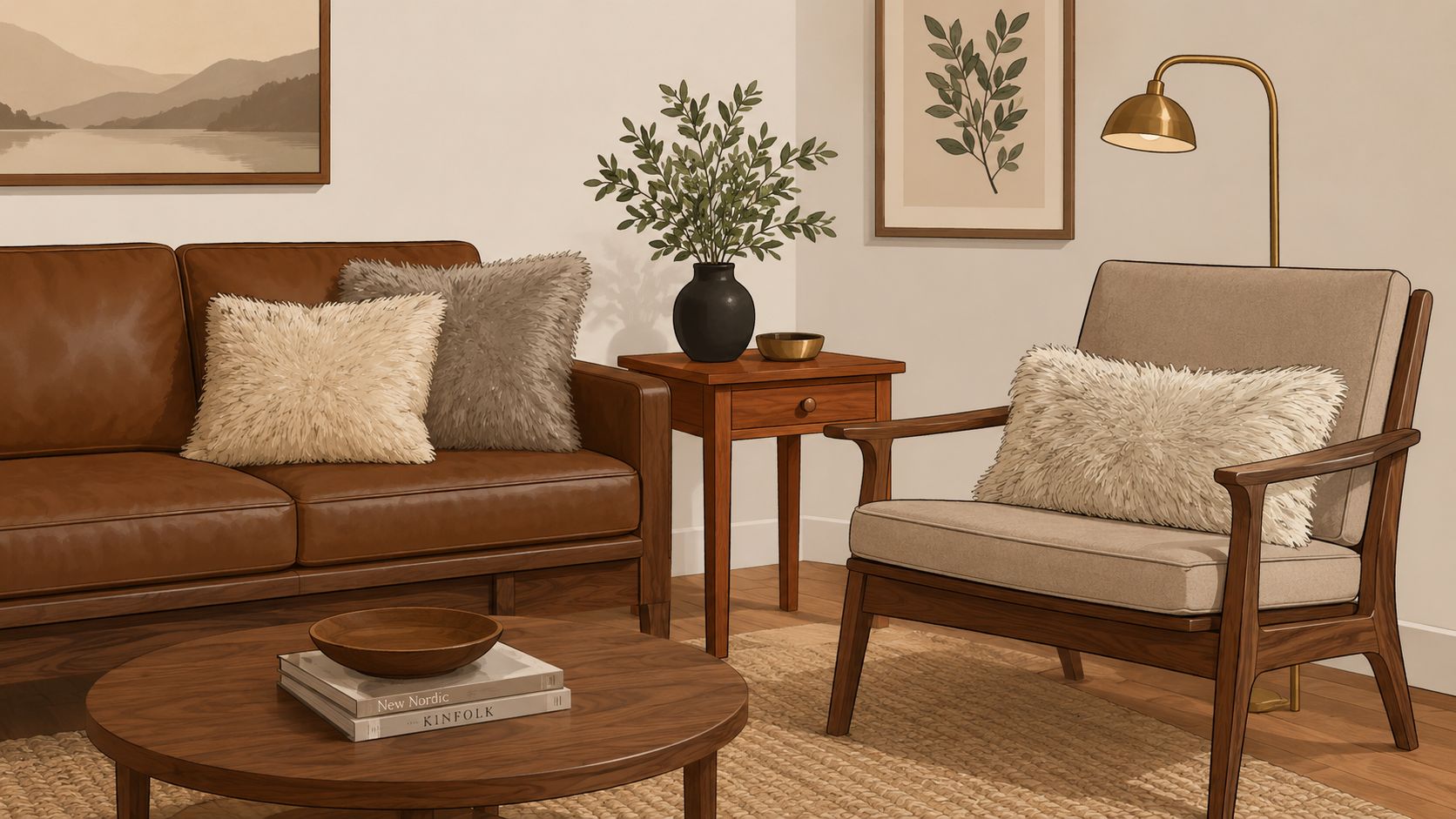
Use the pillow as the soft counterweight
A cream or ivory pillow can calm the visual weight of a walnut chair. A taupe pillow warms up black or deep brown leather. On a sofa with strong lines, one faux fur pillow prevents the whole arrangement from feeling too rigid. That is especially useful in rooms that mix solid wood furniture with upholstered pieces, because the pillow softens the transitions between materials.
Room-by-room pairings that hold up
A guest room sleeper sofa works well with a pair of matching faux fur pillows because the setup looks finished without becoming fussy. A reading chair benefits from a single oversized lumbar, especially if the chair has arms or a pronounced wood frame. On a primary bed, a layered trio can work, with faux fur used as the topmost texture so the bed reads rich rather than overstuffed.
Tyner's guide to wood furniture and hardwood selection fits naturally into this conversation because material integrity changes how the pillow looks. A finely built cherry dresser, an oak nightstand, or a maple bed frame gives the room weight. The pillow is the last layer, not the centerpiece.
Styling note: the best faux fur accents look better beside heirloom pieces than they do beside furniture that tries too hard to be trendy.
That is also where Tyner's mix of in-stock pieces and made-to-order options matters. The showroom includes furniture across the Home Office, Living Room, Bedroom, Dining Room, Entertainment, and Outdoor Spaces, and the ability to customize finishes, fabrics, and configurations, including Canadel and Stressless, makes it easier to build a room that can carry a pillow like this without looking pieced together.
How to Clean, Fluff, and Store a Faux Fur Pillow
A faux fur pillow stays attractive only when the care routine is simple enough to repeat. Weekly fluffing is the first step. It keeps the fill from packing down and helps the pile recover after daily use. A quick shake before bed or when straightening the sofa is enough for most homes.
Keep the surface lifted
Monthly vacuuming with a brush attachment helps remove dust and crumbs without pulling at the fibers. Spot cleaning should be gentle, using a mild detergent and a soft cloth rather than aggressive scrubbing. That matters because rough treatment flattens the pile and can leave the fabric looking tired even when it is technically clean.
Wash carefully, not casually
Machine washing is only sensible when the cover is removable and the care label allows it. Heat is the enemy here. Low-heat tumble drying is the safer route because high heat can flatten the pile and reduce loft over time. Air drying flat is often the better choice when the construction is delicate or the fill feels uneven after washing.
For households that prefer lower-moisture cleaning habits across soft surfaces, low-moisture rug cleaning methods is a relevant reference because the same caution applies, less moisture usually means less stress on pile and backing. The point is not to baby the pillow. The point is to avoid forcing the fibers into a shorter life.
Store seasonal pillows the right way
When a pillow is not in use, breathable cotton storage bags are better than sealed plastic bins. Add cedar blocks if the pillow is going into long-term storage, then keep it somewhere dry and stable. Before storing, make sure the pillow is clean and fully dry. Packing away a damp faux fur pillow is a sure way to shorten its life.
A good care routine protects both the pile and the insert. If either one is neglected, the pillow stops looking generous long before the fabric is actually worn out.
That is why construction details matter at purchase. Removable inserts, washable covers, and clear drying instructions make care easier from day one. Buyers who want the pillow to age gracefully should choose those details on purpose.
Longevity, Shedding, and the Cost-Per-Year View
Shoppers often judge a faux fur pillow by the wrong standard. They assume the shedding, flattening, and wear will be the same across the board. They are not. Backing density, fiber length, pile quality, and insert construction shape how the pillow ages, and those details matter more than a styled photo.
A well-made pillow can stay attractive for several seasons if it lives in the right room and gets regular care. A cheaper one may start to mat quickly, especially on a busy family sofa where it gets leaned on, tossed aside, and pulled back into place all day. That is why cost-per-year is the smarter way to shop. A pillow that keeps its shape and still looks composed after real use is the better buy, even if the upfront price is higher.
Choose by use, not by impulse
If the pillow will be used for heavy daily lounging, buyers should look for firmer fill and a stronger backing. If it is a seasonal accent on a bed or chair, a softer, more decorative version can make sense. The wrong move is bringing a very lofty pillow into a high-traffic family room and expecting it to stay crisp without attention.
High-quality faux fur is often sold with specific pile-height options, such as 12 to 20 mm for decorative pillows. That detail matters because pile height changes both the look and the upkeep. Shorter pile usually reads cleaner, while longer pile feels richer but asks for more care.
A quick way to judge quality is to study the construction, not just the finish. Dense backing, even stitching, and a fill that holds its shape all point to a pillow that will age better than one that feels airy and loose from the start. For shoppers who want faux fur quality guidance, the safest rule is simple, choose the pillow that looks substantial in hand, not the one that only photographs well.
The most important takeaway is simple. A faux fur pillow should be treated like a small upholstered investment, not a disposable accent. For shoppers in Ann Arbor and across Southeast Michigan, that means feeling the pile in person, comparing inserts, and checking how the pillow sits beside solid wood and upholstered furniture before bringing it home. Tyner Furniture has offered that kind of guidance since 1957, and the same local legacy shows up across the broader showroom selection, from the Home Office to Outdoor Spaces.