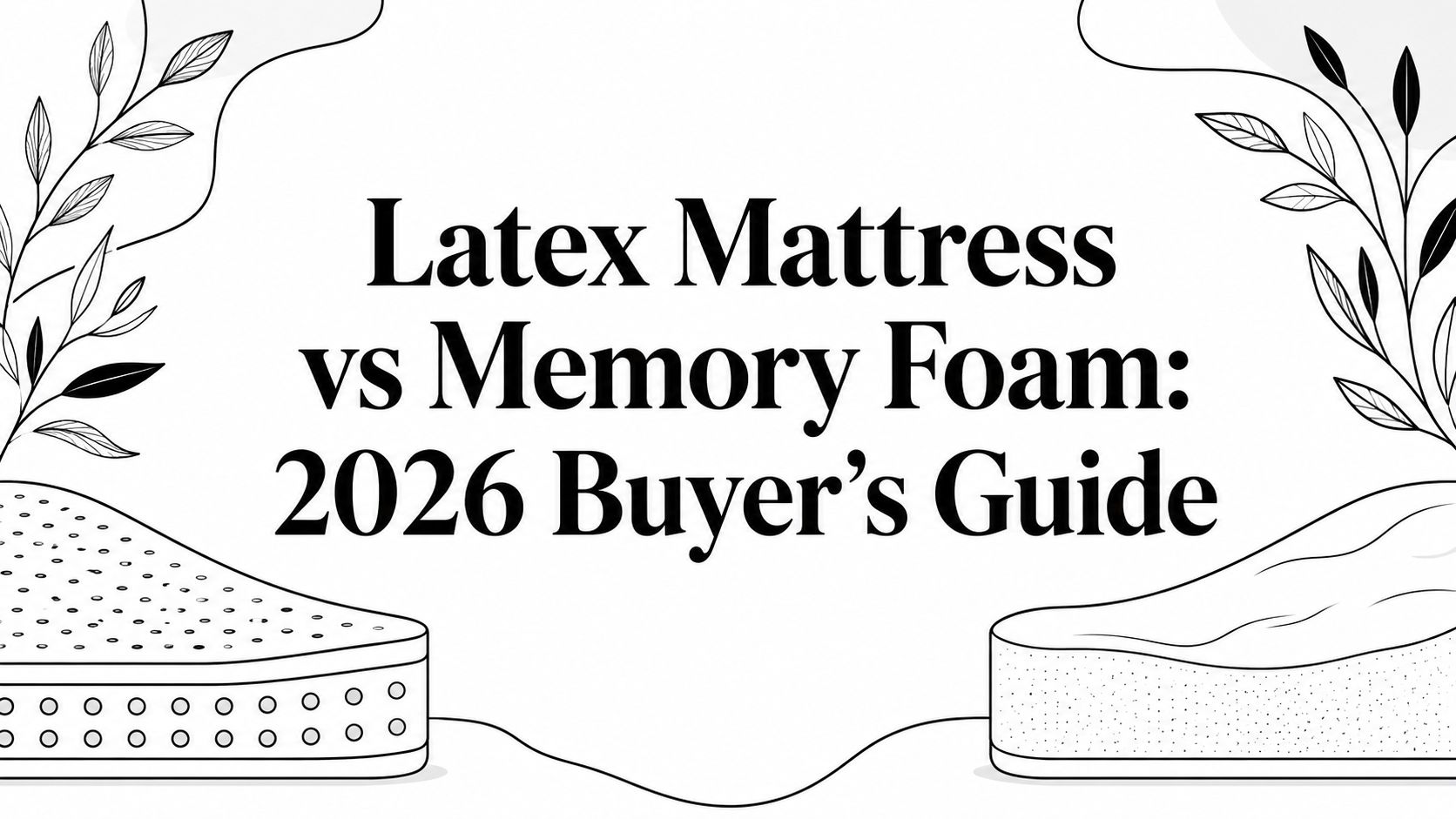
Latex Mattress vs Memory Foam: 2026 Buyer’s Guide

Most mattress shoppers reach the same point. They've read a dozen product pages, seen words like “viscoelastic” and “open-cell,” and still don't know which bed will feel right at bedtime. The main question usually isn't which material wins on paper. It's which one fits the way a person sleeps, moves, warms up, and plans to live with that mattress for years.
For Ann Arbor and Southeast Michigan households, that choice often comes down to latex mattress vs memory foam. Both can be comfortable. Both can support healthy sleep. But they do very different jobs. One offers a buoyant, lifted feel. The other offers a slower, closer contour. One often makes more sense for long-term value. The other can be a strong fit for sleepers who want more body-hugging pressure relief.
A mattress also doesn't work in isolation. Good sleep comes from the whole setup, including habits, comfort, and pain management. For readers who want to discover natural sleep improvement, that broader perspective can help narrow the mattress search. For a deeper local buying framework, Tyner's own ultimate guide for choosing a mattress is also a useful place to continue the research.
Table of Contents
- Choosing Your Next Mattress in a World of Options
- Understanding the Core Materials Latex and Memory Foam
- Feel and Performance A Head to Head Comparison
- Durability and Your Long Term Sleep Investment
- Which Mattress Is Best For Your Sleep Style
- How to Test a Mattress in Our Ann Arbor Showroom
- Making Your Final Decision with Confidence
Choosing Your Next Mattress in a World of Options
Mattress shopping gets confusing fast because many brands describe comfort with technical language instead of plain experience. Buyers don't buy a mattress because they care about foam chemistry. They buy one because shoulders ache, sleep runs hot, or a partner's movement keeps waking them up.
That's why the smartest way to approach latex mattress vs memory foam is to stop looking for a universal winner. A mattress has to match the sleeper, not the marketing. A bed that feels supportive to one person can feel restrictive or overly soft to another.
For families furnishing a first apartment, updating a primary bedroom, or finishing a forever home in Southeast Michigan, this choice also connects to value. Since 1957, Tyner Furniture has served Ann Arbor as a local legacy business built around durability, guidance, and purchases that are meant to last. That same philosophy shows up across the showroom, from home office solutions to outdoor spaces, and from bespoke Canadel dining to ergonomic Stressless seating with made-to-order options beyond what's in stock.
Practical rule: A mattress decision gets easier when the shopper ranks three things first. Feel, temperature, and how long the purchase needs to last.
A mattress should be judged the same way well-made furniture is judged. Not by the quickest first impression, but by how it performs after months and years of daily use. That's the difference between a temporary fix and a lasting comfort investment.
Understanding the Core Materials Latex and Memory Foam
The feel of a mattress starts with the material itself. Before firmness, cover fabric, or quilted top layers come into play, latex and memory foam behave differently under weight, heat, and movement.

What Latex Feels Like
Natural latex comes from rubber tree sap and is known for an elastic, buoyant character. On a mattress, that usually translates to a surface that compresses under the body but pushes back quickly. Sleepers often describe it as springy, lifted, or gently buoyant rather than strong cushioning.
There are also different ways latex is processed, including Dunlop and Talalay. In broad terms, Dunlop tends to feel denser and more grounded, while Talalay is often associated with a lighter, airier sensation. Those process differences matter because they change how the same raw material feels in the finished bed.
The best way to think about latex is this: it supports by holding the body up with some contouring, not by letting the body sink far in.
What Memory Foam Feels Like
Memory foam is a synthetic foam designed to respond to heat and pressure. It softens where the body settles in, then slowly regains shape after weight is removed. That delayed response is what creates the familiar “molding” sensation.
A sleeper lying on memory foam usually notices more cradle around the shoulders, hips, and ribcage. Instead of a lifted sensation, there's often a slower, closer hug. That can feel calming and pressure relieving for some people, while others find it harder to move around on.
The easiest shorthand is tactile. Latex feels buoyant and responsive. Memory foam feels deeper, slower, and more body-conforming.
For shoppers who want a broader material overview before narrowing down the final choice, Tyner's guide to mattress types pros and cons can help frame the bigger category picture.
Feel and Performance A Head to Head Comparison
A lot of couples walk into our Ann Arbor showroom after doing hours of online research and still feel stuck within ten minutes of lying down. One mattress checks the cooling box. Another promises pressure relief. The question is simpler. How does the bed feel after you settle in, change positions, and spend enough time on it to notice what your body likes and what it fights?
That is where latex and memory foam separate quickly in person.
Latex vs. Memory Foam At a Glance
| Feature | Natural Latex | Memory Foam |
|---|---|---|
| Feel | Springier, more buoyant | Deeper body-hugging contour |
| Response to movement | Faster rebound | Slower recovery |
| Temperature tendency | Cooler, more breathable feel | More likely to retain heat unless engineered otherwise |
| Pressure relief style | Gentle contour with lift | Deep contouring |
| Motion isolation | Good | Better for reducing partner disturbance |
| Best fit for | Hot sleepers, combination sleepers, people who want easy movement | Sleepers who want close contouring and strong motion isolation |
Responsiveness and Ease of Movement
This is often the first difference people notice without knowing the vocabulary for it. Latex responds fast. Memory foam responds slowly.
That speed changes everyday use more than many shoppers expect. A fast-responding mattress helps with turning over, adjusting a shoulder, or getting out of bed in the morning. A slower surface creates more of a settled-in feel. Some sleepers find that comforting. Others start noticing a slight stuck sensation, especially if they change positions often or have sore joints.
Earlier research cited in this article describes the same general split. Latex tends to feel more elastic and quick to rebound, while memory foam tends to mold more slowly and absorb movement more effectively. In the showroom, I usually tell shoppers to roll from their back to their side twice in a row. The mattress that feels easier to move on often becomes the better long-term match for combination sleepers.
Contouring and Pressure Relief
Pressure relief is not one single sensation. It can come from deeper cradle or from better weight distribution near the surface.
Memory foam usually gives more pronounced contouring around the shoulders, hips, and ribcage. Latex usually keeps the body more lifted while still softening pressure points. For a side sleeper with sharp pressure at the shoulder, memory foam may feel better in the first few minutes. For a sleeper who wants pressure relief without feeling enclosed, latex often makes more sense.
Firmness matters as much as material here. A softer latex can relieve pressure very differently than a firmer memory foam, which is why I always pair material choice with a guide on how to choose mattress firmness before anyone makes a final decision.
A simple showroom test helps. Lie on your usual side for at least ten minutes. If your shoulder starts asking for more give, that tells you something. If your lower back feels unsupported or your hips dip too far, that tells you something too.
Cooling and Temperature Balance
Temperature is one of the clearest real-world trade-offs. Latex usually feels cooler and less close because air moves through it more easily and the surface does not hold the body in the same way. Memory foam often sleeps warmer, especially for people who already run hot at night.
You do not need a chart to notice that difference. Spend fifteen minutes on each type in a quiet showroom and many shoppers can tell which one keeps them more comfortable. If someone says, "I love the pressure relief, but I can already feel myself warming up," that concern should be taken seriously. Heat can turn a mattress that feels great at first into one that gets less comfortable over a full night.
Parents who are also comparing breathable sleep surfaces for children may find Hiccapop's crib mattress guide useful for that narrower category.
Motion Isolation for Couples
Couples usually have to balance two competing needs. One person wants easy movement. The other wants less disturbance when a partner rolls over or gets up early.
Memory foam generally handles motion isolation better because it absorbs movement instead of sending it across the surface. Latex still performs well for many couples, but its quicker rebound often makes partner movement a little easier to notice. That does not make memory foam the automatic winner. It means couples should decide which annoyance is harder to live with: feeling more partner motion, or feeling less freedom to move.
For long-term value, that trade-off matters just as much as price. A mattress that costs less up front but leaves one partner sleeping lightly every night is rarely the better buy over the years.
Latex usually stands out for cooler sleep, quicker response, and easier movement. Memory foam usually stands out for deeper contouring and stronger motion control. The better choice is the one that fits how you sleep, not how the spec sheet sounds online.
Durability and Your Long Term Sleep Investment
A lot of Ann Arbor shoppers arrive with the same question. Should I spend less now and replace the mattress sooner, or spend more once and keep it longer? That is the right question, because mattress value is measured over years of sleep, not the afternoon you place the order.
Why Cost per Year Matters
Latex usually carries the higher ticket price. Memory foam usually asks for less up front. The better comparison is cost per year of comfortable use.
Industry comparisons commonly place latex in the longer-lasting category, while memory foam often has a shorter usable life depending on foam density, build quality, and how the bed is used. In practical terms, that means a latex mattress can make financial sense for shoppers who expect to keep their next mattress for many years. Memory foam can still be a smart buy, especially if the feel suits your body much better, but it should be judged with a shorter replacement cycle in mind.
I often tell customers to do the math on the years they realistically expect from the bed, then divide the price by those years. That simple exercise usually clears up the decision faster than looking at a long list of online specifications.
A mattress that costs less at checkout can still cost more over time.
What Durability Means in Daily Life
Durability shows up in the feel of the bed long before a mattress completely wears out. It affects how well the surface holds its shape, how consistently it supports the heavier parts of the body, and whether the comfort layers still feel right after years of use. Once those qualities slip, sleep quality usually slips with them.
Latex tends to hold its support character well over time. That is one reason shoppers who care about long-term value often give it a serious look. Memory foam can still be the better fit for a sleeper who wants more contouring and pressure relief, but buyers should go in with clear expectations about lifespan and replacement timing.
This matters even more when discomfort is already part of the picture. For readers trying to sort out whether their symptoms come from the mattress, sleep position, or a broader issue, these practical strategies for leg pain can help separate mattress problems from other causes.
Care also matters. A good mattress lasts longer with proper support, routine rotation when the model allows it, and basic upkeep. Tyner's guide to mattress maintenance and cleaning tips to extend its lifespan covers the habits that help protect your investment.
For shoppers deciding between latex and memory foam, the goal is simple. Buy the mattress that gives you the best sleep for the money you will spend over the full life of the bed, not just the lowest number on the price tag.
Which Mattress Is Best For Your Sleep Style
People don't sleep in abstract categories. They sleep on one shoulder, with one warm foot outside the covers, or while adjusting positions through the night. Choosing between latex and memory foam gets easier when the decision is tied to real sleep behavior.
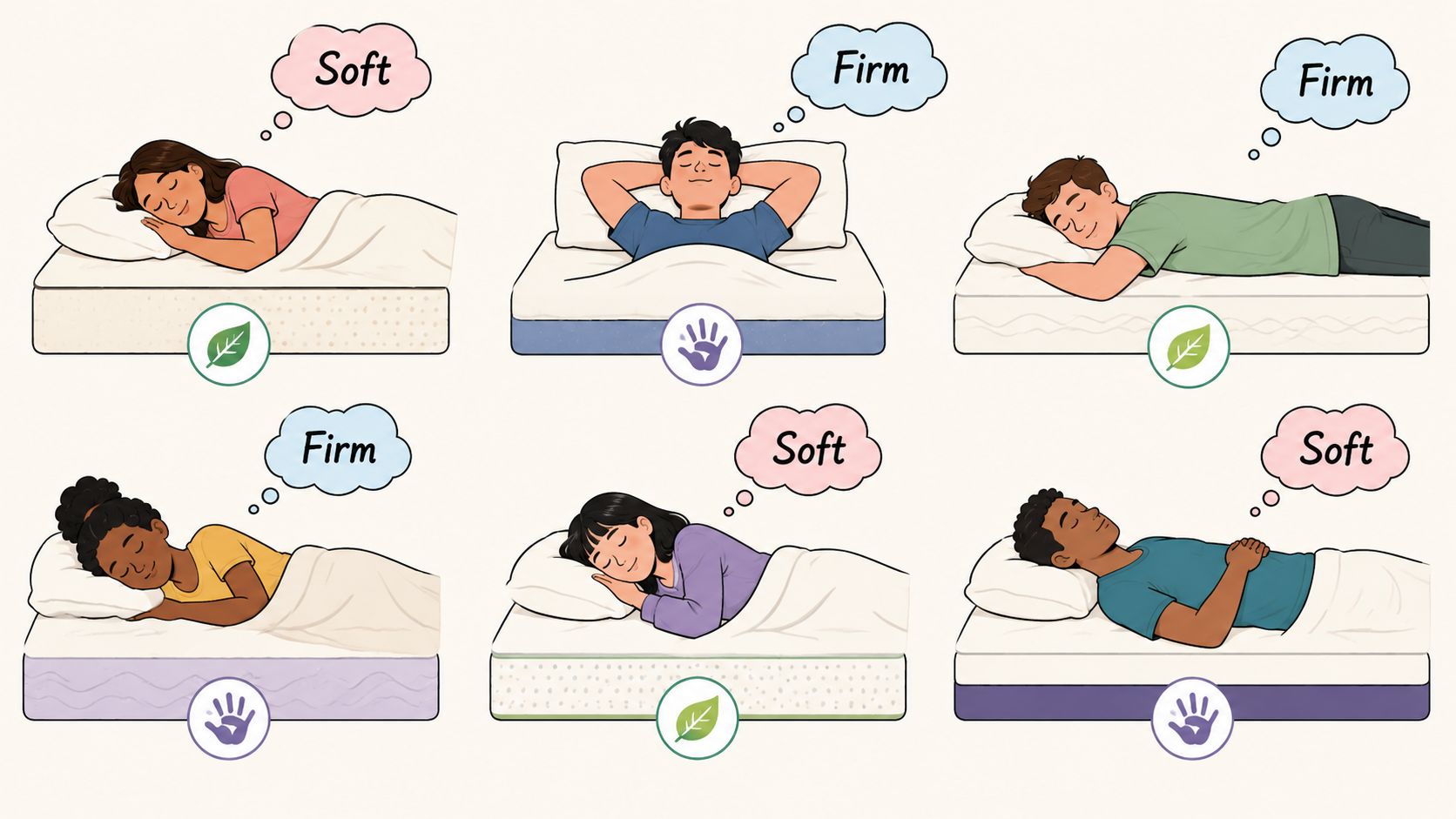
Side Sleepers
Side sleepers usually need enough cushioning at the shoulder and hip to avoid sharp pressure buildup. Memory foam often feels natural here because it molds more closely around those curves and spreads weight over a larger contact area.
Latex can still work well for side sleepers, especially if the comfort layer has enough give, but it creates a more lifted sensation. Sleepers who want pressure relief without a deep cradle may prefer that balance.
For readers dealing with discomfort that shows up while lying down, especially in the lower body, these practical strategies for leg pain can also help clarify whether the issue is purely mattress-related or part of a broader pain pattern.
Back and Stomach Sleepers
Back and stomach sleepers often need the mattress to keep the torso from settling too far. That's where latex can make a strong case. Its faster response and buoyant support can help the sleeper feel more on the mattress than in it.
Memory foam can still suit these positions, but only when the overall construction keeps the hips from sinking too far. If the sleeper likes a flatter, easier-to-move-on surface, latex often feels more natural from the first few minutes.
Hot Sleepers
Some shoppers decide in under five minutes because they can feel heat building almost immediately. For those sleepers, latex usually has the edge because of its more breathable, temperature-neutral character, a distinction covered earlier in the performance comparison.
Memory foam can still appeal to people who love the contouring sensation, but hot sleepers should pay close attention during in-person testing. If warmth becomes noticeable in the showroom, it rarely becomes less noticeable at home.
A sleeper who wakes up kicking off covers should treat temperature as a top-tier buying factor, not a minor preference.
Couples
Couples need to think about both shared and separate comfort. Memory foam often works well when partner disturbance is the main complaint, since it's better at absorbing motion.
Latex tends to work well when both people move frequently and don't want to feel trapped in the surface. It can also suit couples who value a more buoyant feel and easier repositioning throughout the night.
The deciding question is simple. Is the bigger problem feeling movement, or feeling stuck?
Allergy and Material Preference Shoppers
Some households care as much about material character as feel. They want a mattress that aligns with broader preferences for natural materials, simpler construction choices, or a more sustainable home.
Natural latex often appeals to that shopper because of its rubber-tree origin and durable character. Memory foam may appeal more to shoppers who prioritize contouring first and material composition second. Both can belong in a well-furnished bedroom. The key is being honest about which priority leads the purchase.
For a fuller breakdown tied to sleeping positions and habits, Tyner's article on how to choose the right mattress for your sleeping style is a practical next step.
How to Test a Mattress in Our Ann Arbor Showroom
Online research narrows the field. It doesn't replace lying down. Mattress feel is physical, and the body notices things in person that product descriptions can't fully communicate.

Start with Your Real Sleep Habits
Shoppers should test mattresses in the same positions they use at home, not just by sitting on the edge for a few seconds. Wear comfortable clothing. Take off bulky coats. Lie on the side, back, or stomach position that reflects normal sleep.
Stay there long enough to notice pressure points and body temperature. A quick bounce test won't tell much about shoulder relief or whether the lower back stays comfortable after a few minutes.
In-person guidance helps at the South State St. showroom in Ann Arbor. Tyner Furniture is one local option for shoppers who want to compare mattress feels directly while also browsing the broader store, which covers everything from bedroom furniture to home office and outdoor spaces.
What to Notice After a Few Minutes
Use a simple checklist instead of chasing brand language.
- Shoulders and hips: Do they feel cushioned, or do they press too sharply into the surface?
- Lower back: Does the mattress support the natural curve, or does the midsection sag?
- Movement: Is it easy to roll and reposition, or does the bed resist motion?
- Heat: Does the surface stay neutral, or does warmth build quickly?
- Partner effect: If shopping as a couple, does one person's movement travel across the bed?
Don't judge a mattress by the first ten seconds. The more useful impressions usually show up after the body settles.
A proper showroom test turns a confusing category into a practical decision. The body almost always tells the truth faster than the sales copy does.
Making Your Final Decision with Confidence
The best mattress isn't the one with the most technical terms. It's the one that matches how a person sleeps and how they want the purchase to perform over time.
Latex usually makes more sense for shoppers who want a cooler, springier, more responsive feel and who care strongly about long-term value. Memory foam usually makes more sense for shoppers who want deeper contouring, a calmer body-hugging sensation, and stronger motion isolation.
For many Southeast Michigan households, the final answer comes down to two questions.
Which Feel Helps You Sleep Better
A sleeper who prefers to feel lifted and mobile will often lean toward latex. A sleeper who wants pressure relief that closely follows the body will often lean toward memory foam.
Neither answer is wrong. The mistake is choosing based only on a short showroom impression or only on online specs, without weighing both feel and expected ownership horizon.
Which Purchase Fits Your Home Plan
A mattress should fit the room, the budget, and the years ahead. Special Financing can make a higher-quality sleep investment more manageable, and a Low Price Promise helps remove some of the stress that comes with making a bigger household decision. That same practical, long-view approach is what many shoppers already appreciate when choosing bespoke Canadel dining, Stressless ergonomic seating, or hand-crafted Amish solid wood pieces built for lasting use.
Since 1957, Tyner has served Ann Arbor with that same emphasis on comfort, craftsmanship, and value that holds up well beyond the first week at home.
If a new mattress is on the shortlist, visit Tyner Furniture in Ann Arbor for a true sit test and side-by-side feel comparison, or browse the online Quick Specs to explore special-order options before heading to the showroom.