Modern Floor Mirrors a Complete Buying and Styling Guide


A shopper sees a tall mirror in a magazine, loves the look, then gets home and hesitates. Will it make the bedroom feel brighter, or just reflect laundry baskets? Will an arched frame soften the room, or will a cleaner rectangle work harder in a narrow hallway? That uncertainty is common because modern floor mirrors sit in an unusual category. They're decorative, practical, architectural, and surprisingly technical all at once.
That's why choosing one well matters. A good mirror doesn't just show an outfit before leaving the house. It changes how a room feels, how light moves, and where the eye travels. In many Ann Arbor and Southeast Michigan homes, especially those with compact entries, older floor plans, or shaded living rooms, that can make a visible difference.
There's also a deeper reason these pieces deserve careful thought. Modern mirrors became possible when German chemist Justus von Liebig developed a silvering process in 1835, replacing toxic mercury and making mirrors clearer, more durable, and accessible enough for everyday homes, as explained in this history of mirror-making and home decor. What looks simple on the wall or floor is really a blend of craft and technology.
For a household trying to create a calmer, more finished home, a floor mirror often works the same way strong lighting or a well-scaled rug does. It solves more than one problem at once. Readers interested in the broader language of clean-lined interiors may also find these elements of a modern home useful when deciding whether a mirror should blend in subtly or act as a statement.
Table of Contents
- More Than Reflection An Introduction
- The Functional Art of Modern Floor Mirrors
- A Practical Guide to Size and Placement
- Choosing Your Mirror Style For Form and Function
- Heirloom Quality Frame Materials and Craftsmanship
- Safe Installation and Bespoke Customization
- Making Your Investment at Tyner Furniture
More Than Reflection An Introduction
Modern floor mirrors often get treated like finishing touches. In practice, they behave more like functional art. They can sharpen a neglected corner, settle an awkward wall, or give a small room a sense of calm by making it feel less boxed in.
That's part of why so many shoppers get stuck. The mirror may look beautiful online, yet still be wrong for the room. A dramatic arch can be lovely in a bedroom corner but underperform in a long, tight hallway. A slim metal frame may feel current, but if the home already has warm woods and softer shapes, it can read too cold. The challenge isn't choosing what's pretty. It's choosing what works.
The mirror as a design tool
A floor mirror can serve several roles at once:
- Daily function: It gives a full-length reflection for dressing, coat checks, and last looks before heading out.
- Visual correction: It can help a room feel less narrow, less dim, or less uneven.
- Decorative weight: It fills vertical space with less visual heaviness than a cabinet or bookcase.
- Long-term value: A well-made frame can stay relevant through paint, rug, and upholstery changes.
Modern floor mirrors aren't just accessories. In many rooms, they act like a quiet architectural adjustment.
That's why seasoned furniture and design professionals treat them differently from trend pieces. Since 1957, local furniture shoppers in Southeast Michigan have relied on trusted guidance for choices that need to last, not just photograph well for a season. A mirror deserves that same level of attention, especially when it's large enough to affect the whole room.
Why this decision feels harder than it should
Shoppers usually run into one of three problems:
They buy for shape alone.
The mirror looks stylish, but the shape doesn't help the room.They ignore the reflection.
The mirror reflects clutter, cords, or a blank dark corner.They underestimate construction.
A large mirror needs real stability, especially if it leans.
Modern floor mirrors reward slow decisions. That's not bad news. It means the best choice usually comes from matching optical performance, placement, and craftsmanship instead of chasing a silhouette that's popular this year.
The Functional Art of Modern Floor Mirrors
A floor mirror earns its place when it solves a room problem. Some brighten a dim corner. Some relieve the tunnel effect of a hallway. Some create breathing room in a tight bedroom where a dresser, bed, and nightstands already do most of the visual talking.
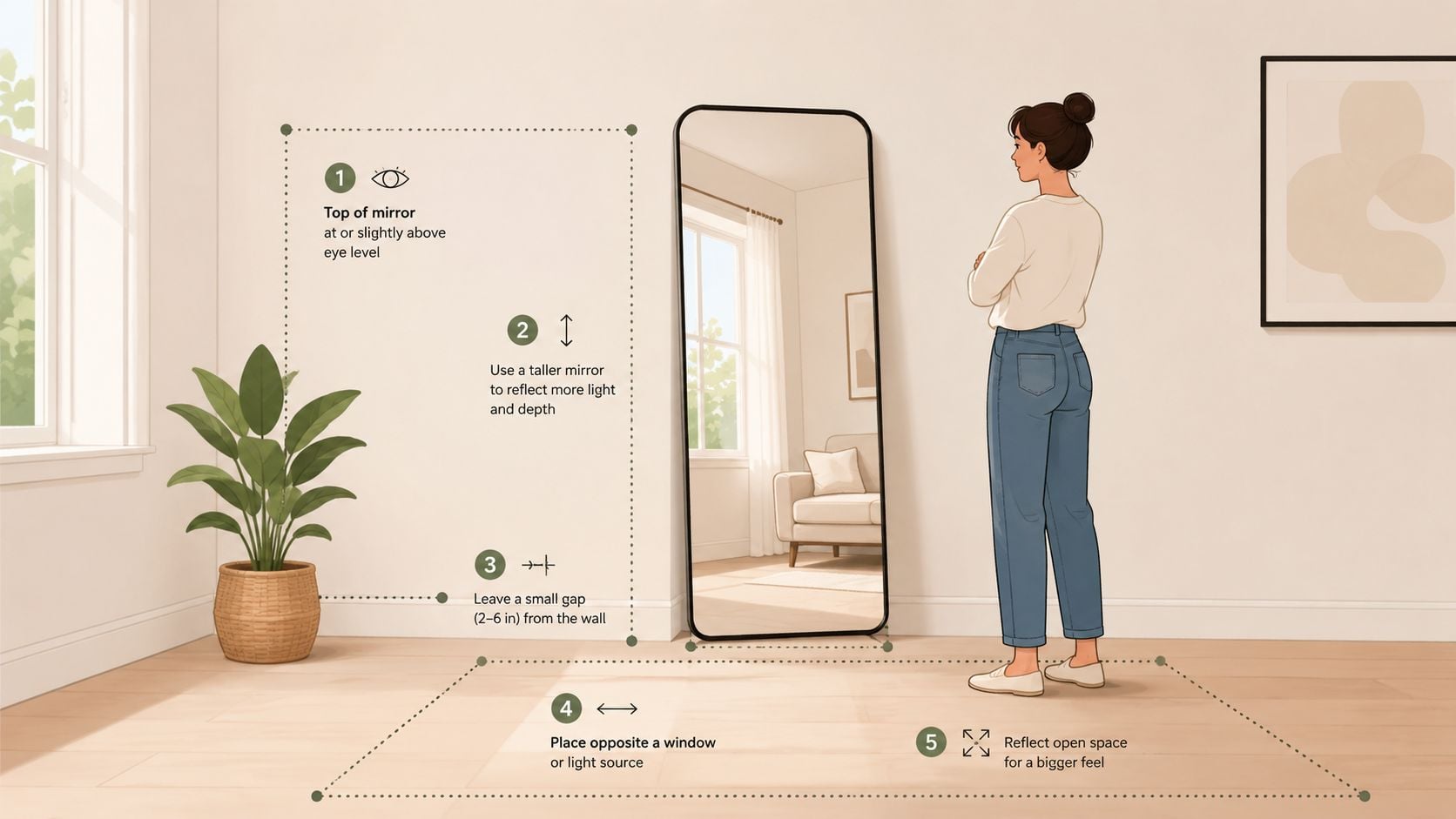
Large floor mirrors improve spatial perception by extending the visual boundary of a room. They can make tight or irregular layouts feel more open by increasing perceived depth and redistributing both natural and artificial light more evenly across surfaces, according to this interior design guide on large floor mirrors.
How mirrors change a room
A useful way to think about a floor mirror is to treat it like an extra window, even when there's no new opening in the wall. It doesn't create light, but it helps existing light travel farther.
In practical terms, that means a mirror can help when a room has:
- A shaded side: One side of the room gets daylight, while the other fades early.
- An awkward corner: Furniture leaves a dead zone that feels unfinished.
- A narrow path: Hallways and entries can feel compressed when every line runs straight ahead.
- Heavy furnishings: Upholstered pieces, wood case goods, and dark rugs can absorb light visually.
For readers also working with oversized art, the same balancing instincts often apply. These tips for styling oversized pieces can help with scale, spacing, and visual weight when deciding whether a large mirror should dominate a wall or unobtrusively support the room.
What to reflect and what to avoid
A mirror's job isn't merely to exist. Its job is to reflect something worth repeating.
Practical rule: A mirror should bounce back light, space, or beauty. If it reflects clutter, it doubles clutter.
That's where many purchases go wrong. A shopper places a large mirror in a bedroom, but it catches the edge of an overfilled chair, a tangle of charging cords, or a busy closet opening. The mirror works optically, yet the room feels more chaotic because the reflected view adds visual noise.
A better approach is to stand where the mirror will sit and look outward first. That preview shows what the glass will repeat. Good candidates include a window, a lamp with a warm shade, a clean stretch of wall, or a pleasing furniture silhouette.
Readers working with especially tight rooms may also find these small-room design ideas helpful, since mirrors work best when paired with thoughtful furniture scale and clear walkways.
A Practical Guide to Size and Placement
Size is where modern floor mirrors stop feeling vague and start feeling manageable. Once the shopper understands the basic geometry, the rest of the decision becomes much easier.
A simple size rule
For a true full-length reflection, a floor mirror's height should be at least half the user's height, and common residential sizes that handle this comfortably are around 150 to 160 cm tall and 40 to 50 cm wide, as noted in this floor mirror sizing guide.
That rule surprises many shoppers because they assume a mirror must be nearly as tall as the person using it. It doesn't. What matters is the viewing geometry, not matching body height inch for inch.
A mirror in that common residential range usually strikes a useful balance:
- Large enough for daily dressing
- Portable enough to reposition
- Substantial enough to read as furniture-scale decor rather than a small accessory
Placement by room
Different rooms ask different things of a floor mirror.
Entryway
A mirror near the front door works hard. It gives a practical last check before leaving and makes the entrance feel more welcoming. In a narrow entry, a tall mirror often works better than a wide one because it supports vertical lift without crowding the walkway.
Bedroom
This is often the most functional location. A floor mirror near a dresser, beside a wardrobe, or in an underused corner supports dressing routines while adding light to a room that may already have soft furnishings absorbing brightness. The key is keeping it clear of open closet views or laundry zones.
Living room
Here the mirror behaves more like a statement piece. It can lean beside a console, sit between windows, or anchor a quiet corner that feels unfinished. Good placement often depends on what it reflects. A lamp, window, or strong furniture grouping tends to work better than open shelving full of small objects.
Professionals preparing interiors for photography often think this way too. This staging guide for high-end interior shoots offers a helpful mindset for editing what appears in reflective surfaces, even for everyday homes.
Pro tip box
Avoid these common mirror placement mistakes:
- Reflecting disorder: Baskets, cords, and open storage become twice as noticeable.
- Blocking circulation: A beautiful mirror still needs safe walking clearance.
- Choosing width without purpose: A wider mirror isn't always better if the room needs height.
- Ignoring measurement: Nearby furniture, outlet placement, and trim all affect fit.
Before buying, it helps to map the footprint the same way one would for a sofa, chest, or bed. These furniture measuring basics can prevent the common mistake of falling in love with a mirror that technically fits the wall but overwhelms the room.
Choosing Your Mirror Style For Form and Function
Most style advice stops at appearance. That leaves out the more useful question. What will this shape do to the room? Modern floor mirrors aren't interchangeable. Their outlines influence how a space feels.
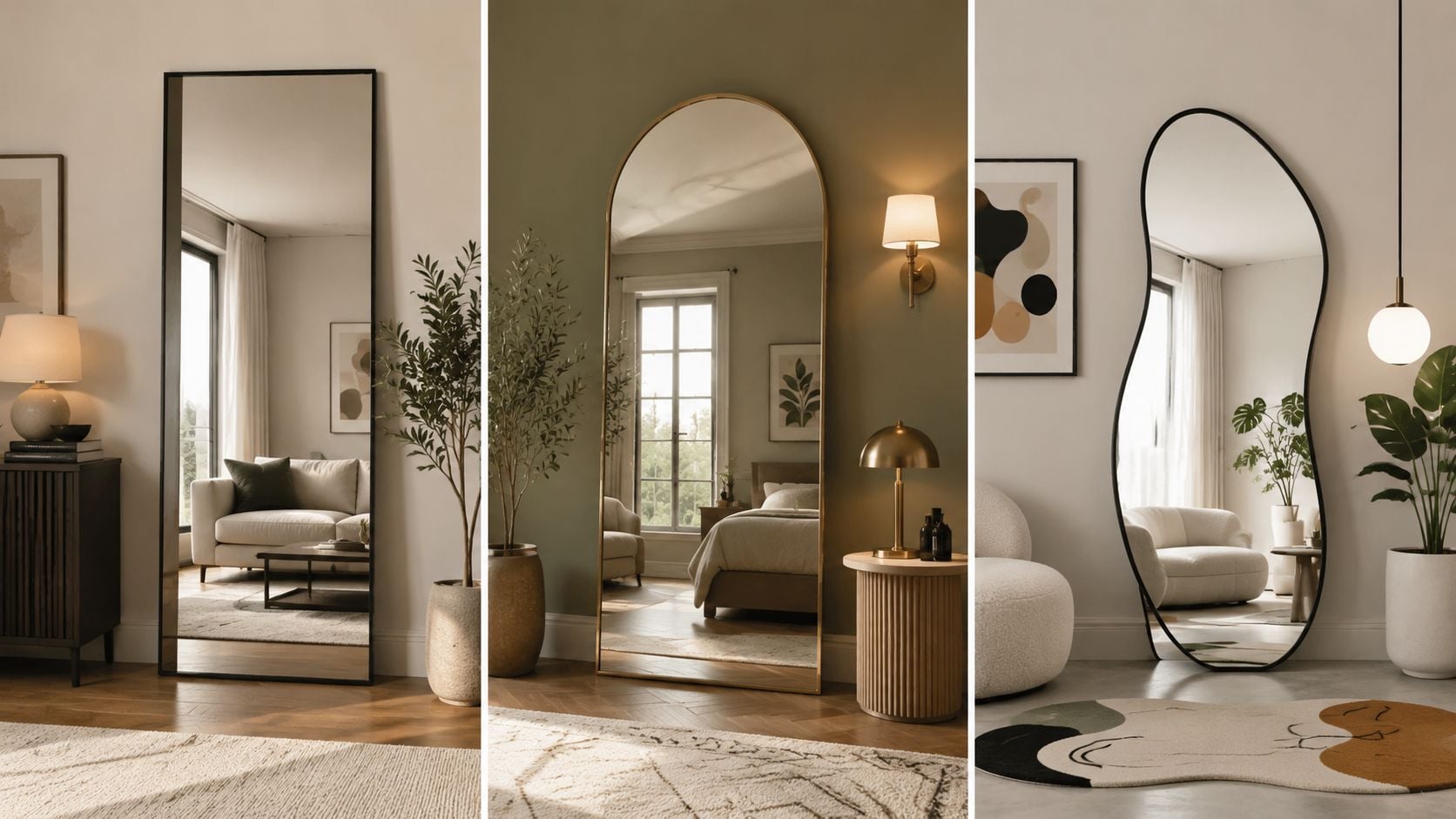
A key distinction is optical performance. An arched mirror can add softness and perceived movement, while a tall rectangular mirror is often better at visually elongating a tight hallway or entryway, as described in this guide to floor mirror applications and shape performance.
Rectangular mirrors for structure
Rectangular mirrors tend to feel orderly and architectural. Their straight lines echo doors, windows, and case goods, which makes them especially effective in homes that already lean modern or transitional.
They're usually the strongest choice when a room needs:
- Vertical emphasis in a standard-height room
- Clarity in a narrow hallway
- Clean symmetry beside dressers or consoles
- A quieter statement that doesn't compete with surrounding furnishings
A tall rectangle often helps a space feel taller because the eye follows its line upward. In smaller apartments and compact entries, that can make the room feel less compressed.
Arched mirrors for softness
Arched mirrors shift the mood. They loosen a room filled with hard edges and repeated rectangles. When a bedroom has a squared headboard, crisp nightstands, and straight-lined windows, an arch can introduce relief.
That doesn't mean an arch is always the better design choice. In a very tight passage, the softer top can sacrifice some of the strict elongating effect a rectangle provides. But in a bedroom corner or living space with enough width, the arch can feel graceful rather than rigid.
A mirror shape should answer the room's problem. If the room feels boxed in, structure often helps. If it feels severe, curves usually help.
Frame language matters too
The frame changes the message as much as the shape.
| Frame type | What it tends to communicate | Where it often works best |
|---|---|---|
| Slim metal | Lightness, crispness, modern restraint | Hallways, apartments, cleaner-lined rooms |
| Substantial wood | Warmth, permanence, visual grounding | Bedrooms, living rooms, homes with natural materials |
| Decorative profile | Statement, detail, ornament | Spaces that need personality more than visual quiet |
For readers comparing finishes, edge treatments, and decorative effects beyond basic shapes, it can help to explore specialty glass and mirror styles before deciding whether a simpler reflective surface or a more expressive treatment fits the room.
Heirloom Quality Frame Materials and Craftsmanship
There's a point where a floor mirror stops being decor and starts becoming furniture. That point usually has less to do with style and more to do with materials, joinery, and stability.

Current assortments show that premium floor mirrors can cost furniture-level money, with some priced around $1,099 to $1,799, and trend-led features like irregular silhouettes or tinted glass may not hold long-term value as well as stronger frame construction, according to this retail overview of floor-length mirror pricing and design trends. That's why shoppers need to separate temporary appeal from durable value.
When paying more makes sense
A higher price makes sense when the mirror will serve as a long-term anchor piece. That usually means one of three situations:
- It will move with the household through several rooms or future homes.
- It has furniture-scale presence and needs construction that can handle real use.
- Its frame is neutral enough to outlast paint, bedding, rugs, and trend shifts.
Cost-per-year is more useful than sticker shock. A substantial mirror with a stable, well-built frame can remain relevant for years, while a trendy silhouette may feel dated long before the materials wear out.
What craftsmanship looks like in person
Good craftsmanship is easiest to spot in the details a shopper can touch.
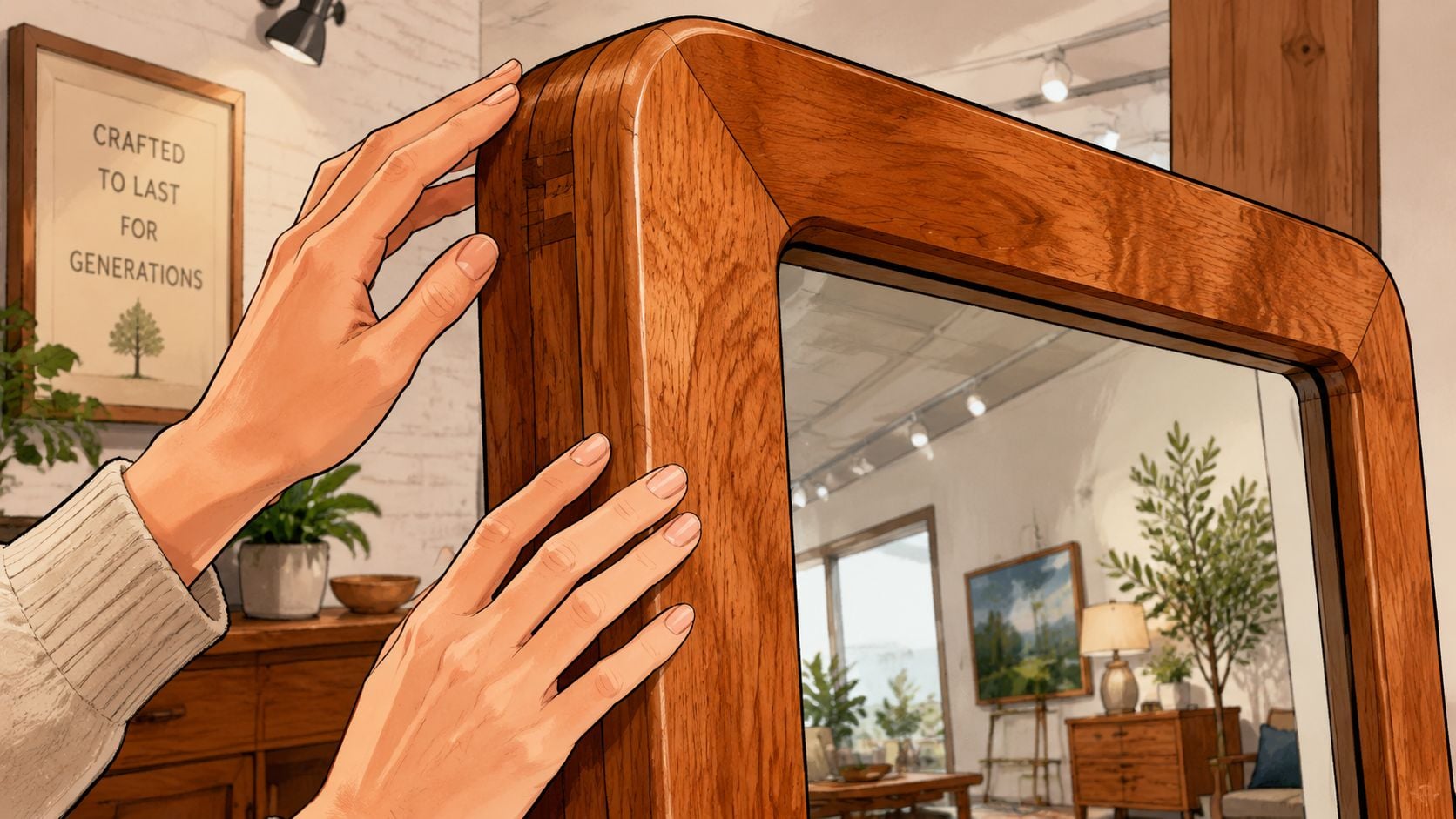
A strong wood frame has visual depth. The corners feel deliberate. The piece has a steady, reassuring weight. Wood grain reads naturally rather than as a printed surface. The finish looks absorbed into the material instead of sitting on top of it like a plastic film.
That's why solid wood matters. In furniture categories such as bedroom and dining, hand-crafted Amish construction is valued for material integrity and joinery, not just appearance. The same logic applies to a mirror frame. A solid wood surround with careful construction offers durability and versatility that a lighter, mass-produced option may not.
For readers comparing wood species and how they age, this guide to choosing hardwood furniture for longevity and style gives useful context. It's especially relevant for households trying to match a mirror to existing case goods in oak, maple, or cherry.
In a showroom setting, this is also where customization starts to matter. In-stock is only the beginning. Made-to-order choices in the home often include finish, scale, and surrounding furnishings, whether a shopper is coordinating with bespoke Canadel dining, ergonomic Stressless seating, a bedroom suite, a home office, or even outdoor spaces. One factual local option is Tyner Furniture, which offers furniture and design guidance in Ann Arbor with custom-order programs across multiple categories.
Safe Installation and Bespoke Customization
A large mirror should never be treated casually. If it leans, it needs stable footing, a sensible angle, and an honest assessment of the household around it. Children, pets, uneven flooring, and narrow traffic paths all change what counts as a safe setup.
Leaning versus anchoring
Leaning can look relaxed and elegant, but it isn't automatically the right choice.
A leaning mirror tends to work best when:
- The wall is solid and level
- The floor surface is stable
- The mirror has a substantial frame
- The area doesn't serve as a high-traffic play zone
Wall anchoring is often wiser when the mirror is especially heavy or the household needs more security. Some shoppers love the casual style of a leaner, then realize their entry hall gets too much daily movement for that arrangement to feel comfortable.
Safety should shape the design decision, not get added as an afterthought.
Small details matter too. Floor grips can reduce slip. A rug under the front edge can change the angle in ways that feel minor but affect stability. Baseboards also influence how flush the frame sits against the wall.
Why made-to-order can solve real problems
Customization isn't just about color. It can solve practical issues that off-the-floor pieces often miss.
A made-to-order approach may help when a shopper needs:
- A frame finish that relates to existing wood tones
- A better-proportioned scale for a specific wall or alcove
- A style that feels timeless rather than trend-driven
- Coordination with other furnishings already planned for the room
That's where bespoke thinking becomes useful. A custom order can create a mirror that feels intentional within the whole home, especially in forever-home projects where the goal is long-term coherence rather than a quick visual fix. Readers comparing those options can start with this guide on how custom furniture orders work.
Making Your Investment at Tyner Furniture
A well-chosen floor mirror does several jobs at once. It supports daily routines, improves how a room reads, and adds a layer of polish without taking up the visual weight of a large storage piece. When the shape fits the room, the placement reflects something worth seeing, and the frame is built with care, the result feels settled rather than trendy.
That long-view mindset matters. A mirror can be one of the most visible objects in a bedroom, entry, or living room, so it's worth choosing with the same care given to a dining table, bed, or recliner. Households that value heirloom thinking usually end up happier with neutral forms, better materials, and construction that won't feel flimsy a few seasons later.
For Southeast Michigan shoppers, seeing the piece in person often clears up what online browsing can't. Frame depth, finish quality, and overall presence are easier to judge at full scale. That's especially true when a mirror needs to coordinate with other furnishings in the home, from bedroom storage to dining, home office, and outdoor spaces.
Since 1957, Tyner has been part of the Ann Arbor furniture conversation for shoppers who want guidance, craftsmanship, and practical value. The South State St. showroom gives households a chance to compare finishes, assess proportions, and talk through whether an in-stock piece is enough or whether a bespoke, made-to-order solution would serve the room better. For larger purchases, Special Financing and the Low Price Promise can also make a long-term investment easier to plan without lowering standards.
For readers ready to take the next step, Tyner Furniture offers a practical place to continue the search. Visit the Ann Arbor showroom on South State St. to see materials, scale, and craftsmanship in person, or browse the online Quick Specs for special orders if a made-to-order mirror or coordinated room plan is the better fit.