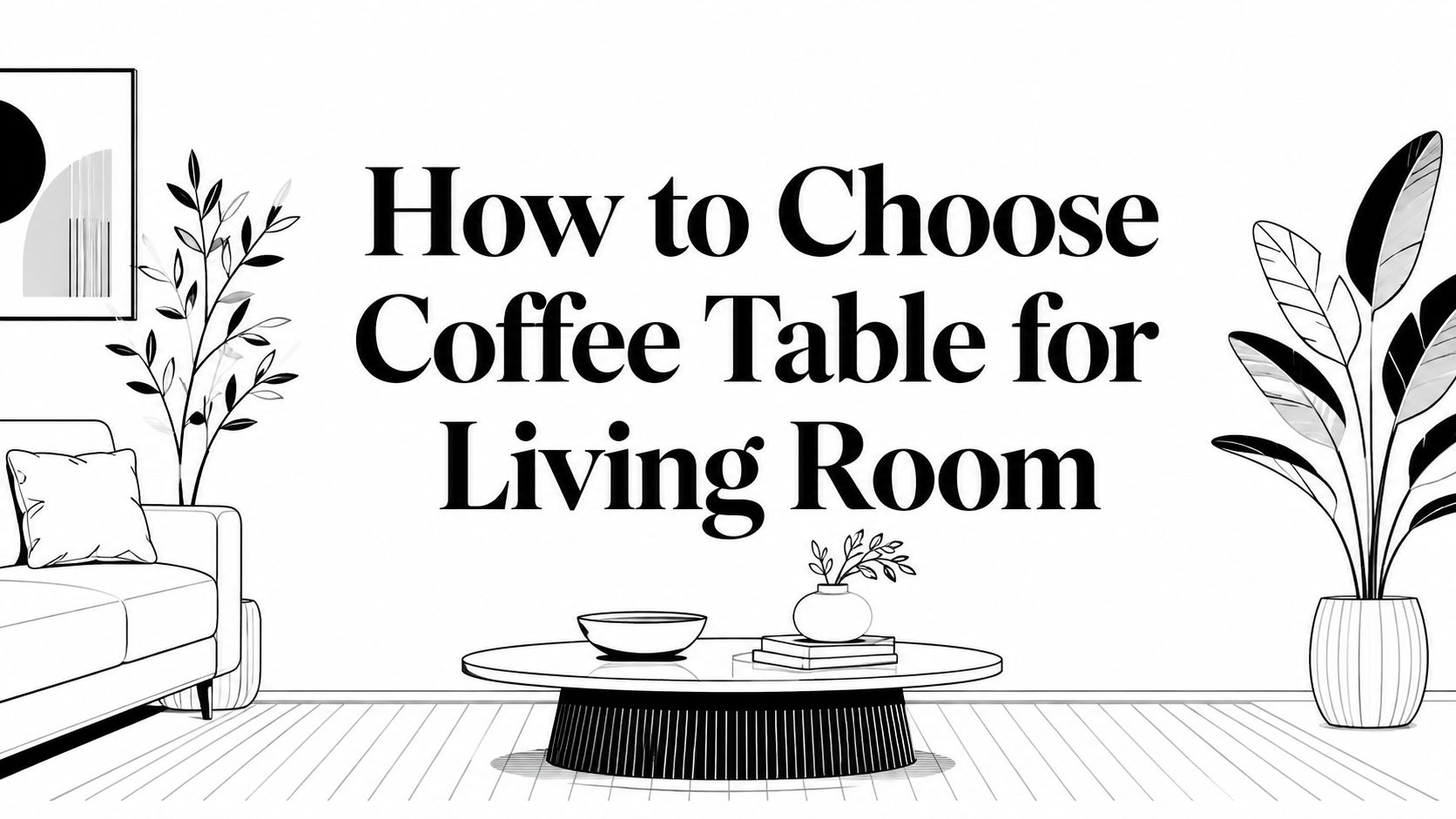
How to Choose Coffee Table for Living Room

A lot of living rooms end up with the same mistake. The sofa gets weeks of thought, the rug gets samples, the chairs get debated, and the coffee table gets picked in one tired afternoon because the room “just needs something in the middle.”
That usually backfires.
The coffee table handles daily abuse that most accent pieces never see. It catches coffee mugs before work, mail after dinner, laptop corners during video calls, snack bowls on game night, and tired feet at the end of a long week. In homes across Ann Arbor and Southeast Michigan, it often becomes the most touched hard surface in the room without anybody planning for that reality.
That's why anyone serious about how to choose coffee table for living room should treat it like an investment piece, not a filler purchase. Cost-per-year matters more than sticker shock. A table that holds up for years, ages with dignity, and still looks right after a sofa update delivers better value than a trendy piece that feels spent after a few seasons.
Why the Coffee Table Deserves More Thought Than You Think
Saturday morning puts the coffee table to work fast. Two mugs hit the surface first. Then a laptop, the mail, reading glasses, a snack plate, and by nightfall a game box and the remote everyone swears was right there a minute ago.
That kind of use exposes weak furniture in a hurry.
A coffee table takes daily hits, constant wiping, shifting weight, and the kind of casual abuse that ruins thin veneers and shaky construction. Shoppers who buy one as a quick room-finisher usually feel the mistake within a year. The top shows rings. The corners chip. The whole piece starts looking tired long before the sofa does.
Treat it like a long-term purchase. Give it the same attention you would give a sofa or a recliner, because it earns that attention.
The best choices in a real living room are usually heirloom-quality solid wood or a well-built bespoke upholstered ottoman. Solid wood has staying power you can see and touch. It develops character, not just damage, and it can be refinished if life leaves marks behind. A custom upholstered piece solves a different problem. It softens the room, handles feet better, and can be built around the fabric, cushion feel, and scale that fit your seating instead of forcing a generic piece into the middle of the room.
That long-view approach has been part of Southeast Michigan furniture shopping since 1957. In an Ann Arbor showroom built around furniture meant to be lived with for years, the coffee table is not a throwaway accent. It is a working piece at the center of the room, and it should still look right after a sofa replacement, a layout change, or a house full of kids grows into a house that hosts adults.
What deserves extra thought
- Daily wear: This is one of the hardest-working surfaces in the living room.
- Material honesty: Solid wood and quality upholstery age better than cheap laminates and thin veneers.
- Comfort and use: The wrong table makes the room feel cramped, awkward, or under-equipped every single day.
- Long-term value: A well-made table costs more up front and often saves money over time because it does not need to be replaced the minute the finish or structure gives out.
Plenty of furniture can be swapped out later. The coffee table should be chosen like it plans to stay.
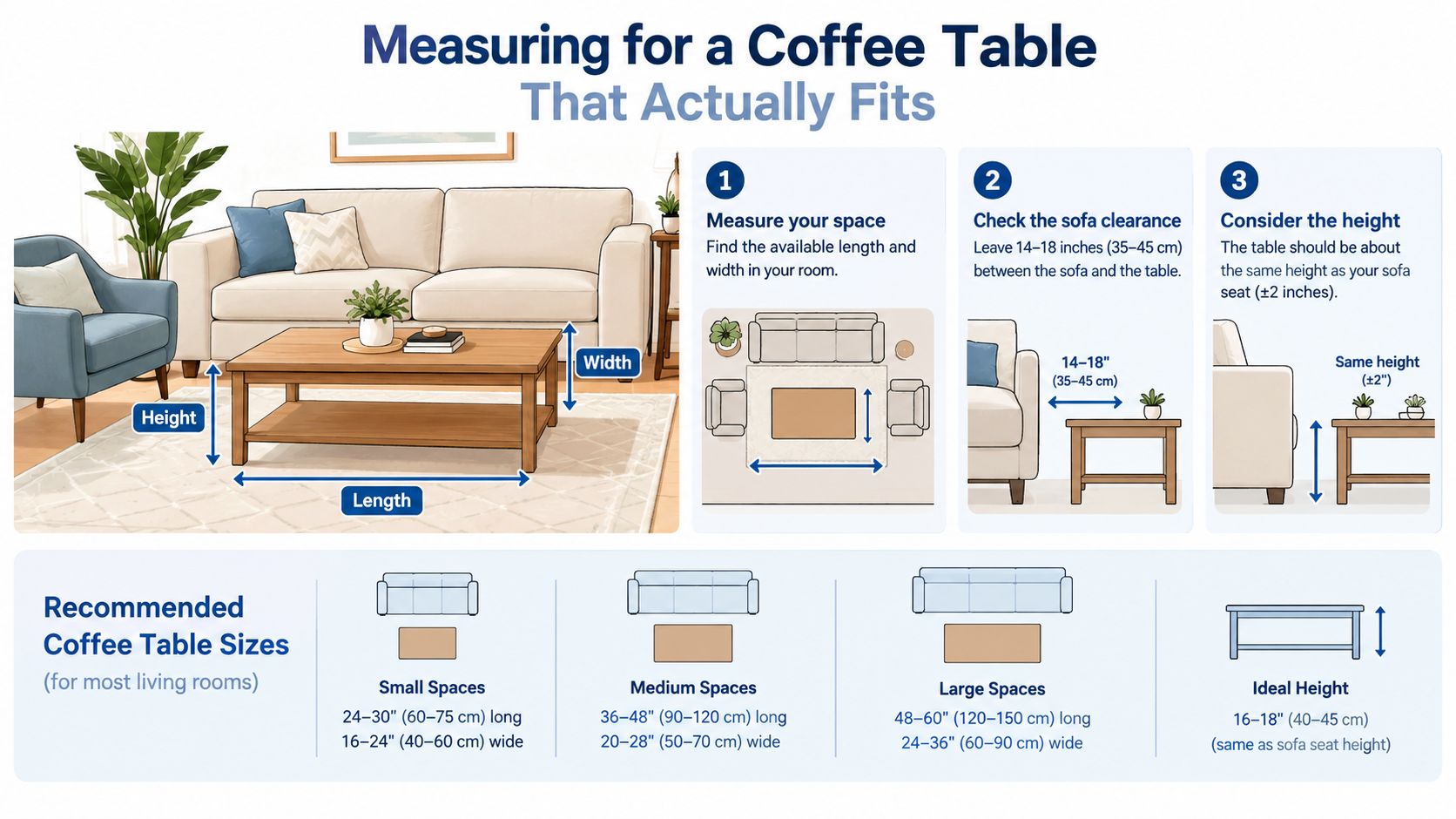
Measuring for a Coffee Table That Actually Fits
A bad coffee table usually fails on size first. You feel it every time you reach too far for a drink, squeeze past a corner, or stare at a table that looks tiny against a substantial sofa.
Measure the room before you fall for the piece.
Start with the seating length
Use your sofa as the anchor. A coffee table should usually run about two-thirds of the sofa's length. That proportion keeps a long, heirloom-quality solid wood table from overwhelming the room, and it keeps a smaller piece from looking like an afterthought in front of a well-made upholstered sofa.
Here is the plain-English version. An 84-inch sofa usually wants a table around the mid-50-inch range. That gives you enough top surface to be useful without turning the center of the room into an obstacle course.
If you are shopping for a custom upholstered ottoman instead of a wood table, the same rule holds. Scale first. Fabric choice comes later.
Get the height right
Height affects comfort more than shoppers expect. Measure the sofa seat height, then choose a coffee table that lands at about the same height or slightly lower. General sizing guidance commonly places coffee tables in the 16 to 18 inch range, as noted in this coffee table sizing guide.
Too tall feels intrusive. Too low gets annoying fast.
This matters even more with long-term pieces. A solid wood table built to stay in your home for years should work with the way you sit today, not just look good under showroom lighting.
Leave enough breathing room
Length and height get the attention, but clearance decides whether the room feels calm or cramped. Keep enough space between the sofa and the table for an easy reach, and protect the main walking path so nobody has to turn sideways to cross the room.
Use this order:
- Measure the sofa length.
- Measure the sofa seat height.
- Measure the open floor area in front of the sofa.
- Measure the walkway around the table.
If you want a clean process before visiting the showroom, this furniture measuring guide for your room and entryways helps you catch the dimensions that shoppers often miss.
Mark it on the floor before you buy
Painter's tape is still the smartest test. Outline the table size on the floor and live with it for a day. Sit down, put your feet up, carry a basket through the room, and see whether the footprint works.
That quick test saves people from buying a table that looks impressive in the store but feels wrong at home.
In a showroom with solid wood pieces and bespoke upholstered options built for the long haul, size is not a small detail. It is the difference between a coffee table you replace in two years and one that still makes sense after the next sofa, the next layout change, and the next stage of life.
Storage or Surface What Your Living Room Really Needs
A coffee table should fix the room's biggest daily annoyance. If your family is always clearing remotes, chargers, school papers, and coasters off the cushions, buy storage. If the room stays fairly orderly and you use the table for drinks, books, trays, or a charcuterie board on Friday night, protect the surface area.
This choice matters more with long-term pieces. In a Southeast Michigan showroom that has sold furniture since 1957, shoppers usually regret buying too little function long before they regret buying too much quality. A solid wood table or a custom upholstered ottoman should earn its spot for years, not just fill space for one season.
Storage vs Surface-First Coffee Tables
| Feature | Storage-Forward Tables | Surface-First Tables |
|---|---|---|
| Best for | Busy households with lots of loose items | Tidier rooms that need open serving or display space |
| Typical forms | Lift-top tables, drawers, shelves, nesting sets | Slab tops, simple wood tables, upholstered ottomans |
| Big advantage | Hides clutter and supports multi-use living | Feels lighter and often gives cleaner tabletop access |
| Main trade-off | Can look visually heavy and overstuffed | Demands better habits because clutter stays visible |
| Good fit for | Apartments, media rooms, family rooms, hybrid spaces | Formal living rooms, conversation areas, calmer layouts |
Storage adds visual weight. That is the trade-off. Drawers, lower shelves, and lift tops solve real problems, but they also make a table feel more substantial in the room. If your seating already includes deep custom upholstery, broad arms, and heavily framed wood pieces, another bulky table can make the center of the room feel crowded.
Open tables do the opposite. They keep the sightline cleaner and let the craftsmanship show, especially in heirloom-grade hardwood where the grain and joinery deserve to be seen. The catch is obvious. Every stray item stays in plain view.
Choose based on what happens after dinner
Watch the room between 7 and 9 p.m. That tells you what to buy.
- Choose storage if the tabletop becomes a drop zone every night and you want the room to recover fast.
- Choose surface area if you host often, serve snacks and drinks, or use the table more like a shared landing spot.
- Choose a flexible design if the room has to handle TV time, homework, and guests in the same week. This guide to multi-functional furniture for modern homes can help narrow that down before you start debating finishes.
One blunt rule from the showroom floor. Do not buy a lift-top or drawer-loaded table just because it sounds practical. If you will never use the mechanism or the storage cavity, that extra bulk is wasted. On the other hand, do not buy a bare sculptural table if your household lives with clutter in honest daylight. You will resent it.
The best long-term choice is the one that matches your habits and is built well enough to outlast them. In solid wood, that usually means choosing function first, then selecting a piece with the kind of construction and finish you will still respect ten years from now.
Choosing a Material That Ages Beautifully
Material decides whether a coffee table settles into the room or starts looking worn out before the sofa does.
If you want a piece that still makes sense ten or fifteen years from now, start with solid wood. In a showroom that has been helping Southeast Michigan families furnish homes since 1957, that lesson repeats itself constantly. Heirloom-quality hardwood earns its keep because it has real weight, real warmth, and a surface you can live with instead of tiptoeing around.
Solid wood sets the standard
Solid hardwood is the long-game choice. Cherry deepens in color. Oak develops character. Minor scratches read like use, not failure, especially when the table is built well and finished properly. If the top takes hard wear, it can often be refinished instead of replaced.
That is the difference between buying decor and buying furniture.
A shopper looking at solid wood coffee tables should inspect the basics first. Check the thickness of the top. Look at the joinery. Run a hand along the edge. Open your eyes to the grain match and the finish quality. Trendy shape matters less than construction you will still respect after years of daily use.
Coffee Table Materials Compared Over Years of Daily Use
| Material | Feel & Warmth | Durability Over Time | Maintenance |
|---|---|---|---|
| Solid wood | Warm, grounded, tactile | Ages with character, often refinishable | Moderate care, forgiving in real life |
| Metal | Cooler, leaner, more industrial | Structurally strong, finish wear can show | Shows fingerprints and surface marks |
| Glass | Light, airy, visually open | Holds its look if protected, less forgiving in active homes | Frequent wiping and visible smudges |
| Upholstered | Soft, quiet, comfortable | Depends on fabric quality and tailoring | Needs fabric care and routine upkeep |
Where the trade-offs get real
Metal works best as a visual counterpoint, especially under a wood top. It trims down the look of the table and can help a room with bulky seating feel less heavy. The trade-off is touch and maintenance. Metal can feel cold, and some finishes advertise every fingerprint, scratch, and dust line.
Glass earns its place in smaller rooms because it keeps the view open. It also asks for regular wiping and a little patience. In busy family rooms, shoppers often love glass for five minutes and resent it by the end of the week.
Upholstered cocktail tables are better than many shoppers expect. They soften noise, remove sharp corners, and feel comfortable in rooms built for television, conversation, and feet-up living. The difference between a keeper and a regret comes down to tailoring and fabric choice. Tight lines and quality upholstery look intentional. Puffy shapes and weak fabric look tired fast.
Customization matters here because material choice is tied to how the rest of the room is built. If your seating is a long-term investment in bench-made upholstery or solid wood case goods, the coffee table should hold up to the same standard. Made-to-order options in wood species, finish color, leather, and performance fabric let you buy for the room you have, not the one on a display floor.
One clear recommendation from the showroom floor. If you want the safest long-term bet, buy solid wood first. Choose metal or upholstery only when they solve a specific problem in the room.
Coordinating Shape and Style With Your Seating
A coffee table should look like it belongs with the seating you chose to keep for years, not like a filler piece dropped onto the rug at the last minute. In a room built around heirloom-quality wood and bench-made upholstery, shape and style need to support the seating plan, the traffic path, and the visual weight of the room.
A straight sofa usually pairs best with a rectangular or softly squared table. The lines relate to each other, and the arrangement looks settled. Sectionals, swivel chairs, and conversation layouts usually do better with a round or oval top because people can move around it without constantly skirting a hard corner.
Match the silhouette to the seating
Use the seating layout as your first filter.
If the room has one main sofa facing a fireplace or media wall, a rectangle usually looks right and gives you the most usable surface. If the room has a sectional with a chaise, two chairs angled inward, or a walkway cutting through the seating area, choose a round or oval table. Curved forms keep the room from feeling crowded and make movement easier in daily use.
This is also where visual weight matters. A thick upholstered sofa with broad arms can handle a table with presence, especially in solid cherry, maple, or walnut. Slimmer seating often looks better with a lighter base and a well-proportioned top. Shoppers who want that lighter look without giving up substance can browse metal-base coffee table options.
Edges affect comfort and safety more than expected
Edge profile changes how a table feels every day, not just how it photographs.
- Eased edges are the safest all-around choice. They suit traditional, transitional, and cleaner updated rooms.
- Beveled edges look sharper and more refined. Use them with neater upholstery lines and less ornament.
- Live-edge tops bring character, but they need restraint around them. Pair them with simple seating, not busy fabric and heavy pattern.
- Upholstered cocktail tables make sense in TV rooms, family spaces, and homes where people put their feet up.
If kids cut through the room, guests gather tightly around the table, or the space serves as a pass-through, skip sharp corners. Rounded ends or a full oval shape are easier to live with. That is practical design, not a trend.
Finish should tie the group together
The finish should connect to the seating the way a good pair of shoes finishes an outfit. It does not need to match every wood tone in the room, but it does need to make sense with the sofa, chairs, and rug.
Natural oak and lighter finishes calm down rooms with patterned upholstery or layered color. Darker walnut tones give pale upholstery more definition and make the seating group feel anchored. Painted or mixed-material bases can help bridge wood case goods and upholstered pieces when the room has more than one finish family.
In a Southeast Michigan showroom that has been helping families furnish rooms since 1957, this is the difference between a coffee table that lasts and one that gets replaced in two years. Solid wood with the right shape and finish keeps pace with custom upholstery and other long-term furniture choices.
Wall art also changes how the seating group reads as a whole. If you are trying to get the proportions right from sofa to table to wall, this hanging art above sofa guide is useful.
The coffee table does not need to steal attention. It needs to complete the seating group and hold up for the long haul.
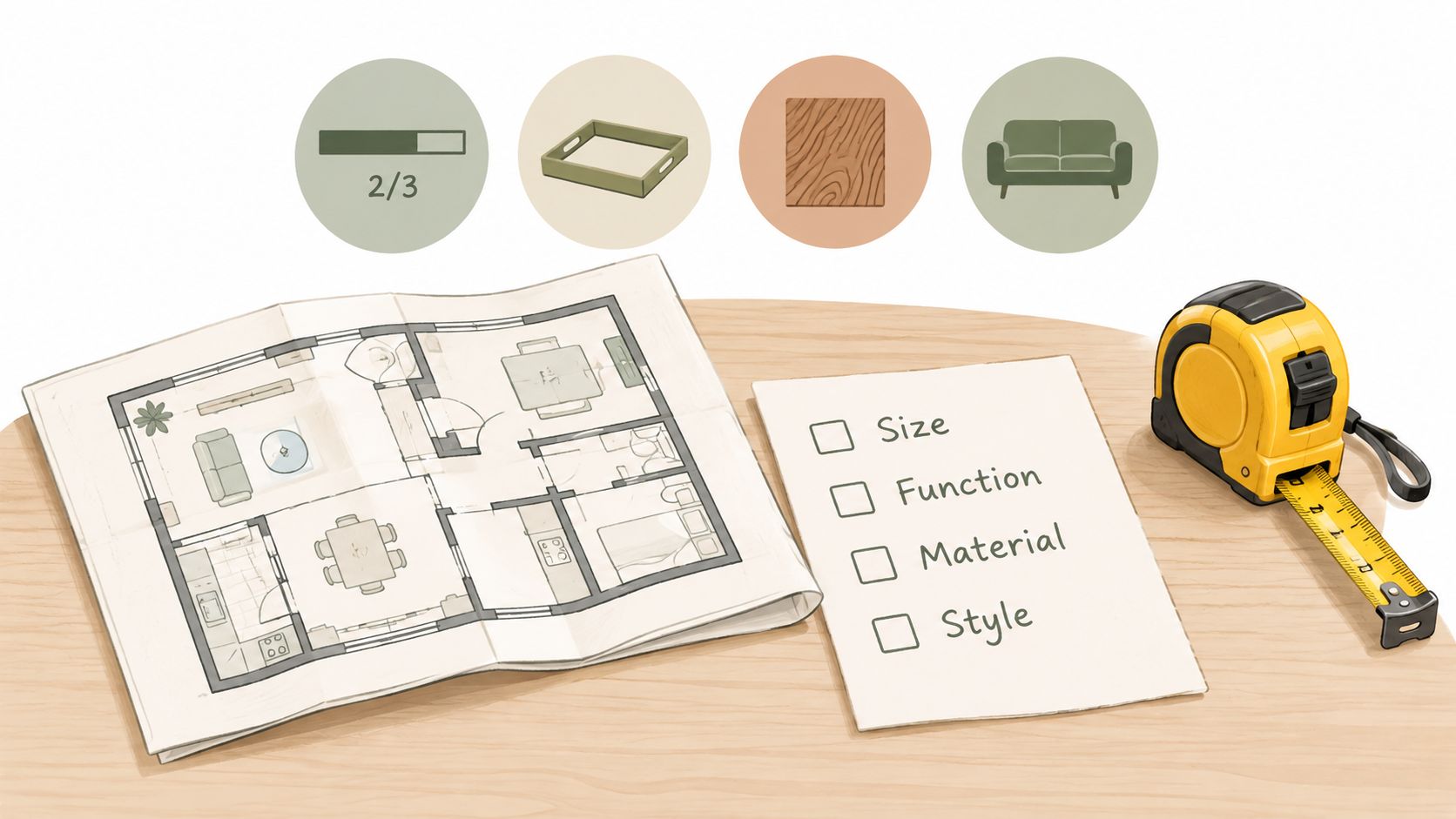
A Simple Decision Framework Before You Shop
A bad coffee table purchase usually starts the same way. Someone walks into a showroom, sees ten good-looking options, and starts judging them by stain color instead of whether the piece will work in the room for the next ten or fifteen years.

Handle the decision in this order and the field narrows fast. It also keeps you focused on long-term pieces, especially if you are pairing the table with solid wood case goods or custom upholstery built to stay in the house, not rotate out next season.
The four anchors
Start with size
Rule out every table that is too long, too short, too tall, or too deep for the seating area. If the proportions are off, nothing else can save it.Set the job
Pick one primary role. Hidden storage for remotes and throws, a broad top for entertaining, or an upholstered surface that can double as a footrest. Tables that try to do everything usually look bulky.Commit to material
If you want a piece that earns its keep over time, start with solid wood. Oak, maple, and walnut develop character with use and can be refinished if life leaves a mark. That matters more than a trendy finish that looks tired in two years.Finish with shape
Once size, function, and material are settled, choose the shape that suits the seating plan and traffic pattern. At that point, the right answer is usually obvious.
This order works because it mirrors how good furniture is bought. The strongest rooms are built around proportion, use, and construction quality first. In a Southeast Michigan showroom that has been doing this since 1957, that is the difference between a quick replacement and a table that still belongs in the room after the sofa gets reupholstered.
What to bring to the store
- Room measurements: Sofa length, seat height, and the open space in front of the seating
- A simple sketch: Enough to show traffic paths, chairs, and where the table has to sit
- Room photos: Wide shots in daylight help when comparing wood tones and upholstery
- A short priority list: Storage, softness, open surface, or heirloom-level durability
Bring those four things and you shop with a filter instead of a guess. That is how buyers end up with a coffee table that fits the room now and still makes sense when they invest in better upholstery, better wood furniture, and a living room meant to last.
See It in Person at the Ann Arbor Showroom
You measure carefully, order online, and the table still shows up wrong. The walnut reads too red against your sofa. The edge feels sharp on the knees. The upholstered option looks good in a photo but feels too soft to hold a tray. A coffee table is a use-it-every-day piece, and those calls are easier to make in person.
At the Ann Arbor showroom on South State St., shoppers can compare real scale, real wood tones, and real upholstery in the same room. That matters if you are buying for the long haul. Since 1957, Tyner has focused on furniture that stays in the house through reupholstery, layout changes, and the usual wear of a busy living room. A good coffee table should still make sense years from now, not just on delivery day.
What an in-person visit clears up
- True scale: A table can look balanced on a screen and still feel too long, too low, or too heavy beside your seating.
- Wood and finish selection: Solid oak, maple, and walnut all age differently. You want to see the grain, color depth, and finish sheen beside upholstery, not guess from a thumbnail.
- Upholstered details: If you are considering a tufted or upholstered cocktail ottoman, you need to press on the cushion, check the fabric, and judge whether it works for trays, feet, or both.
- Construction quality: Drawer glide, joinery, edge profile, and top thickness tell you whether the piece is built to last.
- Custom options: The best answer is often a made-to-order size, finish, or fabric, especially if you are building around heirloom wood furniture or bespoke seating.
If solid wood is the priority, review Tyner's Amish solid wood furniture collection before you go. It gives you a clear read on the kind of craftsmanship, wood species, and long-term durability that belong in a serious living room purchase.
Bring your room measurements, a quick sketch, and a few daylight photos. Then put your hand on the tops, step around the corners, and compare finishes next to upholstery you would live with. That is how shoppers stop treating the coffee table like a filler piece and start buying it like the long-term investment it is.