Expert Furniture Upholstery in Ann Arbor & SE Michigan

A lot of shoppers in Ann Arbor and across Southeast Michigan start the same way. They walk into a showroom, or scroll page after page online, and see a sea of sofas that look almost identical at first glance. The color seems right. The shape seems current. The price may even seem reasonable. Then the uncertainty sets in. Why does one piece feel steady and supportive while another already seems tired? Why does one fabric invite daily living while another looks worn before the room is even finished?
That confusion makes sense. Furniture upholstery is one of the least visible parts of furniture buying, even though it affects comfort, durability, and long-term value more than almost anything else. Identifying a pleasing color is common. Fewer know how to judge what sits underneath that fabric.
For households building a forever home, refreshing a condo, or upgrading a family room near South State St., the better question isn't just “Does this sofa look good today?” It's “Will this still feel good years from now?” That's where upholstery becomes an investment decision, not just a style choice. Material quality, cushion support, suspension, and frame integrity all work together. When they're built well, a piece can feel calm, grounded, and worth living with for a long time.
That same thinking helps when comparing leather options too. A simple guide to top-grain leather versus bonded leather can quickly show why surface appearance alone never tells the whole story.
Table of Contents
- An Introduction to Heirloom-Quality Furniture
- Understanding the Anatomy of Upholstery
- Choosing Your Upholstery Material
- The Unseen Foundation of Quality Furniture
- When to Reupholster Versus When to Replace
- The Made-to-Order Process at Tyner Furniture
- Costs Care and Making Your Investment Accessible
An Introduction to Heirloom-Quality Furniture
A familiar scene plays out every week. A shopper needs a sofa for a living room that gets real use. Kids stretch out for movies. Guests stay late after dinner. Someone takes the corner seat every evening with a book. Yet on the sales floor, many sofas seem designed more for a quick first impression than for daily life.
That's where the idea of heirloom quality becomes useful. It doesn't mean furniture has to look formal or precious. It means the piece is built with enough care, structure, and material integrity to keep earning its place in the home. Good furniture upholstery supports that goal from the inside out. The fabric matters, but so do the hidden layers that hold shape, absorb pressure, and return comfort day after day.
Practical rule: A sofa should be judged the way a home is judged. Surface appeal matters, but the structure underneath matters more.
This long view fits the values many Southeast Michigan households already have. People want pieces that feel good, wear well, and don't need replacing the moment styles shift. That's one reason trusted local furniture stores with a long legacy still matter. A business founded in 1957 carries a different perspective than one built around short-term trends. It understands that a recliner, sectional, dining chair, or upholstered bed has to live through years of real use.
A thoughtful home also doesn't stop at one room. The same quality standards shoppers bring to a sofa often carry into the dining room, bedroom, home office, and even outdoor spaces. Upholstery may be the focus here, but the broader idea is consistent. Buy fewer pieces. Buy better pieces. Choose craftsmanship that still makes sense later.
Understanding the Anatomy of Upholstery
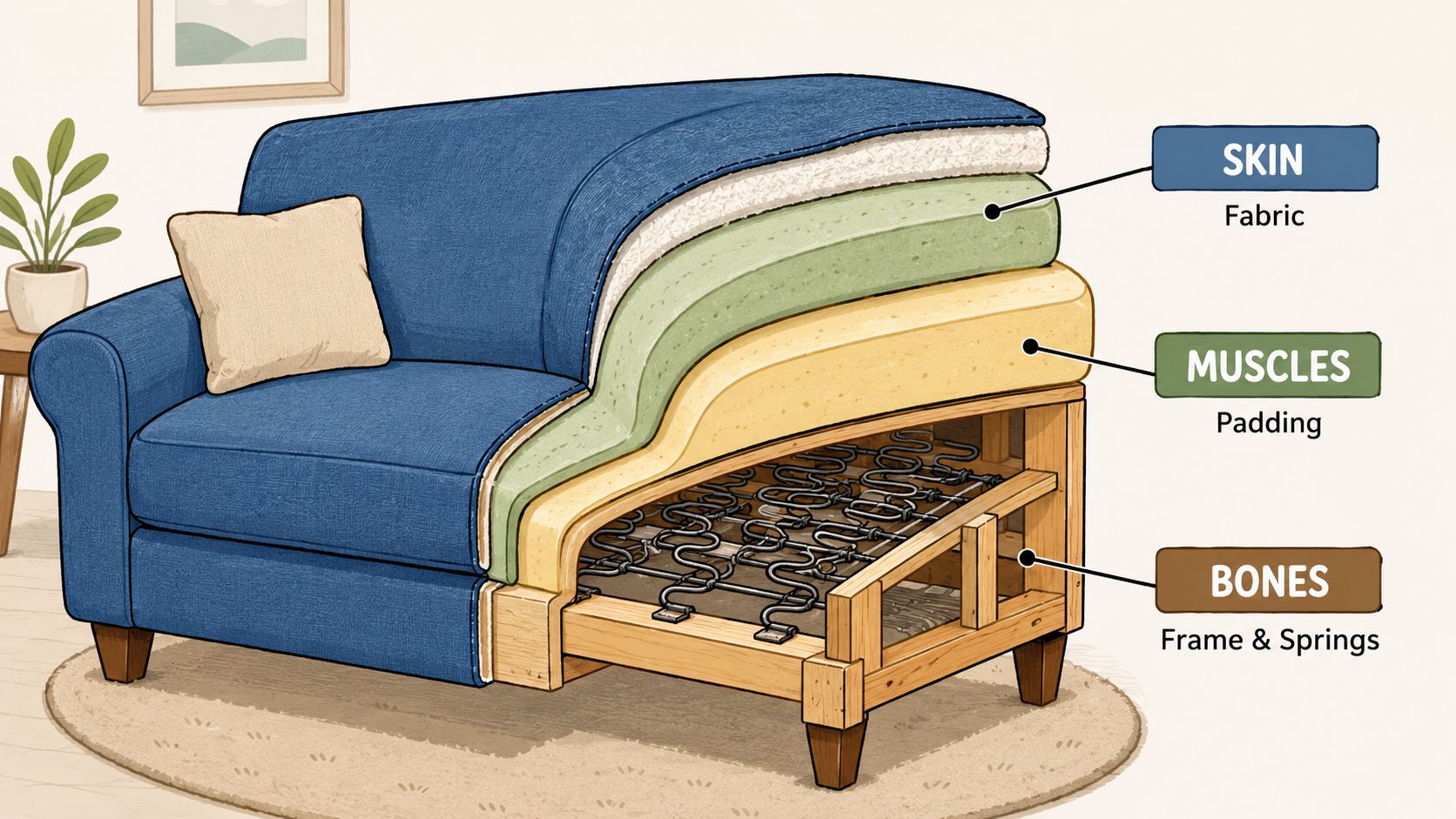
Why upholstery matters more than shoppers expect
Furniture upholstery is an old craft, but true upholstered furniture in the modern sense emerged only in the last four centuries, when padding became part of the furniture itself rather than a loose cushion, as noted in this history of upholstery. That history matters because it explains why upholstery isn't decoration added at the end. It's a complete construction method.
To best understand an upholstered chair or sofa, envision it as a body. Each layer has a job. When one layer is weak, the whole piece feels off, even if the outside still looks attractive.
A shopper who's dealing with flattened seats at home may find it helpful to review practical signs in this guide on how to fix sinking couch cushions. It gives useful context for recognizing whether the issue is the cushion alone or something deeper.
The four layers of comfort
The frame is the skeleton. It gives the piece shape, strength, and stability. If the frame twists, loosens, or flexes too much, no fabric or cushion can hide that for long.
The suspension acts like muscles. Springs or webbing absorb weight and help the seat push back in a supportive way. Good suspension keeps a sofa from feeling like a hammock.
The padding and cushion core are the supportive tissue. These layers create softness, resilience, and pressure relief. They also influence whether a seat feels crisp and structured or relaxed and sink-in.
The fabric or leather covering is the skin. It handles touch, wear, cleaning, and the room's visual personality.
- Frame: Holds alignment and resists wobble.
- Suspension: Controls support and recovery.
- Padding: Shapes comfort and seat profile.
- Covering: Affects feel, maintenance, and appearance.
A beautiful cover over weak construction is like quality paint over a cracked wall. It may look fine on day one, but it won't stay convincing.
Many readers make a common error: they assume comfort comes mostly from the cushion they can touch. In reality, comfort is layered. A plush cushion on weak suspension often feels good for a brief sit test, then disappoints in daily use. A well-built seat usually feels balanced instead of flashy. It supports the body without collapsing under it.
That's the core lesson in furniture upholstery. The best pieces don't rely on one magic material. They use several well-chosen layers working together.
Choosing Your Upholstery Material
Fabric is more than color and pattern
Material selection often starts with looks, but lasting satisfaction usually comes from performance. Upholstery-grade textiles are engineered for abrasion resistance, dimensional stability, and colorfastness, and they're typically heavier and woven more tightly than decorative or apparel fabrics. Higher construction density, yarn twist, and finishing treatments are key drivers of wear under repeated seating use, as explained in this guide to upholstery-grade textiles.
That technical language sounds intimidating, but the everyday meaning is simple. Upholstery fabric is built to be sat on, leaned against, and lived with. A fabric that looks lovely in a drape may not belong on a family room sectional.
For readers comparing options in detail, this article on upholstery materials gives a helpful next step.
Natural fibers and performance fabrics
Natural fibers often attract shoppers who want softness, texture, and an easy, welcoming look. Cotton can feel familiar and relaxed. Linen offers airy texture and a casual elegance. Wool can bring warmth and depth.
Performance synthetics and blends usually appeal to households that need easier maintenance and steadier appearance retention. Microfiber tends to feel smooth and approachable. Polyester blends can offer dependable everyday wear with a broad range of textures.
What matters most is matching the material to the room's real life.
| Upholstery Fabric Comparison | Durability | Best For | Maintenance Level |
|---|---|---|---|
| Cotton blend | Moderate to strong, depending on weave | Casual seating, lighter daily use | Moderate |
| Linen blend | Moderate | Formal rooms, textured interiors | Higher |
| Wool blend | Strong | Cozy spaces, tailored seating | Moderate |
| Microfiber | Strong | Family rooms, frequent use | Lower |
| Polyester blend | Strong | Multi-use spaces, busy households | Lower |
A common point of confusion is “durable” versus “forgiving.” Some fabrics resist wear well but show lint, pet hair, or wrinkling more easily. Others may not feel as luxurious at first touch but handle everyday messes with less drama.
Leather choices and everyday living
Leather deserves its own category because it ages differently from woven fabric. Good leather develops character through use. The surface softens, the color deepens, and the chair starts to reflect the person who uses it most. That's part of the appeal.
Top-grain leather often gives shoppers that supple, buttery feel they're hoping for. It tends to look refined without feeling fragile. Bonded leather can look similar from across the room, but it doesn't offer the same long-term experience.
Buying lens: The best upholstery material isn't the one that looks perfect untouched. It's the one that still looks and feels right after ordinary life happens.
For homes with pets, children, or frequent guests, practical questions help more than trend language:
- How does the material handle repeated sitting?
- Will it show wrinkles or marks quickly?
- How much upkeep realistically fits the household?
- Does the room call for softness, structure, or both?
Shoppers in Ann Arbor often do best when they bring a room photo, paint sample, and a realistic picture of daily use. A sun-filled sitting room, a basement media space, and a formal living room may all need different answers, even when the homeowner prefers one consistent design style.
The Unseen Foundation of Quality Furniture
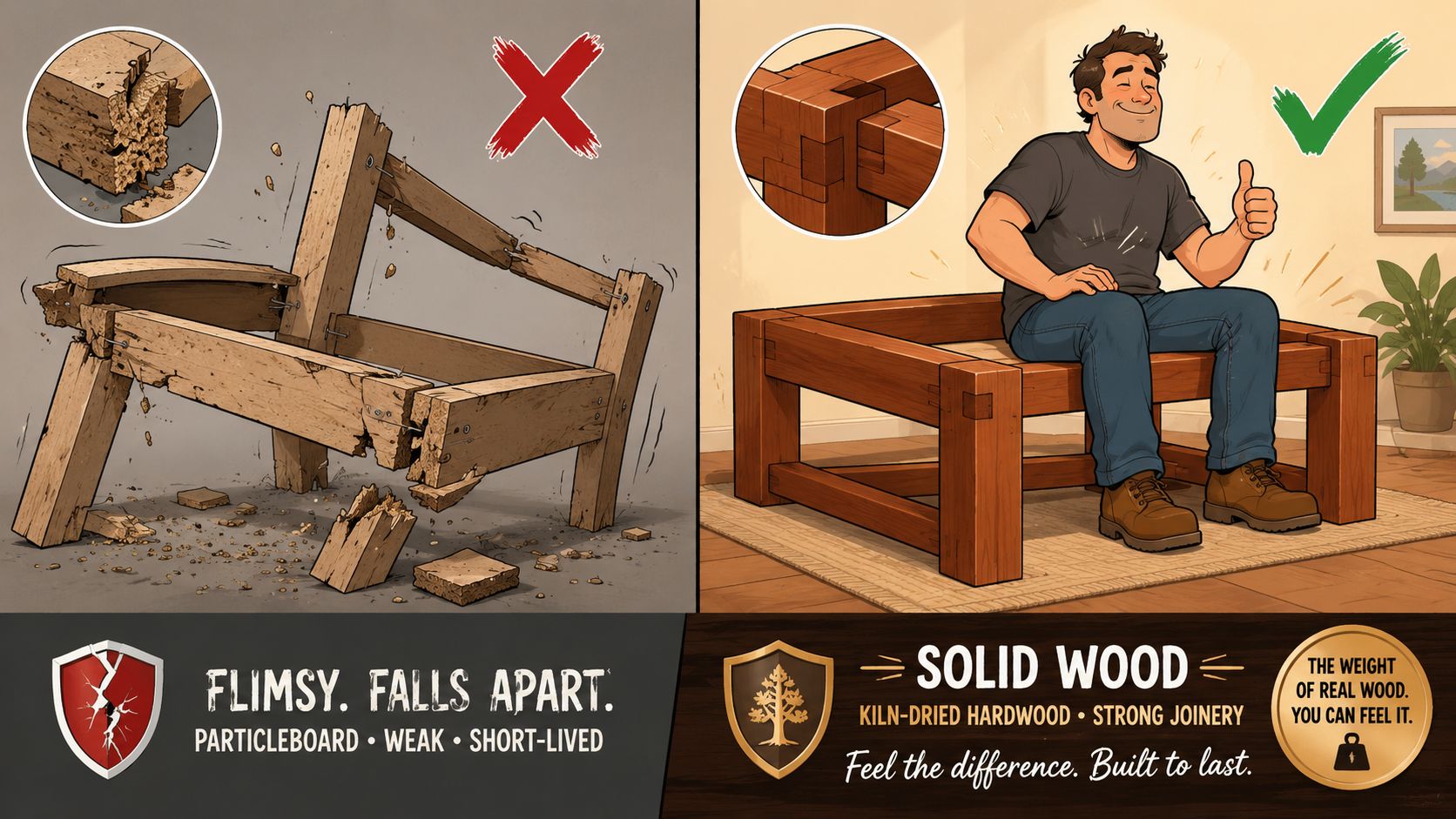
Why the frame decides the future
If upholstery material is what shoppers notice first, the frame is what decides whether the piece deserves to stay in the home. A strong frame keeps arms from loosening, backs from shifting, and seats from dipping unevenly. It gives the whole piece a grounded feel.
This matters even more when comparing hand-crafted construction to mass-produced shortcuts. Solid wood, especially when joined with time-honored methods such as mortise-and-tenon or dovetail joinery, tends to hold up better than lighter alternatives built with weaker materials and quick fastening methods. That difference rarely announces itself in a showroom. It shows up later, after years of use.
For readers who want a practical overview of what to inspect before buying, this checklist on what to look for in a new sofa or chair is worth reviewing.
Suspension changes everything
Even a strong frame can disappoint if the suspension isn't doing its job. Springs and webbing shape the seat's support, resilience, and feel over time. This is one reason two sofas with similar silhouettes can feel completely different.
A better suspension system helps prevent that familiar sagging center seat and the “rolling inward” sensation that makes people avoid certain spots on the couch. It also helps cushions wear more evenly because the foundation underneath them is doing part of the work.
A useful companion resource for readers curious about the construction side is this overview of the right sewing essentials for upholstery work. It helps explain why upholstery involves specialized materials and methods rather than ordinary fabric handling.
Construction also affects compliance
Upholstered furniture construction also intersects with compliance. In the U.S., upholstered furniture under 16 C.F.R. part 1640 / TB 117-2013 is evaluated through four component tests: cover fabric, resilient filling material, barrier material, and decking material. Those components are judged on char length, smoldering, and transition to open flaming, according to the Consumer Product Safety Commission upholstered furniture guidance.
That's important because upholstery isn't just one layer. If a barrier layer is used, it affects how the piece is built and enclosed. In practical terms, pattern layout, seam placement, and reupholstery decisions can all be shaped by what's happening beneath the visible fabric.
- Frame integrity: Supports weight and preserves shape.
- Joinery quality: Helps the structure stay tight over time.
- Suspension design: Controls comfort and sag resistance.
- Component construction: Affects how the entire upholstery system performs.
For shoppers who care about long-term value, this is the real dividing line. A sofa becomes an heirloom candidate when its unseen parts are built with the same seriousness as its visible ones.
When to Reupholster Versus When to Replace
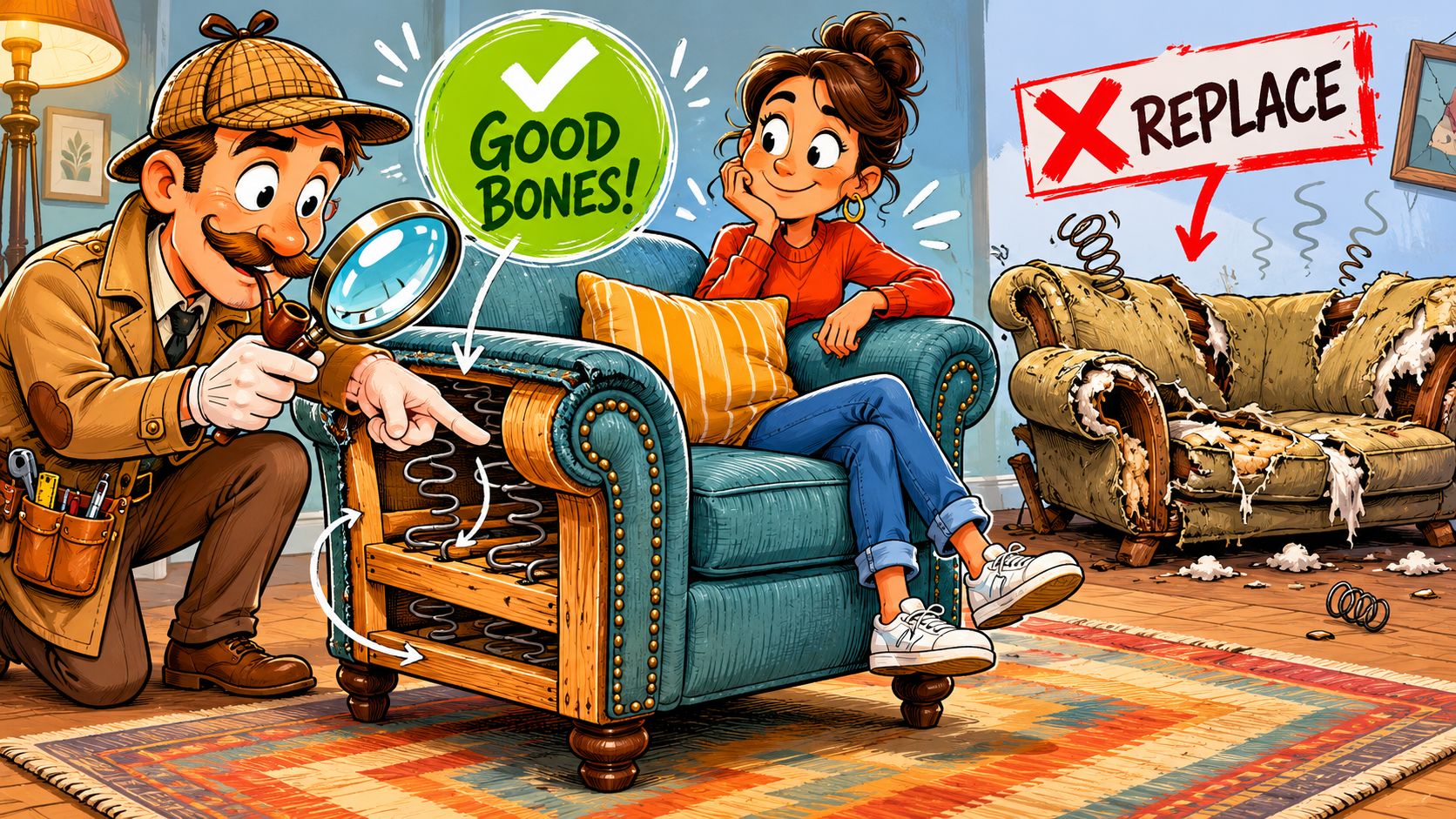
Some older furniture deserves a second life. Some doesn't. The challenge is knowing the difference before spending money on new fabric.
Reupholstery makes the most sense when the existing piece has a worthy foundation. A chair with a sturdy hardwood frame, well-built arms, and strong sentimental value may be an excellent candidate. The same goes for a sofa whose shape still works beautifully in the room and whose support system remains structurally sound.
Green flags that support reupholstery
These signs usually point toward reupholstery being worth serious consideration:
- Solid structure: The frame feels heavy, steady, and square.
- Good bones: The silhouette is attractive and hard to replace well.
- Repairable wear: Fabric is tired, but the underlying build still has life.
- Meaningful value: The piece has sentimental importance or uncommon craftsmanship.
Reupholstery works best when the outside is tired but the inside is still honest.
Before starting any project, planning questions matter. Upholstery guides advise customers to confirm exact fabric yardage requirements, clarify delivery logistics to the upholsterer, and discuss finished product details before purchasing material, as outlined in this reupholstery planning guide. That sequence helps prevent expensive mistakes.
Red flags that point to replacement
Other pieces tell a different story. If the frame wobbles, corners separate, or the seat deck feels compromised, new fabric may only disguise a deeper problem. Replacing a weak piece is often the wiser move.
Common warning signs include:
- Loose or twisting frame
- Visible structural fatigue
- Low-grade materials in the core build
- Arms or back that shift under pressure
Cost per year thus becomes the fairest way to think. Reupholstering a strong older piece can be smart because the renewed furniture may continue serving the home well. Spending heavily on a failing foundation usually leads to disappointment. The fresh fabric looks promising, but the furniture still sits poorly.
For many households, the best decision is emotional and practical at the same time. Keep and restore what has lasting structure. Let go of what never had enough substance to begin with.
The Made-to-Order Process at Tyner Furniture
A made-to-order experience helps shoppers move past the frustrating idea that what's on the floor is the only option. In-stock furniture can be a good starting point, but it isn't the whole story. A room often needs a particular scale, seat depth, finish, or material to feel resolved.
From sit test to finished selection
The process usually begins with real-life needs rather than trends. A family may need a sectional that fits an awkward corner. A professional furnishing a condo may want a cleaner profile with supportive seating. Another shopper may need a recliner that feels ergonomic instead of oversized.
That's where a showroom visit on South State St. becomes useful. A sit test answers questions no photo can settle. Seat height, back support, arm shape, and cushion feel all become clearer in person.
For readers curious about how custom ordering works before visiting, this guide on getting started with custom order furniture lays out the process clearly.
Where customization makes the biggest difference
Customization tends to matter most in three places.
First, upholstery selection. Hundreds of fabrics and top-grain leathers make it easier to match the room's traffic, mood, and maintenance expectations.
Second, configuration. Sofas, sectionals, and dining sets often work better when dimensions and layout fit the home instead of forcing the home to fit the furniture.
Third, fit. That's especially true with ergonomic seating. Stressless, for example, offers sizing options that help more shoppers find a recliner that supports the body properly rather than looking right from a distance alone.
Canadel is another strong example of the customization edge. Made-to-order dining lets shoppers combine finishes, table shapes, and configurations that feel bespoke rather than generic. That matters in open-concept homes where dining furniture has to live in conversation with upholstery, flooring, and cabinetry.
- For living rooms: fabric, leather, seat feel, and layout matter most.
- For dining spaces: finish, table scale, and chair selection shape daily function.
- For comfort seating: ergonomic fit changes how a chair feels after an hour, not just after a minute.
This kind of personalization lowers the chance of buyer's remorse. Instead of settling for “close enough,” the shopper can build around how the room lives.
Costs Care and Making Your Investment Accessible
Quality upholstery lasts longer when owners treat it like an investment instead of a disposable purchase. The daily care isn't complicated, but consistency matters. Routine vacuuming, prompt attention to spills, and cushion rotation help preserve appearance and wear patterns. Sunlight awareness matters too, especially in bright Southeast Michigan rooms where one seat can fade faster than another.
Simple care habits that protect upholstery
A few habits go a long way:
- Vacuum gently: Remove dust before it settles into fibers and seams.
- Rotate cushions: Spread daily use more evenly across the piece.
- Address spills quickly: Blot first, then follow the care guidance for the material.
- Use professional cleaning when needed: For readers comparing service expectations, this overview of the upholstery dry cleaning process in Birmingham offers useful context on what professional upholstery care can involve.
Seasonal upkeep helps too. This fall furniture maintenance checklist is a good reminder that furniture performs better when care is built into the calendar.
Why craftsmanship changes the value equation
Higher-quality upholstery usually costs more at the start because skilled labor is part of the product. U.S. labor data shows a median annual wage of $42,730 for upholsterers in May 2023, according to the Bureau of Labor Statistics. That figure helps explain why custom and repair work carry real value. Upholstery is specialized craft work, not simple assembly.
That's why cost per year is such a useful lens. A hand-crafted piece with durable materials, sound structure, and repair potential may ask for more upfront, but it can repay that decision in longevity, comfort, and fewer replacement cycles. The value isn't only financial. It also shows up in how a room feels when the furniture continues to perform instead of needing excuses.
For shoppers balancing budget with long-term goals, accessibility matters too. Special Financing can make a bespoke or made-to-order purchase easier to manage, and a Low Price Promise adds peace of mind that value and craftsmanship don't have to be at odds.
For shoppers ready to move from guessing to confidence, Tyner Furniture offers a practical next step. Since 1957, the Ann Arbor showroom on South State St. has helped Southeast Michigan households compare comfort, craftsmanship, and customization across living room, dining room, bedroom, home office, and outdoor spaces. A visit for a sit test can clarify more in a few minutes than hours of online browsing, and shoppers who are planning a special order can also browse the online Quick Specs to explore made-to-order options, including bespoke upholstery, Canadel dining, and Stressless ergonomic seating.