Custom Sectional with Chaise: How to Measure and Order

A Saturday afternoon in an Ann Arbor living room can turn into a furniture-planning session quickly: a tape measure on the rug, catalogs open on the coffee table, and several attractive sectionals that might fit. Before choosing a chaise side or fabric, there's a more basic question to answer: can the piece fit the room, work with its walkways, and make it through the route from the front door?
For a made-to-order sectional, measuring first is more than a tidy planning habit. It's how a shopper avoids committing to a shape that crowds the room or can't be delivered through the home.
Measuring Your Room for a Custom Sectional with Chaise
Before comparing finishes or layouts, tape the proposed sectional footprint onto the floor. That test shows how the piece will sit in the room and whether people can still move comfortably around it. Start by measuring the room's length and width, then mark doors, windows, vents, outlets, and the paths people use to cross the space. Door swings and walkways reduce usable floor area, even though they are not included in furniture dimensions. Use this furniture measuring guide to organize your room measurements before reviewing options.
Mark the clearances you want to keep. Leave at least 30 inches for a normal walkway and about 36 inches along a high-traffic route. Allow 14 to 18 inches between the sofa or chaise and coffee table so people can reach the table without squeezing through. These are planning guidelines; the taped layout lets you judge whether the spacing feels right in your own room.
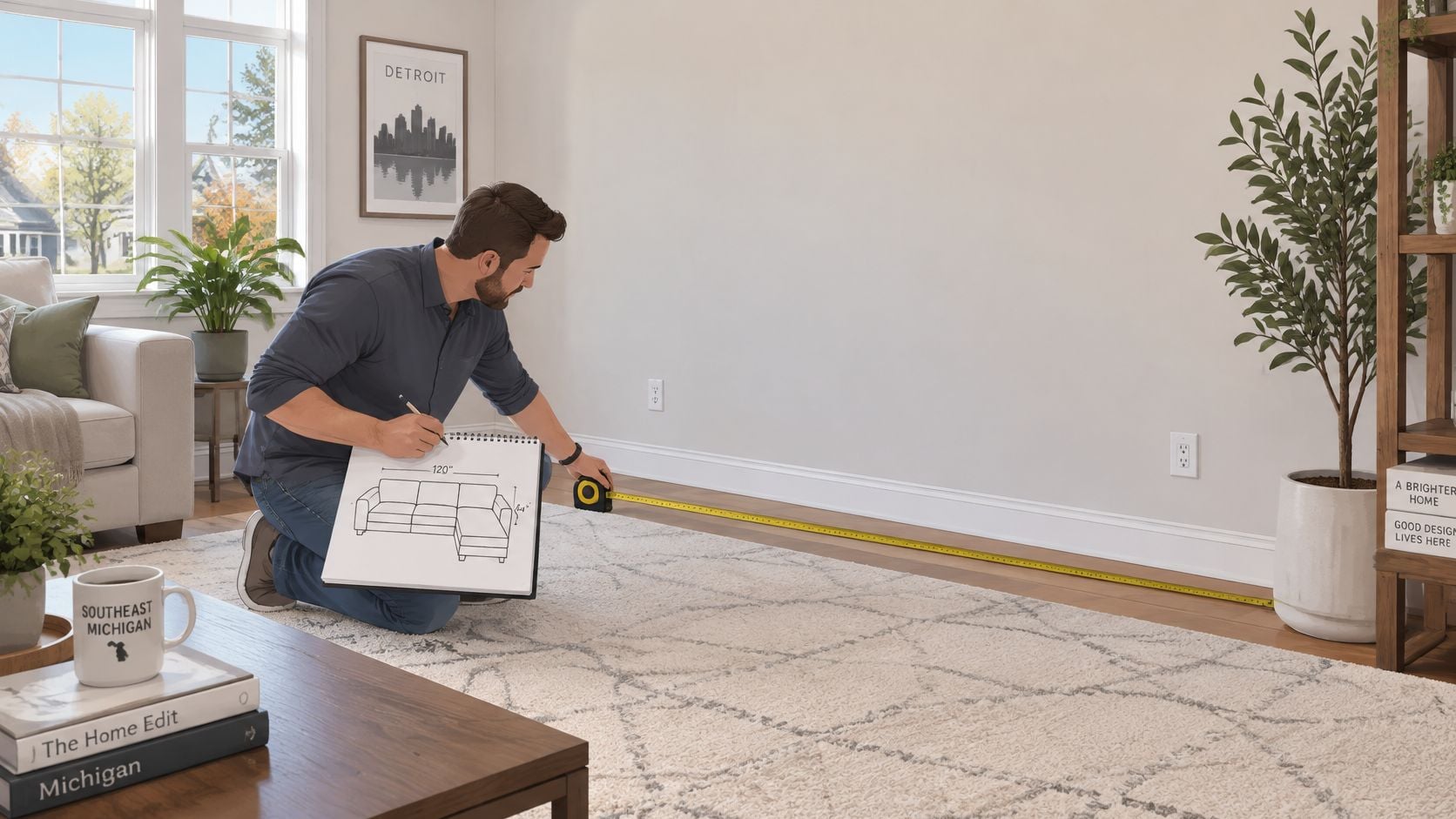
Mark the footprint before choosing a style
Draw a scaled floor plan, then transfer the sectional's exact outside dimensions to the floor with painter's tape. Include the chaise projection. Walk through the outline, open nearby doors, check access to outlets, and view it from the entry and seating areas. If the tape blocks a regular path or crowds the room, adjust the dimensions before settling on a configuration.
Manufacturer specification sheets can give you a starting range: L-shaped sectionals may measure 94 to 156 inches along the long side, 78 to 120 inches along the chaise side, and 36 to 40 inches deep (sectional fit and measurement guidance). Treat those figures as a reference, not a target. A custom piece should fit the taped footprint and preserve the room's circulation.
Pro-Tip: Measure the delivery route before finalizing dimensions. Check the narrowest doorway and passage, stair landings, elevator limits, and tight turns. A sectional can fit the room and still be too difficult to bring around a hallway corner.
Measure the frame and the available entry clearance, too. For planning, a sofa's diagonal depth may be roughly 28 to 36 inches, while entry doors commonly measure about 32 to 36 inches wide. Those ranges alone cannot confirm a successful delivery. Handles, packaging, angles, and turning space can all affect the route. Compare the delivery measurements with the taped floor plan before choosing the final size.
Choosing Orientation and Modular Versus Fixed Layouts
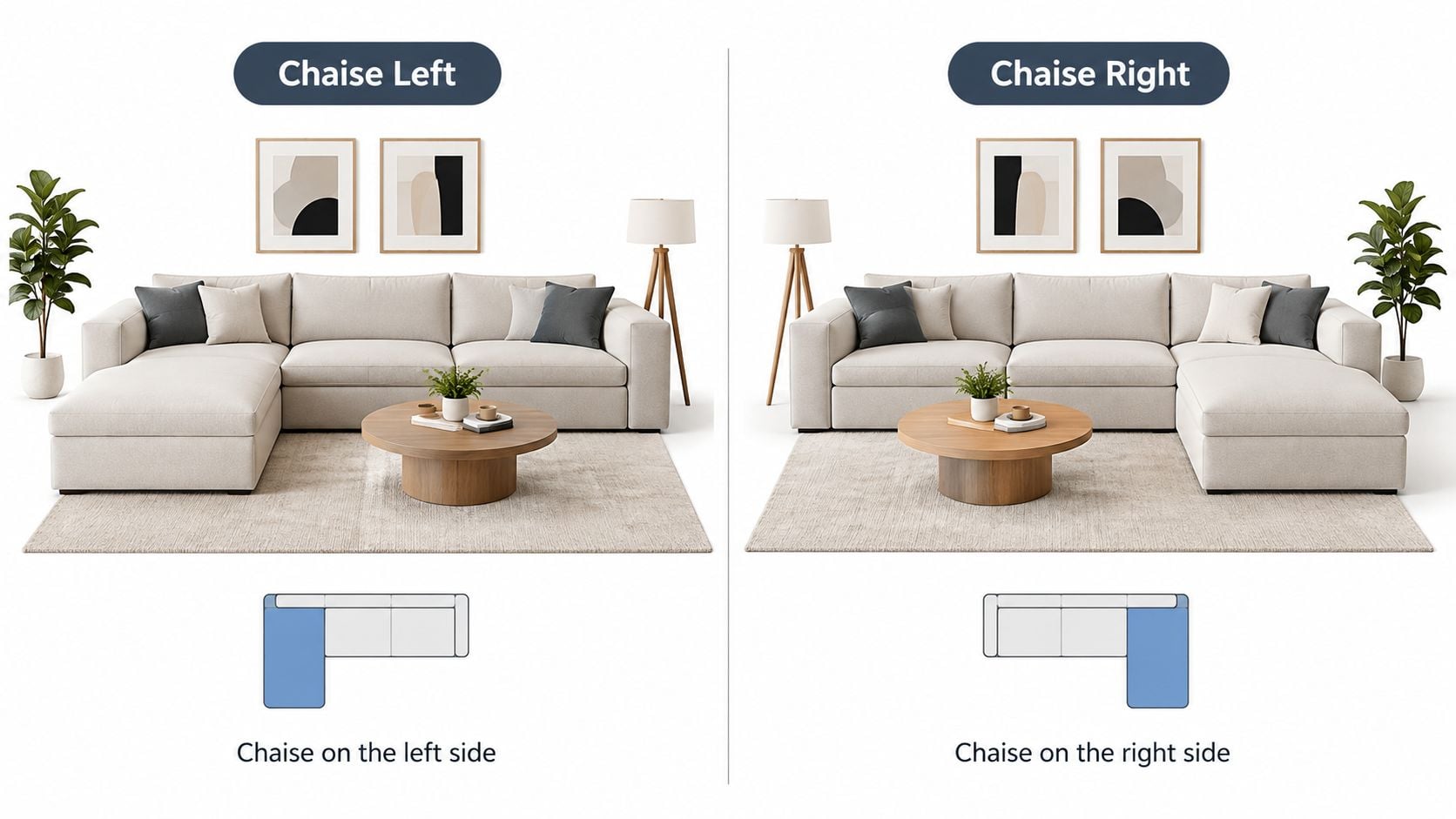
Once the footprint works, compare chaise orientation. Chaise-left and chaise-right are named from the viewpoint of someone facing the sofa from the front, not someone sitting on it. Stand where the main view of the sectional will be, often near the room entrance, and decide which side needs the extension. This simple viewpoint check can prevent an expensive mismatch on a made-to-order piece.
Orientation also changes how the sectional relates to the rest of the room. A chaise that extends toward a window may create a pleasant lounging spot but block a route or crowd a table. Moving it to the other side might improve circulation, yet leave the room's seating less connected. The taped footprint should help settle the question: sketch both arrangements and compare how each one affects paths, sightlines, and usable seating.
Modular pieces or one fixed arrangement
A fixed configuration offers a clean, unified silhouette. It can suit a room with a clear focal wall and a stable furniture plan. A modular arrangement, by contrast, uses separate seating components that can support different room layouts. That flexibility is useful if the sectional needs to shift around a focal point or the household expects its living space to change.
The thinking behind modular seating has a long history. In 1936, designer Gilbert Rohde advanced a “grouping principle” using armless chairs and corner units to form an L-shaped arrangement. That approach helped establish the idea that seating could be composed from pieces rather than locked into one sofa shape (sofa history and modular design). Today's modular logic lets buyers specify corner placement, seat count, orientation, and the extended chaise rather than accept one fixed silhouette.
The choice is practical as well as visual. A lounge-length chaise invites stretching out with a book on a rainy afternoon; a more upright seating arrangement may make conversation easier when guests gather. A larger L-shaped or U-shaped configuration can provide more places to sit, but its extra reach also uses more floor area. A compact sofa with a chaise may keep the room open, though it may offer less seating than a broader arrangement.
For each candidate layout, draw the sectional directly onto the room sketch and check it against the taped outline. Keep the option that fits how people move through the room, not just the one that looks most balanced on paper. For more terminology and configuration basics, consult this guide to sectional layouts and features.
Matching Fabric and Leather to Daily Use
Before choosing a fabric or leather, tape the proposed sectional footprint on the floor and confirm the chaise fits the room and its delivery path. Then consider how that seat will be used. A chaise often gets longer, more relaxed use than a formal sofa seat: people stretch out, children sprawl, and pets may settle there. Upholstery performance is a household decision as much as an interior design choice.
The Wyzenbeek double-rub test measures abrasion by rubbing standardized cotton duck fabric back and forth across an upholstery sample. Each complete back-and-forth movement counts as one double rub. Testing ends when visible wear appears or two yarns break. The result helps compare abrasion resistance, but it does not measure stain resistance, fading, pilling, or resistance to pet claws. See this upholstery abrasion testing guidance when reviewing a specification sheet.
| Household Use | Wyzenbeek Double Rubs | Best Fit |
|---|---|---|
| Occasional sitting in a formal room | Around 10,000–25,000 | Ordinary residential upholstery for lighter use |
| Typical everyday seating | Around 12,000–20,000 | A practical range for regular household seating |
| Busy family sectional or frequent lounging | Around 30,000–50,000 | Heavy-residential fabric suited to more abrasion |
These figures are screening benchmarks, not promises of a fabric's lifespan. Industry guidance puts general residential upholstery around 15,000–30,000 double rubs and heavy-residential use around 30,000–50,000 (fabric rating guidance). Published ranges vary by guidance and test context. Compare fabrics tested by the same method, rather than treating every rating as interchangeable.
Compare the feel as well as the specification
A tightly woven performance textile may feel crisp and structured; top-grain leather can feel buttery and soften with use. Fabric offers a broad range of colors and textures, while leather has a distinct surface and may show wear differently. Neither suits every household. Consider cushion construction, care needs, daily habits, and the look you want before deciding.
Martindale cycles and Wyzenbeek double rubs come from different test methods. One industry benchmark associates 15,000 Wyzenbeek double rubs with about 20,000 Martindale cycles, and 30,000 double rubs with 40,000 Martindale cycles. These are approximate comparisons, not interchangeable measurements. Use a rating to compare samples tested on the same basis.
Tyner Furniture offers made-to-order upholstery choices, including hundreds of premium fabrics and top-grain leathers for sectionals. Ask for the complete technical sheet and check the abrasion method, fiber content, cleaning code, lightfastness, and exclusions before choosing. This guide to upholstery materials explains how material characteristics affect daily use. For a general reference on how material choices shape feel and upkeep across home textiles, see choosing fabric for personalized blankets.
Frame Construction and Joinery That Lasts for Decades
Fabric is the part a shopper sees and touches, but the frame and its joints carry the structure. The phrase “solid wood” doesn't explain how two pieces connect, where the frame needs reinforcement, or how the construction handles movement and use. Joinery gives a more concrete starting point for evaluating durability.
A mortise-and-tenon joint fits a projecting tenon into a matching mortise, creating a broad wood-to-wood connection that distributes stress across the joint. A dovetail joint uses interlocking pins and tails that resist being pulled apart without relying entirely on hardware. These shapes can also accommodate some natural seasonal movement in wood, which helps structural connections stand up to changing conditions (joinery and wood durability overview).
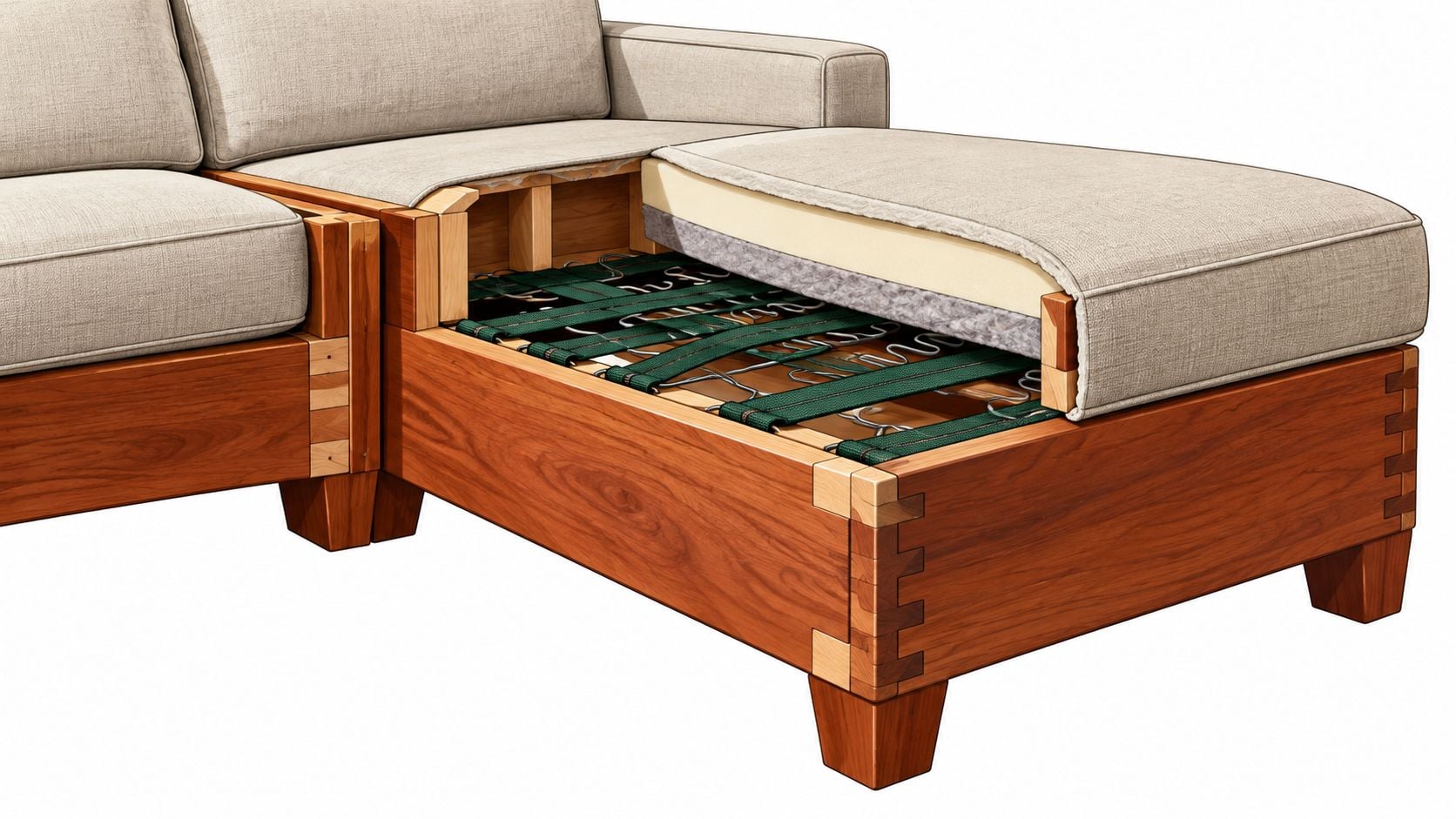
Ask about the joints, not just the label
The weight of solid cherry or the grain of oak and maple gives a different impression from a lightweight, hollow-feeling frame. But heft alone doesn't confirm construction quality, and a wood label doesn't tell the full story either. Ask which joints appear in the frame and where they're used. A discussion about the actual connection is more useful than a general assurance about materials.
Tyner's Amish hand-crafted furniture uses North American hardwoods such as cherry, oak, and maple, contrasting with mass-produced furniture that may use veneer over particleboard. That distinction matters to shoppers looking for craftsmanship and an heirloom piece, but furniture should still be assessed by its construction details and intended use. A durable piece may cost more upfront; the relevant comparison is its expected usefulness over time and cost-per-year, not sticker price alone.
Pro-Tip: Ask which joints are used at the frame's stress points, and whether the sectional's support frame and seat deck use the same construction approach. Specific answers make it easier to compare craftsmanship.
Repair and maintenance can also affect a piece's useful life. For wood furniture, shoppers weighing a refinish against replacement may want to understand what professional furniture painting services involve before deciding how to care for an existing piece. For upholstered seating, ask about the frame and support system beneath the cushions, along with the manufacturer's repair options. This makes longevity a question of serviceability as well as materials and joinery; additional construction details are available in this guide to sofa support systems.
Choosing Between Floor Models and Custom Orders
A floor model makes it possible to sit in a sectional and judge its comfort immediately. A made-to-order piece gives more control over the match between the room and the furniture. The better choice depends on which trade-off matters most: getting a known piece that's available in the showroom, or shaping the configuration, upholstery, and finish around a specific home.
| Decision | Floor Model | Made-to-Order |
|---|---|---|
| Room fit | Works when its existing dimensions and orientation suit the taped footprint | Can be configured around the room's measurements and chaise-side needs |
| Upholstery | Limited to the model's available selection | Allows a more tailored choice of fabric or leather |
| Layout | The displayed arrangement is the starting point | Configuration can address an awkward corner or preferred seating plan |
| Comfort check | Can be tested directly in the showroom | A showroom sit test helps assess feel, though the final configuration may differ |
In-stock is just the beginning. Tyner's made-to-order programs let clients customize upholstery, configuration, and finish, with options that include Canadel dining and Stressless ergonomic seating for other spaces in the home. For a sectional, the benefit is being able to align the chaise side, seat arrangement, and upholstery with the room rather than settling for the nearest showroom match. That control also carries responsibility: custom orders require careful verification because the finished piece is built to the approved specification. The custom order guide outlines what to consider before placing an order.
Read the financing terms before signing
Special financing, subject to credit approval, can make a larger furniture purchase easier to plan, and promotional no-interest periods may be available for floor models or custom orders. The written terms are what matter. An offer described as “0% interest for 12 months” may use deferred interest rather than a genuine 0% APR plan. With deferred interest, failing to clear the balance by the promotional deadline can trigger interest calculated from the transaction date (furniture financing terms and risks).
Before committing, confirm whether the promotion is deferred interest or true 0% APR, check the end date, calculate the payment needed to clear the balance on time, and verify that made-to-order furniture qualifies under the written terms. Tyner Furniture's special financing and Low Price Promise can support a competitive-value decision, but neither replaces reviewing the contract. For home projects more broadly, the idea of tailoring a finished space to its occupants also appears in guidance on how to build a custom Scottsdale residence. In furniture, the equivalent discipline is to approve the configuration and terms before production begins.
Booking Your Sit Test in Ann Arbor
A room sketch, a taped outline, and fabric notes turn an abstract furniture search into a practical decision. The measurements show what can fit; the upholstery specification narrows which materials suit the household; and construction questions clarify what sits beneath the surface. A showroom visit can bring those details together through a real sit test.
Tyner Furniture has served Southeast Michigan since 1957, and its Ann Arbor showroom on South State St. offers a place to explore furniture with local guidance. Sit on the sectional and pay attention to seat depth, cushion firmness, and chaise length. A display model won't necessarily match a custom configuration exactly, but it can help shoppers describe the comfort they want before making the final choices.
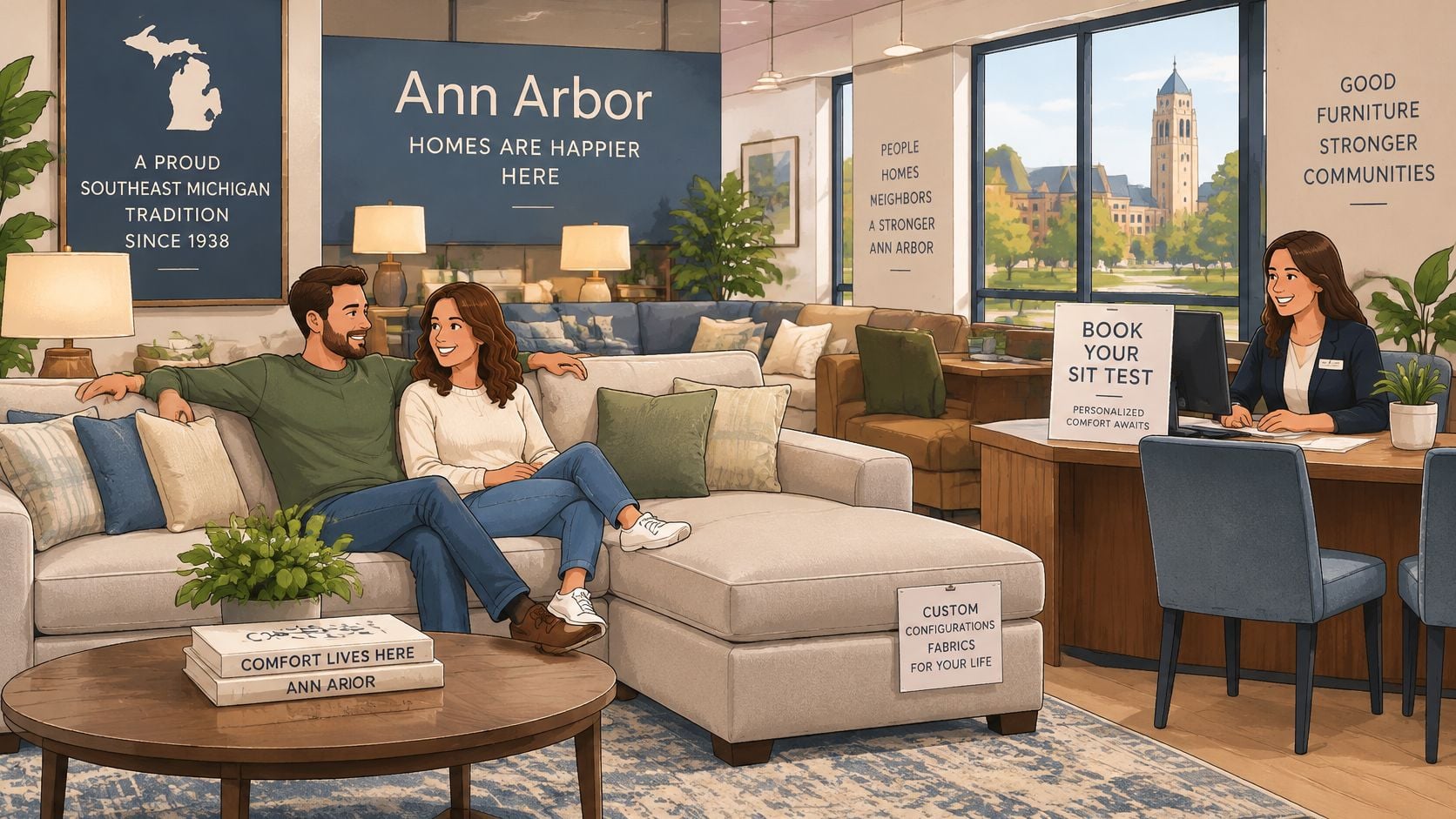
The showroom can also help put a sectional in context with the rest of the home. Tyner covers furniture for home offices, living rooms, bedrooms, dining areas, and outdoor spaces, making it possible to consider how finishes and upholstery relate across rooms. For special orders, online Quick Specs offer a useful way to review product details before planning a visit.
Pro-Tip: Bring the room sketch, the measurements from the taped footprint, and a short list of fabric needs. Those notes make it easier to compare comfort and configuration without relying on memory.
There's no need to settle on a style before confirming the fit. Visit the Ann Arbor showroom for a sit test, or browse Quick Specs for special orders before making the trip.
Tyner Furniture offers made-to-order sectional configurations and upholstery options, with local guidance for shoppers comparing fit, comfort, and construction. Bring the room measurements to the Ann Arbor showroom for a sit test, or explore the available details at Tyner Furniture.