How to Style Your Camel Back Sofa: Timeless Elegance in 2026

A living room can look polished on moving day, then feel dated once a few seasons of decorating trends have passed. Homeowners in Ann Arbor and across Southeast Michigan often want one substantial sofa that feels welcoming today, remains relevant later, and earns its place as an heirloom rather than a short-lived accent. A camel back sofa offers that balance through a graceful profile, thoughtful craftsmanship, and made-to-order flexibility.
Furniture shopping can feel overwhelming, especially when online photographs flatten the difference between a well-built frame and a merely attractive one. A trusted local furniture store helps shoppers evaluate comfort, proportion, upholstery, and long-term value in person. Since 1957, Tyner Furniture has served the Ann Arbor community, helping households select pieces for living rooms, dining rooms, bedrooms, home offices, entertainment areas, and outdoor spaces. Its traditional design guidance reflects an approach centered on lasting character rather than fleeting fashion.
An Introduction to Timeless Seating
A camel back sofa can become the visual anchor of a room without demanding that every other piece follow a formal style. In a Southeast Michigan home, it might sit beneath modern artwork, beside a clean-lined floor lamp, or across from a relaxed coffee table. Its presence feels established, but the right fabric, finish, and surrounding accessories can make it warm and current.
The design also suits shoppers who are thinking beyond the initial purchase. A sofa with durable construction and replaceable upholstery can serve through changing interiors, family routines, and future moves. That makes the decision less about a single decorating moment and more about cost-per-year value, comfort, and the possibility of passing a well-maintained piece forward.
Practical rule: A classic silhouette becomes a flexible investment when the frame, upholstery, dimensions, and finish match the household's actual habits.
A local showroom remains valuable because photographs can't reveal everything. The hand beneath a fabric, the height of the arms, the way the back supports the shoulders, and the visual weight of the wood base all affect a purchase. A proper sit test gives shoppers a clearer sense of whether the sofa feels ergonomic enough for reading, conversational enough for guests, and substantial enough for daily use.
The camel back sofa stands out because its identity begins with the backline rather than excessive decoration. That architectural curve gives the room a focal point, while customization keeps the piece from feeling like a museum reproduction. For homeowners building a forever home or making selections with greater care, the result can be both bespoke and practical.
Defining the Elegant Camelback Silhouette
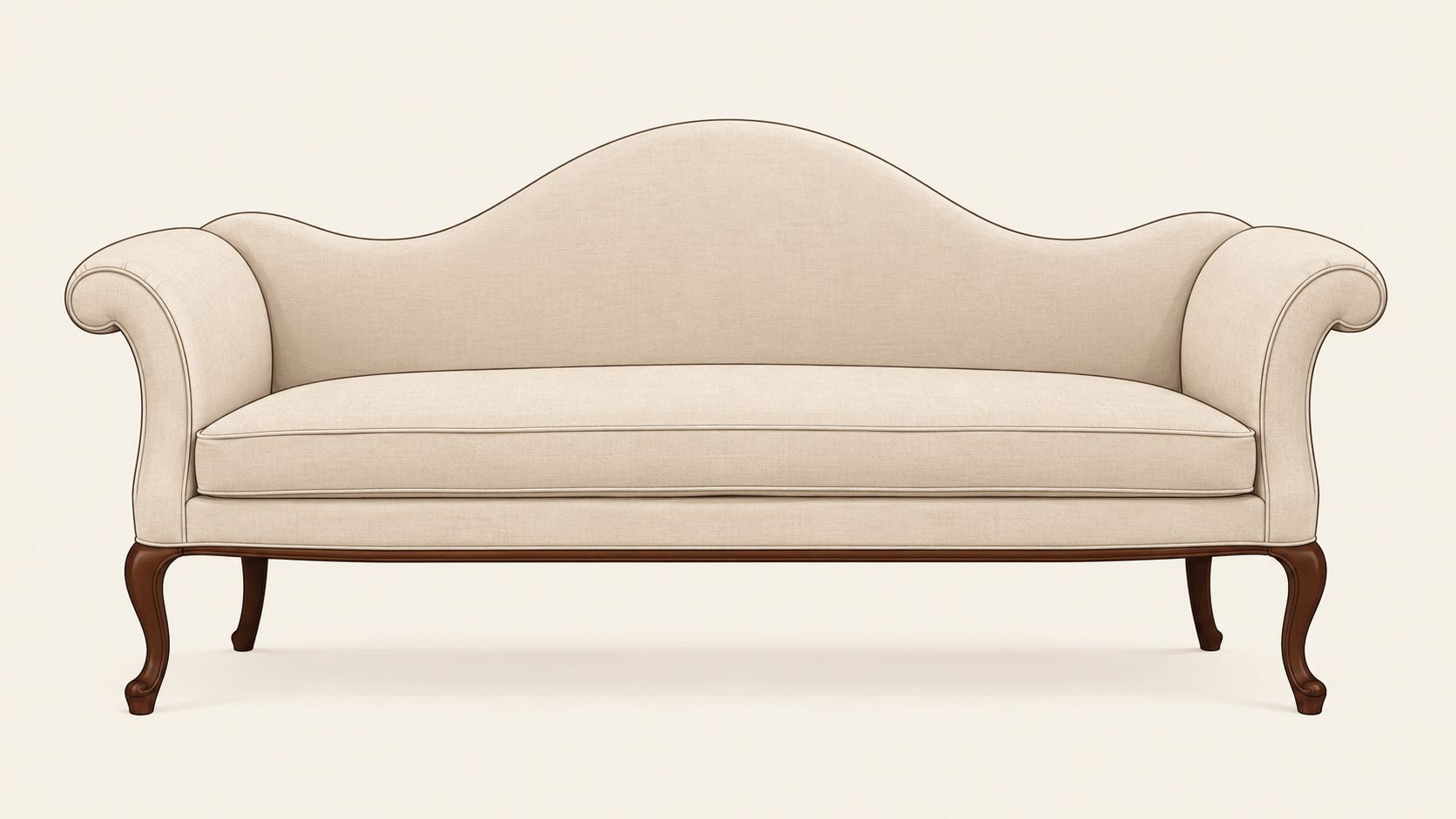
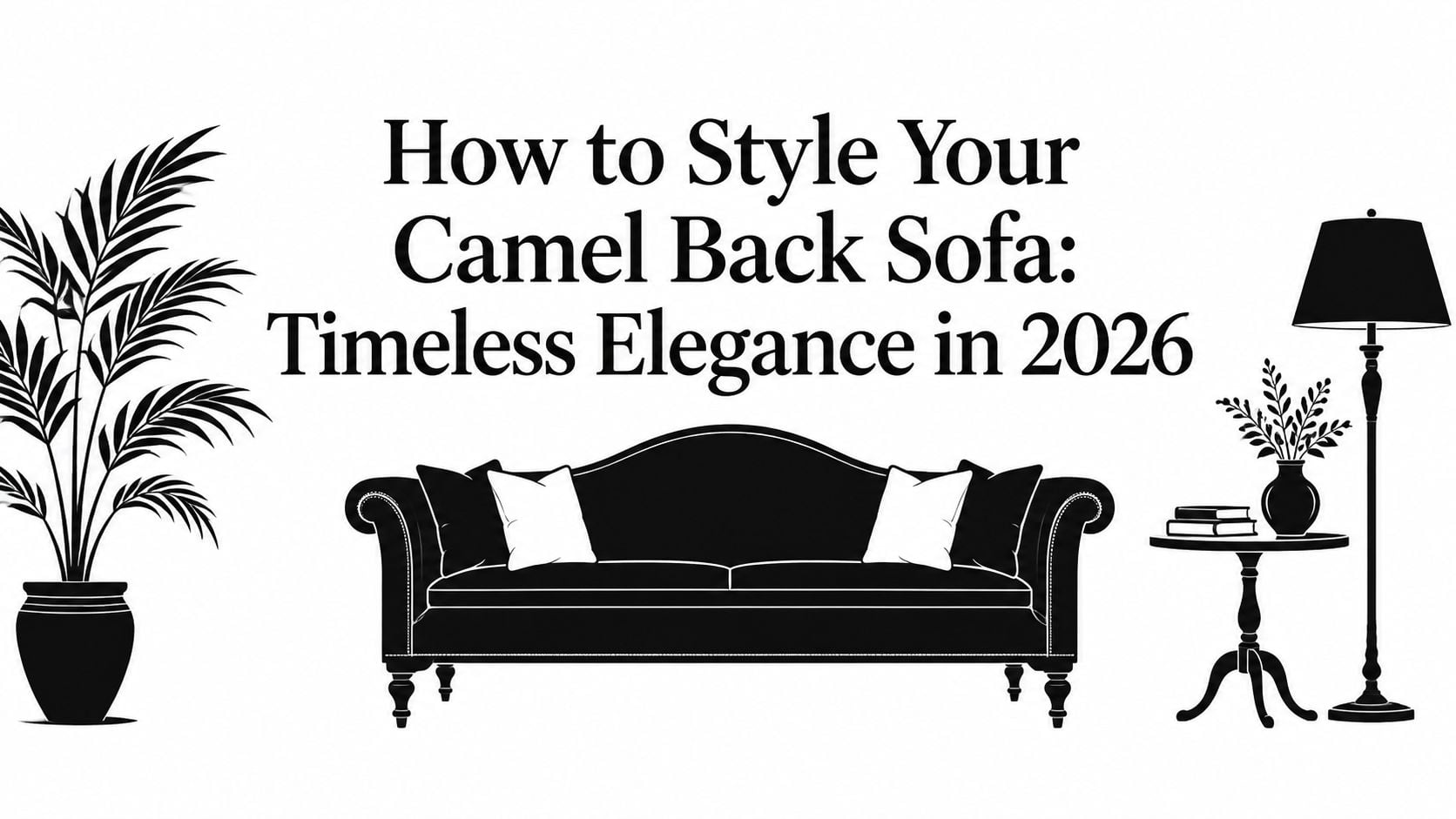
The name comes from the sofa's central crest. A camel back sofa has a back profile that rises to a central peak or twin peaks, then slopes toward the arms. That shape creates a more formal outline than a straight-back sofa and commonly appears with rolled arms and an exposed wood base or legs, as described in this camel back sofa silhouette guide.
Shoppers can identify the form by examining three connected features:
- The crest rail: The arched back is the defining element. A single central rise creates a calm, symmetrical profile, while twin peaks introduce more pronounced movement.
- The arms: Rolled or outward-curving arms support the traditional character and soften the transition from the raised back to the lower sides.
- The base: Exposed wood legs or a visible wood frame add structure. The finish may be understated, richly stained, or lightly painted, depending on the room's direction.
The upholstery changes the mood without erasing the identity. A linen-like textile can make the sofa feel relaxed and collected, while a richly colored woven fabric emphasizes its historic presence. Top-grain leather can bring a buttery feel and a more refined appearance, particularly when the wood finish remains visible.
What the silhouette changes in a room
The crest naturally draws the eye upward, so wall placement matters. Against a plain wall, the curve becomes architectural decoration. Beneath artwork, the sofa should leave enough breathing room for both shapes to remain legible. In a smaller apartment, a lighter finish and restrained upholstery can prevent the profile from feeling visually heavy.
The backline also affects how the sofa relates to nearby furniture. A low, simple coffee table can balance the raised crest, while a heavily carved table may make the arrangement feel overly formal. Pillows should support the back without hiding the central rise. A pair placed toward the arms can preserve the silhouette while adding comfort.
The sofa's appearance isn't determined by cushion height alone. The crest, arms, exposed wood, and overall proportion carry most of the design language, which is why two sofas with similar seating capacity can create very different rooms.
A Rich History from American Craftsmen
The camel-back sofa belongs to a documented 18th-century American furniture tradition. The Metropolitan Museum of Art records an American example dated 1760–1790 and notes that this style was the most common sofa type made in America during the second half of the eighteenth century, especially in Philadelphia, according to the museum's collection record for an American camel-back sofa.
That history gives the form unusual weight. It wasn't a niche novelty that appeared briefly and disappeared. Philadelphia became a central production city for this type of seating, and surviving examples preserve the combination of arched backs, serpentine front rails, and outward-scrolling arms associated with the period. The Smithsonian's Diplomatic Reception Rooms likewise emphasizes the strong survival of Philadelphia-made sofas, with examples from that city represented in greater numbers than those from other American cities.
From period furniture to living tradition
The silhouette is often discussed alongside major furniture references such as Chippendale, Sheraton, and Hepplewhite. Those associations help explain why the form can look carved and formal in one setting, then restrained and refined in another. Later Colonial Revival decorating brought the profile back into wider use, reinforcing its ability to move between historical appreciation and contemporary interiors.
Individual surviving pieces make the timeline tangible. The Detroit Institute of Arts dates an American camelback sofa to circa 1770, while an example associated with John Penn has been dated between 1763 and 1771. These documented dates don't mean a new sofa must imitate every historic detail. They show that the underlying design has already proven its staying power across generations.
A well-chosen classic doesn't freeze a room in the past. It gives newer materials and personal details something with which to converse.
For Southeast Michigan homeowners, the historical connection can make a purchase feel more meaningful. The sofa becomes part of a longer American design story, while its upholstery and finish can reflect the household using it now. Tyner's American-made solid wood furniture offers a related way to think about material integrity, craftsmanship, and pieces intended to remain useful rather than disposable.
The strongest modern interpretation respects the old proportions without turning the living room into a period display. A simple rug, contemporary lighting, or relaxed textiles can give the camel back sofa an edited, livable setting.
The Anatomy of an Heirloom Quality Sofa
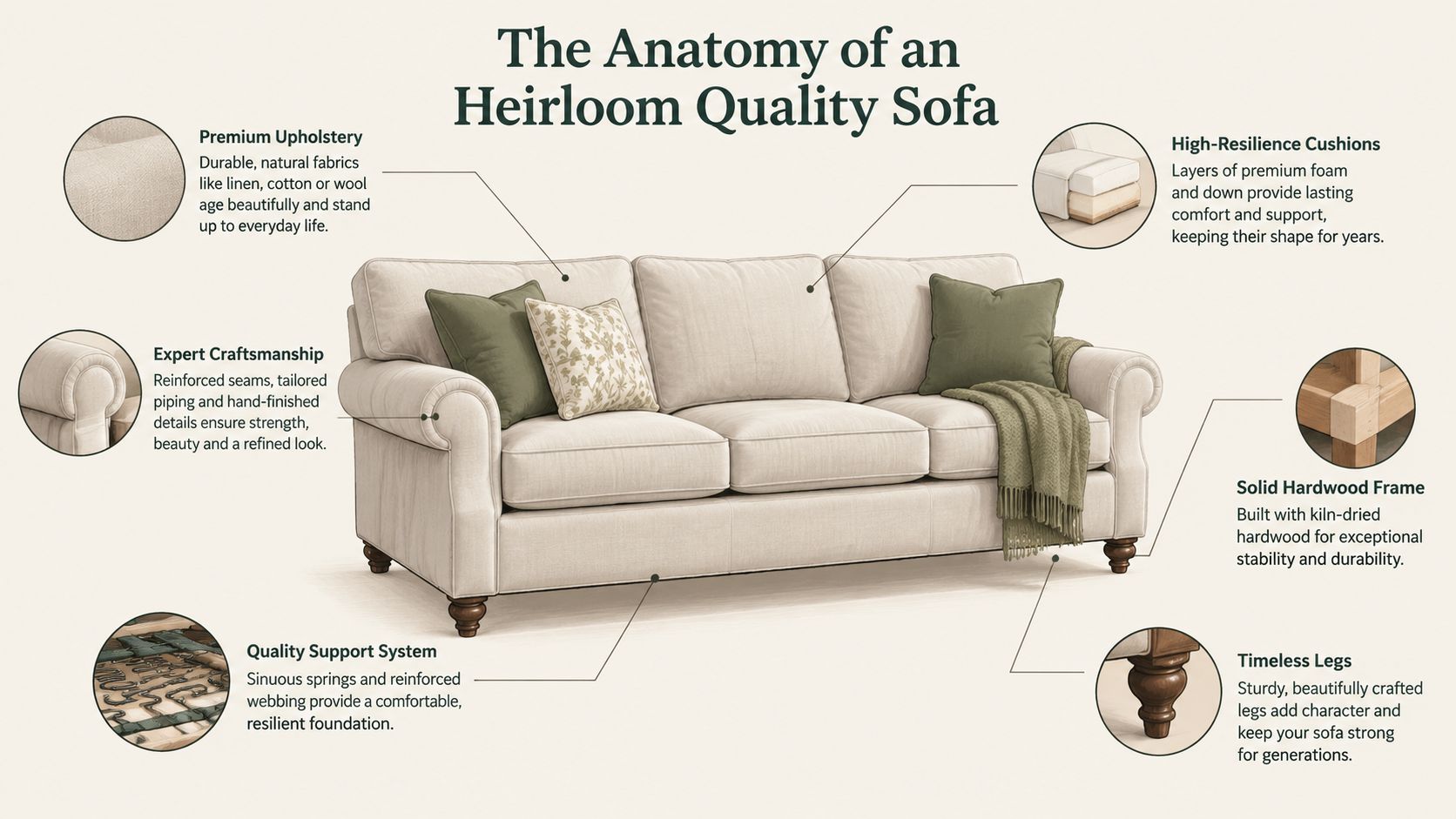
Good looks tell only part of the story. A camel back sofa places particular demands on its structure because the curved crest and arm-to-back transitions create shaped surfaces that must remain stable under upholstery. A shopper evaluating long-term value should look beneath the fabric and ask how the frame was built, how the joints are secured, and whether the textile suits the household's use.
Start with the frame
Independent furniture guidance recommends a kiln-dried hardwood frame or quality plywood construction with proper joinery. Kiln-dried wood helps limit moisture-related movement, while sound joinery supports the frame where rails, arms, and back components meet. The same guidance recommends fabric abrasion resistance of at least 15,000 double rubs for residential use, with 20,000 to 30,000 double rubs suited to family-room or higher-wear settings. These figures and construction considerations are outlined in this upholstered furniture materials guide.
A double-rub rating isn't a complete quality score. It describes abrasion testing, not the softness, cleanability, color, or feel of the textile. Still, the rating gives shoppers a useful comparison point, especially where the curved crest and arm transitions experience concentrated fabric stress.
Look at the joinery
Mortise-and-tenon joinery uses a projecting tenon fitted into a matching mortise. Woodworking sources describe it as an ancient assembly method used for thousands of years and valued because the joint resists pulling apart and twisting. In a sofa frame, that principle matters because repeated sitting, shifting, and everyday movement place pressure on structural connections.
Amish hand-crafted furniture offers a useful standard for examining this kind of workmanship. Solid North American hardwoods such as cherry, oak, and maple have a different material integrity from thin surface treatments over engineered cores. The weight of solid cherry wood, the clarity of a carefully finished oak grain, and the precision of a fitted joint are tactile details that photographs rarely communicate.
Tyner's approach to upholstery can be explored through its upholstery materials resource. The practical lesson is simple: a buyer should assess the frame and textile together, not select a fabric based only on color.
Calculate value over time
A durable sofa may require a greater initial commitment, but cost-per-year thinking changes the comparison. A piece that remains supportive, visually relevant, and serviceable through years of use can offer stronger value than a lower-priced sofa that needs replacement after a shorter period. The exact outcome depends on construction, care, household activity, and upholstery selection.
A useful showroom checklist includes:
- Frame: Ask whether the construction uses kiln-dried hardwood or quality plywood.
- Joints: Request an explanation of the joinery at the arms, rails, and back.
- Fabric: Match the abrasion rating to the room's traffic and daily routines.
- Comfort: Sit upright, recline naturally, and check whether the arm height feels comfortable.
- Serviceability: Ask how the cushions, upholstery, and finish can be cared for over time.
This is the difference between buying an attractive object and choosing an heirloom. Craftsmanship should be visible in the feel of the finished sofa and understandable in the explanation behind it.
Styling a Camelback Sofa in Your Home
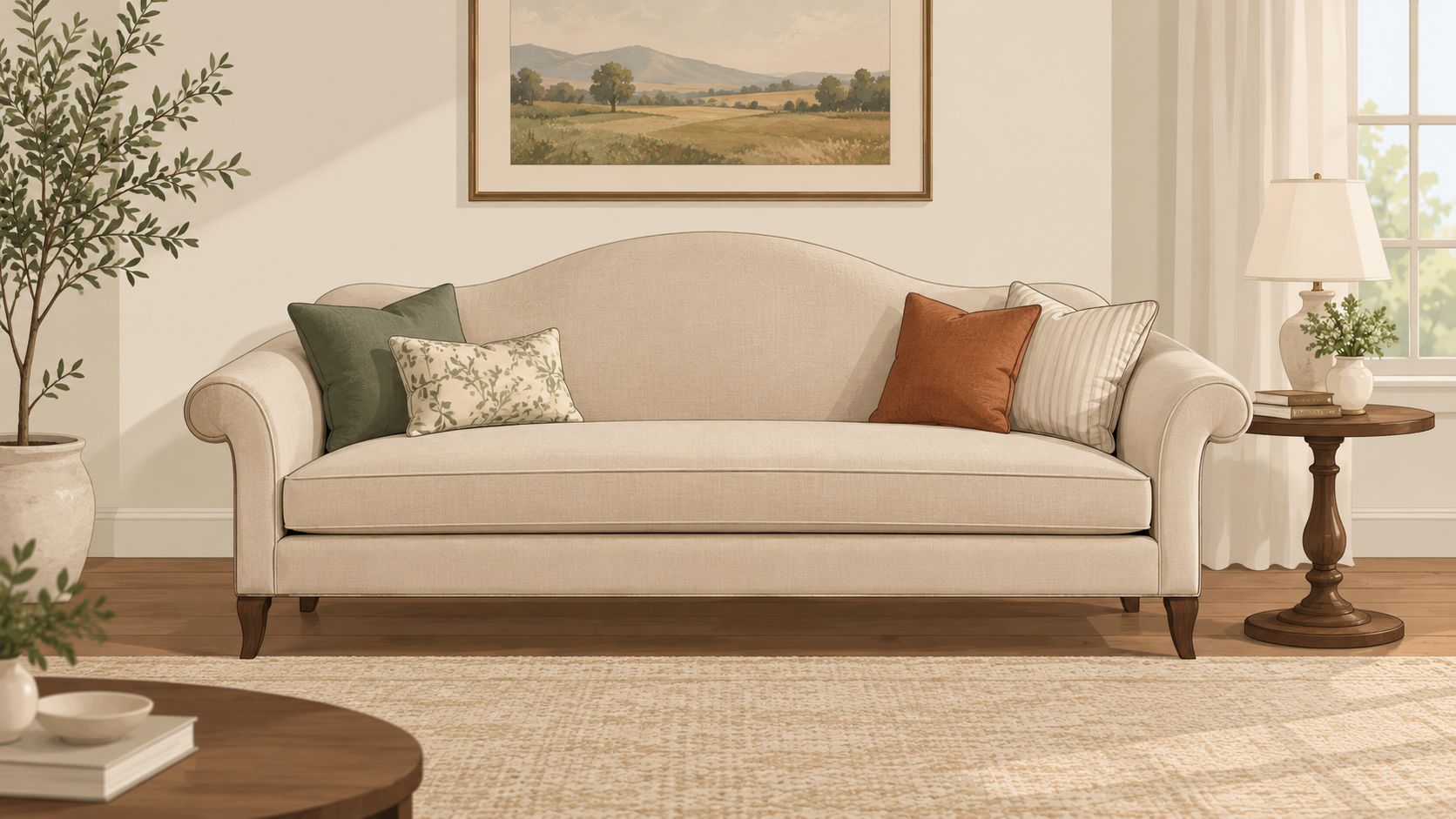
A camel back sofa doesn't require a historically decorated room. It works best when its formal outline receives a few relaxed counterpoints. In an Ann Arbor living room, a neatly upholstered neutral sofa might sit with a contemporary rug, a simple wood table, and artwork with generous open space. In a larger Southeast Michigan family room, a deeper color or patterned textile can give the sofa enough presence to hold its own among larger furnishings.
Build around proportion
Begin with the room rather than the sofa alone. A small space benefits from visual breathing room, slender occasional tables, and a finish that doesn't compete with the wall color. A generous room can support stronger arms, darker upholstery, or a more expressive wood finish, provided the sofa remains proportionate to the seating group.
Placement also changes the sofa's effect:
- Against a wall: The arched back becomes a decorative focal point, especially beneath carefully scaled artwork.
- Facing another sofa or chairs: The raised crest helps establish a formal conversation arrangement.
- Floating in the room: The back upholstery and exposed wood must look finished from every angle.
- Near a window: Natural light can reveal the texture of linen, leather, or woven fabric throughout the day.
Mix styles with intention
Modern accessories keep the traditional form from feeling rigid. A metal reading lamp, abstract artwork, or clean-lined side table can create a transitional room. Eclectic interiors can combine the sofa with collected ceramics, patterned pillows, and a vintage-inspired rug, as long as one color or material repeats across the arrangement.
Textiles provide the easiest adjustment. A lumbar pillow can soften the upright posture, while a folded throw across one arm introduces informality. Pillows shouldn't cover the center crest because the curved back is the sofa's most important visual feature. A restrained arrangement lets the upholstery and woodwork remain visible.
The coffee table should provide contrast without competing for attention. A simple rectangular table can echo the sofa's structure, while a rounded table can soften the room's geometry. Tyner's coffee table styling guide can help organize accessories so the surface supports conversation and daily use rather than becoming a crowded display.
Keep daily comfort in view
A formal outline doesn't mean formal behavior. The sofa should accommodate reading, conversation, and ordinary relaxation. If household members prefer sprawling, the seating depth and cushion arrangement deserve careful testing before any fabric or finish is selected.
Room test: Stand several feet away from the proposed location and check whether the crest remains visible above nearby tables, lamps, and accessories.
The best styling lets the sofa carry history while the room carries personality. That combination feels collected rather than staged, and it allows the piece to adapt as the household's taste changes.
Bespoke Design Making the Classic Your Own
The phrase “classic sofa” can suggest limited choices, but a made-to-order process opens the design considerably. In-stock is just the beginning. Shoppers can often make decisions about finish, fabric, configuration, dimensions, cushion feel, and the degree of formality, turning a familiar silhouette into a piece that belongs specifically to the room.
Tyner Furniture's custom upholstered sofas provide one path for that process. The selection can include performance fabrics for active households and the buttery feel of top-grain leather for a more refined setting. The practical goal isn't to add options for their own sake. It's to align the sofa with cleaning routines, pets, entertaining habits, lighting, and the room's existing materials.
Personal details create flexibility
A camel back sofa can shift character through small decisions:
- Fabric selection: A quiet neutral emphasizes the curve, while a pattern can make the piece more expressive.
- Wood finish: A warm stain connects with traditional furnishings, while a lighter treatment can support transitional interiors.
- Configuration: The right dimensions and seating arrangement help the sofa fit the room instead of forcing the room to accommodate it.
- Comfort choices: Cushion support and seat depth should suit the people who will use the sofa most often.
Customization also creates continuity. Canadel gives shoppers a way to coordinate finishes, fabrics, and dining furniture, while Stressless offers ergonomic seating options with custom sizing in Small, Medium, and Large. Those examples show how a home can combine visual coherence with different comfort needs, even when each room serves a different purpose.
Special Financing may help qualified shoppers plan for a more substantial purchase, and a Low Price Promise can support competitive value. Promotional financing requires careful review of the applicable terms, including any qualifying purchase thresholds and the deadline for paying a promotional balance in full. The decision should remain grounded in construction, comfort, and cost-per-year value rather than payment timing alone.
A camel back sofa can be historically informed, thoroughly modern, and unmistakably personal. That combination makes it a strong choice for homeowners who want a sustainable alternative to repeatedly replacing furniture.
Tyner Furniture offers made-to-order upholstery, finish and configuration guidance, and an Ann Arbor showroom where Southeast Michigan shoppers can compare comfort and craftsmanship in person. Visit Tyner Furniture for a camel back sofa sit test, or browse the online Quick Specs when exploring special-order options.