Curved Wood Coffee Table Buying Guide for 2026


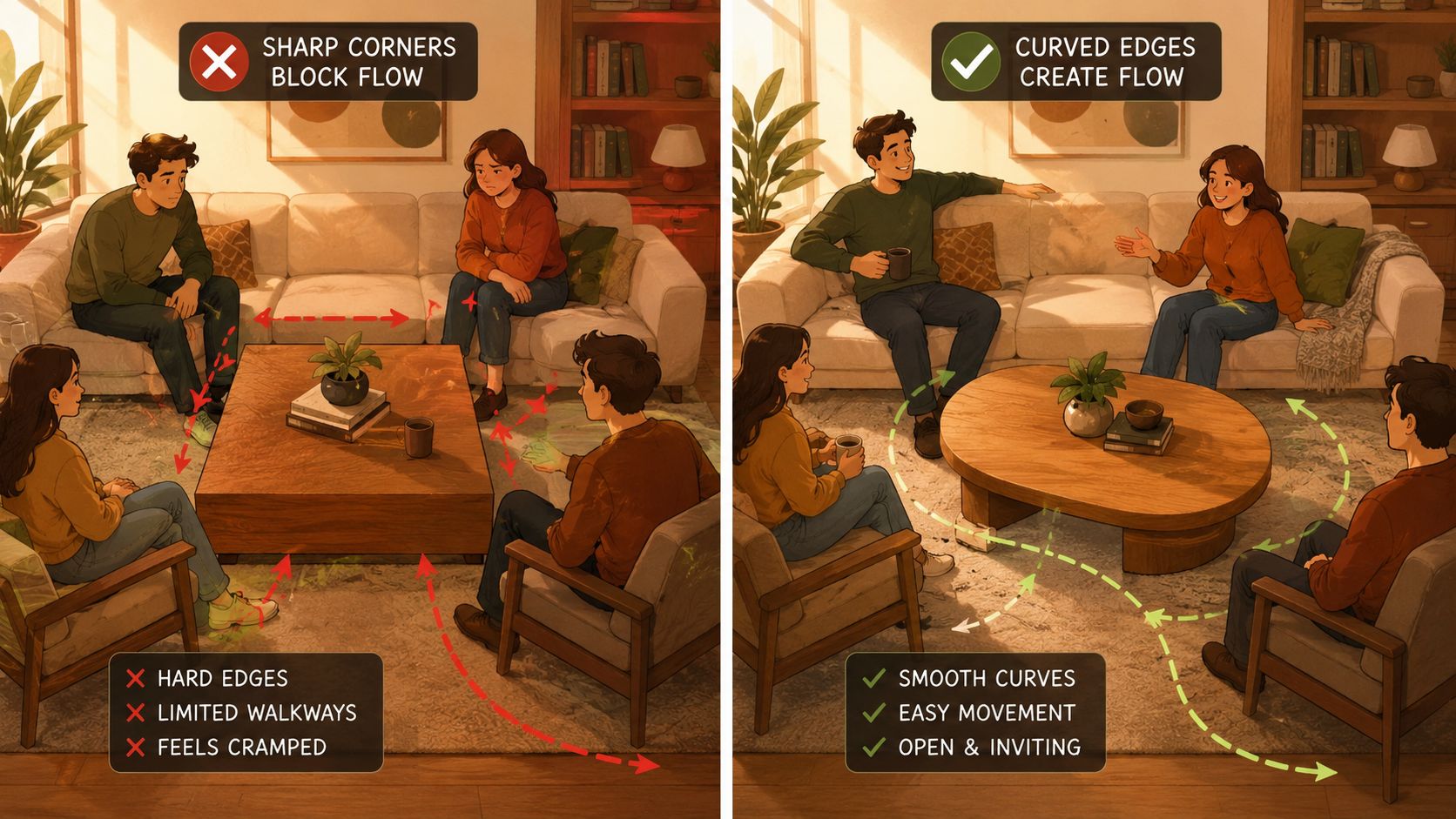
A shopper walks into a living room, takes one step around a square coffee table, then takes another to avoid its corner on the way to the sofa. The room isn't necessarily too small. The table may be working against the traffic pattern. A curved wood coffee table can soften that route, add warmth, and give the room a sculptural focal point, but the right purchase depends on more than a graceful outline.
The first decision should be how the curve is built. Wood species, stain, and size matter, but moisture control, grain direction, base design, and joinery determine whether the table remains a stable heirloom or becomes a beautiful source of maintenance problems. That distinction matters in Ann Arbor and throughout Southeast Michigan, where seasonal indoor conditions can challenge solid wood.
What a Curved Wood Coffee Table Really Brings to a Room
A shopper browsing a showroom usually notices the silhouette first. A kidney-shaped top seems to guide movement around a sofa, while a bowed apron catches light differently as someone walks past. In a busy living room, the absence of a hard corner can make the path from a doorway to a seat feel less forced.
A curved wood coffee table is more specific than a table with softened corners. Its top, apron, legs, or base uses an organic bend or flowing profile instead of relying only on an oval outline or a small radius at each corner. Some designs curve across the entire perimeter. Others use a straight top with a bowed base or a sculptural apron beneath it.
The curve carries structural work
A curve isn't merely a decorative flourish. A maker may create it through steam bending, laminated layers, or carefully planned joinery, and each method responds differently to moisture, grain orientation, and stress. The clamp holds the form while the wood settles. The joint transfers pressure where the curved piece meets the top or base. The finish protects the surface, but it can't correct weak construction underneath.
That's why a sculptural coffee table should be judged from below as carefully as from above. The underside should show deliberate support, clean transitions, and a base positioned to carry the top without making it feel tippy. A dramatic curve with an undersized or loosely connected base is a styling decision that has ignored engineering.
A landmark in curved furniture history
The category has a clear historical reference point. In 1947, Herman Miller introduced the Noguchi table in the United States, designed by Isamu Noguchi. Its two identical curved wood pieces support a heavy glass top, and the design remains one of the most recognizable early examples of sculptural curved-wood coffee-table construction. The history of the Noguchi table helps explain why coffee tables became objects of visual form as well as utility during the mid-century period.
A curved table earns its place when the form improves the room and the construction respects the material. Before choosing walnut, cherry, or oak, shoppers should decide whether the curve is a genuine structural feature or a rounded skin over a conventional substrate. For styling ideas after that decision, Tyner's coffee table decorating guide can help translate the shape into a practical living-room arrangement.
Solid Wood Versus Veneer on a Curved Shape
A curved top can look convincing in either solid wood or veneer. The difference appears in how the material moves, how the edge is finished, and what can be repaired after years of use.
Solid wood behaves like a living material. It expands and contracts as its moisture level changes. A maker can bend it with steam, build a curve from laminated layers, or use controlled saw-kerfing. Each method has a place, but every method requires careful grain planning. A curve running against the grain creates a different stress pattern from one that follows the grain, and the wrong orientation can make a piece more likely to split or reject during bending.
Why moisture control matters
USDA Forest Service guidance recommends 12% to 20% moisture content before steaming or microwave heating, with 15% to 20% preferred for more severe bends according to the Forest Service guidance on bent furniture parts. Those figures apply to the bending process, not to a permanent humidity setting for a finished home.
The principle is straightforward. If the wood later gains moisture, the curve can relax. If it dries, the bend can sharpen. A made-to-order table may arrive slightly concave or convex and then settle as it acclimates to the home, especially after moving from a controlled workshop into an older house or a seasonally dry Southeast Michigan interior.
A 2023 European oak bending study found the best acceptance rates when moisture content reached at least 16%, while single-stage predrying to 8% produced rejection rates above 70% in the published oak bending research. The same research connected bendability with stiffness and grain-related characteristics, reinforcing a practical showroom lesson: the wood's preparation matters as much as the shape drawn on the design.
What veneer does well, and where it asks for caution
Veneer over a curved substrate can deliver a consistent appearance across a complex profile. It may also make a broad curve easier to manufacture. The concern isn't that veneer automatically looks poor. The concern is that thin surface material leaves less room for aggressive refinishing, and poorly resolved edges or seams can become visible as the table receives knocks, heat, and moisture.
A buyer evaluating construction should ask:
- Edge treatment: Does the grain continue cleanly around the curve?
- Surface repair: Can the finish be renewed without exposing the substrate?
- Substrate stability: Is the curved core built to resist movement?
- Delivery guidance: Will the maker explain acclimation and placement?
The solid wood and engineered wood guide offers useful background for that comparison. For shoppers seeking an heirloom, solid wood with sound bending practice and repairable joinery is the stronger long-term choice. Veneer remains reasonable when the substrate, edge work, and finish quality are clearly specified.
Sizing and Ergonomics for Your Living Room
A beautiful curve can still be the wrong table if it crowds the sofa. The tape measure should come out before the showroom visit, because the room's circulation determines whether the shape feels graceful or obstructive.
Start with height. The top generally works best one to two inches below the sofa seat cushion. That position keeps drinks, books, and remotes within reach without making the table compete with the seating. A very low table can suit a relaxed, low-profile room, but it shouldn't force users to lean forward uncomfortably.
Three measurements that prevent most mistakes
The table's length should be roughly two-thirds of the sofa's length. This keeps the table visually connected to the sofa without filling the entire front of the seating. A smaller sofa needs restraint. A broad sectional can support a longer kidney or serpentine top, provided the base doesn't interfere with feet or movement.
Leave 14 to 18 inches of walking space on every side of the table. That clearance gives the curved perimeter room to work. It also leaves enough space for people to pass without brushing the top every time they enter the seating group.
The exact footprint changes the experience:
- Kidney and serpentine shapes: These direct traffic along their longer sides and can soften a direct route through the room.
- Fully round tables: These remove corners completely, but their circular footprint claims space in every direction.
- Curved aprons with straighter tops: These provide sculptural interest without changing the usable surface as dramatically.
A quick scale check
For a small sofa, a compact round or gently bowed table usually keeps the room breathable. A medium sofa can handle a more pronounced kidney shape with enough clearance for the outer curve. A large sofa or sectional can support a substantial sculptural base, but the table should still leave the seating visually open.
A simple floor plan sketch should include the sofa, chairs, rug, walkways, and table footprint. The furniture measuring guide helps shoppers prepare accurate dimensions before visiting the Ann Arbor showroom. Ergonomic comfort isn't limited to recliners. It also includes the reach distance, knee space, and movement pattern created by the table.
Matching the Curve to Your Sofa and Decor
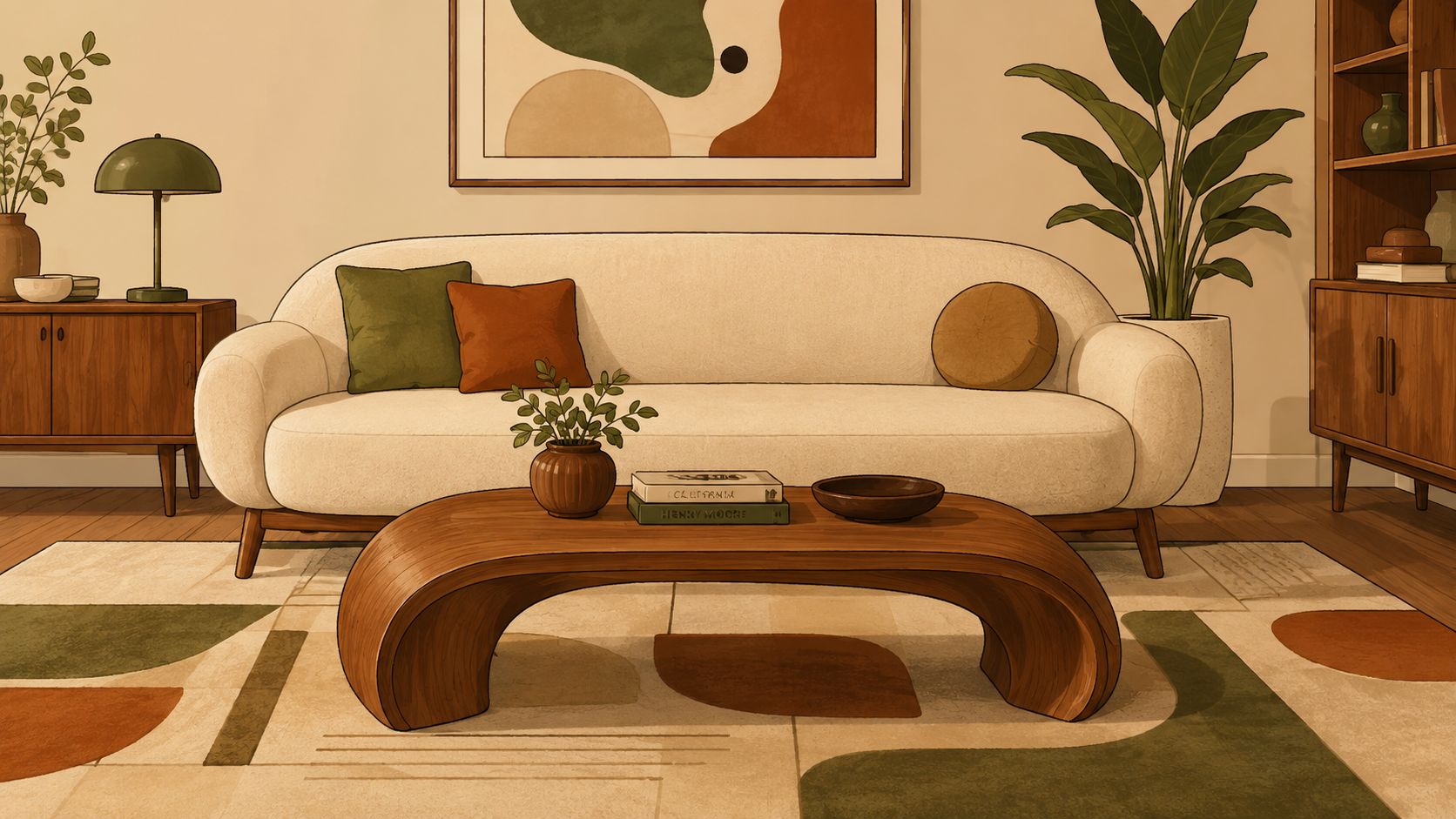
The curve should speak the same design language as the seating, but it doesn't need to match every line in the room. A restrained arc can settle into a transitional interior, while a stronger compound curve can anchor a contemporary setting. Mid-century modern rooms welcome organic profiles naturally, and contemporary farmhouse spaces benefit from the contrast between softened wood and practical upholstery.
Wood tone sets the temperature. Warm cherry beside cream leather feels established and inviting. Weathered oak beside slate linen brings a quieter, more textural character. Walnut beside jewel-toned velvet creates a richer, more architectural composition. The choice should account for both the wood's grain movement and the upholstery's surface.
Use texture to keep the form approachable
A curved table has visual motion. Upholstery can either support that motion or calm it. The buttery feel of top-grain leather makes a polished wood curve feel refined. Nubby linen tempers a glossy finish and gives the room a more relaxed rhythm. A table with a strong base often needs simpler accessories, because too many objects compete with the silhouette.
The finish also changes how the curve reads. A natural or lightly colored finish lets the grain travel across the bend. A deeper stain emphasizes shadow beneath the apron and can make the base feel more grounded. Neither choice is automatically superior. The correct finish depends on whether the room needs warmth, contrast, or visual quiet.
Bring real materials to the sit test
Online color can mislead. A wood sample reveals whether the grain feels lively or flat, and a fabric swatch shows whether the sofa absorbs or reflects the room's light. At the South State St. showroom, shoppers can compare the visual weight of solid cherry, the depth of walnut, and the cooler presence of oak beside seating materials.
A useful pairing list includes:
- Cream leather and cherry, for a welcoming, traditional foundation.
- Slate linen and oak, for a soft modern or transitional room.
- Jewel-toned velvet and walnut, for a dramatic contemporary arrangement.
- Neutral upholstery and a lighter natural finish, when the curve itself should carry the design.
The living-room arrangement guide can help shoppers test the relationship between the table, sofa, chairs, and rug before committing. The best result usually has one dominant curve and supporting shapes that echo it without copying it everywhere.
Why Joinery Decides How Long a Curved Table Lasts
A curved table can look flawless on the showroom floor and still loosen at its joints after repeated use. The curve changes how forces travel through the piece, especially where the apron meets the legs, a pedestal meets the floor, or the top attaches to its support. Check those connections before judging slab thickness or surface finish.
Traditional joinery carries load through the joint itself. A mortise-and-tenon connection places one shaped component into a matching recess, creating mechanical interlock and broad glue surfaces. Read more about mortise-and-tenon construction before you compare tables. Dovetail construction uses interlocking tapered pieces, useful where parts face pulling or racking forces. Both methods handle seasonal wood movement better than a narrow fastener alone.
What shoppers should inspect
You do not need woodworking credentials for a useful showroom inspection. Run your eyes and hands over the base. Look for these signs:
- Mortise-and-tenon details: Check for clean, tight transitions where legs or stretchers meet.
- Dovetail work: See whether the interlocking profile looks deliberate rather than hidden under filler or finish.
- Base rigidity: Apply gentle hand pressure and watch for movement at the joints.
- Attachment strategy: Ask how the top is secured while allowing solid wood to expand and contract.
A furniture joinery source explains that failure often begins at joints, where stress concentrates, instead of through solid wood sections. It places traditional joinery at 50 to 100 years or more of potential service, while fastener-dependent construction often reaches structural failure within 5 to 15 years in its explanation of furniture joinery and longevity.
The heirloom argument is structural
Tyner's Amish hand-crafted pieces follow this construction logic. Their value rests on material integrity and deliberate workmanship, not merely a rustic appearance. A master craftsman can account for grain direction, seasonal movement, moisture behavior, and the way a curved component meets the rest of the table. Those decisions separate a potential heirloom from a mass-produced form that only imitates sculptural furniture.
Mortise-and-tenon and dovetail connections distribute stress, interlock mechanically, and accommodate seasonal expansion and contraction, as explained in this solid wood joinery guide. Ask about the joint before asking about the stain. A finish can be renewed. A poorly engineered connection is far harder to repair.
Custom Finishes, Species, and Curves Worth Ordering
Once the structural standard is clear, customization becomes practical rather than decorative. In-stock is just the beginning. A made-to-order piece can respond to the room's dimensions, existing wood tones, preferred edge, and the amount of visual movement the household can live with.
The first choice is species. Cherry brings warmth and depth as it develops. Oak shows a more pronounced grain pattern. Maple reads cleaner and quieter. Walnut offers a darker, more graphic presence. The right selection depends on the room's light, adjacent furniture, and whether the curve should blend into the setting or command it.
A sensible order of decisions
- Choose the species. Decide whether the grain should be prominent, restrained, warm, or dark.
- Select the finish. A natural finish shows the wood's character, while a stain shifts the table toward the existing interior design palette.
- Set the edge profile. A softened edge supports high-traffic rooms. A sharper profile creates a more architectural effect.
- Specify the curve. The top perimeter, apron, legs, or pedestal can carry the bend. The curve should be intentional from every viewing angle.
- Confirm dimensions. The final size must respect sofa proportions and walking clearance.
- Clarify the order. Made-to-order pieces require an understood timeline, deposit terms, and delivery plan before the order is placed.
Amish solid wood construction provides the material and joinery foundation for a bespoke table. Canadel adds customization expertise for dining-adjacent silhouettes, finishes, edges, and related forms. Stressless contributes ergonomic seating options that can pair with a low, flowing table, including sizing choices suited to different bodies and postures.
A shopper should arrive with room measurements, sofa dimensions, preferred species, finish references, and a clear answer about the curve's job. Tyner Furniture serves more than the living room, with selections spanning the Home Office, bedroom, dining room, entertainment areas, and Outdoor Spaces. That broader range helps coordinate a curved table with the rest of the home rather than treating it as an isolated statement.
Care and Maintenance That Preserves a Curved Shape
Solid wood care starts with the air around the table. Independent care guidance commonly places indoor humidity around 35% to 50%, because low humidity can dry wood while high humidity can contribute to swelling, warping, or cracking as summarized in the furniture trend and care coverage. Southeast Michigan homes need attention in both directions. Winter heating can pull moisture from the room, while humid summer conditions can push it back into the wood.
Placement matters just as much. A heating vent can dry one portion of a curved component faster than another, and direct afternoon sun can warm and fade the exposed surface. The table should sit away from concentrated heat and strong sunlight whenever the room allows.
A practical maintenance rhythm
Every day, use coasters under drinks and felt pads beneath objects that move. Wipe spills with a soft cloth instead of allowing moisture to sit along an edge or joint.
Each week, clean according to the finish manufacturer's instructions. A damp cloth may suit one finish, while another requires a particular wood-safe cleaner. Flooding the surface with liquid is never a sound substitute for gentle, controlled cleaning.
Each quarter, inspect the joints, base, and underside for looseness or unusual movement. A light polish may refresh an appropriate finish, but polish shouldn't hide a developing structural problem.
Practical rule: A curved table should acclimate to its new home gradually, especially after delivery into a climate-variable house.
A table may need a few weeks to settle after delivery. During that time, small changes in apparent flatness can reflect acclimation rather than failure. The owner should avoid forcing a component flat, tightening hardware aggressively, or placing heavy objects over a changing area until the table has adjusted.
A simple humidity-control habit protects the investment. Monitor the room through winter and summer, keep the table away from direct heat, and respond to persistent swings rather than waiting for a crack or warp to appear. Proper care protects the heirloom, sustainable, and long-service qualities that justify choosing solid wood.
Buying Locally With Showroom Visits, Financing, and Delivery
The final decision isn't made by silhouette alone. It comes from combining the floor plan, the construction inspection, the finish choice, and the purchase terms into one clear evaluation.
A showroom visit gives the shopper information a screen can't provide. The wood's grain changes as the light moves across the curve. A solid cherry piece has physical weight that affects how grounded the room feels. The edge tells the hand whether the table is comfortable in a high-traffic path. A sit test also reveals whether the sofa and table work together ergonomically, especially when the table is paired with deep seating or an adjustable recliner.
Ask the right questions before ordering
- Construction: Is the curve solid, laminated, veneered, or formed over an engineered substrate?
- Joinery: How are the base, apron, stretchers, and top connected?
- Movement: What acclimation guidance applies after delivery?
- Care: Which cleaner and finish routine protect the surface?
- Customization: Which species, stains, edges, dimensions, and base configurations are available?
- Delivery: How will the piece enter the home, and what placement conditions should be ready?
Tyner Furniture has served the Southeast Michigan community since 1957, giving local shoppers a design resource while they evaluate a substantial furniture investment. The showroom supports choices across the home, from living and dining spaces to the Home Office and Outdoor Spaces, so the coffee table can be considered alongside the broader plan.
Treat financing as a contract decision
Special Financing can make a high-end, hand-crafted piece easier to plan for, and a Low Price Promise adds a value check to the purchase conversation. Financing terms still require careful reading. Furniture programs commonly use promotional 0% APR periods of 12, 24, 36, or 48 months, while some offers extend from 6 to 60 months; after the promotional period, the standard APR can be substantially higher as outlined in this furniture financing guide. The exact term, eligibility, payment schedule, and post-promotional rate should be verified before signing.
The strongest local purchase framework is simple. Measure the room, inspect the curve, test the seating, confirm the construction, and understand the order and financing terms. A trusted local legacy doesn't remove the need for careful buying. It gives shoppers knowledgeable support while they make the decision.
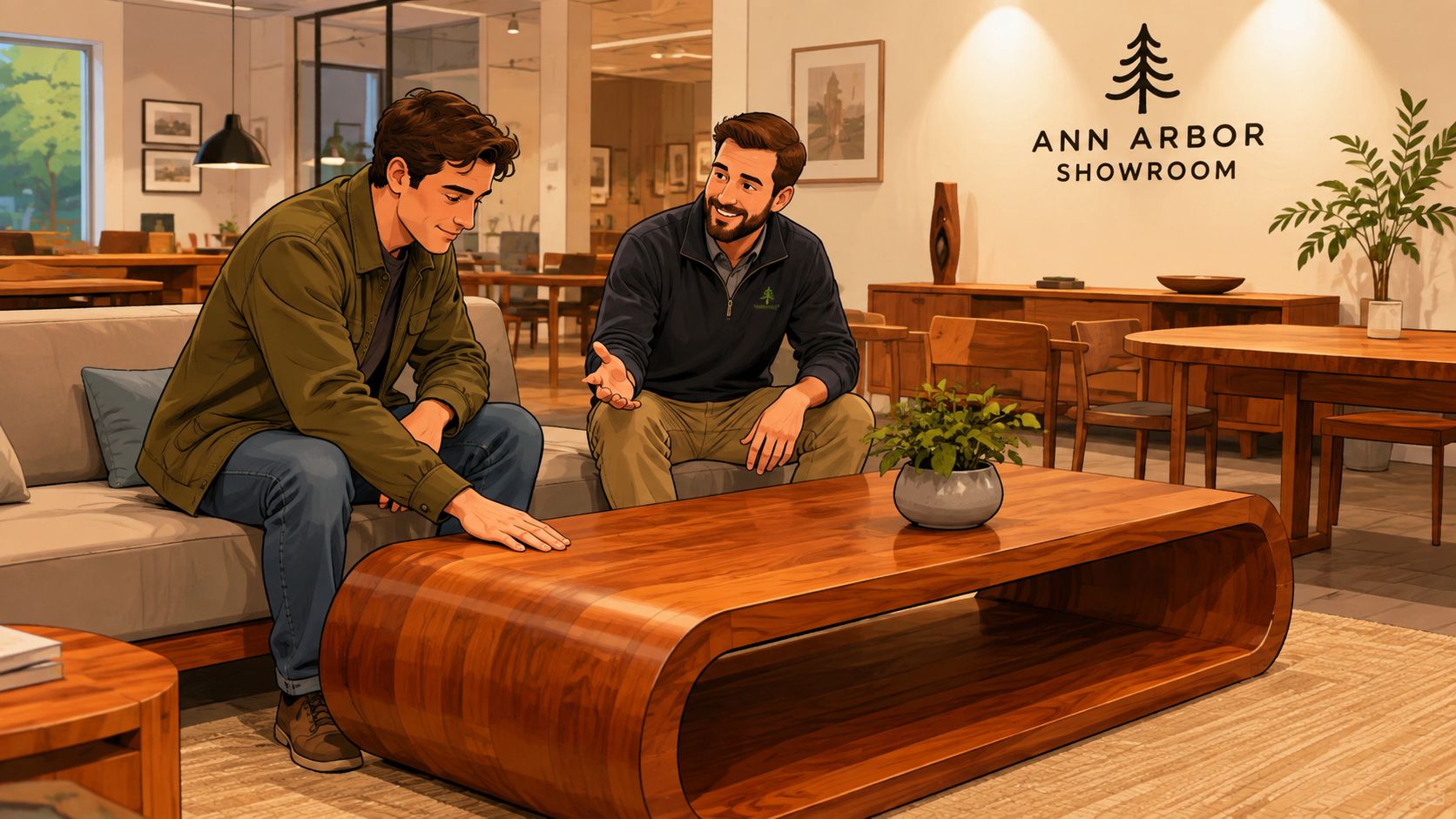
Visit Tyner Furniture at the South State St. showroom for a proper sit test, hands-on wood comparison, and guidance on a made-to-order curved table. Shoppers can also browse the online Quick Specs for special orders, then bring room measurements and finish preferences to the Ann Arbor team.