Your Guide to the Perfect Traditional Accent Chair

A lot of living rooms reach the same point. The sofa is in place. The rug works. The lamp has the right glow in the evening. But the room still feels unfinished, as if one corner hasn't yet joined the conversation. In many homes across Ann Arbor and Southeast Michigan, that missing piece turns out to be a traditional accent chair.
That choice can feel harder than it sounds. A chair has to do several jobs at once. It needs to look right, sit comfortably, fit the room, and hold up over time. For households trying to furnish a forever home, or buy better the first time, that's where shopping can become overwhelming.
A trusted local furniture store that has served the Southeast Michigan community since 1957 brings a different perspective to that decision. A traditional accent chair isn't just a decorative extra. Done well, it becomes a focal point, a practical seat, and often the piece that gives a room its sense of finish. It can also connect beautifully with the rest of the home, from the home office to outdoor spaces, especially when the overall design plan values longevity, craftsmanship, and comfort.
Table of Contents
- The Timeless Appeal of the Perfect Accent Chair
- Understanding the Hallmarks of Traditional Chair Design
- How to Select the Perfect Chair for Your Space
- Creating an Heirloom The Tyner Customization Edge
- Styling Your Traditional Accent Chair Room by Room
- Your Forever Piece Making It Last and Bringing It Home
The Timeless Appeal of the Perfect Accent Chair
A traditional accent chair often enters the room last, but it rarely feels secondary. In a living room with a tailored sofa and a classic coffee table, the right chair can soften the layout, add personality, and give guests an obvious place to settle in. In a bedroom, it can turn an empty corner into a reading nook. In a home office, it can bring a stately, collected feel that a standard desk chair never will.
Traditional styles stay relevant because they speak a familiar design language. Rolled arms feel welcoming. Tufting adds depth. Warm wood tones bring steadiness. Those details make a room feel grounded rather than trendy.
A room often feels complete when the seating looks intentional, not merely sufficient.
For homeowners and renters alike, that matters. A good traditional accent chair helps a space look composed without making it feel formal or stiff. It can anchor a window wall, balance a large sectional, or add charm beside a fireplace.
There's also comfort in choosing a style with staying power. Families in Southeast Michigan often want pieces that can move from one house to the next, or from a first apartment into a long-term home. Traditional seating works well in that kind of life because it adapts. It fits older homes with trim and character, and it can also warm up newer interiors that need a touch of heritage.
Why this chair often becomes the finishing piece
The beauty of a traditional accent chair is that it solves both a design problem and a practical one.
- It fills visual gaps: An empty corner stops feeling accidental.
- It adds usable seating: Guests don't have to perch on the edge of the sofa.
- It creates a focal point: A chair with shape and texture gives the eye somewhere to land.
- It brings character: Even a quiet room gains presence from one elegant silhouette.
That's why this category deserves more thought than a quick click. The right chair isn't filler. It's part of the room's long-term story.
Understanding the Hallmarks of Traditional Chair Design
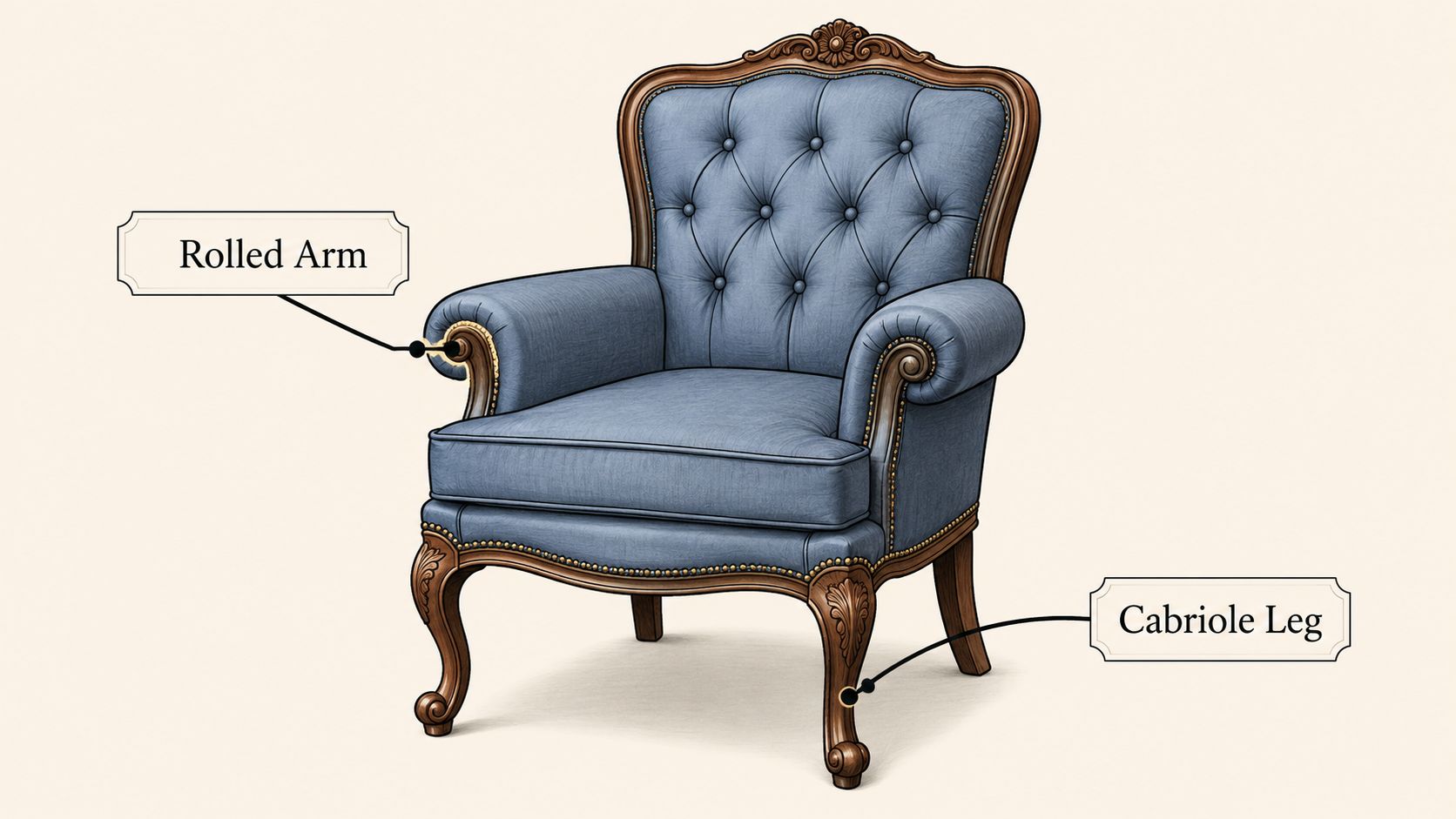
A traditional accent chair has a distinct vocabulary. Once a shopper learns to spot it, the difference between a passing style and an heirloom-minded piece becomes much clearer. The most recognizable details are often the very ones that make the chair feel inviting in person.
The shape tells the story
Some traditional chairs have a wingback profile that feels formal and protective. Others use rolled arms to create a softer, more conversational look. Cabriole legs add elegance through curve rather than bulk, while turned legs feel classic and sturdy.
A few details often signal traditional design at a glance:
- Rolled arms: They make the chair feel established and comfortable.
- Winged sides: These add height and a slightly more formal posture.
- Button tufting: This creates depth, shadow, and texture across the back or seat.
- Exposed wood trim: It adds visual definition and a sense of craftsmanship.
The result is a chair that doesn't disappear into the room. It contributes shape, history, and a little ceremony.
Materials matter more than many shoppers expect
Traditional design is only as convincing as the materials that support it. The buttery feel of top-grain leather, the refined appearance of a tightly woven upholstery fabric, and the weight of solid cherry wood all create a very different impression from lighter, less substantial construction.
According to material benchmarks for traditional accent chairs, genuine leather can last more than 15 years under high-traffic use, and button tufting can increase fabric load-bearing capacity by 12 to 18%. That matters because these details aren't just ornamental. They help explain why some chairs age gracefully while others loosen, flatten, or separate at the seams.
Practical rule: Decorative details are worth more when they also strengthen the chair.
For households that use a chair daily, upholstery choice shapes the ownership experience. Leather develops character. Performance fabrics simplify maintenance. Linen and cotton can be beautiful, but they need more thoughtful placement and care.
A shopper who wants to see how these traditional features come together can study the silhouette of an upholstered wingback chair. The proportions, arm shape, and back height all show how tradition is built through structure, not just surface detail.
Traditional design isn't the same as heavy design
Many people get stuck here. They assume “traditional” must mean oversized, dark, or overly ornate. It doesn't. A well-designed traditional accent chair can still feel refined and balanced, especially when the lines are clean and the wood finish complements the room instead of dominating it.
Consider the difference below:
| Feature | Reads More Refined | Reads More Visually Heavy |
|---|---|---|
| Arms | Gently rolled or open | Thick and oversized |
| Legs | Exposed wood, lifted profile | Fully skirted, low to floor |
| Back detail | Controlled tufting or smooth upholstery | Dense ornament in every area |
| Wood tone | Coordinated with nearby pieces | Unrelated or too dark for the room |
Traditional style works best when the details feel intentional. A chair can carry heritage without carrying too much visual weight.
How to Select the Perfect Chair for Your Space
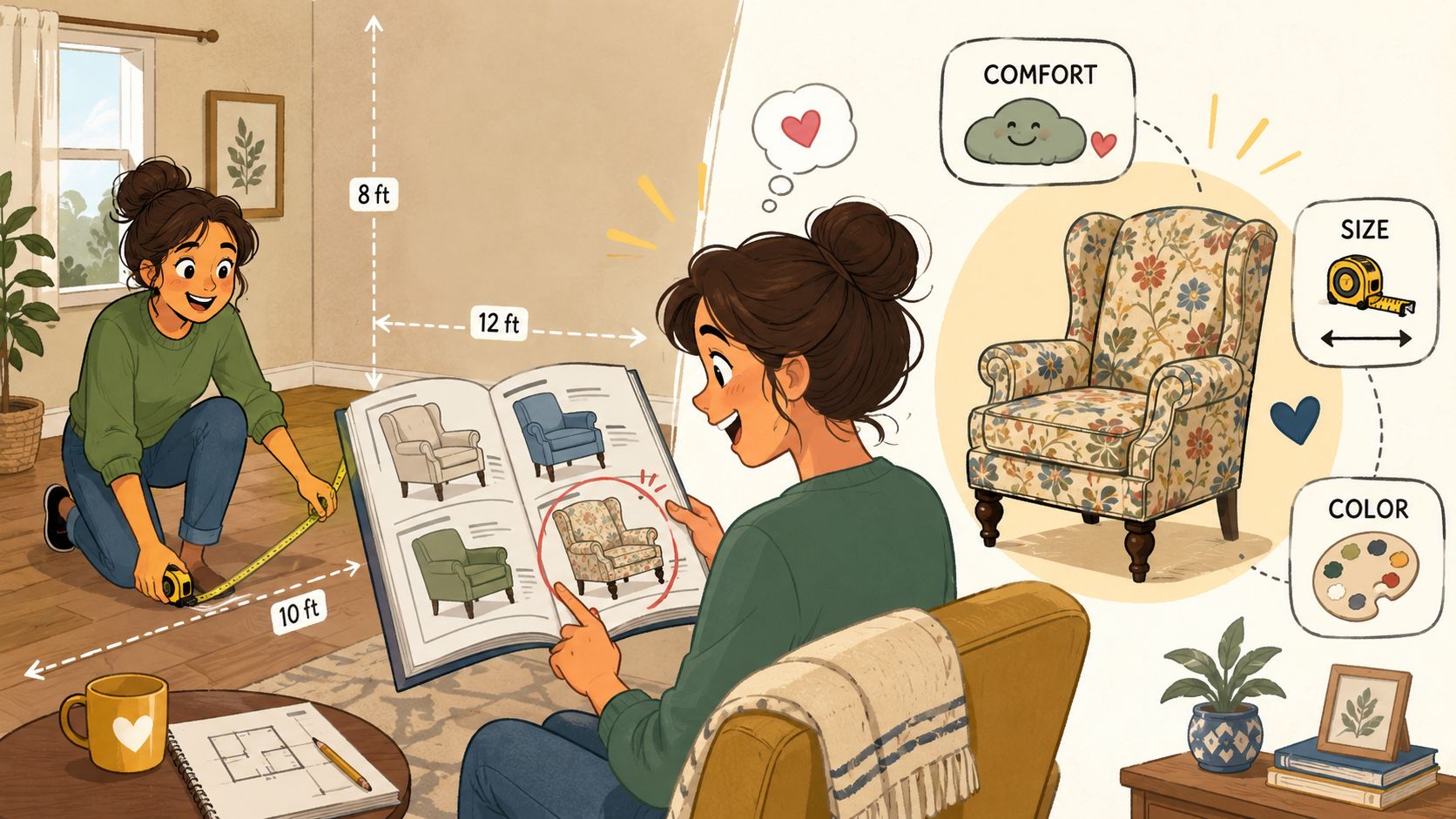
Choosing a traditional accent chair gets easier when the decision starts with the room instead of the fabric swatch. The chair may be beautiful on its own, but if the scale, function, and sit don't match the space, it won't feel right once it's home.
Start with scale and clearance
Traditional accent chairs tend to work best within a clear range of proportions. Design guidance on accent chair sizing places typical seat depths at 18 to 22 inches, seat heights at 18 to 22 inches, and overall dimensions around 30 to 40 inches wide and 28 to 34 inches deep. That same guidance notes that keeping the chair seat height within a 4-inch differential of the sofa helps maintain visual harmony, and allowing 18 inches of clearance around the chair improves movement through the room.
Those measurements answer a common question. Why does one chair look settled and another look awkward, even when both technically fit? Proportion is usually the reason.
For small living rooms, visual lightness matters as much as footprint. A chair with exposed legs and a less bulky profile often feels easier in the room than one with the same dimensions but more visual mass.
Match the chair to the job
Not every traditional accent chair should sit the same way. A reading chair benefits from a more relaxed posture and supportive back. A conversation chair usually needs a more upright sit, especially when it faces a sofa.
A helpful way to sort the options is to decide what the chair will do most often.
- Reading corner: Look for a supportive back, room for a lamp and side table, and upholstery that feels cozy in longer sits.
- Conversation seating: Choose a seat height that relates well to the sofa and an arm shape that doesn't feel too sprawling.
- Bedroom perch: A slightly smaller scale often works better than a deep lounge profile.
- Occasional guest seat: Balanced dimensions matter more than dramatic styling.
For a deeper checklist on fit and comfort, this guide on what to look for in a new sofa or chair is a useful next step.
Don't overlook comfort
Many articles stop at style, but that approach overlooks a common reality. According to recent ergonomic guidance on accent chair selection, 54% of homeowners prioritize comfort over aesthetics. Traditional chairs can absolutely satisfy that need, but only when the seat height, pitch, and back support are considered carefully.
The best-looking chair in the room becomes the least useful one if nobody wants to sit in it.
This is also where ergonomic seating enters the conversation. Some homes want the visual language of tradition in one room and a more ergonomic solution in another. That's why it helps to think broadly about the whole house. In-stock seating is only the beginning. Custom options and personalized comfort matter too, especially when a household is furnishing everything from the living room to the home office. Partnerships such as Stressless make that easier by offering ergonomic recliners in Small, Medium, and Large sizing, which helps personalize support in a way standard in-stock seating can't.
Upholstery and wood should support daily life
Leather often suits high-use spaces. Performance fabrics make sense where spills, dust, or everyday wear are concerns. Wood finish matters just as much. A warm medium stain can subtly connect a chair to nearby case goods, trim, or flooring without looking over-coordinated.
When shoppers slow down and compare these choices in the room, the chair usually reveals itself. The smart buy isn't the one that shouts first. It's the one that still makes sense after the tape measure comes out.
Creating an Heirloom The Tyner Customization Edge

A traditional accent chair makes the strongest case for itself when the shopper stops asking only, “What does it cost today?” and starts asking, “How will it live over time?” That's the heart of the cost-per-year mindset. A better-built chair may ask for more upfront, but if it stays comfortable, attractive, and structurally sound for years, its value looks very different.
Heirloom thinking changes the conversation. A made-to-order chair with the right frame, upholstery, and finish doesn't need to be replaced just because a trend changes or a seam gives out. It earns its place through daily use.
The solid wood standard
Construction separates a legacy piece from a short-lived one. Amish hand-crafted solid wood furniture uses dovetailing and mortise-and-tenon joinery, and those methods structurally outperform mass-produced alternatives while supporting solid North American hardwoods such as cherry, oak, and maple. That kind of joinery gives furniture a different feel in the room. There's substance to it. Drawers glide with confidence. Frames stay square. Edges wear in rather than wear out.
Even when the article's focus is seating, this standard matters because a traditional accent chair rarely exists alone. It often sits beside a hand-crafted side table, across from a solid wood cocktail table, or near a dining room that deserves the same integrity.
- Cherry: Warm, rich, and especially handsome in traditional interiors.
- Oak: Grounded and durable, with visible character in the grain.
- Maple: Smoother and often a strong fit for lighter or cleaner classic rooms.
In-stock is only the beginning
Many shoppers assume the showroom floor is the whole story. It isn't. The best traditional accent chair is sometimes a starting silhouette that becomes something more personal through custom choices.
At high-end domestic retailers, custom upholstery programs often offer hundreds of fabric and leather choices for a single sofa model. That same made-to-order thinking helps a chair coordinate precisely with paint, rugs, drapery, and artwork. It also allows more control over details that shape the final personality of the piece.
Clients who want to understand the process can review how custom furniture orders begin. Choices may include arm styles such as pleated, track, or sock, along with leg shapes, skirted options, and decorative elements like nailhead trim or welts.
Design note: Bespoke furniture feels calmer in a room because it doesn't look almost right. It looks resolved.
The customization edge extends beyond upholstery. Canadel offers bespoke dining with thousands of combinations for leg styles, table edges, finishes, and distress levels. Stressless brings ergonomic precision through custom sizing. Together, those options show why in-stock furniture should be treated as a sample of what's possible, not the limit.
What to expect from the order process
Custom doesn't have to mean confusing. It usually follows a straightforward rhythm.
| Step | What typically happens |
|---|---|
| Selections are finalized | Fabric, leather, finish, trim, or sizing is chosen |
| Deposit is placed | The order moves into production |
| Updates are provided | Sales teams share timeline information as available |
| Delivery is scheduled | White-glove service helps protect the piece on arrival |
Made-to-order furniture also asks for patience. Custom orders generally take 8 to 10 weeks from placement to delivery and often use white-glove delivery. That timing makes sense when the goal is a lasting piece rather than a temporary solution.
Styling Your Traditional Accent Chair Room by Room
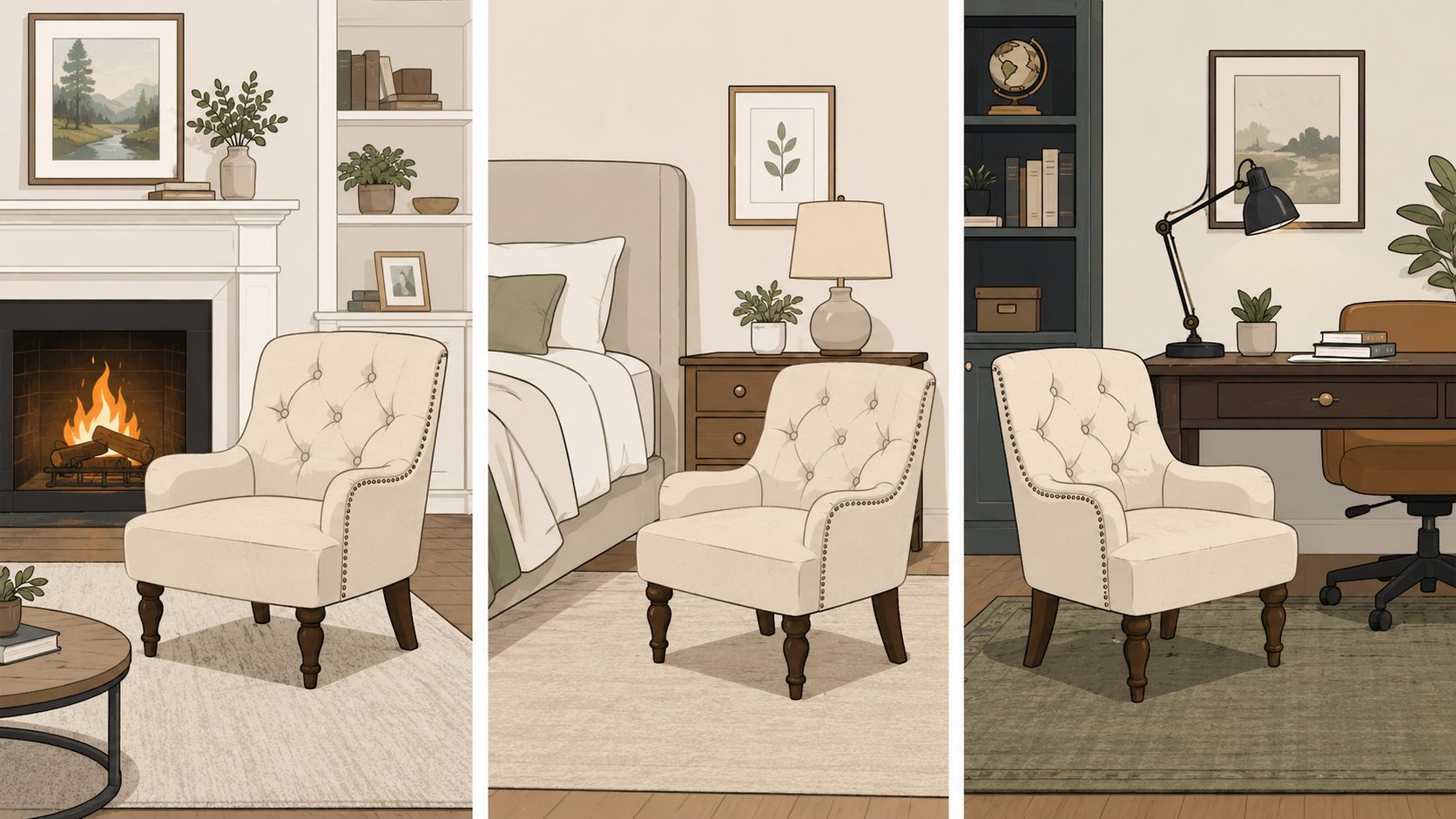
A traditional accent chair can change personality from room to room. The same tufted chair that feels dignified in a home office can feel soft and restorative in a bedroom. Placement, lighting, and surrounding materials do most of that work.
The living room
In the living room, the chair often works best when it helps complete a conversation area. Set near the end of a sofa, angled slightly inward, it can close an open layout without making the room feel boxed in. A patterned fabric can bring energy to a neutral seating group, while leather often adds depth and a sense of permanence.
For homeowners exploring layout ideas, these five ways to use an accent chair offer helpful visual starting points.
A side table, a lamp, and one thoughtful accessory usually do enough. If the room needs softness, greenery can help bridge formal furniture and everyday life. For that, Little Green Leaf's guide to plant decor offers practical ideas on using houseplants without cluttering the space.
The bedroom
Bedrooms benefit from restraint. A traditional accent chair near a window or dresser gives the room a useful pause point. It becomes a place to read, to put on shoes, or to keep the room from feeling furniture-light in one corner.
A softer fabric often works well here. The goal isn't formality. It's ease. A chair with graceful arms and a supportive back can make the bedroom feel finished in the same way a bench sometimes does, but with more comfort.
A bedroom chair should feel like an invitation, not an obligation.
The home office
The home office is one of the best places for a traditional accent chair because it adds warmth to a room that can otherwise become all function. Positioned near a bookshelf or in a corner opposite the desk, it creates a secondary zone for reading, calls, or a short break from screen time.
This is also a smart place to think about the whole-home mix. One room may lean classic and refined, while another calls for more ergonomic seating. That flexibility is part of thoughtful interior design. The goal isn't to make every room identical. It's to make every room feel intentional.
For local shoppers in Ann Arbor, seeing room setups in person often clears up what online photos can't. Scale, fabric texture, and seat comfort are much easier to judge when the chair is in front of them.
Your Forever Piece Making It Last and Bringing It Home
A traditional accent chair becomes a forever piece through care as much as construction. Upholstery lasts longer when it's cleaned according to material type and protected from constant direct sun. Wood looks better over the years when dust is removed gently and spills are addressed quickly instead of left to sit.
Solid wood deserves especially thoughtful maintenance. This guide to protecting wood furniture from scratches and stains is a practical resource for preserving the finish and integrity of hand-crafted pieces.
A few habits that help
- Rotate use when possible: One favorite seat shouldn't carry every evening.
- Keep surfaces clear of friction: Rough objects and neglected grit can wear fabric and wood.
- Use the room wisely: Place the chair where it can be enjoyed without being crowded.
- Treat it like an investment: Regular care protects long-term value.
There's also the purchase itself to consider. High-quality furniture can feel like a big step, especially when the household is making several upgrades at once. Supportive financing can make that decision more manageable. Special financing programs, subject to credit approval, allow customers to spread costs into monthly payments and often include promotional no-interest periods, which helps make luxury accessible without compromising quality. A Low Price Promise adds another layer of trust and competitive value, especially when paired with white-glove delivery and responsive local support.
Custom orders also come with a practical rhythm. Deposits are typically required once selections are finalized, and delivery timing varies by manufacturer and furniture type. The process works best when shoppers treat it as part of creating something bespoke, not as a delay.
A well-chosen traditional accent chair should feel good on day one and still make sense years later. For shoppers ready to compare fabrics, test support, or talk through bespoke options from upholstery to Canadel dining and Stressless comfort, Tyner Furniture offers a strong next step. Visit the Ann Arbor showroom on South State St. for a proper sit test, or browse the online Quick Specs for special orders and see how a lasting investment can fit the whole home, from the home office to outdoor spaces.