Solid Oak Dining Chairs Built to Last Generations

A family gathering in Southeast Michigan can reveal a dining chair's weaknesses quickly. Someone shifts back from the table, a leg rocks against the floor, and the whole set feels less settled than it looked in the showroom or online. By contrast, solid oak dining chairs bring a grounded presence, the quiet weight of real hardwood, and a sense that the room has been furnished for years rather than for a season.
Furniture shopping can feel overwhelming because appearance, comfort, construction, finish, and price all compete for attention. A chair may look beautiful but sit too low. Another may feel comfortable but crowd the table. A third may carry a competitive price yet offer little practical path to repair when the joints loosen.
Tyner Furniture has served the community since 1957, giving Ann Arbor and Southeast Michigan households a local place to compare materials, test comfort, and plan lasting interiors. The South State St. showroom offers something a screen can't provide, the chance to feel the weight of solid oak, inspect the grain, and perform a real sit test.
The most useful question isn't, “What does an oak chair cost?” It's, “What value does the chair deliver each year it remains comfortable, stable, repairable, and attractive?” That cost-per-year perspective changes the decision from an upfront purchase into an investment in an heirloom dining room.
What Makes Solid Oak Different From the Inside Out
A chair can look like oak at first glance, yet its hidden structure determines how it ages. Solid oak brings hardwood through the legs, rails, and seat supports, so the material you see is also doing the work. An independent guide lists oak at about 0.75 g/cm³ in density, 1,200 to 1,300 lbf in Janka hardness, and roughly 14,000 psi in bending strength. Those properties help explain its suitability for everyday dining furniture. (independent oak furniture standards guide)
Density gives a chair a grounded feel. Hardness helps the surface handle ordinary dents, while bending strength supports the frame through repeated use. Lift a well-built chair in a showroom and you notice the weight. Sit down and shift slightly, and the frame should respond with quiet, controlled resistance rather than rattling.
Material integrity comes first
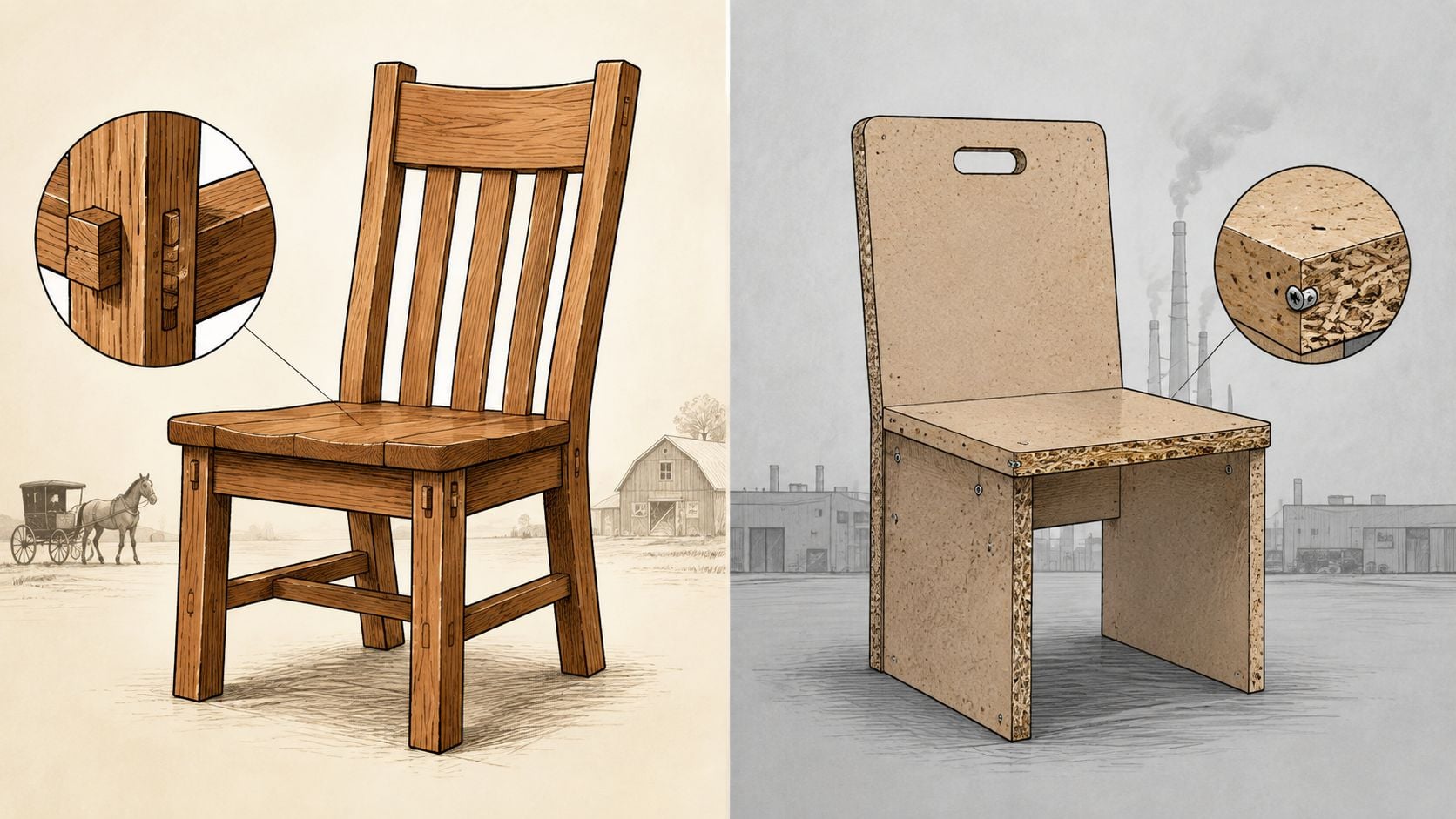
A solid North American hardwood chair carries wood through its structural members. Veneer over particleboard may provide an attractive surface, but appearance alone cannot show what supports the legs, rails, and seat. Tyner's Solid Wood Standard focuses on material integrity, particularly in Amish hand-crafted furniture made with traditional construction rather than a hardwood imitation.
Oak also responds to changes in humidity. The material guide identifies roughly 4% radial shrinkage, 9% tangential shrinkage, and a T/R ratio of 2.25. These figures show that oak moves differently across and along the grain, so careful design and construction matter in Southeast Michigan homes as seasons change indoors.
Joinery carries the load
Finish catches the eye. Joinery keeps the chair steady. Mortise-and-tenon construction fits one shaped member into a matching opening, creating a strong connection at legs, rails, and bases. Dovetailing can reinforce other furniture components by using interlocking wood to resist separation.
For a practical look at red oak's grain and working character, find red oak lumber in Canada. Red oak's open grain can take stain less evenly than white oak, a relevant detail if you are considering a two-tone finish. For help connecting wood species with longevity, finish, and construction, consult this wood furniture guide to hardwood selection.
Practical rule: Test stability before admiring appearance. Grip the back, shift gently, and listen for movement. A sound frame answers with controlled resistance, giving you better evidence of long-term value than a quick visual inspection.
Solid Wood Versus Mass Produced Alternatives
A chair can look sound on showroom day and still tell a different story after years of family meals. Solid oak and engineered alternatives differ not only in material, but also in how their frames handle repeated movement, maintenance, and repair. One retailer's published estimate places quality solid hardwood furniture, including oak, at 50 to 100+ years with proper care, while mass-market engineered-wood furniture is often estimated at 5 to 15 years.
Those ranges describe tendencies, not guarantees. Construction quality, household use, care, and repair affect the result. A lower purchase price can therefore hide more frequent replacement costs, while a well-built chair may spread its value across many years of service.
Cost-per-year changes the conversation
One retailer's published chair-longevity information describes solid wood chairs as commonly lasting 10 to 15 years on average, with high-end chairs reaching 20 to 40+ years. Since this is a retailer estimate rather than an independent lifecycle study, use it as a comparison point, not a promise.
Cost per year keeps the decision practical. Divide the purchase price by the expected years of service, then consider whether the chair can be repaired, refinished, or passed to another household. A higher initial price may make sense when the frame remains useful for decades instead of requiring an early replacement.
Repairability supports heirloom value
Solid oak has enough material depth to accept renewed finish work when ordinary marks appear. A skilled craftsperson may tighten a joint, refresh the surface, or replace a damaged component. Veneer and engineered panels provide less depth for refinishing, and surface damage can reveal the layer beneath.
Dining chairs receive force from many directions. People push away from the table, turn, lean, and shift during meals. A carefully made oak frame can handle that repeated cycle, and its construction gives future repairs a workable foundation.
The solid wood versus engineered wood comparison explains differences in material integrity, maintenance, and long-term ownership. For households seeking a sustainable, bespoke choice, the responsible purchase is often the chair that stays useful, comfortable, and attractive instead of being replaced prematurely.
Style Comfort and Ergonomic Fit for Real Life
A solid oak chair earns its place at the table through both appearance and daily comfort. Current 2025 to 2026 trend coverage points to growing interest in medium-to-high backs for longer meals, along with curved solid-wood frames and natural oak tones that feel useful rather than purely decorative. (2025 to 2026 dining chair style coverage)
Natural oak warms a dining room because its grain remains visible beneath the finish. A hand-rubbed surface brings out that pattern, while a deeper stain can relate the chairs to an existing table or floor. Finish works like the room's connecting thread. It coordinates the chair without erasing the wood's identity.

The numbers that affect comfort
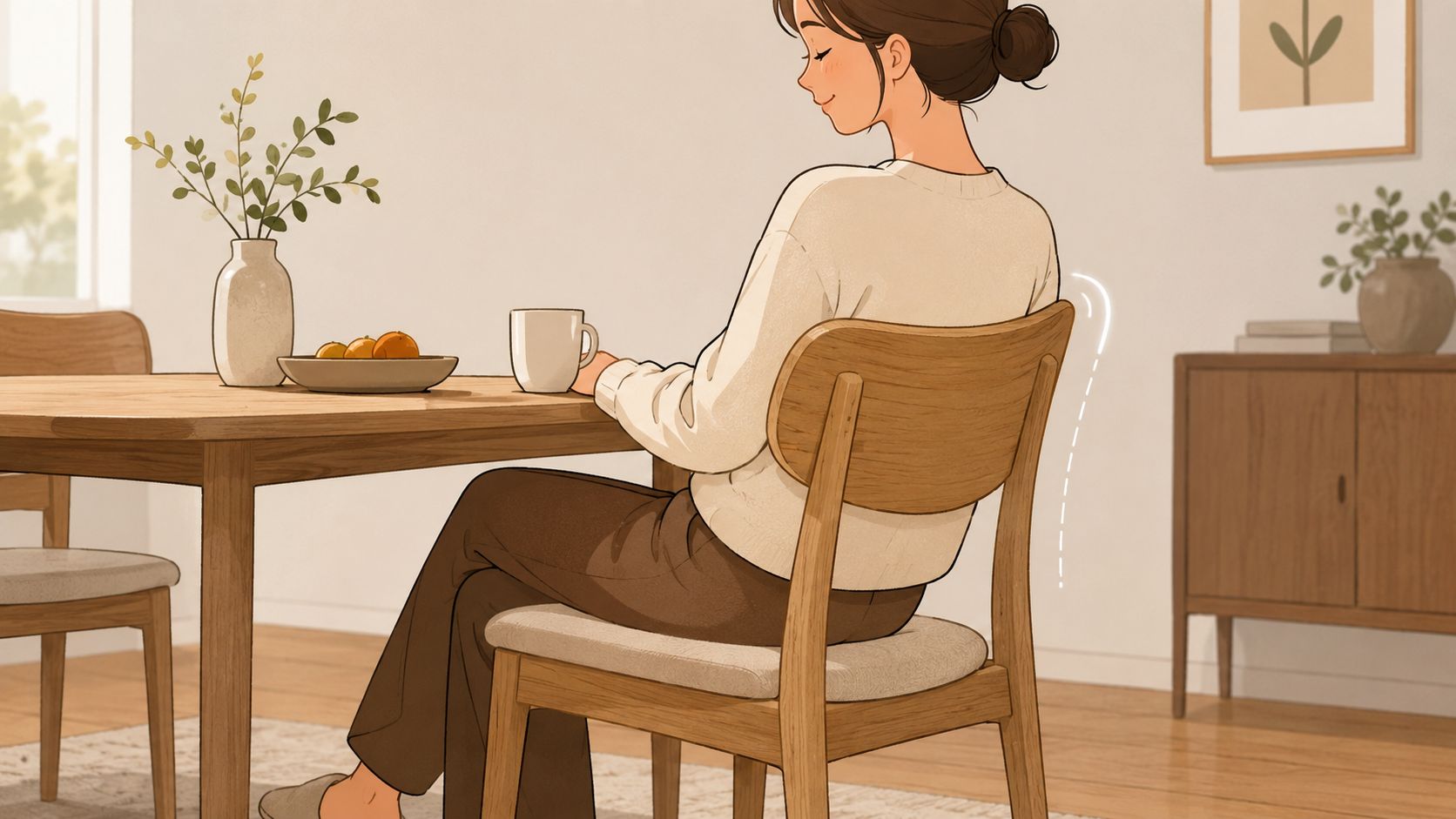
A standard dining chair generally works with an 18 to 20 inch seat height and a 28 to 30 inch table, leaving about a 10 to 12 inch vertical gap for knee clearance and balanced posture. (dining chair ergonomic dimensions) Too little room can crowd the hips and torso. Too much can raise the shoulders and make eating feel strained.
The measurement from floor to frame is only the starting point. Cushion compression and seat-pan thickness change the height your body experiences. Even a one-inch difference can alter the relationship between your thighs and the table apron, especially when people of different proportions share the set.
Seat depth and back position matter just as much. A deep seat may support a taller diner but leave a shorter person without firm back contact. A gently shaped back can provide support without making the chair feel stiff, while a cleanable wood seat may suit a busy family better than fabric.
Fit the chair to the meal
Households that linger over dinner may prefer upholstery or a supportive, curved back. Renters should check chair depth and rear clearance so the set does not obstruct a walkway. Hosts may place armchairs at the table ends, provided the arms slide beneath the tabletop or apron.
At Tyner Furniture's Ann Arbor showroom, a sit test can clarify what measurements cannot. Bring your table measurements and compare the chair's seat height, depth, back position, and arm clearance in person. The dining chair styles guide can help narrow the visual direction before that visit. A chair that feels right at the table is more likely to deliver heirloom value year after year.
How to Choose the Right Oak Chair for Your Table and Space
Choosing a chair works best as a room-planning exercise. Start with the table, then consider the people who use it, the paths around it, and the visual weight of nearby furniture. A chair can be beautifully made and still be wrong for a narrow dining area if its back, arms, or depth interfere with movement.
A practical selection checklist
Measure the table: Record the tabletop height and the underside of the apron. The clearance beneath the table determines whether an armchair can slide in and whether seated users have enough room.
Map the traffic flow: Pull a chair out as someone would during a meal. Leave enough functional space for people to sit, stand, and pass without turning every dinner into a furniture puzzle.
Match visual weight: A substantial oak table usually pairs well with a chair that has a confident frame. A lighter table may need a simpler silhouette so the room doesn't feel crowded.
Consider household use: Children may benefit from a cleanable wood seat, while adults who host long dinners may prefer upholstery and a supportive back. If the room serves multiple purposes, choose a shape that can also work at a desk or occasional workspace.
Plan the whole home: Tyner's selection extends from the Home Office to Outdoor Spaces, so dining chairs can be considered alongside the broader home rather than as an isolated purchase.
A wooden serving accessory can also affect how a table functions during gatherings. Readers considering shared dishes may find this guide to a wooden lazy susan for a table useful when planning reach, tabletop space, and seating positions.
Oak Chair Fit Decision Matrix
| Chair Feature | Best For | Watch Out For |
|---|---|---|
| Medium-to-high back | Longer meals and supportive everyday seating | A tall back can feel visually heavy in a compact room |
| Armless frame | Flexible placement, narrow spaces, and easy table access | It may offer less support when users lean sideways |
| Armchair | Table ends, reading, and relaxed hosting | Arms must clear the apron and slide beneath the table |
| Upholstered seat | Added softness and a more formal interior design | Fabric needs care suited to the household |
| Wood seat | Easy cleaning and a crisp hand-crafted look | A shaped seat matters for comfort during longer meals |
The guide to choosing dining chairs can support the final comparison. In-stock is just the beginning. A made-to-order configuration may solve a table-clearance problem or provide a finish that connects the dining room to adjacent living spaces.
Customization Care and Making Luxury Accessible
A dining chair becomes more useful when its design responds to the household instead of forcing the household to accept a fixed combination. Tyner's customization approach includes Canadel dining options with choices in finishes, fabrics, leg styles, and distress levels. Stressless adds ergonomic precision where relevant, particularly for households coordinating dining comfort with other seating throughout the home.

Amish made-to-order furniture offers another path. A household can select a wood species and stain that complement an existing table, flooring, or cabinetry. The result feels bespoke without sacrificing the practical identity of solid hardwood. In the showroom, the contrast is sensory, the buttery feel of top-grain leather nearby, the grain under a hand-rubbed oak finish, and the reassuring weight of a solid frame.
Care protects the investment
Oak's movement across grain makes indoor conditions worth watching. Sudden humidity changes can contribute to alignment problems, loose joints, split rails, or finish checking over time. A stable indoor environment, gentle cleaning, and prompt attention to looseness help preserve the chair's structure.
Use a soft cloth and products appropriate for the specific finish. Avoid saturating the wood, dragging chairs across the floor, or treating every surface with the same cleaner. When a finish becomes worn, refinishing may restore the appearance and extend the useful life of solid oak.
Financing should still reward careful planning
Special Financing can make a high-quality purchase easier to plan, including showroom models and custom orders. Promotional financing commonly requires the balance to be paid in full within a defined period to receive the no-interest benefit. Otherwise, interest may be charged retroactively from the purchase date, and minimum monthly payments still apply during the promotional window. (furniture financing terms)
A Low Price Promise can add confidence for shoppers comparing competitive value, but financing terms deserve the same attention as wood species and finish. The strongest purchase combines manageable planning with a chair that earns its place through durability, comfort, and craftsmanship.
Bringing Heirloom Quality Home to Southeast Michigan
The case for solid oak dining chairs rests on more than a familiar grain. Oak combines mechanical strength, a substantial feel, repairability, and the potential for long service when its joints and finish receive appropriate care. One lifecycle perspective also notes that a red-oak chair can carry a carbon footprint of 9.84 kg CO2e in a specific AHEC case study, while annual red-oak growth in the United States outpaces harvest by about 21 million cubic meters. (AHEC environmental profile of red oak)
Those figures don't make every solid chair automatically sustainable. Raw materials, finishing, and transport can account for much of a product's impact, so lifespan, supply chain, finish chemistry, and responsible sourcing all deserve consideration. Certified and reclaimed wood can further reduce deforestation risk, making the word sustainable a question of the entire lifecycle rather than the word “solid” alone.
Tyner Furniture's local legacy since 1957 gives Ann Arbor and Southeast Michigan shoppers a place to examine that lifecycle through real materials and real construction. The showroom serves as a design resource across the home, from dining rooms and custom Amish furniture to Home Office and Outdoor Spaces. Guidance can cover material integrity, ergonomic fit, finish coordination, and made-to-order planning without reducing the decision to a single style label.
A hand-crafted chair should earn its heirloom status every time someone sits down. The right choice feels stable beneath the hand, fits the table without crowding the knees, supports the length of a meal, and remains adaptable as the household changes.
Tyner Furniture offers solid oak dining chairs, Amish hand-crafted dining furniture, Canadel customization, and Stressless ergonomic seating for homes across Southeast Michigan. Visit the Ann Arbor South State St. showroom for a hands-on sit test and material comparison, or browse Tyner Furniture online for Quick Specs and special-order options supported by local guidance and white-glove delivery.