Furniture Financing No Interest: A Smart Shopper’s Guide


A couple stands at the dining table display in Tyner Furniture's South State St. showroom, measuring the space between the table edge and the wall while mentally adding chairs, delivery, and the rest of the room. The table fits beautifully. The payment, at first glance, doesn't.
That's where furniture financing with no interest can help, but only when the shopper treats it as a payment calculation rather than a cheerful phrase on a sign. A quality dining set may feel difficult to absorb in one card payment, yet a properly structured promotional plan can turn the purchase into a predictable monthly obligation. The important question isn't whether the offer says “no interest.” It's whether the balance will reach zero before the promotion ends, and what happens if it doesn't.
Tyner Furniture has served Ann Arbor and Southeast Michigan since 1957, helping households choose pieces for dining rooms, bedrooms, living rooms, home offices, outdoor spaces, and more. The showroom's in-stock selection is only the beginning. Made-to-order upholstery, Canadel finishes and configurations, Stressless ergonomic seating, and Amish hand-crafted solid wood pieces give shoppers a path beyond standard floor models.
Why Furniture Financing No Interest Matters Right Now
The couple at the dining table isn't unusual. Furniture has become a considered purchase, especially when the goal is an heirloom rather than something that merely fills an empty room. A shopper may compare the weight of solid cherry wood, the feel of a carefully finished tabletop, and the construction of the chairs against a lower-priced alternative that may not offer the same durability.
The payment decision should begin with the household's monthly budget, not the showroom sticker. If the purchase is divided across a genuine no-interest promotional window, the buyer can preserve cash for ordinary obligations while paying for a piece designed to remain useful for years. That's a different calculation from choosing a lower-quality set solely because the initial swipe feels easier.
The payment is only one part of value
A cost-per-year view gives the purchase more useful context. A dining set that serves a family through daily meals, holidays, homework, and gatherings has a different value profile from furniture that needs replacement after a short service life. Durability, craftsmanship, repairability, and timeless design belong in the same conversation as the monthly payment.
The broader market helps explain why this financing question matters. The Federal Reserve estimated that BNPL providers originated about $156.7 billion of consumer credit in 2025, with roughly 63% carrying 0% APR. “Pay in 4” plans alone represented $78.3 billion, or 50% of total BNPL originations, according to the furniture BNPL analysis. Those figures show that promotional financing has moved from an unusual convenience to a mainstream way of managing larger retail purchases.
Furniture and home furnishings remain central to that activity. Furniture Today reported that furniture and home décor represented 26% of BNPL purchases, while a separate industry analysis cited 42% of BNPL users making home and furniture purchases with BNPL, with BNPL orders carrying an average order value 85% higher than orders paid through other methods, as summarized in Furniture Today's financing coverage.
Practical rule: A monthly payment is useful only when the buyer knows the payoff date, the required balance, and the consequence of missing either one.
That's the promise of a well-read financing agreement. By the end of the decision, the shopper should be able to read an offer like a contract, not a brochure, and decide whether the payment structure supports an heirloom purchase.
How Promotional No-Interest Plans Work
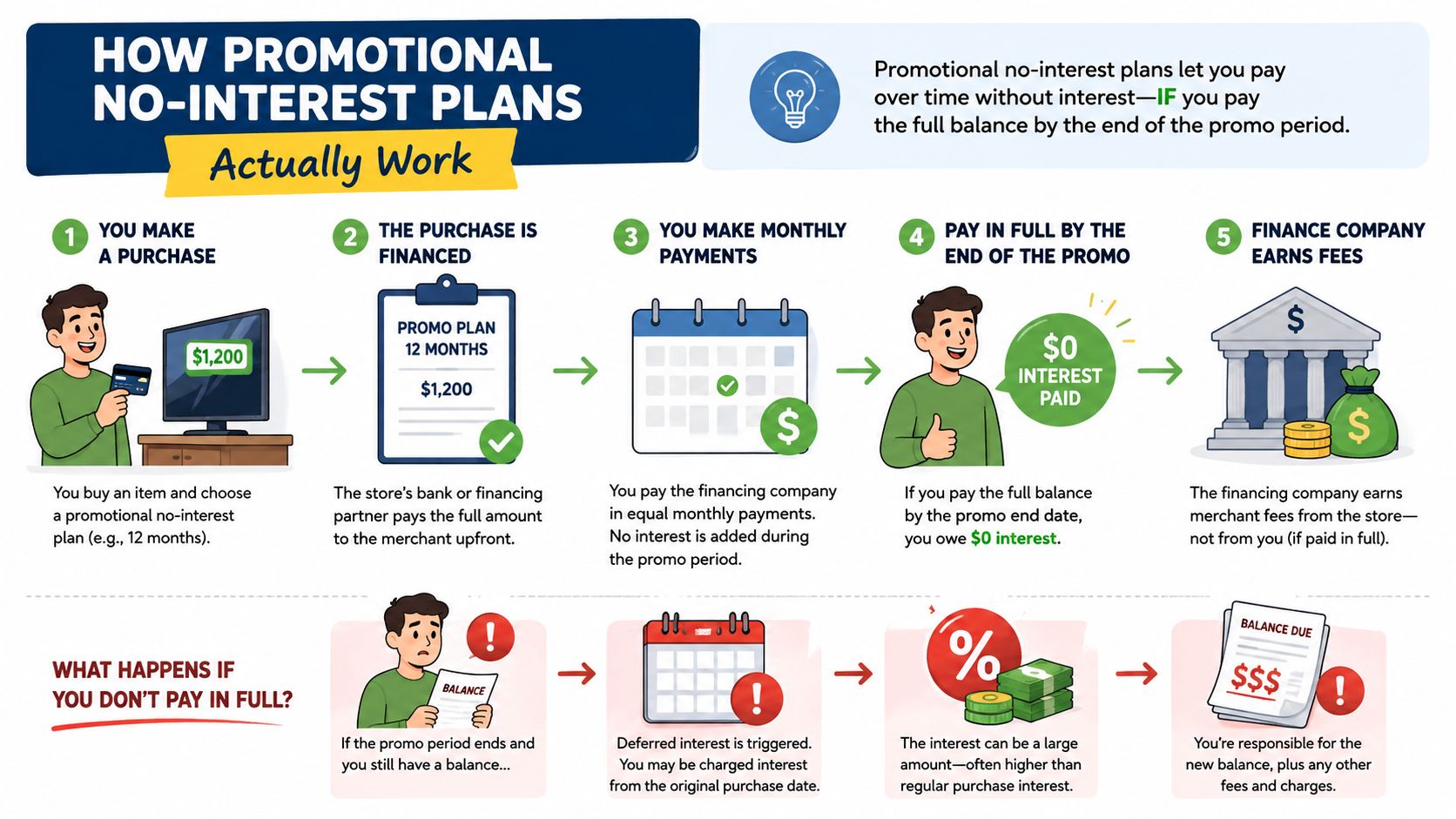
A shopper choosing a sofa for a growing family needs more than a low monthly figure. The first question is whether the offer provides genuine 0% APR or merely delays interest. A true 0% APR promotion lets the borrower use the money for a fixed period without charging interest attributable to that promotional window. The principal remains due, and the account still has a deadline. The interest is waived, not the obligation to pay.
Deferred-interest financing follows a different contract. The lender calculates interest from the purchase date, holds those charges in the background, and waives them only if the full balance is paid by the required deadline. Miss that condition, and previously accrued interest can become payable.
Four details belong on the shopper's checklist
Read every offer through these four points:
- Promotional length: Identify whether the window lasts 6, 12, 18, or 24 months. That calendar sets the payoff math.
- Minimum payment: Confirm how the issuer calculates the required monthly amount. The minimum can keep the account current without clearing the balance.
- Payoff date: Find the exact date when the full balance must be paid. It may differ from the final scheduled statement date.
- Activation rate: Locate the interest rate that applies if the conditions fail. This rate can be far higher than the shopper expects.
Take a $3,200 sectional and compare two agreements. A true 0% APR plan over 12 months requires the buyer to eliminate the principal within that window. A deferred-interest plan over the same period may calculate charges from day one, then apply them if the balance remains or another condition is breached. The paperwork can look nearly identical, so search for language stating whether interest is waived or deferred.
The Consumer Financial Protection Bureau's explanation of promotional financing draws the key distinction: true 0% APR does not charge interest attributable to the promotional period, while deferred interest makes the waiver conditional. Federal advertising rules require advertisements for deferred-interest programs using “no interest” to state “if paid in full” and disclose the deferred-interest period, as set out in Regulation Z's promotional-financing rule.
For payment structures outside furniture, the best balance transfer cards guide explains how promotional offers can differ from deferred-interest arrangements. At Tyner's local showroom, review the financing information alongside the agreement presented at purchase. Approval, terms, and promotional conditions determine the actual obligation, whether the goal is a fast purchase or a custom heirloom Amish or bespoke Canadel piece.
The Deferred-Interest Trap and How to Avoid It
A deferred-interest offer can turn a manageable furniture purchase into a large final bill. The lender calculates interest during the promotional window, then waives it only if the buyer meets the agreement's payoff conditions. The common mistake is treating the minimum payment as the amount needed to finish paying for the furniture.
Take a $4,000 living room set with a 24-month deferred-interest clause at 29.99%. The lender may accrue roughly $1,000 during that period without showing the full amount as a current statement charge. If a balance remains at the deadline, or a payment is late under the agreement, that accumulated interest may appear as one lump-sum charge.
The consumer guidance on retail-card promotions explains why the distinction matters. Deferred-interest plans commonly run 6 to 12 months, and retail-card rates are often around 25% APR. Consumer-advocacy coverage of an “interest free” furniture advertisement also discussed a stated rate of 27.99% and concerns about insufficient disclosure of retroactive charges in Truth in Advertising's furniture-financing report.
Read the offer like a payoff contract
| Scenario | Total Paid | Interest Charged | Effective APR |
|---|---|---|---|
| $4,000 balance cleared within the promotional deadline | $4,000, assuming no fees | $0 during the promotion | 0% during the qualifying window |
| $4,000 balance with deferred interest triggered | $4,000 plus accrued interest and any applicable charges | Roughly $1,000 in the example above | 29.99% stated promotional-trigger rate |
| Balance paid one month after the deadline | Principal plus the retroactive interest billed under the agreement | The contract's accrued amount | The agreement's applicable rate |
This table shows the structure, not a guaranteed lender calculation. The actual amount depends on the agreement, transaction timing, fees, payment history, and balance.
Custom orders add a timing question. Amish and Canadel pieces may be ordered long before delivery, while the promotional clock may begin when the account opens. Before choosing buy now, pay later furniture financing, ask whether the promotion starts at order, shipment, delivery, or another defined event. That answer affects whether the plan fits a made-to-order heirloom piece or creates pressure before it reaches your home.
Use four checks before signing:
- Mark the deadline early: Set a reminder one month before the promotional end date.
- Pay above the minimum: Leave room for delivery timing, statement delays, or an order adjustment.
- Search the agreement: Find “retroactive,” “accrued,” “deferred,” and “back-charge.”
- Request the payoff amount: Ask the issuer for the exact amount needed to close the account before the deadline.
Deferred interest is not automatically improper. It is a contract that rewards a complete, on-time payoff and makes casual attention to the minimum bill expensive. At Tyner's family-owned Ann Arbor showroom, ask staff to walk through that timing before committing to a custom Amish or bespoke Canadel order.
Sizing Your Monthly Payment to the Promo Window
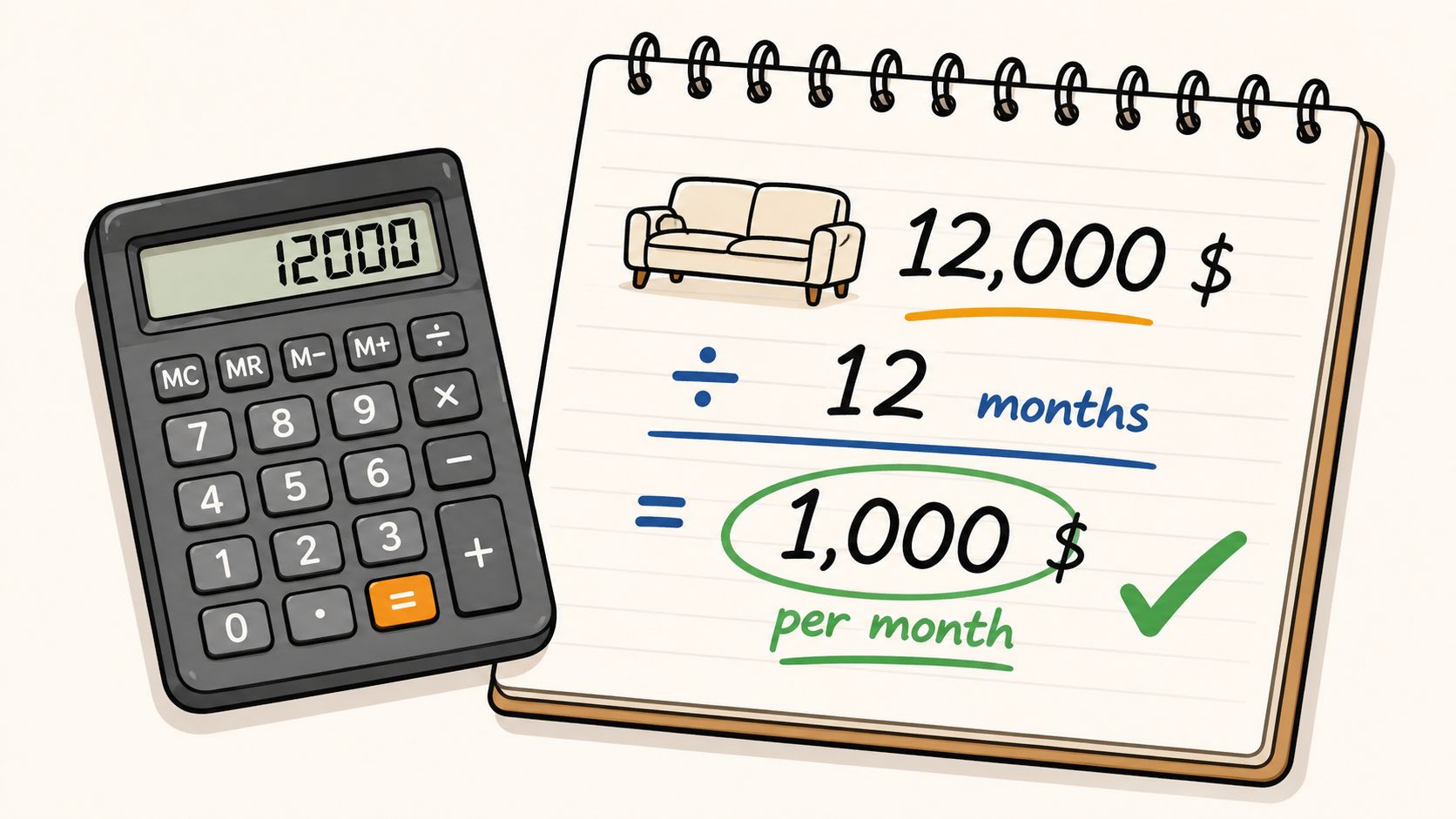
A dining set costs $4,200, and the promotional period lasts 12 months. The payment target is $350 per month, before accounting for any added charges placed on the account. That is the number to plan around, even if the statement displays a much lower minimum payment. A minimum can keep the account current while leaving a balance due when the promotion ends.
Write these figures beside the order before signing:
- Total purchase price: Count selected finishes, fabrics, configurations, delivery, taxes, and every other amount added to the account.
- Exact promotional length: Follow the agreement's stated months and final payoff deadline.
- Required payoff payment: Divide the complete balance by the promotional months.
- Automatic payment setup: Schedule payments early enough to allow for processing time.
- Protective buffer: Add a 10% payment cushion, then confirm that the issuer accepts extra payments without a penalty.
The cushion protects against timing gaps and small order changes. It does not replace a contract review. Confirm that every option and fee is included in the balance used for your calculation.
Made-to-order furniture demands another calculation whenever the price changes. A Canadel table can cost more after a finish, edge, leg profile, or dimension changes. Upholstery selections can change the total too. Recalculate the balance across the remaining promotional months after every revision, especially for a custom Amish or bespoke piece ordered for long-term use.
The payment that matters is the amount that clears the account, not the smallest figure printed on the statement.
Credit Scores, Approvals, and What Financing Does Not Do
A financing application can involve a credit review, income assessment, debt-to-income analysis, and the lender's own approval criteria. The exact process depends on the financing partner and the offer, so a shopper shouldn't assume that a promotional banner guarantees approval or a particular term.
No-interest financing also doesn't automatically build credit. Richmond Fed research found that BNPL products typically don't involve hard credit inquiries and generally aren't reported to credit bureaus, as discussed in its BNPL product overview. That design may make some applications feel lighter, but it can leave the payment history invisible to traditional credit scoring.
Approval myths that need correcting
- A promotion isn't a permanent rate lock: Approval for one purchase doesn't guarantee the same terms for a future purchase.
- A promotional account doesn't erase penalties: Late payments can still create fees, account consequences, or loss of promotional benefits under the agreement.
- A furniture application isn't a credit-building promise: The account must report in a way that supports credit history, and payments must be made on time.
- The showroom doesn't control the underwriting: The offer travels with the shopper and is governed by the financing provider's terms.
Because no verified data establishes universal credit-score tiers or typical approval thresholds, the following table uses decision labels rather than invented score cutoffs:
| FICO Range | Typical Promo Length | Approval Likelihood |
|---|---|---|
| Lower or limited history | Varies by provider and offer | Depends on the application and underwriting |
| Established history | Varies by provider and offer | Depends on income, existing obligations, and account criteria |
| Strong history | Varies by provider and offer | May support broader consideration, but approval isn't guaranteed |
Shoppers seeking general education on score factors can review CreditCardCult's credit score tips, then ask the finance desk whether the application uses a soft or hard inquiry and whether the account reports to credit bureaus.
The plain rule is simple: read the credit-pull language, confirm reporting practices, and judge the payment plan on its own terms. A high score may help an application, but it doesn't replace payoff discipline.
Applying Financing to Custom Amish and Bespoke Orders
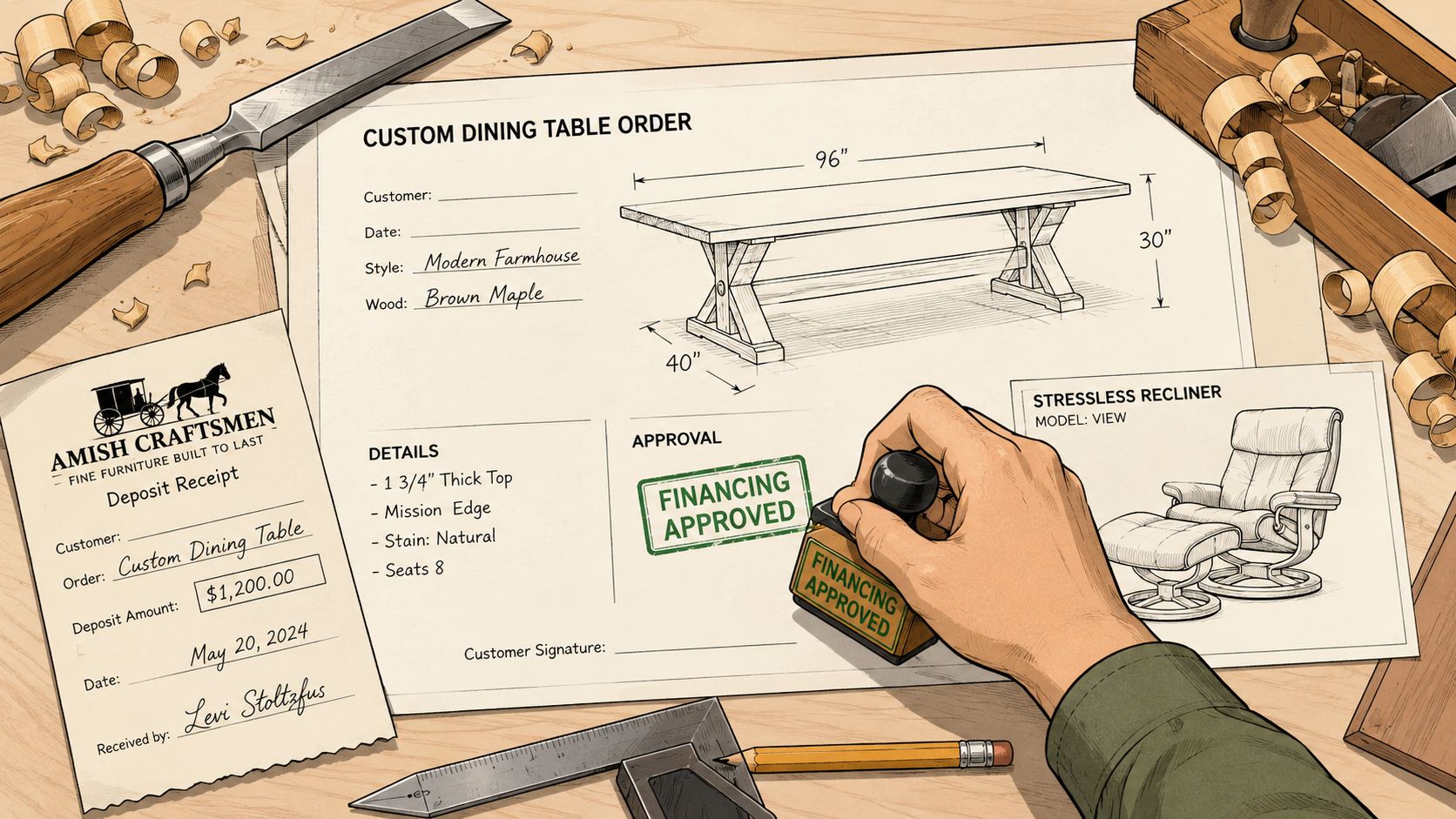
A custom order turns financing into a payment-math exercise. Start with the completed design, not the first estimate. An Amish dining table, a Canadel configuration, or a Stressless recliner can change price with its size, finish, fabric, and upholstery. Set the financed amount only after the household has chosen the specifications it wants.
The showroom may collect a deposit when the order is confirmed, provide production updates, and collect the remaining balance at delivery. Financing could begin with that deposit while an approved credit line covers the larger ticket. The agreement determines how each charge is posted, so ask when the promotional clock starts and whether later charges receive the same treatment.
Use the order timeline, not the delivery date
A 12- or 18-month promotion can apply to a handcrafted table or sofa, yet delivery does not automatically extend the payoff period. With production taking 8 to 14 weeks, the furniture might arrive during month four while the original deadline stays fixed.
Calculate the required payment from the order date. Then confirm whether the deposit, later options, and delivery balance share the same promotional terms. If the total changes, divide the new balance by the months remaining. That figure is the payment target, not the smaller amount shown on an early estimate.
Tyner's custom-order starting guide helps organize design choices before the financing paperwork. Treat the showroom visit as a design consultation and inspect the details that determine long-term value:
- Finish and material: Solid cherry, oak, and maple have a different weight and feel from thin surface treatments.
- Joinery: Mortise-and-tenon construction fits high-load frames such as chairs, tables, and beds. Dovetails suit drawers, boxes, and cabinets, as explained in furniture joinery guidance.
- Configuration: Canadel offers choices in finishes, fabrics, sizes, and arrangements.
- Ergonomics: Test Stressless seating in person for sizing and support.
- Payment structure: Review the final total, first charge, and promotional deadline beside the finished design.
The result is financing attached to an heirloom piece, rather than a generic monthly payment disconnected from the order. In a family-owned showroom, that structure gives shoppers a practical on-ramp to Amish and bespoke furniture instead of fast furniture.
How Tyner's Special Financing and Low Price Promise Work Together
A financing offer can fit the payment schedule and still leave a household overpaying for furniture that will not last. Evaluate the purchase with three questions: What is the total cost, how will the household pay it, and how long should the piece serve the home?
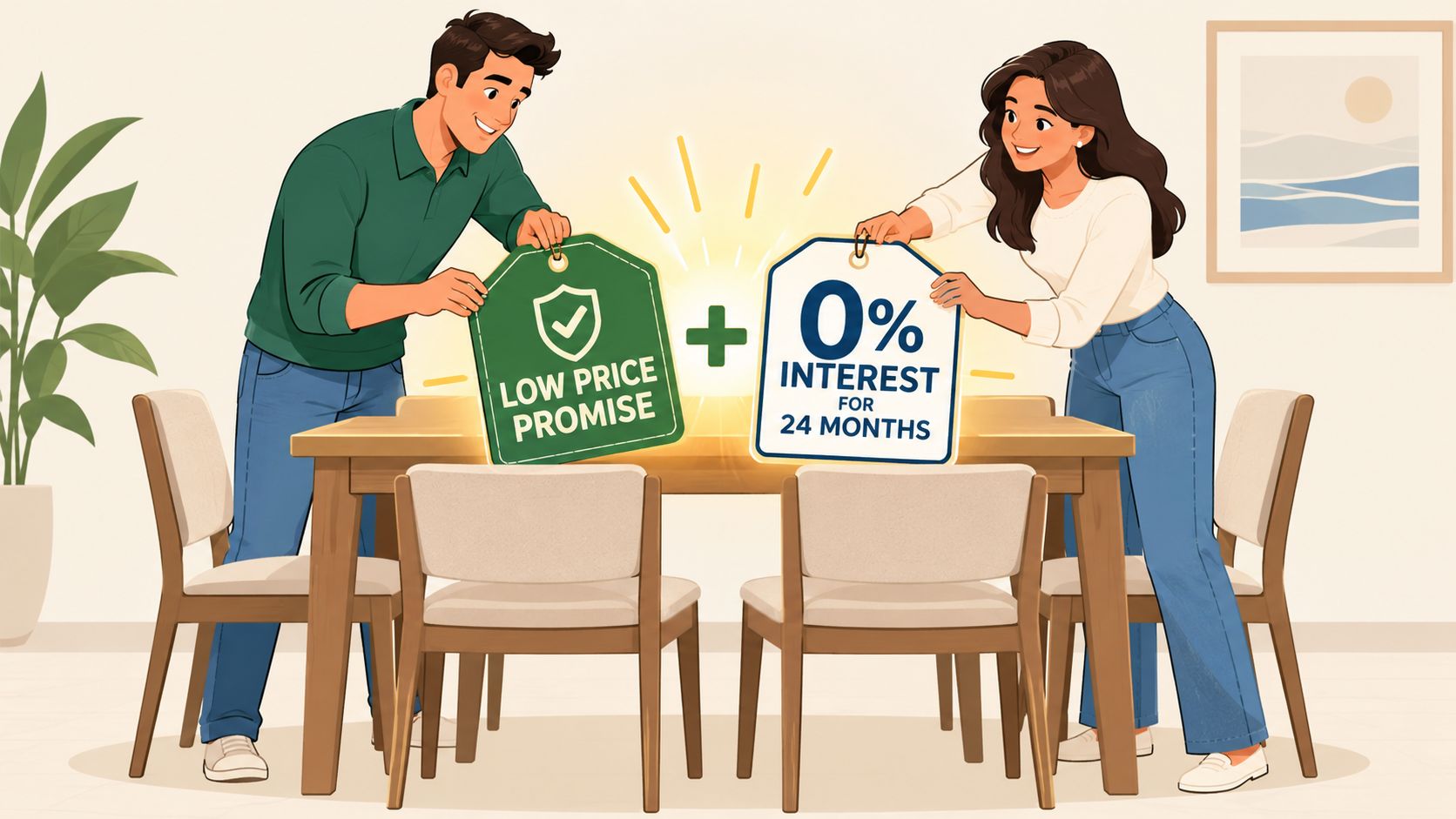
Tyner Furniture has operated as a family-owned showroom in the same Ann Arbor location since 1957. On qualifying purchases, it offers special financing subject to approval and promotional terms. Its Low Price Promise details address the price question by committing to meet or beat a comparable written quote from an authorized dealer, subject to stated conditions. Bring the written comparison and confirm that the furniture, specifications, delivery, and service terms match.
Cost-per-year changes the conversation
Payment math becomes more useful when it includes expected ownership. A mass-produced dining set priced below $1,500 and used for seven years carries an initial cost-per-year of roughly $214, before maintenance, replacement, delivery, or disposal. An Amish or Canadel heirloom financed without interest over 24 or 36 months may require more cash at the outset, yet a piece kept for 30 years has a much lower initial cost-per-year. A $1,500 example works out to roughly $50 per year, with the figure falling when the purchase price rises only moderately above that amount.
These figures illustrate the method, not a promise about service life or price. Longevity changes the value equation. A solid wood table that can be refinished, a chair made with durable joinery, or a recliner chosen for proper ergonomic fit can justify a higher initial purchase when the household plans to keep it through changing rooms and life stages.
Value test: Interest-free financing should make a durable purchase easier to schedule, not make an unsuitable purchase seem affordable.
Tyner's selection extends beyond dining. Households can furnish living rooms, bedrooms, home offices, entertainment areas, and outdoor spaces, while also choosing mattresses. The in-stock floor offers a starting point. Made-to-order upholstery, Canadel configurations, Stressless seating, and Amish finishes support a more personal result.
A Low Price Promise plus qualifying special financing plus heirloom construction addresses three separate risks. The financing limits interest cost during the qualifying promotional window. The written-price review keeps the comparison grounded in equivalent furniture and services. The construction question determines whether the piece deserves its place in the home for years to come.
For shoppers in Ann Arbor, that combination turns financing into a payment-math exercise and a practical on-ramp to Amish and bespoke furniture, rather than a reason to settle for fast furniture.
Your Next Step at the Ann Arbor Showroom
A focused visit produces better answers than a rushed purchase. Shoppers in Ann Arbor and Southeast Michigan can prepare three items before heading to the South State St. showroom.
Start with the paperwork
First, obtain a current written quote for an equivalent set if another authorized seller has been considered. The comparison should identify the same materials, dimensions, finish, configuration, warranty terms, and delivery obligations. A vague online price won't provide enough detail for a meaningful value review.
Second, narrow the furniture shortlist using actual dimensions. Measure doorways, stairways, walking paths, table clearance, and the intended wall. The showroom team can then discuss whether an in-stock piece fits or whether a made-to-order configuration makes more sense.
Third, apply for promotional financing early enough to understand the available credit and terms before the design consultation. Approval doesn't remove the obligation to calculate the payoff amount. It gives the household clearer boundaries for the final selection.
Use Quick Specs before the drive
Tyner's online Quick Specs can help shoppers review dimensions, leather grades, finish options, and special-order details before visiting. That preparation turns the in-store appointment into a focused conversation about construction, comfort, customization, price, and payment rather than a broad search through every room.
A sit test remains essential for upholstered furniture. The buttery feel of top-grain leather, the support of an ergonomic recliner, and the scale of a dining chair can't be judged reliably from a product thumbnail. For bedroom and dining furniture, shoppers should also inspect material integrity and joinery, especially when comparing Amish hand-crafted solid wood against mass-produced alternatives.
At the finance desk, three questions should be written down:
- Is this true 0% APR, or is it deferred interest?
- What payment clears the full balance before the promotional deadline?
- What happens if a payment is missed or the balance remains at the end?
The Tyner Furniture contact page gives shoppers a direct way to confirm showroom details and arrange the next conversation. A household that arrives with measurements, a written comparison, preferred finishes, and a payment target can make a confident decision without surrendering attention to the fine print.
Tyner Furniture offers special financing on qualifying purchases, a Low Price Promise, and access to heirloom Amish, Canadel, and Stressless furniture for homes throughout Ann Arbor and Southeast Michigan. Visit Tyner Furniture for a showroom sit test on South State St., or browse Quick Specs online before arranging a focused design and financing consultation.