Weather Resistant Fabrics Explained for Lasting Comfort

A sunny Southeast Michigan patio can feel like an extra room in June, while a bright sunroom becomes a favorite reading spot for both people and pets. Then the practical questions arrive. Will the cushions fade? Will a damp towel leave a smell? Will the upholstery still feel inviting after daily use, washing, and the occasional muddy paw?
Weather resistant fabrics answer more than the question of whether rain reaches the foam. They influence comfort, color retention, cleanability, breathability, and the cost-per-year value of a chair, sofa, or cushion. A carefully chosen textile can support an heirloom frame for years, while a poorly matched finish may lose its appeal long before the furniture itself needs attention.
Why Weather Resistance Matters Beyond the Patio
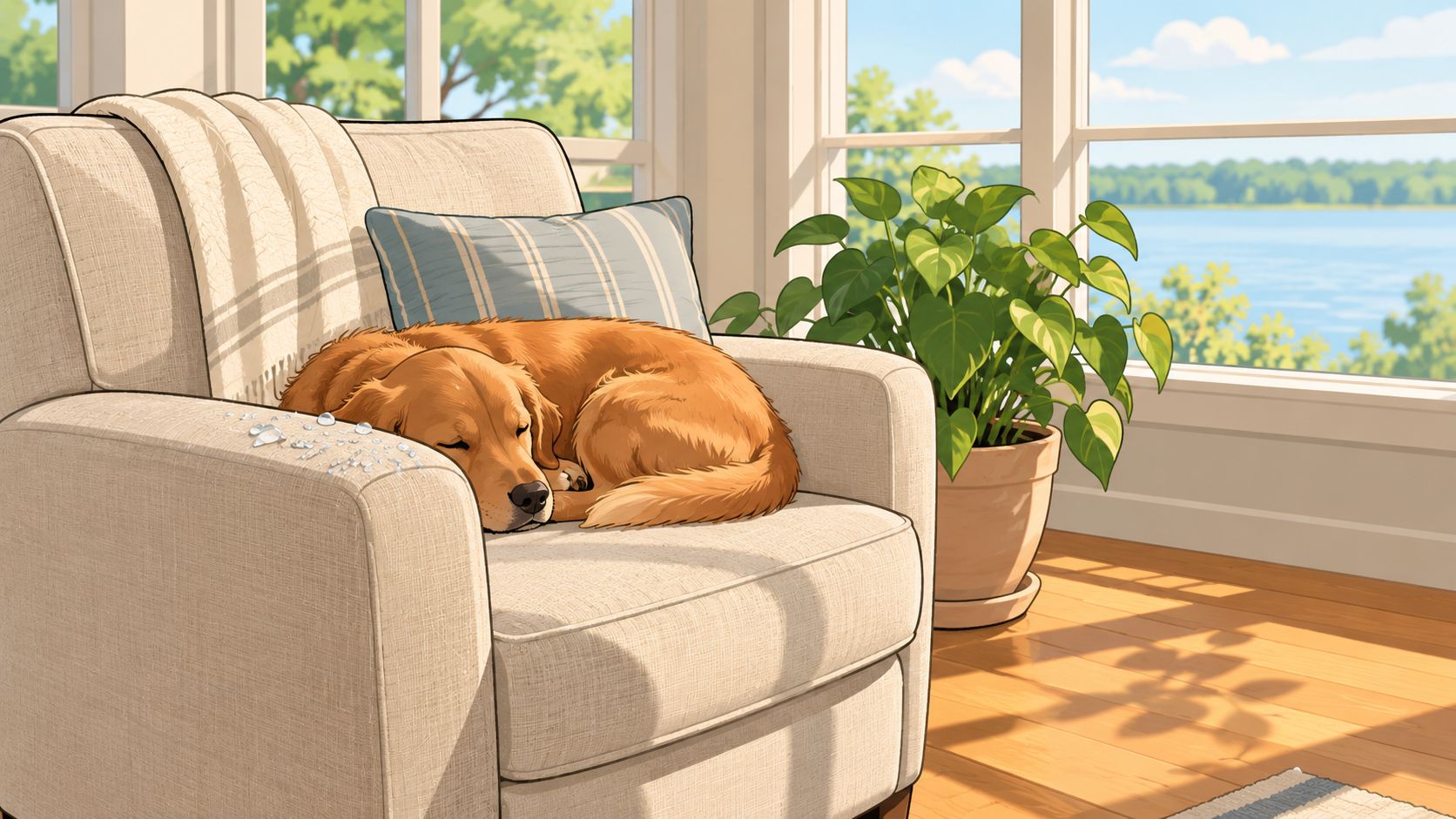
A family in Ann Arbor might use the same upholstered chair in three demanding ways. It may sit beside a sunny window, welcome a sleeping dog, and move onto a covered porch for summer gatherings. None of those situations involves a downpour, yet light, moisture, friction, pollen, and everyday spills all test the fabric.
That's why weather resistance belongs in the conversation about indoor-outdoor living, not only patio furniture. A textile that repels a splash but feels stiff against bare legs may disappoint in a sunroom. Another that feels soft and tailored may need more attentive cleaning. The right choice balances the tactile experience with the conditions surrounding the furniture.
Practical rule: Water resistance is one performance trait, not a complete description of how a fabric will live.
The history of these materials shows how much that balance has changed. The Victoria and Albert Museum's history of staying dry notes that South American natives were coating cloth with natural liquid latex as early as the 13th century. François Fresneau developed a related waterproofing method in 1748, and Charles Macintosh's 1823 patent bonded rubber between cloth layers to create the Mackintosh coat. Later, vulcanization in 1839 and Burberry's gabardine in 1879 improved stability, flexibility, and movement, while PVC and polyurethane coatings expanded industrial textile production in the mid-1900s.
Those milestones matter to a homeowner because they mark a shift from blocking water to engineering a more usable material. Heirloom thinking asks whether the fabric will remain comfortable and attractive as the seasons pass, not just whether it beads moisture on arrival.
A local way to judge value
In-stock is just the beginning for a considered furniture purchase. A made-to-order piece can coordinate fabric, finish, scale, and configuration with an existing room, which supports a more sustainable approach than replacing a complete setting whenever one surface wears.
Tyner Furniture has served Southeast Michigan since 1957, and its Ann Arbor South State St. showroom gives shoppers a place to compare textures in natural light, press a cushion, and judge how a fabric feels against the hand. Online inspiration can help organize a patio or sunroom, including an ai patio design generator, but a showroom visit reveals details a screen can't show, such as nap, softness, stretch, and the quiet weight of a well-made frame.
How Weather Resistant Fabrics Actually Work
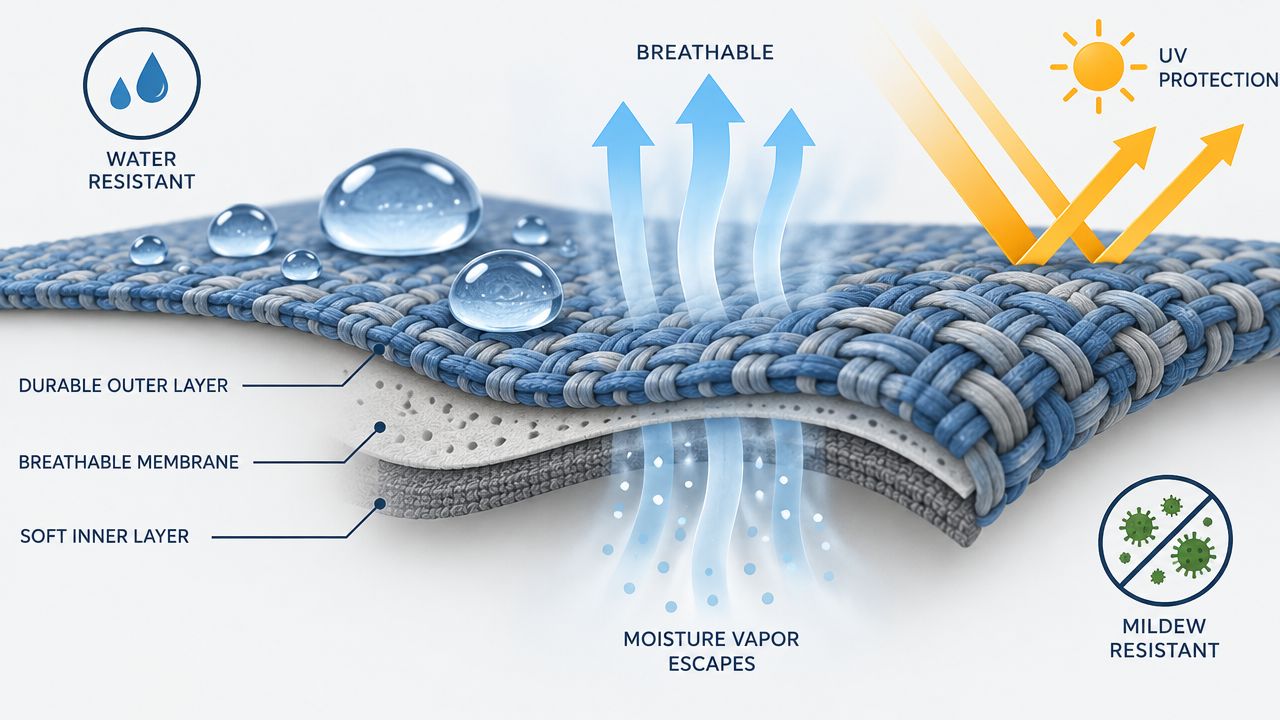
A useful way to understand a weather resistant fabric is to separate its jobs. The surface manages droplets, the structure manages liquid penetration, and the fiber or finish manages sunlight, friction, and organic residue. These layers of performance explain why two fabrics can look similarly dry in a sample book yet behave differently on a cushion.
First comes surface water repellency
Many textiles begin with a finish that encourages water to bead and roll away. Durable water repellent, commonly called DWR, works like a freshly waxed leaf. It doesn't necessarily make every layer beneath it waterproof, but it helps prevent the outer face from becoming saturated immediately.
That distinction matters after washing. A cushion can still contain a capable barrier while the surface loses its quick-beading behavior. Once the face fabric wets out, it may feel clammy, dry more slowly, and restrict the movement of water vapor through the textile.
Then comes the barrier
A tight weave, coating, or membrane creates more substantial resistance to liquid water. Older waterproof textiles relied on oiled, waxed, or rubberized surfaces. Modern breathable systems use engineered structures that aim to block liquid while allowing some vapor movement.
The best-known example, Gore-Tex, arrived in 1969. Its membrane is described as having holes about 20,000 times smaller than a water droplet, which allows liquid water to stay out while supporting air circulation, as explained in Goodfellow's overview of waterproof materials. The principle is similar to a very selective screen. A droplet is too large to pass through, while smaller vapor molecules have a better chance of moving outward.
For furniture, breathability affects the sensation of sitting. A fully sealed surface may offer strong moisture protection but feel less pleasant during warm weather. A softer, more air-permeable construction can feel closer to indoor upholstery, especially on a covered patio or in a sunroom.
Finally, the textile has to survive use
Sunlight can weaken finishes and alter color. Abrasion from clothing, pet claws, cushion movement, and repeated flexing can break face yarns or open pathways through a coating. A fabric may perform beautifully at purchase, then lose practical protection as its surface wears.
Acrylic fibers illustrate the difference between the fiber itself and the environment around it. Acrylic can resist mold and mildew naturally, yet mildew can still grow on dirt, pollen, or other organic material left on the surface, according to Cascadia Outdoor Cushions' explanation of solution-dyed acrylic. Routine care remains part of the performance system.
For a tactile guide to related upholstery decisions, Tyner's upholstery materials guide helps connect construction choices with the feel a shopper experiences in a showroom.
Fiber and Finish Families You Will See While Shopping
Material names can sound interchangeable until a hand touches the sample. Solution-dyed acrylic often feels substantial yet comfortable, while a coated textile may feel crisper or smoother. Polyester can take on many different textures, and vinyl offers a distinctly wipe-clean surface. The best choice depends on where the piece sits and what the household asks it to withstand.
Solution-dyed acrylic
In solution-dyed acrylic, color and UV stabilizers are built into the fiber rather than placed only on the surface. That construction supports color retention during prolonged sun exposure. One industry source reports typical exposure life of 5,000 to 10,000 hours and a service life of 8 to 15 years, while also describing high resistance to mold growth, as detailed in Cardinal Patio Furniture's textile standards.
This family suits exposed outdoor cushions, bright sunrooms, and seating where fade resistance matters. It still needs cleaning because surface soil can support mildew.
Olefin
Olefin is often selected for practical value and straightforward cleaning. It can work well in covered patios, family rooms, and casual seating where spills and frequent use matter more than a luxurious hand.
Its feel varies by weave and finish. A tightly woven olefin may feel crisp and structured, while a textured version can soften the visual impression. Sample testing matters more than the fiber label alone.
Polyester
Polyester offers broad design flexibility. It can be woven, brushed, textured, or treated for specific performance needs. That versatility makes it useful for covered outdoor areas, home offices, and living rooms where color, pattern, and tactile comfort need to coexist.
The tradeoff is that performance depends heavily on the construction and finish. A generic polyester isn't automatically weather resistant, UV stable, or stain resistant.
Vinyl and PVC-based surfaces
Vinyl and PVC-based materials provide a surface that can be wiped clean, making them useful for dining, high-contact areas, and settings where liquid cleanup takes priority. They can feel smooth and protective, though some shoppers may prefer a woven textile for softer seating.
Coatings add another layer of protection to many fabric families. They may improve water resistance, but a heavier barrier can reduce breathability and change the hand from buttery to slightly structured.
Coated blends and made-to-order choices
Blended constructions combine properties, but they also require careful questions. A coating may protect the face while making the fabric less airy. A softshell-style laminate may offer stretch and comfort while requiring more specific care.
Tyner's guide to choosing sofa upholstery fabric can help shoppers compare feel and use case before selecting a made-to-order configuration. Canadel supports bespoke dining choices, while Stressless offers ergonomic sizing, including Small, Medium, and Large options. Those programs make it possible to coordinate a fabric decision with the furniture's dimensions, posture support, and surrounding interior design rather than treating upholstery as an afterthought.
Reading Performance Ratings Without the Guesswork
A performance label becomes useful only when it answers a household question. Hydrostatic head can indicate resistance to liquid water, but it doesn't tell the whole story about a seat that faces afternoon sun and daily friction.
Hydrostatic head measures pressure
Under ISO 811, water pressure rises against a fabric until three drops penetrate. The height of the water column becomes the hydrostatic head rating, reported in millimeters. Technical literature commonly places outdoor sports and workwear around 5,000 to 15,000 mm, while alpine or expedition-grade use often reaches 20,000 to 30,000+ mm, according to the textile research on hydrostatic head and breathability.
A higher rating indicates stronger resistance to liquid penetration. It doesn't automatically mean a better furniture fabric. Tighter structures and heavier membranes can limit air movement unless the design balances protection with high moisture vapor transmission.
Ratings need companions
UV durability, abrasion, tear strength, and breathability describe different forms of real-world stress. Outdoor guidance identifies AATCC 169 as a UV resistance test with a minimum target of 1,000 hours at Grade 4, while technical outdoor fabric guidance also emphasizes abrasion and tear resistance. Separately, independent textile testing guidance identifies AATCC 16 for colorfastness to light and notes that Xenon Arc results are preferred because they represent sunlight more closely than Carbon Arc results.
| Performance Attribute | How It Is Measured | What Good Looks Like | Tradeoff to Watch |
|---|---|---|---|
| Liquid resistance | Hydrostatic head under ISO 811 | A rating matched to the exposure, often 5,000 to 15,000 mm for outdoor sports or workwear and 20,000 to 30,000+ mm for extreme conditions | Higher resistance can reduce air permeability |
| UV stability | AATCC 169 and AATCC 16 light testing | Results that address prolonged sunlight and color retention | Strong sunlight can still age finishes and face yarns |
| Abrasion and tear | Standardized abrasion and tear tests | A construction suited to repeated sitting, rubbing, and movement | A high water score alone doesn't predict friction life |
| Breathability | Moisture vapor transmission and air-permeability evaluation | A membrane or weave that releases vapor without sacrificing needed protection | More open structures may offer less liquid resistance |
Read the ratings as a bundle. A fabric with excellent water entry resistance can still disappoint if its color fades, its coating cracks, or its surface feels uncomfortable.
Matching Fabrics to Real Life Spaces and Use Cases
A fabric decision becomes clearer when the room comes first. A fully exposed cushion on a Southeast Michigan deck faces a different combination of sun, rain, and drying conditions than an upholstered home-office chair beside a window.
Choose by exposure and behavior
Fully exposed outdoor cushions need strong attention to UV stability, water management, mildew prevention, and drying. Solution-dyed acrylic can be a practical direction when color retention and outdoor use are central.
Covered patios and sunrooms allow a broader range. A breathable polyester, olefin, acrylic, or treated blend may provide a more relaxed hand because the fabric isn't facing the same direct exposure every day.
Pet-friendly living rooms need more than water resistance. Look for a construction that feels pleasant, cleans according to its care instructions, and doesn't show every brushed mark or strand of fur. A tightly woven surface may be easier to live with than a loose, delicate texture.
Home offices put comfort first. The chair or sofa should support an ergonomic posture and remain comfortable during long sitting, while the fabric handles sunlight and occasional spills. Water resistance alone won't guarantee a cool hand or attractive drape.
A useful starting point is to write down the actual stressors:
- Sun: Identify whether the piece receives direct afternoon light or filtered brightness.
- Moisture: Separate occasional splashes from repeated rain exposure.
- Friction: Consider pets, denim, blankets, arm contact, and cushion movement.
- Cleaning: Decide whether the household prefers wiping, removable covers, or professional care.
- Feel: Compare softness, texture, stretch, and warmth with a hand and a short sit.
Water resistant doesn't mean stain resistant, and neither term guarantees UV stability. Outdoor living guidance from Task Masters Inc. can provide additional planning ideas for arranging a comfortable exterior setting, while Tyner's outdoor upholstered furniture resources help connect performance fabrics with furniture selection.
The category is also moving toward more nuanced constructions, including hybrid laminates, softshell approaches, and bio-based or recycled membranes. Those options point toward a broader definition of sustainable performance, where longevity, comfort, maintenance, and material choices all matter together.
Cleaning and Care That Preserves Protection
Care begins before the first spill. Dust, pollen, sunscreen, food residue, and pet hair can collect on the surface, and organic material can give mildew something to grow on even when the underlying fiber resists mold.
Routine cleaning also protects the hand and appearance. A soft brush or upholstery attachment can remove loose debris without grinding it into the weave. For washing or spot treatment, the fabric label remains the authority because different finishes respond differently to water, solvents, heat, and agitation.
A manageable maintenance rhythm
- Brush first: Remove dry soil before applying moisture.
- Clean gently: Use the approved mild cleaner and test it in an inconspicuous area.
- Rinse thoroughly: Residue can attract more soil or alter the fabric's feel.
- Dry completely: Damp cushions should not return to use or storage while moisture remains inside.
- Inspect seams: Look for loose threads, abrasion, or coating changes before small issues spread.
- Store thoughtfully: Keep removable outdoor pieces protected during harsh weather when practical.
DWR finishes often wear off after roughly 20 to 40 washes, and overall waterproof fabric life is commonly cited at 3 to 5 years with normal use, even though the membrane may last longer, according to material guidance on waterproof breathable textile longevity. Those figures are broad expectations, not a promise for a particular cushion or chair. Sun exposure, washing method, friction, and storage can change the result.
Small habit, lasting value: Clean surface dirt before it becomes embedded, and follow the care label before reaching for a stronger product.
Aggressive detergents, high heat, stiff brushes, and unapproved waterproofing products can strip or alter a finish. Tyner's patio furniture care guide offers a practical starting point for protecting outdoor pieces while preserving their comfort and appearance.
Your Selection Checklist and Next Steps at Tyner Furniture
A good fabric choice begins with the furniture's daily life, not a performance word on a tag. Before ordering, shoppers can use a short checklist:
- Exposure level: Is the piece indoors, under cover, or fully exposed?
- Sun pattern: Does direct light reach the seat for part of the day?
- Moisture source: Will the fabric meet rain, damp towels, condensation, or only occasional spills?
- Household activity: Are pets, children, meals, or frequent entertaining part of the routine?
- Tactile priority: Should the fabric feel soft and relaxed, crisp or wipe-clean?
- Care capacity: Will the household brush, wash, dry, and store cushions consistently?
- Longevity goal: Is the aim a short refresh or an heirloom piece intended to remain useful for years?
The cost-per-year view often clarifies the decision. A durable, hand-crafted frame with a carefully matched made-to-order textile can support repair, refreshing, and continued use. For bedroom or dining furniture, Tyner's Amish solid wood pieces offer a different standard from mass-produced alternatives, with solid North American hardwoods, dovetailing, mortise-and-tenon joinery, and finishes selected around the home. The weight of solid cherry or the grain of oak communicates material integrity before a single drawer opens.
In-stock is just the beginning. Tyner Furniture's custom upholstery services allow shoppers to explore hundreds of fabrics, finishes, and configurations. Canadel supports bespoke dining customization, while Stressless provides ergonomic sizing for a more personalized sit. The collection also extends from the Home Office to Outdoor Spaces, so fabric decisions can remain coordinated across a home.
Special Financing, subject to approval, can make a high-quality purchase easier to plan, and the Low Price Promise adds value-focused reassurance. The South State St. showroom in Ann Arbor provides the most useful final test: sit, touch, compare, and see how the textile behaves under real hands rather than relying on a photograph.
Tyner Furniture helps Ann Arbor and Southeast Michigan households match weather resistant fabrics with durable upholstery, outdoor seating, home-office comfort, and heirloom-quality solid wood furniture. Visit Tyner Furniture for a showroom sit test on South State St., or browse online Quick Specs when planning a special order.