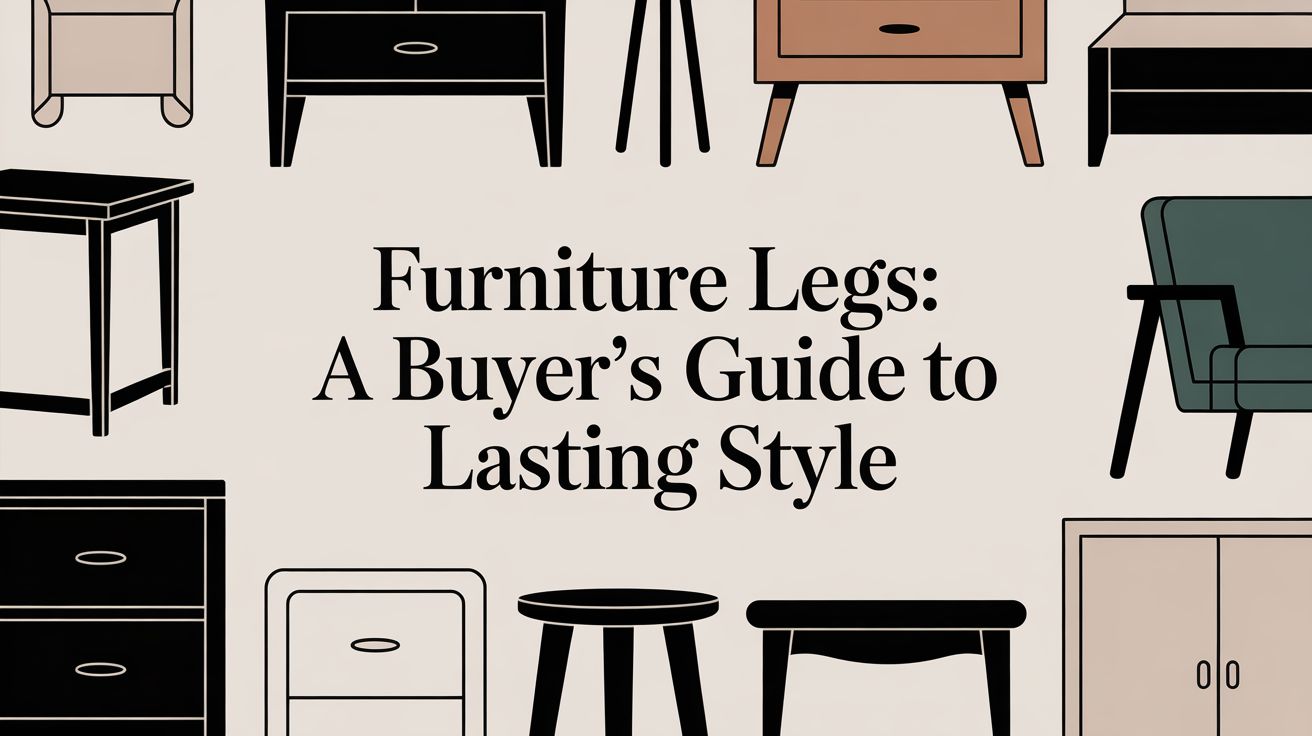
Furniture Legs: A Buyer’s Guide to Lasting Style

You're probably doing what many careful furniture shoppers do. You've found a dining table, chair, sofa, or bed that seems close to right, but something still feels uncertain. The top looks beautiful. The fabric or wood finish works. Yet the piece still raises a quiet question: will it look right in your room, feel right every day, and hold up for years?
A lot of that answer lives below the seat, case, or tabletop. Furniture legs shape the stance of a piece, its visual weight, its comfort, and its long-term stability. They can make a room feel lighter, more formal, more relaxed, or more grounded. They also carry the load, resist wobble, and affect how well a piece ages.
That's why shoppers often feel stuck. There are style terms, material choices, and sizing questions that aren't always explained clearly. If you're researching before a major purchase, this kind of detail can make the whole process feel more manageable. Helpful tools like AI-powered furniture product descriptions can also make it easier to compare design language across products while you narrow your preferences. For a broader look at how people move from browsing to buying, Tyner's guide to the furniture buying journey from first research to final decision is a useful companion.
Table of Contents
- The Unsung Heroes of Your Furniture
- A Visual Guide to Furniture Leg Styles
- Heirloom Materials for Lasting Support
- How to Measure for Perfect Proportions
- The Science of Stability and Structure
- The Tyner Customization Edge for Furniture Legs
- Caring For Your Investment and Next Steps
The Unsung Heroes of Your Furniture
Walk into a well-furnished room and you can usually feel balance before you name it. A dining chair seems inviting instead of awkward. A sideboard feels substantial instead of bulky. A cocktail table sits with confidence instead of looking like it was dropped into place as an afterthought.
Often, the difference is in the legs.
Furniture legs set the posture of a piece. Slim, tapered legs can make a cabinet feel lighter on the floor. A bold block leg can give a table quiet authority. A curved leg can soften a formal dining room and make traditional furniture feel graceful instead of stiff. Shoppers notice the effect even when they don't know the vocabulary yet.
That's also why this detail gets confusing. Legs aren't just decorative trim attached at the end of production. They influence the style period a piece belongs to, the way weight is distributed, how easy it is to sit down and stand up, and whether the piece still feels dependable after years of daily use.
A good rule: if a piece looks beautiful from the top but unresolved at the bottom, it usually won't feel satisfying for long.
In Southeast Michigan, many shoppers are furnishing spaces that have to do several jobs at once. A dining room may also be homework central. A home office may need to look polished on video calls and still handle daily work. A condo near downtown Ann Arbor may need furniture that feels visually open without sacrificing strength. That's where leg design stops being a minor detail and becomes part of a smart buying decision.
Since 1957, local families have leaned on experienced guidance when a significant purchase feels harder than it should. That long view matters, because the best furniture choices aren't only about what photographs well today. They're about what still looks right, works hard, and feels worth owning year after year.
A Visual Guide to Furniture Leg Styles
Some furniture legs tell you exactly what era or mood a piece belongs to. Others are quieter. Learning to identify them helps you shop with more confidence and describe what you like without guessing.
How style became a design language
Furniture legs have carried design history for centuries. Cabriole legs emerged in the early-to-mid 18th century and are strongly associated with Queen Anne and Chippendale furniture, while spiral legs reached Europeans in the mid-17th century and became especially popular in England from 1660 to 1703, as described in this history of furniture leg styles and their historical periods.
That history matters because leg shape isn't random. It signals taste, period influence, and often the level of craftsmanship involved. If you're also trying to connect furniture details to a broader room plan, this overview of understanding design styles for agents can help translate a single piece into a whole-home design direction.
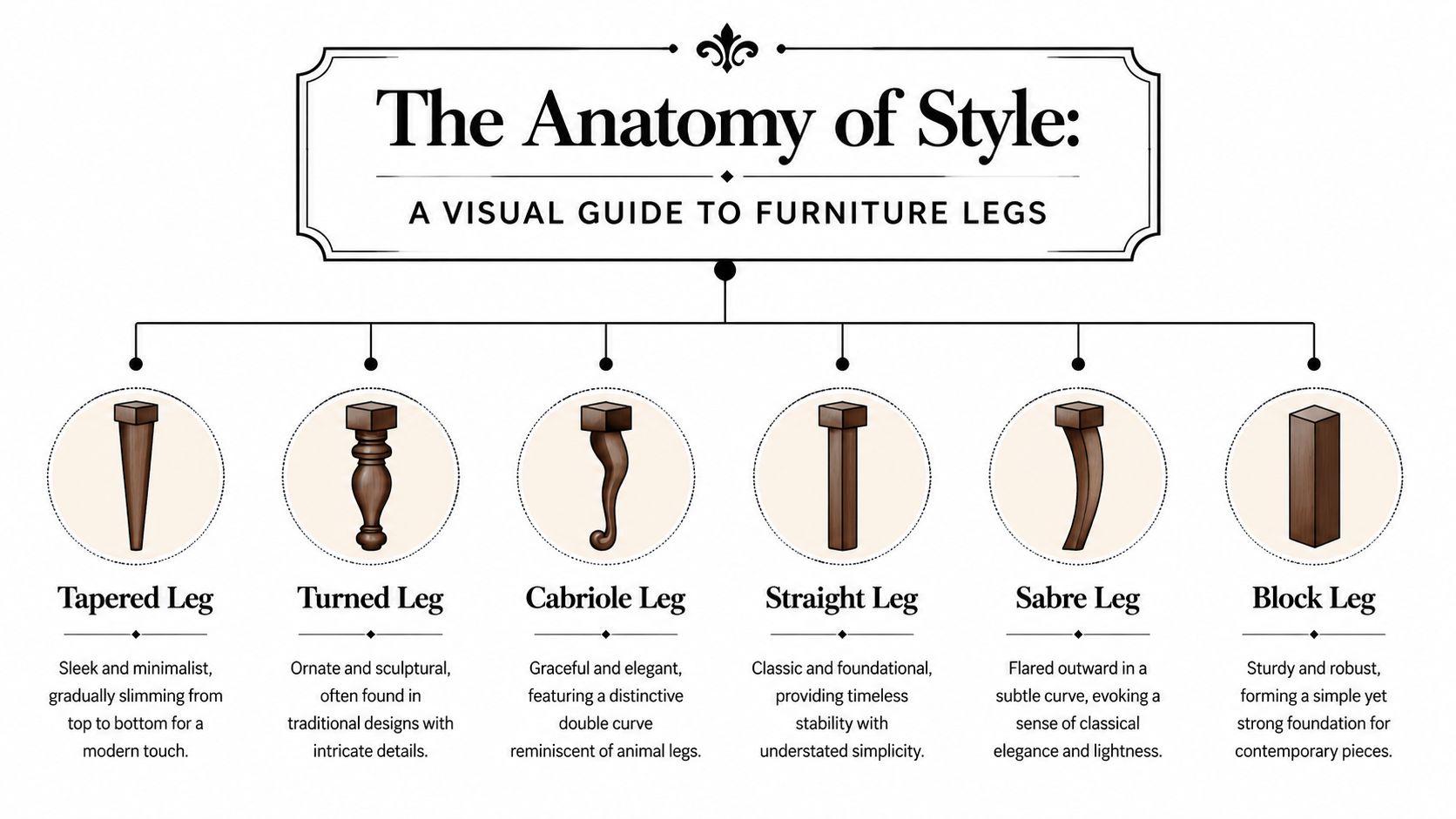
Six leg styles worth recognizing
Here's a practical vocabulary you can use in a showroom or while comparing special-order options.
| Leg style | What it looks like | What it tends to communicate |
|---|---|---|
| Tapered | Narrows as it goes down | Light, modern, clean |
| Turned | Rounded and shaped on a lathe | Traditional, decorative, crafted |
| Cabriole | Distinct double curve | Elegant, historic, formal |
| Straight | Vertical with minimal shaping | Simple, versatile, timeless |
| Sabre | Gentle outward curve | Classical, refined, airy |
| Block | Square or rectangular profile | Strong, grounded, contemporary |
A few other terms come up often in conversation.
- Hairpin legs use bent metal rods and have a lean, open look. The form was invented in 1941 by Henry P. Glass, and it became closely tied to mid-century modern furniture that rose in the 1940s and became widely popular in the 1950s and 1960s, as outlined in this account of the history of hairpin legs.
- Baluster legs usually feel older and more architectural, with fuller shaping through the center.
- Bun feet create a low, rounded base that can make a piece feel sturdy and traditional.
- Bracket feet often appear on case goods and give chests and cabinets a composed, substantial look.
How to match a leg style to a room
If your room already has strong lines, such as large windows, modern lighting, or a simple sectional, tapered or straight furniture legs usually keep the look cohesive. If your home leans classic, a turned or cabriole leg often feels more at home because it adds shape and warmth.
For mixed interiors, balance is usually better than strict matching. A modern room can handle one traditional note. A classic dining area can benefit from a cleaner leg profile to avoid visual heaviness. Pieces like a coffee table with a metal base work well for that reason. They bring structure without crowding the room.
Many shoppers don't need more choices. They need better words for the choices already in front of them.
Heirloom Materials for Lasting Support
Style gets attention first, but material decides how a leg performs after years of use. A beautiful silhouette made from the wrong material won't stay satisfying for long. That's where a shopper's thinking often shifts from appearance to cost per year.
Solid wood and metal do different jobs well
Material choice directly affects durability and intended use. One commercial leg catalog specifies #304 food-grade stainless steel and 1-7/16 inches of adjustment for leveling, which shows why stainless legs are favored where strength, rust resistance, and floor irregularities matter, according to this stainless and adjustable leg catalog.
In plain language, metal legs usually make the most sense when a piece will see harder wear, more moisture, or heavier day-to-day traffic. Kitchens, offices, and active family spaces are common examples. Powder-coated or stainless options are practical because they handle abrasion and changing conditions better than more delicate materials.
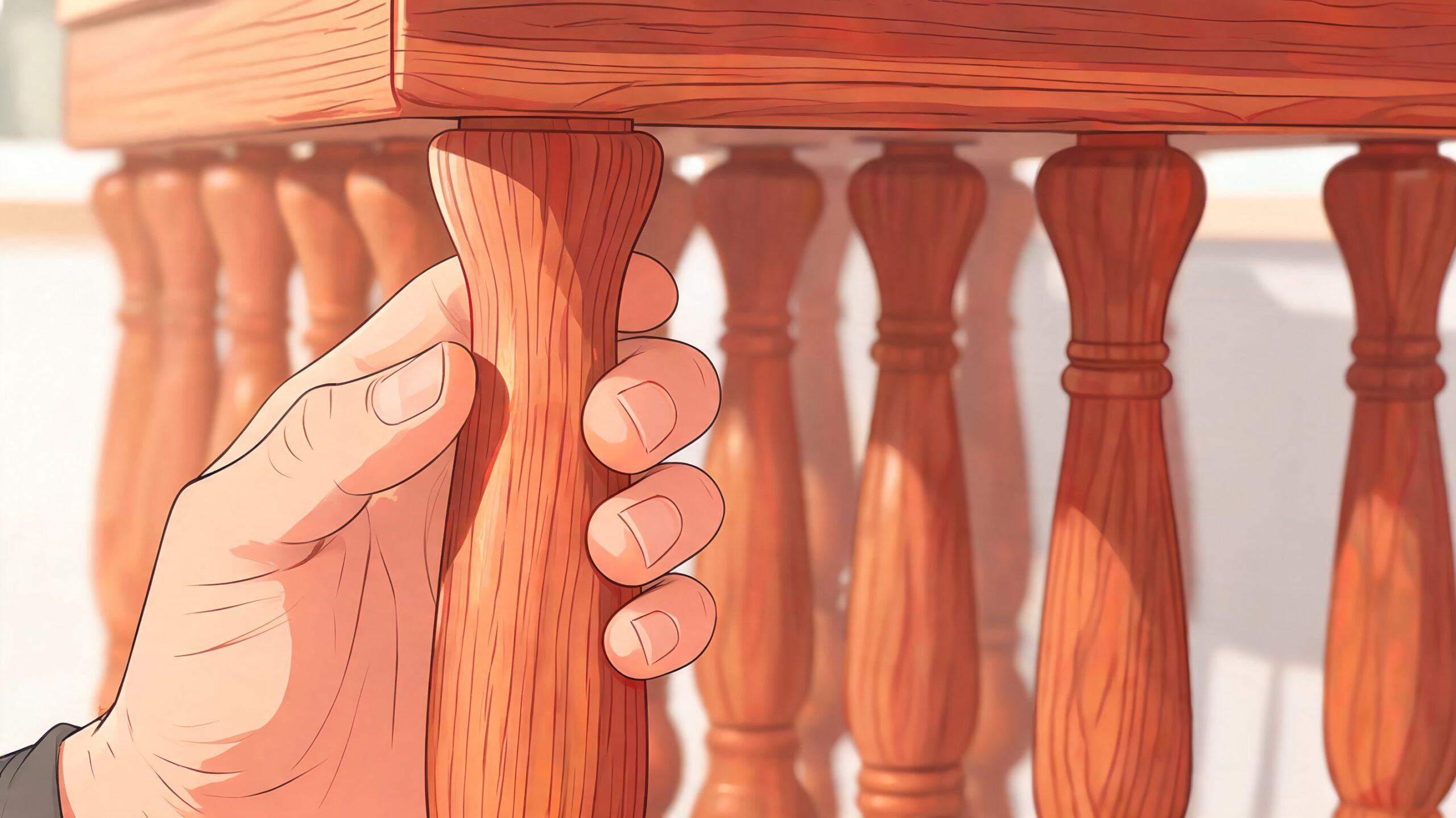
Solid wood legs serve a different kind of value. They bring warmth, visual depth, and a tactile quality that's hard to imitate. On hand-crafted dining and bedroom furniture, the weight of solid cherry, oak, or maple usually tells you more than a spec sheet can. The piece feels planted. It feels quiet. It feels like it was made to stay.
For readers comparing wood species before buying case goods or dining pieces, this guide to choosing the right hardwood for longevity and style is worth reviewing.
What your hand can tell you
A shopper can learn a lot by touching the leg itself.
- Feel the transition points. On a good wood leg, the shaping should feel intentional, not abrupt.
- Check the finish. A quality finish should feel even and settled into the wood, not thick and plastic-like.
- Lift one corner slightly if appropriate. Better-built pieces often feel composed and substantial rather than hollow.
- Look at connection areas. Where the leg meets the apron, seat frame, or cabinet base should look integrated, not merely attached.
What lasts at home often feels different in the hand before it ever proves itself in use.
For many households, especially those furnishing a forever home in Ann Arbor or elsewhere in Southeast Michigan, the idea of heirloom quality becomes real here. You're not only buying a look. You're buying a material that can age with dignity.
How to Measure for Perfect Proportions
A common showroom moment goes like this. A customer finds a leg style they love, brings home the measurements, and the finished piece ends up too high for comfortable dining or too low for everyday work. The mistake usually starts with measuring one part in isolation.
Your body uses the finished piece, not the leg by itself. For that reason, the most reliable starting point is the final height you want to live with, then the thickness of everything sitting above the leg, such as a tabletop, seat frame, or cushion.
Start with the finished height
Furniture sizing works a lot like tailoring. A sleeve measurement matters, but the full jacket has to fit the person wearing it. Leg height works the same way. It only makes sense once you account for the structure above it.
For a table, ask one simple question first: where should the top surface land when the piece is fully assembled? Once you know that, subtract the thickness of the top and any support structure underneath. That gives you a much better target for the leg itself than shopping by leg height alone.
This sounds simple, but it prevents expensive mistakes.
A simple measuring checklist
Use this order at home before you shop.
- Measure the room first. Record wall length, walking space, and any doors, drawers, or vents that affect placement.
- Measure the piece you already use. If an existing table or chair feels comfortable, that real-life reference is often more useful than a catalog description.
- Include the floor in the equation. Rugs, uneven older floors, and transitions between surfaces can change both height perception and how steady a piece feels.
- Measure for the primary user. A breakfast chair, a desk chair, and a lounge chair support different postures, so the right leg height changes with the job.
- Check the visual weight. A thick top on narrow legs can feel top-heavy to the eye, even if the measurements are technically workable.
Proportion is part comfort, part appearance, and part long-term value. A leg that is undersized for the piece can make good materials look temporary. A leg that is too heavy for the scale of the furniture can make a room feel crowded. Good proportion helps a piece look settled and use its structure wisely over many years.
Bring three numbers when you shop: your room width, your target finished height, and the thickness of the top or cushion above the leg.
If you want a printable worksheet before visiting a showroom, Tyner's guide on measuring furniture for your room and layout keeps the process organized.
The Science of Stability and Structure
A dining table can look solid in the showroom and still feel different after a few months of real use. Plates stack up, people lean in, a child scoots a chair back on one corner, and all that force travels through the legs. That quiet job is what separates a piece that feels settled for years from one that starts to wobble before it has earned its place in the home.
Why load path matters
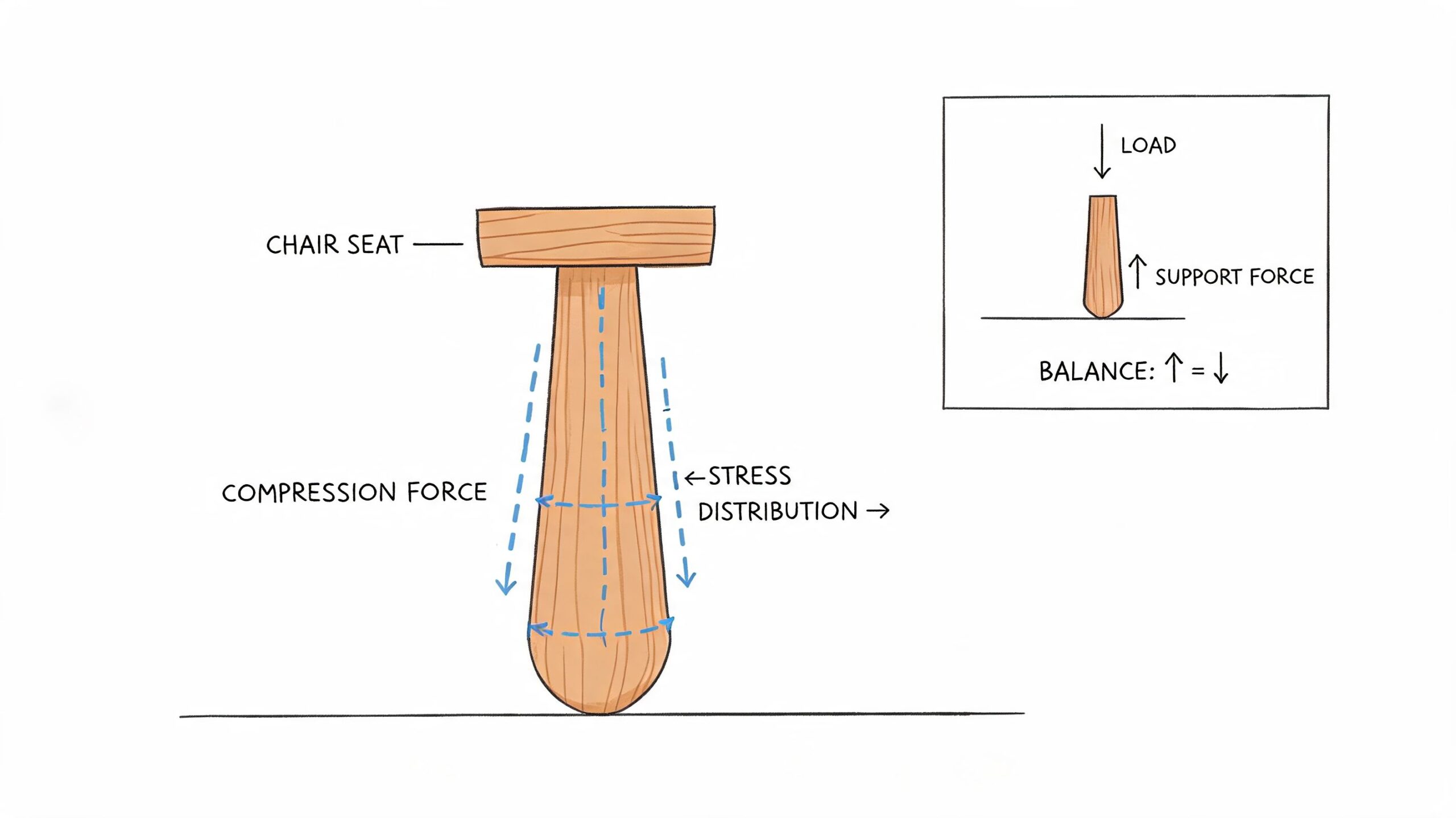
Furniture makers use the term load path to describe how weight moves from the top of a piece down to the floor. The cleaner and straighter that path is, the more confident the furniture tends to feel.
A simple example helps. A heavy wood top paired with thin legs may still look elegant, but the legs and their joints have to carry that weight every day. If the leg size, material, or attachment method is too light for the job, the piece can flex, sway, or loosen over time. Good design keeps beauty and structure working together, not competing with each other.
Placement matters too. Legs near the corners usually give a table a broader stance, while legs set too far inward can make the top feel less planted. On chairs and case pieces, the same principle applies. The farther force has to travel through a weak connection, the more likely you are to feel movement.
That is one reason custom building can be such a smart investment. A piece designed around its actual size, top thickness, and daily use has a better chance of aging like an heirloom instead of aging like a compromise. Tyner's custom furniture design process gives shoppers a way to match leg style with the structure the piece really needs.
Rake and splay are not the same thing
Chair legs add another layer because angles change how a chair behaves when someone sits down, shifts weight, or stands up.
Woodworkers usually separate those angles into two terms:
- Rake is the angle seen from the side.
- Splay is the angle seen from the front.
Small changes in either one can have a noticeable effect. A chair with a slight rearward rake may feel more relaxed and secure. A wider splay can make the base feel steadier, but if it is overdone, the chair can look awkward and take up more visual space than the room wants. That balancing act is part engineering and part craftsmanship.
Chairmakers also pay close attention to how those angles work together in space, which is why discussions of chair leg mortise angles, rake, and splay focus so much on precision. A few degrees can change comfort, stability, and even how easy it is to get in and out of the chair.
A chair does not need dramatic angles to feel better built. Small, well-judged adjustments often make the bigger difference.
What separates sturdy from shaky
Shakiness usually starts in one of three places. The leg is too slight for the load. The joint is not strong enough. Or the base lacks the bracing needed to resist side-to-side stress, which furniture makers call racking.
You can check a lot of this in person without any tools.
- Press gently from the side. A well-built piece should resist that push without a loose, delayed response.
- Watch the corners. The frame should move as one unit instead of letting each corner act on its own.
- Sit, shift, and stand. Good seating settles quickly and feels composed through the whole motion.
- Look underneath. Stretchers, corner blocks, and joinery should look intentional and properly fitted.
Joinery makes a lasting difference here. Mortise-and-tenon construction, dovetails, and other time-tested methods help distribute force across the frame instead of asking one screw or bracket to do too much. You may never see those details once the piece is in your dining room or study, but you will feel them in the steadiness of the furniture and in how well it holds up year after year.
That is the part many style guides miss. Furniture legs shape the look of a piece, but they also protect its value. When the leg design, material, angle, and joinery are chosen with care, you are not just buying a style. You are buying a structure that can stay useful, attractive, and worth keeping for a very long time.
The Tyner Customization Edge for Furniture Legs
Most shoppers don't need endless options. They need the right options connected to real use. That's where customization earns its keep.
Customization solves real furniture problems
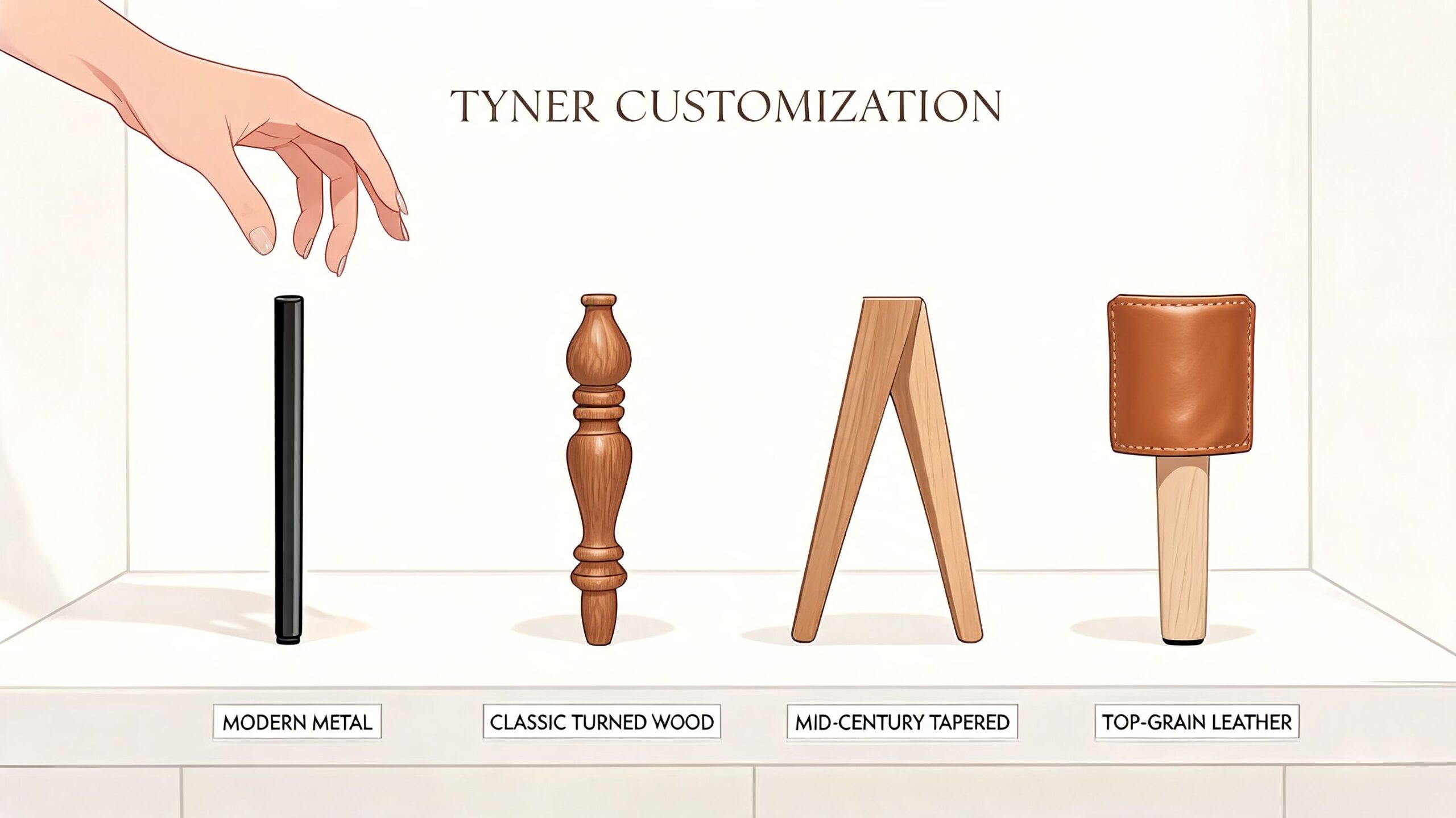
A made-to-order piece lets you line up three things at once: the look you want, the comfort you need, and the structure the piece requires. That's very different from accepting a leg style because it happens to be attached to the in-stock version on the floor.
At Tyner Furniture's custom furniture process, that usually means a shopper can move beyond “close enough” and refine the details that affect daily life. In dining, Canadel makes this especially practical because customers can work through combinations of table shape, finish, and leg style. In reclining seating, Stressless brings the same logic to ergonomic fit, where the base and size affect how the chair supports the body. In solid-wood collections, Amish hand-crafted pieces often allow the buyer to choose wood species, stain, and details that give the furniture a more personal, heirloom result.
Where custom legs make the biggest difference
Customization tends to matter most in a few situations.
Dining rooms with competing needs
A family may want a table that feels substantial enough for gatherings but not so heavy-looking that it dominates the room. Changing the leg profile can solve that without changing the whole design.
Open-plan homes
In a combined kitchen, dining, and living area, furniture legs help pieces relate to each other. A lighter visual footprint can keep the room from feeling crowded.
Bedroom furniture that needs warmth
Bed and case good legs change whether a suite feels grounded, refined, or airy. Even subtle differences in profile can shift the whole mood.
Home office and outdoor-adjacent spaces
Tyner's selection extends beyond dining and bedroom into the Home Office and Outdoor Spaces, where leg material and stance also affect durability and appearance.
Customization also helps with details shoppers don't always consider until late in the process. A leg finish can tie into existing flooring. A slightly different base can improve everyday ergonomics. A stronger visual anchor can make a custom piece feel like it belongs in the home rather than just fitting the measurements.
For many households in Ann Arbor and across Southeast Michigan, that's the point where furniture starts feeling less like inventory and more like a considered investment. Add in Special Financing and a Low Price Promise, and a made-to-order purchase becomes easier to plan without reducing the quality of the final choice.
Caring For Your Investment and Next Steps
Good furniture legs don't ask for complicated care, but they do reward consistency. Dust wood legs with a soft cloth, and keep moisture from sitting on the finish. For metal legs, wipe away residue before it builds up, especially in active kitchens, entry-adjacent spaces, or high-traffic rooms. Check levelers and floor contacts from time to time so a small imbalance doesn't become ongoing stress on the frame.
The larger point is simple. Furniture legs affect style, comfort, structure, and longevity all at once. They influence whether a piece feels light or grounded, formal or relaxed, sturdy or uncertain. When you choose carefully, you're not getting lost in details. You're protecting the value of a purchase you'll live with every day.
That matters even more when you're buying for the long term. In-stock pieces can be a good starting point, but they're only part of the story. Custom finishes, bespoke sizing, ergonomic bases, and hand-crafted solid wood construction can turn a good piece into one that fits your home with much more confidence.
If you're in Ann Arbor or elsewhere in Southeast Michigan, the smartest next step is still an in-person one. Sit in the chair. Run your hand over the finish. Notice the weight of solid wood and the balance of the base. Those small impressions are often what confirm a wise investment.
If you're ready to compare furniture legs in person, visit Tyner Furniture on South State St. in Ann Arbor for a sit test and a closer look at hand-crafted solid wood, Canadel dining options, Stressless ergonomic seating, and made-to-order details. Since 1957, the showroom has helped Southeast Michigan shoppers move from uncertainty to confident decisions. If you're still narrowing options, browse the online Quick Specs for special orders and ask about Special Financing when you're ready to make a long-term purchase feel manageable.