Ergonomic Chairs for Tall People: A Buyer’s Guide

A tall person usually knows the problem within the first minute of sitting down. Knees crowd the desk. The seat feels short under the thighs. The lumbar pad lands too low and pushes in the wrong place. By the end of the day, the chair hasn't supported posture. It has asked the body to compensate for it.
That frustration is common because shopping for ergonomic chairs for tall people is often reduced to labels like “high-back” or “big and tall.” Those labels sound helpful, but they don't solve the underlying issue. Fit isn't one measurement. It's a combination of seat height, seat depth, lumbar position, backrest height, and arm support working together.
That's why the right approach starts with measurement and testing, not with a roundup list. A chair can look generous on a sales floor and still fail once a taller body sits in it for an hour. A patient fitting process leads to better comfort, better posture, and a purchase that feels like a long-term investment instead of a compromise.
Table of Contents
- Your Guide to Finding the Right Fit
- Why Standard Chairs Fail Tall People
- The Anatomy of a Perfect Fit for Tall Bodies
- Your In-Person Fit Test Guide for the Showroom
- The Power of Custom Sizing with Stressless
- Frequently Asked Questions for Tall Chair Shoppers
Your Guide to Finding the Right Fit
A lot of tall shoppers arrive at the same conclusion after trying several chairs. The problem isn't that they haven't found a chair with enough padding. The problem is that the chair was never scaled to their body in the first place.
Published guidance for taller users makes that clear. One tall-user guide notes that fit is multi-dimensional, and that a person who is 6'5" may need a 20-inch seat height, a 20+ inch seat depth, and lumbar support placed 19 to 22 inches above the seat pan. It also warns that a chair marketed as high-back can still miss the mark if the other dimensions don't line up with the user's body according to this tall-fit guide.
That's the shift many shoppers need. Stop asking, “Is this chair made for tall people?” Start asking, “Where does this chair match my body, and where does it miss?”
A chair that solves only one dimension usually creates a new problem somewhere else.
For households in Ann Arbor and across Southeast Michigan, that question matters because a chair is rarely a short-term purchase. It becomes part of a daily routine in the home office, the reading corner, or the family room. Since 1957, local shoppers have looked for furniture that lasts, and seating is no exception. Durability, adjustability, and proper fit all matter more than a quick first impression on the showroom floor.
A practical first step is to measure the body before measuring the chair. That process doesn't need to be complicated. A tape measure, a flat floor, and a few minutes are enough to build a much clearer shopping standard. This furniture measuring guide is a useful starting point for anyone trying to shop with more confidence instead of guesswork.
Height is only the starting point
Two people can stand at the same height and need different chairs. One may have longer legs. The other may have a longer torso. One may need more seat depth. The other may need the lumbar support to adjust higher.
That's why the most useful buyer's guide isn't a ranking list. It's a fitting process. Once a shopper understands that process, it becomes much easier to evaluate any chair properly, whether it's in a home office setup or on a South State Street showroom floor.
Why Standard Chairs Fail Tall People
Most standard office seating is built to satisfy average dimensions. That sounds reasonable until a taller user sits down and finds that average sizing isn't neutral. It's restrictive.
One published guide states that standard office chairs fit only about 60% of the working population, leaving the other 40% outside the intended ergonomic range in this seating fit overview. For tall people, that mismatch often shows up as poor posture, discomfort, and a chair that asks the body to adapt instead of supporting it properly.
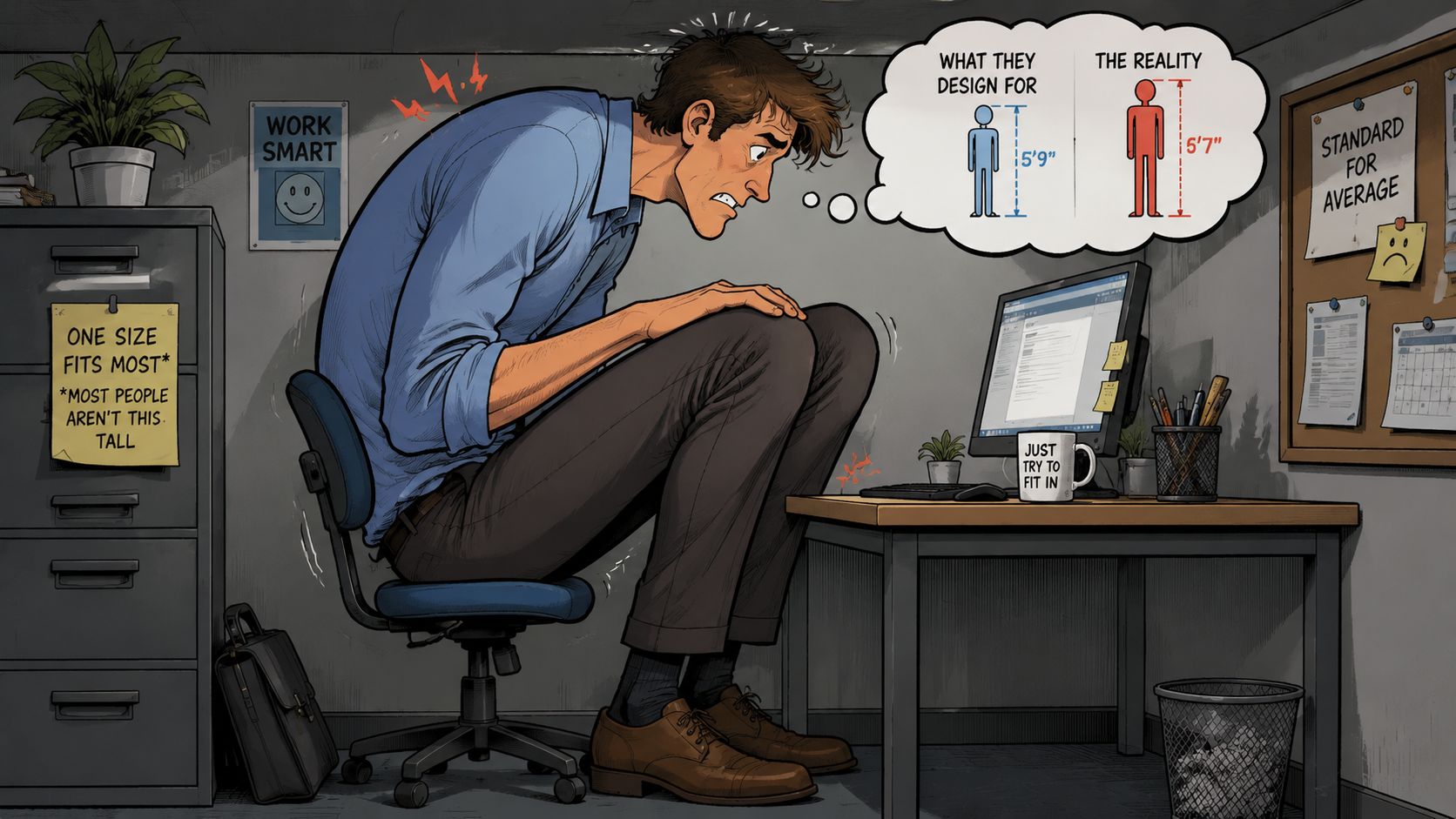
A too-low chair changes more than leg position. It closes the hip angle, reduces knee clearance, and often pushes the pelvis backward. A shallow seat can leave the thighs unsupported. A short backrest may stop below the area that needs support. None of those failures are dramatic on their own, but they build strain over a full workday.
The real problem is constrained posture
When a chair doesn't fit, the body starts holding itself in place. That extra effort is what many people feel as fatigue rather than sharp pain. Shoulders tighten. The lower back works harder. The user slides forward to find thigh support, then loses contact with the backrest.
A helpful way to think about it is this. A good chair carries the body. A poor one makes the body brace against gravity.
- If the seat sits too low, the knees ride higher than they should and the hips stay cramped.
- If the seat pan is too short, the thighs never fully settle, so pressure shifts toward the sit bones.
- If the backrest ends too early, the upper back and shoulder blades don't get enough support.
- If lumbar support is fixed too low, it can feel intrusive instead of helpful.
That's why posture advice and chair fit belong together. This article on improving posture while sitting gives useful context for shoppers who know something feels off but haven't yet connected that discomfort to furniture dimensions.
Why one-size thinking breaks down
General-purpose chairs are often built around the 5th to 95th percentile of users, according to tall-chair ergonomic guidance in the verified research set. That leaves some taller bodies outside the design envelope. In practical terms, “close enough” usually isn't close enough for someone whose legs, torso, or shoulder height exceed standard assumptions.
The issue isn't that tall users are unusually demanding. The issue is that mass-market sizing asks them to live with a chair that was designed around somebody else's proportions.
For a shopper who wants lasting value, that matters. Buying the wrong chair twice costs more than buying the right chair once.
The Anatomy of a Perfect Fit for Tall Bodies
A tall shopper usually notices the problem in the first few minutes. The chair looks adjustable on paper, but once seated, the thighs are only half supported, the lumbar hits too low, or the shoulders never settle. Height alone does not explain fit. Body proportions do.
In our showroom, we see this with long-legged customers, tall customers with shorter torsos, and broad-shouldered customers who need more arm width than standard chairs allow. Two people can stand the same height and need very different chairs. That is why the right approach is to measure the body first, then match the chair.
Fit starts with proportions
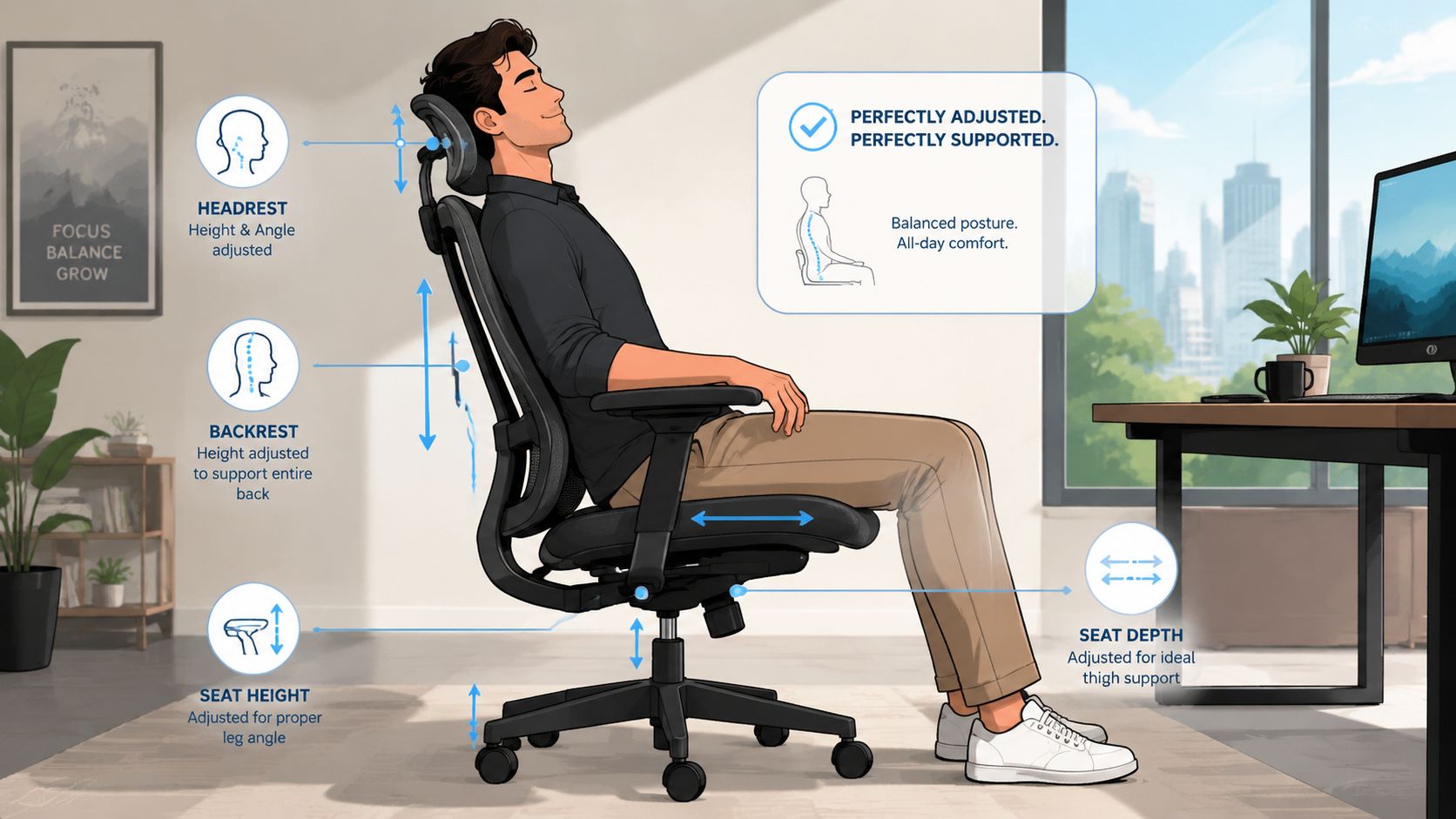
For tall bodies, five areas decide whether a chair feels supportive after ten minutes and still feels right after a full workday.
-
Seat height
The feet should rest flat with the knees in a relaxed bend and the hips supported, not folded up. If the cylinder does not raise the seat enough, the body starts compensating elsewhere. -
Seat depth
The seat should carry most of the thigh without pressing into the back of the knee. Tall shoppers often need more depth than standard chairs provide, but too much depth creates its own problem if the back can no longer reach the backrest. -
Lumbar position
The curve in the chair needs to meet the natural inward curve of the lower back. If that support lands too low, it pushes into the pelvis instead of supporting the spine. -
Backrest height
Taller users often do better with a back that supports farther up the torso, especially during long sitting sessions. A short back can feel acceptable for a quick sit and tiring by mid-afternoon. -
Armrest range
Height, width, and sometimes pivot all matter. The goal is relaxed shoulders and elbows that rest without forcing the arms outward.
A chair can have plenty of adjustments and still miss the person sitting in it.
What a balanced fit should feel like
Good ergonomics are easier to judge by feel than by marketing language. Once the chair is adjusted, the body should settle without effort. There should be contact at the lower back, even support under the thighs, and no sense that you are perching, bracing, or sliding forward.
That lines up well with these physiotherapy insights for posture, especially the idea that posture holds better when the chair gives the body the right contact points. In practice, I tell shoppers to pay attention to what happens after the first impression. A chair that feels soft at first can still be wrong if it leaves the legs unsupported or the shoulders tense.
The trade-offs tall shoppers should watch for
Many tall-friendly chairs solve one problem and create another. A higher seat may help the knees, but if the seat pan stays short, the thighs still do not have enough support. A taller backrest may look promising, but if the lumbar is fixed too low, the backrest height does not solve the fit issue.
This is why broad category labels are not enough. “Big and tall” often refers to weight capacity, not proportion, and “ergonomic” can mean almost anything unless the chair adjusts in the places that matter. Our ergonomic seating solutions for different body measurements are useful for this reason. They help shoppers compare real fit characteristics instead of relying on product tags.
The best long-term choice is usually the chair that asks the body to do the least work.
Your In-Person Fit Test Guide for the Showroom
Numbers narrow the field. Sitting in the chair makes the decision.
A practical fitting protocol for taller individuals starts with seat height and seat depth, with guidance pointing shoppers toward an adjustable seat height of around 20 to 22 inches. The same guidance says the most common fit failures are a seat that's too low and a seat pan that's too shallow, both of which force poor posture and leave the thighs under-supported in this fitting guide for tall users.
A showroom test works best when the shopper treats it like a diagnosis instead of a quick sit.

What to do in the first 30 seconds
Start by sitting all the way back in the chair. Don't perch on the front edge. Let the pelvis settle where the chair intends it to sit.
Then check these sensations immediately:
-
Feet on the floor
If the feet don't rest flat without strain, the height range may be wrong. -
Pressure under the thighs
The support should feel even, not concentrated only at the back edge. -
Contact at the lower back
The lumbar support should meet the natural inward curve, not press lower into the pelvis. -
Space behind the knees
There should be a small clearance instead of pressure at the back of the knee.
How to test the adjustments
After the first sit, change one setting at a time. That's the easiest way to tell whether the chair has enough usable range for a tall body.
- Raise the seat fully and confirm that posture improves rather than forcing the shoulders upward.
- Adjust the seat depth if the chair allows it. A deeper seat should support more of the thigh without cutting into the knee area.
- Move the armrests until the elbows can rest without lifting the shoulders.
- Recline slightly and notice whether the backrest continues to support the upper back or loses contact too early.
If a chair feels “almost right,” that usually means one key dimension is still off.
In a physical showroom, those checks reveal details that photos can't. The firmness of the seat. The smoothness of the mechanisms. The sound and solidity of the controls. The texture of upholstery, whether that's performance fabric or the buttery feel of top-grain leather. Those details matter because a chair isn't only a measurement sheet. It's a daily-use object.
This local guide to what to look for in a new sofa or chair is also useful because it trains the eye to evaluate construction and long-term comfort, not just appearance.
For shoppers visiting South State Street in Ann Arbor, a proper sit test often cuts through weeks of online confusion in a single afternoon.
The Power of Custom Sizing with Stressless
There comes a point where adjustment alone isn't enough. A chair can offer multiple levers and still be built on a frame that's too short, too shallow, or too low for a tall body.
That's where custom-sized seating changes the conversation. Instead of trying to coax a standard chair into working, the shopper starts with a frame that's proportioned more appropriately from the beginning.
Where standard sizing still falls short
Engineering thresholds become more important as user height rises. For users above 195 cm (6'5"), published guidance raises the target to 53 to 60 cm seat height and a 60 cm+ backrest, often with a reinforced Class 4 gas cylinder for stability and longevity in this tall-user specification guide.
Those numbers matter because taller bodies place different demands on a chair. The pressures exerted are different. The needed back support is higher. Stability matters more when the user reclines or shifts weight.
A chair can be padded generously and still fail structurally or dimensionally. That's one reason many “big and tall” labels disappoint tall users who don't need oversized width as much as they need vertical range and proportional support.
Why made-to-order comfort changes the outcome
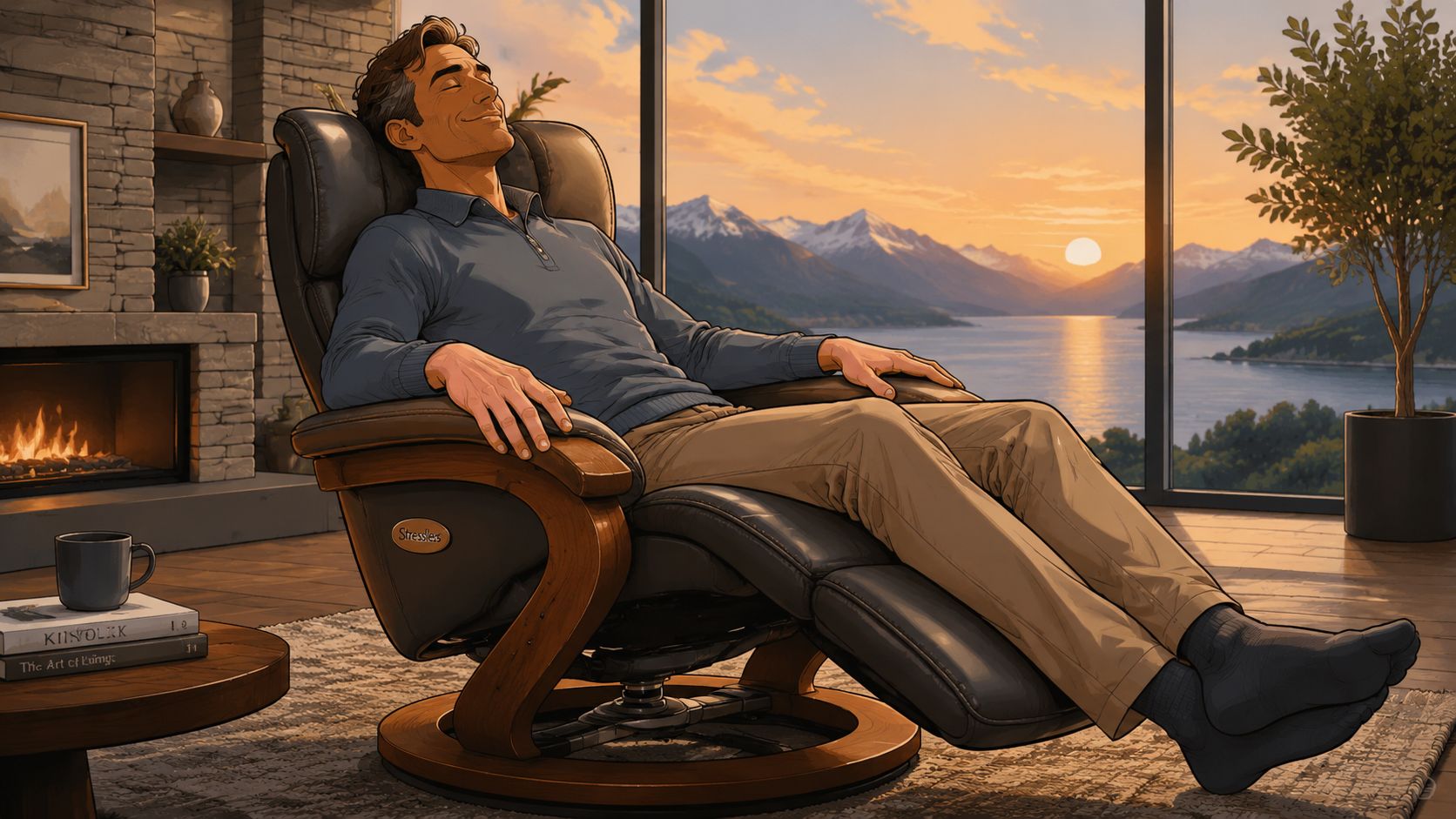
Stressless seating options become relevant as one practical route, because the collection includes multiple sizes and made-to-order options rather than treating every body the same. That matters for shoppers trying to line up backrest height, seat scale, and whole-body support more precisely.
The advantage of custom sizing isn't just comfort on day one. It's durability over time.
- A better-sized frame tends to support posture more naturally, so the user doesn't spend years sitting around the chair instead of in it.
- Made-to-order upholstery choices let shoppers match comfort with the room, whether that means a classic leather finish or a fabric selected for daily family use.
- Long-term value improves when the chair remains comfortable and appropriate across years of use, which is the true measure of cost per year.
For a family-owned business serving Southeast Michigan since 1957, that investment mindset matters. Furniture should earn its place in the home. In-stock options are often just the starting point. Many shoppers also appreciate that custom programs can extend beyond seating to made-to-order design in other areas of the home, including Canadel dining and other coordinated spaces from the home office to outdoor living.
Accessibility matters too. A premium ergonomic purchase feels more manageable when special financing and a Low Price Promise help remove some of the pressure from the decision. That doesn't change the importance of fit. It makes it easier to choose lasting craftsmanship when the right chair appears.
Frequently Asked Questions for Tall Chair Shoppers
Does weight capacity matter if the main issue is height
Yes, because height and structure often interact. A tall person may not need extra width, but may still benefit from a more stable base, stronger lift mechanism, and sturdier construction. The key is not assuming every tall user needs the same heavy-duty chair. The right question is whether the chair's structure matches the body and the way it will be used over time.
Do tall users really need a headrest
Not always. A headrest helps most when it supports the upper body during recline or extended sitting, and when it can be positioned high enough to meet the user correctly. A poorly placed headrest can be as unhelpful as a poorly placed lumbar pad. For many tall shoppers, backrest height matters first. Headrest usefulness comes second.
A headrest should support rest. It shouldn't push the head forward.
What if an online chair looks right on paper
Treat online specs as a screening tool, not a final answer. A chair can appear correct in dimensions and still feel wrong because of cushion shape, back curvature, arm placement, or limited real-world adjustment range. That's why self-measurement and an in-person sit test remain the strongest combination.
A careful shopper should compare listed dimensions against personal measurements, then confirm the fit physically whenever possible. If that isn't possible, requesting clear quick specs for special orders is the next best step.
What if visiting a showroom in Ann Arbor isn't possible
A remote buying process can still work if it starts with accurate body measurements, room measurements, and a clear description of how the chair will be used. Home office tasks, reading, gaming, and TV viewing place different demands on posture and support.
Shoppers can also narrow choices by thinking beyond one room. A family furnishing a long-term home often wants coordinated comfort across multiple spaces, from office seating to bedroom, dining, and outdoor areas. That broader view helps avoid one-off purchases that don't support the home's overall function or design.
Since 1957, local furniture guidance has mattered because many buyers don't just need a product. They need help making a confident decision. That's especially true when the purchase is meant to last, when the feel of top-grain leather or the scale of a chair can't be fully judged on a screen, and when customization plays a role in getting the fit right.
For shoppers ready to move from guesswork to a real fit, Tyner Furniture offers a practical next step. Visit the Ann Arbor showroom on South State Street for a sit test, or browse the online Quick Specs for special-order seating and made-to-order options. A careful fitting process takes a little more time, but it's often what turns a chair purchase into a lasting investment in comfort, posture, and everyday living.