Made to Order Oak Furniture: A Complete Buyer’s Guide

A dining table can look perfect on a showroom floor and still be wrong for the home. The shape may block a walkway, the fixed size may leave no room for holiday guests, or the available finish may fight the floor and cabinetry. A homeowner in Ann Arbor or elsewhere in Southeast Michigan often discovers the problem with a tape measure in hand, standing between the table and the wall and wondering why a standard piece doesn't fit.
Made-to-order oak furniture offers a practical answer. Instead of accepting one fixed size and finish, a household can choose proportions, wood species, edge details, finish, seating, and configuration around the way the room works. Since 1957, Tyner Furniture has helped local households think beyond a showroom sample, whether the need is dining furniture, a bedroom set, a home office, or pieces for outdoor spaces.
What Made to Order Oak Furniture Means
A made-to-order piece sits between ordinary in-stock furniture and a fully custom build that starts with a blank sketch. You begin with an established design, then choose defined specifications such as dimensions, wood, finish, hardware, upholstery, and configuration. This gives the room more flexibility while keeping the structural choices within a proven system.
Consider a narrow dining area connected to the kitchen. A standard rectangular table may seat six, yet its fixed length can leave too little clearance around the chairs. A made-to-order version can be sized for the room, matched to daily seating needs, and fitted with extension leaves for larger gatherings. The goal is a better relationship between the furniture and the way the household uses the space.
Practical rule: A made-to-order order should solve a room problem before it adds a decorative option.
Oak appears frequently in these programs because it combines useful strength with grain that responds well to stains and clear finishes. Oak may refer to different species, however, so shoppers should ask whether the piece uses red oak or white oak and how that choice affects color, grain, and the finished appearance. The wood also suits styles ranging from traditional and Mission-inspired dining furniture to quieter transitional interiors. Buyers can explore made-to-order Amish furniture options while comparing how wood choice shapes the final piece.
What the process does and doesn't promise
Made to order does not mean instant delivery. A deposit generally reserves the selected specifications and places the piece into a production queue. The schedule depends on the design, wood availability, finish, upholstery, and workshop workload. A written quote should identify each selection and explain what happens if a specification changes.
It also does not mean every shape can be created without limits. Established programs help buyers choose compatible options, much like selecting parts from a carefully designed kit. A well-run dining program can let shoppers select table shape, size, edge profile, leaves, species, finish, and chair style within defined boundaries. In-stock furniture is only one starting point, particularly for households with unusual room dimensions or specific comfort needs. Ask how the construction, kiln-drying, and finish specifications support indoor use before placing the order.
Customization Options Worth Knowing Before You Order
A six-seat table can feel comfortable on an ordinary evening yet become awkward when chairs crowd the walkway. Start with the room's daily use, then choose the details that shape how the table looks and works.
Start with the room, not the sample
Measure the usable floor area, including pulled-out chairs and walking paths around the table. Consider door swings, nearby cabinets, and the route people take through the room. A narrow open-concept dining area may suit a table that seats six every day, while a household hosting larger holiday meals may prefer extension leaves that add space only when needed.
Review these configuration choices before focusing on stain color:
- Overall dimensions: Check length, width, and height against the room and chair placement.
- Top shape: Rectangle, round, oval, and other shapes create different circulation patterns.
- Edge profile: A softened edge feels different against a forearm than a crisp, square treatment.
- Leaf arrangement: Ask how many leaves are included, where they store, and how they affect the table's balance.
- Leg style: Leg placement affects appearance, legroom, and where guests can sit.
- Oak group: Ask whether the piece uses red oak or white oak. “Oak” alone does not identify the species.
- Finish and sheen: A natural, low-sheen surface and a darker stain can make the same grain look markedly different.
- Distressing: Decide whether you want deliberate marks and texture or a cleaner hand-crafted appearance.
- Chair or bench pairing: Match seat height, upholstery, arm placement, and comfort to the people using the set.
A finish sample needs context. Place it beside the floor, wall color, lighting, and nearby woodwork, because a color can look warmer or darker in the room than it does under showroom lighting. Tyner's custom wood finish guidance can help you prepare for that conversation.
Use a defined program to reduce guesswork
A well-designed made-to-order program keeps the available choices compatible. It may offer selectable table shapes, sizes, edge profiles, extension leaves, wood species, finishes, and chair styles within defined boundaries. That structure works like a carefully designed kit: you get meaningful control, while the maker limits combinations that could create fit or construction problems.
Ask the showroom or maker:
- Which dimensions preserve comfortable circulation?
- Will the selected edge profile change the usable surface?
- Does the finish emphasize open oak grain?
- Are the leaves made from matching boards?
- Does the chair style allow the intended number of seats?
- Can the finish coordinate with existing pieces?
- Which options affect the order price or production schedule?
Those questions turn a broad catalog into a room-specific decision. They also reveal whether “custom” means genuine specification choices or only a small stain menu.
The same principle applies beyond dining furniture. Made-to-order upholstery may involve fabric or leather selection, seat dimensions, and support preferences. Choose each item according to how the household sits, eats, works, and moves through the room. The finished space should feel coordinated because the specifications work together, not because every piece follows the same style.
Why Oak Works So Well for Heirloom Pieces
Oak earns its place in heirloom furniture through a combination of hardness, stiffness, strength, weight, grain, and workability. The U.S. Forest Service reports that red and white oaks together represent approximately 38% of total U.S. hardwood volume, while oak accounts for about 38% of U.S. hardwood sawtimber volume and approximately 9% of total sawtimber volume in the United States. The agency identifies roughly 224 billion board feet of oak sawtimber, with 42% concentrated in six states. Those figures help explain why oak has remained a foundational domestic furniture material rather than a short-lived style choice. U.S. Forest Service oak data
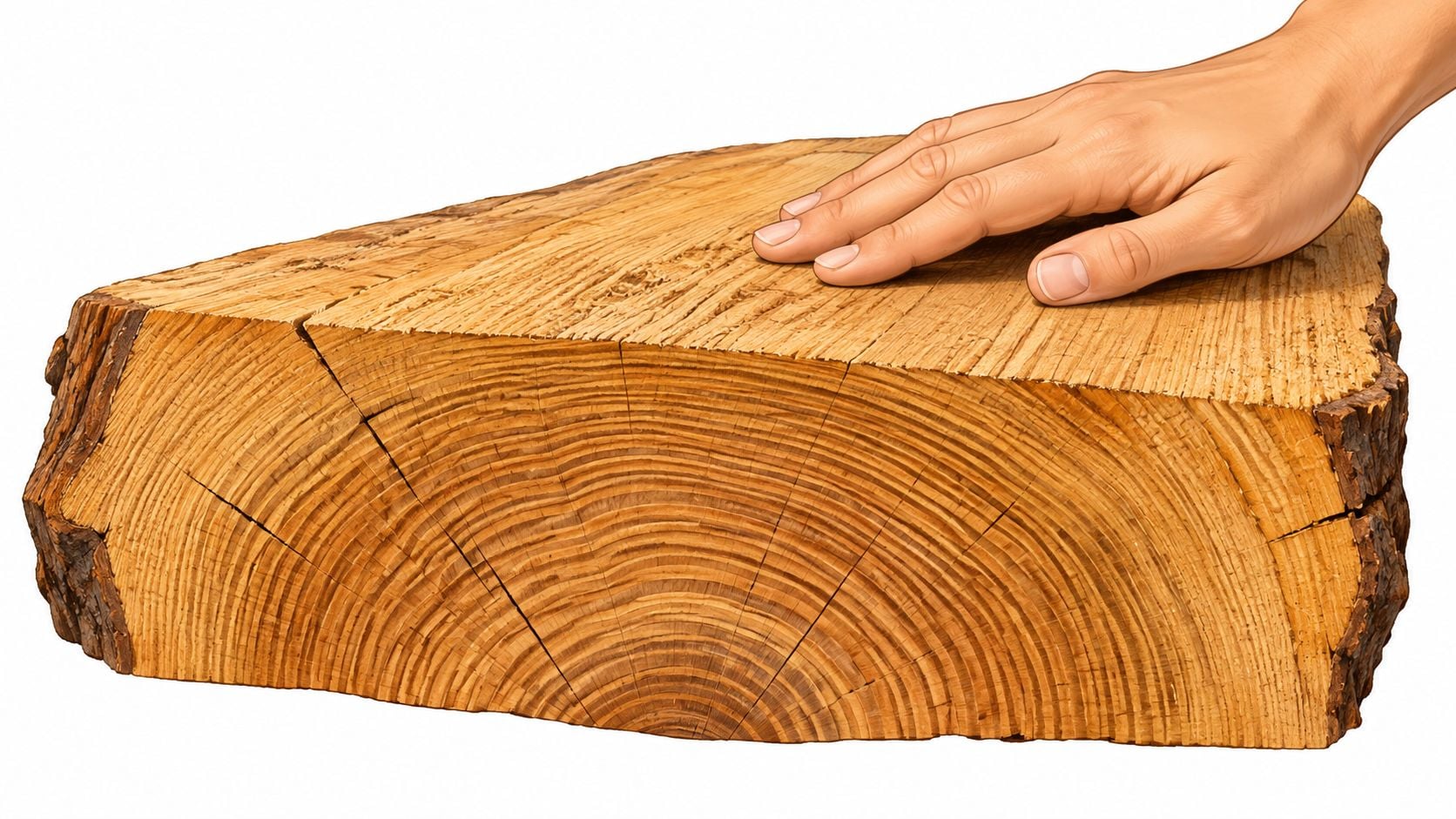
At approximately 12% moisture content, white oak averages about 47 pounds per cubic foot, with reported specific gravity ranging from 0.57 to 0.64 for white oak and 0.52 to 0.61 for red oak, according to the same Forest Service material. In plain language, oak has enough substance for table aprons, legs, rails, stretchers, desks, beds, and casework that must tolerate repeated use.
Oak is a family, not one identical material
A spec sheet that says only “oak” leaves an important question unanswered. White oak heartwood is rated very resistant to decay, while black oak and red oak are rated slightly to nonresistant. Swamp chestnut oak is rated moderately resistant. White oak heartwood is also resistant to preservative impregnation, while red oak is more readily penetrated, according to Forest Service technical information on oak species.
That distinction matters when a piece sits near an entry, patio door, or other area with greater exposure. A bedroom dresser and a dining table for a conditioned interior don't face exactly the same environment, so the species conversation should follow the intended use.
Oak also machines, glues, and holds fasteners well. Its straight grain accepts finishes predictably, which suits made-to-order work where buyers may choose stain, edge treatment, sheen, or distressing. For a closer comparison of grain, visual character, and furniture use, buyers can review oak and maple furniture differences.
Joinery, Kiln-Drying, and the Details That Decide Longevity
A durable oak surface can't compensate for weak connections or poorly conditioned lumber. The hidden specifications often determine whether a table remains tight and comfortable through years of use.
Joinery carries the repeated load
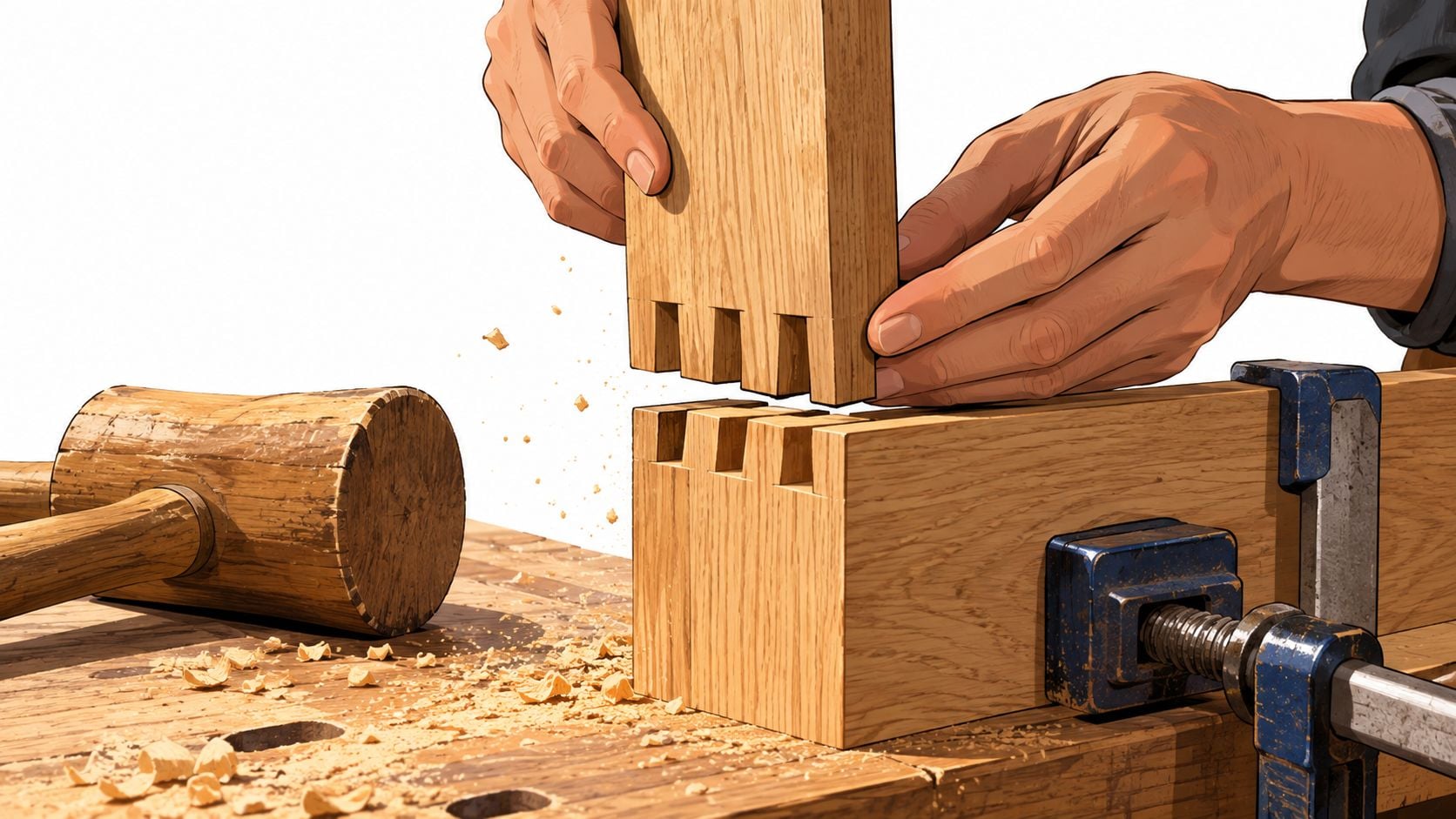
Mortise-and-tenon joints connect a projecting tenon to a fitted mortise, creating a substantial mechanical connection for rails, legs, and frames. Dovetails use interlocking angled parts, particularly useful in drawers and casework. By contrast, staples and simpler biscuit connections may be efficient for certain applications, but they don't communicate the same construction standard in heavily stressed solid-wood furniture.
Independent testing found that a traditional mortise-and-tenon joint made from the same stock withstood more than 26 kN of applied load before elastic failure, while a common number 20 biscuit joint handled just over 12 kN, roughly half as much. The study also found that dovetail strength increased with more dovetails per unit width and greater glue-surface area, as reported in this furniture joint strength study.
Dowel construction is another useful comparison because the same principle extends beyond case goods. Buyers evaluating frame construction can consult this explanation of dowel-built sofa durability to understand why the internal connection method matters even when it can't be seen.
Moisture content protects the fit
Hardwood furniture intended for interior use is typically dried to approximately 6% to 8% moisture content, a target also recommended by Purdue Extension for most North American interior applications. USDA Forest Products Laboratory guidance explains why this matters: wood continues exchanging moisture with its surroundings, so lumber installed too wet or too dry can later shrink, swell, warp, or open joints.
Southeast Michigan adds a practical challenge. Heated winter interiors and humid summers create meaningful indoor humidity changes, so a broad dining top needs a design that permits movement across the grain. Floating panels, elongated attachment holes, and mechanically restrained but flexible fasteners help the wood move without splitting the frame.
A showroom checklist should include:
- Joint locations: Ask which joints support legs, aprons, drawers, and cabinet frames.
- Moisture target: Confirm that lumber was uniformly kiln-dried and acclimated before machining.
- Movement strategy: Ask how wide tops and panels are attached.
- Finish role: Remember that finish slows moisture exchange but doesn't stop it.
- Repair access: Find out whether solid components can be repaired or refinished later.
Tyner's mortise-and-tenon construction information gives shoppers a useful starting point for discussing the details that separate hand-crafted construction from a surface-level imitation.
The Ordering Process and What to Expect on Lead Time
A made-to-order purchase usually begins with a consultation, either in the showroom or through a remote conversation. The buyer and furniture specialist establish the room dimensions, intended use, species, finish, edge profile, leaves, hardware, upholstery, and delivery requirements. Those selections should appear in a formal quote before a deposit is placed.
A typical order moves through several stages
- Room planning: Measurements, traffic paths, seating requirements, and design preferences are reviewed.
- Specification: The selected wood, dimensions, finish, construction details, and accessories are written down.
- Deposit and scheduling: The deposit secures the order and places it into the workshop queue.
- Production: Lumber is conditioned, machined, joined, sanded, and prepared for finishing.
- Finishing and upholstery: Stain, protective finish, fabric, or leather work is completed according to the approved specifications.
- Delivery and placement: The delivery team confirms access, brings the piece inside, and positions it in the room.
The schedule can span several weeks for a simpler piece or a few months for a more involved dining set. A custom build shouldn't be rushed to meet an arbitrary date, because drying, acclimation, joinery, finishing, and inspection each affect the final result.
Confirm the details before paying
The written order should identify the species and oak group, board construction, moisture-conditioning target, finish type, hardware, upholstery specifications, delivery scope, and policies for changes or defects. A buyer should also verify doorways, stairwells, elevators, and the final table location before production begins.
An Ann Arbor showroom visit adds information that a screen can't provide. A sit test reveals chair comfort, table height, edge feel, and clearance, while physical oak samples show how grain and finish interact under real light. The same habit helps when choosing ergonomic Stressless seating, upholstered pieces, or coordinated furniture for the home office.
Pricing, Cost-per-Year, and How Financing Really Works
A higher purchase price doesn't automatically mean higher lifetime cost. A useful comparison asks how many years a piece can remain functional, repairable, and visually welcome, then considers the cost across that service life. A peer-reviewed life-cycle study of solid wood, plywood-core upholstered, and mixed solid-wood and plywood furniture found that extending a product's lifespan through reuse and additional service cycles can reduce environmental impacts compared with manufacturing a new replacement, as documented in this wood furniture life-cycle study.
That supports a cost-per-year mindset. A solid oak table that remains useful through moves, repairs, refinishing, and changing interiors may distribute its material and manufacturing impacts across far more years than a piece that must be replaced when a joint loosens or the dimensions no longer work.
Separate lifetime value from payment mechanics
Special Financing can make a made-to-order purchase easier to plan, and Tyner's Low Price Promise addresses competitive value alongside the construction decision. Financing should still be read carefully. Some no-interest furniture offers use deferred interest, meaning interest accumulates during the promotional period and may become due retroactively from the purchase date if the balance isn't paid by the deadline. Consumer-finance guidance also warns that being more than 60 days late on a minimum payment can cause the promotional benefit to be lost, with late fees potentially added. Furniture financing guidance
Read the agreement, not just the headline: Confirm whether the plan is true 0% annual percentage rate or deferred interest, identify the payoff deadline, and understand the consequence of a missed payment.
Households comparing payment plans can also review financing advice from Henson's Designs as a general reminder to examine terms rather than focusing only on the advertised monthly amount. The right question isn't whether the payment fits this month. It's whether the piece offers enough durability, repairability, and daily usefulness to justify the full commitment.
For more detail on planning a furniture purchase, Tyner's furniture financing information can be considered alongside the written terms of the specific offer.
A Practical Pre-Order Checklist and Your Next Step
A careful order comes down to documentation. Natural variation is part of oak's appeal, but a buyer shouldn't have to guess what lies beneath the finish or how the piece was prepared for the home.

Questions to bring to the showroom
- Species and origin: Is the piece red oak, white oak, or another oak group, and where was the wood sourced?
- Board construction: Which parts are solid oak, and are any backs, drawer bottoms, or panels made from veneer or engineered wood?
- Joinery: What connections are used at legs, aprons, drawers, doors, and other stress points?
- Moisture preparation: Was the lumber kiln-dried uniformly, acclimated, and assembled for the intended indoor environment?
- Movement allowance: How do tops and wide panels expand and contract across the grain?
- Finish composition: Is the finish water-based, oil-based, or solvent-based, and can it later be repaired or refinished?
- Indoor air quality: Are adhesives or composite components used, and are emission details available for a bedroom, nursery, or office?
- Hardware and upholstery: What hardware, foam, fabric, leather, or support components are included?
- Delivery scope: Does delivery include room placement, setup, packaging removal, and access review?
- Repair and warranty policy: What happens if natural movement, finish wear, or a construction issue appears?
Solid wood isn't chemical-free, and made to order doesn't automatically mean low-emission. The U.S. Environmental Protection Agency identifies pressed-wood products made with urea-formaldehyde adhesives as significant household formaldehyde sources and recommends ventilation after new sources are introduced. A government indoor-air-quality guide likewise supports asking about every finish, adhesive, drawer component, back, and panel rather than assuming the oak species answers the health question.
Small seasonal movement can occur even in excellent furniture. That isn't a manufacturing failure by itself. The important questions are whether the material was prepared correctly, whether the design allows movement, and whether the maker explains care, ventilation, maintenance, and repair clearly.
Tyner's local legacy extends beyond dining furniture to the Home Office, bedroom, living spaces, ergonomic seating, and Outdoor Spaces. For a household in Ann Arbor or Southeast Michigan, those categories make it possible to coordinate a broader interior design plan while keeping the focus on material integrity and long-term value.
Tyner Furniture offers made-to-order oak dining furniture, Amish hand-crafted solid-wood pieces, Canadel configurations, Stressless ergonomic seating, and options for spaces from the Home Office to Outdoor Spaces. Visit Tyner Furniture on South State Street in Ann Arbor for a hands-on sit test and oak sample review, or browse the online Quick Specs to begin a special order from home.