Dining Room Sets for 6: A Complete Buyer’s Guide

You’re probably starting in a familiar place. One browser tab has a farmhouse table, another has a clean-lined modern set, and a third has reviews that leave you less certain than when you began. Meanwhile, your real questions are much more practical. Will six people sit comfortably? Will the chairs tuck in? Will the finish still look good after years of weeknight meals, holiday hosting, homework, and laptop time?
That’s why dining room sets for 6 remain such a steady choice. They’re the most common configuration in average households, and many include a removable leaf that lets the table shrink for everyday use, a feature highlighted in over 70% of mid-range models according to Colder’s overview of dining sets for 6. In real homes, that flexibility matters more than trend language ever will.
A dining set for six sits in a useful middle ground. It handles daily life without making the room feel formal or overfilled. It also gives you options when you’re furnishing a home you plan to stay in for years, not just until the next move. If you’re sorting through finishes, sizes, and quality levels, a good place to begin is with a practical planning framework like this dining room starting guide.
Table of Contents
- Finding the Heart of Your Home
- Mastering Your Space and Layout
- Choosing the Right Table Shape and Size
- Selecting Chairs for Comfort and Style
- Investing in Heirloom Quality Materials
- Budgeting for Value and Longevity
- Your Next Steps to the Perfect Dining Room
Finding the Heart of Your Home
A dining table earns its place differently than most furniture. A sofa might be for relaxing, and a bed is for rest, but the dining table has to handle more roles without complaint. It hosts birthdays, late dinners after work, school projects, coffee with neighbors, and the holiday meal where one more place setting somehow always appears.
That’s why homeowners often feel stuck when shopping for dining room sets for 6. They’re not just picking a silhouette. They’re trying to choose the piece that will anchor daily life for years. Style matters, but so do legroom, chair comfort, finish durability, and whether the table still feels right once the excitement of the purchase fades.
Why six works in so many homes
Six seats is a practical number because it doesn’t force the room into one mode. On ordinary days, it feels generous without being oversized. On busier days, it gives you enough room for guests.
A well-chosen six-seat dining set should feel calm on a Tuesday night and ready on a Saturday when company shows up.
That flexibility explains why this size has stayed so popular. Many households don’t need a large formal table every day, but they do need a set that can stretch a bit when life gets fuller. A removable leaf helps with that. So does choosing a design that doesn’t overwhelm the room with bulky legs or oversized chairs.
What works and what tends to disappoint
Some sets photograph beautifully online and then feel awkward in person. Chairs may be too stiff for a lingering meal. The tabletop can look substantial in a product shot but feel thin at the edge. A bench may save space, yet make everyday seating less comfortable if it’s the only option.
A better approach is to think about the room as lived space, not showroom space.
- Daily rhythm matters: If the table doubles as a work surface or homework zone, choose a finish and chair style that can handle regular use gracefully.
- Hosting style matters: If you entertain casually, an extendable top and mixed seating often work better than a rigid formal set.
- Longevity matters: In a forever home, a dining set should age well with your taste, not just match this year’s mood board.
Mastering Your Space and Layout
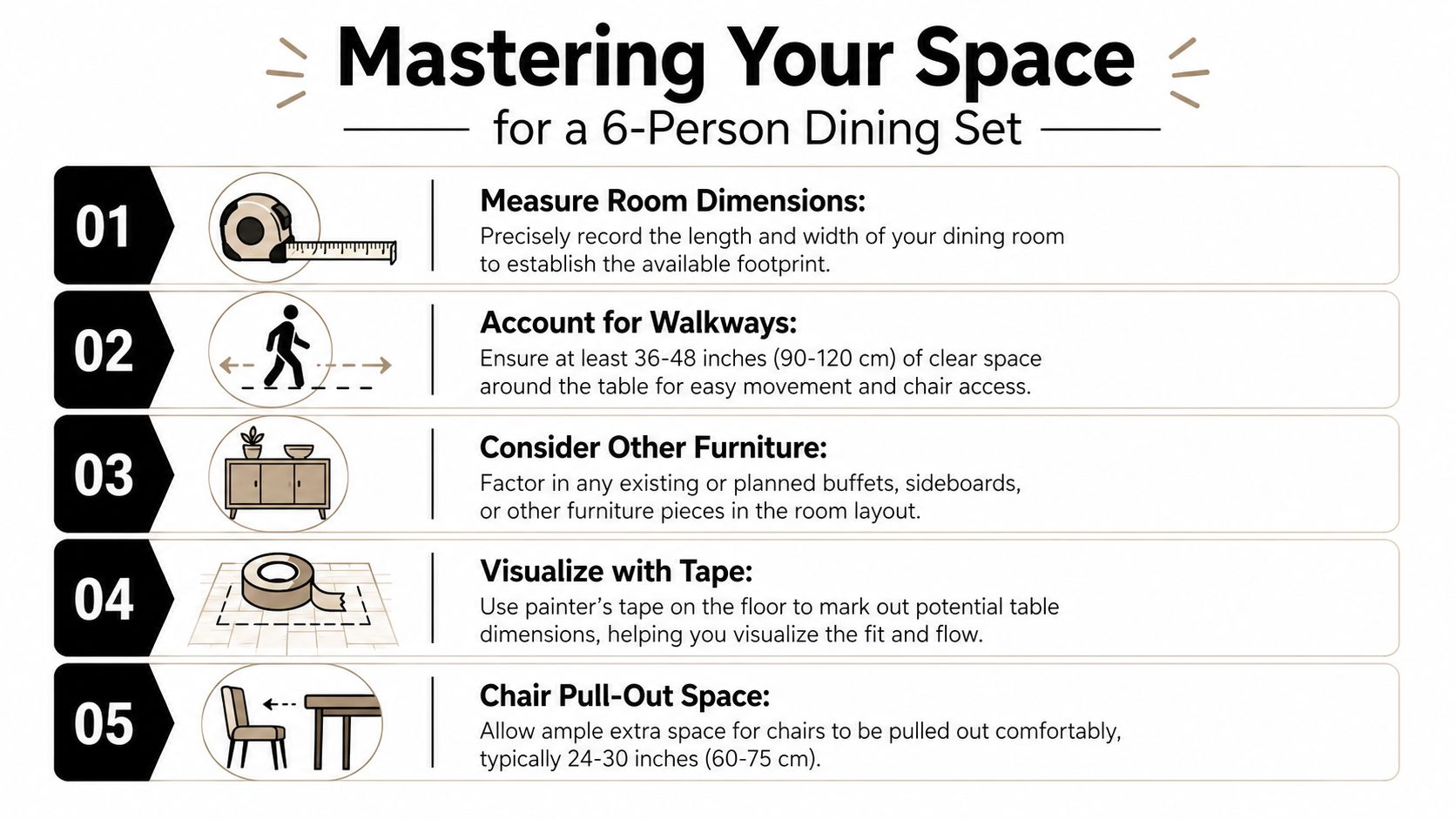
The most common mistake happens before anyone talks about stain color or chair backs. People measure the table. They don’t measure how the room needs to function once the chairs are occupied and pushed back.
A poor fit is more than an inconvenience. A 2025 Houzz report noted that 42% of dining furniture returns stem from poor spatial fit, with 6-person sets overrepresented, and standard recommendations call for 108-144 square feet minimum for a 6-person table, including 36 inches of clearance per side, according to IKEA’s dining set category guidance.
Start with the room, not the table
Measure the full footprint first. Then mark windows, door swings, floor vents, nearby islands, and any piece that shares the space, such as a buffet or sideboard. If the dining area is part of an open plan, include the walking paths people use.
Use this order:
- Measure wall to wall: Record the length and width of the room or the defined dining zone.
- Subtract circulation space: Keep clear room around the table so people can sit, stand, and pass behind seated diners.
- Account for other furniture: A sideboard that looks slim on paper can change the room once drawers open and traffic flows around it.
- Think about the rug too: If you’re adding one, the rug needs to support the chairs when they slide back. This Australian dining room rug guide is useful because it frames rug size around chair movement, not just tabletop dimensions.
Practical rule: If you can’t walk around the taped-out layout comfortably before the furniture arrives, the set is too large for the space.
For homeowners comparing shapes, this guide to table shapes and seating arrangements helps translate dimensions into actual room behavior.
Use a real-world floor test
Painter’s tape is one of the simplest planning tools you can use. Mark the tabletop on the floor, then pull a chair into place. Step around it. Open the nearby door. Pretend someone is carrying a serving dish past the seated chairs.
That test quickly reveals the hidden trouble spots.
| Layout check | What to watch for |
|---|---|
| Chair pull-out space | Can someone sit down without bumping a wall or cabinet? |
| Main traffic path | Can people move through the room without squeezing behind diners? |
| Shared open-plan zone | Does the table interrupt kitchen or hallway flow? |
| Corner conditions | Do chair backs hit trim, radiators, or windowsills? |
What usually doesn’t work is treating the listed table size as the full story. It isn’t. The table is only the center piece. The actual footprint includes chairs, movement, and the breathing room that keeps the room pleasant instead of crowded.
Choosing the Right Table Shape and Size
Shape changes how a table lives in the room. Two sets may seat the same number of people and require very different compromises. The right choice depends less on trend and more on how your room is proportioned, how often you host, and whether you want the table to feel architectural or soft-edged.
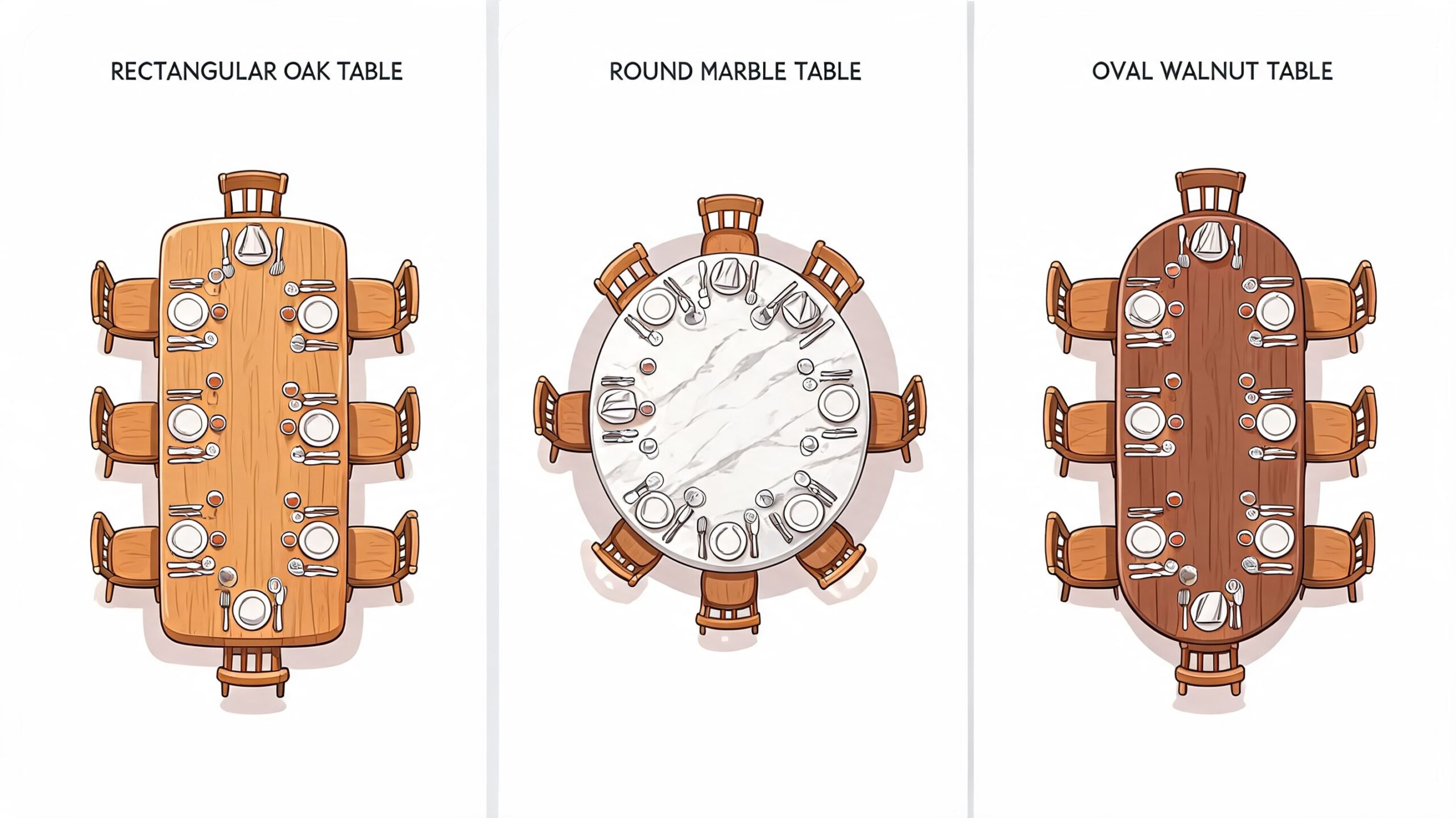
Rectangular tables
Rectangular tables are the default for a reason. They work well in most dedicated dining rooms, align naturally with long walls, and make place settings feel orderly. They also pair easily with benches, host chairs, or leaves.
There’s one sizing detail many shoppers miss. For dining room sets designed to seat six, the minimum table length for all six chairs to tuck fully underneath is 66 inches, while a 60-inch table can work during meals but often fails that tucked-in test, according to this table sizing explanation.
That difference matters in tighter rooms. A table may technically seat six, yet still look untidy or feel cramped when the chairs can’t slide in properly.
Round and oval tables
Round tables soften a room immediately. They’re often easier for conversation because everyone faces inward, and they remove the sharp corners that can make a compact dining area feel boxed in. The trade-off is that they don’t always use long, narrow rooms as efficiently as a rectangle.
Oval tables split the difference. They keep the softened lines of a round top but stretch more comfortably in elongated rooms. For households that want a friendlier visual profile without giving up useful length, oval can be the quiet answer.
A material perspective can help here too. If you enjoy seeing how different woods and construction choices affect table character, this piece on Japanese dining table materials offers a thoughtful look at how material selection shapes use and appearance over time.
- Choose rectangular if your room is longer than it is wide, or you want the cleanest fit with leaves and mixed seating.
- Choose round if conversation and softer movement around the table matter most.
- Choose oval if you want visual softness without giving up a room-friendly footprint.
For proportion questions that involve apron depth, chair arm height, and dining comfort, this dining table height guide is a practical companion.
Selecting Chairs for Comfort and Style
Most dining regrets start in the seat, not the tabletop. People forgive a table that’s slightly larger or darker than expected. They don’t forgive a chair that feels rigid halfway through dinner.
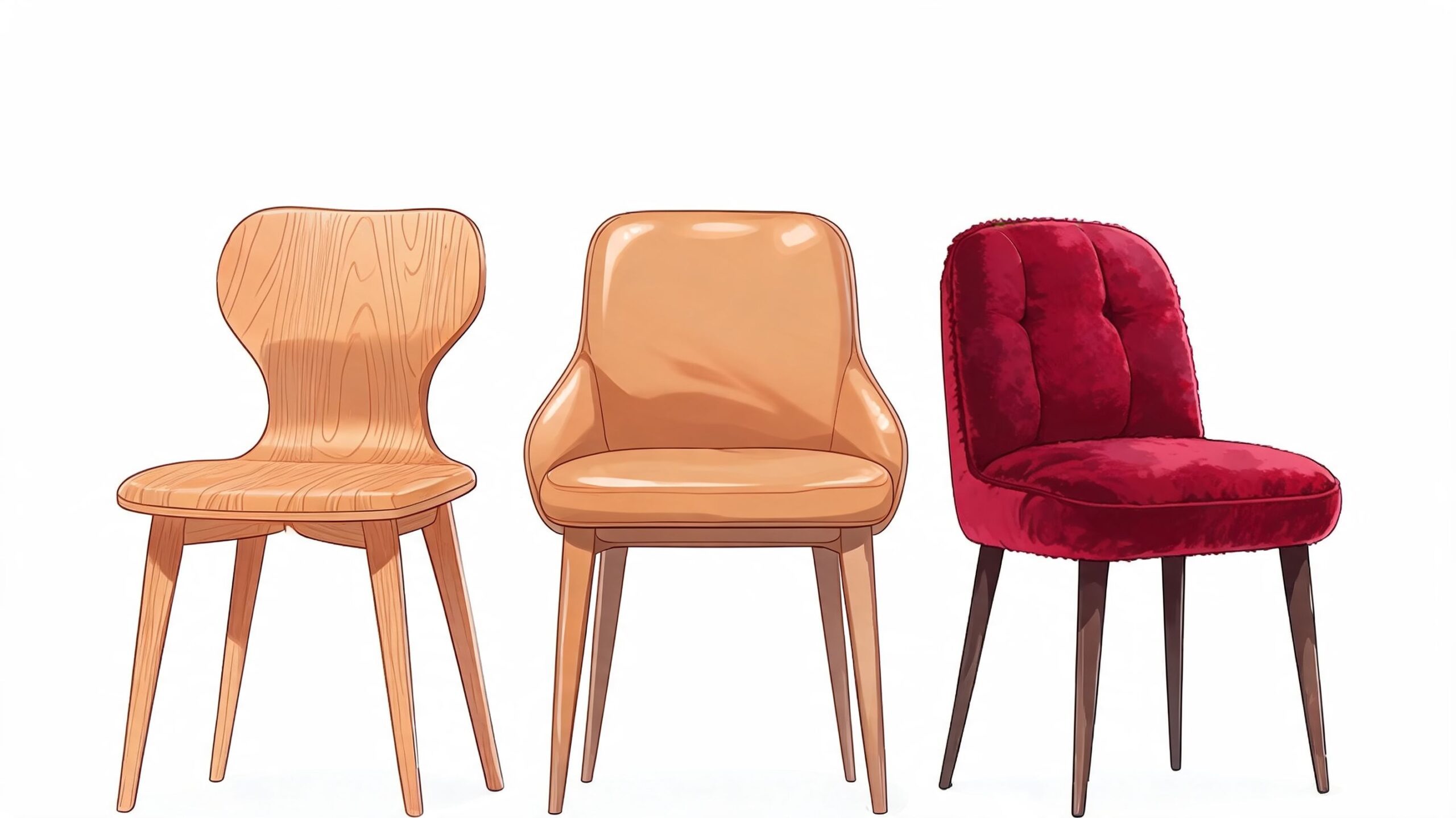
Comfort changes how long people stay at the table
A dining chair shouldn’t force good posture through discomfort. It should support an easy, upright position without making the body work for it. Seat depth, back angle, cushion firmness, and the feel of the front rail all matter more than shoppers expect.
The comfort issue isn’t minor. A Mayo Clinic study on dining posture found that 62% of users report back pain from rigid, non-ergonomic dining seating after just 6 months, cited in Lowe’s six-person dining set page background.
That’s why a sit test matters. If you live in Ann Arbor or elsewhere in Southeast Michigan, don’t rely only on product photos. Sit long enough to notice whether the back supports you naturally and whether your feet land comfortably.
Matching isn’t always the smartest choice
The old idea that every chair must match perfectly often leads people into a set that looks polished but lives poorly. Mixed seating can solve several problems at once. You might want a bench on one side for flexibility with children, or host chairs at the ends for more support and presence.
The same data set notes that mixed sets, meaning a table paired with separately chosen chairs, can reduce buyer dissatisfaction by 40% through personalization in that same Lowe’s background source. The point isn’t novelty. It’s fit.
If the table is the frame, the chairs are the part your body remembers.
A few practical chair checks help narrow the field:
- Back support: Choose a back shape that supports a relaxed upright posture, not one that presses you forward.
- Seat feel: A chair can look refined and still feel hard after ten minutes.
- Arms and clearance: Host chairs with arms need enough room under the table apron.
- Floor protection: Chair movement affects flooring more than most buyers anticipate. If you’re pairing a new set with wood floors, this Richmond homeowners' guide to scratch-resistant flooring offers useful context for planning around wear, glides, and finish durability.
If you’re considering individual seating pieces rather than a boxed set, this dining side chair collection page is a useful way to compare silhouettes and support styles.
Investing in Heirloom Quality Materials
Material choice decides whether a dining set matures beautifully or starts asking for replacement far too early. The resulting difference between mass-market construction and hand-crafted construction becomes obvious, even before anyone mentions style.
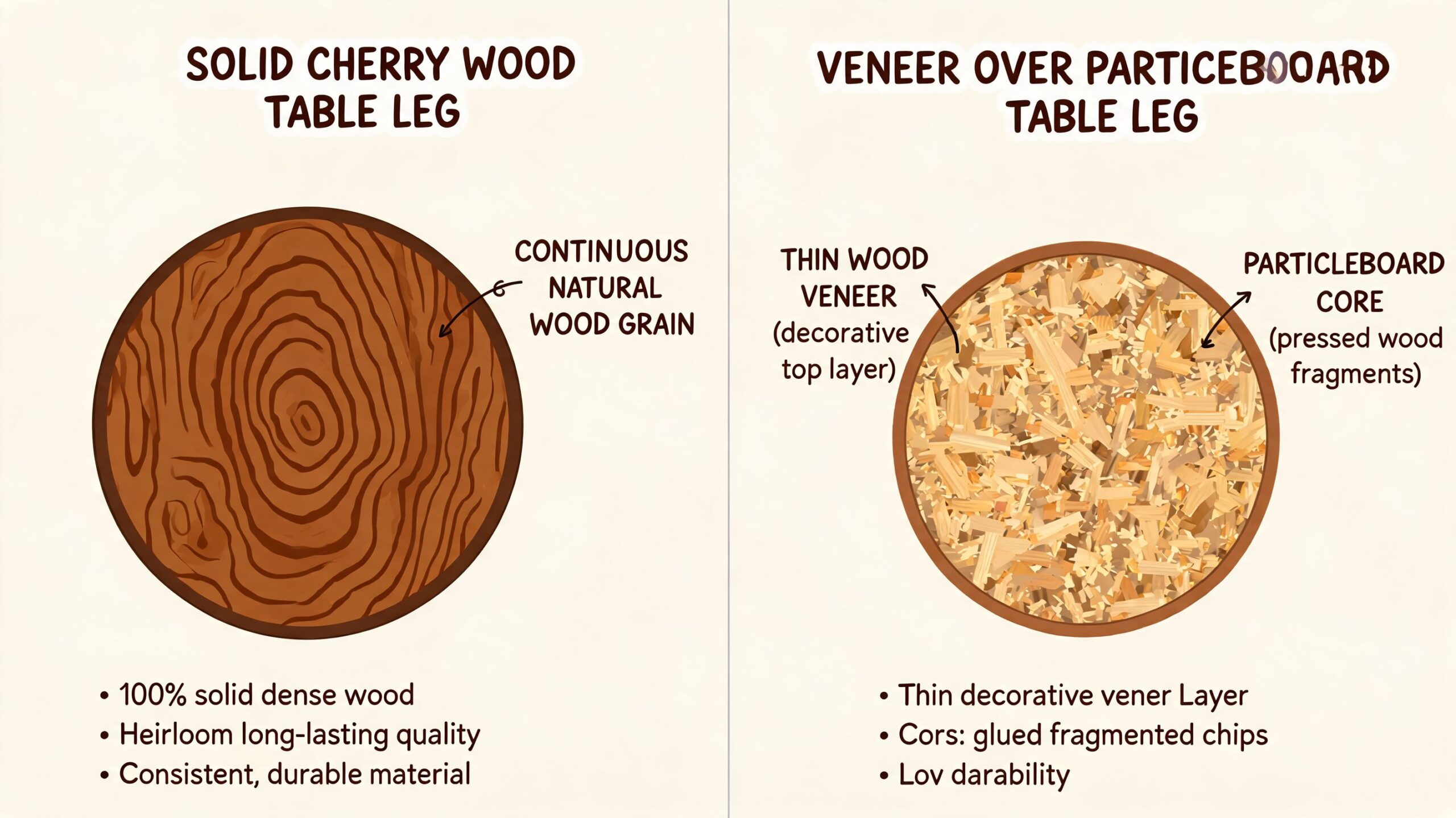
What solid wood feels like in daily use
A solid wood table has a physical honesty to it. You feel the weight when you steady a chair against it. You see grain variation that doesn’t repeat like a printed surface. A cherry or oak top develops character through use instead of showing wear.
By contrast, many lower-built sets look convincing at first glance but reveal their limits over time. Edges chip. Veneers lift. Joints loosen. The table may survive light use, yet struggle with the ordinary pressure of years of family life.
The durability gap is substantial. Heirloom-quality Amish solid wood 6-person sets use dovetail joinery for 50+ year durability, compared with a 5-10 year lifespan for typical veneer or particleboard sets from mass-market retailers, as cited in Home Depot’s six-seat dining category background.
Solid wood asks for a higher initial commitment, but it gives back through repairability, stability, and presence.
That’s the part online shopping often hides. A screen can show color. It can’t show the difference between a hollow feel and the grounded feel of well-built hardwood.
Customization matters in a forever home
In a long-term home, customization isn’t indulgence. It’s risk reduction. The right finish can coordinate with existing flooring. The right edge profile can soften a room that already has many straight lines. The right base can improve legroom or reduce visual bulk.
One practical route is made-to-order dining, where the buyer can adjust details instead of accepting a fixed package. Tyner Furniture offers custom dining through Canadel, with choices in finishes, table edges, and configurations, alongside Amish hand-crafted solid wood options. For shoppers comparing construction quality more closely, this American-made solid wood furniture guide explains what to look for in joinery, wood species, and long-term build integrity.
Good customization should answer a real need. It should help the set fit your room, your habits, and the life of the home you’re building.
Budgeting for Value and Longevity
A dining set can be expensive and still be a poor value. It can also be a meaningful investment if it stays useful, comfortable, and structurally sound for many years. The difference is in how you judge the purchase.
Think in cost per year
Upfront price tends to dominate the conversation because it’s visible and immediate. Longevity is quieter. But longevity is where the math changes.
A lower-priced set may feel sensible in the moment. Then the finish wears poorly, the seats loosen, or the table no longer feels worth moving into your next phase of life. Replacing furniture once or twice over the years usually costs more than people expect, and it often leaves them with a room that never feels fully settled.
By contrast, a well-made dining table earns its keep slowly. If the structure remains sound, the finish still suits the room, and the chairs remain comfortable, the set becomes less of a purchase and more of a household constant.
Consider these value questions instead of asking only “What does it cost today?”
- How long do I expect to live with this set?
- Will the construction hold up to daily use?
- Can the piece be refinished, reupholstered, or updated instead of replaced?
- Does the style have enough restraint to age well?
Where financing fits into a quality purchase
For many households, the right set isn’t out of reach because of taste. It’s out of reach because of timing. That’s where financing can be practical, not indulgent. If spreading the purchase out allows you to buy the quality you want, that can be the wiser decision.
The same is true of a price promise. Competitive value matters. So does buying once with confidence instead of buying twice with frustration. If you’re weighing how to shop more strategically, this furniture buying guide is a helpful framework for balancing construction, comfort, customization, and budget.
Your Next Steps to the Perfect Dining Room
A good dining purchase rarely comes from chasing the prettiest product photo. It comes from making a series of sound decisions in the right order. Measure first. Choose the shape that suits the room. Sit in the chairs long enough to notice comfort. Pay attention to material quality. Then decide whether the set belongs in your life for a few years or for the long haul.
A simple buying checklist
If you want a reliable short list before ordering, keep it practical:
- Room fit: The layout allows comfortable movement, not just table placement.
- Shape fit: The tabletop supports both the room and the way you gather.
- Chair fit: The seat and back feel supportive enough for a full meal and a long conversation.
- Material fit: The build quality matches the years you expect from the piece.
- Lifestyle fit: The set works on ordinary weekdays, not only when styled for guests.
A forever-home mindset changes the answer to all five.
What to do before you place the order
If the set is custom or made-to-order, confirm the details that affect daily function. Check final dimensions with chairs pushed in and pulled out. Review finish tones in the room’s actual light if possible. Ask how the delivery team handles placement, assembly, and protection of nearby surfaces.
Care matters too. Use pads or glides under chair legs. Wipe spills promptly. Avoid treating solid wood like an indestructible workshop surface, but also don’t be afraid to use it. The point of well-made furniture is that it’s built for life, not for display.
For custom configurations, special-order finishes, or bespoke dining adjustments, this custom order starting guide helps you organize measurements, preferences, and the questions worth asking before you commit.
The final step is always tactile. Sit in the chair. Run your hand along the table edge. Notice whether the wood feels substantial, whether the seat welcomes you, whether the proportions make the room feel settled.
If you’re ready to narrow the field, visit Tyner Furniture on South State St. in Ann Arbor for a proper sit test, or browse the online Quick Specs for special orders. Since 1957, the store has helped Southeast Michigan homeowners furnish everything from the dining room and home office to the bedroom, living room, and outdoor spaces with a focus on comfort, craftsmanship, and lasting value.