Top Grain Leather Sofa Recliner Buying Guide for 2026


A shopper in Ann Arbor can stand in front of two leather recliners that look nearly identical, sit down for ten seconds, and still miss the true difference. The price gap usually isn't about the silhouette. It's about what's inside the cover, how the leather was finished, and whether the mechanism underneath was built to survive everyday use.
That's why a top grain leather sofa recliner deserves a serious look. It gives buyers the leather feel they want, with a finish that's more uniform and easier to live with than many people expect, while staying practical for a room that gets regular use. In a showroom, the buttery feel of top-grain leather can be convincing fast, but the smarter decision comes from knowing what wears first, what can be repaired, and when custom order details beat whatever happens to be on the floor.
Why a Top Grain Leather Sofa Recliner Earns Its Place
A couple walks into the South State St. showroom and sits in two recliners that look nearly identical. One costs more, so branding seems like the obvious explanation. Look underneath and at the upholstery, and the decision becomes clearer. Top-grain leather gives a heavily used recliner a practical balance of appearance, feel, and everyday durability.
What top grain actually signals
Top-grain leather comes from the outer hide layer. Manufacturers lightly sand or buff that surface to reduce visible marks and create a more even finish, while preserving the leather feel buyers expect from a genuine hide. That makes it a strong choice for high-contact zones, including arm panels, headrests, and seat fronts. These areas receive constant handling, so a uniform finish keeps the chair looking orderly as it ages.
The grade also explains the price position. A top grain leather sofa recliner is premium but attainable, suited to a family room, media space, or basement hangout rather than reserved for a formal room. It offers a refined surface without requiring the buyer to accept every natural mark found on less-finished leather.
Market demand supports that practical appeal. One study reported that leather represented 42.1% of the reclining-sofa market by value in 2025. The same market report placed the recliner-sofa market at USD 20.15 billion in 2024, with projected growth to USD 33.79 billion by 2035, and listed leather at USD 5.0 billion in 2024. Buyers continue choosing leather when they want comfort, durability, and a cleaner visual line in one seat.
Practical rule: if the room gets used every night, upholstery grade matters more than the showroom label.
Top grain earns its place because it handles routine contact while keeping stitching, quilting, and panel layout visually consistent. Still, do not judge the purchase by the hide alone. A recliner mechanism can fail before the leather shows serious wear, so ask about construction, serviceability, and replacement support. A custom order can also beat an in-stock chair when you need a specific leather, color, seat size, or configuration.
For shoppers comparing options online, Tyner's American-made leather sofas page is a useful starting point. The final decision belongs to the sit test and a close inspection of the mechanism.
Understanding the Leather Grade Ladder
A recliner may look right under showroom lights, then disappoint after years of nightly use. Leather grade affects the surface you see and touch, but it does not decide the whole ownership experience. On a recliner, the mechanism, frame, and service support deserve equal attention.
Start with the material beneath the name
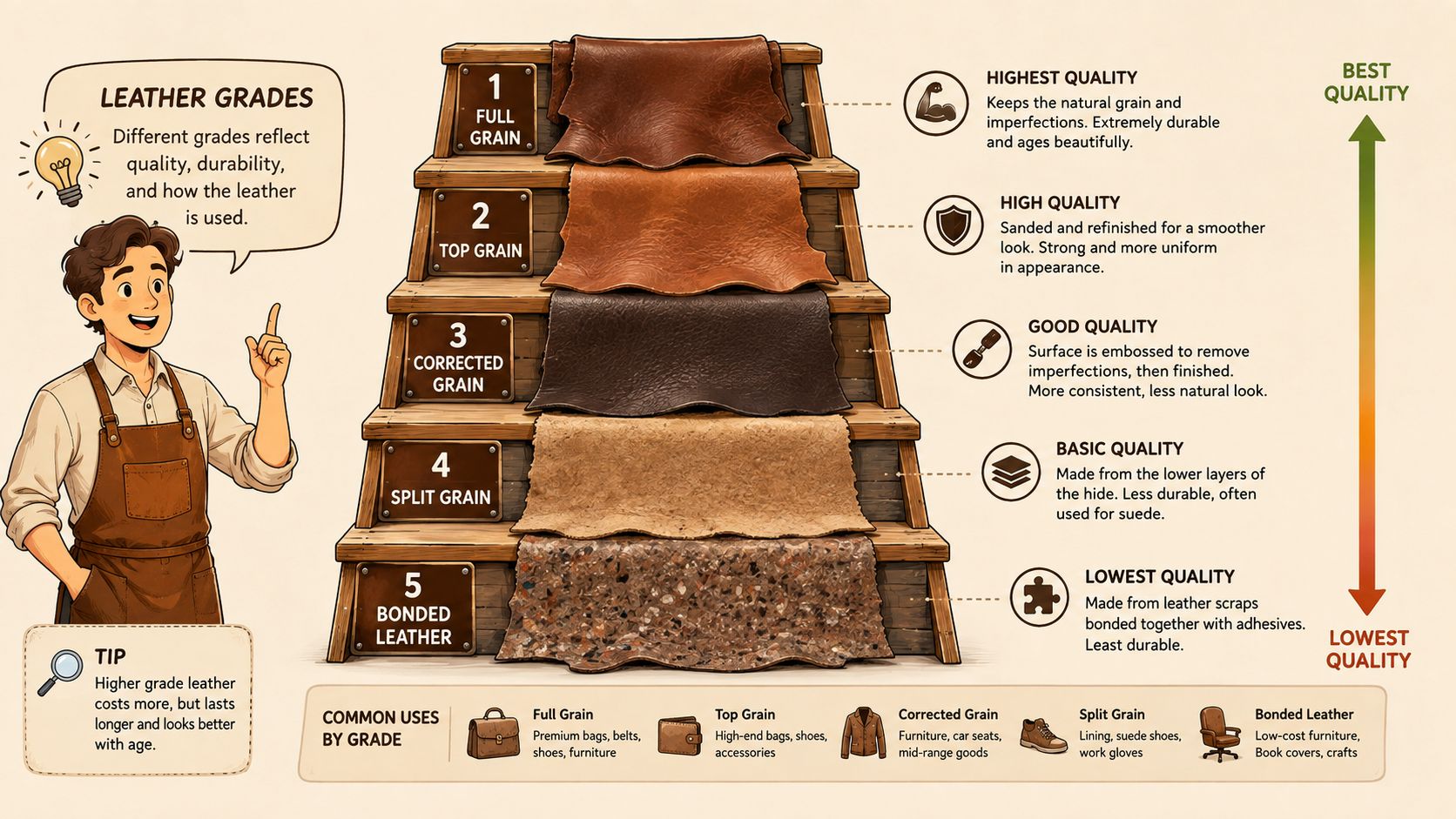
Bonded leather sits at the bottom of this ladder. It combines leather fibers and scraps with a backing, creating a tidy initial appearance that can struggle as the same areas flex repeatedly. Split leather comes from the lower part of the hide and lacks the dense surface structure of the outer layer.
Top-grain leather comes from the outer hide layer. Manufacturers lightly sand or finish it for a smoother, more uniform surface. That process gives it a refined appearance while keeping it genuine leather. Full-grain leather leaves more of the natural surface intact, including marks and scars from the hide itself.
What top grain signals
The practical ranking comes down to natural character versus a predictable finish. Bonded leather prioritizes a manufactured surface. Split leather offers a more substantial leather base. Top-grain leather gives everyday buyers a premium, consistent finish, while full-grain preserves the most natural variation.
That makes top grain a sensible choice for a frequently used recliner. You get real leather with fewer visible surprises and easier coordination with the room. Full-grain suits buyers who want the hide's markings to remain part of the design. Bonded leather suits a tighter initial budget, but it is a poor choice when repeated flexing and long ownership matter.
Grade alone should not determine the order. Ask how the mechanism is built, whether it can be serviced, and what replacement support is available. A custom upholstery order can beat an in-stock chair when you need a particular leather, color, seat size, or configuration. Tyner's upholstery materials guide helps you compare those material tradeoffs before choosing a finish.
Full-grain suits buyers who want maximum natural variation. Top-grain suits buyers who want fewer surprises and easier room coordination.
Use the grade ladder to narrow the material. Use the sit test and mechanism inspection to judge the recliner.
How Top Grain Compares to Full Grain and Bonded Leather
Top-grain, full-grain, and bonded leather are not just different levels of the same thing. They behave like three separate buying decisions, especially on a recliner where the material has to bend, stretch, and recover every time the footrest moves.
What changes on a recliner
Full-grain preserves the natural surface of the hide, so it carries more visual character and often more color variation. That's appealing to some buyers, but it also means every mark shows more clearly. Bonded leather, by contrast, starts with a manufactured surface that can look tidy on day one but doesn't age with the same credibility once the chair begins to flex at the seams and edges.
Top-grain lands in the middle for a reason. It gives the recliner a clean, consistent finish and still delivers real-leather durability where people touch the piece most. On a heavily used seat, that usually makes it the stronger value choice because it avoids the fragility of bonded leather and the higher price pressure of full-grain.
Why price and ownership experience diverge
The market data points to the same pattern. Leather is a major part of the reclining-sofa category, and premium leather recliners were reported to command prices from about $1,800 to $6,000+ in the market ecosystem described in the verified data. That pricing range makes sense when the material grade changes the whole ownership equation, not just the look.
Bonded leather may save money up front, but it can become the wrong answer on a seat that gets used every evening. Full-grain is a stronger statement piece, but many households don't need that level of natural variation in a recliner. Top-grain is the middle lane that fits more homes.
| Attribute | Bonded Leather | Top Grain | Full Grain |
|---|---|---|---|
| Surface feel | Smooth, manufactured, more uniform | Supple, consistent, real-leather feel | Natural, character-rich |
| Visual consistency | High on day one | High, with a more finished look | Lower, more natural variation |
| Recliner use | Least forgiving under flex | Well-suited to repeated use | Strong, but more premium than many families need |
| Ownership value | Shorter-service approach | Balanced long-term value | Highest natural authenticity |
Tyner's top grain leather vs. bonded leather guide is worth reviewing before deciding whether the goal is everyday value or a more temporary fix.
What Wears Out First on a Leather Recliner
A recliner can still show clean, supple leather while its mechanism is already developing play, noise, or uneven movement. Judge the chair as a working machine, not only as an upholstered seat. The hide affects appearance and surface wear, but the frame, hinges, tracks, motor, and switches determine whether the chair remains useful.
The mechanism usually goes first
Recliner durability depends on upholstery and hardware working together. EN 13759:2012 covers durability testing for hand-operated and power-operated reclining mechanisms, using repeated operation by a person weighing up to 110 kg. Leather abrasion is commonly evaluated with rotary methods such as ASTM D7255 or ISO 17076-2 (testing standard reference).
For a buyer, that means asking what the testing covers. Look for a recliner tested for repeated mechanism use, then inspect the leather where flexing and contact occur. Those areas include the seat edge, footrest folds, seams, and arm zones. A durable hide cannot compensate for a track that binds or a motor that strains.
A recliner can feel fine on the showroom floor and still fail in the track, motor, or hinge before the leather looks worn.
What to check before buying
Use the floor model as a working inspection.
- Rock the chair gently. A solid frame feels planted rather than loose.
- Listen for grinding or scraping. Noise points to weak hardware or poor alignment.
- Test the recline path. Movement should stay smooth, without jerking or hesitation.
- Check the underside. Solid wood or substantial framing gives better support than thin panels.
- Press the arm and headrest zones. These areas reveal whether the structure supports the upholstery properly.
Serviceability matters after the purchase, too. If a motor, switch, or hinge fails, modular construction makes repair more practical than a sealed frame. Ask whether those parts can be reached and replaced before committing to the order. Custom upholstery gives buyers room to choose the mechanism and construction details instead of accepting a bundled floor-model configuration.
Regular care still protects the hide. For spills or finish problems beyond routine wiping, vetting leather cleaning pros helps separate basic maintenance from repair work.
Tyner's custom approach earns attention here. Specify the mechanism, frame construction, and upholstery together, then judge the purchase by expected years of reliable use rather than by the leather color alone.
Comfort, Ergonomics, and the Stressless Sizing Advantage
A recliner can look luxurious and still feel wrong in under a minute. Seat geometry decides that fast. The right chair supports the body where it matters, while the wrong one makes the lower back and shoulders do the work.
The five measurements that matter
The seat depth, seat height, backrest angle, lumbar curl, and armrest height are the true comfort test. If the seat is too deep, shorter legs lose support. If it's too shallow, taller buyers feel perched instead of held. If the lumbar contour misses the lower back, the chair stops feeling restorative and starts feeling like a long sit.
Foam choice matters too. Denser cores usually hold their shape longer, while layered construction can change how the seat breaks in over time. That's why the first impression in the showroom should never be the only test.
Why sizing removes guesswork
Stressless sizing makes the decision more exact. The lineup uses Small, Medium, and Large sizing so the frame dimensions and headrest travel can match the sitter instead of forcing the sitter to adapt to the chair. In a category full of generic dimensions, that's a real advantage for anyone who spends long stretches in the same seat.
| Stressless Size Match by Body Type | |||
|---|---|---|---|
| Stressless Size | Recommended Height | Recommended Weight | Best For |
| Small | Shorter to average builds | Lighter to average builds | Compact posture support |
| Medium | Average builds | Average builds | Balanced everyday lounging |
| Large | Taller builds | Heavier builds | Deeper support and extended lounging |
Tyner's ergonomic seating solutions page is a solid next stop for shoppers comparing support, fit, and recline behavior before they commit.
Sit-test rule: if the feet don't land flat and the lumbar doesn't meet the back, keep shopping.
That's why an Ann Arbor showroom visit matters. A chair can't be judged by the spec sheet alone when the goal is real-world comfort for daily use.
Care, Color Choices, and Custom Upholstery at Tyner
A new leather recliner doesn't need a complicated care routine, but it does need a consistent one. The first month sets the tone, especially in a room with windows, vents, or a family that uses the furniture every day.
The care rhythm that protects the finish
Start by blotting spills instead of rubbing them. That matters more than you might think, because rubbing pushes liquid deeper into the finish and can spread the mark across a larger area. Keep the chair out of direct sun when possible, and don't park it near furnace vents or heat sources that dry the hide faster than normal use does.
Protected finishes are easier to live with in busy homes, while more natural finishes demand a gentler hand and more attention. A good leather-safe conditioning routine should follow the care guidance for the specific finish, not a one-size-fits-all habit. Over-conditioning can be as much of a problem as neglect.
Color changes the room, and the wear pattern
Light leathers open a space visually, but they also show patina faster. Mid-tone browns and grays usually hide everyday wear better. Darker hides anchor a room beautifully, though they ask for more consistent care because dust, dryness, and surface marks stand out sooner.
That's where custom upholstery pays off. Tyner's made-to-order upholstery program can match a sectional or recliner to a room instead of forcing the room to adapt to whatever happens to be in stock. Stressless leather options such as Paloma, Batick, and Cori give buyers different looks and hand-feel profiles, while special-order swatches help keep color consistent if a matching chair is added later.
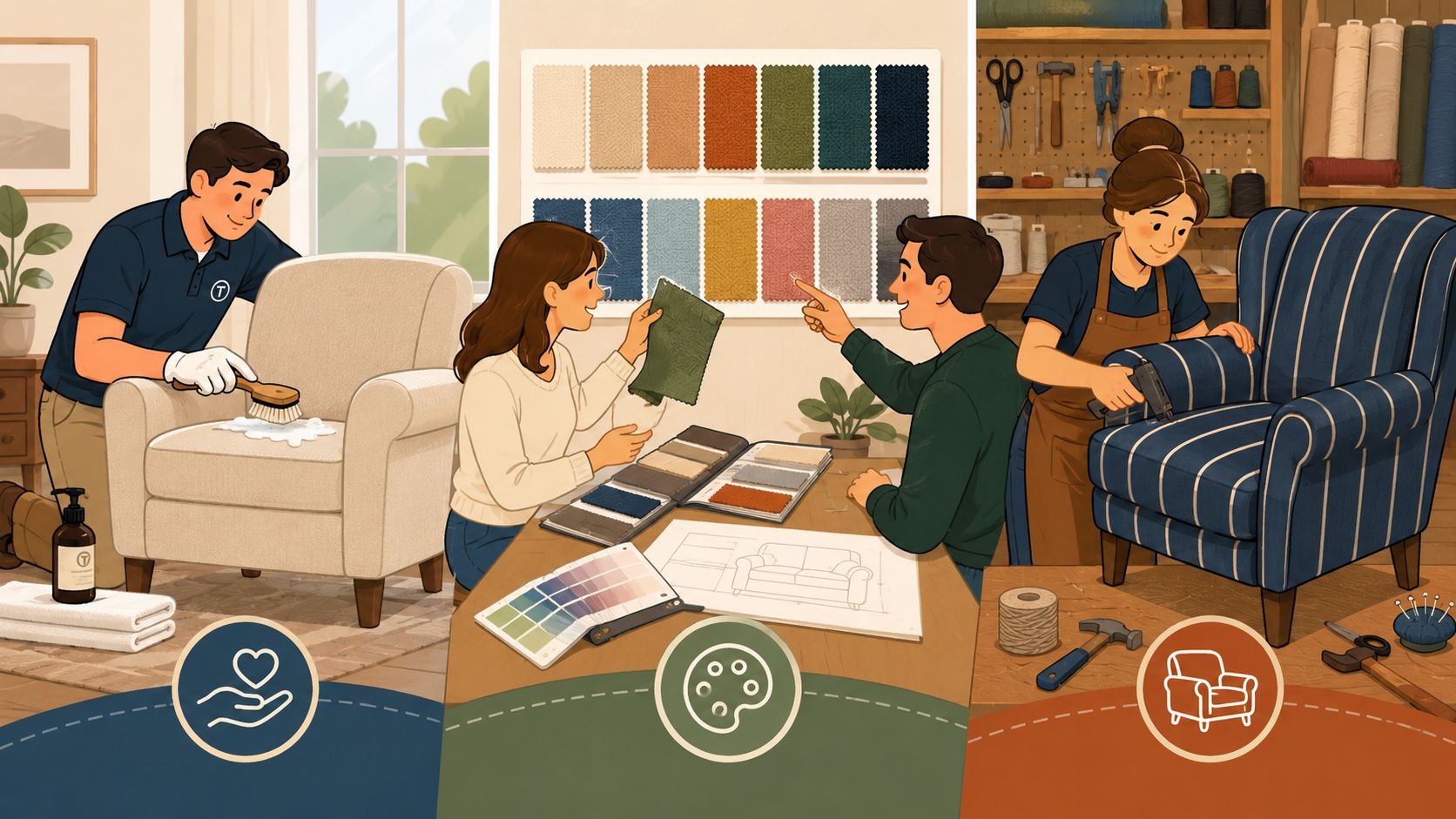
For a homeowner trying to build a coordinated interior design plan, that kind of color control matters as much as the leather grade itself.
Investing Smart with Financing and a Showroom Sit Test
A top grain leather sofa recliner earns its price when it remains comfortable, supportive, and serviceable over years of daily use. Judge it by cost-per-year, not the purchase total alone. A lower-priced chair that needs replacement sooner can cost more in the long run, especially when its reclining mechanism wears out before the leather does.
Why financing changes the buying math
Furniture financing programs may offer 0% or no-interest periods, but read the terms carefully. Minimum monthly payments still apply, and interest can be charged retroactively if the balance remains after the promotional window. Market examples include 6-, 12-, 24-, and even 60-month no-interest promotions with qualifying-purchase thresholds (financing options). Used responsibly, financing spreads the cost of a stronger chair without forcing the entire purchase into one month's budget.
Tyner's furniture financing and no-interest information helps shoppers review available arrangements while considering a custom order. That matters when the right leather, finish, or size is worth waiting for instead of accepting an in-stock compromise.
The sit test that settles the question
Start with alignment, not appearance. Sit in the chair long enough to test both the fit and the mechanism.
- Feet flat on the floor. Dangling feet signal the wrong seat height.
- Knees near 90 degrees. This supports a stable sitting position.
- Lumbar filled in. The lower back should meet the cushion.
- Headrest cradles the head. Your neck should relax.
- Recline glide feels smooth. Jerky movement points to a mechanism problem.
The test takes little time but reveals what photographs cannot. Check the handle, footrest, hinge points, and return motion. A beautiful hide cannot compensate for a stiff, noisy, or poorly fitted reclining system. Custom upholstery and better sizing can turn a decent floor model into the right chair for a specific body and room.
Tyner's Ann Arbor showroom covers living room seating, the Home Office to Outdoor Spaces, and related furnishings, so the design team can coordinate the recliner with the rest of the home. Since 1957, the local showroom has provided a place to compare materials, sit in multiple sizes, and decide before placing a special order.
Visit Tyner Furniture in Ann Arbor for a sit test, or review the online Quick Specs before visiting. The South State St. showroom can help match leather grade, reclining mechanism, and Stressless sizing to daily use.