How to Choose the Perfect Leather Swivel Recliner Chair


A leather swivel recliner chair can look perfect under showroom lighting and still become the wrong chair the moment it reaches a Southeast Michigan living room. The seat may feel luxurious for five minutes, then force the pelvis backward after an hour. The leather may look rich online but feel coated, stiff, or overly warm in person. The back may recline beautifully, yet the chair can crowd a walkway or strike the wall every time someone uses it.
Furniture shopping gets overwhelming because shoppers often judge a recliner by appearance, price, and the first showroom sit. Those factors matter, but they don't determine whether the chair will remain comfortable, functional, and attractive over years of daily use. A proper evaluation also considers leather grade, ergonomic fit, mechanism design, room clearance, and maintenance.
That approach fits the way Tyner Furniture has served the community since 1957. The Ann Arbor showroom on South State St. gives Southeast Michigan shoppers a place to test seating with real attention to posture, movement, upholstery, and room planning. Whether a household is furnishing a living room, Home Office, bedroom, dining area, entertainment space, or Outdoor Spaces, the same principle applies: a lasting purchase begins with fit and material integrity, not marketing language.
Why Most Leather Swivel Recliner Chair Buyers End Up Disappointed
A couple in Ann Arbor chose a leather swivel recliner chair that looked exceptional in the showroom. The silhouette was handsome, the base rotated smoothly, and the upholstery felt soft enough to suggest heirloom quality. They tested it upright, reclined once, and placed the order.
Within months, the ergonomic mismatch became clear. The seat sat too low for one user, so the feet lost consistent floor contact and the knees rested at an awkward angle. The cushion also pushed the pelvis backward, increasing pressure behind the thighs during longer sessions. The swivel base reached farther into the room than expected, brushing nearby furniture whenever someone turned toward the television.
Premium leather cannot correct a poor fit.
The five decisions that determine satisfaction
Judge the chair by these five conditions before purchase:
- Leather grade: Does the surface feel supple and natural, or heavily coated and prone to trapping heat? Ask how the finish handles friction, body oils, sunlight, and routine cleaning.
- Ergonomic fit: Check seat height, seat depth, hip width, lumbar position, head support, and footrest length against the primary user. Feet should rest firmly, the knees should remain supported, and the lower back should stay in contact with the cushion.
- Mechanism type: Confirm whether the chair swivels, glides, reclines manually, or uses power adjustment. Test each movement for control, noise, stability, and return speed.
- Spatial clearance: Measure the swivel arc and reclined footprint, not only the chair's upright width. A chair that turns into a walkway becomes a daily obstruction.
- Maintenance commitment: Follow the leather-care instructions and inspect moving joints as recommended. A premium hide still cracks, dries, or loses finish when neglected.
A chair can perform well in four areas and fail in the fifth. Correct leather grade will not rescue an incorrect seat depth. Excellent body support will not solve a base that blocks a doorway or strikes a wall.
Practical rule: Stay in the showroom seat long enough for your posture to settle. Recline, rotate, raise the footrest, and check whether your body remains supported rather than merely comfortable at first contact.
Furniture Today reported U.S. consumer spending on reclining chairs at about USD 3.7 billion in 2009 and USD 3.8 billion in 2010. Reclining chairs represented roughly 5% of the total furniture and bedding market during that period, as summarized in this recliner market overview. The figures show a mature comfort category, while swivel functionality adds room-planning and movement requirements that buyers often overlook.
The right leather swivel recliner chair should support the body, clear the room, tolerate its intended use, and remain maintainable after the showroom novelty disappears.
Decoding Leather Grades and Durability Standards
The label “genuine leather” is too vague for a serious purchase. Leather grades indicate how much of the hide's natural surface remains and how the upholstery was processed. For a leather swivel recliner chair, request the exact grade, surface finish, approved cleaning products, and leather-specific abrasion information before judging the price.
Full-grain leather retains the hide's natural grain, including variations and markings. That natural surface develops visible character instead of remaining perfectly uniform. It also exposes maintenance mistakes. Harsh chemicals, excess moisture, and aggressive scrubbing can damage the finish, so full-grain leather suits buyers willing to follow a consistent care routine.
Top-grain leather comes from the hide's outer layer and receives light sanding to remove imperfections. The process preserves flexibility and a soft hand while producing a more consistent appearance than full-grain leather. Review this top-grain versus bonded leather guide before accepting a salesperson's broad “premium leather” description.
Corrected or coated leather uses a more processed surface to conceal imperfections and create visual consistency. It handles ordinary wipe-downs well, but abrasive products and solvent-based cleaners can still wear or dull the coating. Ask which finish covers the seat, arms, and high-contact areas. Those surfaces often determine whether the chair still looks presentable after months of daily use.
Leather Grade Comparison for Recliner Upholstery
| Leather Grade | Durability Rating | Feel and Aging | Best For |
|---|---|---|---|
| Full-grain | Strong natural surface, with durability tied to the finish and care routine | Rich, tactile, and likely to develop visible character | Quiet living rooms, reading spaces, and buyers seeking heirloom appeal |
| Top-grain | Durable premium upholstery when properly specified | Soft, flexible, and supple, with graceful aging potential | Daily-use living rooms and buyers prioritizing comfort with a refined appearance |
| Corrected or coated | Protective surface supports practical cleaning, but abrasion and solvents can harm the finish | More uniform feel and appearance | Busy households wanting visual consistency and straightforward wipe-down care |
How to read an abrasion statement
Do not compare a fabric rub figure directly with a leather rub figure. ASTM D7255 evaluates leather abrasion with a rotary platform double-head tester, while ISO 17076-2 uses the Martindale ball-plate method. The methods are different, so a credible specification must identify the test method instead of presenting an unexplained figure. The ASTM procedure is described in this ASTM leather abrasion document.
Practical upholstery benchmarks commonly place medium-duty use around 12,000 to 20,000 rubs, with heavy-duty upholstery starting above 20,000 rubs. Leather testing programs also cite 20,000 Martindale cycles for general upholstery and 40,000 cycles for heavy-duty applications. Treat every figure as method-specific, not as a universal durability score.
A disciplined buyer should:
- Verify the test method. An unexplained abrasion figure proves little.
- Match the threshold to traffic. A formal living room and a family television room create different demands.
- Request cleaning guidance. The finish determines which products are safe.
- Reject vague specifications. A premium chair should include a leather-specific durability statement.
Inspect the leather in person. Quality top-grain leather should feel supple, flex naturally under your hand, and show a consistent finish across the seat, arms, and back. A polished showroom surface means little if the care instructions are missing or the abrasion test is unspecified. The grade starts the evaluation. The complete specification determines whether the chair can handle your household.
Finding Your Ergonomic Fit and Correct Size
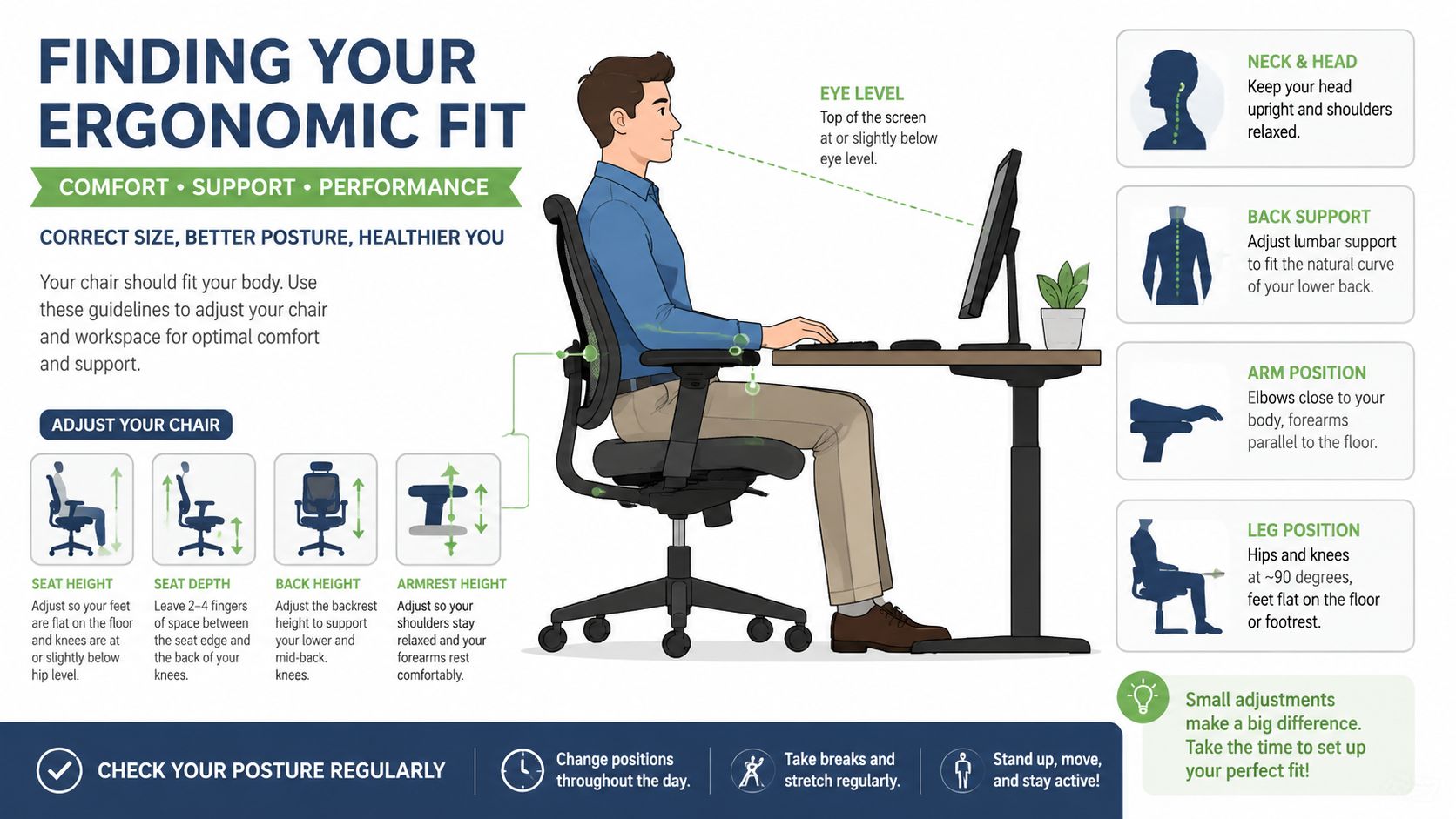
A leather swivel recliner chair shouldn't be selected by height alone. The chair must accommodate seated hip breadth, seat depth, thigh support, foot contact, and lumbar position at the same time. A large chair can feel generous in a showroom and become tiring at home if the user can't maintain stable contact with the floor or footrest.
Start with the body, not the upholstery.
The fit-and-function test
When seated upright, the shopper should check whether the hips fit without pressure from the arms. The seat depth should support the thighs without forcing the back away from the lumbar area. The feet should rest securely, either on the floor or on the extended footrest, without dangling or reaching.
A chair that's too deep can push the pelvis into posterior pelvic tilt, encouraging slouching and reducing the body's ability to hold a neutral spine. An undersized chair creates the opposite problem. It can reduce thigh support and concentrate pressure beneath the legs and seat.
Stressless sizing provides a useful benchmark because its Small, Medium, and Large categories recognize that one recliner shape can't serve every frame equally well. Tyner's ergonomic seating selection allows shoppers to investigate fit through options such as ergonomic seating solutions, rather than treating size as a cosmetic detail.
What to measure in the showroom
A serious sit-test should answer these questions:
- Hip breadth: Do the arms leave room without squeezing the body or forcing an awkward angle?
- Seat depth: Can the back rest against the lumbar support while the knees remain comfortably supported?
- Foot contact: Does the footrest meet the legs naturally, or does it stop short or push too high?
- Recline arc: Does the chair preserve support as it moves from upright to reclined?
- Swivel behavior: Can the user turn without twisting the torso or losing lumbar contact?
Clinical ergonomics work on recliner-like chairs shows that geometry can materially affect injury risk. In one simulation study, the lowest-risk device was the only one that stayed within the evaluated ergonomic threshold limits. The practical lesson is simple: a chair should be tested through its full movement range, not judged in one locked position.
“Comfort” means the body remains supported after the initial softness has stopped impressing the shopper.
The showroom should also test the chair with the intended user, not a salesperson or a family member with a different frame. Ergonomic precision is especially important when the chair will serve as a home office seat, reading chair, or primary evening recliner. Swivel motion adds freedom, but it can't correct a seat that doesn't fit.
Comparing Swivel and Reclining Mechanisms
Mechanism choice should follow the chair's job. A manual push-back recliner, a powered recliner, and a swivel glider can all feel excellent, but they create different experiences in a living room, Home Office, nursery, or reading corner.
Manual push-back recliners
Manual mechanisms keep operation straightforward. The user shifts body weight to open the recline, which can produce a clean, quiet experience with fewer controls and less visual hardware. The tradeoff is limited positioning. The recline angle may depend more on body weight and the mechanism's design than on precise adjustment.
Manual seating suits shoppers who value simplicity and don't need incremental positioning. It should still open smoothly, hold its path without abrupt movement, and return without excessive force.
Power recliners
Power adjustment offers finer control over the back, leg support, and, on some models, the headrest. That control can help users who spend long periods seated or need a particular posture for reading, television, or conversation. The mechanism adds electrical components, so buyers should understand the controls, service support, and power-cord placement before committing.
A power option earns its price when it solves a real positioning problem. It isn't automatically better because a button replaces a lever. A chair that supports the head and lumbar area while the user remains relaxed is more valuable than one with features that never get used. Tyner's power reclining seating guide gives shoppers a way to compare configurations without reducing the decision to motor count.
Swivel glider combinations
A swivel glider can help a user turn toward a conversation, window, television, or side table without moving the entire chair. Gentle gliding can also support relaxation. But movement can encourage slouching if the seat lacks dependable lumbar support or if the user constantly rotates away from the chair's intended posture.
For households managing mobility needs, a side-access accessory can also matter. A resource such as this swivel table for lift-chair use can help organize drinks, reading materials, or personal items without requiring repeated reaching.
The showroom mechanism test
- Start upright: Check whether the pelvis stays planted and the lumbar area remains supported.
- Recline slowly: Listen for grinding, abrupt catches, or uneven movement.
- Rotate while seated: Turn toward several points in the room and notice whether the back loses contact.
- Return to upright: Confirm that the chair closes smoothly without throwing the body forward.
- Inspect access: Controls should be reachable without twisting the shoulder or leaning away from support.
A premium mechanism should improve daily function, not merely add motion. The best choice is the one that serves the household's actual routine.
Planning Your Room Layout and Clearance Requirements
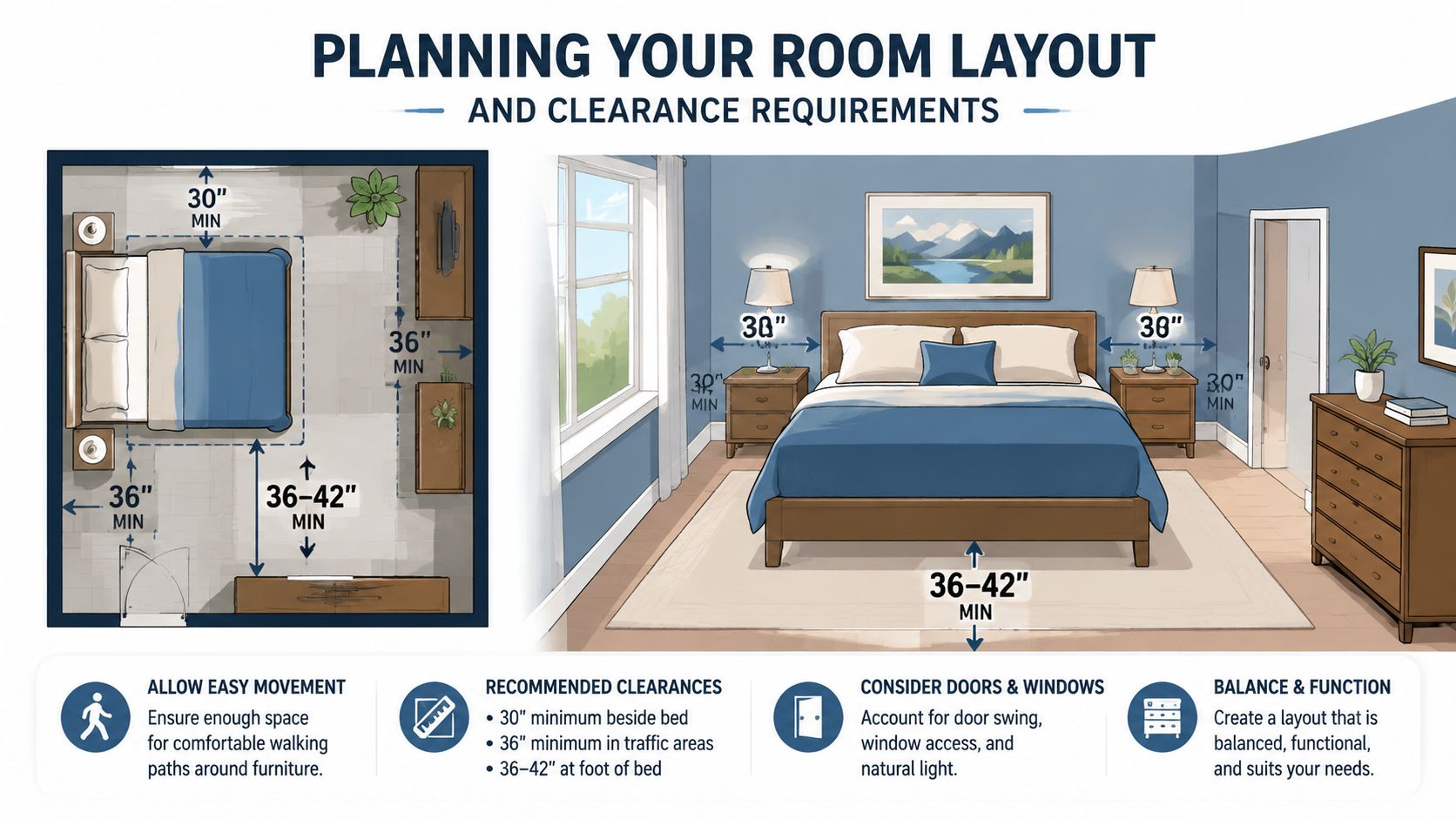
A leather swivel recliner can fit on paper and still become a daily nuisance. The hidden mismatch appears after delivery: the back strikes the wall, the footrest blocks the walkway, or the swivel arc clips a table every time someone turns. Measure the room, doorway, hallway, and final position before ordering, especially in Southeast Michigan homes with tight entries and older room layouts.
Allow roughly 40 to 48 inches of clear circular space for rotation and 18 to 24 inches behind the chair for models that recline into the room, following swivel recliner buying guide clearance guidance. Confirm the exact requirement on the manufacturer's specification sheet because wall-hugger and standard mechanisms use different paths.
Dimensions that change the plan
Many swivel recliners measure about 36 to 40 inches wide, while larger versions can reach 41 to 45 inches. A leather swivel recliner listed at 37 inches wide, 42 inches deep, and 42 inches high may extend to 66 inches deep when open. Use the open measurement for planning. Closed dimensions conceal the space the chair occupies.
A living room layout should protect the main walking route between seating and the doorway. In a home office, check the full swivel arc against the desk, filing cabinet, and wall-mounted equipment. In a reading nook, curtains, floor lamps, vents, outlets, and trim can become collision points. Leather also needs enough separation from heaters and direct sunlight to reduce avoidable drying, fading, and heat exposure.
The pre-delivery measurement checklist
- Measure the room opening. Record doorways, stair turns, elevator access where relevant, and narrow hallways.
- Mark the chair footprint. Use painter's tape for the closed width and depth.
- Mark the rotation zone. Trace the complete circular area, not only the forward-facing position.
- Mark the reclined position. Include the open depth and rear clearance.
- Check nearby objects. Measure tables, lamps, vents, trim, outlets, curtains, and electronics.
- Plan the delivery route. A chair can fit the room and still fail at the entry.
Use this furniture measuring guide before visiting the South State St. showroom. Drawings help, but tape on the floor exposes blocked movement immediately. Sit in the taped footprint and rotate your shoulders, extend your legs, and check whether another person can pass without brushing the chair.
Room-planning insight: If the taped footprint makes the room feel crowded, the delivered chair will not solve the problem.
Building a Maintenance Routine That Protects Your Investment
A premium leather swivel recliner can look perfect in the showroom and show wear quickly at home. The usual cause is a maintenance gap: the leather finish receives the wrong product, while the swivel base and reclining hardware go unchecked. Build the routine around both systems.
Leather finish determines the cleaning method. Full-grain and top-grain leather require a gentle approach. Harsh chemicals, soaking, abrasive pads, and vigorous brushing can damage the surface or change its feel. Corrected or coated leather may tolerate more frequent wiping, yet solvent-based products and abrasive cleaners remain poor choices. Confirm the finish and approved products in the manufacturer's care instructions before treating the chair.
For a practical overview, follow this guide to protecting leather furniture.
A practical care calendar
Vacuum the upholstery regularly, wipe it with a damp cloth, and address spills immediately. Professional cleaning and conditioning should take place about 2 to 4 times per year, with frequency adjusted for household traffic and room conditions. A family recliner used every day deserves closer observation than a lightly used chair in a formal room.
Conditioning schedules vary. Some recommendations call for every three months, while others suggest every six to twelve months. Use the leather finish, manufacturer guidance, exposure to heat or sunlight, and actual use to set the interval. Apply conditioner sparingly, and test it on a hidden area first.
Mechanism care belongs in the same routine
Inspect the swivel base and recline hardware periodically. Remove accessible debris, listen for new sounds, and check for stiffness, wobbling, grinding, or an uneven return. Follow the manufacturer's instructions before applying lubricant. A resistant mechanism may need inspection rather than a random product.
Keep the chair on a level, stable floor. An uneven base can affect swivel movement, weight distribution, and long-term hardware wear.
A monthly visual check should cover:
- Surface changes: Dryness, cracking, discoloration, or sticky residue.
- Spill damage: Marks that were not cleaned promptly.
- Movement changes: Grinding, stiffness, wobbling, or an uneven return.
- Hardware issues: Loose fasteners or shifting components.
- Environmental exposure: Direct heat, prolonged moisture, or strong sunlight.
For plain-language cleaning guidance, use J.G. Carpet Cleaning's leather care guide. Match every product to the chair's specific leather finish rather than copying a generic routine.
The goal is preventive control. Consistent surface care and early mechanism checks preserve comfort, appearance, and serviceability far better than waiting for visible damage before taking action.
Evaluating Long-Term Value and Making Your Purchase
A premium leather swivel recliner chair should be evaluated by cost per year, not by purchase price alone. One buying guide states that leather power recliners can last 15 to 20 years with basic care, while top-grain leather may outlast fabric by roughly 5 to 10 years when properly maintained, as discussed in this leather versus fabric power recliner guide. The exact value depends on the chair's construction, use, care, and service support, but a longer service life can make an heirloom purchase more sensible over time.
The market supports leather's position as a premium upholstery choice. One estimate places the leather recliner segment at roughly USD 11.5 billion in 2025, representing 42.1% of the global recliner market, according to this global recliner market report. That figure doesn't tell a household which chair to buy. It does show that leather recliners occupy an established, substantial category rather than a narrow specialty.
Spend on the features that remain useful
The strongest investment usually combines:
- A leather grade suited to household traffic
- A body-appropriate size
- A mechanism that matches daily use
- Enough room for full rotation and recline
- A maintenance plan the household will follow
- Serviceable construction and clear product specifications
In-stock is just the beginning. Tyner Furniture offers made-to-order options that can extend beyond the showroom floor, including customized finishes, fabrics, leathers, and configurations. That same customization edge reaches beyond recliners through Canadel dining pieces and Stressless ergonomic sizing, while the broader assortment covers everything from the Home Office to Outdoor Spaces.
The same material discipline applies to bedroom and dining furniture. Tyner's Amish hand-crafted pieces use solid wood, careful joinery, and material integrity rather than mass-produced construction that hides behind surface appearance. The weight of solid cherry wood, the precision of dovetailing, and the strength of mortise-and-tenon joinery communicate value in a way a thin finish cannot.
Special Financing, subject to credit approval, and the Low Price Promise can reduce the barrier to a high-quality, made-to-order purchase without changing the standard for durability. Buyers should still choose the chair by fit and function first. Financing makes a sound decision easier to plan. It shouldn't rescue an unsound one.
Tyner Furniture offers leather swivel recliners, made-to-order upholstery choices, Stressless ergonomic sizing, and guidance grounded in its Southeast Michigan local legacy since 1957. Visit Tyner Furniture in the Ann Arbor showroom for a proper sit-test on South State St., or browse the online Quick Specs when considering a special order.