Distressed Wood Finishes: A Guide for Ann Arbor Homes


Distressed wood finishes are an intentional design technique that celebrates imperfections, adds warmth and character, and helps disguise everyday wear. The look can be created through layered color, selective abrasion, texture, or weathering, with some DIY methods using a 1:1 paint-and-water wash, a wash of about one part paint to two parts water, or vinegar left on wood for about 10 hours as part of the treatment, as described in this comparison of distressed wood finishes.
A homeowner choosing a dining table for an Ann Arbor kitchen may start with a simple question: Should the surface look perfectly uniform, or should it feel as though it has already earned a place in the family history? That decision affects more than color. It influences how the furniture handles fingerprints, small marks, changing décor, and the years of use that turn a purchase into an heirloom.
At Tyner Furniture, a Southeast Michigan local legacy established in 1957, furniture shopping is treated as a design decision rather than a quick transaction. The same attention extends across the Home Office, dining and bedroom spaces, living rooms, entertainment areas, and Outdoor Spaces. Distressed wood can look inviting in a photograph, but the difference between a mass-produced rustic effect and hand-crafted furniture becomes clear in the grain, joinery, finish depth, and weight of the piece.
What Are Distressed Wood Finishes?
A distressed wood finish is a controlled method of creating the visual language of age. Craftspeople may add a base color, apply a contrasting topcoat, soften selected areas, brush the grain, introduce glaze, or abrade edges where natural contact would occur. The objective isn't to damage a usable piece. It's to create believable character while keeping the surface stable and practical.
The most convincing results follow the logic of real wear. Edges, corners, raised profiles, drawer pulls, and other high-contact areas receive more attention than broad, untouched panels. Guides to the process commonly recommend 120 to 180 grit sandpaper for selectively removing the upper layer in wear zones, followed by smoothing or sealing to protect the exposed layers, as outlined in this practical guide to distressing wood.
Character should remain functional
Knots, open grain, color variation, and small irregularities become part of the design rather than defects to conceal. A dark underlayer revealed through a lighter topcoat can give a tabletop visual depth, while a wax barrier can prevent the upper color from bonding fully in chosen areas. The final protective coat matters because distressing deliberately thins the film at selected spots, making sealing part of the construction rather than an afterthought, according to this technical overview of distressed wood methods.
That principle aligns naturally with Amish hand-crafted furniture. Solid North American hardwood, careful joinery, and material integrity give the finish a sound foundation. A rustic appearance applied over weak construction remains a surface effect. A thoughtfully distressed finish on well-built solid wood can develop into a patina that feels connected to the piece's construction.
Practical rule: A finish should suggest a history without creating a maintenance problem.
The tradition behind the look reaches far beyond modern rustic interiors. Historical wood-finishing practices have been used for thousands of years, with oil finishes traced to ancient China and linseed and tung oil described among the most common early everyday coatings in this history of common wood finishes. Shellac became dominant on fine furniture until roughly the 1920s and 1930s, when lacquer began replacing it as a faster industrial finish. Wax also played a major role in Western furniture finishing until the mid-19th century, when shellac largely supplanted it.
That history explains why distressed wood finishes can feel familiar. They borrow visual cues from slower, layered, hand-finished surfaces, then adapt those cues for modern homes. Buyers considering an older piece should also distinguish restoring vs conserving antique wood, because preserving original material and recreating a distressed appearance call for different decisions.
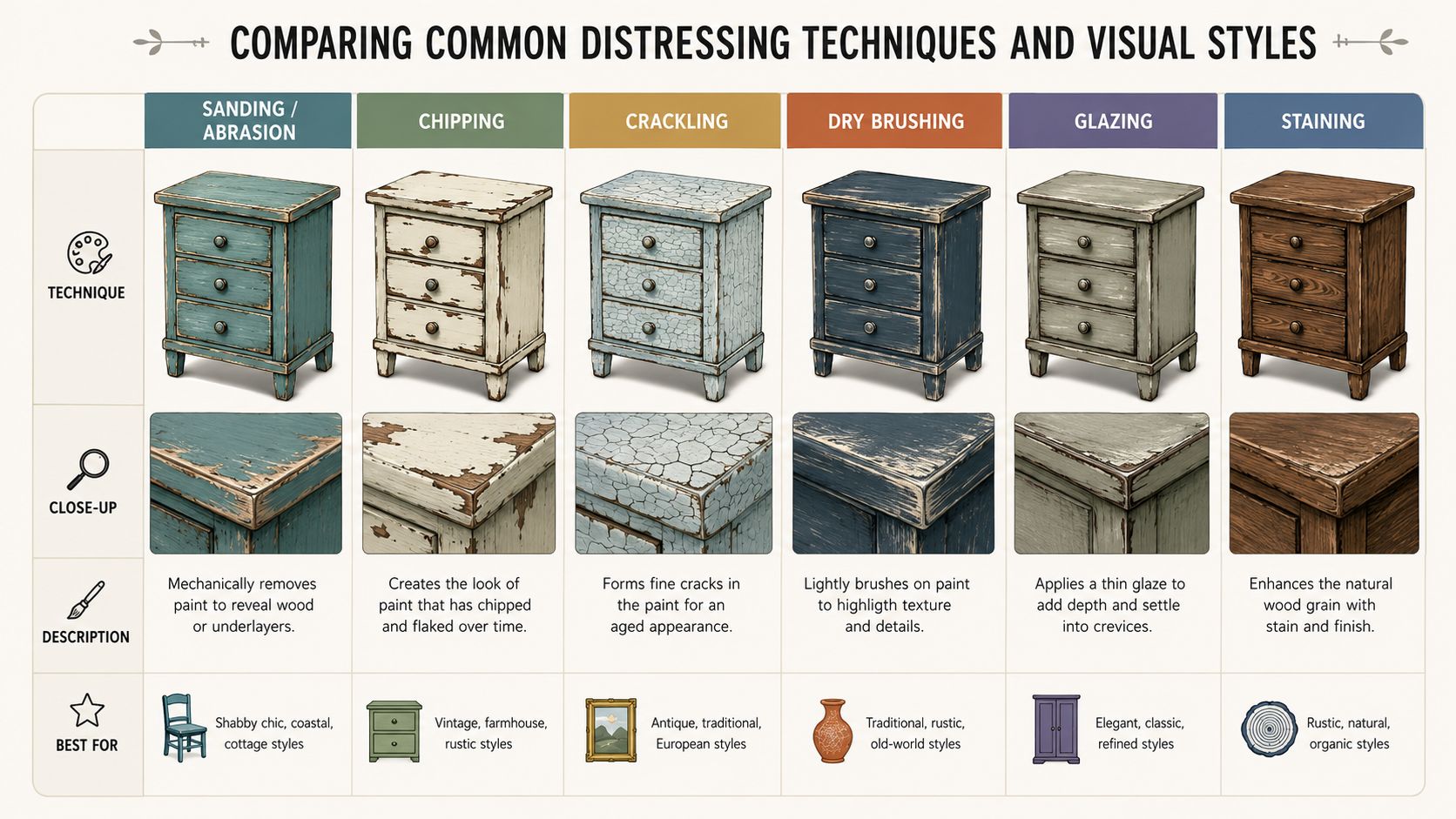
Comparing Common Distressing Techniques and Visual Styles
The word “distressed” covers several very different finishes. A lightly aged tabletop and a heavily hand-scraped cabinet may share a category, but they create different tactile experiences and suit different rooms.
Light distressing
Light distressing keeps the surface calm. Small softened edges, modest color variation, and restrained abrasion create a subtle patina that works well in transitional interiors, contemporary dining rooms, and bedrooms where the wood should add warmth without dominating the space. Under natural light, the effect can resemble a soft rubbing of age rather than a dramatic reclaimed-wood statement.
This is often the safest starting point for a homeowner who wants character but expects the furniture to remain adaptable through future interior design changes.
Hand-scraped and heavy distressing
Hand-scraped finishes introduce more pronounced ridges, softened gouges, and visible tool marks. The surface feels more tactile under the hand, with shadows collecting in irregular areas. Heavy distressing can anchor a traditional farmhouse room, lodge-inspired setting, or large dining area, but it may feel visually busy beside ornate flooring, patterned upholstery, or strongly grained architectural details.
Factory-made rustic furniture sometimes applies identical marks across multiple pieces. Authentic hand-crafted work usually looks less repetitive because the material and the maker's hand shape the result. Buyers comparing rustic and industrial rooms can find useful design context in this guide to industrial and rustic furniture styles.
Wire-brushed texture
Wire-brushing lifts softer portions of the grain while leaving harder growth areas more pronounced. The result is a dry, tactile surface that catches the fingertips and reflects light in a controlled way. It's a strong choice for modern transitional rooms because it adds texture without the visual drama of deep scraping.
Recent 2025 to 2026 trend coverage identifies wire-brushed and lightly distressed surfaces as part of the continued preference for warmer, matte, tactile wood, while heavier hand-scraped products have lost momentum in some markets, as reported in this coverage of current wood door finish trends. That distinction matters for homeowners who want a finish with longevity beyond a single decorating cycle.
Glazed and whitewashed surfaces
Glaze settles into grain lines, corners, and recesses, adding contrast without necessarily changing the entire base color. It can make a carved profile look deeper and give a broad panel a more dimensional appearance. A whitewashed finish lightens the overall impression, while a darker glaze can emphasize the architecture of the piece.
A useful comparison:
- Light distress: Soft patina, restrained variation, flexible across décor styles.
- Hand-scraped: Noticeable texture, irregular marks, grounded and traditional.
- Heavy distress: Strong character, dramatic wear cues, best used selectively.
- Wire-brushed: Raised grain, matte touch, compatible with transitional spaces.
- Glazed: Recessed contrast, enhanced profiles, layered visual depth.
- Whitewashed: Airier color, visible grain, useful for relaxed interiors.
Distressed hardwood flooring became more commercially scaled during the modern revival of wood surfaces in the 1980s. One industry source reports that 90% of distressed floors are prefinished and 80% to 85% are glued down, showing how a once highly individual craft effect became a factory-applied format designed for consistency and installation efficiency, according to this history of handcrafted distressed floors.
Durability and Species Selection for Every Lifestyle
A distressed finish doesn't make every wood species behave the same way. The substrate determines how sharply a mark reads, how the grain accepts color, and how the piece responds to years of movement, cleaning, and contact.
Oak is a practical choice for busy dining rooms and family spaces. Its pronounced grain gives wire-brushing and glazing places to settle, so the finish can look dimensional rather than painted on. Maple has a tighter, quieter grain and a lighter visual presence. It can suit a clean transitional room, although distressing needs restraint so the surface doesn't appear artificially marked.
Cherry brings a warmer, more refined character. Its color develops with exposure to light, and a distressed treatment should support that natural depth rather than obscure it with excessive abrasion or a heavy contrasting coat. The weight and smoothness of solid cherry are tangible in person, especially when compared with a thin, uniform panel that only imitates the appearance of wood.
Matching species to household use
High-traffic rooms in Southeast Michigan homes need a finish that works with real routines. Dining tables encounter plates, homework, celebrations, and hurried cleanup. Bedroom furniture sees repeated drawer movement and contact around handles. A home office desk may experience concentrated wear around the keyboard and chair.
Selection points to discuss with a furniture specialist:
- Oak: Strong grain and visible texture support brushed, glazed, and moderate distressed treatments.
- Maple: Cleaner grain suits lighter, quieter finishes and modern transitional rooms.
- Cherry: Warm color and refined grain favor controlled distressing with layered tonal depth.
- Solid construction: Joinery and material integrity matter as much as the surface treatment.
- Finish thickness: A protective top layer helps stabilize areas where distressing has revealed lower tones.
A distressed surface can conceal small marks more effectively than a perfectly uniform high-gloss surface because irregular color and texture interrupt the eye. That doesn't make the finish indestructible. Liquid marks, deep scratches, and damaged edges still require attention, and textured areas can make a local repair more complicated if the original distress pattern is difficult to match.
A forgiving appearance is valuable, but it shouldn't substitute for sound construction and a finish designed for the room's use.
Tyner's Amish hand-crafted solid wood pieces provide a meaningful contrast with mass-produced alternatives. Time-honored joinery, including dovetailing and mortise-and-tenon construction, supports furniture intended for long service, while solid North American hardwood preserves the material's genuine weight and grain. The North American hardwood guide can help shoppers become familiar with the differences before visiting the showroom, and The Cabinet Coach wood guide offers additional background on how common species differ in appearance and behavior.
The right measure is cost-per-year, not the opening price alone. A durable, made-to-order piece that remains useful through multiple room updates may deliver stronger value than furniture selected only for a current rustic trend.
How to Choose a Distress Level to Match Your Décor
Start with the room, not the sample. A finish that looks charming under showroom lighting may overwhelm a smaller Ann Arbor dining area with limited natural light. Conversely, a barely visible treatment can disappear in a large open-concept room filled with strong architectural features.
Read the existing visual weight
Count the surfaces already competing for attention. If the room includes patterned upholstery, exposed brick, ornate hardware, or pronounced flooring, a light or wire-brushed finish can add warmth without creating another focal point. If the architecture is simple and the furnishings are restrained, a deeper glaze or hand-scraped treatment may give the room the texture it lacks.
Color temperature matters, too. Recent design coverage describes a movement away from cold gray and highly polished wood toward richer browns, matte surfaces, wire-brushed grain, and lightly distressed treatments, as discussed in this 2025 hardwood flooring trend coverage. Warm brown can make a Southeast Michigan home feel more grounded during gray winter afternoons, while a soft whitewash may suit a brighter coastal or cottage-inspired palette.
Use the room's traffic as a design filter
A distress level should reflect both visual preference and practical use.
- For formal dining: Choose restrained edge wear or a subtle glaze if the table needs to look polished during gatherings.
- For everyday family dining: Moderate texture can make ordinary contact less visually prominent while preserving a welcoming surface.
- For a bedroom: Light distressing usually keeps the mood restful and prevents the case goods from competing with bedding.
- For an entry or mudroom: A more pronounced treatment can support the architectural role of the piece, provided the finish is properly protected.
- For a contemporary home office: Wire-brushed grain or a matte, lightly aged finish can soften technology-heavy surroundings.
Lighting should be tested from more than one angle. A deep scrape casts shadows that may look subtle in one position and pronounced in another. Samples should be viewed beside the home's flooring, wall color, hardware, and upholstery rather than judged in isolation. Tyner's expert guide to color palettes provides useful context for coordinating undertones and contrast.
A buyer planning to stay in the home for years can choose a more personal finish. Someone thinking about resale or frequent redesign may prefer lighter distressing, which reads as crafted and warm without committing the room to a strongly farmhouse identity.
Maintenance and Repair Tips for Long-Lasting Beauty
Distressed furniture should be cared for according to its protective finish, not treated as indestructible. Regular dust removal with a soft cloth prevents grit from collecting in the grain, while a slightly damp cloth can address ordinary marks when the finish permits it. Spills should be handled promptly, especially around edges, seams, and recessed texture where liquid can remain longer.
Sunlight deserves attention in rooms with large windows. Wood color can change naturally over time, and uneven exposure may make a tabletop or cabinet front develop at different rates. Moving accessories periodically and using window protection where appropriate can help the surface age more evenly.
Repair depends on the type of damage
A shallow scuff may blend into an irregular finish more easily than it would on a completely uniform stain. A deep scratch, lifted finish, or liquid ring is different. The repair may require matching the base tone, recreating the surrounding abrasion, and restoring the protective layer without producing a conspicuous patch.
Care priorities include:
- Clean gently: Avoid abrasive pads and aggressive rubbing that can enlarge distressed areas.
- Protect daily-use zones: Use practical barriers beneath hot, wet, or sharp objects.
- Watch edges: Distressed corners have less finish film and deserve prompt attention after impact.
- Ask before refinishing: A professional should identify the existing finish before applying a new product.
- Keep documentation: Made-to-order specifications and finish details can help with future service.
Independent finish-testing guidance places emphasis on resistance to heat and other performance factors, a useful reminder that appearance and durability should be considered together. Consumer guides often explain how to create the look but spend less time discussing touch-up visibility, maintenance, and long-term wear behavior. The wood furniture protection guide offers a practical reference for extending the life of finished pieces.
Custom ordering can support maintenance because the original species, color, distress level, and protective finish are documented more clearly than they may be with an anonymous mass-produced item. That traceability supports heirloom ownership. Over time, the goal isn't to keep the furniture frozen in its first-day condition. It's to help the wood age with dignity while preserving its function.
Customizing Your Finish with Tyner and Canadel
In-stock furniture is just the beginning. A homeowner may need a different table size, leg profile, edge treatment, wood tone, fabric, leather, or distress level to make a room feel intentional rather than assembled from unrelated pieces.
Canadel's made-to-order dining program gives shoppers room to refine those choices. The process can include finish color, distress intensity, leg styles, table edges, and other configuration details. A light, brushed surface may suit a modern transitional Ann Arbor home, while a richer glaze and more visible wear can support a traditional dining room.
The same customization mindset applies beyond dining. Upholstery can be ordered in a broad selection of premium fabrics and top-grain leathers, with the buttery feel of quality leather offering a very different sensory experience from textured woven fabric. Stressless seating adds an ergonomic dimension, including Small, Medium, and Large sizing intended to support a more personalized fit.
Construction remains the foundation
Finish customization has value only when the underlying piece is worth keeping. Tyner's Amish hand-crafted solid wood furniture contrasts with mass-produced alternatives through material integrity and joinery. Solid cherry, oak, and maple carry the weight and grain of genuine hardwood, while dovetail and mortise-and-tenon construction support the long-term demands of drawers, doors, and daily use.
A distressed finish should therefore be evaluated as part of a complete furniture specification:
- Species: Select wood for grain, warmth, and room conditions.
- Construction: Examine joinery, movement, hardware, and structural support.
- Finish: Decide whether the surface should be light, wire-brushed, glazed, whitewashed, or more heavily distressed.
- Configuration: Confirm dimensions, storage, seating, and traffic requirements.
- Long-term value: Consider cost-per-year and whether the piece can follow the household through future rooms.

Tyner's custom wood finishes can help shoppers compare finish direction before placing a special order. The showroom also offers Special Financing subject to credit approval and a Low Price Promise, giving homeowners ways to plan for heirloom-quality furniture without reducing the decision to a short-term price comparison.
Tyner Furniture offers customizable distressed wood finishes, Amish hand-crafted solid wood furniture, Canadel dining configurations, and Stressless ergonomic seating for homes throughout Ann Arbor and Southeast Michigan. Visit Tyner Furniture on South State St. for a hands-on sit test and the weight of real wood, or browse the online Quick Specs when exploring special-order options.