
What Is Active Release Technique: A Complete Guide for 2026


A shoulder that aches after a day at the desk, a lower back that tightens during the drive home from Southeast Michigan, or a wrist that tingles after repeated computer work can make ordinary routines feel surprisingly difficult. Rest and stretching may help for a while, yet the same restriction returns when the body resumes its usual movement pattern.
That's where Active Release Technique, often called ART, enters the conversation. It isn't a relaxation massage or a forceful stretch. It's a structured, hands-on therapy that combines targeted pressure with active movement, while long-term comfort also depends on the furniture, posture, and daily habits surrounding the body.
That Nagging Pain That Just Won't Go Away
A professional in Ann Arbor might start the morning comfortably, spend hours reaching for a mouse or leaning toward a screen, and finish the day with a shoulder that feels caught in place. Another Southeast Michigan resident may wake with lower-back tightness, stretch beside the bed, and still feel the same stubborn pull by lunchtime. The problem can be especially frustrating when the discomfort isn't severe enough to stop every activity, but never fully disappears either.
General stretching lengthens a broad area. Rest reduces demand for a time. Neither approach necessarily identifies a small, restricted section of muscle, fascia, tendon, or nerve that fails to glide normally during movement. That distinction matters because persistent discomfort can reflect more than simple post-exercise soreness.
People managing recurring discomfort can also benefit from broader education, including our chronic pain guide, which discusses practical ways to understand and manage ongoing pain. For sleep-related comfort, a supportive mattress can matter too, and a guide to choosing the right mattress for back pain offers another useful part of the picture.
Practical rule: Persistent, worsening, or unexplained pain deserves professional assessment before any manual therapy begins.
ART approaches the problem more like a careful repair than a general rubdown. A trained provider evaluates how a specific structure moves, applies focused contact, and guides the patient through a controlled range. The purpose is to improve tissue movement and function, not to create a temporary sensation of looseness.
Understanding Active Release Technique
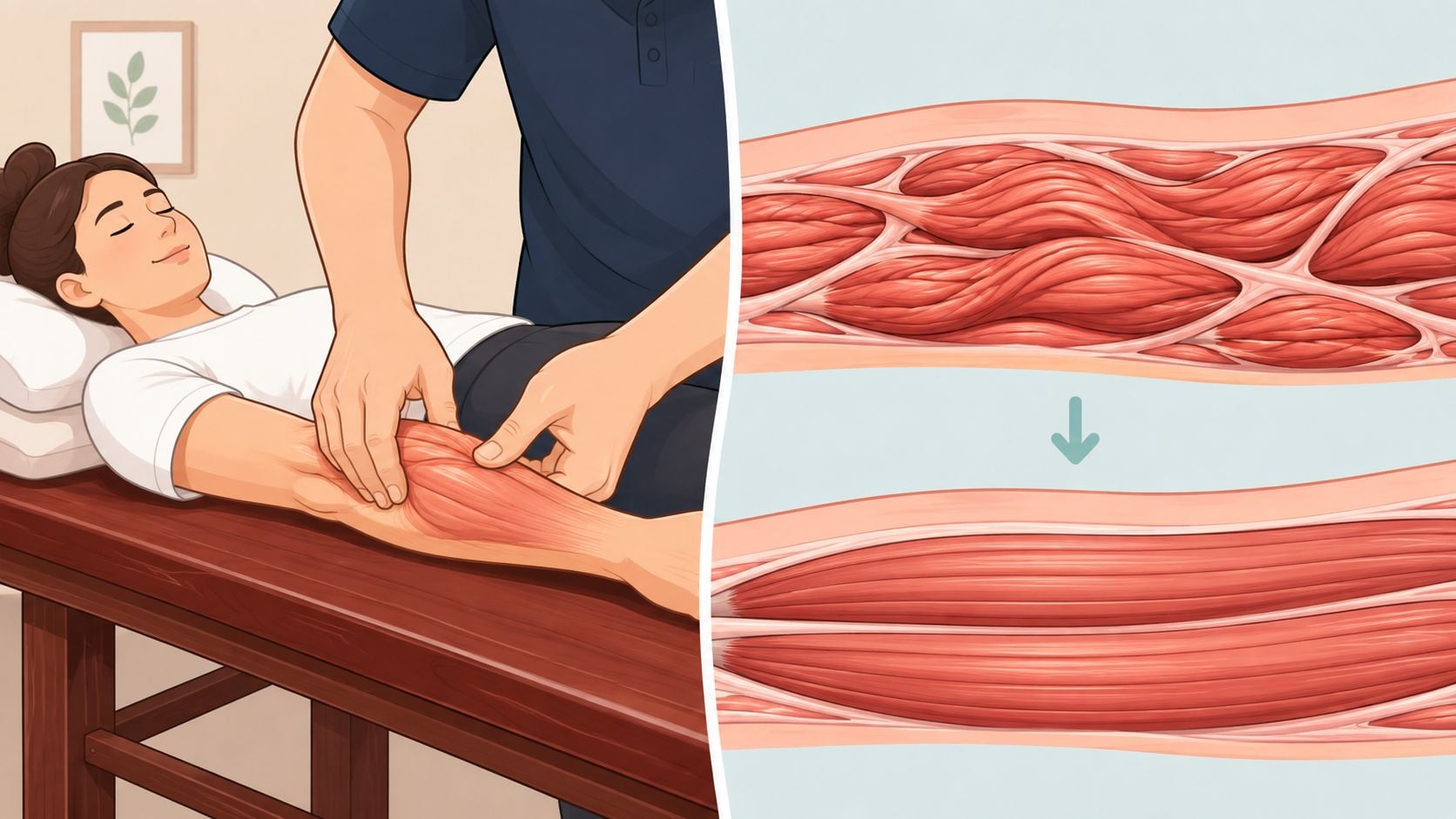
Active Release Technique is a soft-tissue manual therapy that combines clinician-applied pressure with active and passive patient movement. Providers may address muscles, fascia, tendons, ligaments, and nerves, depending on the assessment and the protocol selected.
A simple analogy helps. Healthy fibers in a rope slide alongside one another. If part of the rope becomes sticky and tangled, pulling the entire rope may not remove the restriction. A skilled person would locate the knot, hold it with precision, and move the rope so the fibers can separate. ART applies a comparable logic to restricted soft tissue, though human anatomy is more complex and treatment must be performed by an appropriately trained professional.
A formal method, not an improvised massage
Chiropractor P. Michael Leahy developed ART, with documentation beginning in 1985 under the earlier name Myofascial Release. The method was formally trademarked in 1988, and an institutional history reports that Leahy's early clinical work led him to report resolution of over 90% of his patients' problems. Those historical details come from this account of ART's development.
The structured nature of ART also distinguishes it from broad relaxation work. A provider does not move hands over a large area and hope that tension changes. The provider identifies a target, selects a defined movement pattern, and observes whether motion or symptoms change.
Readers seeking related explanations of localized soft-tissue work may find pelvic trigger point therapy useful, particularly when trying to understand how focused manual treatment differs from general massage. Posture remains part of the larger discussion, and guidance on improving posture while sitting can help connect treatment principles with daily routines.
How an ART Session Actually Works
An ART appointment is interactive. The patient isn't lying still while a practitioner works passively on the body. Instead, the provider uses the hands to locate and tension a restricted structure while the patient performs a prescribed movement.
The process in practical terms
-
Assessment comes first. The provider discusses the symptom, observes movement, and palpates relevant tissue. This helps distinguish a localized soft-tissue restriction from a problem requiring another form of evaluation.
-
The tissue starts in a selected position. Depending on the protocol, the targeted structure may begin shortened or lengthened. The provider establishes contact with the fingers or another part of the hand.
-
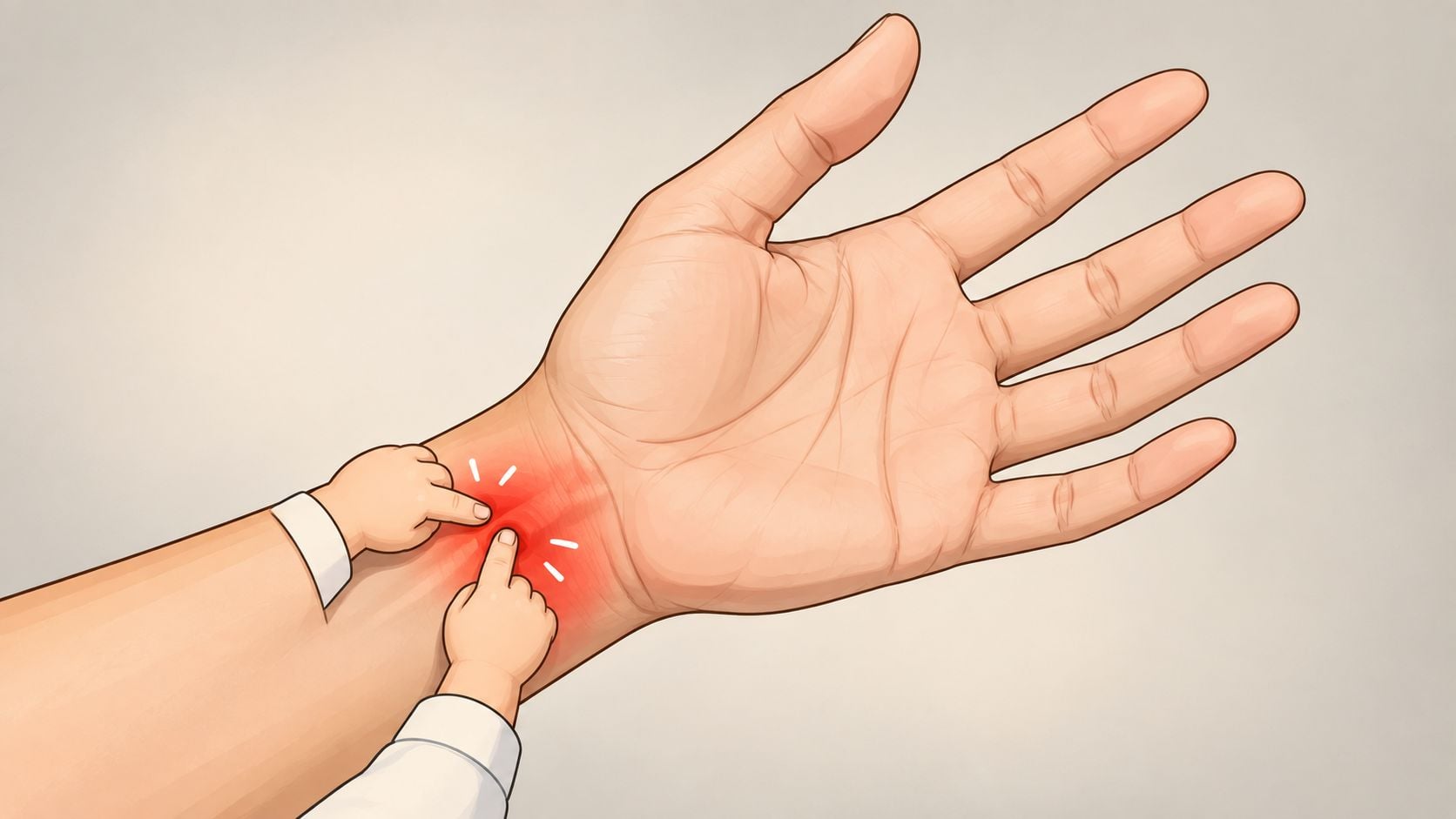
The patient moves under controlled tension. The provider maintains deep digital tension while the patient actively moves the tissue from a shortened position toward a lengthened position, or in the opposite direction. Passive movement may also be used.
-
The provider reassesses. Changes in tenderness, range of motion, or the quality of movement help determine whether the selected protocol is appropriate and whether another structure needs attention.
Why the movement matters
The active component is what gives ART its defining character. The patient's movement draws the tissue beneath the provider's contact, allowing the clinician to work with a specific structure rather than treating the whole region indiscriminately.
Published descriptions of ART report that each targeted area is typically treated for about 5 to 8 minutes, using defined protocols learned during certification. The pressure can feel firm or intense, but it should remain part of a controlled clinical exchange. Patients should communicate clearly if the sensation becomes sharp, alarming, or difficult to tolerate.
ART training also follows a protocol system. The official provider program states that Level 1 attendees learn to evaluate and treat disorders using 59 protocols, with Full Body Level 1 certification requiring the Lower Extremity, Nerve, Spine, and Upper Extremity seminars. The program also requires anatomy preparation, methodology study, protocol instructions, and a pre-credentialing exam, as described on the ART Level 1 provider training page.
Common Conditions ART Can Address
Aching after desk work, gripping, lifting, or walking can sometimes point to restricted soft-tissue movement. ART may be relevant when symptoms relate to repetitive loading, posture, or a specific activity. A qualified provider should determine whether the presentation fits a soft-tissue approach, since ART is not a universal answer for every pain complaint.
Common examples include:
-
Shoulder discomfort: Restricted muscle and fascia movement around the shoulder may affect reaching, lifting, or sustained computer work.
-
Low-back tightness: Tension around the lumbar region, hips, and pelvis can create pulling or limit movement. Back pain also has many possible causes, so assessment matters.
-
Hip restrictions: Tissue that feels tight or does not glide well may make sitting, walking, or changing direction uncomfortable.
-
Wrist and forearm symptoms: Repetitive gripping and computer use can load muscles and tendons involved in wrist motion. Tingling or weakness calls for careful evaluation.
-
Tennis elbow: Localized tendon and forearm restrictions may contribute to pain during gripping or lifting.
-
Plantar foot discomfort: Restrictions in the calf, ankle, or foot can influence how the body absorbs force while standing and walking.
A workplace utilization study records where ART has been used in practice. It reviewed 697,002 onsite ART treatments across 448 North American sites from 2014 to 2018, including 199,077 new cases, and reported an average employer cost of $306.69 per case. The most frequently treated areas were the shoulder, with 32,574 cases, the low back, with 27,873 cases, and the hip, with 6,633 cases. Average pain improvement was 87.2%. Those results describe that workplace dataset, not a promised outcome for every person. The full findings appear in the published utilization study.
Symptom location helps shape questions, but it cannot establish a diagnosis. Someone reviewing sleep and neck comfort may also explore the best mattress for neck pain, while a clinician checks whether the source involves soft tissue, joints, nerves, or another structure. That distinction helps connect short-term care with better daily support, including furniture that encourages comfortable, supported posture at home.
Beyond Treatment Proactive Ergonomic Support
A long computer session can leave the neck slightly forward and the shoulders working harder than they should. Repeated reaching, slumped sitting, or holding one posture may feel harmless at first, yet these habits can keep adding strain to the same tissues ART has treated.
Rather than replacing clinical care, ergonomic support reduces avoidable strain by helping the body stay supported during ordinary tasks. Work, reading, television, and driving all place different demands on posture. A chair that allows easy position changes makes those demands easier to manage.
The role of movement-friendly seating
Movement-friendly seating supports the spine while leaving room for natural shifts. Stressless seating follows the body as it reclines and moves through patented technology. Fit still depends on the user's size, posture, room, and routine, so a sit test provides better guidance than appearance alone.
Healthy sitting is not rigid sitting. The body benefits from supported movement, balanced pressure, and enough adjustment to avoid holding one position too long. Movement breaks, strengthening, and professional guidance remain part of the plan when symptoms continue.
A useful distinction: Treatment responds to a problem. Ergonomic design helps make the daily environment less likely to keep provoking it.
A workstation review should cover screen height, shoulder position, keyboard reach, and the chair's support. People who work at computers can also review expert tips for RSI prevention. For persistent back discomfort, choosing a supportive ergonomic chair for back pain can help create a more sustainable setup, especially when the chair is adjusted to the person rather than treated as a one-size-fits-all solution.
The same care makes sense for furniture intended to last. A bespoke, ergonomic, heirloom-quality piece should be assessed for comfort, adjustability, material integrity, and cost-per-year, rather than the initial price alone. Top-grain leather and a carefully fitted recliner matter most when they continue providing balanced support through years of daily use.
Tyner Furniture connects this practical prevention mindset with Stressless seating. In an Ann Arbor home, the right chair can serve as part of a long-term wellness routine, supporting comfortable movement between professional care, work, rest, and everyday life.
Finding Lasting Relief in Southeast Michigan
The evidence supports a measured view of ART. A systematic review of nine studies found significant improvements in pain in six studies, range of motion in six studies, and disability in two studies. The review rated average methodological quality at 12 out of 15, suggesting a moderate but not definitive evidence base for musculoskeletal applications, as reported in the systematic review of ART.
That nuance helps readers make better choices. ART may be useful for a specific restriction, especially when limited tissue extensibility affects movement, but lasting comfort also depends on strength, activity patterns, recovery, and the ergonomics of the home and office. A 2024 critically appraised topic found Level B evidence supporting acute hamstring flexibility gains in healthy people with extensibility deficits, reinforcing that outcomes can vary by body region and treatment goal.
For Southeast Michigan households, ergonomic support can include an appropriately fitted recliner, a well-designed home-office chair, a supportive mattress, or coordinated pieces that make healthy positioning easier. Ergonomic seating solutions should be evaluated in person, because posture and pressure are physical experiences, not just specifications on a screen.
Tyner Furniture has served the community since 1957, with an Ann Arbor showroom on South State St. that features the Home Office, living areas, bedrooms, dining rooms, entertainment spaces, and Outdoor Spaces. In-stock is just the beginning. Made-to-order options can customize finishes, fabrics, and configurations, including Canadel dining furniture and Stressless ergonomic seating. Amish hand-crafted solid wood pieces offer joinery, durability, and material integrity that mass-produced alternatives often can't match, with the weight of solid cherry, oak, or maple making the difference apparent at the showroom floor.
Tyner Furniture offers ergonomic Stressless seating, customizable Canadel pieces, and heirloom Amish solid wood furniture for homes across Ann Arbor and Southeast Michigan, with Special Financing and a Low Price Promise available on qualifying purchases. Visit Tyner Furniture on South State St. for a personal sit test, or browse the online Quick Specs when exploring a made-to-order piece.