Signs You Need a New Mattress: An Expert Guide


You may be reading this because your bed still looks “fine,” but your body is telling a different story. You sleep a full night, yet you wake up stiff in the shoulders, tight through the lower back, or oddly tired before the day even begins. That disconnect confuses a lot of people. They assume the problem is stress, age, or a bad pillow, when it may be the surface carrying them for hours every night.
A mattress isn’t just another bedroom purchase. It’s part of your daily health routine, right alongside the chair you work in, the shoes you walk in, and the lighting you live under. When support fades, sleep quality usually fades with it. That’s why signs you need a new mattress are worth noticing early, before discomfort becomes your normal.
For families around Ann Arbor and Southeast Michigan, this decision can feel bigger than it first appears. A mattress is a long-term investment, not a throwaway item. Since 1957, local shoppers have leaned on experienced furniture guidance because a good sleep surface should serve you well year after year, the same way people look for durability in a dining set, thoughtful ergonomics in a recliner, or hand-crafted construction throughout the home. If you want a deeper look at the health side of the equation, this guide on why investing in a high-quality mattress is essential for your long-term health is a helpful companion.
Table of Contents
- Your Mattress and Your Well-Being
- The Unmistakable Signs of a Worn-Out Mattress
- Beyond the Obvious The Lifespan of Your Mattress
- At-Home Diagnostics Simple Tests for Your Bed
- Choosing Your Next Investment in Sleep
- Making Your Investment Accessible and Getting Started
- Frequently Asked Questions About Mattress Replacement
Your Mattress and Your Well-Being
One of the most common conversations in a furniture showroom starts with a sentence like this: “I didn’t realize how uncomfortable my bed had become until I stayed somewhere else.” That’s usually the turning point. At home, people adapt. They roll away from a dip, bunch a pillow under a shoulder, or stretch their back before their feet hit the floor.

Sleep should leave you restored, not negotiating with soreness first thing in the morning. If a mattress no longer holds your spine in a stable, comfortable position, your muscles take over through the night. By morning, that extra work often shows up as stiffness, restlessness, or the feeling that you slept long enough but didn’t recover.
A bed affects more than bedtime
Your mattress influences more than comfort. It can shape how you move when you wake up, how focused you feel at work, and whether your evenings feel relaxing or draining. People often think of mattresses only in terms of plushness or firmness, but the key issue is support over time.
A good mattress should disappear beneath you. You shouldn't spend the night adjusting to it.
In Southeast Michigan, many households shop for furniture with longevity in mind. The same mindset that leads someone to appreciate the weight of solid cherry wood, careful joinery, or a bespoke Canadel dining set applies here too. Quality sleep products are also part of a well-planned home, whether you're updating a primary bedroom, a guest room, a home office, or even coordinating comfort choices across indoor and outdoor spaces.
Why local guidance helps
Since 1957, trusted neighborhood stores have helped people slow down and compare what they feel, not just what the label says. That matters with mattresses because comfort is personal. Two beds can look nearly identical and feel completely different after ten minutes lying in your usual sleep position.
If you’ve been waking up wondering whether the problem is really your mattress, that question is worth taking seriously. Your body is often more accurate than the fabric cover.
The Unmistakable Signs of a Worn-Out Mattress
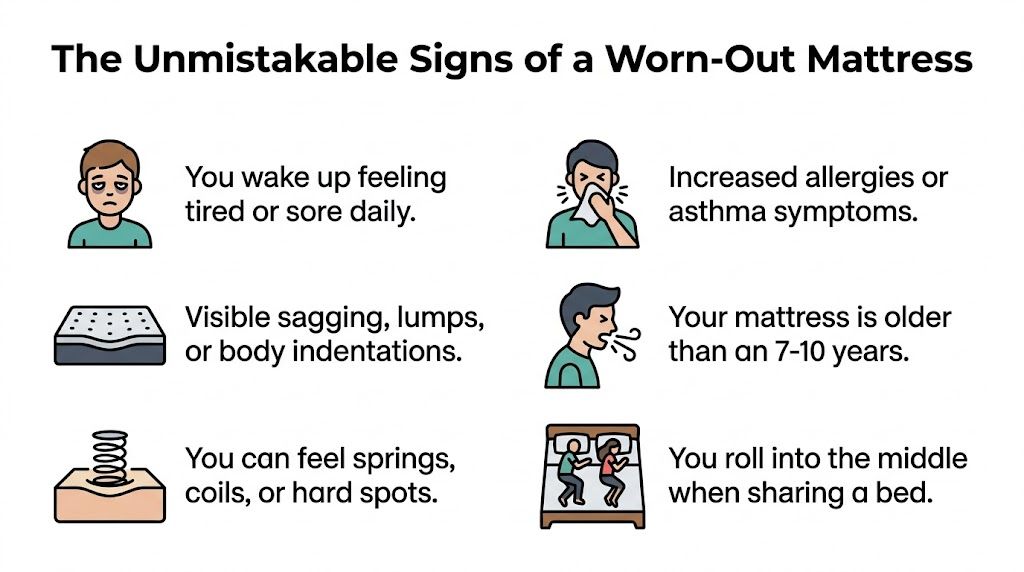
Some mattress problems announce themselves clearly. Others creep in slowly enough that you almost miss them. The clearest signs you need a new mattress usually fall into two categories: what your body feels, and what the bed physically shows.
What your body notices first
Your body usually catches trouble before your eyes do.
Morning aches that feel new: Waking up with fresh discomfort can be a major warning sign. According to WebMD’s signs it may be time to replace your mattress, waking up with new aches and pains can signal that a mattress is no longer supporting the spine properly, with old beds linked to neck, shoulder, hip, and lower back pain in over 70% of users after 6 to 8 years.
Feeling more tired than you should: You may be logging enough hours in bed but still waking up unrested. When a mattress stops relieving pressure well, sleep can become lighter and more broken up, even if you don’t fully remember waking.
Better sleep somewhere else: If you travel, stay with family, or even nap on another bed and feel better afterward, pay attention. That contrast is often one of the most revealing clues.
Partner movement suddenly feels bigger: If every turn, shift, or edge-of-bed exit ripples across the surface, the comfort layers and support system may not be doing their job anymore.
Practical rule: If your body feels better after a night away from home, don't dismiss that as coincidence.
What the mattress shows on the surface
Visual and tactile clues matter too, especially when they match what your body has been telling you.
Sagging or body impressions: If the bed looks like it remembers exactly where you sleep, that’s not a charming feature. It often means the comfort materials have compressed and aren’t rebounding properly.
A trench in the middle: Couples often describe this as “rolling together” even when they’re trying not to. If the center of the mattress feels like a valley, support has likely weakened.
Creaking, squeaking, or shifting noises: Older innerspring and hybrid beds may start talking back when you move. Noise often points to internal wear.
Allergy flare-ups at night: A mattress that has been in service for many years can collect dust and irritants that make bedtime less comfortable, especially if symptoms seem stronger overnight and first thing in the morning.
For a helpful outside perspective, 8 Unmistakable Signs You Need A New Mattress offers a useful checklist that lines up well with what many shoppers describe in person.
Beyond the Obvious The Lifespan of Your Mattress
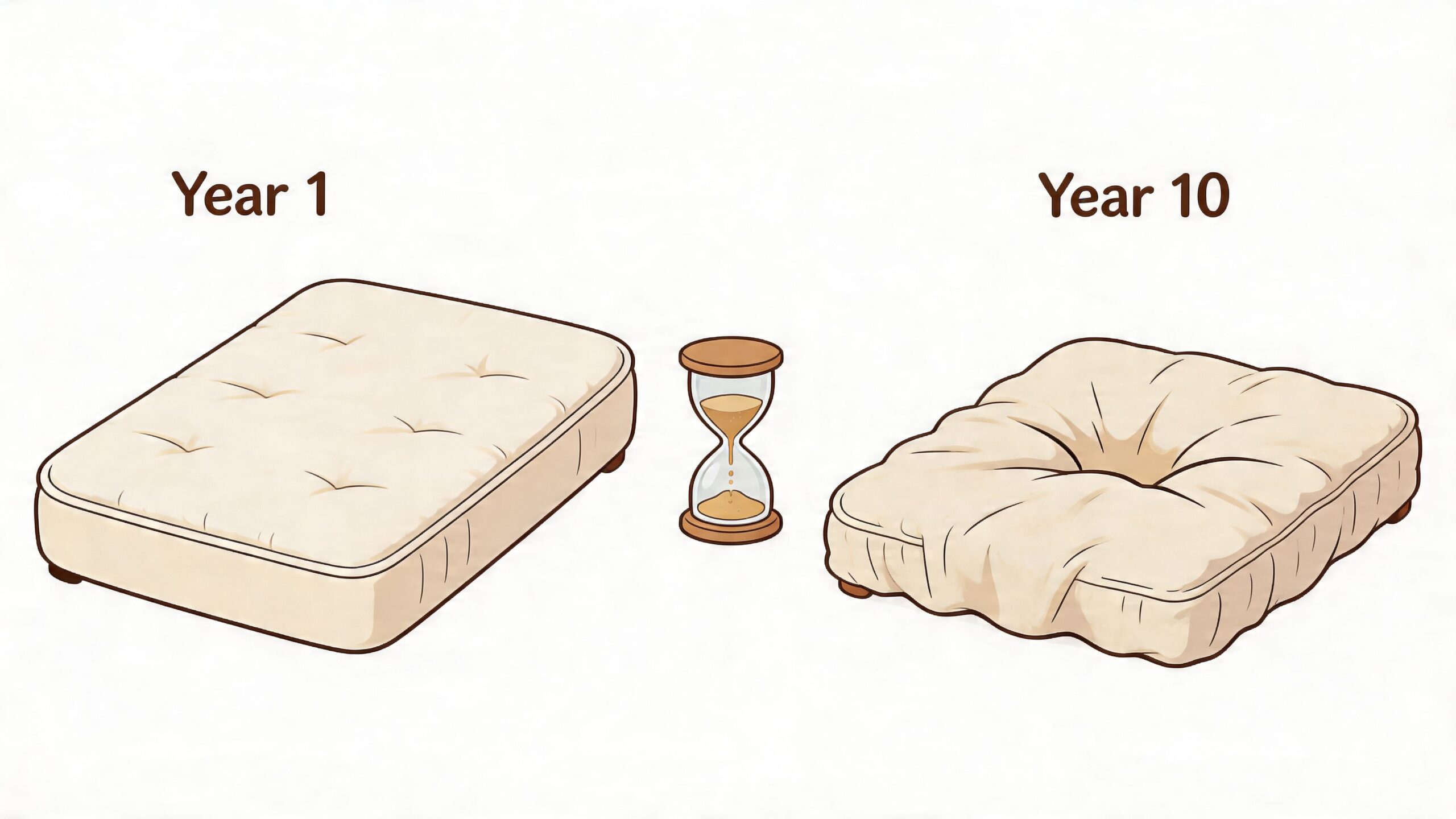
A mattress can wear out long before it looks dramatic. That surprises people. They expect torn fabric or a deep crater, when loss often happens inside the support layers first.
Why age matters even when a bed looks decent
There’s a reason the 7 to 10 year guideline comes up so often. As explained in this mattress age guide, mattresses typically need replacement every 7 to 10 years, and Tampa Mattress notes that they can lose up to 75% of their original support after 9 years, often with 1 to 1.5 inches of sagging that can interfere with spinal alignment.
That doesn’t mean every mattress fails on the same birthday. It means material fatigue is real. Foam gradually compresses. Coils lose resilience. The top layers stop cushioning pressure points the way they once did. You may still recognize the bed you bought, but it may no longer be delivering the support you paid for.
A useful way to think about this is cost per year, not just purchase price. A well-made mattress that serves you comfortably for years is usually the better value than replacing a lower-quality option more often.
Material quality changes the value story
Different constructions age in different ways.
| Mattress type | Typical durability trend |
|---|---|
| Innerspring | Often reaches replacement sooner because coils can lose tension faster |
| Memory foam | Can offer strong pressure relief, but lower-grade foams may soften unevenly |
| Latex | Often chosen for durability and resilience over a longer span |
| Hybrid | Performance depends on both the coil unit and the quality of the upper layers |
The lesson is simple. Materials matter, and so does craftsmanship. In furniture, people understand this immediately when they compare hand-crafted solid wood to a lighter, mass-produced piece. Mattresses deserve the same kind of scrutiny. The hidden parts are doing the heavy lifting.
At-Home Diagnostics Simple Tests for Your Bed
If you’re unsure whether your mattress is worn out or merely not your favorite anymore, a few hands-on checks can clear things up. These aren’t complicated, and they give you something more solid than a hunch.
A few checks you can do today
Start with the bed stripped down to the bare mattress. No topper, no thick pad, no comforter smoothing things over.
- Use a straight-edge test: Lay a broom handle, yardstick, or another straight object across the mattress surface where you usually sleep.
- Measure the deepest dip: Use a ruler to check the gap between the straight edge and the mattress.
- Press with your hands: Move across the center, sides, and shoulder-hip zones. Feel for soft spots, lumps, or areas that collapse more than the rest.
- Sit on the edge briefly: If the edge folds down too easily or feels unstable, support may be fading there too.
You’re looking for unevenness, not perfection. Every mattress gets some normal wear. What matters is whether the surface still feels level and supportive where your body needs it most.
Strip the bed before you inspect it. Bedding can hide the exact wear pattern you need to see.
For readers who want to preserve a newer mattress as long as possible, this resource on mattress maintenance and cleaning tips to extend its lifespan is worth bookmarking.
When the measurement settles the question
Sometimes the tape measure makes the decision easier. Brooklyn Bedding’s guidance on knowing when it’s time for a new mattress notes that industry standards treat sinkage beyond 4 to 6 inches in the center as structural failure requiring replacement because that level of sag directly compromises spinal alignment.
That’s the sort of benchmark that helps when people worry they’re “just being picky.” If your mattress is sinking in the sleep zone, the support system has moved beyond a comfort preference issue. At that point, replacement isn’t indulgent. It’s practical.
Choosing Your Next Investment in Sleep
You’ve confirmed the old mattress is no longer doing its job. Now comes the part that trips up many shoppers. Two beds can both be labeled “medium” and feel completely different once you lie still for a few minutes. Mattress shopping gets confusing fast because the words sound precise, but the experience is personal.
Support and firmness are not the same thing
This is the point that clears up a lot of confusion.
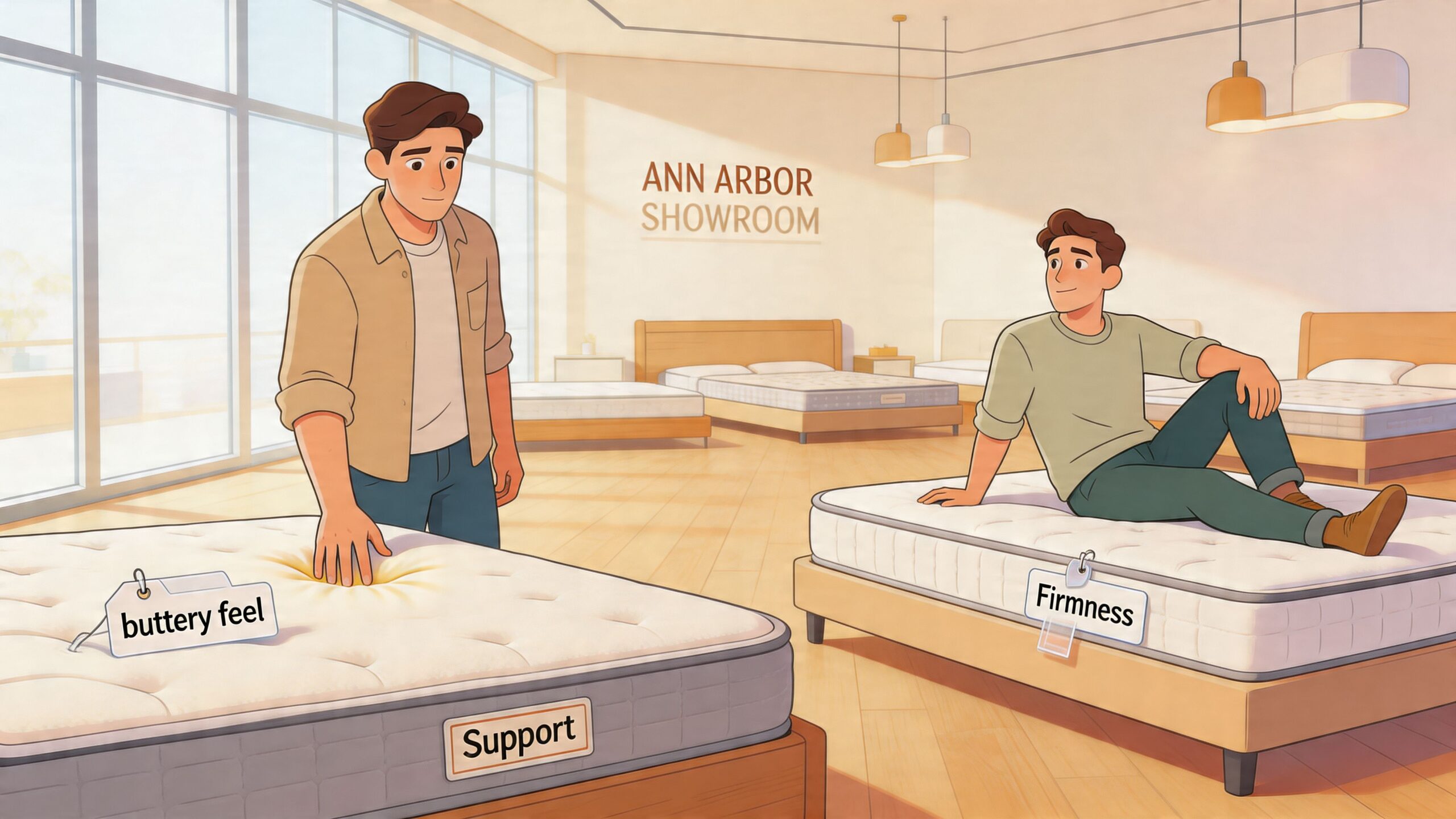
Firmness describes the first impression. How soft or hard does the surface feel when you lie down?
Support describes what the mattress keeps doing after that first impression. Does it hold your spine in a healthy position while letting your shoulders, hips, and joints settle in naturally?
A mattress can feel soft on top and still hold you well underneath. A firm mattress can feel sturdy at first, then create pressure at the shoulders or hips if the surface does not give where it should. It works a lot like a good pair of shoes. The sole might feel cushioned or stiff, but what matters over time is whether your body stays well supported.
That is why your sleep position and body shape matter so much. Side sleepers often need more give at the shoulders and hips. Back and stomach sleepers usually need steadier support through the middle so the lower back does not dip.
A few material types tend to create different experiences:
- Latex often feels springy and responsive, which many people like if they change positions often.
- Memory foam often eases pressure more noticeably, especially around sharper joints like shoulders and hips.
- Hybrid mattresses usually blend surface cushioning with a coil support core, which can appeal to shoppers who want a mix of contouring and structure.
- Stronger edge construction matters if you sit on the side of the bed often or sleep near the perimeter.
Why an in-person rest test still matters
A mattress is a long-term health purchase, not a shirt you can judge at a glance. You need enough time on it for your body to stop “posing” and start settling. Lie in your usual position. Stay there for a bit. Notice whether your shoulders relax, whether your lower back feels held up, and whether turning over feels easy or like work.
Local showrooms help because comparison happens in real time. You can move from one surface to another and feel the differences while they are still fresh in your mind. That makes it easier to sort out what is truly comfortable from what just feels new.
Personalized options can matter here too. In furniture, in-stock is only the starting point. Shoppers who value made-to-order dining, customized seating comfort, or quality craftsmanship in other rooms often appreciate the same approach in the bedroom. A mattress should fit the person sleeping on it, not force the sleeper to adapt to a mass-market compromise.
One practical place to begin is this guide for choosing a mattress. It can help you narrow your options before you test beds in person. At Tyner Furniture’s showroom on South State St. in Ann Arbor, shoppers can compare different mattress feels alongside other ergonomic and made-to-order home furnishings in one visit.
The right mattress should still feel right after your body settles, not just in the first half-minute.
Making Your Investment Accessible and Getting Started
A quality mattress asks for a real commitment. That’s true. But it helps to frame the decision properly. You’re not just buying fabric, foam, or coils. You’re investing in years of nightly use and in how you feel every morning.
Think in years of use, not just today's receipt
Many people spend more time comparing the price tag than comparing the lifespan. That’s understandable, but it misses the larger picture. A mattress that keeps its comfort and support longer often delivers better value over time, especially if it helps you avoid the cycle of buying again too soon.
The same mindset shows up across the home. People choose heirloom pieces for the bedroom, dining room, home office, and even outdoor spaces because durability matters. They want craftsmanship they can feel, whether that’s the weight of solid wood, the buttery feel of top-grain leather, or the stable support of a bed that doesn’t quit early.
A smoother path to replacing it well
The other hesitation is cash flow. That’s where planning tools help. If you’re trying to make a smart move without forcing the whole expense into one moment, special financing options can make a higher-quality choice more manageable. A Low Price Promise can also reduce the anxiety people feel when they’re trying to invest wisely rather than hastily.
You don’t need to rush the choice, but you also don’t need to keep sleeping on a mattress that’s clearly worn out. If your bed has moved from “not perfect” to “actively undermining your rest,” replacing it is a health decision as much as a furniture decision.
Frequently Asked Questions About Mattress Replacement
A few practical questions usually come up once people start noticing signs you need a new mattress. Here are the ones we hear most often.
Can a topper fix a mattress that sags
Usually, no. A topper can change surface feel for a while, but it can’t rebuild a failed support core. If the mattress has dips, deep impressions, or a collapsing center, the problem is structural. You may soften or mask the issue briefly, but you won’t correct it.
Should you replace the foundation too
Sometimes, yes. If the box spring or foundation is bowed, creaking, broken, or no longer providing even support, a new mattress placed on top of it may not perform the way it should. Check the base carefully when you evaluate the mattress. An excellent mattress still needs stable support underneath.
What do you do with the old mattress
Disposal depends on your municipality, building rules, and local hauling options in Ann Arbor and the rest of Southeast Michigan. Some communities have bulk pickup procedures, and some donation or recycling routes may be available depending on condition. It’s worth checking local guidelines before delivery day so you aren’t left scrambling.
How do you know the problem is the mattress and not something else
Look for patterns. If discomfort shows up mainly in bed, improves after you’re up and moving, or eases when you sleep somewhere else, the mattress is a likely suspect. If symptoms are persistent in every setting, a broader health conversation may be worthwhile too.
For another concise outside checklist, 7 clear signs you need a new mattress gives a straightforward summary that many readers find useful.
If you’re ready to replace a mattress that’s no longer serving you, visit Tyner Furniture in Ann Arbor for an in-person sit test and rest test, or browse the online Quick Specs for special-order possibilities. A thoughtful mattress choice can support your sleep, your comfort, and the way your home feels for years to come.