Small Leather Recliner Chair: Find Your Perfect Fit


A small leather recliner chair often enters the search at exactly the right moment. Someone has a reading corner that still feels unfinished, a home office that needs a better landing spot at day's end, or a living room in Ann Arbor or Southeast Michigan that can't spare the floor space for an oversized chair and ottoman.
That's where careful buying matters. A compact recliner isn't a lesser version of a full-size comfort chair. In many homes, it's the smarter choice. The right one can bring the buttery feel of leather, ergonomic support, and heirloom potential into a room that still has to function every day.
Furniture shopping can also get confusing fast. Online listings highlight width, leather color, and whether a chair is manual or power. What they often don't do is help a shopper judge fit, comfort over time, or long-term value. Since 1957, Southeast Michigan shoppers have turned to local guidance for exactly that reason. A recliner should suit the room, the body, and the years ahead.
Table of Contents
- Finding Your Perfect Fit in Southeast Michigan
- Sizing Your Space Beyond the Specs
- The Ergonomic Advantage of a Personalized Fit
- Decoding Leather Types for Lasting Value
- The Customization Edge Beyond the Showroom Floor
- Heirloom Longevity and Simple Leather Care
- Making Your Investment Accessible with Tyner
- Experience the Difference at Our Ann Arbor Showroom
- Frequently Asked Questions
Finding Your Perfect Fit in Southeast Michigan
You walk into a living room in Ann Arbor, Plymouth, or Saline and see the challenge right away. The room needs one chair that can do real work. It has to support a good reading posture in the afternoon, give your legs a place to rest at night, and still leave the room feeling open rather than crowded.
That is why a small leather recliner chair appeals to so many Southeast Michigan shoppers. Many local homes ask one room to serve two purposes, sometimes three. A den becomes a guest space. A bedroom corner turns into a quiet retreat. A study has to function like an office during the day and a place to recover by evening.
Compact scale helps a room stay balanced. A good small recliner leaves space for side tables, lamps, and walking paths, but it also feels substantial enough to become part of daily life for years. The goal is not only to buy a chair with a smaller footprint. The goal is to choose one that fits the way you live.
A well-chosen recliner should feel settled into the room and natural to use every day.
Online research helps you narrow the field, but it rarely answers the questions that matter most in person. How high does the seat feel once you sit down? Does the chair support your shoulders, or only your lower back? Does the leather feel like something that will age gracefully, or something that only looks good under showroom lighting? That translation from screen to real life is where a visit to Tyner matters for Southeast Michigan shoppers. You can compare scale, comfort, leather feel, and motion in one trip, then pair that hands-on testing with a furniture measuring guide for your home before making a final decision.
There is also a practical side to shopping locally. A compact recliner often ends up in the hardest-working spaces of the house, which means clutter can build around it if the room is not planned carefully. Keeping a simple list of what already belongs in the room, from lamps to ottomans to accent tables, can make your choice clearer. Tools like Vorby home inventory for small spaces can help you sort out what needs to stay, what can move, and how much visual breathing room your new chair should have.
For many families, a recliner is not an impulse purchase. It is a long-term comfort piece, closer to a favorite reading lamp or a well-made dining table than a temporary accent chair. That mindset serves you well in the showroom. You are not just asking, "Will this fit?" You are asking, "Will this still feel right five or ten years from now?" In Southeast Michigan, where practical buying habits run deep, that is usually the better question.
Sizing Your Space Beyond the Specs
Why upright measurements can mislead
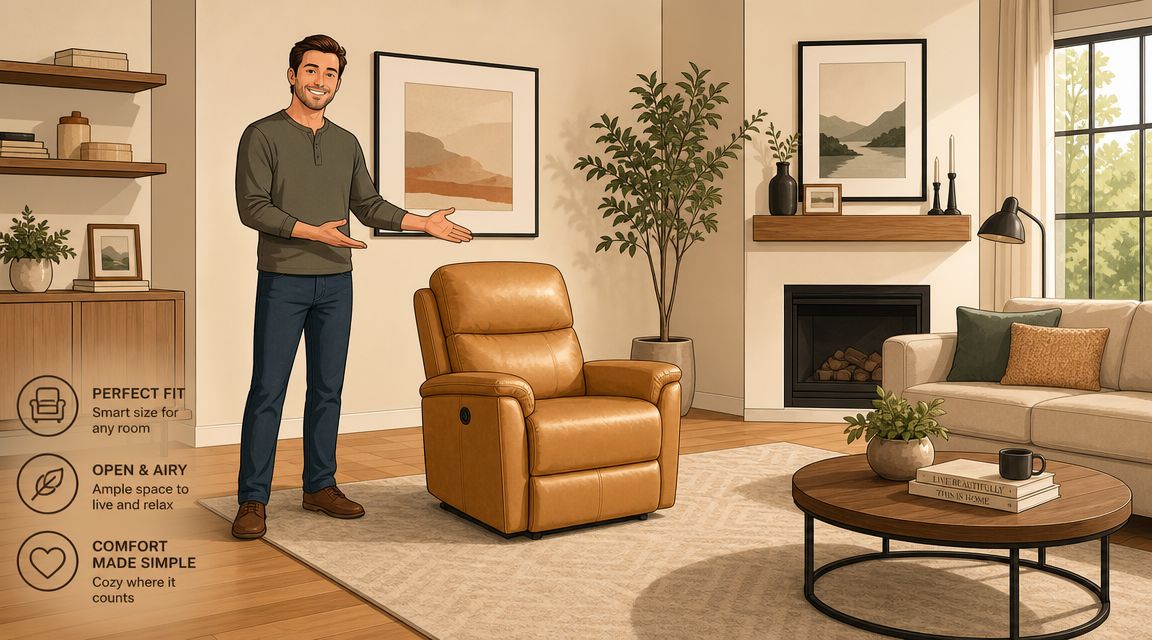
Most shoppers start with width. That's understandable, but it isn't enough. A small leather recliner chair can look compact on paper and still become the biggest obstacle in the room once the footrest lifts and the back tilts.
The more useful idea is the recline envelope. That means the full area the chair occupies when opened, not just when it sits upright. One compact recliner example measures about 32.3" W × 38.6" D × 40.6" H in the upright position, yet that still doesn't tell the whole planning story because the chair needs more room once reclined, as shown in the Ashebrooke product dimensions.
That single point clears up a common source of frustration. A chair may technically fit the corner, but it can still strike the wall, block a walkway, or interfere with a coffee table when used the way it's meant to be used.
A practical measuring routine
Before shopping finishes and delivery day begins, it helps to measure the room the way an interior designer would.
- Mark the chair footprint: Use painter's tape on the floor to outline the upright width and depth.
- Add the recline zone: Extend the tape forward and backward to represent the chair in use.
- Check traffic flow: Make sure people can still move comfortably past the chair when it's open.
- Notice nearby pieces: Side tables, radiators, shelves, and media consoles often create key constraints.
- Think about daily habits: If the chair will sit in a reading nook, leave enough room for a lamp table or basket.
Practical rule: If a chair only works when it stays upright, it doesn't really fit the room.
Many compact models use space-saving mechanisms, often called wall-hugger designs, that need less clearance than traditional recliners. Even so, less clearance doesn't mean no clearance. The mechanism still changes the chair's working footprint.
For households trying to think through room flow more broadly, a resource like Vorby home inventory for small spaces can help organize what stays in the room and what gets edited out. That kind of planning often makes the difference between a room that feels intentional and one that feels crowded.
A careful measuring process also saves time later. For readers who want a more detailed step-by-step approach before visiting a showroom, Tyner offers a useful guide on how to measure furniture for delivery and fit.
The Ergonomic Advantage of a Personalized Fit
Softness is not the same as support
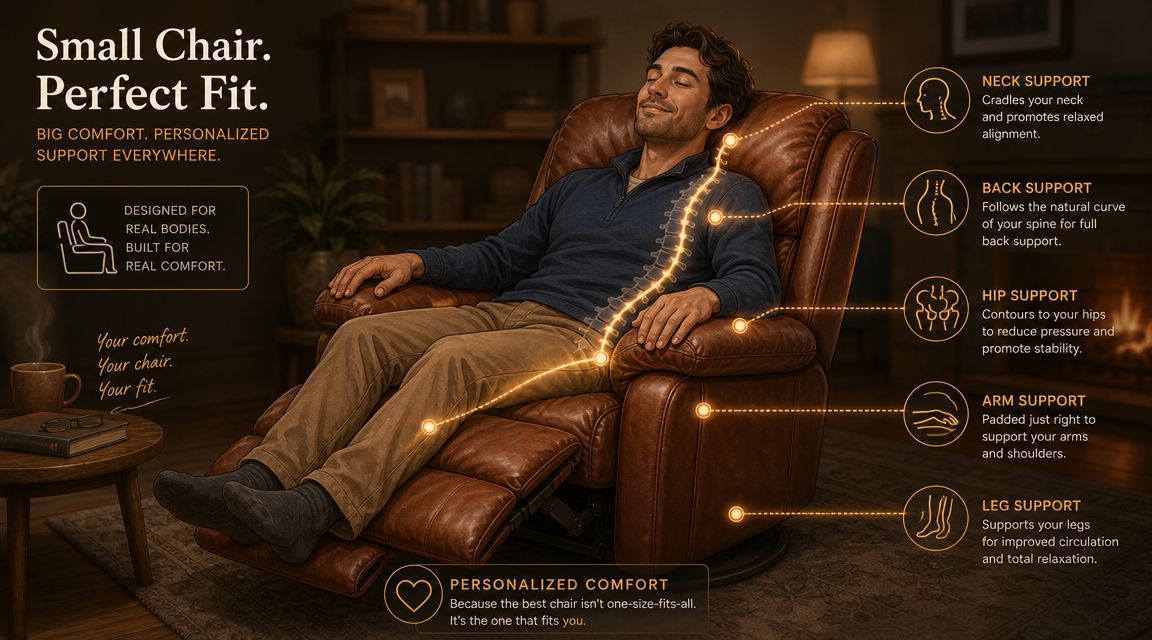
A recliner can feel plush for five minutes and still disappoint over a long evening. That's where many shoppers get tripped up. Cushion softness feels noticeable first. Ergonomic fit proves its value later.
A better standard asks different questions. Does the chair support the lower back while sitting upright? Do the arms fall naturally on the armrests? Does the headrest meet the body where support is needed, or does the neck drift forward? Those details shape whether the chair becomes a daily refuge or a chair that looks inviting but gets used less and less.
The modern recliner category has expanded far beyond a simple leaning chair. An industry history describes motion furniture as a multi-billion dollar industry and notes how the category grew from the late 1920s, eventually adding features such as adjustable headrests, lumbar support, heat, massage, and vibration, as described in this history of reclining furniture. That broader evolution matters because comfort today is increasingly tied to support precision, not just padding.
Why sizing matters in daily use
An ergonomic chair should fit the body the way a good shoe fits the foot. Too deep, and the knees sit awkwardly. Too tall in the back, and the shoulders don't land right. Too broad in the seat, and the body loses the sense of being supported.
That's why sizing systems matter so much in premium seating. Stressless, for example, is known for offering Small, Medium, and Large sizing along with its active release lumbar concept. That kind of made-to-order thinking shifts the purchase away from “Does this look comfortable?” and toward “Does this support daily living well?”
A shopper comparing chairs can use a short checklist:
- Back contact: The lower back should feel supported without forcing the spine.
- Seat depth: The sitter should be able to rest back comfortably without the seat pushing behind the knees.
- Arm position: Shoulders should stay relaxed, not lifted.
- Recline control: The movement should feel smooth and easy to fine-tune.
- Neck support: The headrest should support reading, television viewing, or resting without strain.
The right recliner should support the body in motion, not just cradle it at one angle.
For readers exploring seating with a health and wellness lens, ergonomic seating solutions offers a helpful overview of what to look for in supportive design. In a home office, library corner, or living room, that kind of fit often delivers the strongest cost-per-year value because the chair keeps earning its place every day.
Decoding Leather Types for Lasting Value

How leather choice changes ownership
Leather is where many small recliner decisions become emotional. One chair has a soft, buttery hand. Another has a more uniform surface. A third may look similar online but feel very different after a few months of real use.
The key tradeoff isn't just appearance. It's long-term behavior. A compact recliner concentrates wear in a small area, especially on the seat, arms, and headrest. That's why material choice matters more than many shoppers expect. As noted in this overview of leather recliner offerings, the choice between genuine and PU leather involves a meaningful tradeoff between initial price and long-term durability, with upkeep, repairability, and concentrated wear playing a central role.
A practical way to think about common categories:
- Full-grain leather: Keeps more of the hide's natural character and often develops a rich patina over time.
- Top-grain leather: Smoother and more refined in appearance, often a strong balance of comfort and everyday livability.
- Corrected-grain or PU-style surfaces: Often easier to standardize in look, but the long-term aging pattern can differ from natural leather.
A simple way to think about cost per year
A shopper with kids or pets usually needs more than a style label. The primary question is what the chair will feel like and look like after years of daily contact in one favorite seat.
Cost per year becomes more useful than opening price. A chair that wears gracefully, cleans predictably, and can be maintained over time may hold its value better in everyday life. A chair that only looks good at the start can become frustrating much sooner.
For readers who like to connect seating comfort with body support, understanding workplace ergonomics offers a helpful parallel. Surface feel and posture support work together. A recliner that's pleasant to touch but unpleasant to sit in for long stretches won't feel like value for long.
For a more focused comparison of upholstery quality, top-grain leather vs bonded leather is a useful reference point when sorting through showroom tags and online descriptions.
The Customization Edge Beyond the Showroom Floor
In-stock is a starting point
A showroom chair should be treated as a sample, not the final answer. That mindset opens up far better choices for anyone trying to coordinate a small leather recliner chair with an existing rug, wood floor, paint color, or room scale.
Customization is especially valuable in compact seating because every detail shows. On a large sectional, one finish mismatch can disappear into the room. On a smaller recliner, the leather tone, base finish, and silhouette are all more visible.
That's why made-to-order programs matter. A shopper may prefer a warmer brown leather, a cooler gray tone, smoother grain, contrast stitching, or a wood base that picks up nearby casegoods. Partnerships such as Stressless for ergonomic seating and Canadel for bespoke dining show how far customization can go beyond whatever happens to be on the floor that day.
Matching the chair to the room
A well-integrated recliner should look connected to the home's broader interior design.
Consider a few examples:
- In a study or library: A deeper leather tone can add gravity and warmth.
- In a bright condo living room: A lighter neutral may keep the footprint visually lighter.
- In a bedroom corner: Softer texture and scale often matter more than dramatic bulk.
For shoppers who want to see how made-to-order options work in practice, custom furniture made simple gives a clear overview of how finishes, materials, and configurations can be customized rather than settled for. That same thinking carries across the home, from home office pieces to dining sets and even outdoor spaces.
Heirloom Longevity and Simple Leather Care
Why this piece deserves care
A small leather recliner often becomes the chair everyone reaches for first. It holds evening reading, afternoon naps, and the few quiet minutes after a long Michigan winter drive home. Pieces that serve that faithfully deserve care that matches their role.
Good leather and sound construction can age the way a well-made pair of boots or a solid dining table ages. The surface softens, the color gains character, and the chair starts to look lived with rather than worn out. That is the difference between furniture that gets replaced and furniture that stays in the family.
For Southeast Michigan shoppers, this is one advantage of seeing quality in person at Tyner. You can feel whether the leather has substance, inspect the stitching, work the mechanism, and ask what routine care looks like before the chair ever comes home.
Simple habits that protect leather
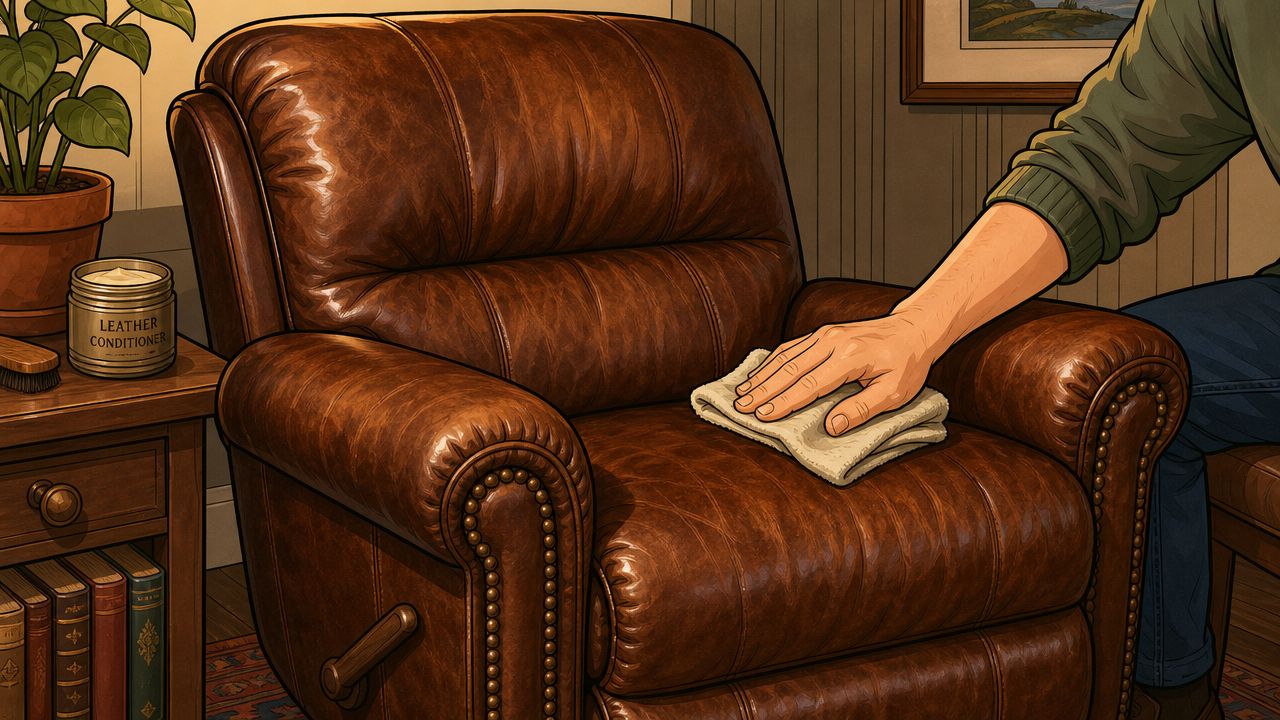
Leather care is usually straightforward. Regular, gentle attention does far more good than occasional heavy scrubbing.
- Dust with a soft cloth: Fine grit acts like sandpaper on arms, seats, and headrests over time.
- Blot spills right away: Press gently and avoid rubbing moisture deeper into the surface.
- Keep the chair away from strong sun and heat vents: Leather can dry out faster when it sits in direct light or near forced air.
- Use a leather-safe cleaner or conditioner only when the manufacturer recommends it: Different finishes need different treatment.
- Sit across the cushion when possible: In a shared room, changing positions slightly can help the chair wear more evenly.
One simple rule helps prevent expensive mistakes. If a care product sounds harsh enough for a kitchen floor, it does not belong on leather upholstery.
For homeowners comparing upkeep costs with future repair work, saving money on furniture fixes offers a helpful frame of reference. Routine care is cheaper, easier, and kinder to the leather than trying to correct years of dryness, staining, or abrasion later.
A well-built recliner should feel reassuring, not fragile. If the initial investment needs to fit into a larger household plan, Tyner also offers special financing for quality furniture purchases, which can make it easier to choose a chair worth maintaining for the long haul.
Making Your Investment Accessible with Tyner
Quality and budgeting can work together
A well-made recliner asks for a larger commitment than an impulse purchase. That doesn't mean the decision has to feel financially abrupt. It means the buyer should think in terms of lifespan, daily use, and manageable planning.
That's where accessibility tools matter. Tyner Furniture offers special financing options and a Low Price Promise, which can help shoppers approach heirloom-quality seating with more flexibility. For households balancing multiple furnishing projects, that can make room for better materials and a more personalized fit without forcing every decision into a short timeline.
Thinking beyond the first receipt
The first receipt never tells the whole story. A recliner earns its value slowly through evening reading sessions, weekend naps, movie nights, and ordinary moments of rest after work.
A useful investment lens includes:
- How often the chair will be used: Daily use changes what “worth it” means.
- How well it fits the room: A chair that fits properly is more likely to stay loved.
- How well it fits the body: Better ergonomics often mean longer satisfaction.
- Whether it can be customized: A made-to-order piece is less likely to feel like a compromise.
- How it coordinates with future purchases: A thoughtful leather and finish choice can support later updates in the same room.
That same long-view philosophy often draws shoppers toward durable furnishings across the home, from ergonomic seating to dining, bedroom, home office, and outdoor spaces. The best purchases tend to be the ones that still make sense years later.
Experience the Difference at Our Ann Arbor Showroom
For most shoppers, the final decision shouldn't happen from a product photo alone. A small leather recliner chair needs to be tested in person. The seat depth, the way the leather feels against the hand, the motion of the recline, and the support under the lower back all become clearer in a few minutes of real use.
The strongest buying approach is simple. Measure the room carefully. Think beyond upright specs. Choose ergonomic fit over surface softness alone. Understand what kind of leather suits the household. Then compare in-stock inspiration with made-to-order possibilities.
A sit test is where those ideas come together. At the South State St. showroom in Ann Arbor, shoppers can feel the difference between leather types, test scale, and see how bespoke options can shape the final result. For anyone furnishing a forever home or refining a compact room, that hands-on step often brings the most confidence.
Frequently Asked Questions
Many shoppers still have a few practical questions before choosing a recliner. That's normal. A thoughtful purchase usually comes with careful questions.
Quick Answers to Your Recliner Questions
| Question | Answer |
|---|---|
| How much wall space does a small recliner need? | It depends on the mechanism. Some space-saving designs need less clearance than traditional recliners, but every chair still needs room for its full working motion. The safest approach is to plan for the recline envelope, not just the upright size. |
| Is a small leather recliner chair good for a home office? | It can be an excellent secondary seat in a home office, especially for reading, calls, or end-of-day decompression. The key is choosing ergonomic support rather than judging only by cushioning. |
| Is genuine leather always the right choice? | Not always. Genuine leather often offers stronger long-term value, but the better choice depends on household use, maintenance habits, and expectations for aging and repairability. |
| Are power recliners better than manual recliners? | Neither is automatically better. Power models can offer more precise positioning, while manual models may appeal to shoppers who prefer mechanical simplicity. The right answer depends on comfort preference and intended use. |
| Can a custom recliner still work in a small room? | Yes, if the dimensions, mechanism, and leather selection are chosen carefully. Customization often helps a compact room because it reduces compromise in both scale and finish. |
| Can financing apply to special orders? | Financing options can help with larger furniture investments, including custom planning, depending on the purchase and approval terms. It's worth discussing the details during the shopping process. |
A few final reminders help narrow the decision.
- Start with measurements: Room fit comes first.
- Sit for more than a minute: Short tests can hide long-term comfort issues.
- Touch the leather: Surface feel tells part of the ownership story.
- Ask about customization: The best version of the chair may not be the one on display.
- Think in years, not weeks: A recliner should support long-term living.
For anyone ready to compare scale, leather feel, and ergonomic support in person, Tyner Furniture offers a practical next step. Visit the Ann Arbor showroom on South State St. for a sit test, or browse the online Quick Specs for special-order possibilities that fit the room, the household, and the long view.