Best Recliners for Back Support: An Expert Guide

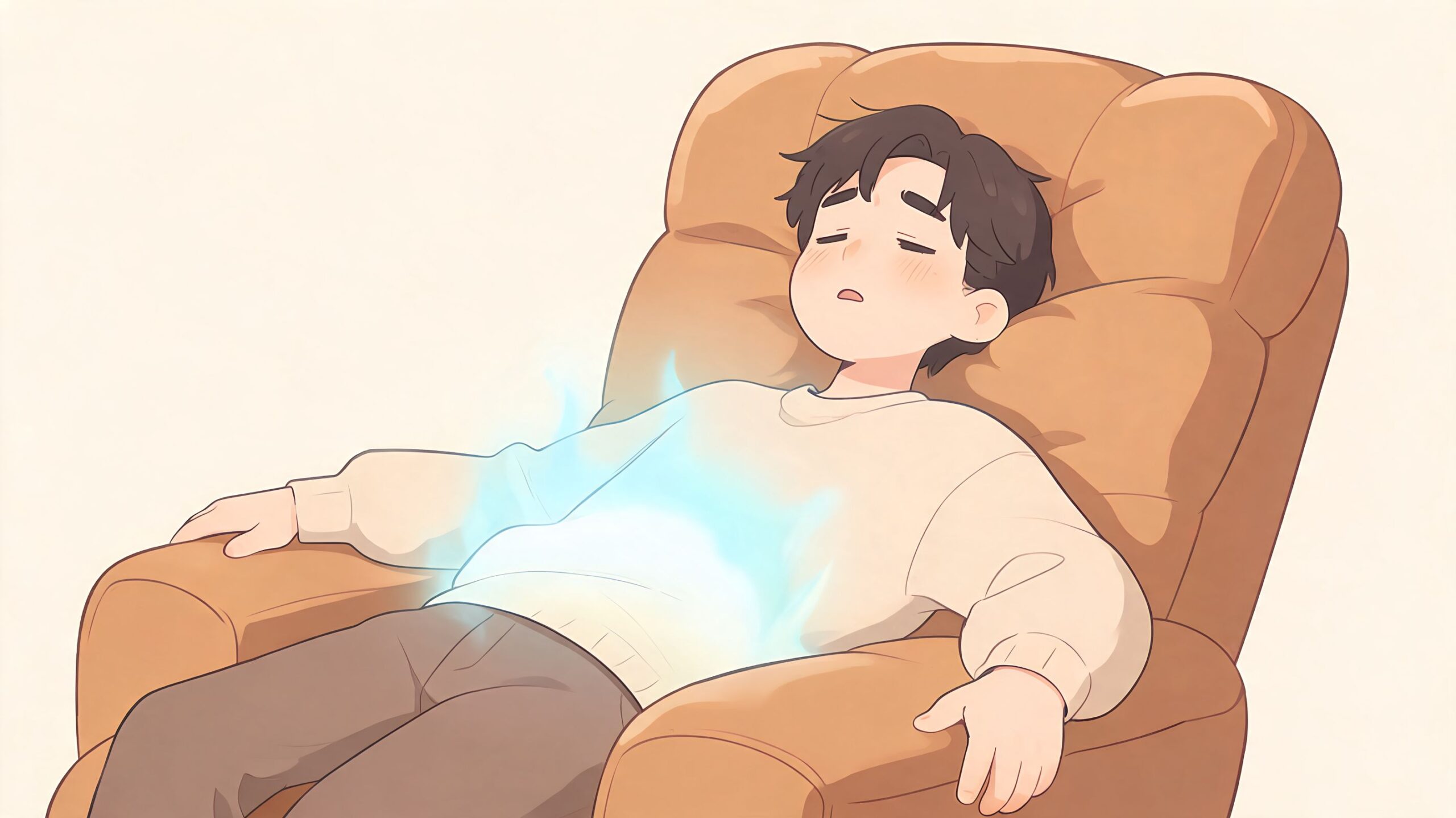
You are likely reading this after following a common routine. You sat down at the end of a long day, shifted once, shifted again, then realized the chair that is supposed to help you relax is making your back more noticeable.
That's the moment recliner shopping changes. It stops being about style alone and starts becoming a search for relief, fit, and long-term support. The best recliners for back support don't just lean back. They hold your body in a way that respects how your spine, hips, shoulders, and neck work together.
In Ann Arbor and across Southeast Michigan, shoppers often arrive with pages of online research and still feel unsure once they step into a showroom. That hesitation makes sense. A recliner can look impressive online and still feel wrong within five minutes of sitting in it. The opposite is also true. A chair that seems understated on a product page can feel like a custom wellness tool when the fit is right.
A proper test drive matters in this context. A recliner should be treated less like a generic seat and more like a bespoke piece of ergonomic equipment for daily life. That's a very different purchase mindset, and it usually leads to a much better result.
Table of Contents
- The Search for Lasting Comfort and Support
- What Truly Defines Back Support in a Recliner
- Key Features to Compare for Optimal Ergonomics
- The Critical Importance of a Personalized Fit
- Materials and Craftsmanship The Foundation of Durability
- Making Your Wellness Investment Accessible
- Your Next Steps to Finding Relief in Ann Arbor
The Search for Lasting Comfort and Support
Late in the day, this is how the search usually starts. You sit down to read or watch a game, and within twenty minutes your lower back starts asking for a different chair. The recliner that once felt soft now lets your hips slide forward, your shoulders round, and your body work harder than it should at rest.
That pattern is common because comfort and support are not the same thing. Plenty of shoppers come in after weeks of online research, convinced they need more padding, when the actual problem is fit. The chair is too deep, the headrest lands in the wrong spot, or the footrest changes posture in a way that leaves the lumbar area unsupported. A good buying process catches those issues before the recliner ever enters your living room, which is why a practical recliner buying guide for comparing fit, function, and long-term use matters.
Back pain is also far from a niche concern. Low back pain affected approximately 619 million people globally in 2020 and is projected to reach 843 million by 2050, according to World Health Organization figures summarized here. In plain terms, many people shopping for a recliner are not chasing luxury. They are trying to make evenings, recovery time, and daily sitting more manageable.
A well-chosen recliner can support that effort, especially when it is paired with better movement habits and body care. For readers who want practical body-care ideas alongside furniture guidance, Peak Therapy's back pain guide is a useful companion resource.
Since 1957, Tyner Furniture has served Southeast Michigan with a more hands-on view of comfort. In an Ann Arbor area showroom, the useful questions show up fast. Does your lower back stay in contact with the chair when you recline? Can your feet reach the floor before you lean back? After ten minutes, do your neck and shoulders settle, or do they start compensating?
The right recliner should reduce the effort your body spends trying to hold itself in place.
That is why this purchase deserves a real test drive. Sit in the chair long enough to notice pressure points. Change positions. Use the controls. A recliner for back support works best when it fits your body the way a good mattress fits your sleep style. It is furniture, but it is also a daily wellness tool.
What Truly Defines Back Support in a Recliner
Back support shows up in the minutes after you sit down, not in the first soft impression. A recliner earns that label when it keeps your spine in a healthy position as you read, watch TV, nap, or shift from upright to reclined.
The first checkpoint is lumbar contact. The lower back has a natural inward curve, and the chair should meet it without creating a hard pressure point or leaving a gap. According to an analysis of ergonomic recliner designs, a modest reclined posture can help reduce pressure through the lower spine. In the showroom, the practical takeaway is simple. If the small of your back loses contact as the chair moves, the rest of your body starts working harder to stay comfortable.
That compensation pattern is easy to miss at first. Ten minutes later, it often shows up as hip tension, shoulder tightness, or a stiff neck.
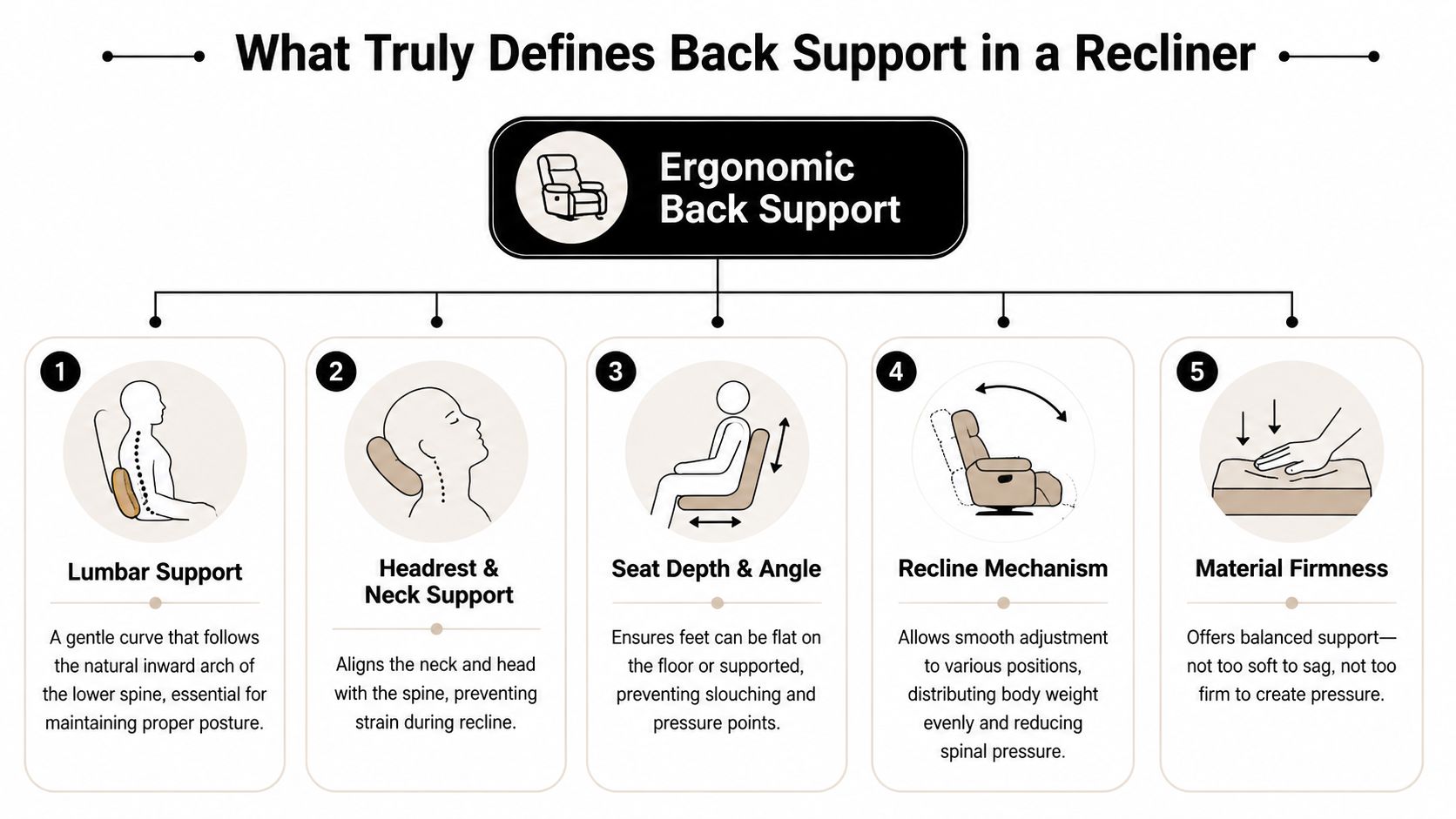
For shoppers comparing models with built-in adjustability, it helps to understand how lumbar support options vary from one recliner to another. Some give light, fixed support. Others let you change the depth or pressure so the chair fits your back more precisely.
Head, neck, and seat proportions matter just as much. A headrest set too far back encourages a forward head posture, especially when someone wants to read or watch television without fully reclining. A seat that is too deep pulls you away from the backrest. A seat that is too short can leave the thighs unsupported and make the whole chair feel perched rather than settled.
This is why I treat recliner shopping more like a fitting than a style decision. Two chairs can look nearly identical online and feel completely different once a real person sits in them. In an Ann Arbor showroom, that difference becomes obvious fast. One chair supports your whole back through the motion. The other only feels good until your posture starts slipping.
For some readers dealing with ongoing pain, spine and nerve disorders can change which positions feel tolerable from day to day. That makes adjustability and proper fit more important than extra padding.
A supportive recliner usually gets these details right:
- Consistent lumbar contact: Your lower back stays supported upright and reclined.
- Neutral pelvic position: The seat and back angle help prevent a rolled-back slouch.
- Natural head support: Your neck can rest without jutting forward.
- Stable cushioning: You settle into the chair without sinking past the support layers.
- Controlled motion: The mechanism changes position smoothly, so your body does not have to brace.
A quick comfort test is not enough. A proper test drive means sitting long enough to notice whether the chair keeps doing its job after the novelty wears off. That is what defines real back support.
Key Features to Compare for Optimal Ergonomics
A recliner can feel good for three minutes and still be a poor ergonomic chair after an hour. The difference usually comes down to how the mechanism supports your body through movement, not how plush the chair feels on first contact.
In the showroom, I watch for what happens between positions. A well-built recliner keeps contact at the low back, supports the head without pushing it forward, and lets the user stop where relief happens. A weaker design feels fine upright, then loses support as soon as the back starts moving.
Ergonomic Feature Comparison
| Feature | Standard Option | Premium (Heirloom-Quality) Option | Why It Matters for Back Support |
|---|---|---|---|
| Recline control | Manual pull or push-back motion | Power recline with finer positioning control | Small position changes can make a meaningful difference in how the back and hips settle |
| Lumbar support | Fixed or lightly padded lumbar zone | Adjustable lumbar system that can be tuned to the user | Better customization helps the chair meet your spine instead of asking your spine to meet the chair |
| Head and neck support | Fixed back cushion | Adjustable or independently responsive neck support | Keeps the head aligned during reading, TV viewing, and deeper recline |
| Sizing | One general frame size | Multiple size options or body-fit designs | Better fit improves posture, thigh support, and full-back contact |
| Cushion construction | Softer, less structured seating feel | Denser support layers with more stable shape retention | Stable cushioning resists the hammock effect that can aggravate slouching |
| Space planning | Standard footprint | Zero-wall or space-conscious engineering | Makes it easier to place ergonomic seating where it will actually be used every day |
Shoppers who want a practical checklist before they visit can use this recliner buying guide for comparing mechanisms, sizing, and options.
What works in daily use
Manual versus power is usually the first real fork in the road. Manual recliners have fewer parts, and some buyers prefer that simplicity. Power models earn their keep by allowing smaller adjustments, which matters for anyone trying to reduce pressure in one stubborn spot rather than dropping into one fully reclined position.
Lumbar design is the next separator. Fixed lumbar padding can feel supportive on a quick sit, then flatten once body weight settles in. Better systems stay engaged as the chair moves, so support does not disappear halfway through the recline cycle.
Head and neck support deserve closer attention than they usually get. Many back complaints start higher up when the headrest forces the chin forward during reading or television viewing. An adjustable or responsive upper section helps keep the neck in a more natural position, especially for taller users.
Stressless often comes up in this conversation because its Plus system is built to let the lumbar and neck support respond as the user changes position. The practical benefit is easy to feel during a real test drive. The chair supports you through the motion instead of asking your muscles to keep correcting your posture.
Tyner Furniture is one Ann Arbor showroom where shoppers can compare Stressless sizing and custom-order upholstery alongside other categories in the home. That matters for a purchase like this. A recliner has to suit the body first, but it also has to work in the room where it will be used every day.
Three trade-offs usually decide the final choice:
- Precision versus simplicity: Power systems allow finer adjustment. Manual systems keep operation more straightforward.
- Responsive support versus plush first feel: A softer seat can feel inviting at first and lose structure over time.
- Made-to-order patience versus immediate pickup: In-stock models solve an immediate need, while custom sizing and upholstery often produce a better long-term match.
Ask the salesperson to show exactly what the lumbar area does as the chair reclines.
If they cannot explain the mechanism in plain language or demonstrate the support changing with your position, keep looking. Good ergonomic design should be easy to see, easy to feel, and repeatable from one sit test to the next.
The Critical Importance of a Personalized Fit
A recliner can have the right features on paper and still miss the mark if the scale is wrong for your body. Because of this, many online purchases go sideways. People buy by silhouette, not by fit.
The best recliners for back support are fitted, not guessed. A chair that's too deep, too tall in the wrong places, or too wide through the seat can undo every ergonomic feature built into it.
How to do a real sit test
A proper sit test isn't complicated, but it does need a little discipline. Don't flop into the chair, say “that's nice,” and move on. Sit all the way back, stay there for a few minutes, and pay attention to where your body lands.
Use these checkpoints:
- Feet position: Your feet should rest flat on the floor when the chair is upright, or feel properly supported if the design changes leg position.
- Knee clearance: You want a small gap between the seat edge and the back of your knees. That keeps the seat from pressing awkwardly into the leg.
- Armrest height: Your shoulders should relax. If the armrests force your shoulders upward, the chair is wrong for you.
- Headrest contact: Your head should meet the support naturally instead of reaching for it.
- Lower back feel: The lumbar area should make contact without poking, collapsing, or disappearing.
If you're measuring at home before visiting a showroom, this furniture measuring guide helps narrow down what dimensions to pay attention to before you ever sit in a chair.
Why one size rarely works
Recliner sizing is more than a convenience; it is a health and comfort issue. Some premium lines offer a better path because they're built in multiple sizes instead of asking every body type to adapt to one frame. Stressless is a strong example because shoppers can try Small, Medium, and Large rather than settling for a one-size-fits-most approach.
That fit difference shows up fast. A smaller person often feels immediate relief when the seat depth shortens and the lumbar lands in the right place. A taller person often notices the opposite. The headrest finally supports the head instead of the shoulders.
A recliner should feel like it was made for your frame, not like you're negotiating with it.
This is also why in-person shopping still matters, especially on South State Street in Ann Arbor where many buyers come in after weeks of digital browsing. You can read every feature list online. You still can't tell from a screen whether the chair meets the back of your knees correctly or whether the neck support lands two inches too low.
A proper fit changes the entire experience. Rising out of the chair is easier. Sitting for longer periods becomes more natural. The support feels quieter, which is usually a sign that the chair is doing its job.
Materials and Craftsmanship The Foundation of Durability
Back support isn't only about shape and mechanics. It's also about what happens after months and years of use. A recliner that starts supportive but softens unevenly won't stay comfortable for long.
That's why material choice and internal construction deserve as much attention as the lumbar controls.
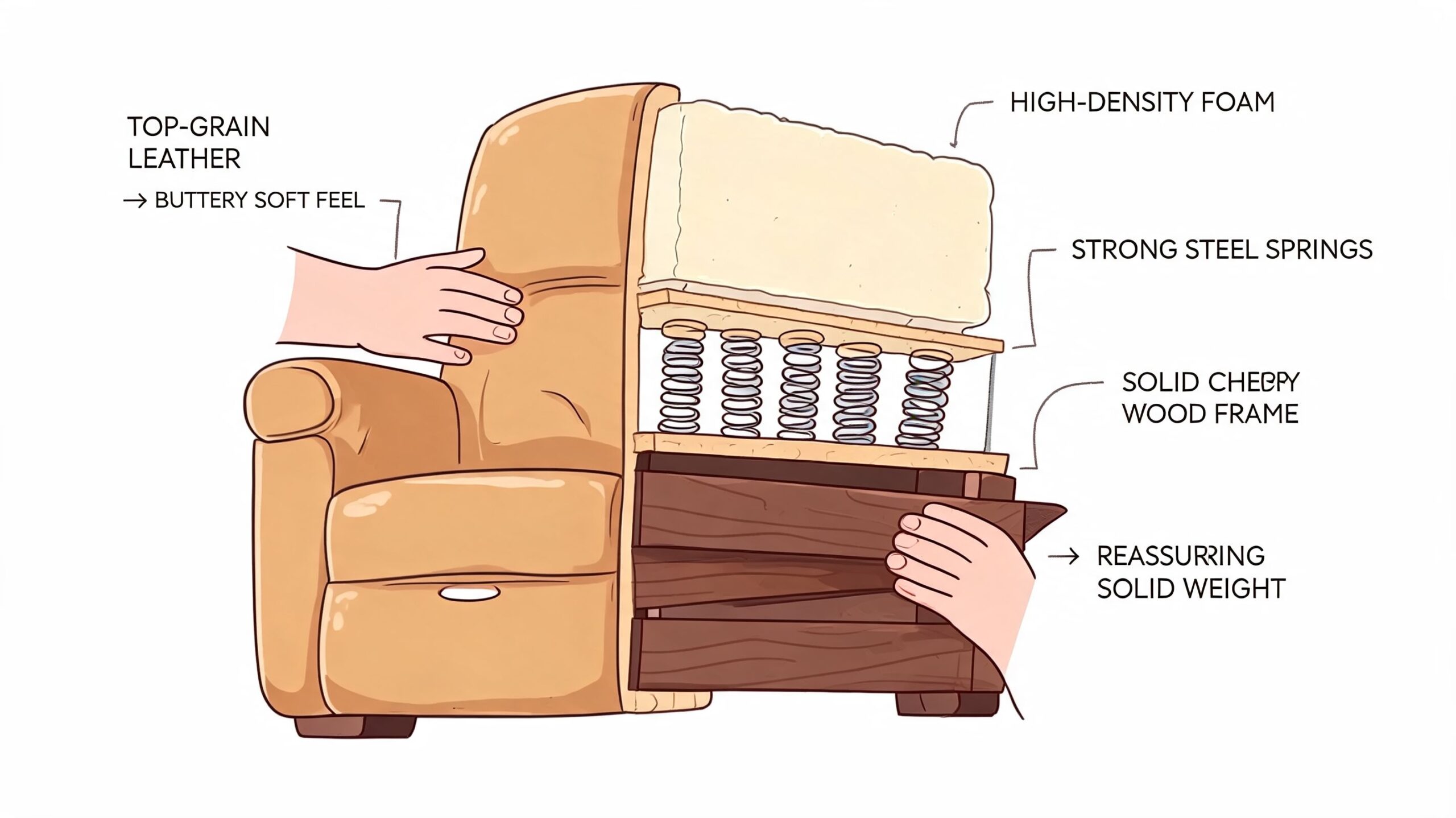
What you feel on day one
Upholstery changes the whole sitting experience. The buttery feel of top-grain leather gives a recliner a refined hand and often a more polished look in the room. Good leather also tends to age attractively, developing character instead of just wearing out.
Performance fabrics bring a different strength. They're practical for busy homes, easier to live with around spills and pets, and available in a wider range of textures and colors. For shoppers balancing ergonomics with interior design, custom upholstery matters because the right chair shouldn't force a style compromise.
If you're weighing those trade-offs, this upholstery materials guide is useful for comparing leather, fabric, and performance options before placing a made-to-order selection.
What holds up over time
The inside of the chair matters more than most shoppers realize. Cushion quality determines whether support stays where you need it. Lower-grade cushioning can feel plush in the showroom but compress prematurely, which changes posture and creates pressure points.
Frame construction is the hidden story behind long-term value. Better recliners tend to use stronger internal structures and more reliable joinery. That matters because every reclining motion stresses the frame over time. A weak frame often announces itself slowly. The chair starts creaking, the seat leans, the back shifts, and support becomes inconsistent.
For households that care about longevity, this is the same logic that applies to hand-crafted solid wood furniture in dining or bedroom spaces. Material integrity matters. Joinery matters. Build quality matters. Tyner's broader assortment reflects that philosophy across the home, from the Home Office to Outdoor Spaces, and it's one reason shoppers who value heirloom construction often look beyond what happens to be on the floor that day. In-stock is only the beginning. Made-to-order upholstery and bespoke options can be the smarter path.
A few practical signs usually point to better construction:
- Consistent seat feel: The cushion rebounds evenly instead of forming a trough.
- Tidy tailoring: Seams sit straight, and padding doesn't bunch where your body bears weight.
- Stable arms and back: The chair feels planted when you sit down or rise.
- Clean motion: The mechanism operates without wobble or twisting.
The goal isn't just to buy comfort. It's to buy support that stays support.
Making Your Wellness Investment Accessible
Price matters. It should. A recliner built for ergonomic support, quality materials, and long-term durability is a meaningful household purchase.
The mistake is comparing only ticket price instead of cost per year. A better recliner often asks for more upfront and less from you later. It's the same reason many homeowners in Southeast Michigan choose hand-crafted, made-to-order pieces instead of replacing mass-market furniture every few years.
Think in cost per year
A recliner used every day becomes part of your routine. You read in it, recover in it, watch TV in it, sometimes even doze in it. When a chair sees that kind of use, durability and support aren't luxury extras. They're the basis of value.
That's also why customization matters. If the upholstery, finish, or fit is right from the start, the chair is more likely to stay in your home and stay useful. The same mindset applies to bespoke Canadel dining, custom upholstery, and ergonomic Stressless seating. A made-to-order piece tends to serve longer because it wasn't a compromise to begin with.
How shoppers make the purchase manageable
Good furniture stores should make quality feel reachable without turning the conversation into hard selling. Practical tools help.
For shoppers who want to spread out the purchase, special financing options can make a supportive recliner more manageable. Tyner also offers a Low Price Promise, which matters to buyers who want competitive value without giving up local service and guidance.
Buy the chair you want to keep, not the chair you're willing to replace.
That's especially relevant with recliners. A poor fit gets expensive in ways that don't show up on a receipt. You feel it in daily discomfort, shorter use, and the frustration of shopping again sooner than expected.
In Ann Arbor, that practical view tends to resonate. People want craftsmanship, but they also want a reasonable path to owning it. Financing and transparent value don't lower standards. They help people choose long-term comfort now instead of postponing it.
Your Next Steps to Finding Relief in Ann Arbor
Most shoppers don't need more theory at this point. They need a clear next move. If you've narrowed your search for the best recliners for back support, there are two smart ways to proceed.
Option one visit for a sit test
Go in person and treat the process like a fitting appointment, not a quick errand. Bring your usual questions. Better yet, bring the discomfort patterns you notice at home. Lower back fatigue after dinner, neck strain during TV time, trouble getting up smoothly from a deep seat. Those details help narrow the right mechanism and scale.
In the Ann Arbor showroom on South State St., focus on fit first. Test multiple sizes if available. Try upright, partial recline, and your likely everyday lounging position. Stay seated long enough for the first impression to wear off. A supportive chair usually feels better the longer you sit in it.
Option two browse quick specs and special orders
If you're still comparing from home, review Quick Specs carefully and pay attention to what can be customized. Upholstery, leather selection, size options, and recline features often make the difference between a chair that's acceptable and one that feels ideal.
This route also helps if you're furnishing a broader room plan. Many households want the recliner to coordinate with surrounding pieces, and that's where made-to-order choices become useful. A wellness tool still has to belong in the home visually.
The strongest buying decisions usually follow this sequence:
- Identify the pain point: Lower back pressure, neck strain, poor seat depth, or difficulty rising.
- Match the feature: Lumbar adjustability, head support, power recline, or lift assistance.
- Confirm the fit: Sit, recline, and test the chair with your actual body, not just your assumptions.
- Choose the finish: Leather or fabric, in-stock or bespoke, with the room in mind.
- Plan the purchase: Use transparent value, Quick Specs, and financing if needed.
A well-fitted recliner should feel calm, supportive, and easy to live with. That's what turns a furniture purchase into daily relief.
Visit Tyner Furniture to schedule your own sit test in Ann Arbor or browse online Quick Specs for special orders, custom upholstery, and ergonomic recliner options that fit your room, your body, and the way you live.