Discover Amish Table and Chairs: Timeless Craftsmanship


You’re probably doing what most dining shoppers do. Standing in the middle of your room, looking at the old table, and trying to decide whether the next one should merely fill the space or truly carry the life of the home.
That decision gets bigger fast. You’re not just choosing wood and chairs. You’re choosing where weeknight takeout lands, where grandkids color, where holiday platters rest, and where one good chair gets claimed by the same person every time. For many Southeast Michigan households, the search for amish table and chairs starts because the current set feels temporary. It works, but it doesn’t feel like the piece that belongs in the long run.
That’s where shoppers often get stuck. One store shows a sleek veneer top that looks good under bright lights. Another shows endless custom options that feel hard to sort through. Somewhere in the middle is the central question. What’s truly worth bringing into a home you plan to live in for years?
A hand-crafted Amish dining set answers that question differently. It asks you to think less about quick replacement and more about durability, repairability, comfort, and how the piece will age. In Ann Arbor and across Southeast Michigan, that shift matters. Homes here work hard. Dining rooms often double as homework stations, project tables, and holiday overflow space. A better table has to keep up.
Table of Contents
- Finding the Heart of Your Home
- What Truly Defines Amish Craftsmanship
- Choosing Your Solid Hardwood
- Sizing and Styling for Your Space
- Creating Your Bespoke Dining Set
- Understanding the Lifetime Value and Investment
- Experience the Difference in Ann Arbor
Finding the Heart of Your Home
A dining table becomes important slowly, then all at once. One family buys it for Sunday dinners. A few years later, it has carried school projects, birthday candles, laptop cords, and one long conversation after everyone else went to bed. That’s why this category feels more personal than many shoppers expect.
Since 1957, local families have leaned on furniture stores not just for inventory, but for perspective. A seasoned eye helps when you’re trying to sort out what looks good today versus what will still feel right years from now. In Southeast Michigan, that kind of guidance matters because buyers often aren’t furnishing a showcase room. They’re furnishing a real home that gets used.
The pressure comes from the fact that dining furniture has to do several jobs at once. It has to look right. It has to feel comfortable. It has to stand up to daily use. And if you’re buying for a forever home, it should still make sense when your routine changes.
A good dining set doesn’t only match the room. It matches the rhythm of the people who use it.
That’s why heirloom furniture keeps coming up in conversations about Amish dining. The appeal isn’t trendiness. It’s stability. The weight of solid wood, the confidence of a chair that doesn’t wobble, the visual calm of honest materials. Those things change the room in a subtle way. They make it feel settled.
If you’ve felt torn between a quick purchase and a more considered one, that hesitation is normal. A dining set is one of the few pieces in a home that touches almost every phase of family life. It should earn its place.
What Truly Defines Amish Craftsmanship
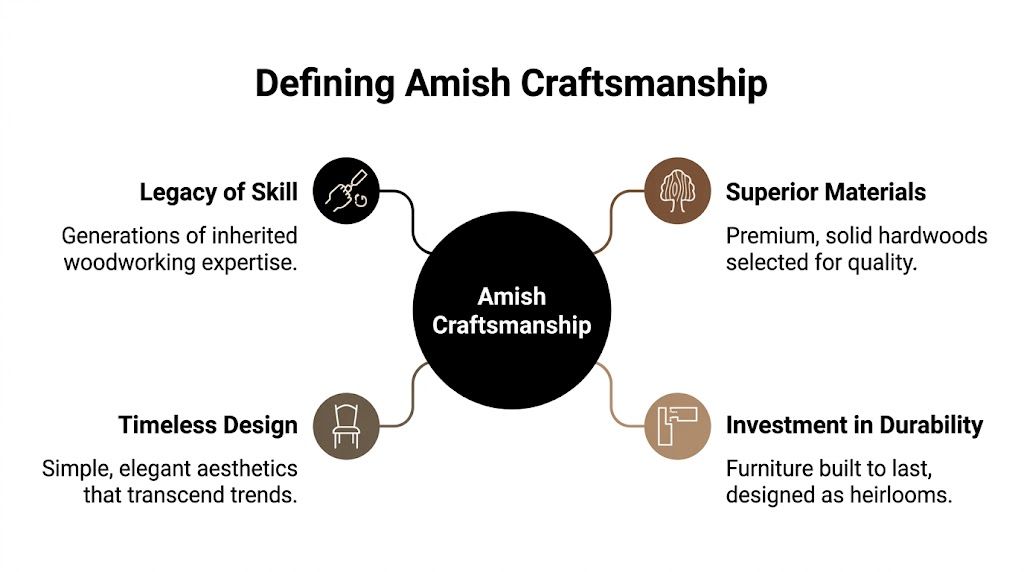
Amish craftsmanship isn’t just a style label. It points to a way of building that values structural integrity, simple design, and methods that have been passed down across generations.
Where the tradition comes from
Amish furniture has documented roots in Pennsylvania in the late 18th century, and its broader popularity grew in the early 1900s during the Arts and Crafts movement, when shoppers valued simpler forms and a reaction against ornate Victorian styling, as outlined in this history of Amish furniture. That background helps explain why Amish tables and chairs still feel grounded today. They weren’t designed around flash. They were built around use.
Another part surprises many first-time buyers. The tradition has grown without giving up the core methods that made it respected in the first place. Between 2006 and 2008, 71% of Amish furniture makers expanded their businesses while continuing to use construction techniques from the 1600s, including dovetail and mortise-and-tenon joints, and avoiding electricity in their workshops, according to this overview of Amish furniture history and industry growth.
That tells you something important. Growth didn’t push the craft toward shortcuts.
Why the joinery matters
Here’s the plain-language version of joinery. A screw can hold one part to another. A well-made joint makes the parts support each other.
Mortise-and-tenon joinery works a bit like a shaped peg locking into a matching pocket. Chair rails, table aprons, and legs benefit from this because stress moves through the connected wood instead of relying on a metal fastener to do all the work.
Dovetail joinery is easy to recognize once you know what to look for. The interlocking wedge shape keeps drawers and case pieces from pulling apart under repeated use. On dining furniture, that same philosophy of interlock and mechanical strength carries through the whole build.
If you’ve ever sat in a chair that shifted under you or pulled a table that racked side to side, you’ve felt the difference poor construction makes. Mass-produced furniture often depends more heavily on thinner materials and simpler connectors. Solid wood joinery behaves differently. It has substance.
Practical rule: When you shop for amish table and chairs, ask how the chair legs connect to the seat and how the table base connects to the top. Those answers tell you more than the stain color ever will.
Material choice matters too. Amish dining furniture is known for using solid North American hardwoods rather than a thin decorative surface over a lighter core. You can feel that difference in the weight of a chair when you pull it out, and in the way a tabletop sounds and feels under your hand.
For shoppers comparing styles across categories, the same attention to build quality shows up beyond dining. A quick look at upholstery options like Hickory Craft furniture helps illustrate a broader principle. Better furniture tends to reveal itself in the construction details, not just the silhouette on the showroom floor.
Choosing Your Solid Hardwood
The wood species shapes almost everything you’ll notice later. It affects the grain, the color movement, the way light hits the surface, and how forgiving the piece will be in daily use.

A lot of buyers come in thinking wood choice is mostly cosmetic. It isn’t. The right hardwood should suit both your taste and your household habits. If your dining room sees backpacks, serving dishes, and constant chair movement, your priorities may be different from someone furnishing a quieter formal room.
What oak feels like in a room
Oak has presence. Its grain is more visible, which gives it a familiar, architectural look. Many shoppers gravitate to oak when they want a dining room to feel rooted and traditional.
Oak also makes sense if you like seeing the natural character of wood instead of a smoother, more understated face. In a busy household, that visible grain can be appealing because the table still looks like wood doing what wood does. It doesn’t ask for perfection.
For families in Ann Arbor with an active kitchen-dining space, oak often fits homes that already have texture. Plank floors, painted cabinets, brick, woven rugs, matte black hardware. Oak tends to sit comfortably among those details.
How cherry and maple differ
Cherry changes the mood of a room. It has a warmer, more refined personality, and many buyers love the way it deepens visually over time. If you want the table to feel like an heirloom from the day it arrives, cherry often points the room in that direction.
Maple is a different experience. It looks cleaner and quieter. The grain is more subtle, which gives it a refined appearance that works well in transitional and contemporary interiors.
There’s also a durability note worth knowing. Solid maple has a Janka hardness rating of 950 lbf and resists denting 30 to 50% better than common softwoods like pine at 380 lbf, based on specifications provided for this Amish Essentials round table. That same example shows how a 42-inch round table with one 18-inch leaf can expand while maintaining structural integrity, which is useful if you want a compact footprint most days with flexibility for guests.
Maple is often the wood people choose when they want the dining set to feel calm, crisp, and ready for everyday use.
If you want a deeper walkthrough of wood behavior, grain, and longevity, this guide on choosing the right hardwood for longevity and style is a useful companion.
Solid hardwood comparison
| Wood Species | Grain & Color | Hardness (Durability) | Best For |
|---|---|---|---|
| Oak | Pronounced grain, classic character, often reads traditional | Durable hardwood used for high-use dining pieces | Active households, classic interiors, larger dining rooms |
| Cherry | Smoother grain, rich warm tones, elegant look | Durable solid hardwood with an heirloom feel | Formal dining spaces, traditional homes, buyers who want warmth |
| Maple | Fine, subtle grain, clean and lighter visual appearance | 950 lbf Janka hardness in the cited example | Everyday dining, transitional spaces, homes wanting a cleaner line |
A simple way to decide is to ask one question. Do you want your table to announce the wood, glow with warmth, or keep the room visually quiet?
- Choose oak if you like texture and tradition.
- Choose cherry if you want warmth and a more formal tone.
- Choose maple if you prefer a smoother, cleaner look with strong everyday practicality.
Sizing and Styling for Your Space
Good dining furniture fits the room, but great dining furniture also fits the traffic pattern, the people, and the way chairs move in and out all week long.
Start with movement not just table size
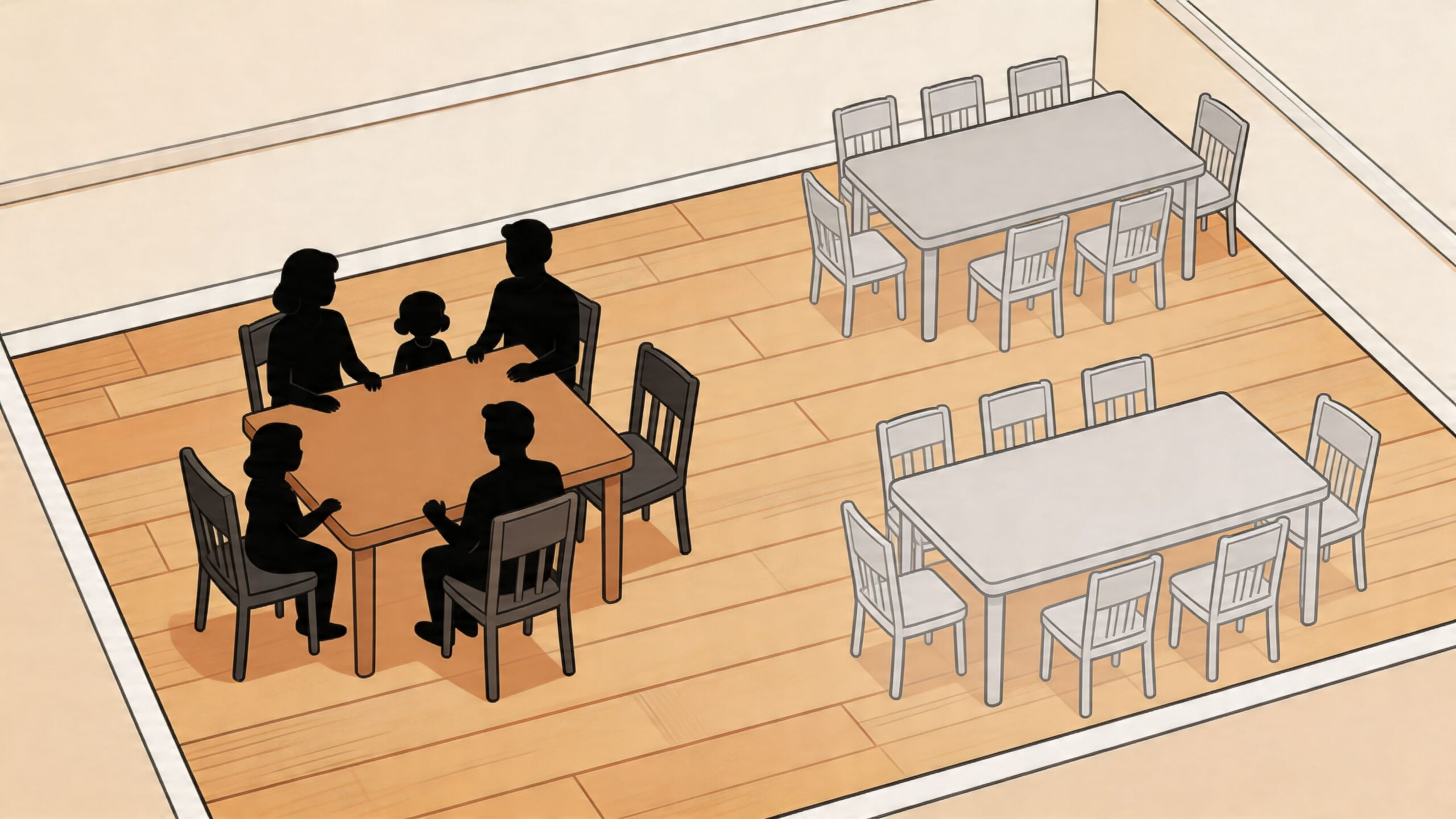
Most sizing mistakes happen because shoppers measure for the tabletop and forget the chairs. You don’t live on the table surface alone. You live in the space around it.
A practical rule is to leave 36 to 48 inches between the table and the wall or nearby furniture so people can pull chairs back and move comfortably. That range isn’t from the Amish sources above, so think of it as a room-planning guideline used in furniture design rather than a cited product specification. In tighter dining rooms, the lower end can work. In open layouts, more breathing room usually feels better.
Measure the room first, then subtract for circulation, then think about the table shape. That order matters.
Pick the shape that matches your daily life
Rectangular tables handle larger gatherings well and often suit dedicated dining rooms.
Round tables soften a room and support conversation. They’re especially useful when you want everyone to feel included and you don’t need the visual length of a rectangle.
Oval tables split the difference. They keep some of the sociability of a round top while using space more like a rectangular one.
If your household hosts often, pedestal design deserves attention too. Amish double pedestal tables such as a 42 inch by 66 inch model are engineered for large gatherings, with dual pedestals reducing tabletop deflection by up to 60% under heavy loads, according to this traditional double base dining set specification. The same source notes that these tables often pair with Jumbo Bow Back chairs designed to fit under a 30-inch apron for ergonomic comfort when seating 8 to 10 guests.
That combination explains why some larger sets feel more stable and easier to live with than others. The base design and chair proportions are doing real work.
Chair comfort isn’t a bonus feature. If the seat height, apron clearance, and back angle don’t work together, the table won’t get used the way you hoped.
For a broader planning reference, this guide to table shapes and seating arrangements can help you compare layouts before you commit.
Pro tip on counting seats
Use this quick method before you order:
- Count daily seats first. How many people eat there on a normal weeknight?
- Count event seats second. What’s your realistic holiday or birthday number?
- Decide how you want to bridge the gap. Leaves, benches, or a larger fixed top all solve different problems.
- Test the chair width. A beautiful chair that’s too broad changes your seat count fast.
Many shoppers in Southeast Michigan find that the smartest answer isn’t the biggest possible table. It’s the table that feels right most days and expands gracefully when needed.
Creating Your Bespoke Dining Set
Customization sounds exciting until you sit down in front of samples and realize how many decisions are involved. Wood species, stain, chair style, edge profile, finish character, extension type. For first-time buyers, the freedom can feel heavy.
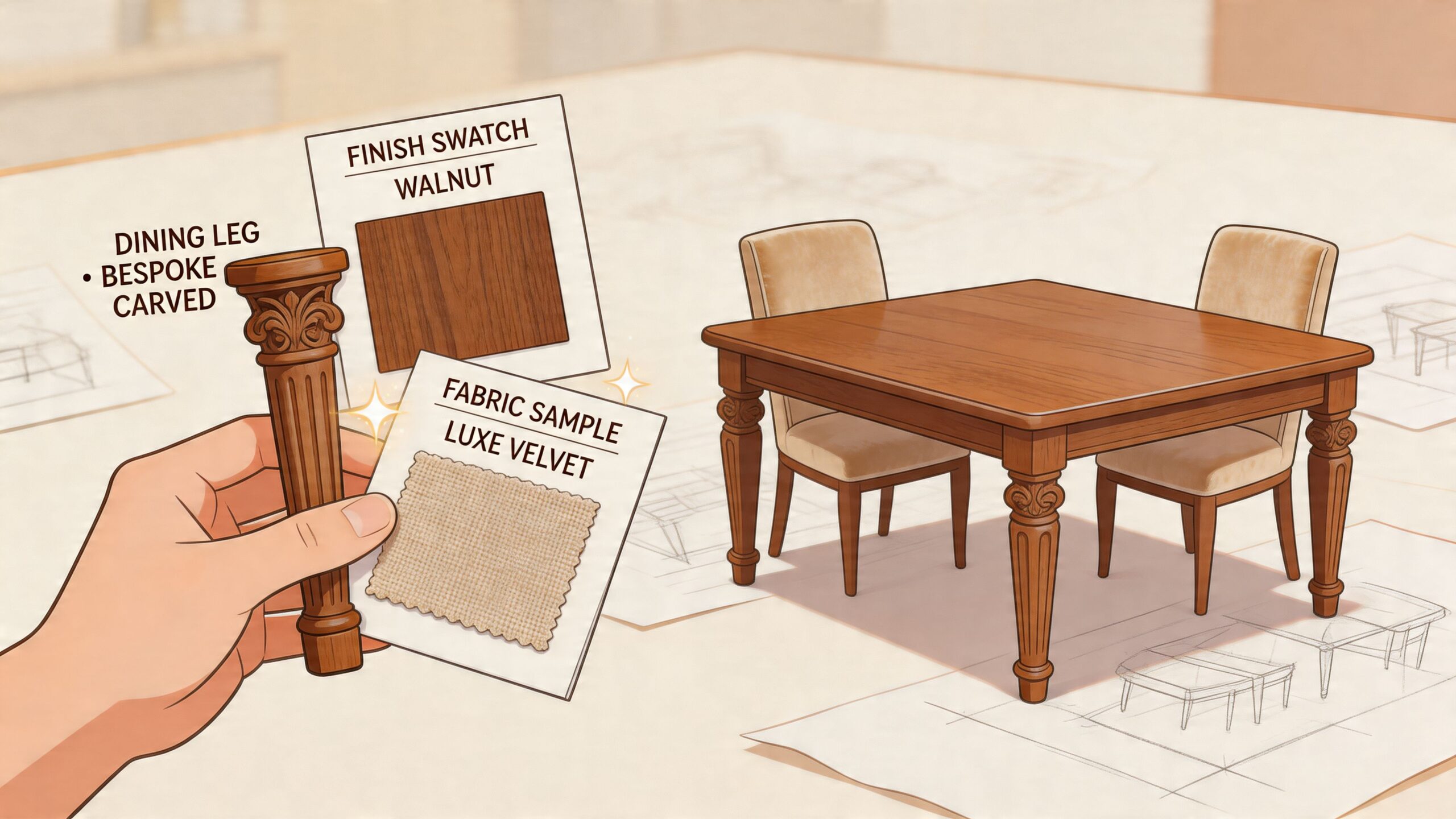
That reaction is common. First-time buyers of custom Amish furniture often face analysis paralysis because there are thousands of combinations. Starter recommendations, photographic examples, and clear timelines help reduce friction and buyer’s remorse, as noted in this custom dining set buying overview.
A simpler way to make custom decisions
The easiest way to handle a made-to-order dining purchase is to stop trying to design everything at once. Start with the decision that affects daily life most, then move outward.
For most buyers, that first decision is one of these:
- The room problem you need to solve. Maybe the current table is too long, too small, or hard to walk around.
- The visual tone you want. Clean and modern feels different from warm and formal.
- The seating need you can’t ignore. Maybe you need more comfort, a bench on one side, or chairs that are easier for older relatives to use.
Once that anchor is clear, the rest gets easier.
What to decide first
A practical custom-order sequence looks like this:
- Start with shape and footprint. A table that fits beautifully solves more than a stain choice ever will.
- Choose the wood second. This step highlights texture, color, and daily-use priorities.
- Then select the chair personality. Slat back, upholstered seat, armchair at the ends, or a mixed look.
- Finish with detail choices. Edge profile, finish tone, distressing level, and extension style.
One helpful reality check is to bring photos of your room and nearby finishes. Flooring, cabinet color, and the wood tones already in the house matter. They help narrow what belongs.
For shoppers who want a guided process, custom furniture made simple offers a practical overview of how these decisions can be organized. In the Ann Arbor showroom, made-to-order dining can also extend beyond Amish case goods into broader customization programs. Tyner Furniture also works with Canadel for bespoke dining configurations and Stressless for ergonomic seating options in other rooms, which is useful if you’re trying to coordinate a whole-home look rather than buy one isolated piece.
The showroom floor should feel like a starting point, not a limit.
That mindset helps a lot. You’re not trying to memorize every possible option. You’re trying to create a dining set that fits your house and your habits.
Understanding the Lifetime Value and Investment
Price matters. It should. But with dining furniture, the more useful question is often not “What does it cost today?” It’s “What does it cost me over the years I’ll use it?”
Think in cost per year
That’s where solid wood Amish dining tends to make more sense for many buyers. A key ROI question is the difference between an Amish table with a 30+ year lifespan and veneer furniture with a 5 to 7 year replacement cycle, as discussed in this overview of dining set value considerations. Even without a perfect universal formula for every household, that comparison changes the conversation.
A table that stays in service for decades behaves differently as an investment than one that gets replaced several times. You’re not only paying for material. You’re paying for fewer restarts. Fewer disappointments. Less compromise each time the joints loosen, the top chips, or the style falls apart before your needs do.
That doesn’t mean every family should buy the same way. It means a higher initial price can be reasonable when the piece is meant to stay with the home.
Why accessibility matters too
This is also where financing matters in a practical sense. Many households want heirloom quality, but they also want cash flow that feels manageable. Special financing, when available and used carefully, can make a long-term purchase easier to plan for. A Low Price Promise matters for the same reason. It helps buyers focus on value without feeling like they have to choose between quality and budget discipline.
There’s another part of value people sometimes overlook. Delivery and setup affect the ownership experience. A solid wood dining set is substantial. Careful in-home delivery, proper placement, and setup reduce the chances of damage and spare you the stress of wrestling a heavy heirloom piece through doorways and around corners.
Buy for the years you expect to use it, not only for the month you expect to pay for it.
That one shift can turn a “big purchase” into a more grounded, easier decision.
Experience the Difference in Ann Arbor
You can learn a lot online. You can compare silhouettes, dimensions, finishes, and wood names. But some parts of dining furniture only make sense in person.
What you can only learn in person
A showroom visit answers questions your screen can’t. You can feel the weight of a solid cherry chair when you pull it back from the table. You can run your hand across maple and notice how calm the grain feels. You can sit long enough to tell whether a chair supports your back or just looks good for a photo.
That’s especially useful with amish table and chairs because the details matter so much. A half-inch here or there in the seat shape, apron clearance, or edge profile can change whether the set feels inviting every day. The same is true of finish tone. Under real light, a stain can read much warmer, deeper, or softer than it does on a screen.
For Southeast Michigan shoppers, the South State St. showroom gives you a way to compare those variables side by side in a grounded setting. You’re not guessing from a swatch alone.
A dining purchase can anchor the whole home
A dining set often becomes the first serious furniture investment in a home. After that, many buyers start thinking more intentionally about adjoining spaces. A solid wood dining room can influence the look of the home office, the living room, even the storage pieces that support entertaining. Something like a corner buffet cabinet can extend that same sense of function and craftsmanship into the room without crowding it.
That broader view is one reason local guidance still matters. Since 1957, shoppers in Ann Arbor have come in not only to buy furniture, but to test it, compare it, and make sure it belongs in the life they’re building. Dining furniture should feel personal that way. It’s not only a product decision. It’s an interior design decision, a comfort decision, and often a family-legacy decision too.
If you’re ready to sort through options with less guesswork, start with the basics. Sit in the chairs. Study the grain. Ask how the table expands. Notice how the room feels around the piece. Those are the moments that turn a dining set from “nice” into “right.”
Visit Tyner Furniture to do a proper sit test in the Ann Arbor showroom on South State St., or browse the online Quick Specs if you’re starting with a special order. If you’re furnishing more than one space, it also helps to know the selection extends beyond dining into the home office, living room, bedroom, and outdoor spaces, so you can build a home that feels consistent, comfortable, and made to last.