Oval Back Dining Chairs: Elegance for Your Home

A lot of dining room decisions stall at the same point. The table feels manageable. The rug can wait. The lighting can be adjusted later. Then the chairs turn into the hard part, because they have to do everything at once. They have to look right from the front door, feel comfortable through a long holiday meal, fit under the table, and still make sense years from now when paint colors, dishes, and even homes change.
That's where oval back dining chairs keep earning their place. They aren't a passing shape. They're one of those forms that settles a room instead of dating it. For households in Ann Arbor and across Southeast Michigan, that matters. Dining furniture often has to carry weekday dinners, homework sessions, birthdays, and the occasional formal gathering without looking tired after a short run.
A family business that has served this community since 1957 sees the same pattern again and again. Shoppers rarely regret choosing furniture with sound proportions, solid materials, and a design history behind it. They do regret buying pieces that looked right in a photo but never felt substantial in the room. Anyone still sorting through options may find it helpful to start with a broader guide to the furniture buying journey before locking in a dining set.
Table of Contents
- An Introduction to Choosing Your Forever Furniture
- The Enduring Allure of the Oval Back Chair
- Craftsmanship and Materials That Define Quality
- How to Choose the Perfect Chairs for Your Home
- Styling Oval Back Dining Chairs in Your Space
- Bespoke for Your Home The Tyner Customization Edge
- An Investment in a Lifetime of Gatherings
An Introduction to Choosing Your Forever Furniture
A dining room asks more from furniture than almost any other space. It has to handle daily use, but it also carries emotional weight. People remember the chair they sat in for graduation dinners, card nights, and the first big meal in a new house.
That's why “good enough for now” often turns expensive in the long run. A chair that wobbles, chips, or feels cramped doesn't just disappoint on a spec sheet. It changes how the room gets used. Families sit shorter. Guests shift around. The room starts to feel decorative instead of lived in.
Why the chair choice matters so much
Oval back dining chairs solve a problem many shoppers don't realize they're trying to solve. They bring formality without stiffness. The curved back softens a room full of hard lines, while the classic outline keeps the dining area from feeling casual in a way that won't age well.
In Southeast Michigan homes, that balance works especially well. A formal dining room in an older home, a transitional space in a newer build, or an eat-in area that needs a little polish can all support this silhouette.
A forever piece doesn't have to be flashy. It has to keep working after trends wear off.
What makes a purchase feel lasting
A chair earns “heirloom” status through more than appearance. The lasting value usually comes from a combination of factors:
- Stable construction: A chair needs a frame that stays square after years of movement.
- Repair-friendly materials: Solid wood can age with grace and can often be refinished rather than replaced.
- Timeless shape: The silhouette has to make sense with changing interiors, not just one current look.
- Comfort that holds up: Dining chairs need to support real use, not just staged photos.
That practical standard has guided local furniture decisions for generations. A showroom that serves homes from dining rooms to home offices to outdoor spaces learns quickly that the pieces worth keeping are usually the ones built with patience.
The Enduring Allure of the Oval Back Chair
The oval back chair has history on its side, and that history explains why it still looks appropriate in a dining room today. Oval-back dining chairs became a hallmark of neoclassical design during the French Louis XVI period, which ran from 1774 to 1792, and that style favored symmetry, tapered legs, and restrained ornament rather than the heavier decoration that came before, as outlined in this overview of Louis XVI chair history.
The design language behind the shape
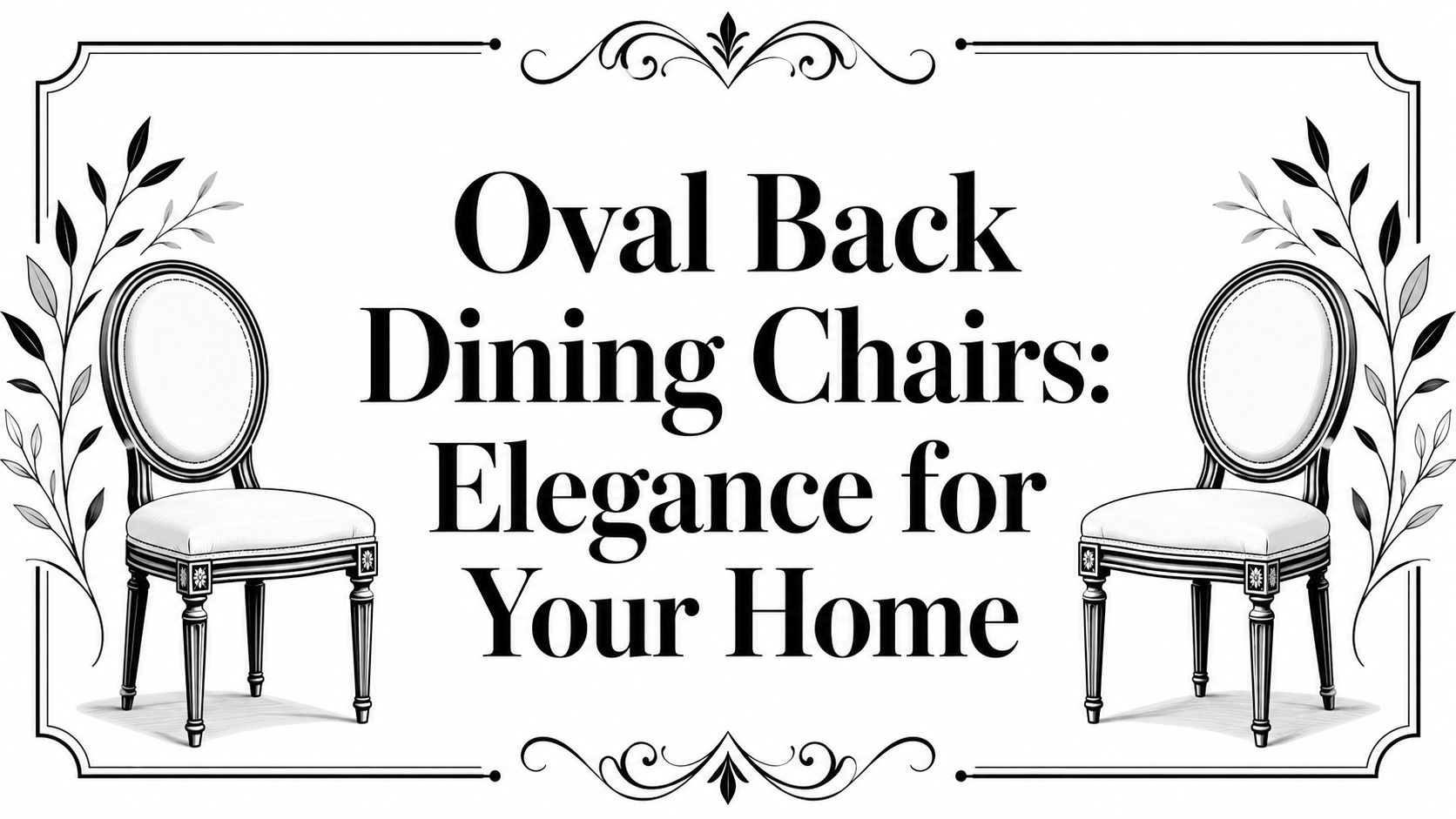
An oval back isn't just decorative. It signals a very specific furniture vocabulary. In well-made versions, the frame reads as composed and balanced. The back shape introduces a gentle curve, but the rest of the chair usually stays disciplined.
That's why the style has range. It can sit in a traditional room with carved case pieces and a substantial table, or it can act as a classic counterpoint in a cleaner, more transitional interior.
Key visual traits usually include:
- An oval or medallion-style back: This is the signature profile and what immediately catches the eye.
- Straight tapered legs: Often lightly refined in appearance, rather than bulky.
- Controlled ornament: Enough detail to feel finished, not so much that the chair becomes fussy.
- A formal silhouette: Taller backs and composed lines tend to give the chair a sense of occasion.
Why it keeps returning in good interiors
Furniture styles come and go, but some survive because they solve aesthetic problems cleanly. Oval back dining chairs do that in two ways. First, they add elegance without visual heaviness. Second, they bridge periods well, which matters for real homes that mix inherited pieces, newer upholstery, and evolving paint schemes.
The oval back works because it reads as settled. It doesn't need a trend cycle to justify itself.
There's also a broader furniture story behind the shape. Chairs existed in Ancient Egypt around 3100 BC, spread through Greek and Roman use, became more common in the Renaissance, and were made far more accessible after the Industrial Revolution (1760–1840), when production expanded, according to the broader history of the chair. Oval back dining chairs sit inside that longer arc. They represent a point where refined design and wider household use started to meet.
Craftsmanship and Materials That Define Quality
A graceful outline won't save a weak chair. In fact, an oval back puts more pressure on the build quality because the curved back rail has to stay rigid under years of movement. The structural integrity of an oval back dining chair relies on its frame, and quality examples are often built from solid hardwoods such as mahogany, with forms around 20 inches wide and 40 inches high, because the curved back has to resist twisting better than simpler designs, as shown in this oval back chair specification reference.
What solid wood changes
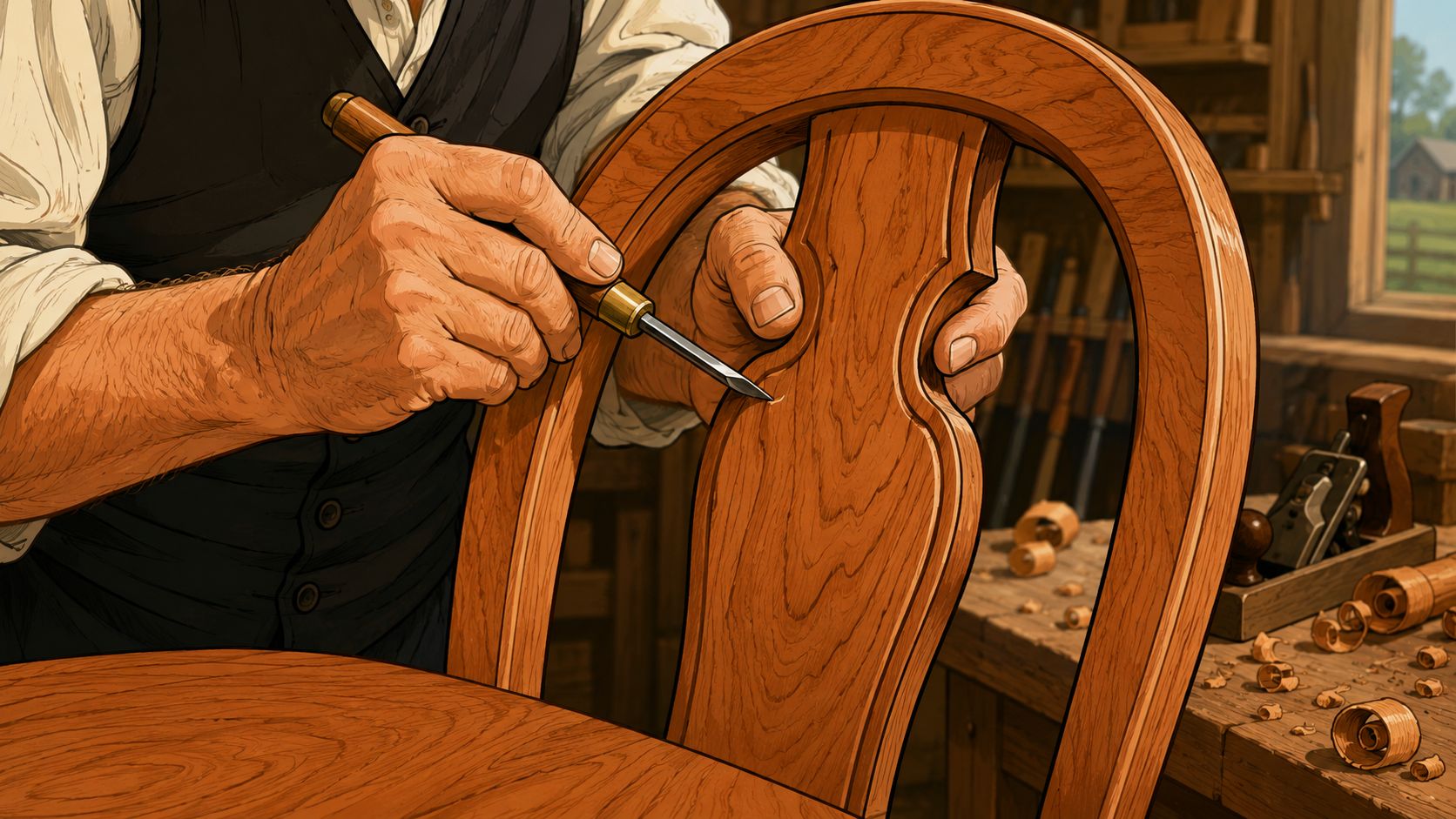
Heirloom furniture distinguishes itself from furniture that merely imitates the look. A hand-crafted solid wood chair has weight in the hand and steadiness on the floor. The frame feels unified. Joints look intentional. Edges read cleanly because the material has depth instead of a thin applied surface.
Mass-produced alternatives often struggle in the exact places that matter most on dining chairs. Repeated pulling, scooting, and leaning expose weak joinery quickly. A chair can still look acceptable online and feel hollow in person.
A quality frame usually shows itself through practical details:
- Joinery that stays tight: Time-honored methods matter because dining chairs take lateral stress every day.
- Hardwood construction: Strong species support the shape better than lightweight substitutes.
- Consistent finish behavior: Solid wood tends to age with character instead of peeling at the edges.
- Serviceable longevity: A solid chair can often be repaired or refinished instead of discarded.
Why Amish hand-crafted construction matters
For shoppers in Ann Arbor who want furniture with staying power, Amish hand-crafted dining pieces set a different standard. The appeal isn't nostalgia. It's the logic of material integrity. Solid North American hardwoods such as cherry, oak, and maple bring density, visible grain, and the possibility of refinishing later, which is part of what makes them suitable for long-term ownership.
The sensory difference is immediate. A solid cherry frame has a certain heft when a chair is pulled out. A maple seat rail feels crisp at the edge, not papery. That tactile quality often tells the truth faster than a product description.
Practical rule: If the beauty of the chair depends only on its finish color, it's probably not enough. If the beauty remains when the eye shifts to the joinery, the wood grain, and the shape of the frame, the construction is doing real work.
For homeowners planning a full-room project, the same design discipline shows up beyond furniture. A useful example appears in CJMC Build's approach to luxury design, where interior decisions are treated as lasting architectural choices rather than isolated purchases. That mindset applies to dining chairs too. They shouldn't be selected as filler around a table.
Upholstery should support the frame, not hide it
On oval back chairs, upholstery can add warmth and comfort, but it shouldn't become a shortcut for weak construction. A good upholstered seat still needs a strong base, stable rails, and properly proportioned dimensions. Fabric and cushioning should refine the chair, not mask flaws in the build.
Shoppers comparing fabrics, textures, and wear patterns can benefit from a practical look at upholstery materials and how they perform. That becomes especially helpful when choosing between a more formal fabric, a family-friendly weave, or a cleaner, precisely fitted seat for daily dining.
How to Choose the Perfect Chairs for Your Home
Most chair mistakes happen before anyone sits down. They happen with measuring. A chair can be beautiful, well made, and completely wrong for the table it's meant to serve.
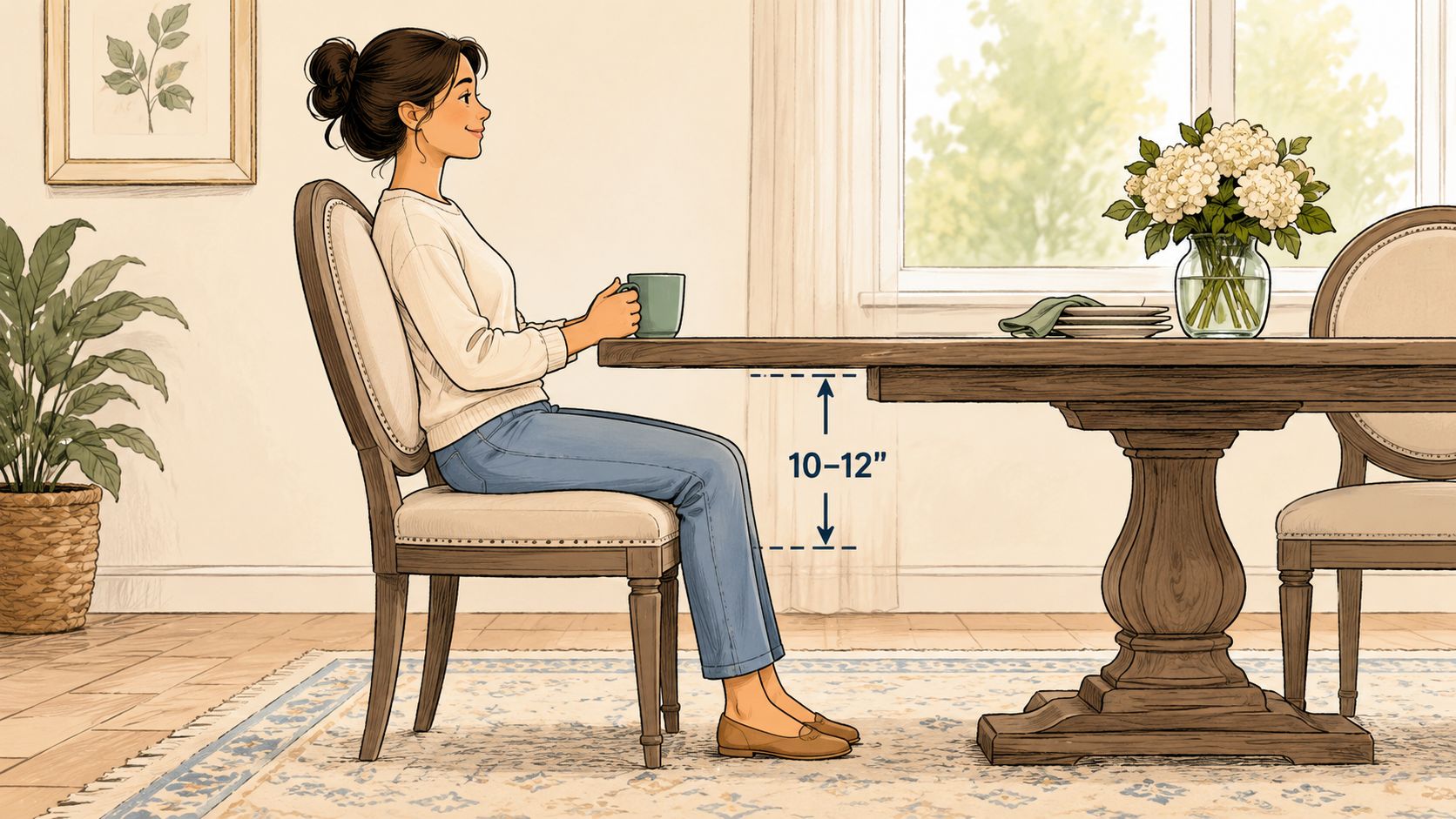
For optimal comfort, dining chair seats should be 17 to 20 inches high under a standard table height of 28 to 31 inches, leaving about 10 to 12 inches of legroom, and upholstered seats need extra attention because cushion compression can reduce clearance under the apron, according to this dining chair sizing guide.
Start with the hard measurements
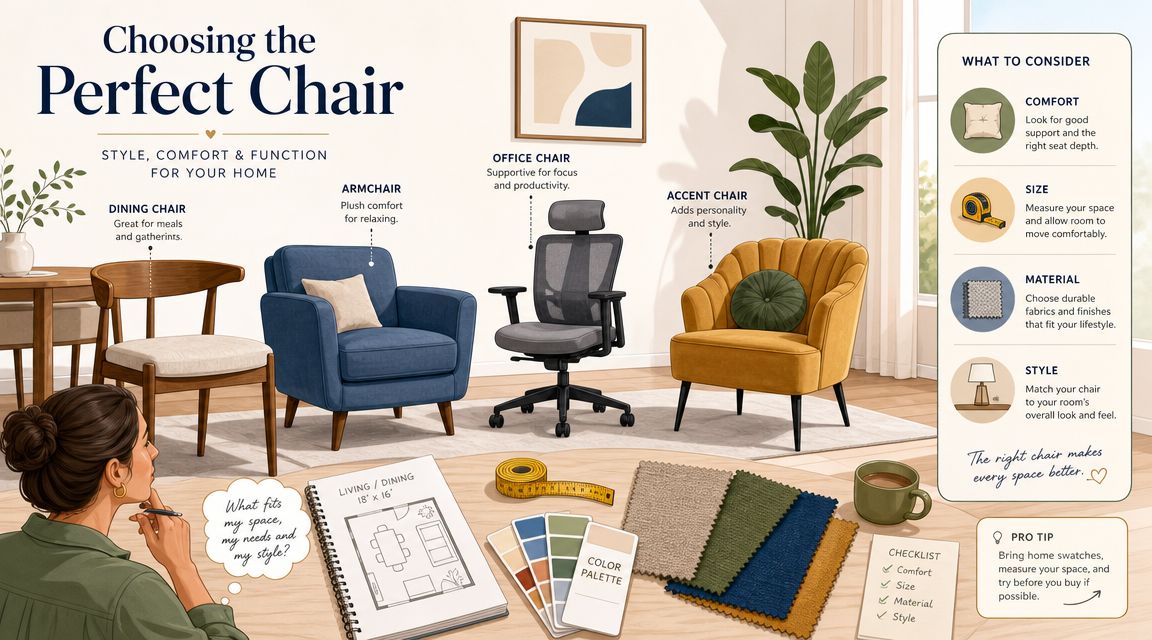
A strong selection process begins at home with a tape measure, not in the showroom with a finish sample. Measure the actual table height, especially if the table has an apron. Then check the usable opening from the floor to the underside where knees will go.
Spacing matters just as much as height. The same sizing guide notes a common benchmark of 18 to 20 inches for chair width, at least 24 inches between chairs, and a 20 to 24 inch push-back zone behind them for movement. Those numbers help prevent the room from feeling crowded even when the chairs themselves look appropriately scaled.
A simple measurement checklist helps:
- Measure table height: Use the measured height, not the listed catalog number if the table is already in the house.
- Check underside clearance: Aprons and edge profiles can reduce usable leg space.
- Confirm loaded seat height: Upholstered chairs sit differently once someone is seated.
- Map chair width across the table: Formal silhouettes can visually hide how much room they take.
- Leave room behind the chair: A dining room has to function when people arrive and leave the table.
Comfort is more than padding
One of the least answered questions in the market is whether oval back dining chairs are comfortable for long meals. Available product copy often focuses on style and basic materials while saying very little about back angle, lumbar contact, or seat depth. That gap matters, because comfort depends on those ergonomic details more than on silhouette alone.
An oval profile can support the body well when the chair includes a thoughtful inset, upholstery panel, or supportive shaping. It can also fall short if the back is shallow, rigid, or scaled without considering how people sit through a full dinner.
A chair can look elegant from across the room and still ask too much of the body after half an hour.
That's why an in-person sit test still matters. A chair that feels fine for a minute may not hold up through a long meal. Shoppers sorting through options can narrow the field online first, then compare dimensions and forms through a dining side chair selection before testing final contenders in person.
What usually works and what doesn't
A few patterns hold up well in real homes:
- Works well: Upholstered seats with disciplined cushioning, supportive back inserts, and stable hardwood frames.
- Often disappoints: Overly shallow seats, decorative backs with little body contact, and chairs chosen only for appearance.
- Works in smaller rooms: Slimmer oval backs with visual openness and careful spacing.
- Needs caution: Deep frames under apron tables, especially when seat compression hasn't been considered.
Styling Oval Back Dining Chairs in Your Space
Oval back dining chairs have a formal lineage, but they aren't limited to formal rooms. Their real strength is adaptability. The outline is polished enough for a traditional dining room, yet clean enough to work in a transitional kitchen or a more layered open-plan space.
Pairing by table shape and room mood
With a rectangular wood table, oval backs bring rhythm. The curve softens the long linear run and keeps the room from feeling too blocky. With a round table, they create a more enveloping composition because the back shape echoes the table's geometry without becoming repetitive.
A few pairings tend to work particularly well:
- Rectangular solid wood tables: Good for classic balance and a grounded, heirloom look.
- Round pedestal tables: Helpful when the goal is a softer, more intimate dining arrangement.
- Glass-topped tables: Useful when a room needs visual lightness but still wants a formal chair shape.
- Mixed-material rooms: Oval backs help bridge wood case pieces, upholstered banquettes, and painted finishes.
Beyond the dining room
These chairs also earn their keep outside the expected setting. A pair can frame a writing desk in a home office. One can sit in a bedroom corner beside a small table. In a living space, an upholstered oval back chair can work as an accent seat when the room needs structure more than bulk.
For readers refining the full dining composition, lighting deserves the same attention as seating. A practical companion resource is Golden Lighting's chandelier selection guide, which helps align fixture scale and dining proportions without turning the light into an afterthought.
How to keep the look current
The easiest way to make oval back dining chairs feel fresh is through contrast. Use a classic frame with a quieter table, or place a simpler oval silhouette in a room with modern art and cleaner architectural lines. That keeps the chair from reading as theme furniture.
A useful design exercise is to study a broader range of dining chair styles and how they shift a room's tone. Once shoppers see how ladder back, upholstered, and oval back forms change the mood of a space, the right chair becomes much easier to identify.
Bespoke for Your Home The Tyner Customization Edge
Many dining chair purchases fail in the last ten percent. The shape is right, but the finish is off. The wood tone works, but the seat fabric doesn't. The frame suits the room, but the overall set feels too formal or not formal enough. That's where custom ordering changes the experience from compromise to fit.
Why customization solves the real problem
Most households aren't furnishing a blank catalog room. They're matching floors already in place, wall colors they intend to keep, inherited case goods, or a table bought years earlier. Oval back dining chairs respond well to customization because their form is stable. The frame supplies the timeless structure, while finish and upholstery shift the personality.
That's especially useful with made-to-order dining. A chair can lean neoclassical, rustic, transitional, or contemporary depending on the wood species, stain depth, seat treatment, and fabric.
Customization is usually most valuable in these areas:
- Wood choice: Different hardwoods change both durability feel and visual temperature.
- Finish selection: A lighter stain, deeper tone, or painted look can completely reset the chair's mood.
- Seat material: Fabric, leather, or a more specific upholstery choice influences both comfort and formality.
- Configuration matching: The right side chair and host chair combination creates a more resolved dining room.
The value of guided choices
A large menu of options only helps when someone can interpret it. That's where guided selection matters. Tyner Furniture offers made-to-order programs that include custom dining choices, including Canadel, which allows shoppers to work through wood, finish, and upholstery options in a more personalized way rather than settling for whatever happens to be stocked.
The same logic appears elsewhere in the showroom through brands like Stressless, where sizing and ergonomic fit matter just as much as appearance. That broader approach matters because it treats furniture as use-driven, not just display-driven.
The best custom result usually isn't the boldest one. It's the one that makes the room feel like it was furnished on purpose.
For shoppers who feel uncertain about where to begin, a practical first step is getting started with custom order furniture. That process tends to calm the common worry that bespoke means complicated. In most cases, it means the final piece fits the home better.
What custom gets right that in-stock often misses
An in-stock chair can be a good answer when the scale, finish, and comfort are already aligned. But custom is often the better route when:
- Existing furniture must be matched: This is common in established homes, not just newly furnished ones.
- The room needs a specific tone: Soft formal, warm transitional, and refined traditional are not the same look.
- Daily use matters as much as style: Fabric performance and seat feel deserve as much attention as shape.
- The purchase is meant to last: A longer-term piece justifies more careful specification.
That's where the idea of bespoke stops sounding indulgent and starts sounding sensible.
An Investment in a Lifetime of Gatherings
Furniture value isn't just the purchase price. It's how long the piece stays useful, attractive, and structurally sound. That's the fundamental cost-per-year question, and it's why heirloom dining furniture often makes more sense than a shorter-lived substitute.
Oval back dining chairs fit that logic well when they're chosen with care. The shape has already proven it can outlast trend cycles. The materials and construction determine whether the chair will still feel steady after years of everyday use. Good care helps too. Keep wood clean and dry, address spills quickly, and avoid dragging chairs across the floor when possible.
Why accessibility still matters
There's a long history behind making furniture more attainable. Chairs became far more common household items after the Industrial Revolution (1760–1840) increased affordability through mass production, as noted earlier in the broader chair history. Today, accessibility looks different. It often comes through flexible planning rather than lower standards.
That matters for households trying to furnish thoughtfully without doing everything at once. Special financing and a Low Price Promise can reduce the pressure to choose between quality and timing. A better chair bought with a workable plan is often a wiser decision than a weaker chair bought in haste.
For readers building or renovating more broadly, the same long-view mindset appears in guides about choosing your custom home builder. The principle carries over cleanly. Lasting results usually come from careful specification, not rushed replacement cycles.
The final test
A good dining chair should pass three tests. It should look composed in the room, support the body comfortably, and make financial sense over time. If one of those three fails, the chair usually becomes a frustration instead of a fixture.
For many Southeast Michigan homes, oval back dining chairs continue to pass that test because they combine history, proportion, and lasting presence in a way few silhouettes do.
If an oval back chair is on the short list, the next step is simple. Visit Tyner Furniture at the South State St. showroom in Ann Arbor for a sit test, or browse the online Quick Specs for special-order options in dining, home office, bedroom, and even outdoor spaces. Since 1957, the focus has stayed the same. Help local families choose furniture with lasting value, solid craftsmanship, and a fit that feels right in the home.