Headboard Styles That Fit Your Bedroom and Your Budget

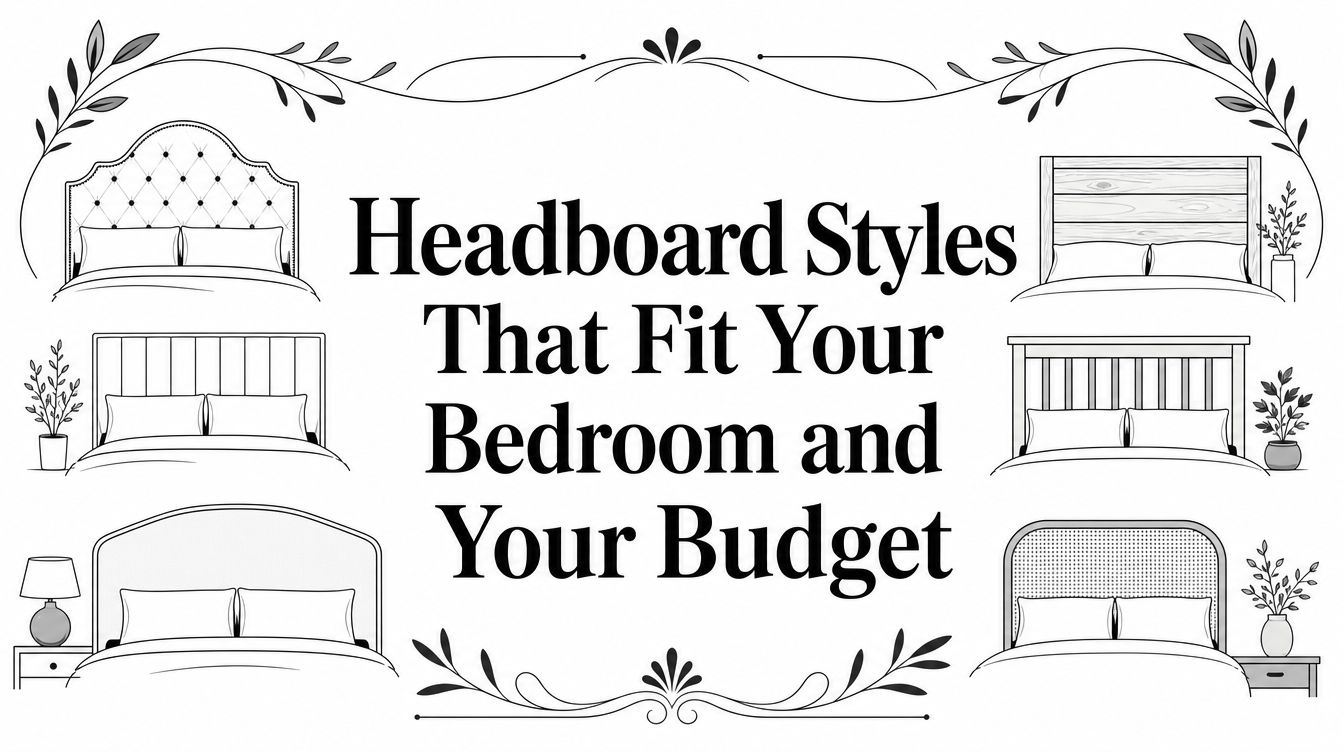
A shopper can stand in an Ann Arbor showroom with a dozen headboard silhouettes in view and still have no idea which one belongs at home. One is softly upholstered, another is carved wood, a third includes storage, and the tallest model seems to demand a room much larger than the one waiting at home. The sensible choice isn't the headboard that photographs best. It's the one that supports the way the bedroom is used.
Headboard styles affect reading comfort, draft control, wall protection, cleaning, storage, scale, and long-term value. A fabric panel can make a bed feel warm and inviting, while an open metal frame keeps a small room visually light. A solid hardwood headboard can become an heirloom, but only when its joinery and finish deserve that lifespan.
Since 1957, Tyner Furniture has helped Southeast Michigan households make those decisions with more attention to craftsmanship than passing fashion. The South State St. showroom gives shoppers a place to test proportions, touch materials, and compare made-to-order options. The same design approach applies across the home, from the Home Office to Outdoor Spaces, because good furniture should serve daily routines rather than merely fill a room.
Why the Right Headboard Style Matters More Than the Trend
The familiar showroom moment starts with a shopper scanning a wall of beds and headboards, touching upholstery samples, and wondering whether a curved shape will feel dated before the bedroom is finished. A neighborly answer is simple: begin with behavior, not a trend label.
A headboard anchors the bed's scale. A wide panel can give a generous bedroom architectural presence, while a narrow iron frame may preserve openness in a compact room. The material also sets the room's tactile temperature. Upholstery feels soft against pillows and shoulders, wood contributes visual weight and warmth, and metal keeps the composition crisp and airy.
The bed is also the furniture surface people use most directly in the bedroom. Pillows lean against it, hands steady against it, and the wall behind it takes the impact of movement every night. That makes ergonomic support, cleanability, construction, and mounting practical concerns, not decorative afterthoughts.
Choose for the routine
A person who reads before sleep needs a supportive backrest. Someone who sleeps in a warm room may value airflow behind an open frame. A household with children or pets needs a surface that tolerates fingerprints, bumps, and regular cleaning. A renter may need an attach-to-frame option that can move without major wall work, while an owner may prefer a wall-to-wall upholstered installation or built-in storage.
Practical rule: The right headboard style should make the bedroom easier to use on an ordinary Tuesday, not just more impressive on move-in day.
The history of headboards supports this practical view. Early examples in ancient Egypt used ebony, silver, and gold for symbolic and practical purposes. Greeks and Romans later used simpler wooden versions to block cold drafts, canopy beds appeared by the 13th century as insulation-focused designs, four-poster beds became status symbols in the 15th century, and upholstered headboards gained popularity in the 17th century as comfort became more important, as documented in this history of headboard design.
That progression shows how headboard styles have shifted from utility toward decoration and comfort across major design eras. A thoughtful selection still combines all three. The following choices connect style to reading, sleeping, storage, climate, room size, materials, and cost-per-year value. For a calming bedroom foundation, shoppers can also review guidance on setting the tone for a relaxing bedroom.
The Most Popular Headboard Styles Explained
The strongest headboard styles solve different problems. Upholstery improves comfort, paneling establishes proportion, metal preserves visual space, and storage turns an unused wall into working furniture. The style name matters less than the job it performs.

Upholstered and tufted
An upholstered headboard brings the buttery feel of fabric or the smooth touch of top-grain leather to the bed. Padding creates a natural lean-back surface for reading, scrolling, or a quiet morning cup of coffee. Tufting adds buttons, channels, or gathered detail, while a clean upholstered panel feels more restrained.
The trade-off is maintenance. Fabric can collect dust and absorb spills, and deep tufting creates more places for debris to settle. A made-to-order build solves part of that problem by letting the shopper select a performance-minded textile, a restrained tufting pattern, or a smooth panel.
Panel headboards
A panel headboard is the dependable classic. It may be built from solid wood, painted material, or an upholstered slab, and it fills a broad wall without requiring an ornate silhouette. A wood panel can display the weight and grain of cherry, oak, maple, or walnut, while a painted panel can coordinate with the room's existing palette.
Its honest drawback is firmness. A flat wood panel isn't the best choice for someone who reads upright without substantial pillows, and a broad uninterrupted surface can feel imposing in a small bedroom.
Sleigh headboards
Sleigh designs use curved rails and a pronounced profile to create drama at the head and foot of the bed. The shape suits traditional interiors, larger rooms, and shoppers who want visible craftsmanship rather than a barely-there frame.
That visual weight can crowd a compact bedroom. Ornate curves also make the bed harder to pair with changing décor, so this is a choice for an owner committed to a classic room rather than someone expecting frequent moves.
Shaker and canopy
Shaker-inspired headboards rely on quiet lines, honest proportions, and restrained construction. They suit small rooms, transitional interiors, and households that value durability over ornament.
Canopy styles create full-room architecture. Drapery or open posts can make a bedroom feel sheltered and can help block drafts in a cold-climate home. The cost is installation complexity and a stronger visual commitment. A canopy bed should be treated as the room's main architectural feature, not an accessory added at the end.
Iron, metal, and storage
Iron and metal frames work well in rentals, dorm rooms, children's bedrooms, and allergy-conscious households because their open structure is easy to access and keeps the bed visually light. The drawback is comfort. Metal doesn't provide a padded backrest, and loose movement can create noise if the frame isn't properly secured.
Storage and attached headboards serve tight bedrooms by adding shelves, drawers, lighting, or charging areas. They make the wall work harder, but they also add weight, dusting surfaces, and installation decisions. Shoppers comparing these categories can build a more useful vocabulary with a guide to bedroom styles for every personality.
Matching Headboard Styles to How You Actually Live
The same bedroom can make two very different headboard styles look sensible, depending on who sleeps there. A reader needs support behind the shoulders. A renter needs mobility. A child needs resilience. A cold Michigan bedroom needs more shelter than a warm, well-ventilated space.
For reading and lounging
Upholstered and tall panel headboards are the clear recommendation for anyone who reads, scrolls, works, or eats in bed. A padded surface reduces the need to build a precarious tower of pillows, and a wingback shape can create a more enveloping, sheltered feel.
A smooth fabric panel is easier to maintain than deep tufting. Channel upholstery adds vertical rhythm and can draw the eye upward, which helps a compact room feel taller without adding a bulky frame.
For cold-climate bedrooms
Canopy, tall upholstered, and fully attached storage headboards provide more material behind the pillows. That can make the bed feel less exposed near a chilly exterior wall. Canopy drapery adds another layer of enclosure, though the room must have enough height and clearance for the structure.
A heavily upholstered or fully panelled design prioritizes insulation and acoustics, but it should be specified with low-emission materials and adequate ventilation. Open slatted or iron designs favor airflow and easier wall drying.
For renters, children, and frequent moves
Renters should look first at iron, metal, or attach-to-frame headboards. These options avoid extensive wall work and can travel with the bed. Kids' rooms benefit from smooth, sturdy surfaces that tolerate sticky fingers and routine cleaning better than delicate textiles.
Owners have more freedom to consider wall-mounted, wall-to-wall, storage-integrated, or made-to-order upholstery. Those choices can improve the room's architecture, but they reward careful measuring and a settled floor plan.
For small rooms
Low-profile Shaker or simple panel designs keep the ceiling from feeling crowded. A compact metal frame works when visual openness matters more than back support. Tight wings, restrained curves, and vertical channels are preferable to wide, ornate sleigh profiles.
Three answers usually narrow the showroom wall quickly:
- Primary behavior: Is the bed mainly for sleeping, or does it function as a reading and lounging seat?
- Ownership status: Does the headboard need to move with a renter, or can it become a permanent architectural feature?
- Room condition: Does the space need storage, draft protection, airflow, or the lightest possible visual footprint?
The goal isn't to browse every headboard style. It's to arrive at two or three candidates worth testing in person.
Sizing, Proportion, and Bedroom Fit
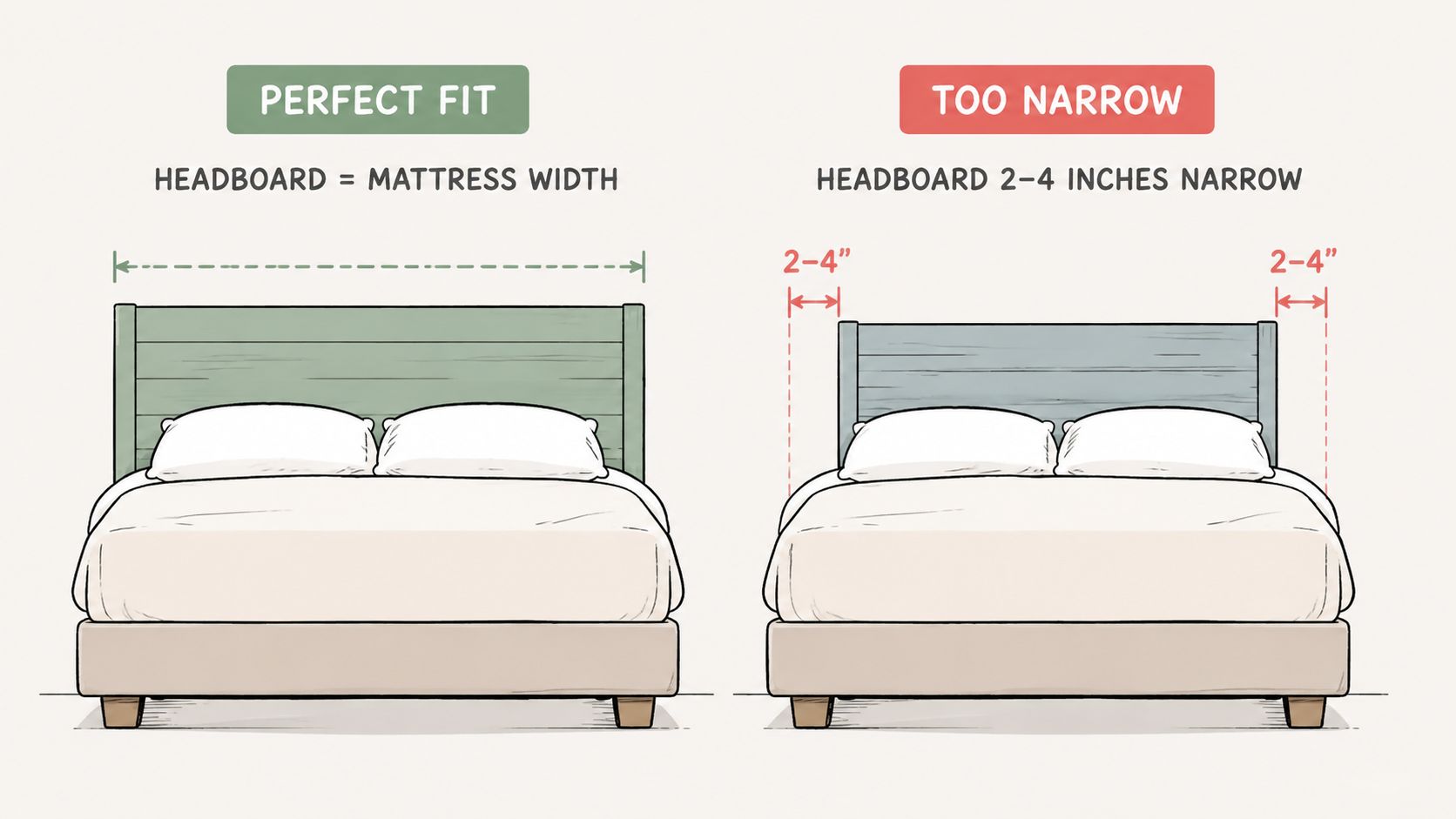
A beautiful headboard can still look wrong if its width or height ignores the room. Width should generally extend 2 to 4 inches beyond the mattress or bed frame on each side, creating a balanced border rather than a headboard that looks undersized. A consumer sizing guide lists approximate standard widths of 41 inches for twin, 56 inches for full, 62 inches for queen, 80 inches for king, and 74 inches for California king, with the same guide recommending rooms of roughly 7 by 10 feet for twin, 10 by 10 feet for full and queen, and 12 by 12 feet for king and California king in its headboard sizing guide.
Height decides the room's mood
Height is often the bigger visual decision. A low profile suits a sloped ceiling or a room that needs openness, while a tall headboard creates a stronger focal point. The showroom associate should measure the ceiling, footboard, windows, sconces, and any trim before recommending a tall silhouette.
The following working ranges help establish a shortlist:
- Under 48 inches: Best for low-profile beds, sloped ceilings, and smaller bedrooms.
- 48 to 54 inches: The everyday sweet spot for many standard rooms.
- 54 to 65 inches: Better suited to rooms with 9-foot-plus ceilings and tall footboards.
- Ceiling-mount canopies: Allow 80 to 84 inches of vertical clearance before considering the structure.
Bed-frame height also affects daily comfort. A very low bed can require more effort to stand from, while a high frame can feel like climbing into bed. The correct height lets the sleeper sit, pivot, and stand without strain, which matters more than a showroom photograph.
For a small room, ornate sleighs should usually be skipped. Vertical-channel upholstery can draw the eye upward, and tight wings preserve walking space. Before measuring a mattress, shoppers should tape the proposed headboard width and height directly onto the bedroom wall, then check doors, outlets, windows, nightstands, and ceiling fixtures. A broader furniture-measuring process is outlined in this guide to measuring furniture.
Materials, Construction, and Indoor Air Quality
A headboard's visible finish doesn't tell the entire construction story. The core, adhesive system, frame, joinery, and finish determine how the piece feels today and how it behaves after years of nightly use.
Solid hardwood remains the benchmark for a substantial wood headboard. Oak, maple, cherry, and walnut bring different grain patterns and color character, but species alone doesn't guarantee longevity. Well-executed mortise-and-tenon joints, corner blocks, and dovetailed rails improve strength, screw holding, and repairability. Industry guidance on how solid-wood furniture joinery supports longevity makes the important point that craftsmanship matters as much as the wood label.
Upholstery deserves the same scrutiny
A durable upholstered headboard typically begins with a kiln-dried hardwood frame rather than soft pine. Shoppers should ask about foam density, support layers, fabric performance, and whether tufted panels use tied springs or glued foam. A specification such as 1.8 lb/ft³ minimum foam density and abrasion ratings of 30,000 Wyzenbeek or more for daily beds, and 50,000 or more for children and pets may be useful when those figures are supplied by the manufacturer.
Indoor air quality also belongs in the conversation. Furniture containing particleboard, plywood, or MDF can emit formaldehyde from urea-formaldehyde resins, and the visible fabric or veneer doesn't remove that concern. The EPA's formaldehyde guidance recommends low-emitting exterior-grade pressed wood, ventilation, and humidity control after installation. Testing documented in recent research on VOC emissions from wood-based furniture measured composite-material emissions in the range of roughly 0.235 to 1.023 mg/m³.
For broader home-air concerns, households can also consult Sylacauga air quality solutions as a practical resource on ventilation and indoor-air management. The same logic applies locally in Southeast Michigan: specify low-emission cores, sealed surfaces, and materials appropriate for a low-ventilation sleep zone.
Headboard Materials at a Glance
| Material | Durability | Air Quality | Maintenance | Best For |
|---|---|---|---|---|
| Solid hardwood | High when joinery and finish are well executed | Lower concern than pressed wood, depending on finish | Dust, wipe, and refinish when appropriate | Heirloom rooms and long-term ownership |
| MDF or particleboard | Varies, with greater vulnerability at damaged edges | May emit formaldehyde from resin systems | Keep dry and repair chipped surfaces | Budget-conscious panel shapes with low-emission specifications |
| Upholstered hardwood frame | High when the frame and upholstery are properly built | Depends on foam, backing, fabric, and adhesives | Vacuum, spot-clean, and professionally re-cover when needed | Reading comfort and made-to-order design |
| Metal or iron | Durable, especially with sound welds and finish | Generally open and ventilated, with finish quality still relevant | Dust and inspect joints for movement | Renters, small rooms, and easy access |
| Leather | Can age beautifully when maintained | Depends on backing and finishing system | Condition according to the maker's care instructions | Smooth, tactile, wipeable luxury |
For a deeper material vocabulary, shoppers can review this upholstery materials guide. A Tyner Furniture showroom associate can also compare Amish hand-crafted solid wood against mass-produced alternatives, including the weight of solid cherry, the feel of a sealed finish, and the evidence of real joinery.
Treating Your Headboard as a Long-Term Investment
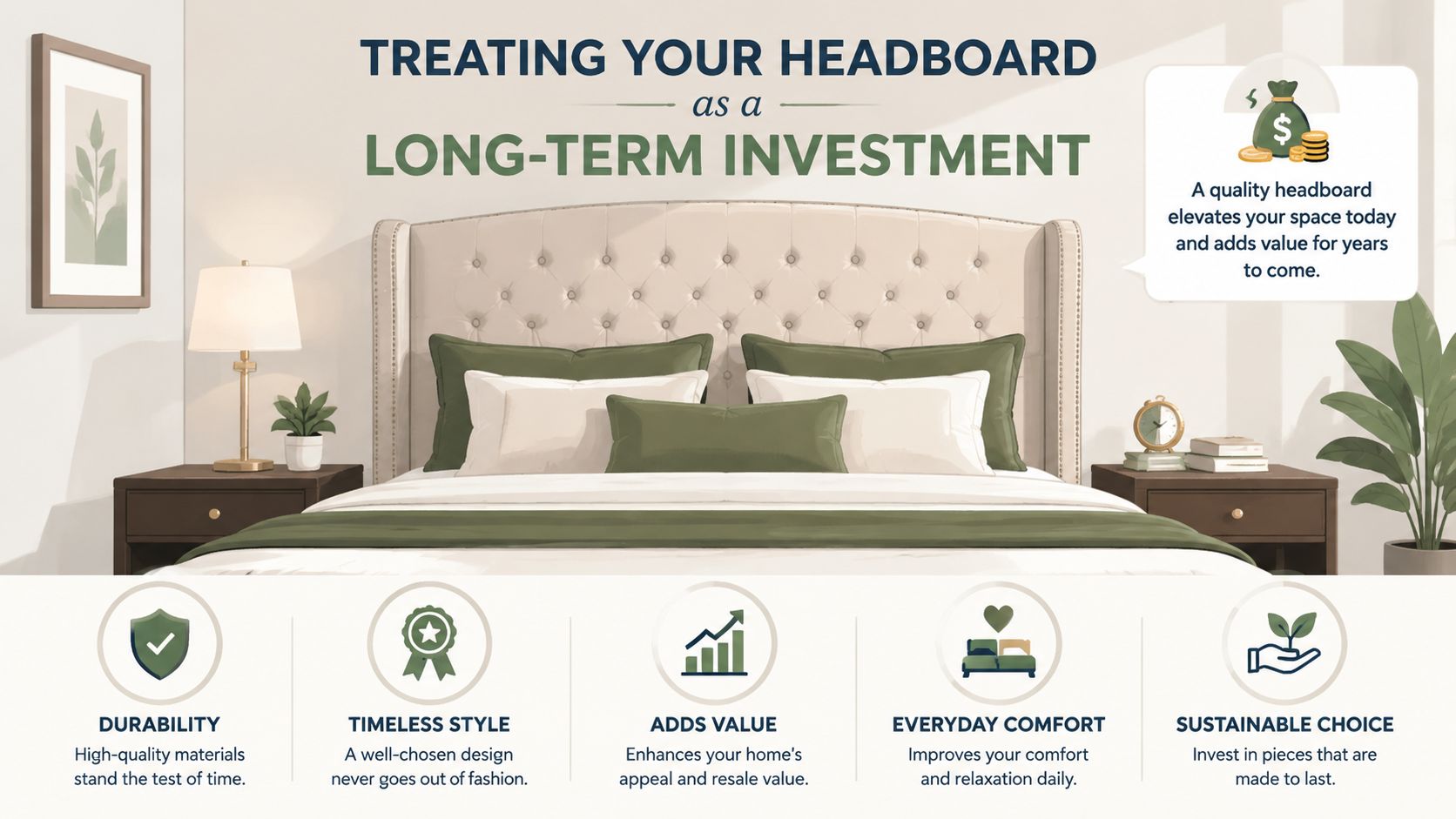
A headboard should be judged by its cost per year, not only by its ticket price. A well-built piece can stay relevant through bedding changes, paint updates, and room moves, while a trend-driven frame may lose its appeal or structural integrity much sooner.
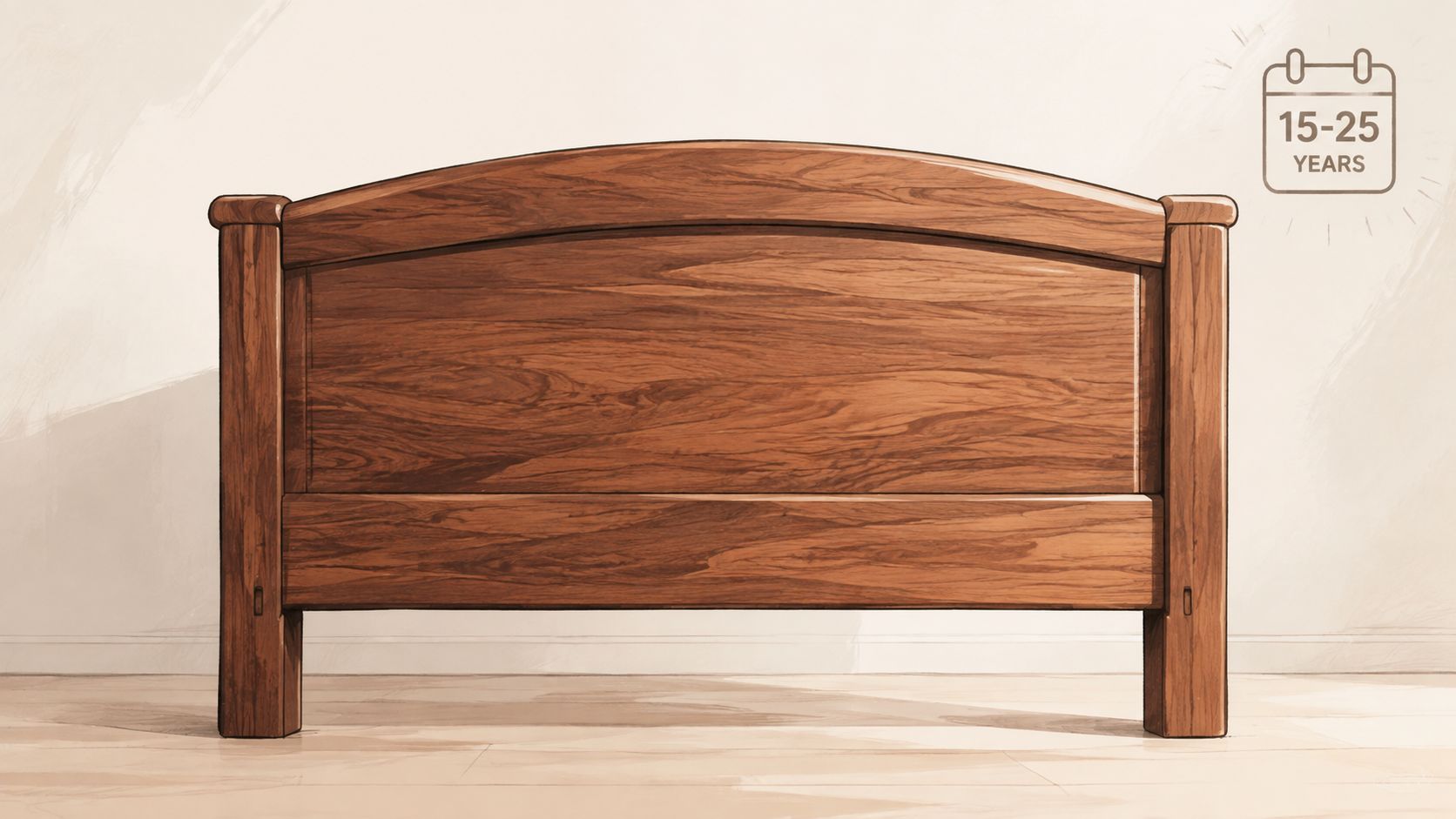
For a concrete illustration, a $1,200 Amish solid-cherry panel spread across 20 years works out to about $5 per month, as a simple calculation based on the stated purchase price and service period. That comparison changes the conversation. The buyer isn't only choosing a silhouette. The buyer is deciding whether the bedroom will hold a disposable object or an heirloom-quality piece that can be lived with, repaired, and appreciated.
Spend on the parts that age well
A kiln-dried upholstered frame can be re-covered later if the fabric wears or the room changes. Solid wood can often be refreshed through careful maintenance or refinishing. Particleboard headboards, by contrast, are harder to repair once edges swell, fasteners loosen, or the surface delaminates.
Three investment rules keep the decision grounded:
- Choose a solid frame before a trendy silhouette. Construction determines whether the piece remains useful.
- Choose a neutral fabric before a bold print. Pattern can be introduced through bedding, pillows, and art, while a calm base adapts more easily.
- Choose a classic profile before a fashion headboard. Curves and channels can be beautiful, but the underlying proportion should remain livable.
Special Financing can lower the immediate monthly burden, but the fine print matters. Deferred-interest financing only provides 0% interest when the balance is paid before the promotional period ends, otherwise interest may be charged, according to this consumer explanation of deferred-interest financing. Shoppers should confirm the exact terms, payoff date, and credit requirements before signing.
Tyner's made-to-order upholstery and Amish builders fit the long-term approach because they allow the shopper to choose materials, finishes, and proportions instead of accepting a one-size-fits-all compromise. A Low Price Promise and Special Financing may help with value and access, but the strongest financial decision remains buying a durable piece that doesn't need replacing soon.
Choosing, Customizing, and Buying with Confidence
A confident shortlist begins with four facts: mattress size, wall width, ceiling height, and the bedroom's main behavior. After that, the material decision becomes clearer. Choose upholstery for leaning and softness, solid wood for tactile durability and an heirloom presence, metal for mobility and openness, or storage for a room that needs every inch to work.
Customization is where in-stock is just the beginning. Made-to-order upholstery can change the fabric, tufting pattern, nailheads, and leg style. Amish solid-wood furniture can be specified by species, stain, profile, and hardware. Canadel demonstrates the breadth of finish and configuration choices available in custom furniture, while Stressless represents the same personalization mindset through ergonomic sizing and comfort-focused selection.
Ann Arbor shoppers can bring wall measurements to the South State St. showroom for design help, compare samples in person, and ask about delivery timelines for custom builds. Special Financing may be available on purchases over $999 with the Synchrony HOME Credit Card, subject to approval and promotional terms. Shoppers who prefer to pre-shop can use Tyner's online Quick Specs catalog, and those considering a custom order can start with this guide to getting started with custom order furniture.
For additional visual inspiration before a visit, affordable headboard inspiration from SouthShore Fine Linens can help clarify preferred shapes, colors, and textures. The showroom conversation should then refine those ideas around construction, scale, cleaning, and long-term use.
Tyner Furniture offers headboards, made-to-order upholstery, and Amish hand-crafted solid-wood bedroom pieces for households across Ann Arbor and Southeast Michigan, with options to compare finishes, fabrics, and configurations. Visit Tyner Furniture for a proper sit test at the showroom, or browse Quick Specs online before bringing room measurements in for a more precise recommendation.